
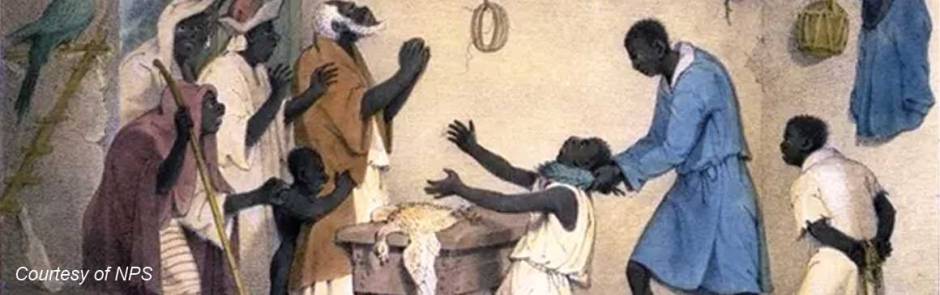
When Africans were captured as slaves and transported to the Americas, they naturally brought with them many of the traditions and cultural practices from their homelands. One cultural practice that had tribal origins in Central and West Africa was hoodoo, a spiritual tradition that was popular among enslaved people on numerous American plantations, including White Haven. What exactly WAS hoodoo?
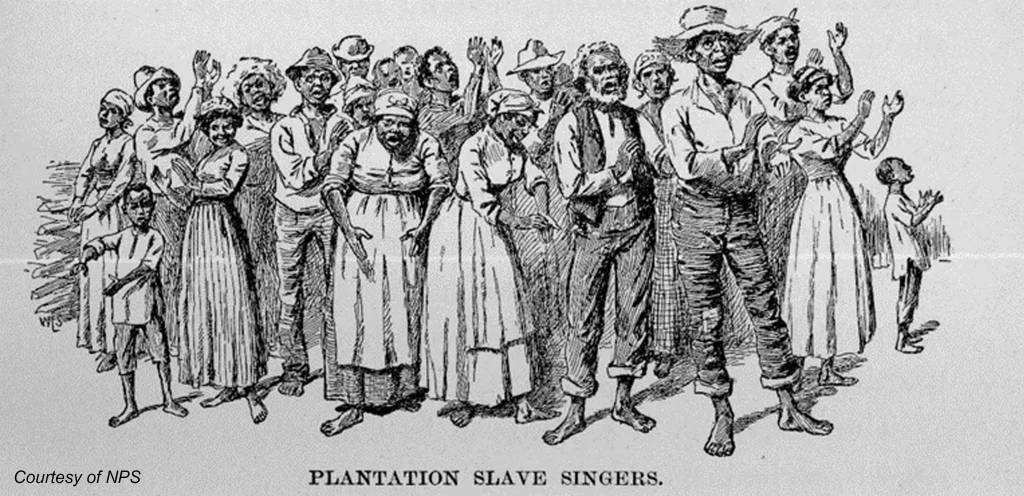
Hoodoo (not to be confused with voodoo) is not a religion per se. It is a collection of rituals such as herbal healings, ancestor worship, song, and folk magic inspired by African religious practices. The practice of hoodoo arose when enslaved workers were forced to become Christians upon arrival in North America. Although the rituals were historically used for curative and protective purposes, they also provided empowerment and comfort for people who had little agency over their lives. Often, hoodoo practitioners attempted to communicate with ancestors and created spells that called for justice and vengeance. Because it was a crime for the enslaved to practice African traditions, many hoodoo practices were hidden from slave owners.
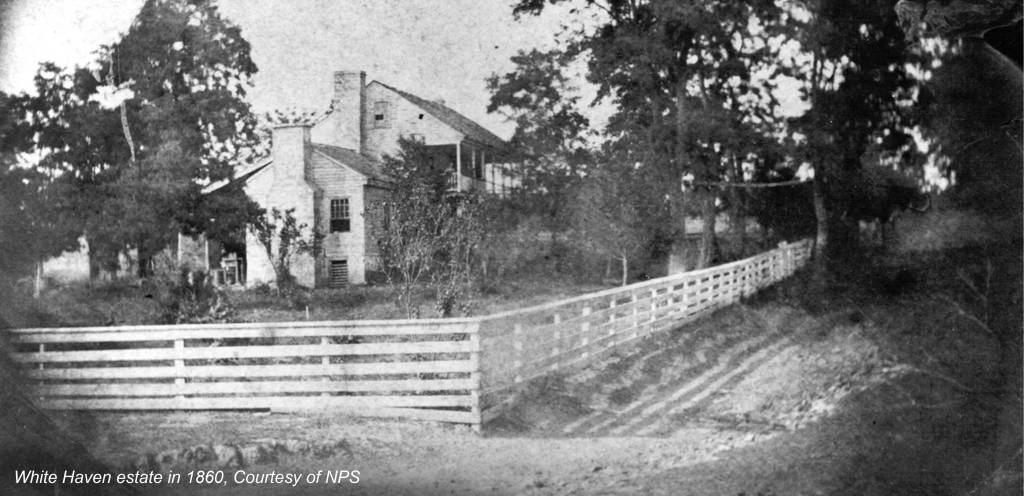
Archeologists and historians working in the 1990s discovered evidence that hoodoo was practiced by the slave community at Ulysses S. Grant National Historic Site. They found cloth bundles known as minkisi buried beneath the floorboards at White Haven. These bundles purportedly contain spirits that inhabit objects created by a conjurer.
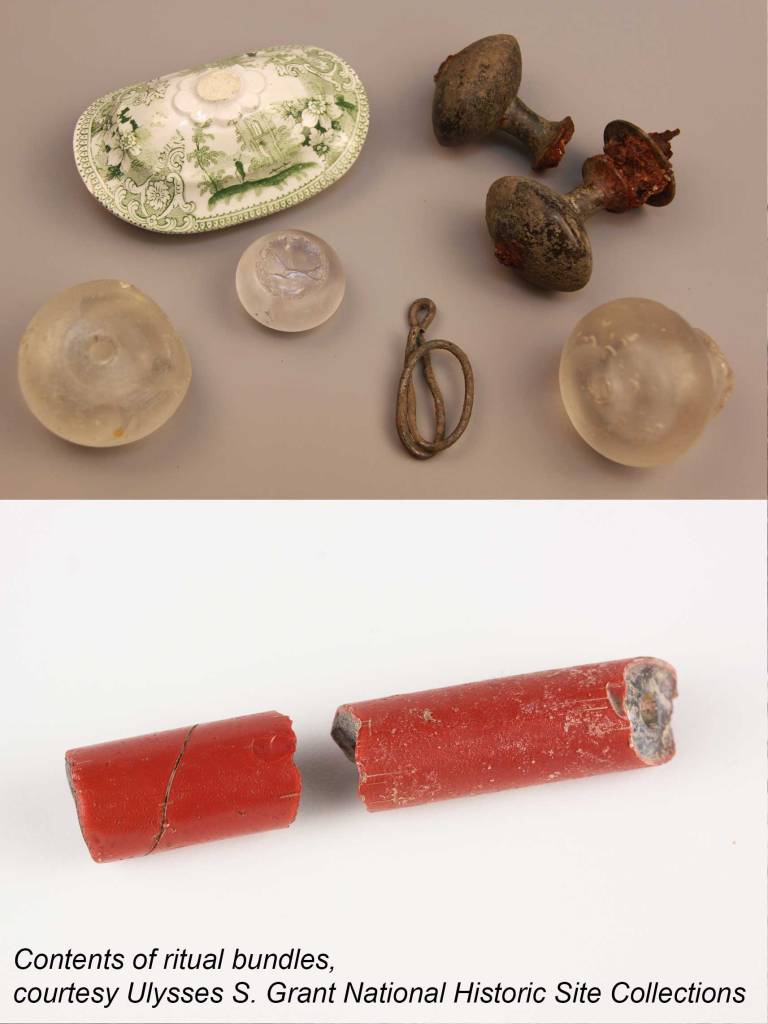
The objects found inside the White Haven minkisi included beads, buttons, crab claws, a peach pit, crystals, seashells, iron, and sharp projectile points – each of which carried a spiritual meaning. Silver dimes were found in the site’s Winter Kitchen, often used in hoodoo as protective charms. Other items found in minkisi bundles at the historic site were similar to those found in conjure bundles on other slave plantations.
Hoodoo practices did not end when slavery was abolished in the U.S. In the late 19th century and well into the 20thcentury, some African Americans turned to hoodoo to help them find jobs or to protect them from law enforcement and racial violence. They also practiced hoodoo to treat illnesses using herbal remedies. These African-derived practices and beliefs continue in some African American communities today.
 JNPA Blog