

More than 150 years ago, the Old Courthouse at Gateway Arch National Park was the scene of an important yet little-known chapter in the early days of the U.S. women’s suffrage movement. And though the outcome of the court case brought by suffragist Virginia Minor didn’t result in women’s right to vote at the time, it set the stage for the eventual adoption of the 19th amendment to the U.S. Constitution 48 years later, finally granting women the vote.

In October of 1872 – shortly before the Presidential election of that year – Virginia Minor walked into the St. Louis Courthouse determined to make history. She tried to register to vote in the upcoming election, citing the 14th Amendment clause which states “All persons born or naturalized in the United States… are citizens of the United States.” Yet the registrar refused to register Minor because she was female, provoking a civil suit brought by Virginia and her lawyer husband, Francis Minor.
The Minors quickly lost their case in the lower court, and it was eventually heard by the U.S. Supreme Court. The high court unanimously ruled that citizenship did not guarantee the right to vote – a major blow to the women’s suffrage movement.

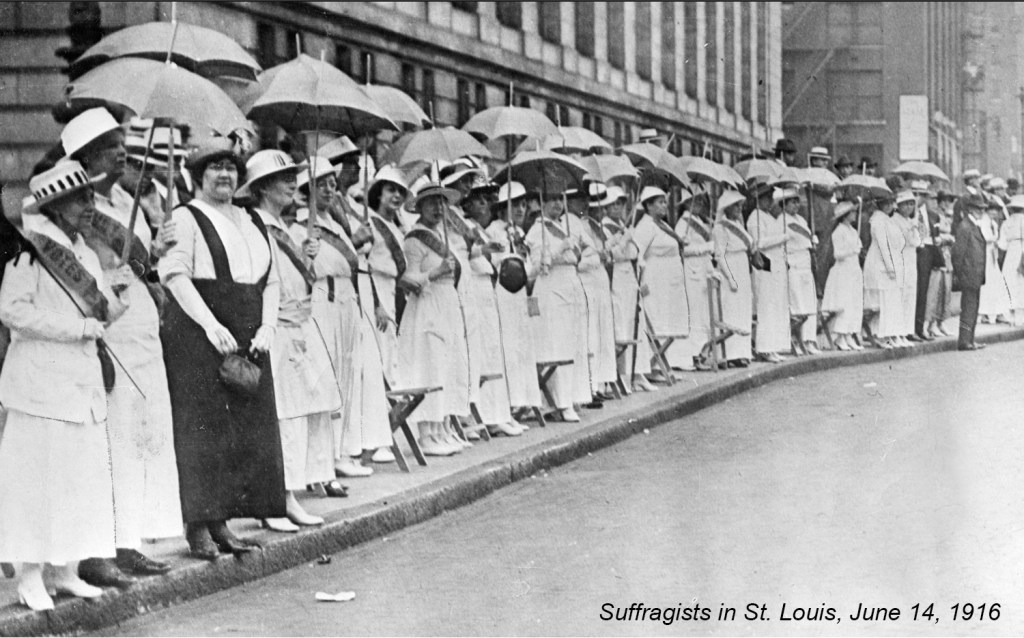
Suffragists then turned their efforts toward state-by-state campaigns to change state constitutions to allow women to vote. Eventually nine states and territories, mostly in the West, had abolished voting restrictions against women by the time the 19th Amendment was ratified 1920. Sadly, Virginia Minor never lived to see women’s right to vote enshrined in the U.S. Constitution. She died in 1894, leaving $1,000 in her will to Susan B. Anthony to carry on the struggle.
On March 30, Gateway Arch National Park will highlight the story of Virginia Minor in a public presentation. Check here for more details.
 JNPA Blog
One thought on “Seeking Women’s Right to Vote”