
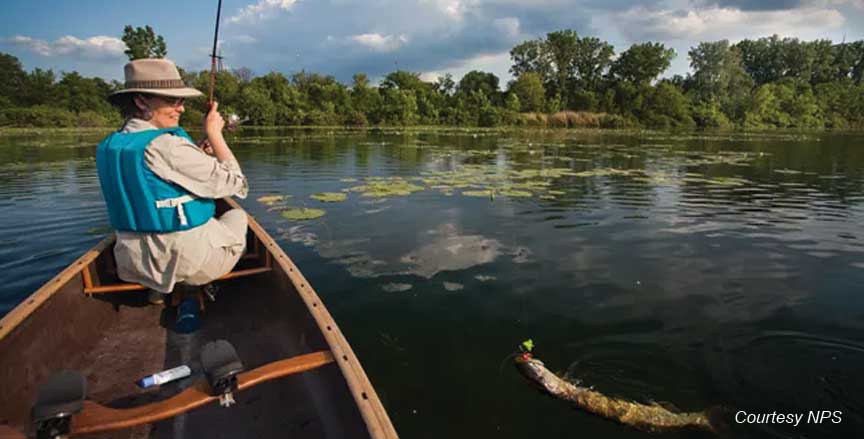
If your idea of a perfect way to spend a day outdoors is dropping a line in a stream or lake and seeing what bites, then you’ll want to check out the great fishing opportunities at our national parks. More than 200 sites in the National Park Service offer recreational fishing for the general public, including fly fishing, casting, bait fishing, trolling, and even ice fishing (brrrr!).
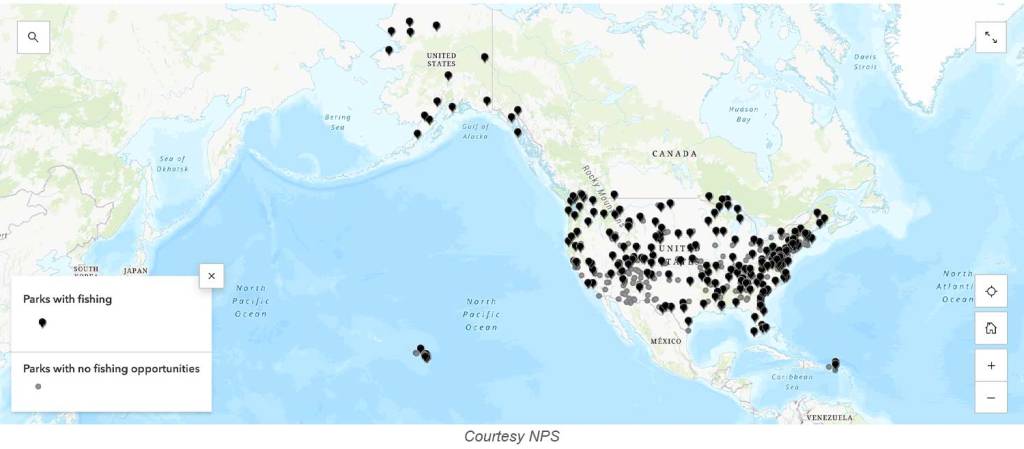
Of course, since fishing can affect local animal populations, each national park site regulates the fishing activities within its borders, usually by conforming with the regulations of the state where the park is located. Before setting out, it’s wise to check a park’s regulations, including learning what permits might be needed and where to find the best fishing spots. By following the park’s rules, such as practicing catch and release fishing of native fish, anglers can help ensure that native fish in our national parks will be enjoyed for generations to come.
A number of JNPA’s partner parks offer visitors a chance to fish their waters:
Voyageurs National Park has many options for both aspiring and experienced anglers. Fish abound in the park’s 30 named lakes, which consist of four large lakes and 26 smaller interior lakes. So far 54 fish species have been identified in the park’s aquatic habitats. Some of the better-known are walleye, sauger, Northern pike, smallmouth bass, yellow perch, and black crappie.
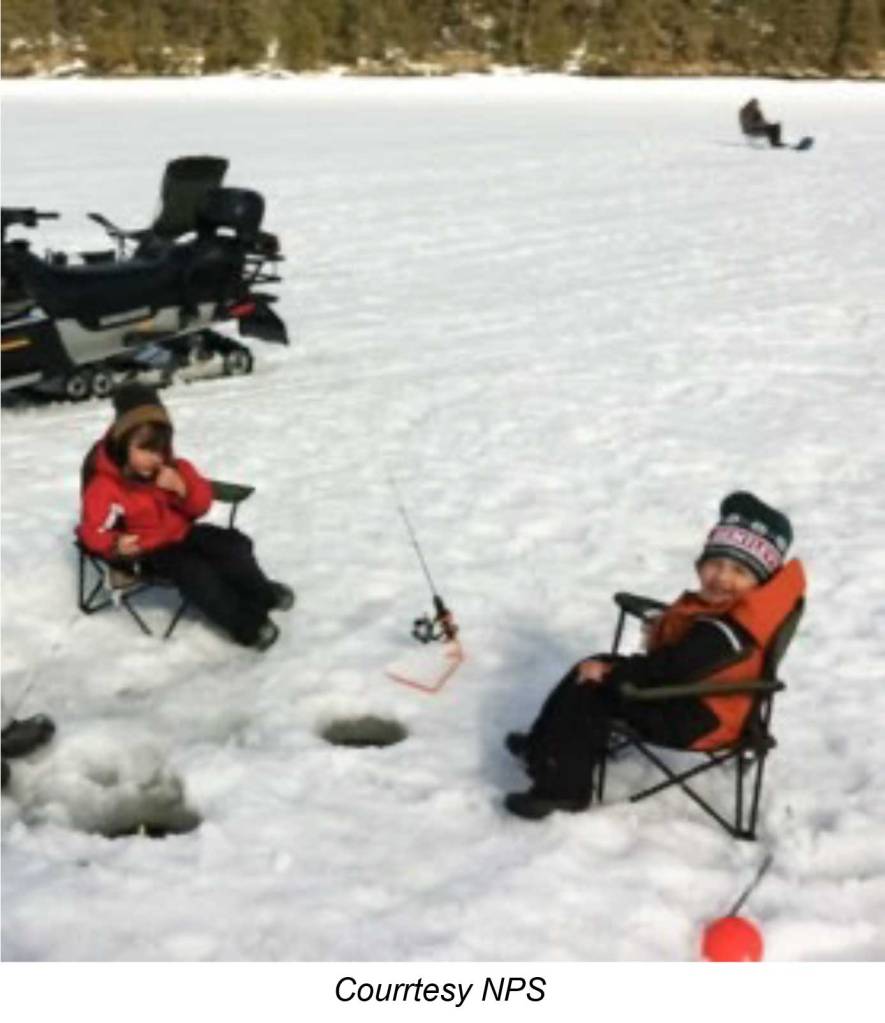
And if winter fishing is your thing, Voyageurs is a must-visit. Rugged piney shorelines, ultra-quiet conditions, and PLENTY of lake ice make the park an ice angler’s dream. Always check the park’s ice conditions before setting out and review the rules about placement of icehouses.
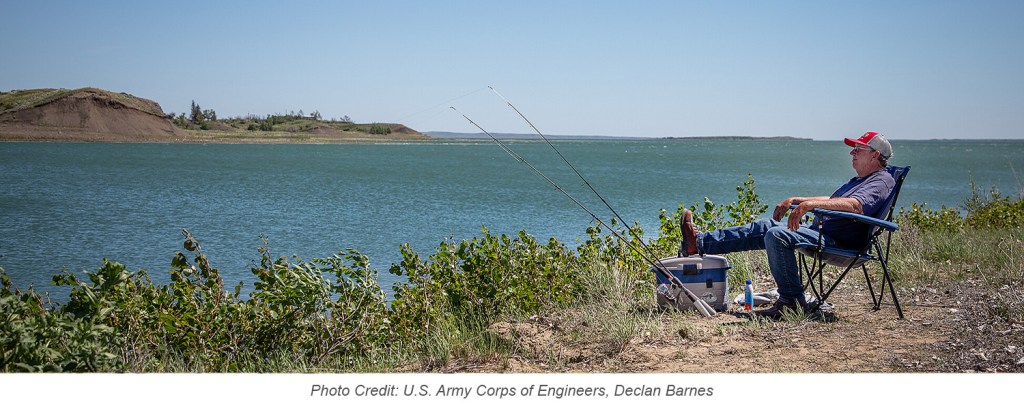
You can also put your angling skills to the test at Missouri National Recreational River. Walleye, sauger, paddlefish, and many more game species are waiting within the two reaches of the Missouri River, 20 miles of the lower Niobrara River, and eight miles of the lower Verdigre Creek. Since most of the park lies on the state boundary between Nebraska and South Dakota, you should be aware of license information and regulations for both states.
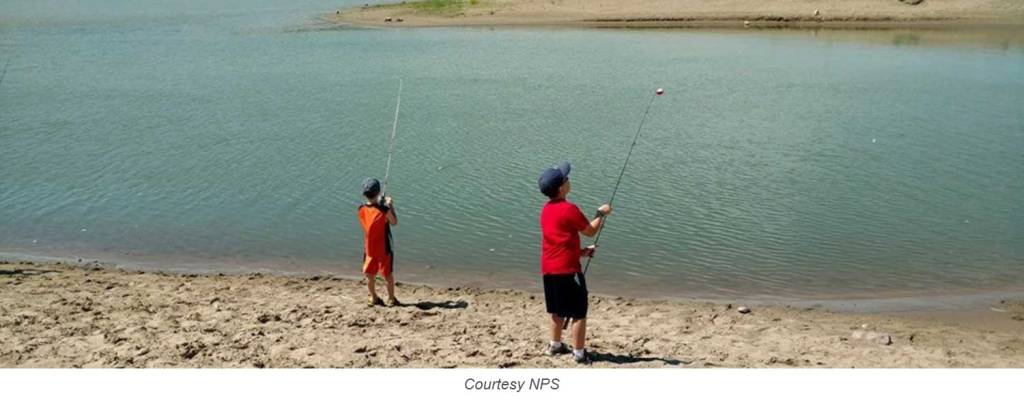
The great fishing opportunities near the Lewis and Clark Visitor Center attract thousands of anglers year-round. The park’s website lists the prime fishing spots and seasons where anglers can find their favorite fish species. Accessible fishing piers are located on the south shore of Lake Yankton and in the Nebraska Tailwaters area. There are separate regulations for residents and non-residents of South Dakota and Nebraska, so be sure to check before you go.
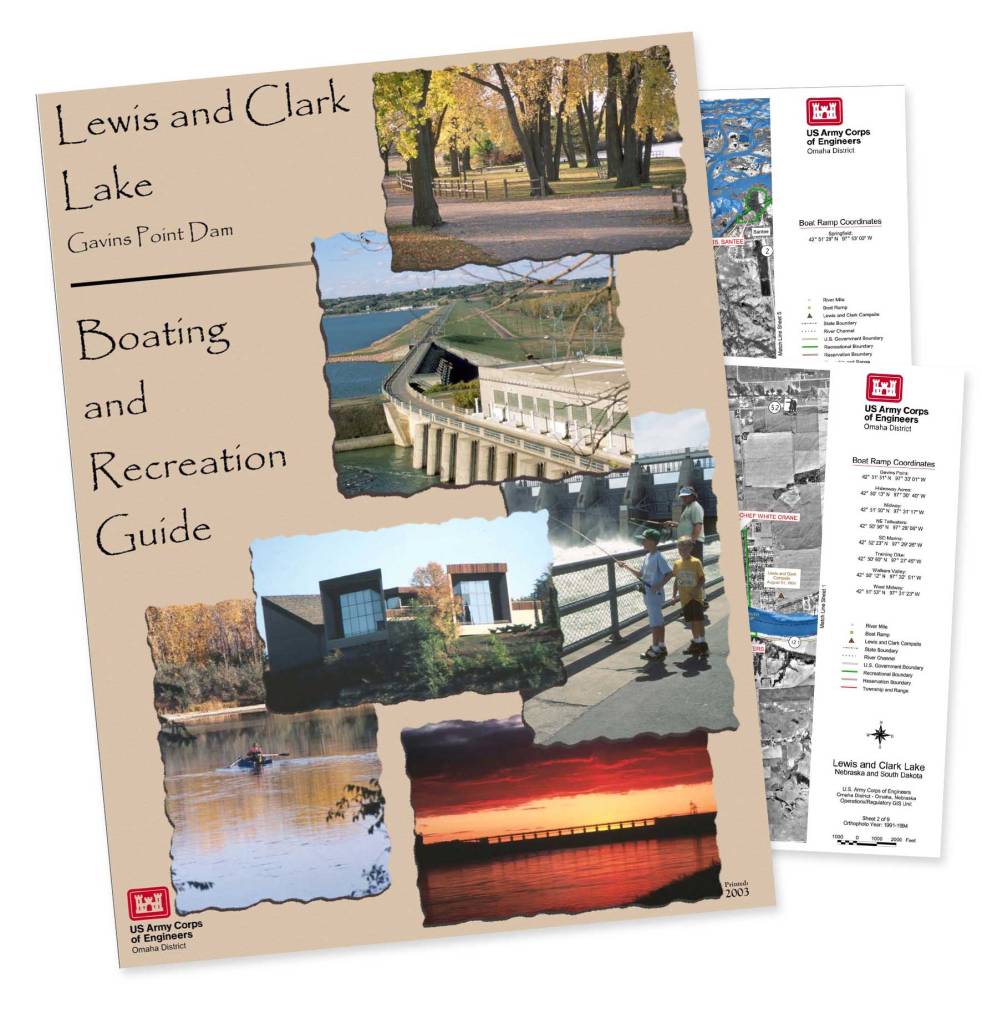
Learn about endangered and threatened species, historical information, or water safety and reservoir navigation with the Lewis and Clark Lake Gavins Point Dam Boating and Recreation Guide. You can pick up a copy at the site, or order it from JPNA’s online store.
There are plenty of locations for both boat-fishing and shoreline fishing within Mississippi National River and Recreation Area. The Mississippi River in the northern suburbs and further north is a nationally recognized smallmouth bass fishery. Walleyes are plentiful below Lock and Dam #1. And floodplain lakes contain trout, panfish, northern pike, and largemouth bass. The park’s website offers more suggested fishing locations.
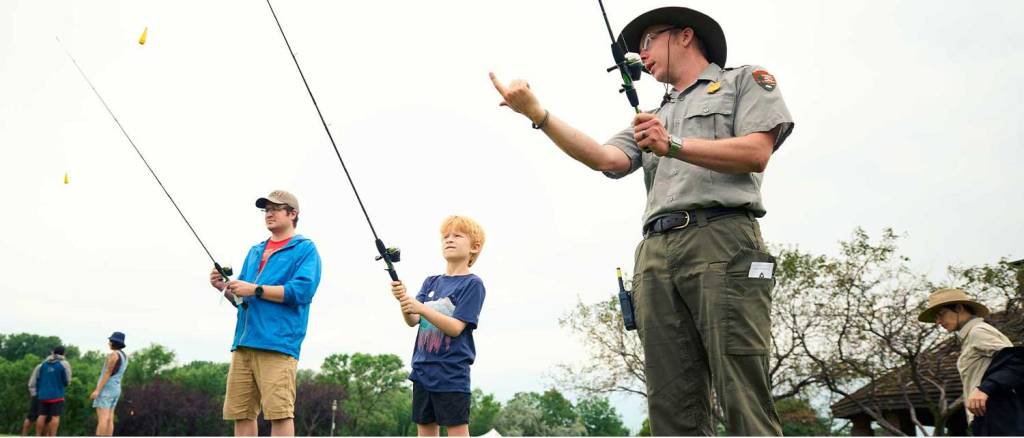
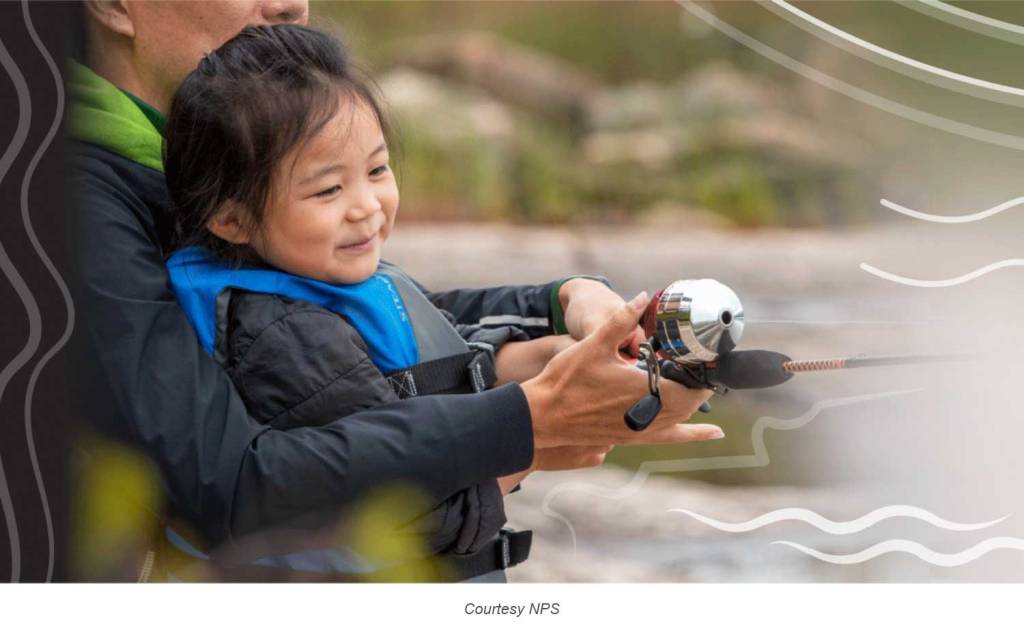
To get kids involved, park rangers hold fishing clinics at certain times of the year. Younger anglers who complete the clinic can earn a Junior Ranger Angler Badge as well as their own fishing kit.
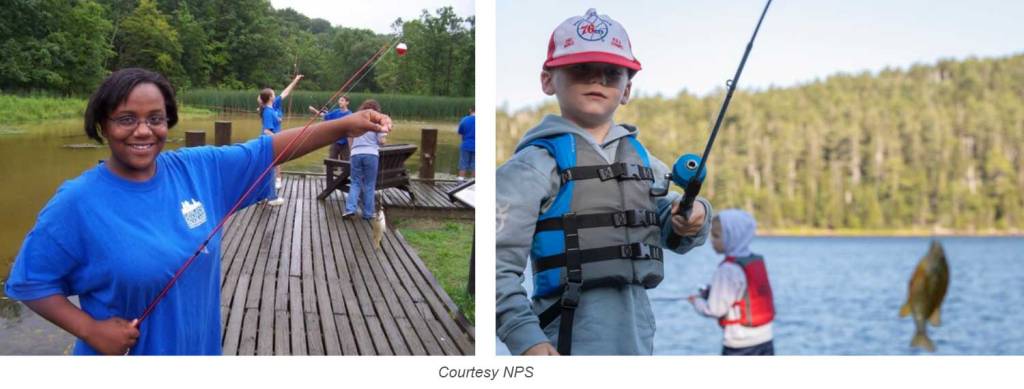
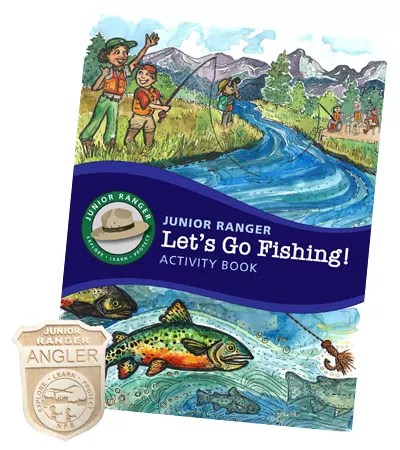
Speaking of kids, the NPS Junior Ranger Angler program is a perfect way to get youngsters interested in the sport. Many national park sites that permit fishing offer the program’s special activity booklet as well as Junior Ranger Angler badges. You can find participating parks on the National Park Service Fish & Fishing website.
 JNPA Blog