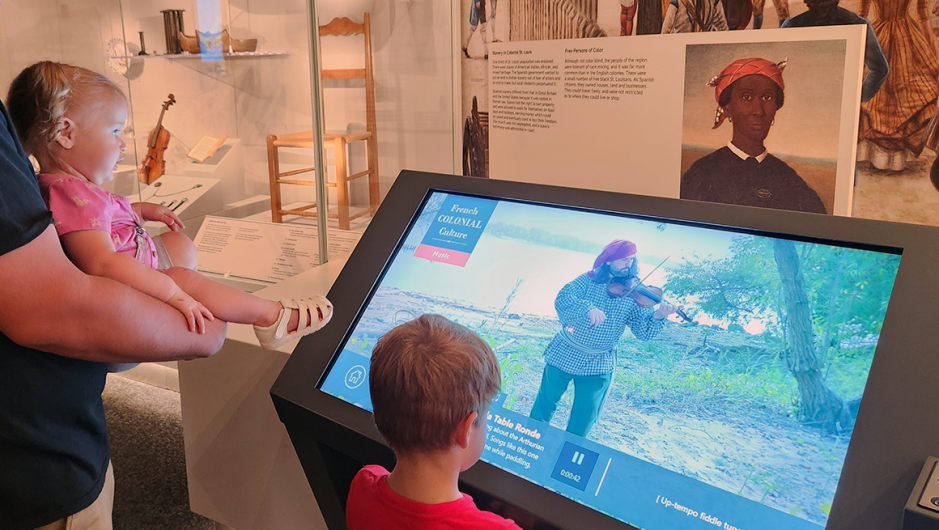
It’s Never Too Early to Start Making Memories at Historic Sites and Museums

It’s the weekend, “Baby Shark” is permanently burned into your brain, you NEED to get out of the house, and you’ve been to every playground in your town umpteen-million times. If you are the parent of kids under the age of five, this scenario may sound painfully familiar. But what if we told you that there was somewhere fun that you can take your small children that you BOTH will enjoy?  Why not try a museum or historic site in the National Park System!
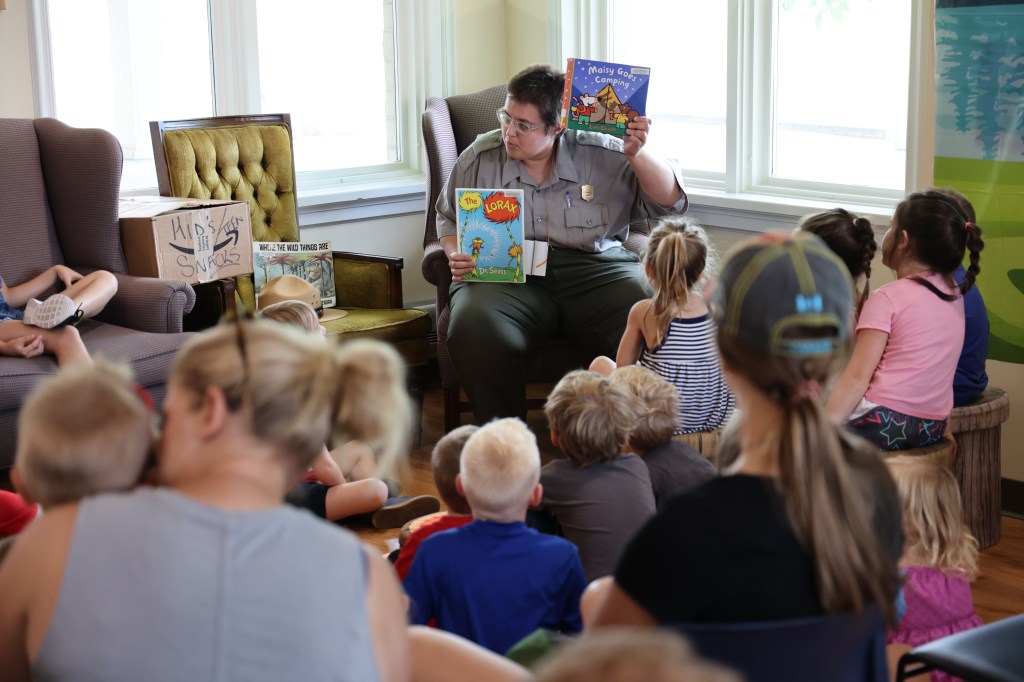
Reading with a Ranger from Ste. Genevieve National Historical Park. Credit: NPS

The mission of the National Park Service is “to preserve the natural and cultural resources of the National Park System for the enjoyment, education, and inspiration of current and future generations,” and they take that mission very seriously. This means that all sites within the National Park System do their best to be a welcoming place for all ages. Not only can your family enjoy the wonders of natural parks, but museums and historic sites will also happily welcome you and your little ones.

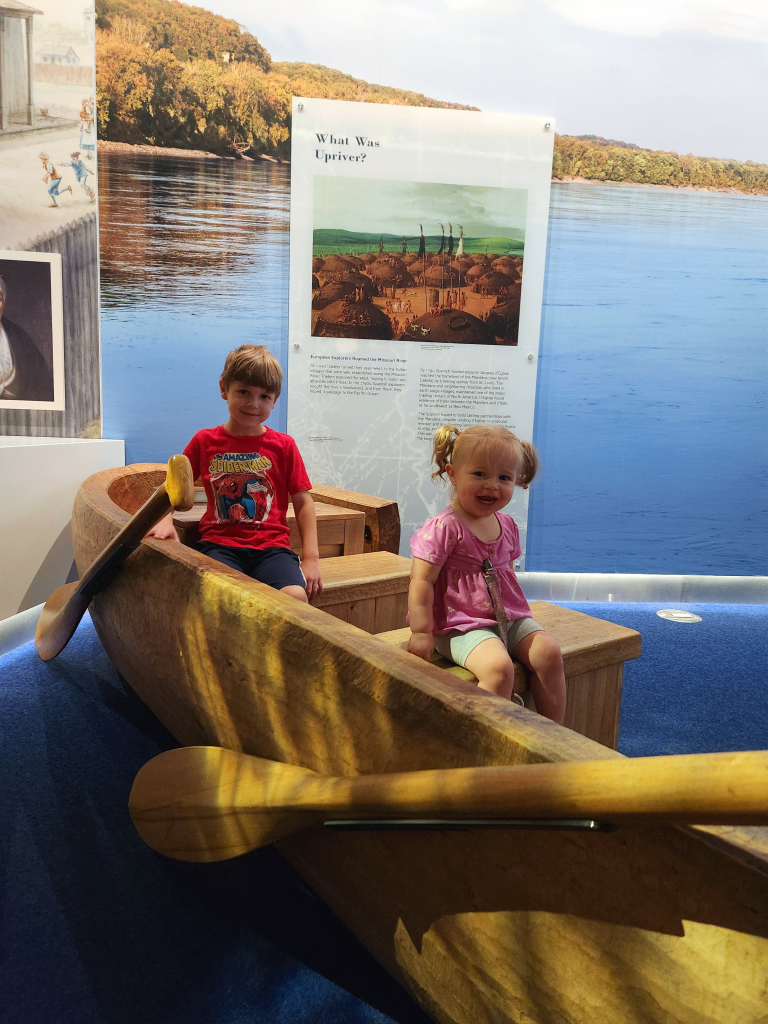
Children participate in boat building activity behind the Jean Baptiste Valle House at Ste. Genevieve National Historical Park. Credit: NPS

Before visiting a national park site, check out its website. Every park’s website has a “Kids and Youth” section, and many include specific activities for toddlers. Many people are aware of the NPS Junior Ranger Program, which is typically geared towards children over the age of five, but some parks have recently adapted their Junior Ranger booklets to include activities for younger children. For example, Ulysses S. Grant National Historic Site includes a picture scavenger hunt that leads children to various places around the historic home.

Excerpt from the Ulysses S. Grant National Historic Site Junior Ranger booklet. Credit: NPS

Some sites have interactive exhibits that are perfect for toddlers and preschoolers. The museum at Gateway Arch National Park features touchable exhibits like a beaver pelt, a replica pirogue kids can sit in, and interactive touchscreens with educational games. They even have a scale map of Lewis and Clark’s expedition route on the floor that kids can stomp on!
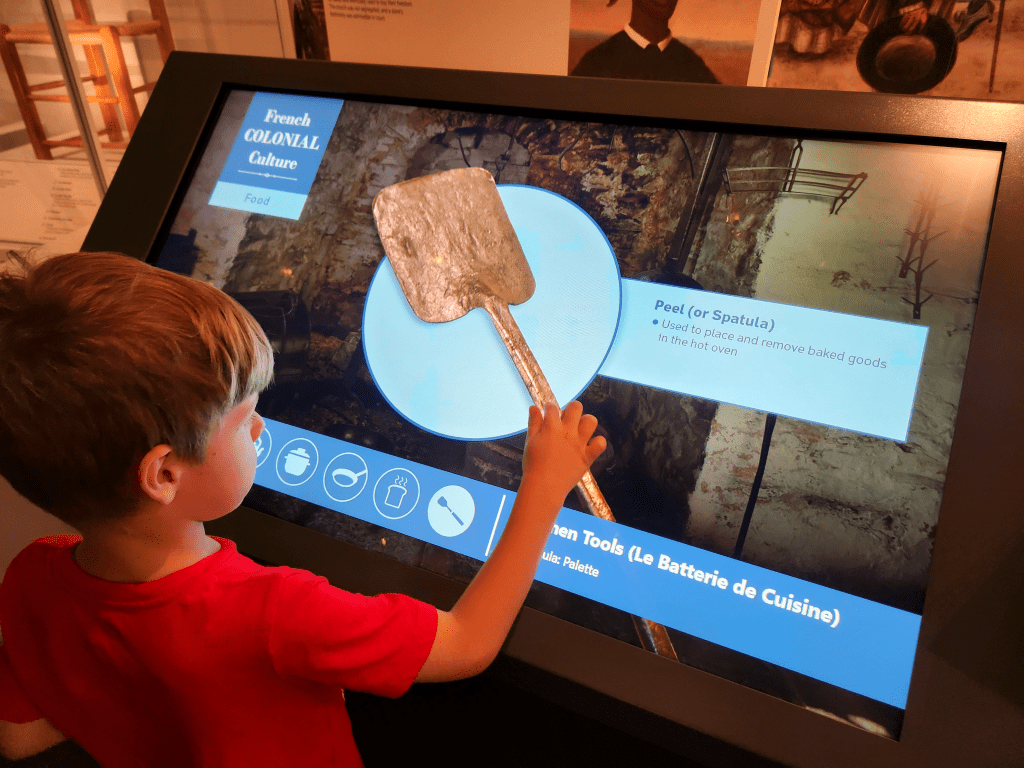
Young children can use interactive touchscreens to learn about French colonial cooking.

Make sure you check out a park’s calendar of events and keep a look out for programs targeted at families with small children. Museums and historic sites often have programs such as puppet shows, touch tables, or reading with a ranger. Many special events also have activities for the whole family, such as the annual NPS Birthday Bash at Ste. Genevieve National Historical Park.

A puppet show at Gateway Arch National Park. Credit: NPS / D. Reissing

Here are a few tips for your visit:

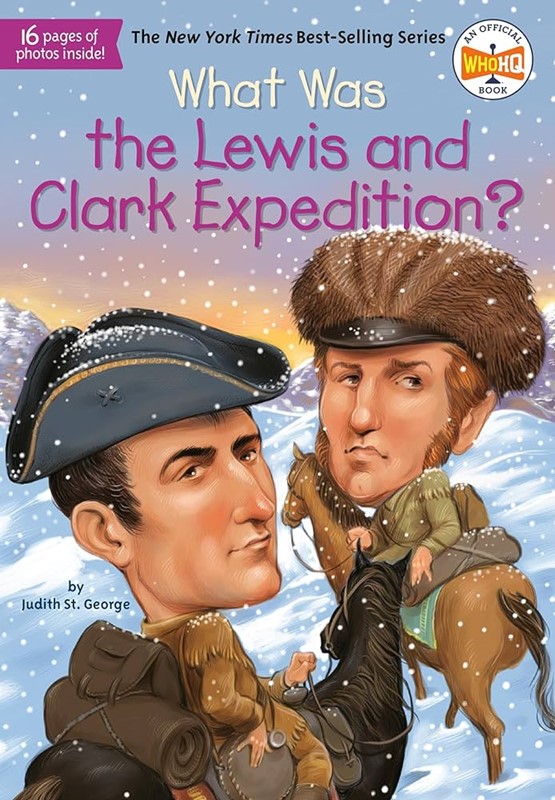
  • Try to read a book or watch a video that ties into the theme of the site before you visit.  We sell kids’ books for a number of partner parks in our online store. Get them excited!
  • SNACKS. Make sure your children eat well before your visit and keep a few extra snacks on hand in your car.
  • Try to burn off some energy before your visit. Many sites have walking trails or some sort of greenspace nearby. Let your kids stretch those little legs and get their wiggles out!
There is plenty of space to run on the grounds of Gateway Arch National Park.
  • Bring a stroller or carrier. It will help you keep your child from wandering off, and it will help your child to feel safe and comfortable in new situation.
  • Manage your expectations. You are more than likely not going to read every interpretive panel in the museum, and that is ok! Instead of trying to see everything, try to see the site from your child’s perspective. What can they see from their eye level? What draws their attention? You’d be surprised what small things a child will notice that most adults overlook.
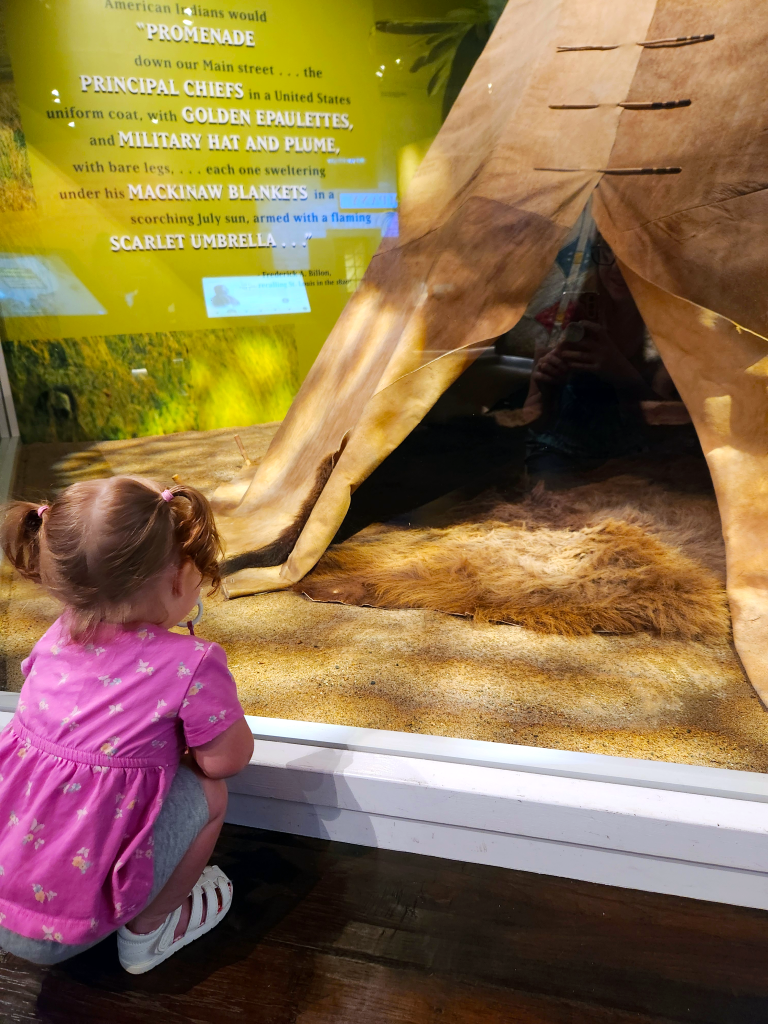
Toddlers are at perfect eye-level to see inside this teepee exhibit.
  • Go early when it is less crowded. It will be easier for you to relax, and there will be more opportunities to speak with park staff. Which brings me to my next point…
  • Talk to a ranger! Park rangers are excellent and engaging storytellers, and they know the site better than anyone. They will be able to point you toward exhibits and activities that are most likely to spark your child’s interest.
  • It can also be fun to let your children lead. Hold their hand and see where their curiosity takes them. If they are old enough to speak, ask them about what they see.
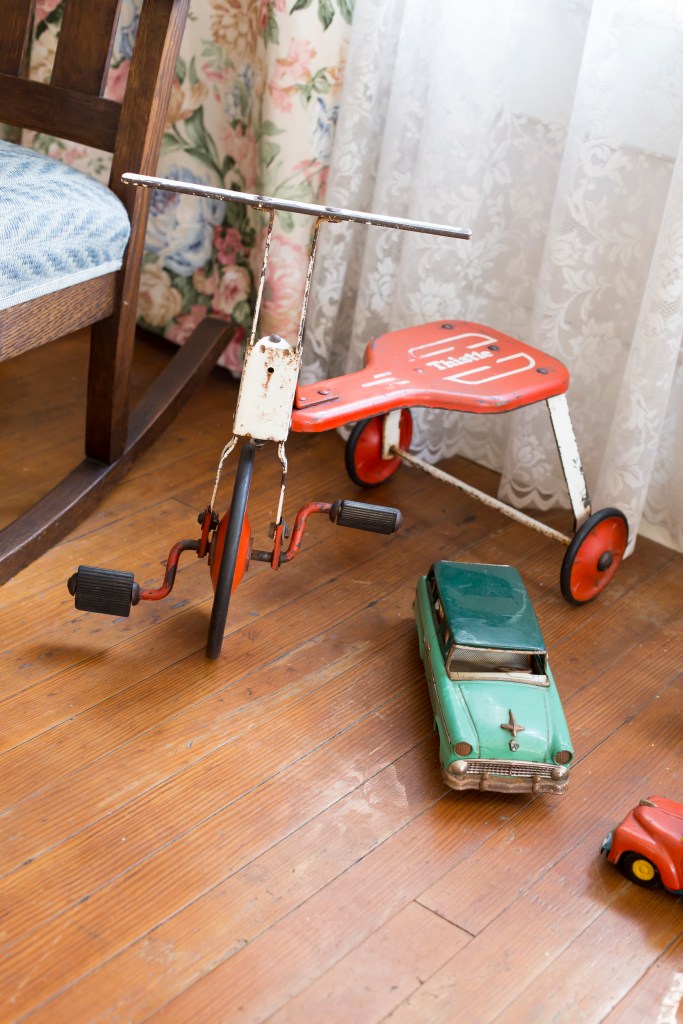
  • Point out the kids in the stories. Show them Bill Clinton’s childhood bedroom and toys at President William Jefferson Clinton Birthplace Home National Historic Site or talk to them about how the Little Rock Nine were just kids when they bravely became the first African American students to attend Central High School.
Members of the Little Rock Nine are escorted by the National Guard.
  • Let them ask questions! Toddlers LOVE to ask what seems like millions of questions a day. Let them ask about anything and everything that strikes their fancy and make it a game to find the answers together!
  • If you need to leave, leave. Do not feel like you have to see every exhibit. It is better to leave on a happy but unfinished note than to leave on a bad one.

No matter which site you choose to visit, we are sure you will make many happy memories with your little ones.

A toddler gazes up at an interpretive panel.

Whetting Your Child’s Appetite for Learning

Do you know a child who can spend hours looking at every plant, insect, and set of tracks they come across outside? What about a budding history buff who wants to know every detail of historical events? Are you a grown-up whose inner child never quite let go of your dream of being a paleontologist or train engineer or marine biologist? Whatever your child’s (or your inner child’s) interest, there is a National Park Service Junior Ranger program for you!

Credit: NPS

The NPS Junior Ranger program is an activity-based program aimed at 5- to 13-year olds that takes place in almost all national parks.  Children typically complete a series of activities during a park visit, share their answers with a park ranger, then receive an offical Junior Ranger patch and certificate. 

This very popular program got its start more than 90 years ago, beginning  as the “Yosemite Junior Nature School” in 1930. The school was held for six weeks every summer from 1930-1954 (with the exception of the years during WWII). Back then, earning an award (the equivalent of becoming a Junior Ranger today), was quite difficult! A child had to attend at least five meetings of the Junior Nature School as well as complete 25 out of the following 26 tests:

  1. Point out and give characteristics of ten trees.
  2. Point out and give characteristics of five shrubs.
  3. Demonstrate the ability to read tree history by means of tree rings.
  4. Tell the principal values of forests.
  5. Identify five birds by means of songs alone.
  6. Point out fifteen different kinds of birds.
  7. Name ten resident birds of Yosemite Valley, five predators, two waders, three wood borers, and fifteen perchers.
  8. Identify the nests of five birds.
  9. Point out the four principal minerals found in granite.
  10. Tell briefly the story of the origin of the Yosemite Valley.
  11. Illustrate the difference between stream-worn and glacial-worn boulders.
  12. Name and identify twenty-five different flowers.
  13. Know the principal parts of the flower.
  14. Explain the function of flowers in plant reproduction.
  15. Name and identify ten Yosemite mammals.
  16. Name and identify five Yosemite reptiles.
  17. Outline the life history of the bear.
  18. Tell four ways of identifying old Indian village sites.
  19. Tell how obsidian arrow points are made.
  20. Tell how the Yosemite [Native Americans] made acorn bread.
  21. Point out fifteen vegetable, ten animal, and three insect sources of food used by the Indians.
  22. Point out forty points of interest around Yosemite Valley.
  23. Identify four kinds of trout.
  24. Tell the methods of fish culture used in the hatchery.
  25. Demonstrate the ability to ‘read the trail-side like a book.’
  26. Identify the following: ant lion, termite, swallow-tail butterfly, grasshopper, wasp, dragon-fly, moth, and ladybird beetle.
Yosemite Junior Nature School, ca. 1935. Credit: NPS

In 1955, the Junior Nature School officially transitioned to the Junior Ranger program, which was much closer to how the program runs today. Now, children (and adults!) can earn a Junior Ranger badge and certificate at over 400 National Park sites across the country by completing activities from that park’s official Junior Ranger booklet. Additionally, there are many national themed booklets available which can be completed at home or at a nearby national park. Some of these themed Junior Ranger programs include Wildland Firefighter, Archeologist, and Underground Railroad Explorer.

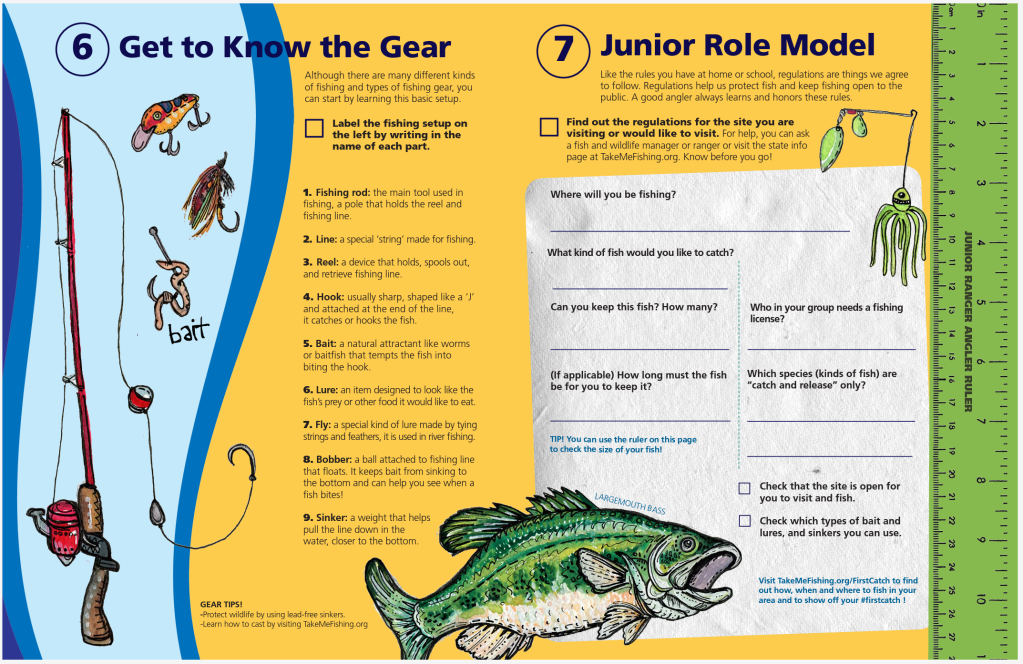
An excerpt from the “Junior Ranger- Let’s Go Fishing!” booklet

Each of JNPA’s partner parks participate in the Junior Ranger program, including:

Also, for a limited time, visitors to Gateway Arch National Park will have the opportunity to earn the “Riverboat Explorer” Junior Ranger badge. This program will be offered daily on riverboat cruises at 1:30pm and 3:00pm now through Labor Day.

Credit: NPS

The next time you visit a national park, make sure to check out their Junior Ranger Program. It is completely free, and you never know what new things you may learn! If you want to add to the experience, you can also purchase this Junior Ranger Hat and Junior Ranger Vest to proudly display all of your badges!