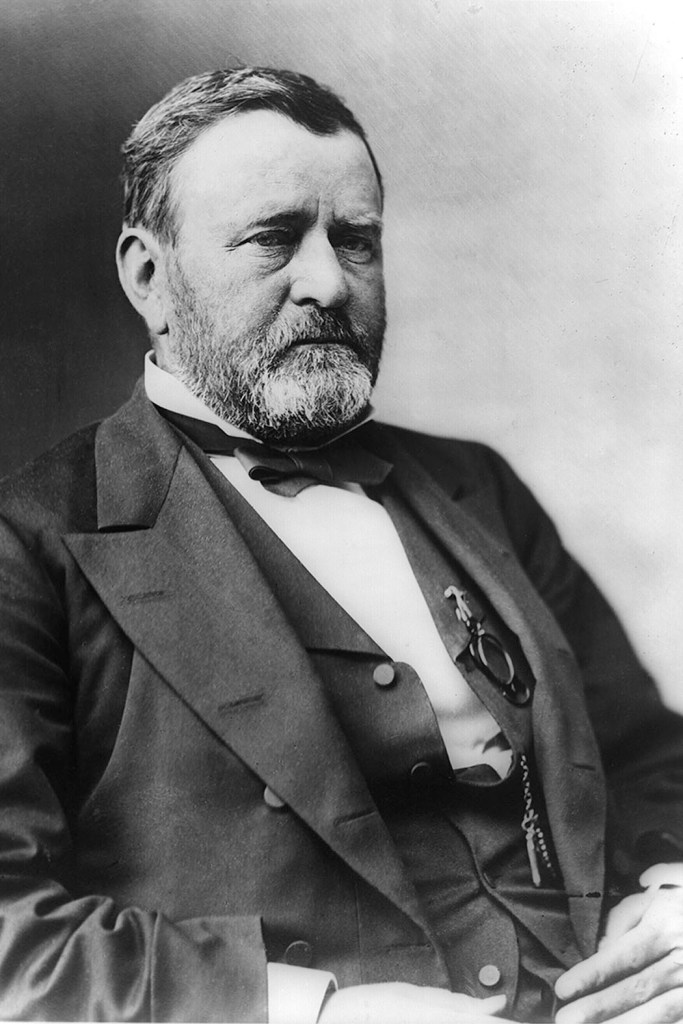
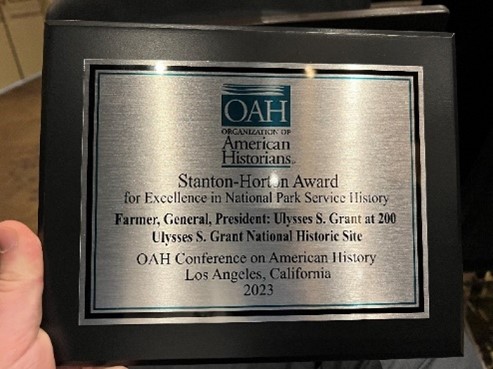
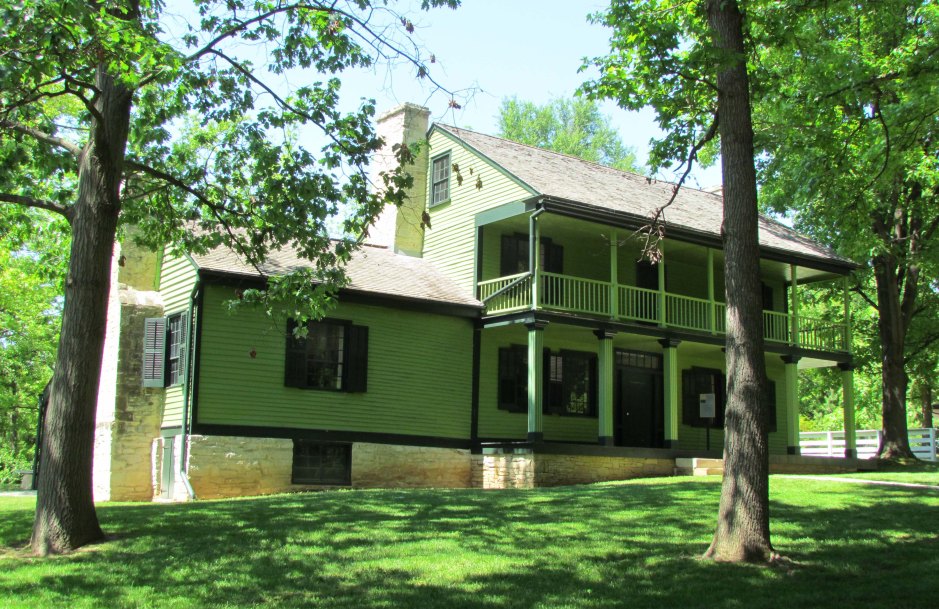
We congratulate our friends at Ulysses S. Grant National Historic Site for their recent award from the Organization of American Historians. At the OAH conference in California last month, the park was recognized for Excellence in National Park Service History because of the many public events and programs honoring last year’s 200th anniversary of Ulysses Grant’s birth.
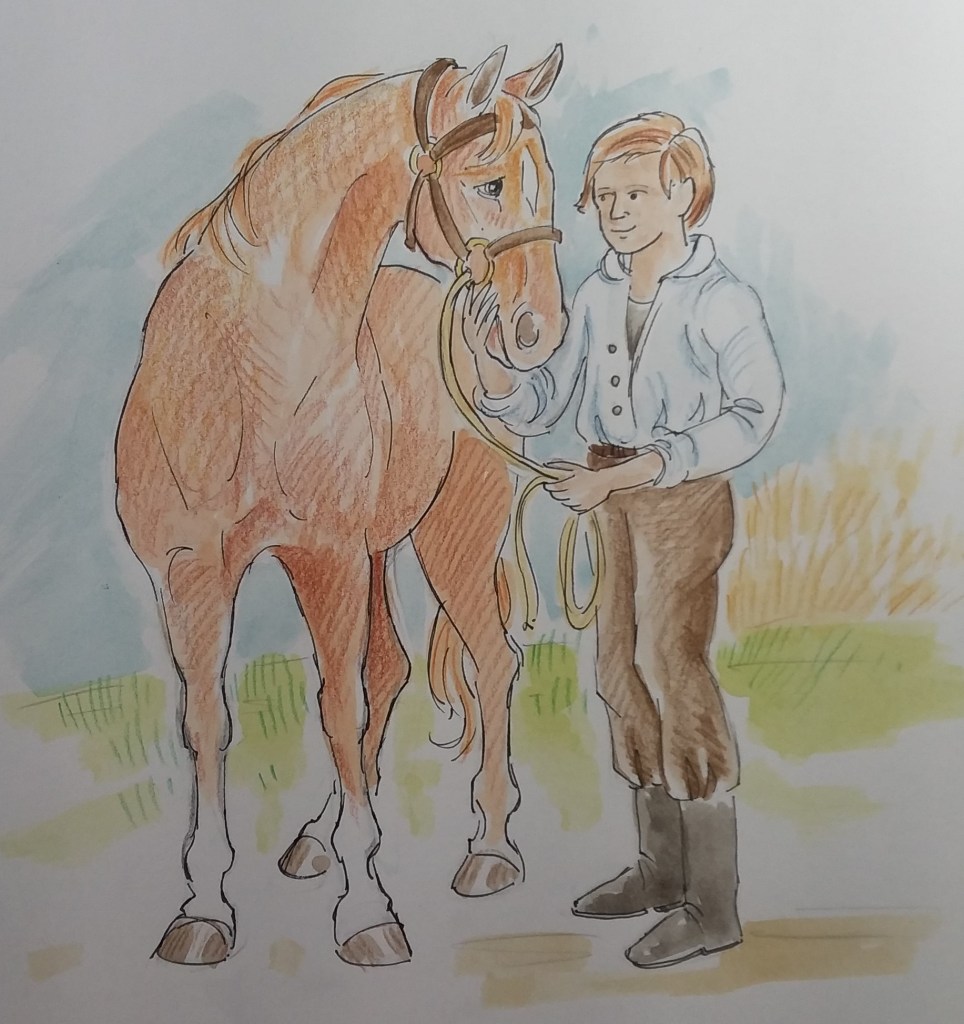
Park staff members used the occasion of the Grant Bicentennial year as a “hook” to connect park visitors to many aspects of the former president’s life, both public and private. Rangers offered more than 100 in-person education programs, six special events (one with horses!), 26 off-site programs, and 16 virtual programs in 2022. They also created online exhibits, videos, and articles on the park’s website to reach audiences that couldn’t attend on-site programs.
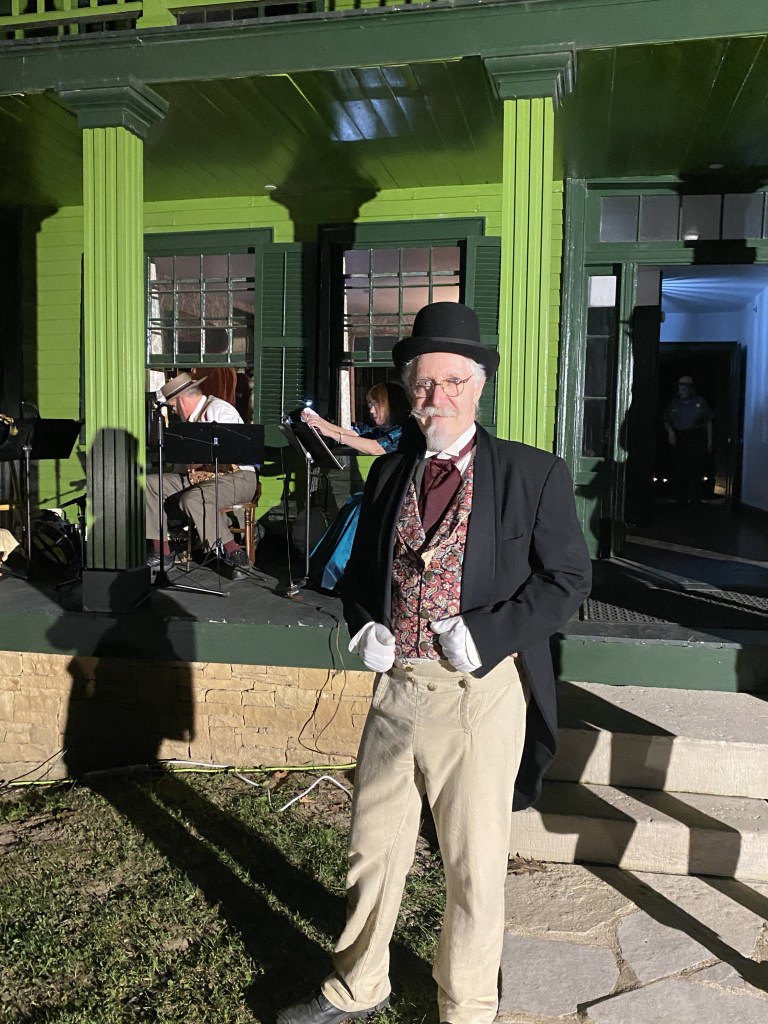
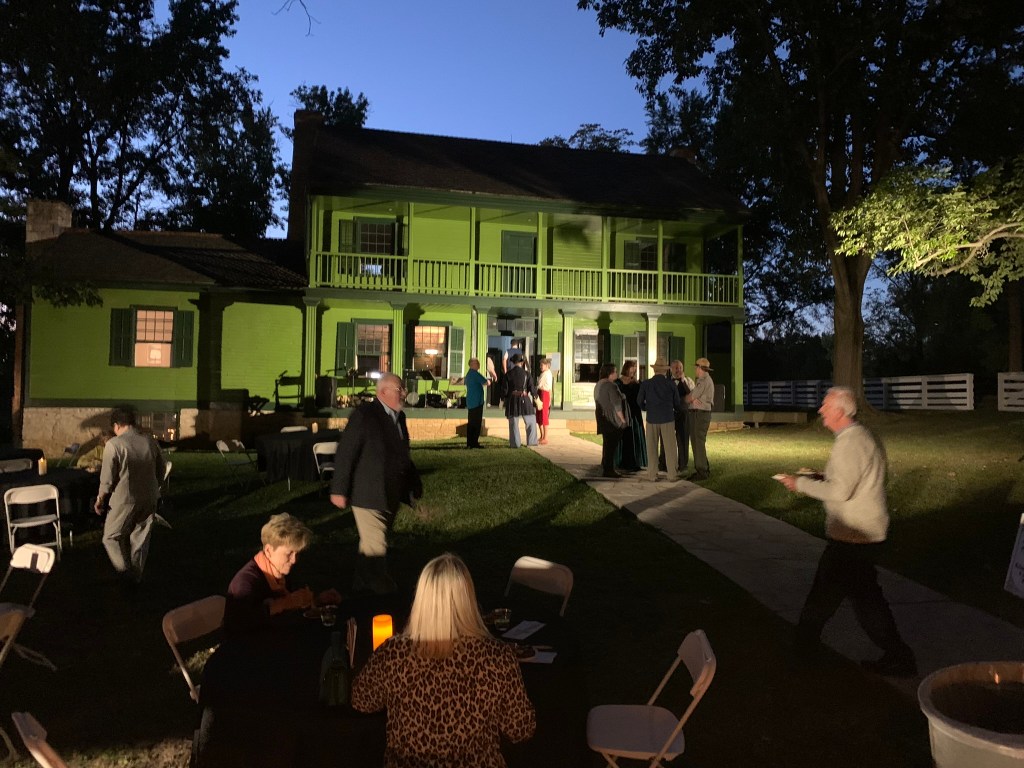
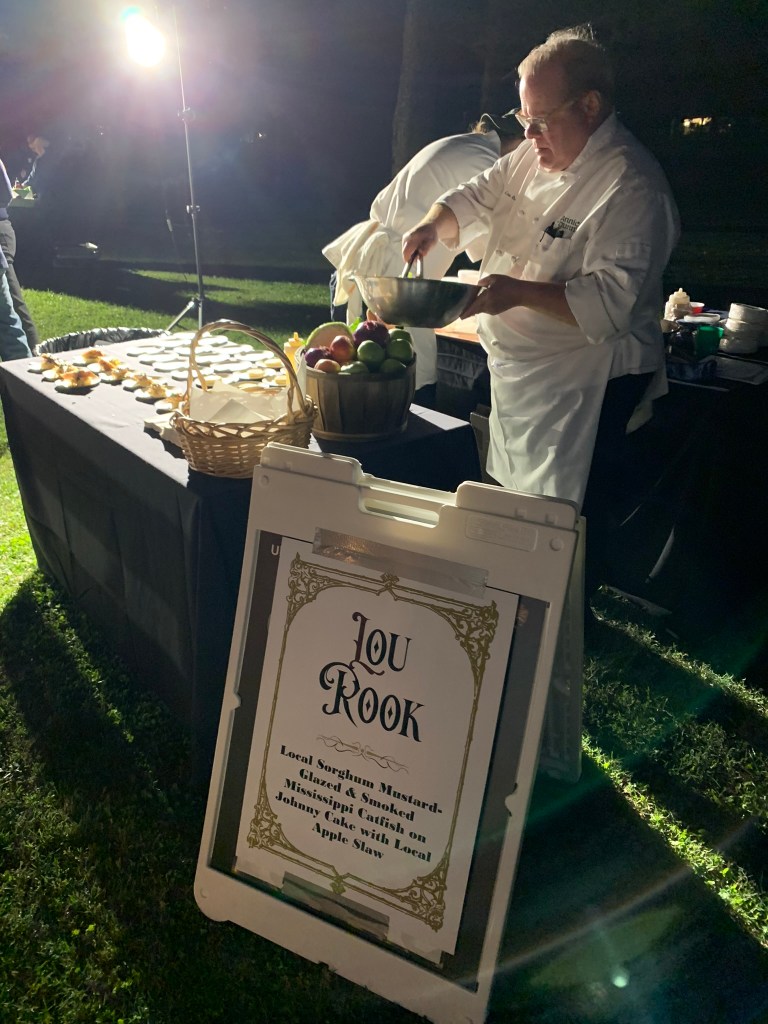
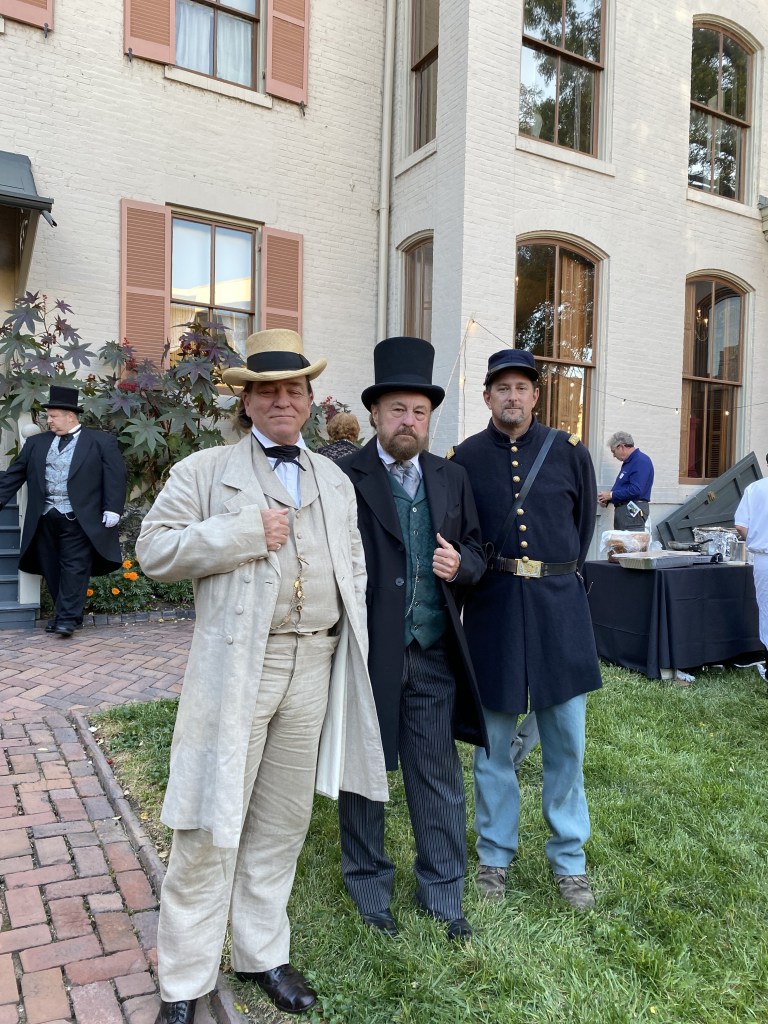
Among the Grant-related events held at the park was an extravagant dinner recognizing benefit the Grant bicentennial, held in partnership with the Campbell House Museum, where Grant sometimes dined. The September event featured local chefs who offered historically inspired recipes from the 1800s. More than 400 guests attended the occasion, which JNPA was proud to host.
For a more complete list of the programs and events that earned the park its recent award, click here.
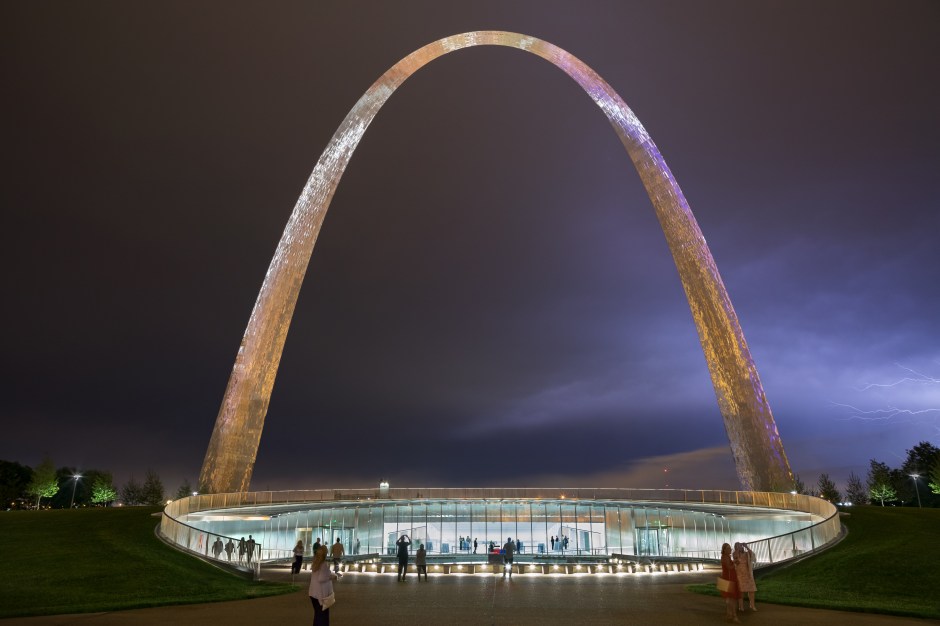
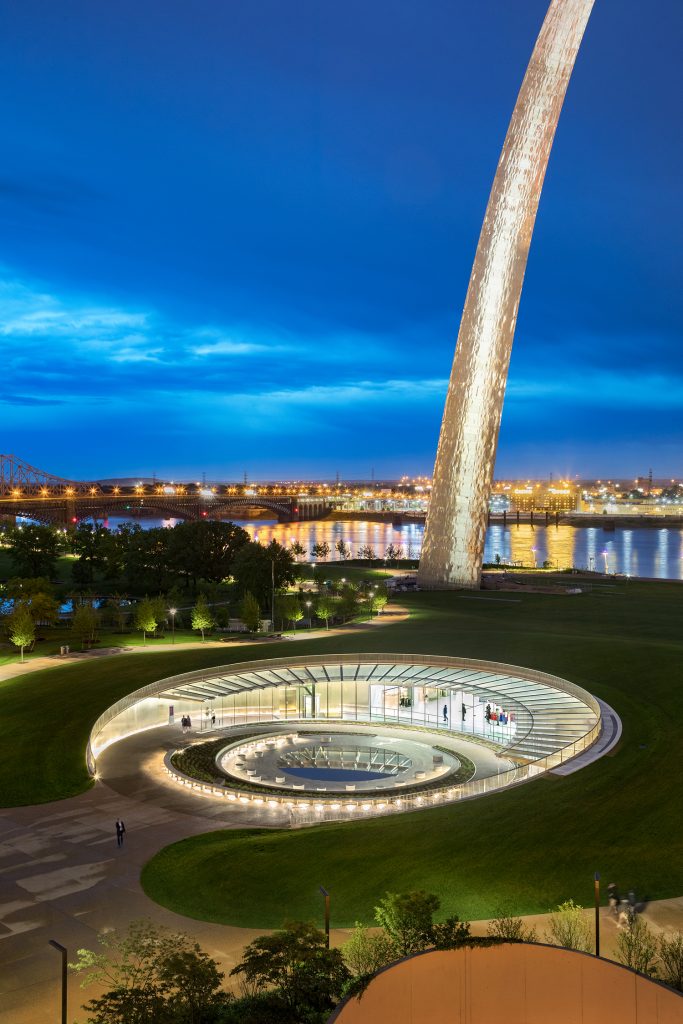
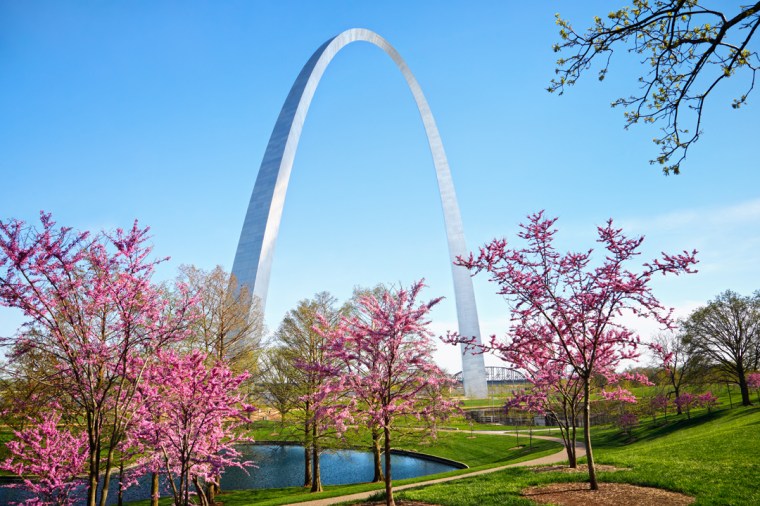
When you visit Gateway Arch National Park, you’re no doubt wowed by seeing the height and majesty of America’s tallest monument. And you probably also can’t wait to take a tram ride to the top. But there are plenty of cool things to experience down below on the ground level of the visitor center, like the Museum at the Gateway Arch. That’s where you can learn what America’s westward expansion was like through the eyes of explorers and pioneers, Native Americans and enslaved individuals, and women and children. You can also learn the stories of the founding of St. Louis and see unique artifacts and displays that commemorate the pioneering spirit.
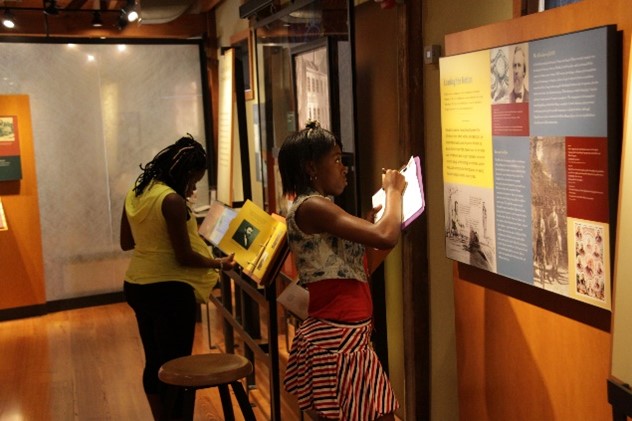
In 2018, the Museum at the Gateway Arch underwent a major renovation. A key factor in this renovation was increased inclusivity in how visitors physically interact with the galleries and with the stories told in the exhibits. The galleries within the museum now tell the city’s history through the eyes of the various cultures involved, encouraging visitors to think about other perspectives.
Credit: Gateway Arch Park Foundation
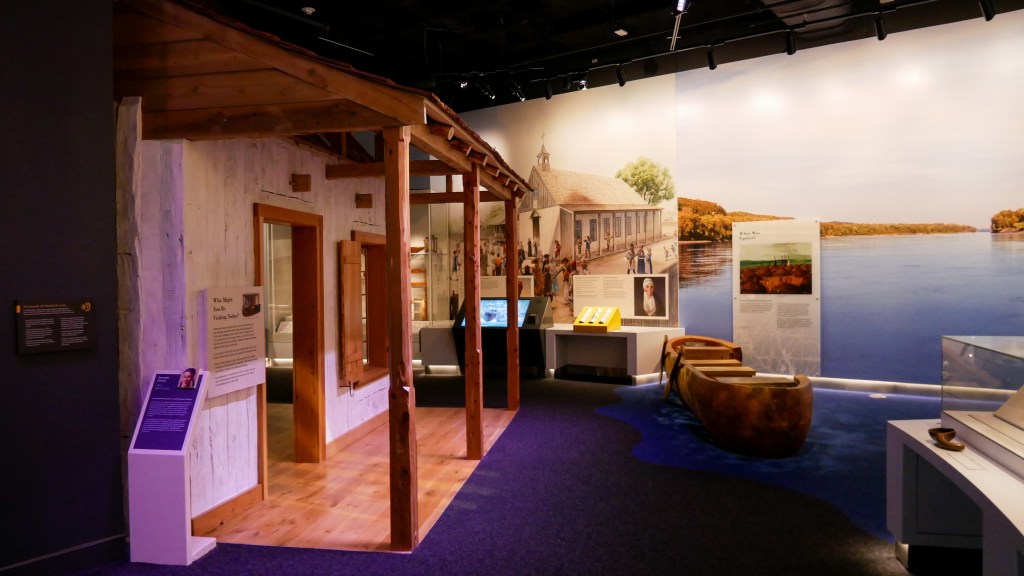
The museum is composed of six interactive galleries that detail more than 200 years of American history. Early St. Louis history will come alive in the Colonial St. Louis gallery as you take in artifacts from the region’s early French colonial inhabitants, including a full-sized vertical log house. You’ll also learn about the Indigenous and Creole cultures of St. Louis before the Louisiana Purchase.
Credit: Gateway Arch Park Foundation
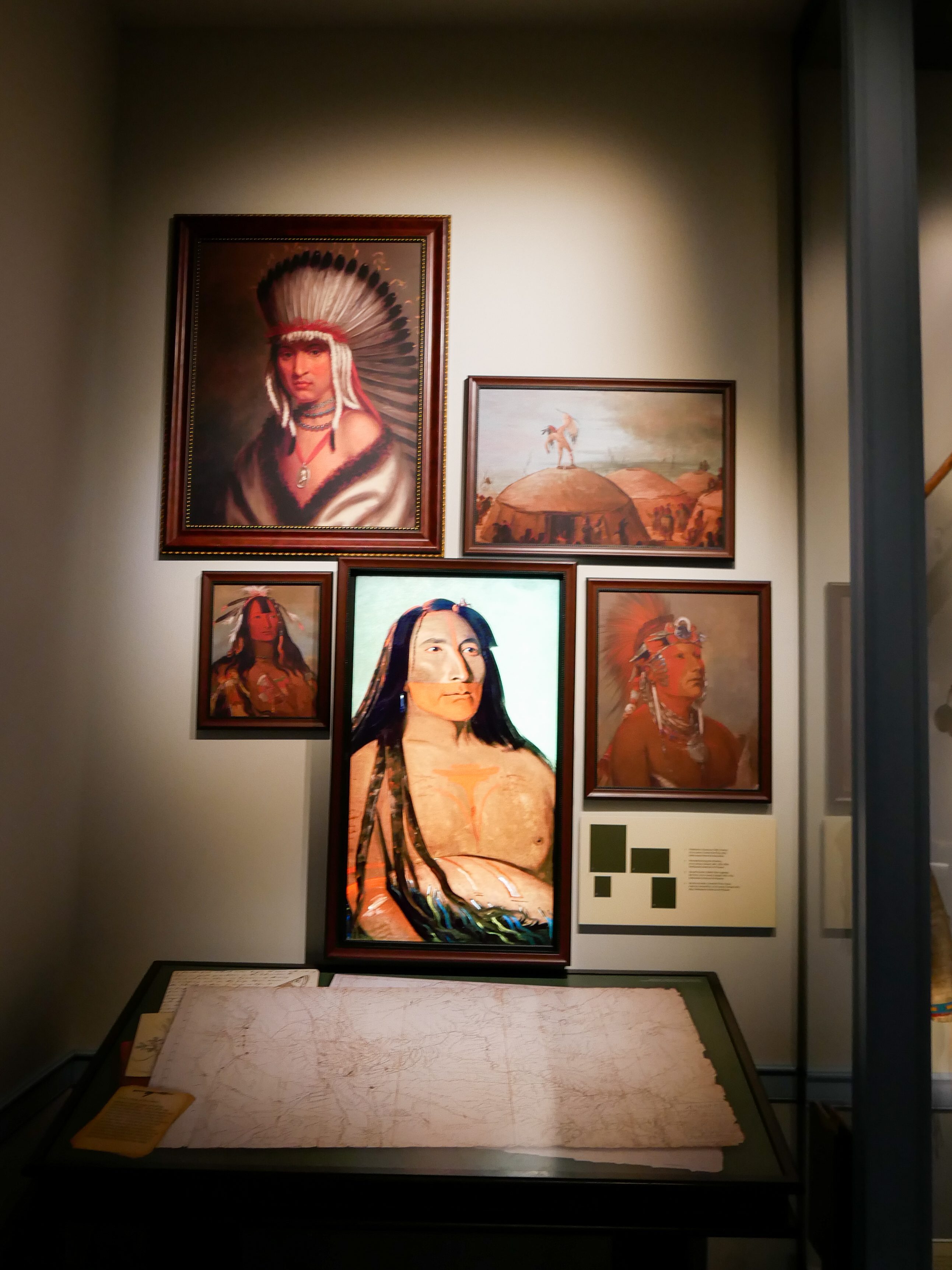
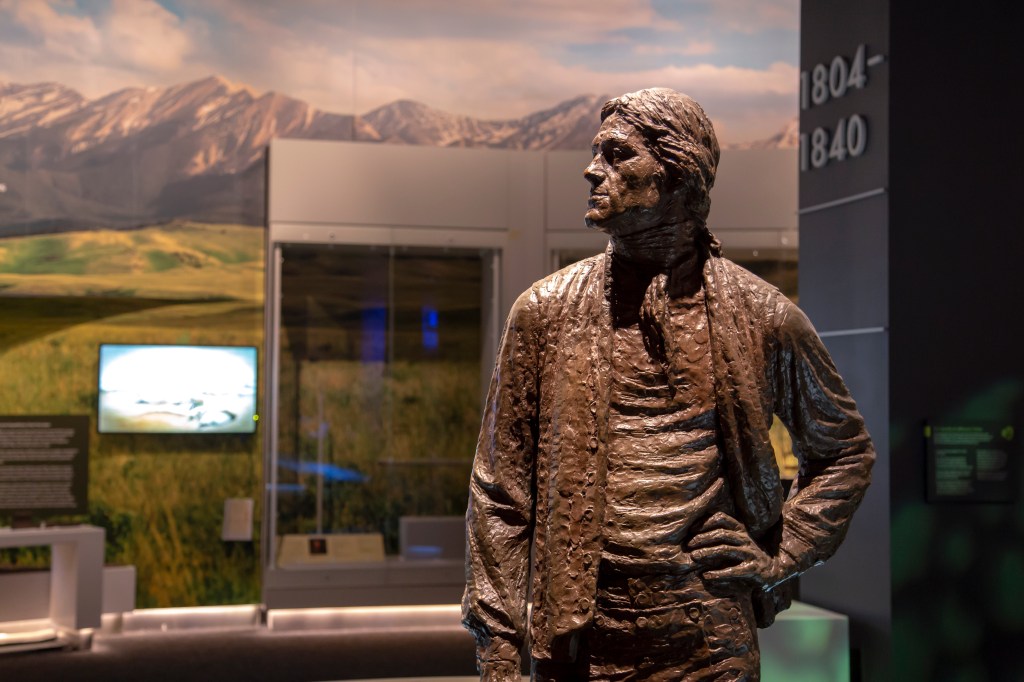
Jefferson’s Vision focuses on the Lewis and Clark expedition, which set the stage for the opening of the American West to settlers from all parts of 19th century society. Examine the discoveries from the explorers’ adventures, see the tools they used, and learn about the ongoing struggle among nations for supremacy in North America.
Credit: Gateway Arch Park Foundation
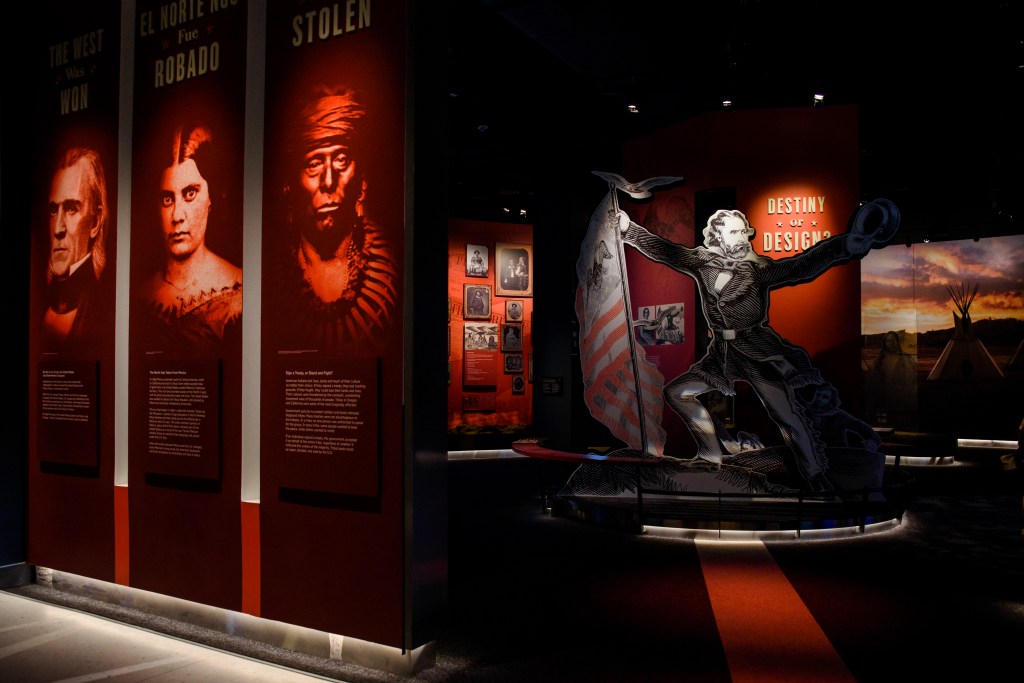
By the mid-1800s, many Americans believed their country had a God-given right to expand its borders throughout the continent. In Manifest Destiny you can examine the clash of cultures as settlers moved west, including the Indigenous inhabitants and the Mexican government.
Credit: Gateway Arch Park Foundation
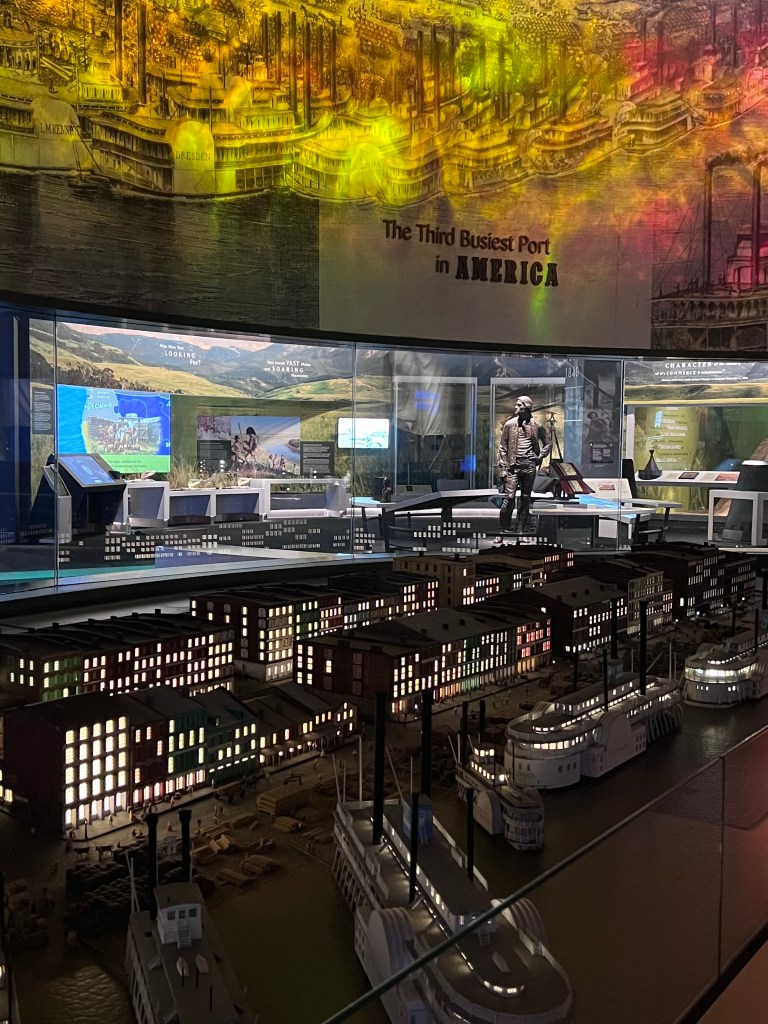
The Riverfront Era gallery traces the evolution of St. Louis as steamboats began to arrive on its riverbanks. By the mid-19th century, the city had truly earned its title as Gateway to the West as the levee bustled with dozens of riverboats carrying goods and people to other parts of the United States. The highlight of this gallery is an intricate scale model of the St. Louis riverfront that changes from day to night before your eyes.
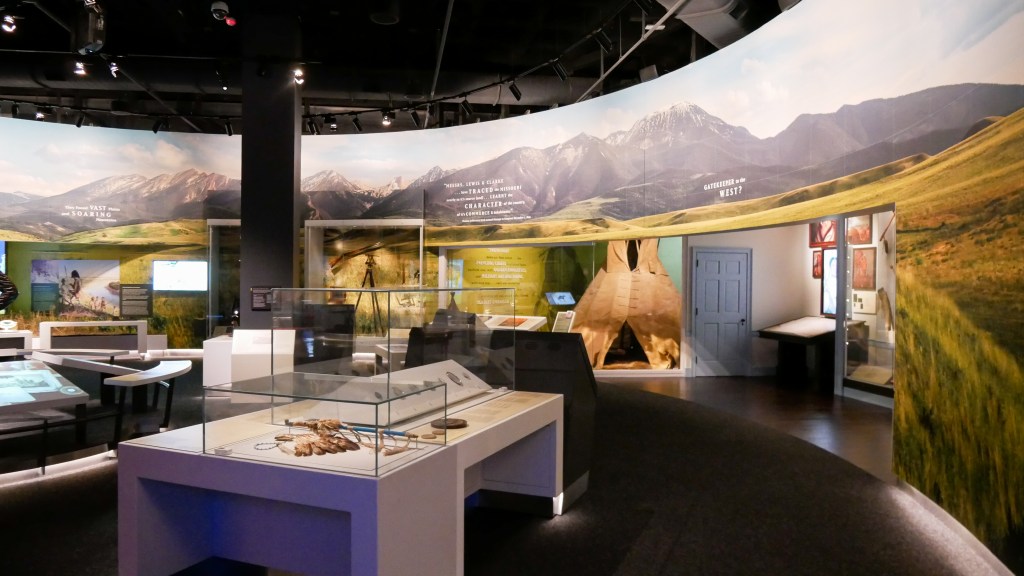
In New Frontiers you can explore what it was like to live in the American West. See an authentic buffalo-hide tipi as you learn about the very different lifestyles of European settlers and Native Americans.
Credit: Gateway Arch Park Foundation
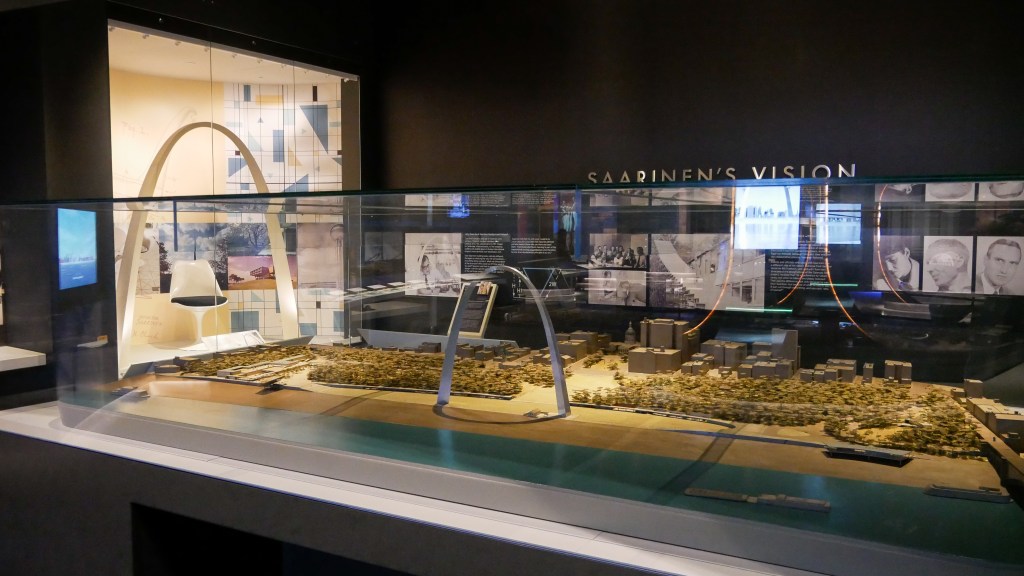
If you’re wowed by the design of the Gateway Arch, you’ll want to spend time in the Building the Dream gallery. There you can examine the various concepts that architects submitted to anchor the new national monument to westward expansion and see the details of Eero Saarinen’s award-winning design. Also discover the innovative builders who constructed the Arch.
Credit: Gateway Arch Park Foundation
The new Arch Museum is only part of park partners’ plans for restoring, maintaining and enhancing the national park. There is also a new entrance to the Arch, improvements to the 90-acre grounds, and new interior amenities like The Arch Store and the Arch Café. Additional renovations have begun at the Old Courthouse and are expected to be completed in the next few years.
Be sure to visit to see all that’s new at the Arch!
Featured Image Credit: Gateway Arch Park Foundation
The two National Park Service sites in St. Louis are filled with exhibits, artifacts, and programs that tell important stories about our nation’s past – from the exploration of the American west to the lives of two U.S. presidents to the struggle for civil rights. The resources at these parks – Ulysses S. Grant National Historic Site and Gateway Arch National Park – are available free to all visitors. But all too often, children from under-served communities aren’t able to take advantage of these experiences.
Now there’s a unique opportunity for middle school students to visit these sites this summer for a full week of specially-designed programs.
Credit: U.S. Grant National Historic Site
The Arch and U. S. Grant are offering free weeklong summer workshops at their sites for middle school students from African American communities. Daily transportation and lunch are included at no cost, as are normally fee-based experiences like the Arch tram ride and a Mississippi riverboat cruise.
The five-day workshops will be offered at both the Arch and at Grant during select weeks from June to August. Educators from both parks will lead the programs. Their aim is to familiarize students with under-told stories of Black Americans in St. Louis and throughout Missouri, including stories of slavery, resistance, and Reconstruction. The participants will learn by discovery instead of direct instruction, with guidance from park staff. Students will select a person or story they want to research, then will present their creative project on their chosen subject at the conclusion of the workshop.
If you are interested, now’s the time to apply! The parks are accepting applications for groups of approximately 15 students (ideally from schools or youth groups) through mid-April. Those interested in applying should contact Julie Northrip, Program Manager of Interpretation and Education at Ulysses S. Grant NHS by emailing julie_northrip@nps.gov or calling 314-842-1867 ext. 223. Please list in order your preference for which week your youth can attend.
June 12-16
June 19-23
June 26-30
July 24-28
July 31-Aug 4
JNPA is proud to support this unique program by underwriting the cost of the student lunches.
Throughout history, women have been instrumental in every facet of human endeavor. Whether they have been renowned trailblazers or unsung heroines working behind the scenes, women have helped guide the course of American history and they continue to shape our future.
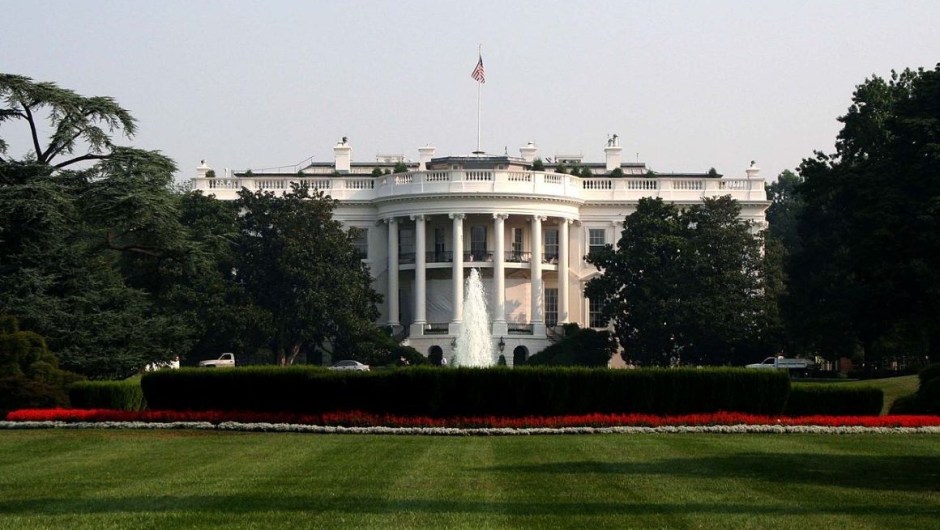
That’s why JNPA is commemorating Women’s History Month. In the words of a White House proclamation, the month of March is an opportunity to “celebrate the countless women who have fought tirelessly and courageously for equality, justice, and opportunity in our Nation. We also reaffirm our commitment to advancing rights and opportunities for women and girls in the United States and around the world.”
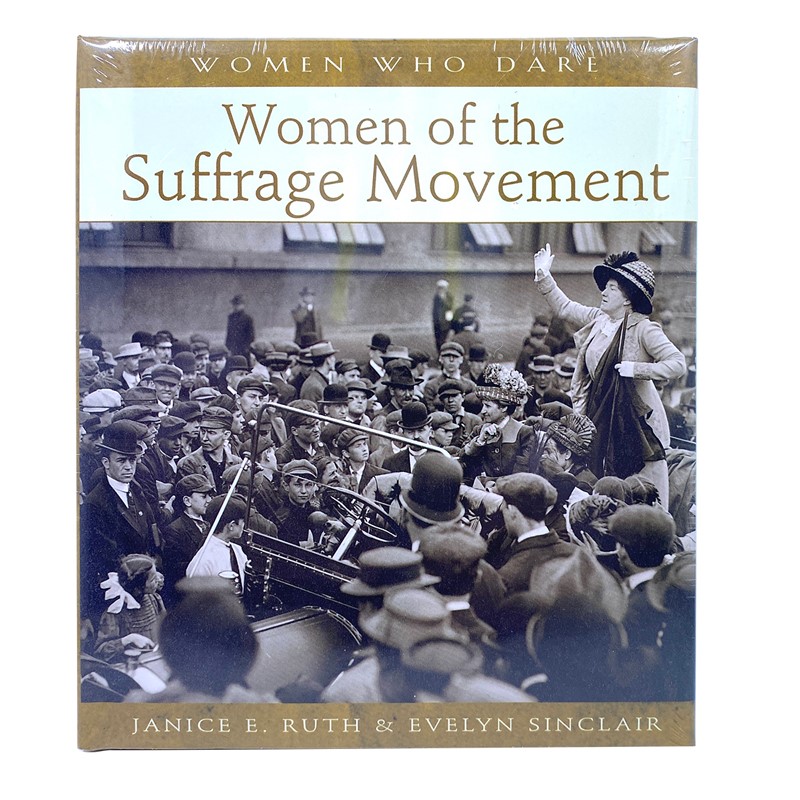
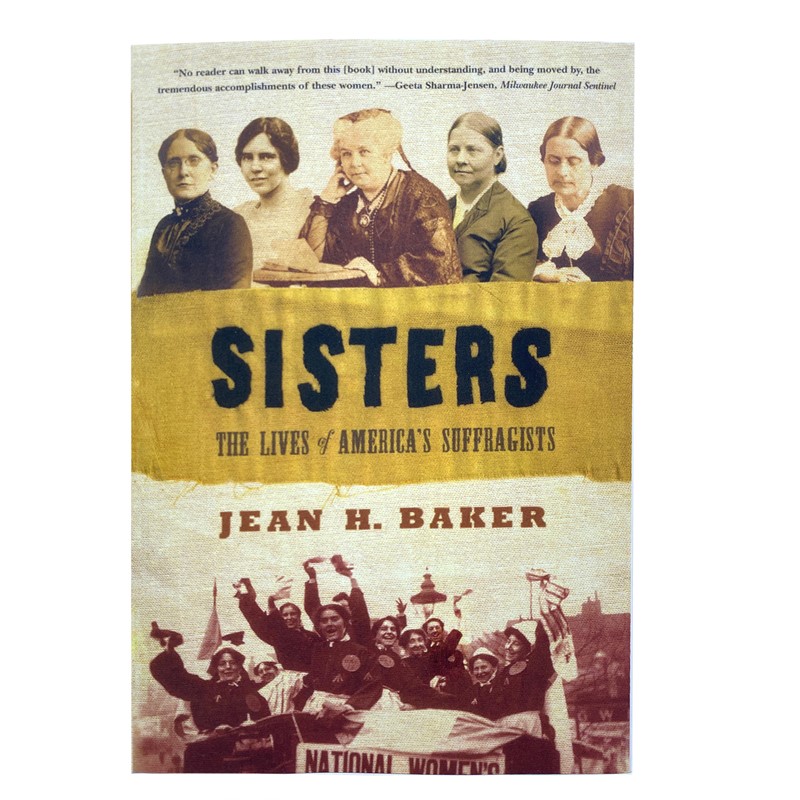
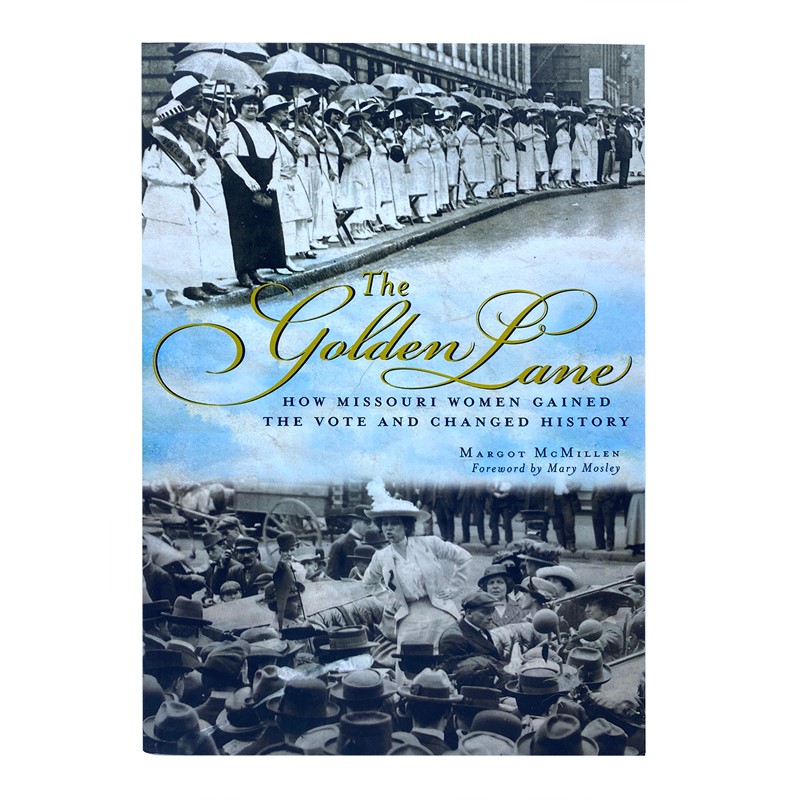
In honor of Women’s History Month, JNPA is proud to offer a number of books that shine a light on examples of women’s contributions to our national heritage, in both civil rights and voting rights:
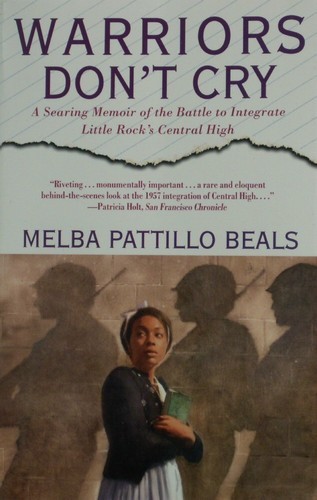
Warriors Don’t Cry is a first-person account of Melba Pattillo Beals, one of nine African American teenagers who helped integrate Little Rock’s Central High School in the 1950s. This searing account of her junior year at Central High highlights Beals’ bravery in the face of racist warnings, attacks, and ultimately, death threats.
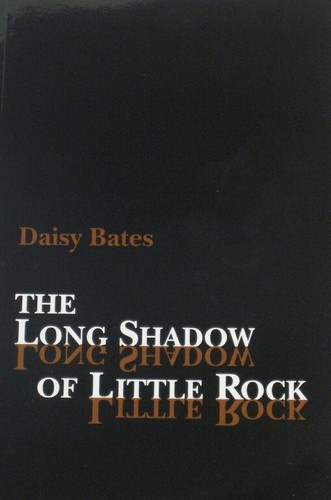
The Long Shadow of Little Rock is a riveting memoir by Daisy Bates, one of the Little Rock Nine. As a later civil rights activist, journalist, and lecturer, Bates provides a riveting and very personal account of America’s fraught school desegregation movement.
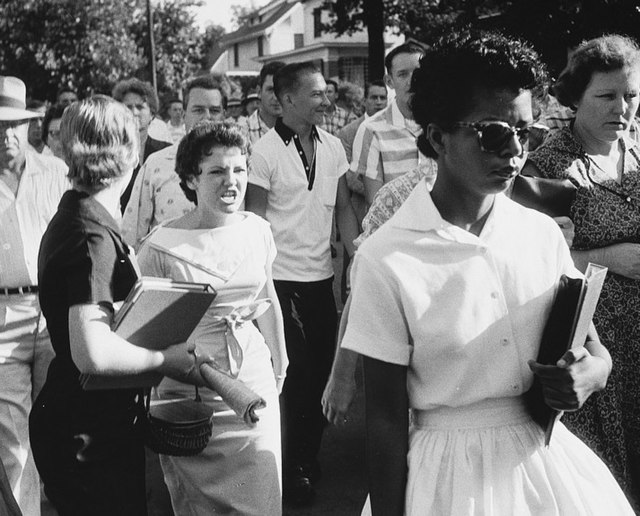
An iconic 1957 image of a white girl screaming at an African American student highlights the anguish of America’s struggle to desegregate schools. Elizabeth and Hazel recounts the intersecting lives of those two girls – Elizabeth Eckford and Hazel Bryan Massery – whose very different lives unexpectedly braided together.
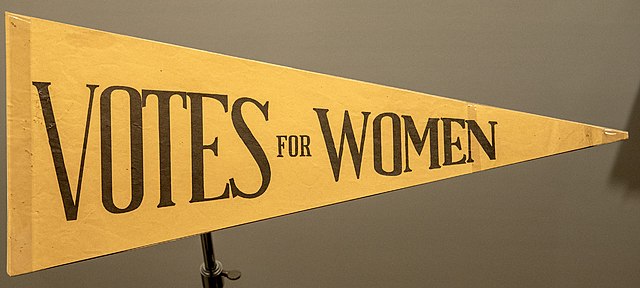
Women of the Suffrage Movement recounts the decades-long struggle of American women to secure the right to vote, from the famous Seneca Falls meeting in 1848 to the ratification of the Nineteenth Amendment in 1920.
The women’s suffrage movement of the 1800s and 1900s was about more than just the right to vote. It encompassed the most fundamental rights of citizenship: the right to receive fair wages, to hold property, to sign contracts, and to file suit in court. Sisters examines the lives of America’s leading suffragists and how their efforts resulted in far-reaching changes to the nation’s laws.
The Golden Lane is the story of how women in Missouri gained the vote and changed the state’s history.
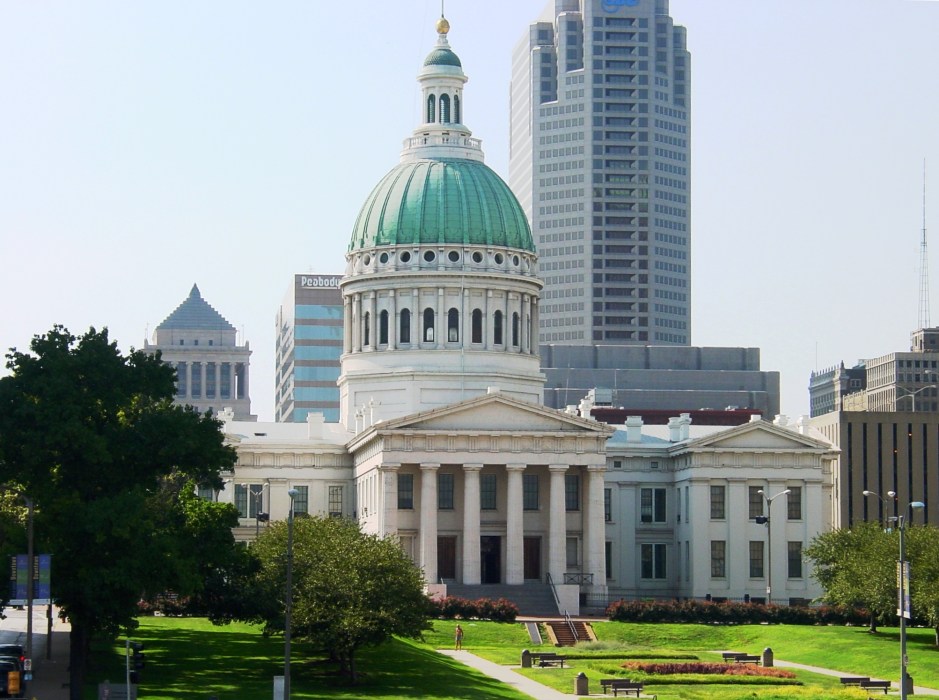
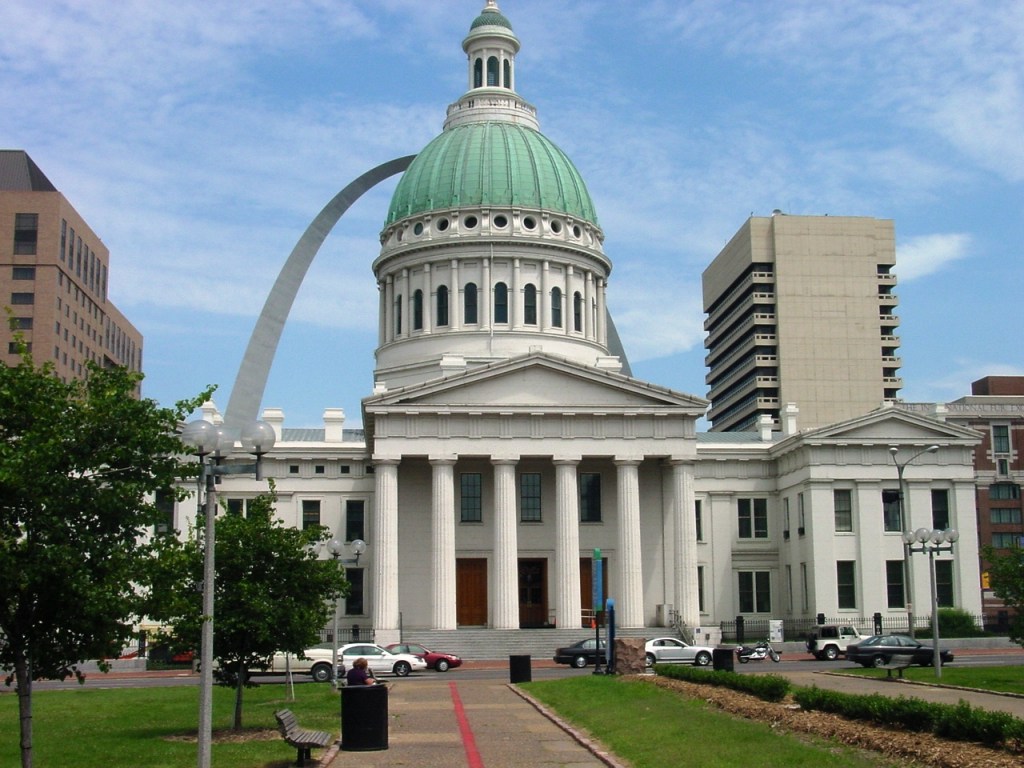
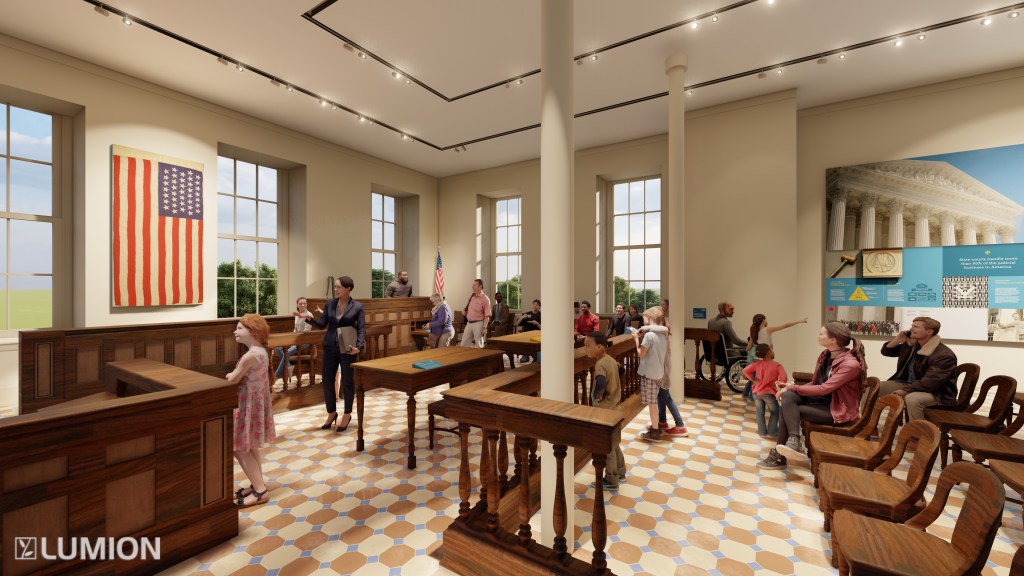
The stately Old Courthouse has stood on its site in Gateway Arch National Park for nearly 200 years. Its courtrooms have been witness to some of the most important court cases in American history, including suits by enslaved African Americans seeking their freedom, and challenges to women’s right to vote.
But over the decades, the imposing building in downtown St. Louis has been in need of serious renovations, both to update its structural integrity and security, and to ensure accessibility for all visitors. There was also a need to substantially update the building’s exhibits to better explain the stories that unfolded within its walls.
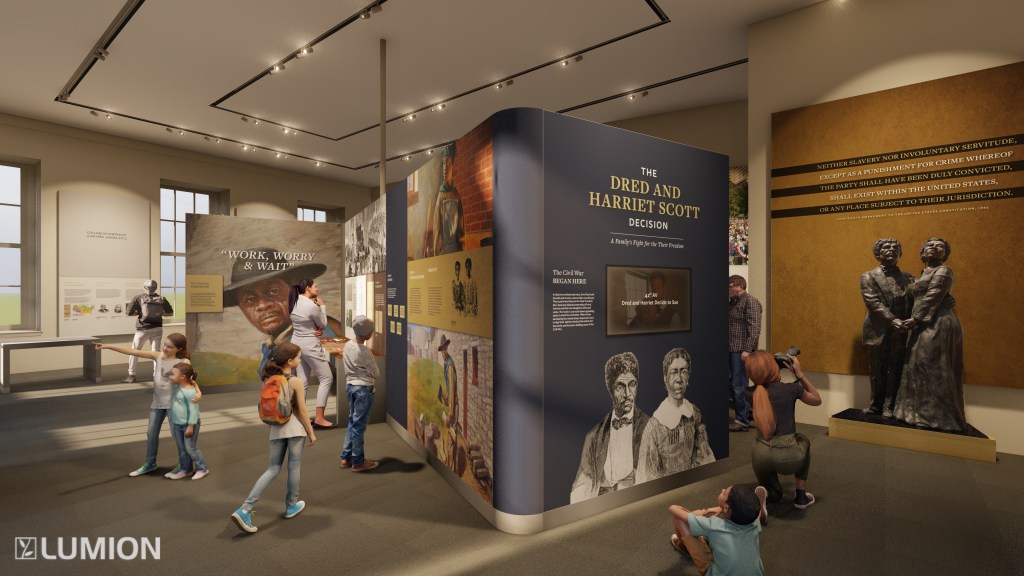
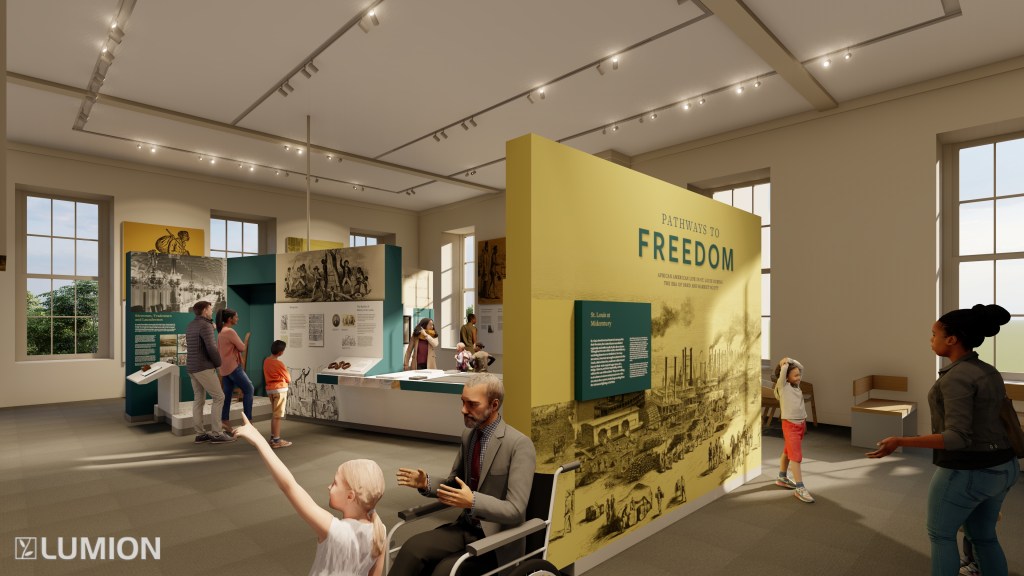
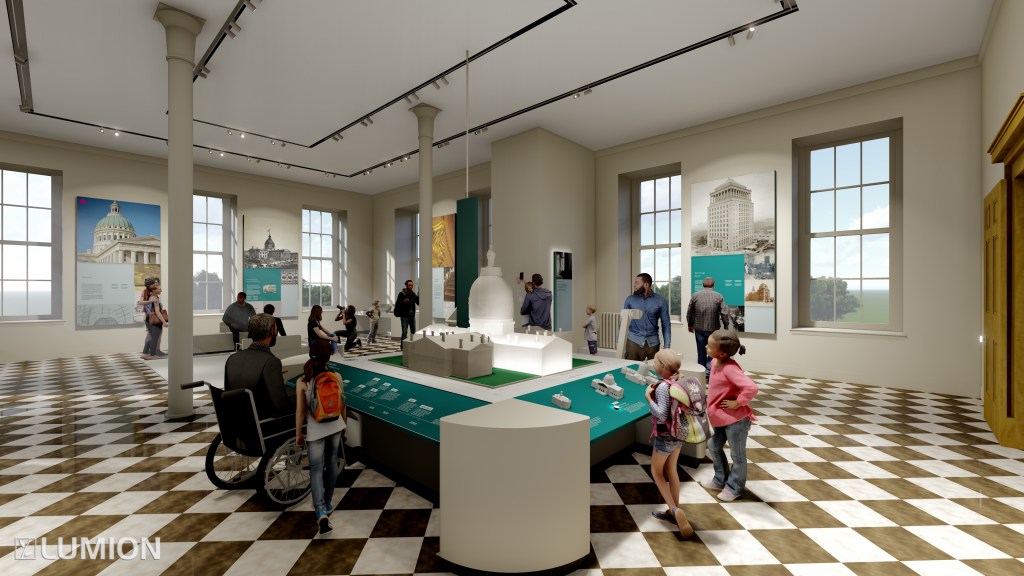
The Old Courthouse is now closed until these renovations are complete. But let’s take a sneak peek of the fascinating exhibits now in the works for the four exhibit galleries.
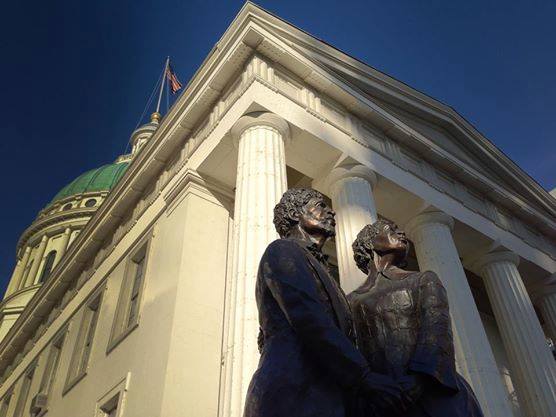
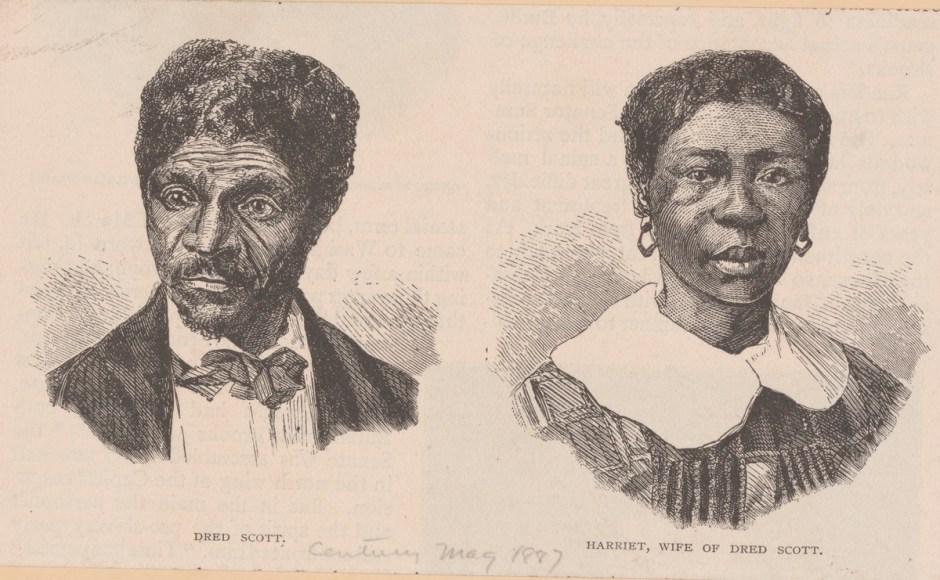
Northeast Gallery: Dred and Harriet Scott – Focuses on the Scott family’s fight for freedom, which began in the Old Courthouse, and how the legal and political environment at the time culminated in the infamous U.S. Supreme Court Decision. The exhibit gallery also reflects on the legacy and relevancy of their case today.
Northwest Gallery: Pathways to Freedom – Explores African American life in St. Louis: slavery, the tortured legacy of enslaved individuals seeking freedom, post-Civil War civil rights, and more.
Southeast Gallery: Designed for Justice – Highlights the architectural features of the courthouse and the spirit of innovation of its architects, designers, builders, and craftsmen.
Southwest Gallery: See You in Court – Focuses on the importance of courts in our society, our legal structure, and the daily activities in the courthouse from 1839 to 1930. Visitors will be able to experience an 1850s courtroom and re-enact mock trials. These will further their understanding of how our court system allows us to settle disputes peacefully and provides a framework for how our society functions.
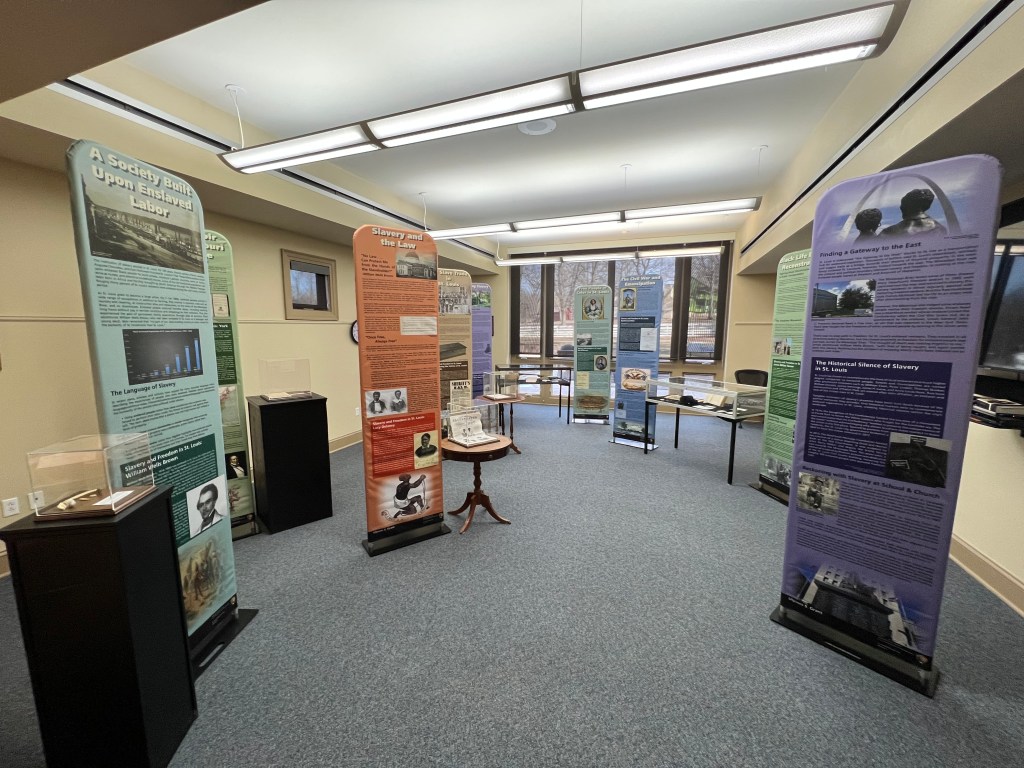
The institution of slavery afflicted most major U.S. cities, and St. Louis was no exception. Yet most modern-day St. Louisans aren’t aware of the many stories of heartbreak and hope that stemmed from the local slave trade. The historians at Ulysses S. Grant National Historic Site have created a new exhibit to address this knowledge gap.
Let’s take a peek at the exhibit.
What do Dred and Harriet Scott, Lucy Delaney, and Elizabeth Keckley have in common? They were all enslaved African Americans in St. Louis who were renowned for their battles for freedom. They also feature prominently in the new Slavery in St. Louis exhibit now on display at the visitor center at Ulysses S. Grant National Historic Site.
A team of local historians and educators – led by park staff members Nick Sacco and Gregory Carr –carefully selected exhibit stories that focus not only on slavery but on freedom. Nine exhibit panels are featured along with artifacts from the park’s museum collections. These explore the personal stories of notable individuals, such as the Scotts, as well as Ulysses S. Grant’s relationship to slavery. Additionally, the exhibit examines what life was like for enslaved people living in St. Louis.
Contributors to this exhibit include:
Lynne Jackson
Cicely Hunter
Ashley Lock
Corinne Mason
Katrina Moore
Vynetta Morrow
Robin Produie
Maria Russel
Kelly Schmidt
Jeff Smith
Joe Thurman
Jamilah Whiteside
Liz Wolfson
Make sure to visit the park and check out Slavery in St. Louis soon, as this temporary exhibit will eventually hit the road to be displayed at other institutions.
We love President’s Day! Why? Because JNPA is the proud partner of three national parks that were created to honor a U.S. president. So as we approach President’s Day on Monday February 20, join us in honoring our national leaders, and find out how you can celebrate the upcoming holiday.
Though his name is no longer included in the park title, Thomas Jefferson is the reason behind the establishment of Gateway Arch National Park (formerly Jefferson National Expansion Memorial). The 90-acre park is a memorial to the third president’s role in exploring the American West. In addition to Eero Saarinen’s soaring Arch, the park features a museum that explores St. Louis’ vital role in U.S. history. It also includes the historic Old Courthouse, where the enslaved Dred and Harriet Scott sued for their freedom in the mid-1800s. (The Courthouse is currently closed for renovations.)
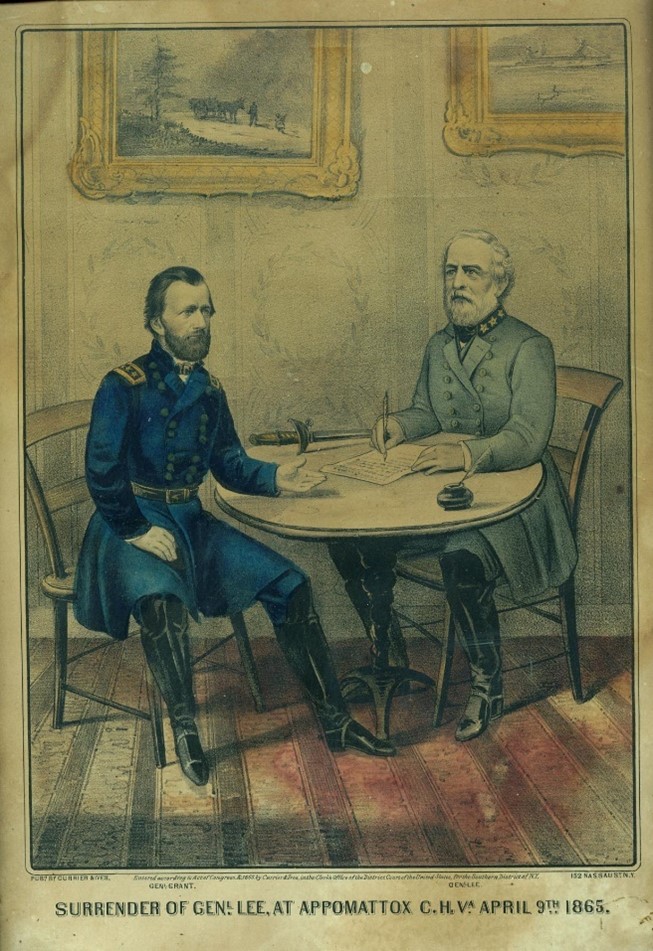
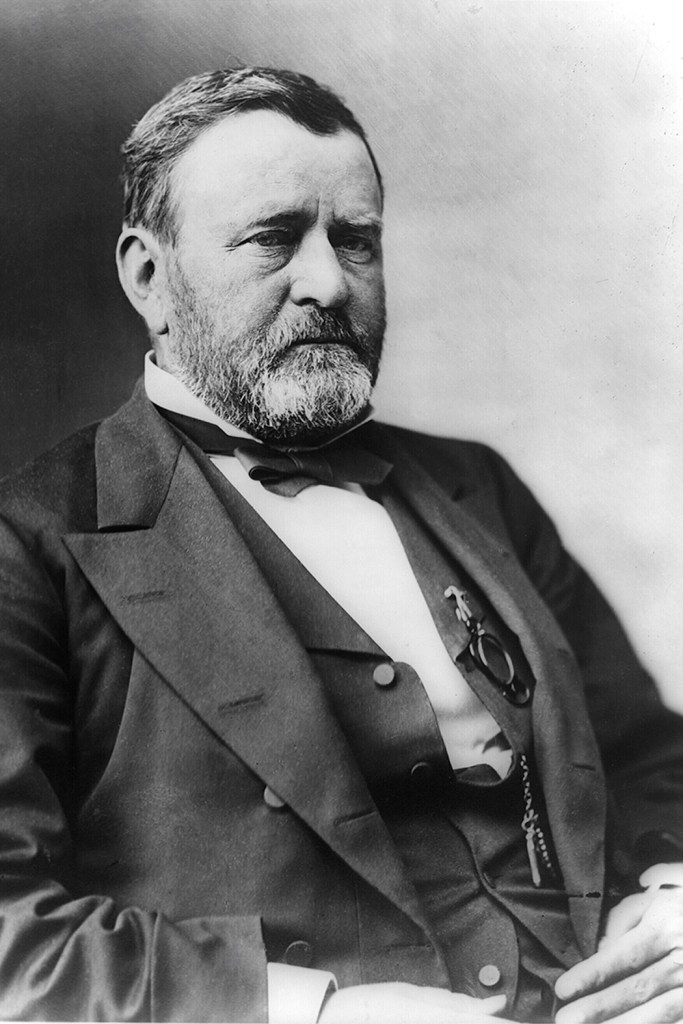
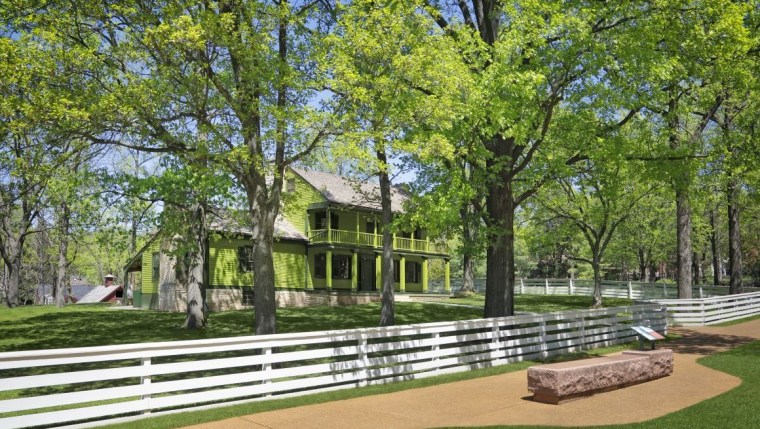
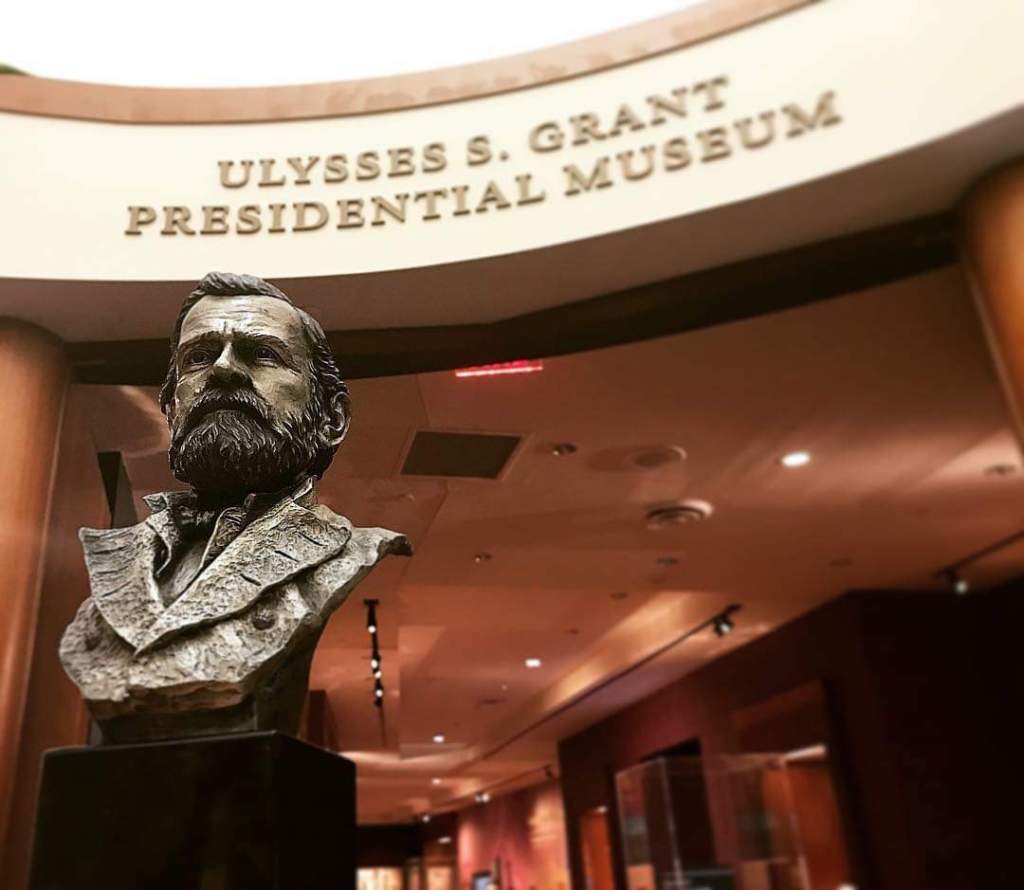
Ulysses S. Grant National Historic Site commemorates the life and illustrious military career of our 18th president. White Haven, the restored home where Grant and his wife Julia lived in the 1850s, is one of five historic structures that visitors can tour. The site also features a museum housed in Grant’s former stable, as well as an introductory film on Grant’s life in the visitor center.
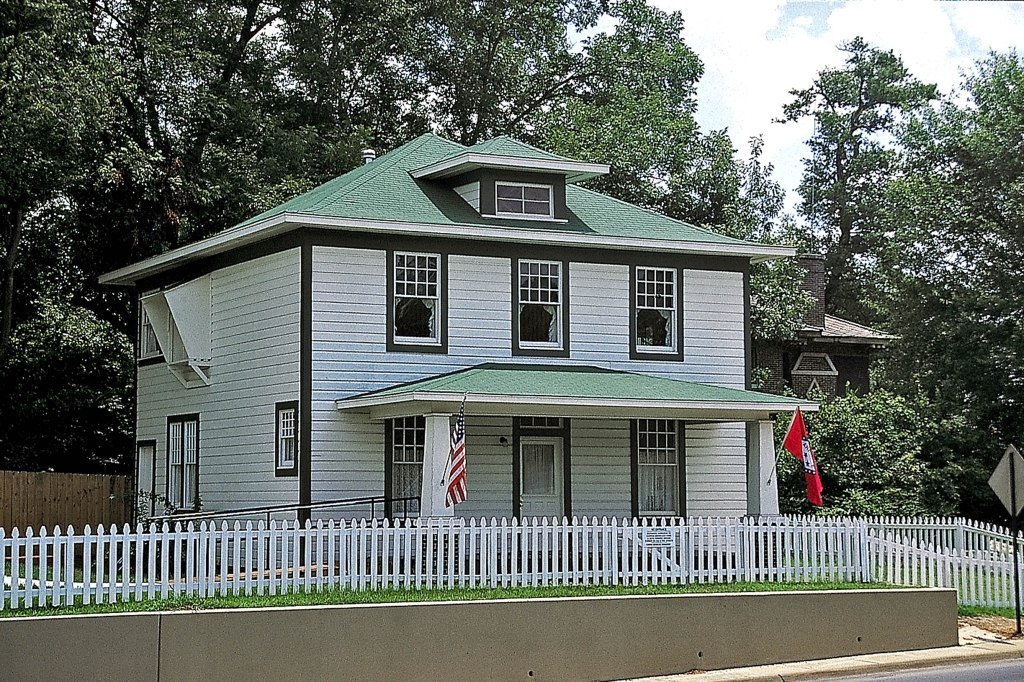
The boyhood home of President Bill Clinton is the featured attraction at President William Jefferson Clinton Birthplace Home National Historic Site in Hope, Arkansas. The small but important park recently celebrated its 12th anniversary as a National Park Service site. Clinton spent the first four years of his life in the white frame house. Visitors can join a ranger-led tour of the home, which has been restored with furniture that evokes the 1940s, and view exhibits on the president’s life in the nearby visitor center.
Looking for a way to celebrate President’s Day? Here are two St. Louis-area events you might enjoy, as well as a few products we love:
At the Gateway Arch:
Washington’s Ball, Saturday Feb. 18 12:00-4:00
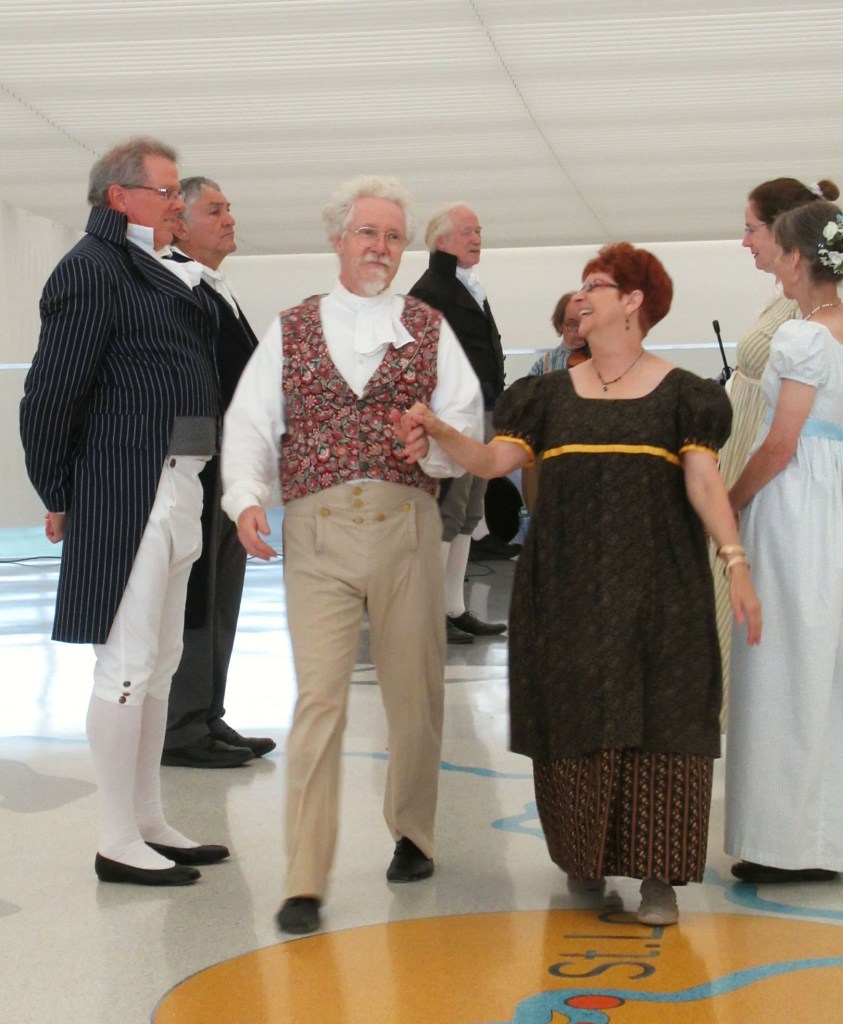
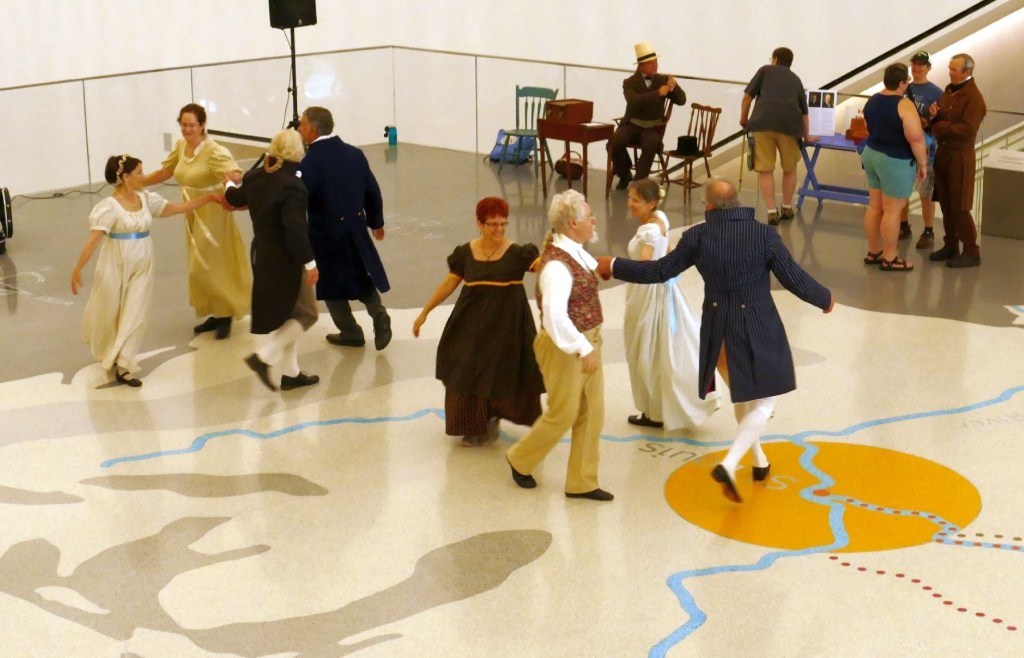
Although Gateway Arch National Park is less about George Washington than Thomas Jefferson, the park will celebrate the first president’s birthday with a mid-19th century ball. Visitors can learn old-fashioned dance steps from a historic dance expert, or just hang back and watch others twirl the afternoon away.
The ball will be held on the mezzanine inside the Arch visitor center. It is free and open to all ages. Historical clothing is not required to participate!
At Ulysses S. Grant National Historic Site:
Museum Quest, Monday, February 20
Here’s a family-friendly way to observe President’s Day: take part in a follow-the-clues quest at the park’s museum. You’ll learn about Grant’s connection to other presidents, as well as some of accomplishments and events during his presidency. When you have completed the quest, you will receive a special commemorative gift.
The quest will run all day, and is fun for all ages.
Fans of bobbleheads can celebrate the holiday with one of our fun presidential bobbleheads – either Thomas Jefferson or Bill Clinton. Whichever you choose, be sure to ask the president a question and he’ll answer you with a nod, “Yes, yes, yes, yes!” Both bobbleheads are available at our park stores, or online.
If you haven’t gotten your honey a little something for Valentine’s Day, there’s still time. And we happen to have a few suggestions from our wide array of Gateway Arch products that just might fit the bill.
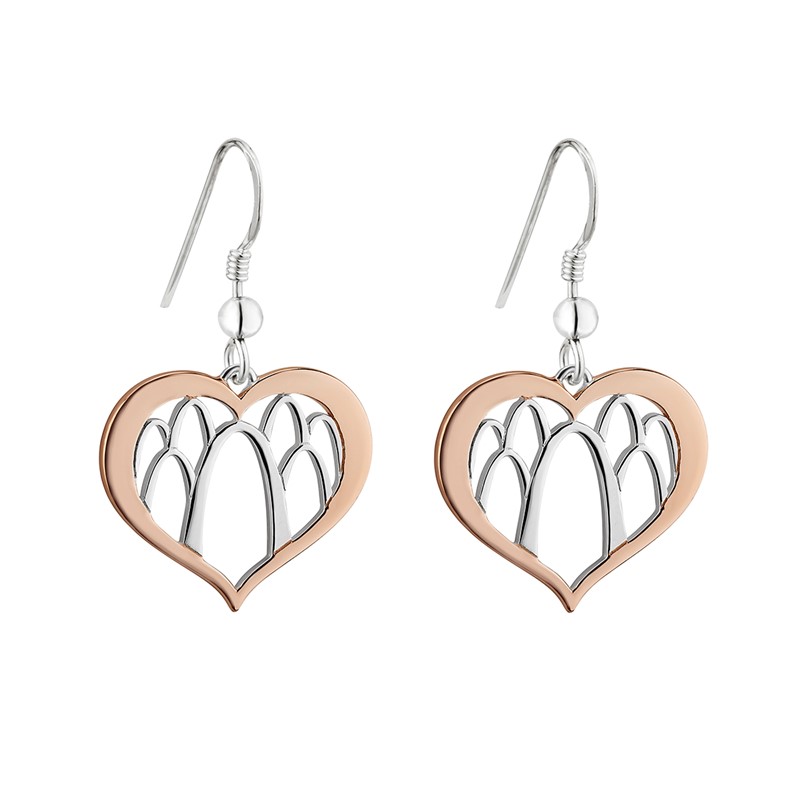
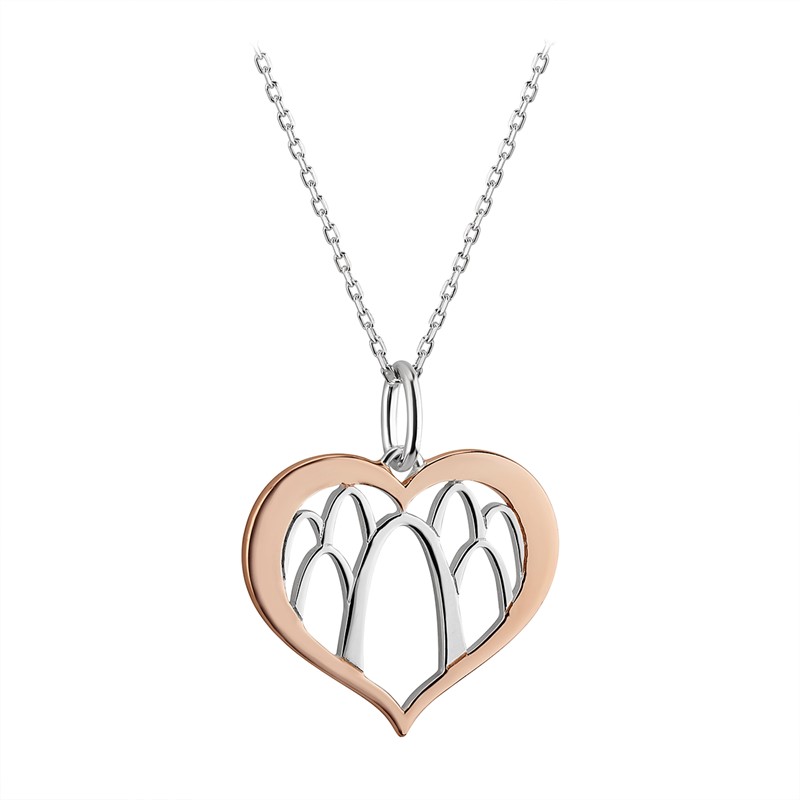
If your Valentine enjoys wearing a matching earring and necklace set, we have two gorgeous options to choose from. The first set is perfect for this special day. Our sterling silver and rose gold earrings feature a repeating Arch pattern inside a heart-shaped outline. And the matching sterling silver necklace has a heart-shaped pendant in the same design.
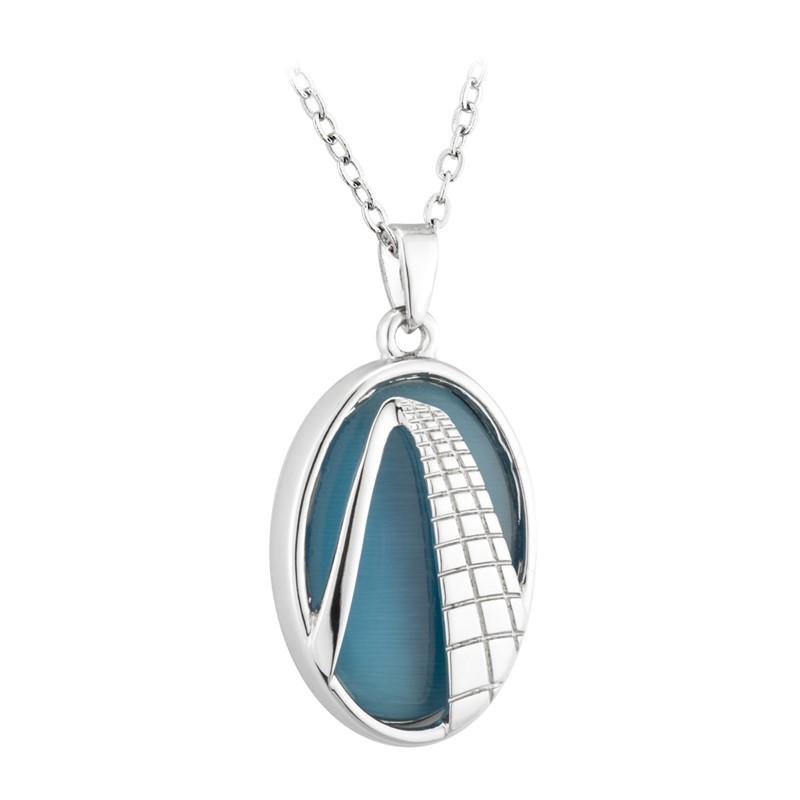
If her tastes run more towards blue, she might like this turquoise- and silver-toned set. The two-tone earrings feature a silver-tone Gateway Arch rising against a turquoise-colored background. The matching necklace features a similar design on the pendant.
And what about something for the guys in your life? How about these jaunty Gateway Arch socks? Whether he wears them to the office or at home, he’ll be a true style setter!
Ulysses S. Grant lived in many places throughout his lifetime. Now that the year-long celebration of the Ulysses S. Grant Bicentennial has come to an end, we thought it was a perfect time to visit a range of historic sites around the country where you can trace the growth and development of our 18th president. From homes to memorials to museums, each of these 11 sites provides a unique perspective on the life and legacy of our 18th president.
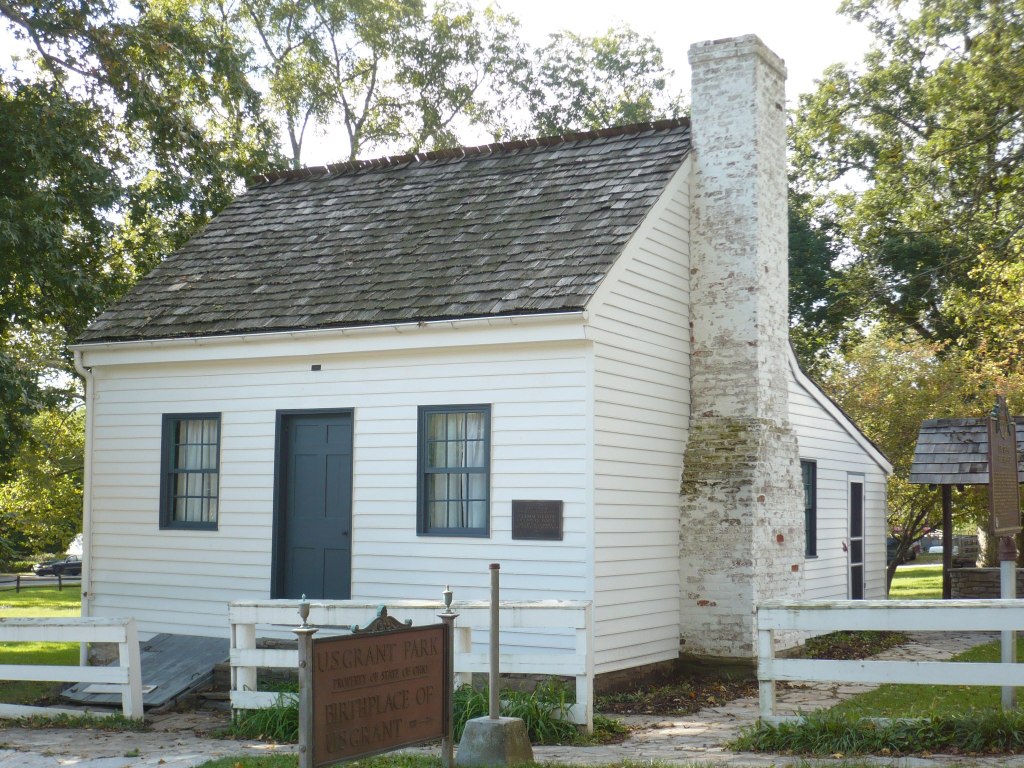
The first stop on our virtual tour is Ulysses’ birthplace in Point Pleasant, a small town in southwest Ohio. He was born there on April 27, 1822, in a one-story frame home rented by his parents, Jesse and Hannah Grant. The family moved a year later to a larger brick home in nearby Georgetown, Ohio, and young Ulysses lived there until he left for West Point in 1839. In addition to his boyhood home, the town also features the small schoolhouse he attended, the tannery his father built, and other Grant-related sites.
Credit: U.S. Grant Birthplace
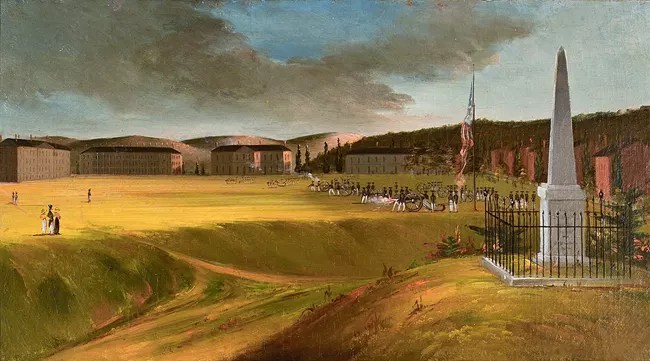
When he was 17, Grant enrolled in the U.S. Military Academy at West Point, NY, thanks to his father’s encouragement. Visitors to West Point can see several memorials and statues dedicated to Grant when they book a tour at the academy.
Painting of West Point by George Catlin, circa 1827. Credit: U.S. Army
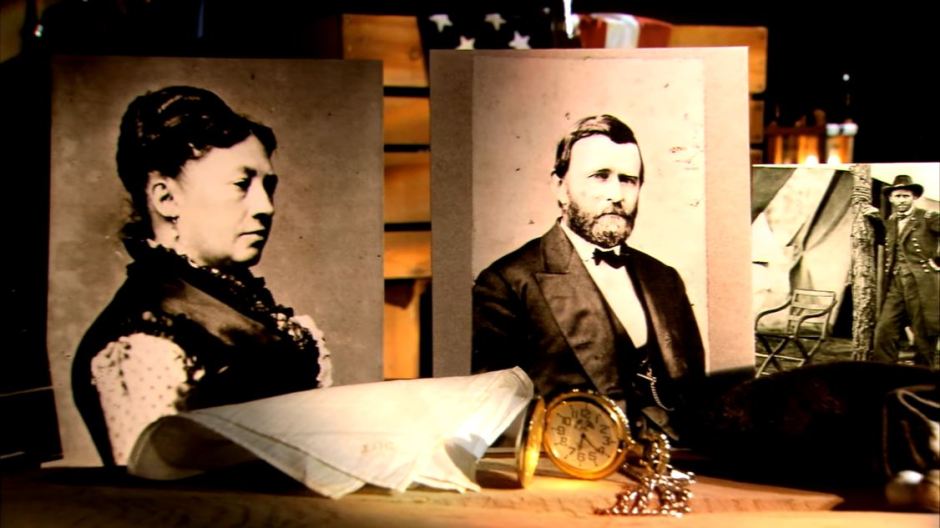
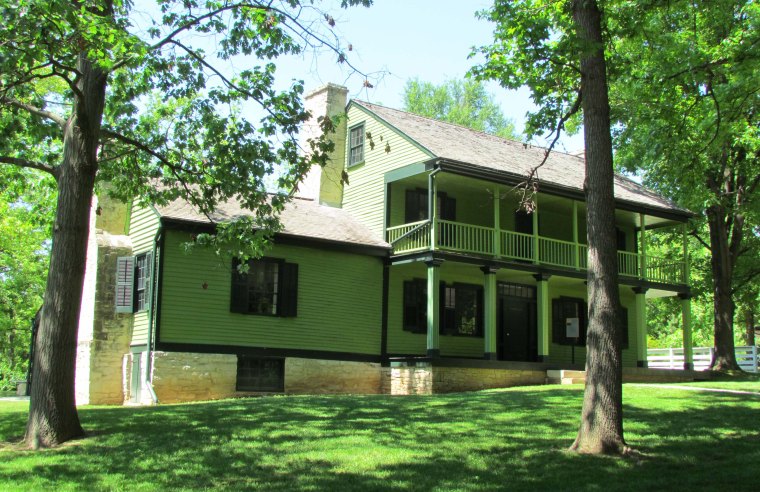
After graduation, the young cadet was assigned to join the 4th U.S. Infantry at Jefferson Barracks near St. Louis. It was here that Grant’s friendships led him to visit White Haven, the sprawling plantation where he would meet his future wife, Julia Dent. Visitors to Ulysses S. Grant National Historic Site can tour the White Haven home as well as the on-site museum devoted to Ulysses and Julia’s lives.
Ulysses S. Grant National Historic Site
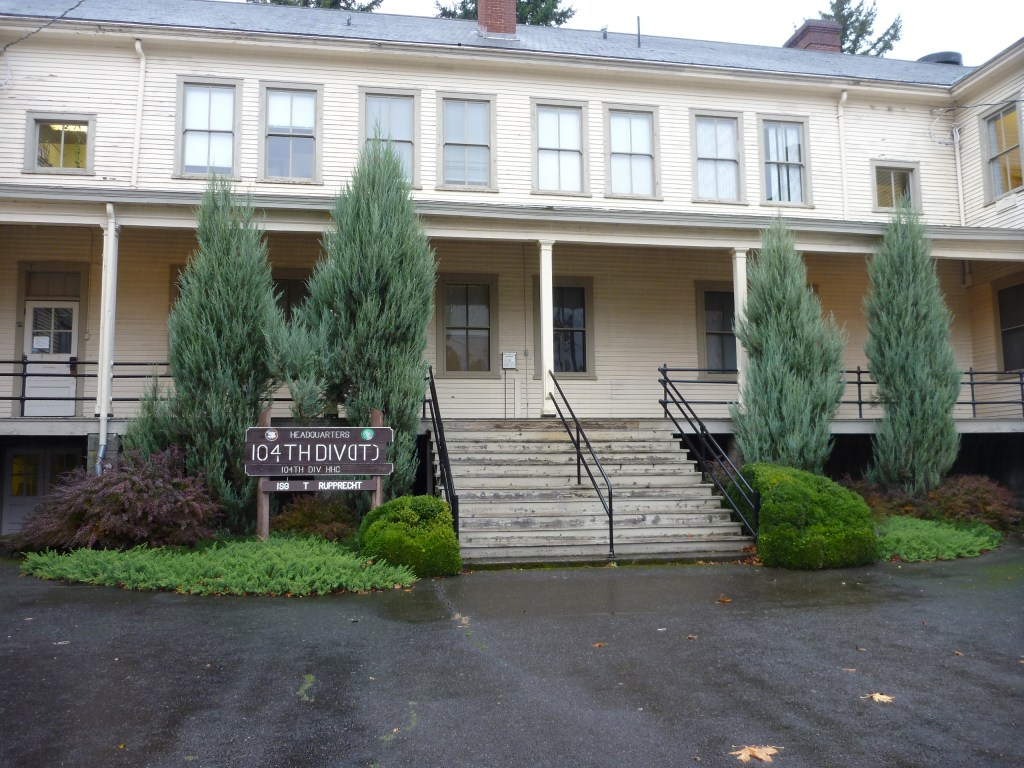
Other sites on our virtual tour trace the various military outposts and stations around the country where Grant served in the U.S. military, sometimes with Julia and his children, sometimes not. These include Fort Vancouver National Historic Site in Vancouver, WA – another National Park Service site.
Barracks at Fort Vancouver National Historic Site. Credit: NPS
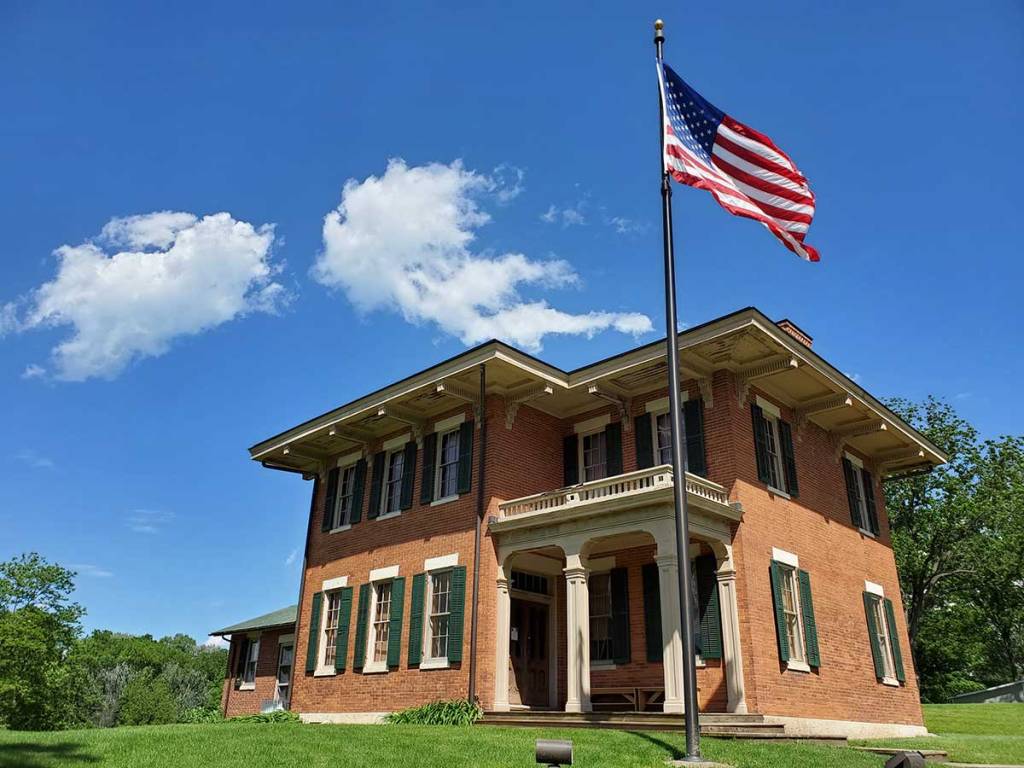
Additional Grant home sites that are open for public tours are also part of our virtual tour. They include the Grant home in Galena, Ill., where his family relocated after his failed career as a farmer in White Haven, and the Grant Cottage in Wilton, NY where Grant died of throat cancer on July 23, 1885.
The Grant home in Galena, IL. Credit: U.S. Grant State Historic Sites
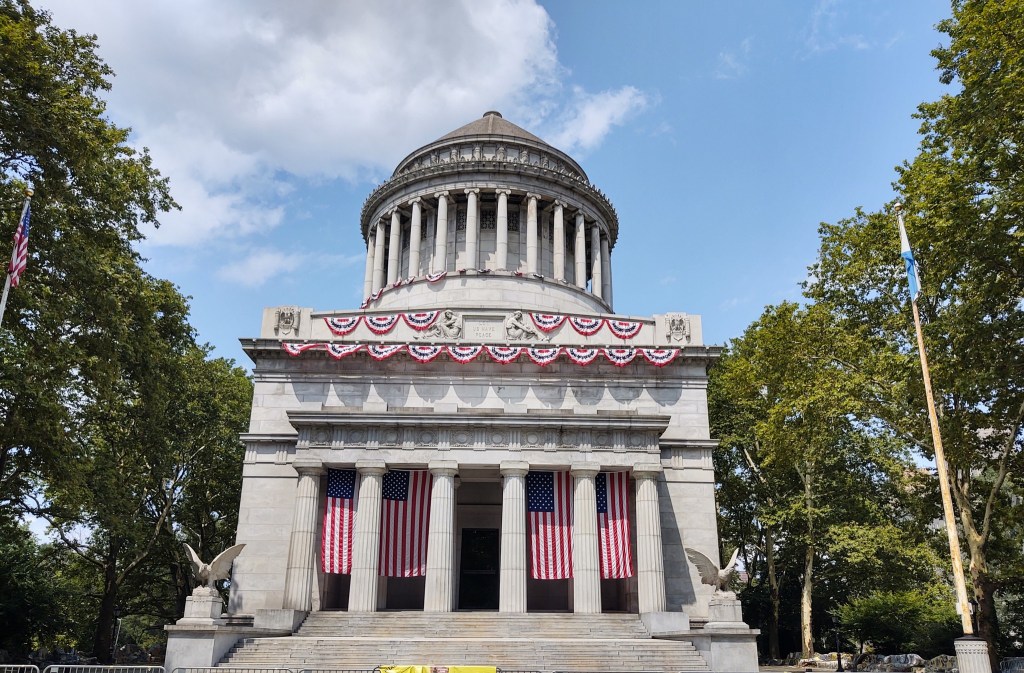
The final resting place of Ulysses and Julia Grant is also worthy of a visit. This is the General Grant National Memorial in New York City. This largest mausoleum in North America was dedicated in 1897, with more than a million people in attendance.
General Grant National Memorial. Credit: NPS
And finally, Grant scholars will want to stop in at the Ulysses S. Grant Presidential Library in Starkville, MI. Mississippi was the site of the Battle of Vicksburg, the general’s greatest victory in the Civil War. Visitors to the library can view exhibits as well as many of Grant’s papers, which are housed at Mississippi State University.
Now that most of us are in the throes of Ol’ Man Winter, what better time to make sure you have the right clothes and drinkware to keep you warm. Luckily, our partner parks offer a wide range of winter-ready products:
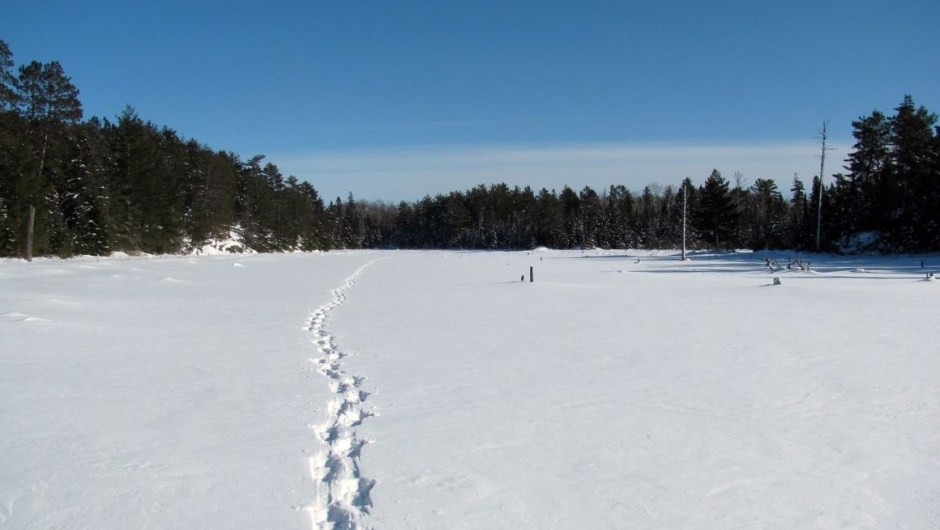
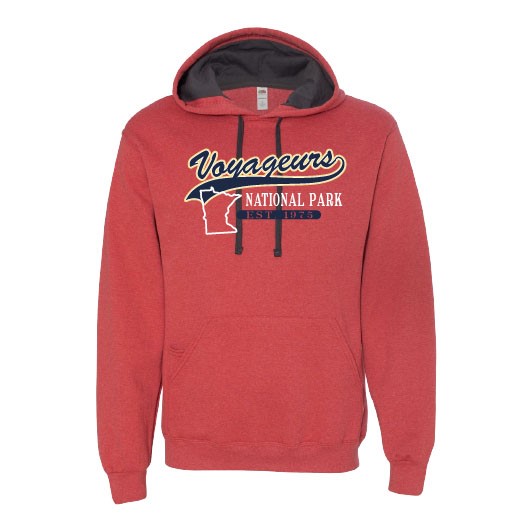
Who knows cold weather better than the folks in northern Minnesota? This cheery red hoodie from Voyageurs National Park promises to keep you warm and toasty. Comes in sizes small to XX-large.
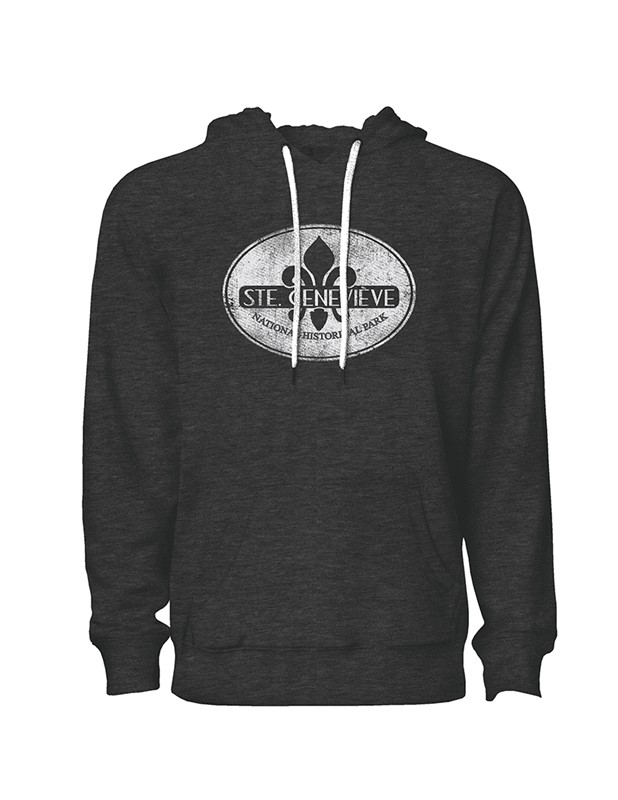
If you’re looking for something more lightweight, you’ll love this French terry hooded sweatshirt from Ste. Genevieve National Historical Park.
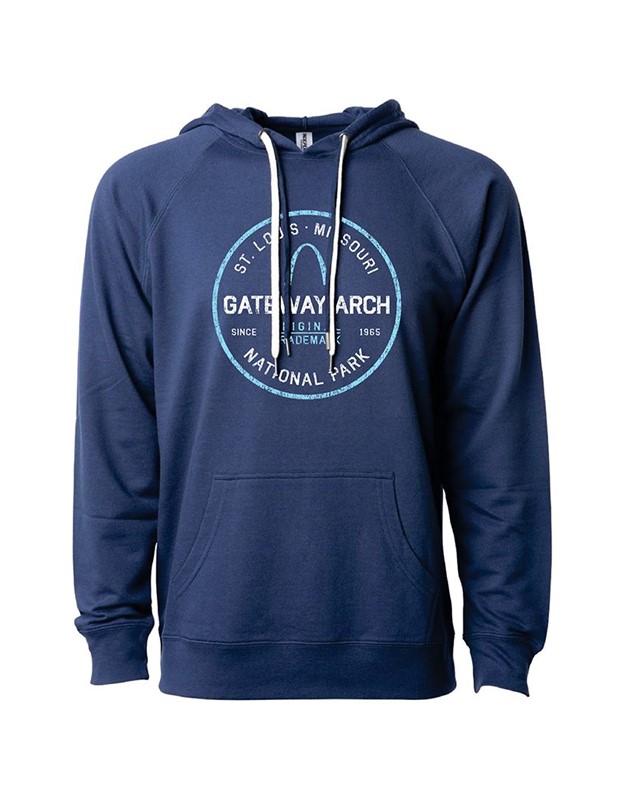
Gateway Arch fans can stay warm in this Docker hooded sweatshirt. It features the park name against a soothing blue background.
And don’t forget to keep your head warm. This cozy striped toque from Voyageurs not only does the job, but it’s the same design that the original voyageurs wore in the northern latitudes
Need something to keep your coffee or cocoa hot when you’re outdoors? Try this handsome insulated water bottle from The Arch Store. Made of sturdy stainless steel with a silver Arch graphic against a navy background.
All of these products are available both at our stores in their respective national parks, as well as from JNPA’s online store. Remember: each purchase you make helps support the educational programs and exhibits at our partner sites.











 JNPA Blog