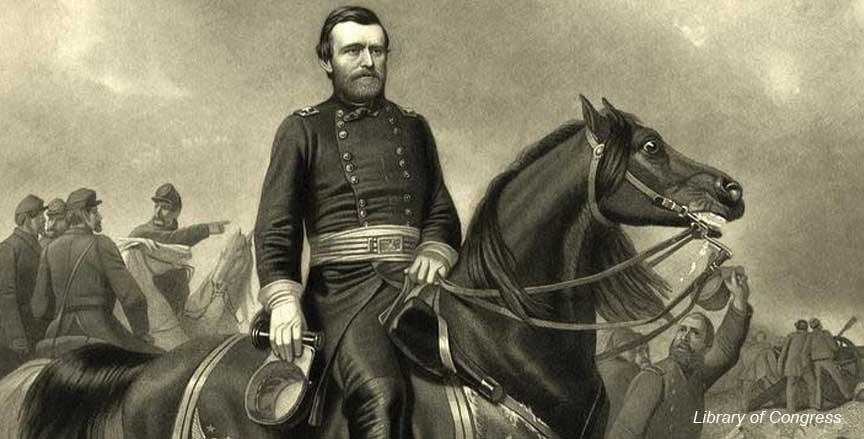
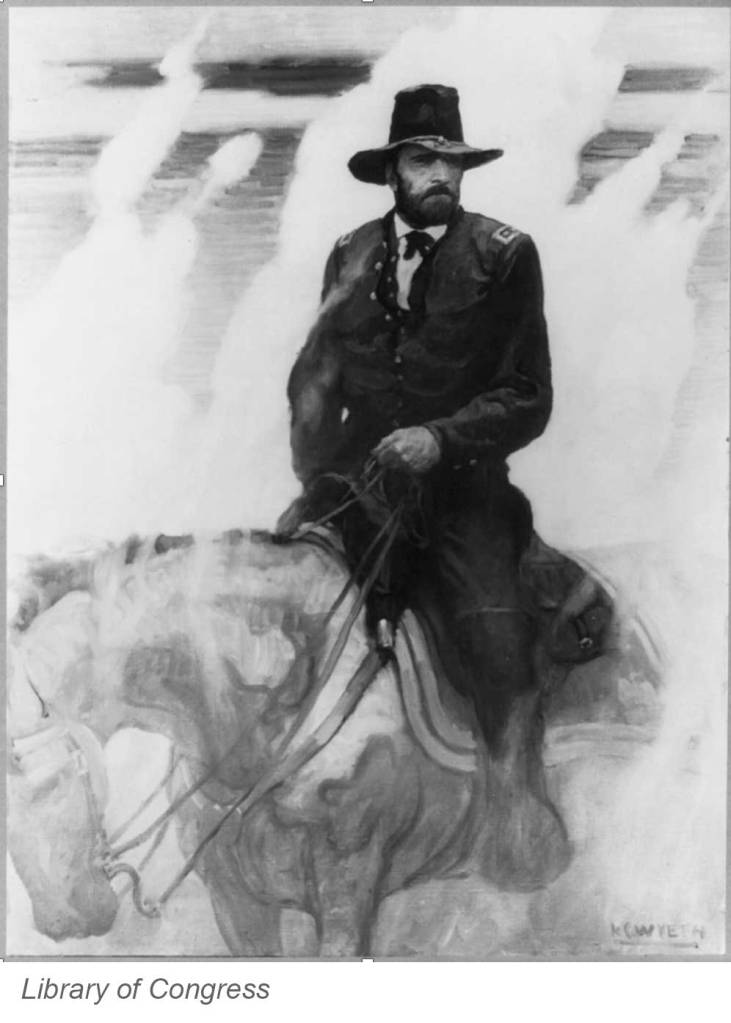
Many of our U.S. presidents were accomplished horsemen. George Washington was known as the “finest horseman of his age;” Thomas Jefferson rode nearly every day until late in life; Andrew Jackson bred and raced horses, stabling several at the White House; and Zachary Taylor grazed his beloved warhorse on the White House lawn. But Ulysses S. Grant is considered by many to be the most skilled horseman to ever occupy the Oval Office.
Even as a small boy, Grant’s connection with horses was obvious. There are numerous stories of young Ulysses breaking in horses nobody else could ride and doing daredevil stunts on horseback. By age five, he was an accomplished and daring rider, known for standing on one leg while maintaining his balance at a gallop. His mother was heard to say, “Horses seem to understand Ulysses.”
Throughout adulthood, Grant continued to ride, train, and care for horses. For him, riding was more than a pastime – it was a form of discipline and excellence. When he attended West Point, his riding abilities were legendary. Fellow cadet James Longstreet described Grant’s skills: “In horsemanship…he was noted as the most proficient in the Academy. In fact, rider and horse held together like the fabled centaur.”
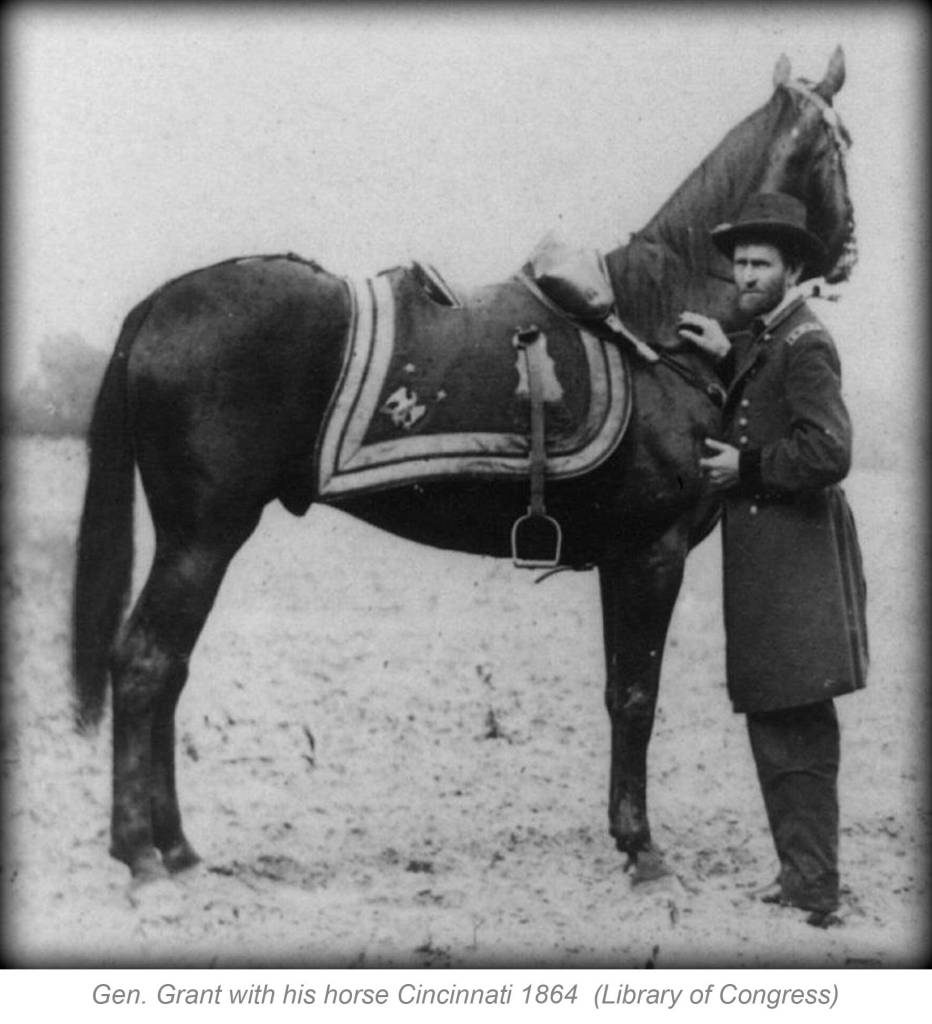
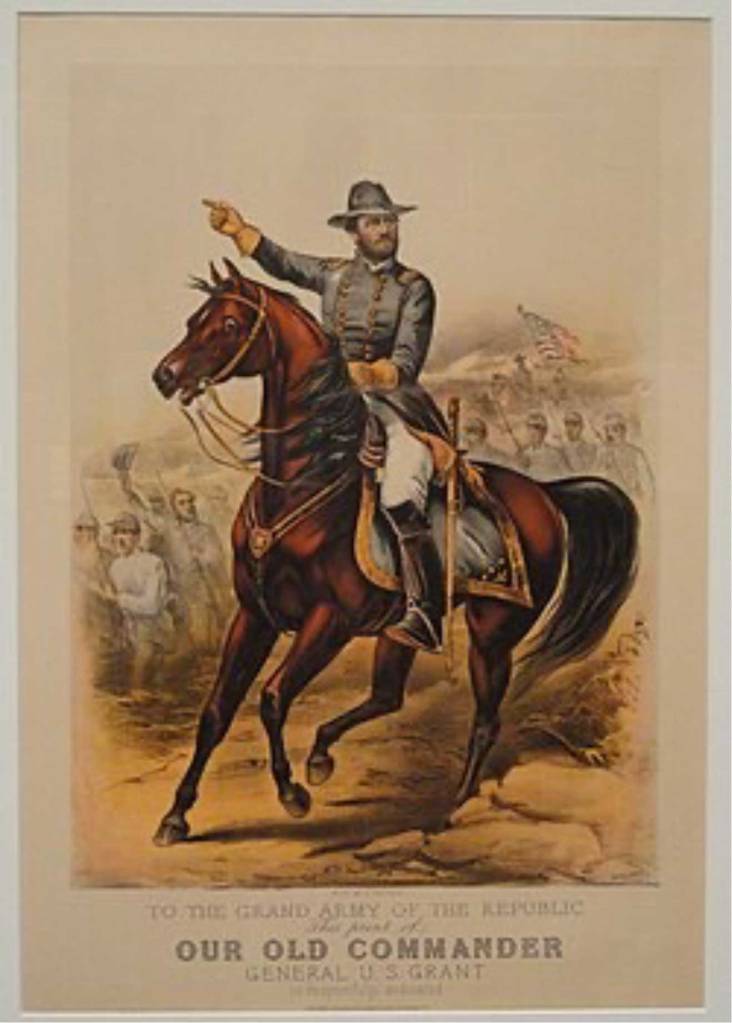
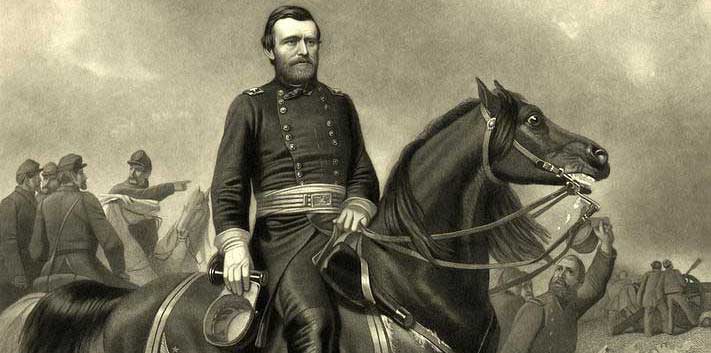
During the Civil War, riding was Grant’s preferred means of transportation since he found it a useful way to scout the terrain. His most famous horse, Cincinnati, was given to him as a gift after the Battle of Chattanooga and quickly became his favorite. (The horse was the son of Lexington, at one time the fastest four-mile thoroughbred in the country.) Cincinnati was a reliable warhorse, remaining even tempered during the fiercest of battles, and Grant continued to own him until the horse’s death of old age.
Courtesy NPS.
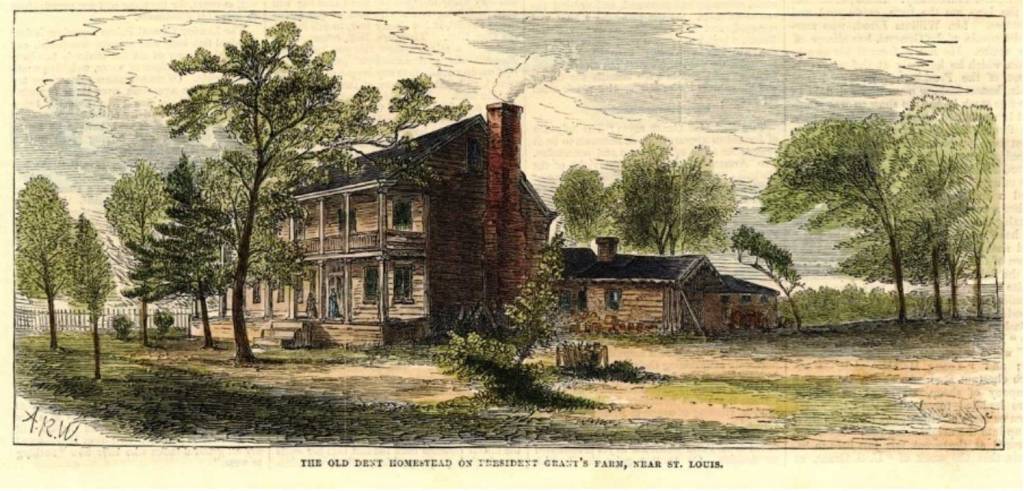
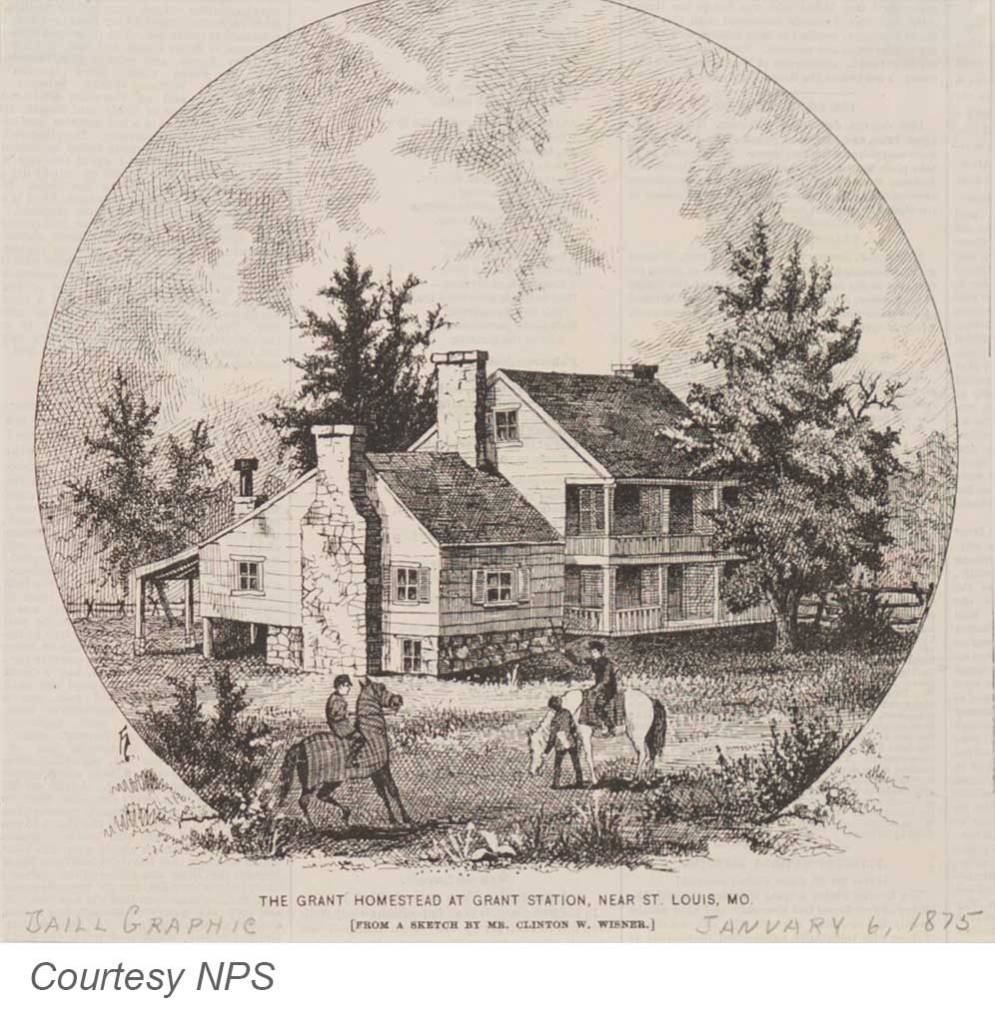
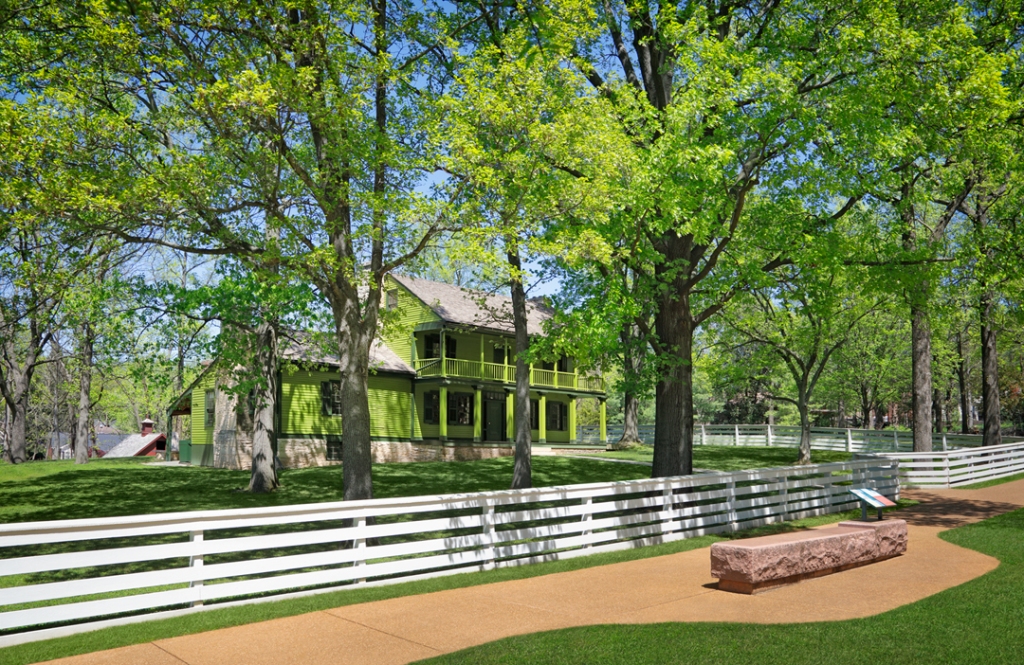
After the war, Grant turned to horse breeding. In 1866 he bought the 860-acre White Haven estate outside St. Louis from his wife’s family, primarily to breed and raise horses. To do this, he needed to convert the bulk of the land from fruits and vegetables to grass and hay to provide feed for the horses. He wrote his caretaker: “I want to get all the ground in grass as soon as it can be got rich enough, except what will be in fruit.”
Original stable at White Haven.
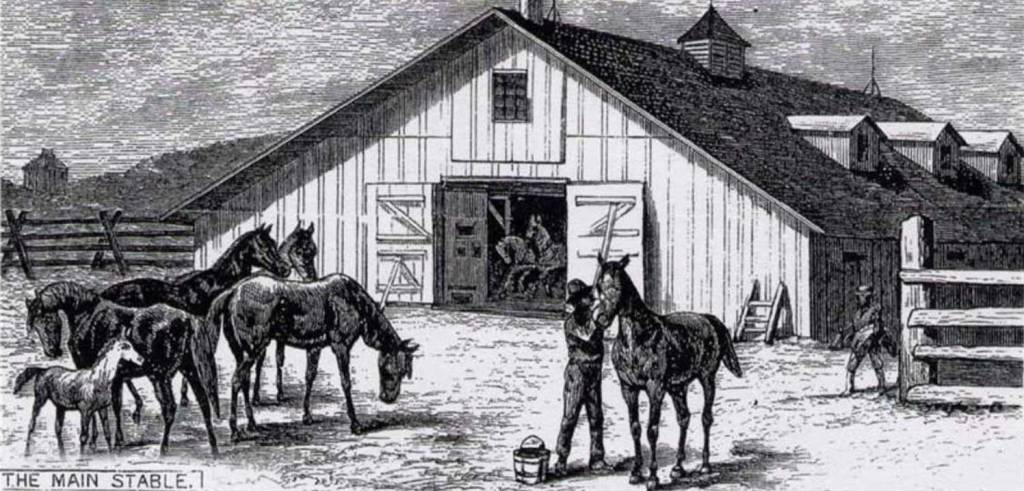
In 1871, he also designed and built a large stable that could accommodate 25 horses, including his beloved trotters, thoroughbreds, and Morgans. Today, the stable remains standing and serves as the museum at Ulysses S. Grant National Historic Site.
Grant’s breeding farm produced a number of very fine horses, which in 1873 were valued at $25,000 ($675,000 in today’s dollars). And yet the operation was barely turning a profit. Grant decided to shut down the farm and put its resources to auction in 1875. He lost the farm when he was swindled by a New York City business partner in 1884.
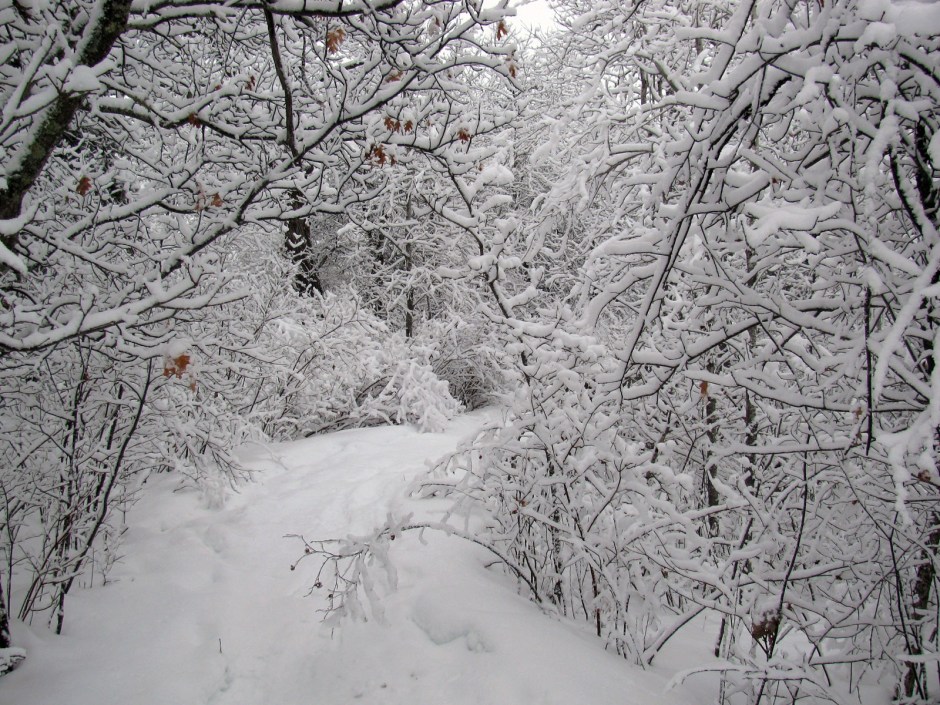
Many of us shudder at the prospect of enduring bone-chilling weather. But imagine having to endure sub-zero temperatures on a multi-day outdoor journey, on bad roads through rugged wilderness, and on horseback! That’s what Ulysses S. Grant had to face during the winter of 1864 as he searched for supply lines for his Union troops fighting the U.S. Civil War.
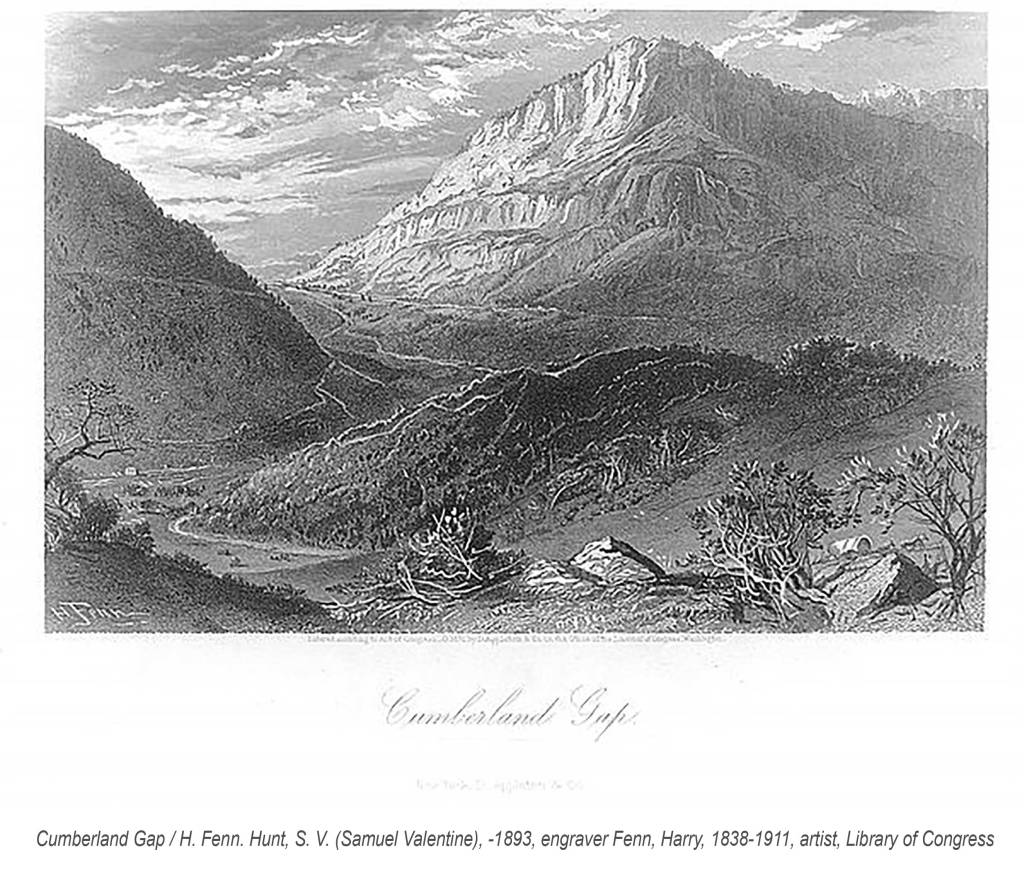
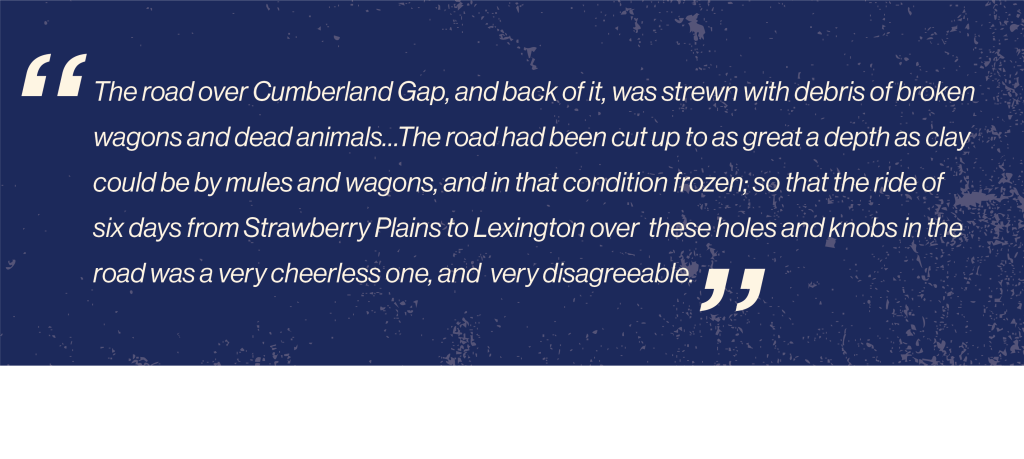
The Union general was laying plans to capture Atlanta, well before that assignment fell to General William Sherman. As Grant explored possible supply routes that would provide easy access to the front in Georgia, he was hoping the Cumberland Gap – straddling Kentucky, Virginia and Tennessee – would fit the bill. The mountain passes in the Gap were valued by both Union and Confederate armies as a way to move men and supplies between the eastern and western theaters of war. But when Grant reached the area in January 1864, what he found was quite unpleasant:
This assessment must have been particularly disheartening for such an accomplished horseman as Grant. From an early age, he became adept at riding, training, and caring for horses, and used those skills during his military career and private life. Some historians believe he bought the White Haven property (now Ulysses S. Grant National Historic Site) from his wife’s family after the Civil War mainly to breed and raise horses.
Grant ultimately had to abandon his plans to move troops through the Gap that freezing cold winter. He might have succeeded in reaching Atlanta by other routes, but President Lincoln interrupted that strategy. Lincoln promoted him to the rank of Lt. General in March 1864, and placed him in command of the Union armies.
Grant’s eventual plan to win the war involved immobilizing General Robert E. Lee’s army near Richmond, Virginia, while General Sherman led the Union army through Georgia. Grant went on to force the Confederates to surrender in 1865.
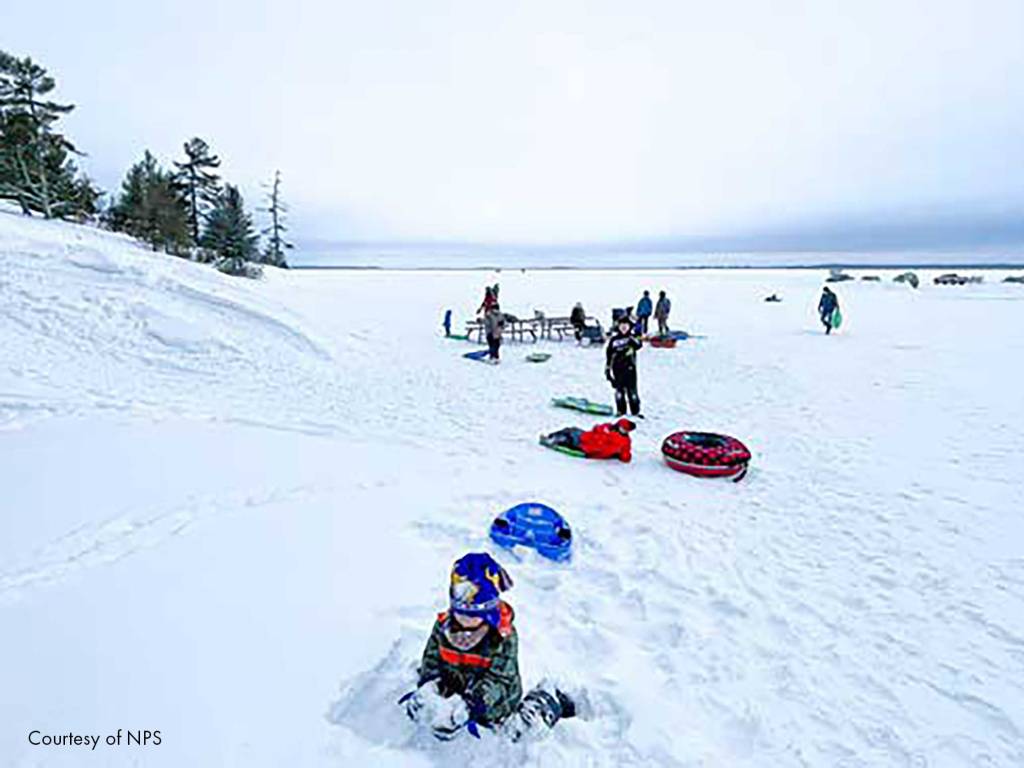
If you’re a cold-hardy adventurer, there’s no better way to experience the magnificence of snow-draped landscapes than with a winter visit to Voyageurs National Park. This stunning 218,000-acre park in northern Minnesota offers numerous ways to enjoy its natural splendor: from snowmobiling, cross-country skiing, and hiking to ice-fishing, sledding, and snowshoeing. And for less athletically inclined visitors, there’s always driving your car on the park’s ice roads!
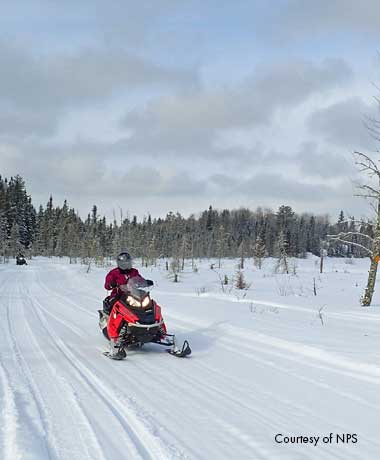
Snowmobilers flock to Voyageurs every winter for the park’s 110 miles of groomed trails. However, since many of the snowmobile trails cross frozen lakes, it’s imperative to pay attention to the ice thickness on many bodies of water. A mid-December report showed there is not enough solid ice to open the frozen lakes to vehicle traffic. The park lists current conditions on its website.
Cross-country skiers can enjoy a number of beginner- and intermediate-level loop trails through pine and birch forests, some with a view of an active beaver pond.
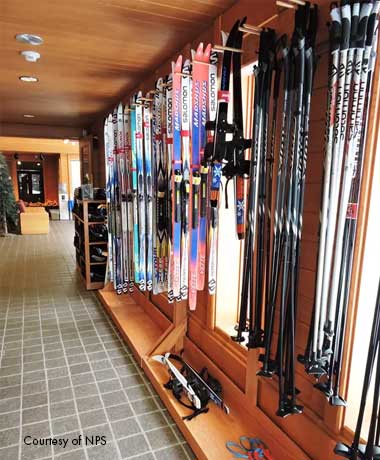
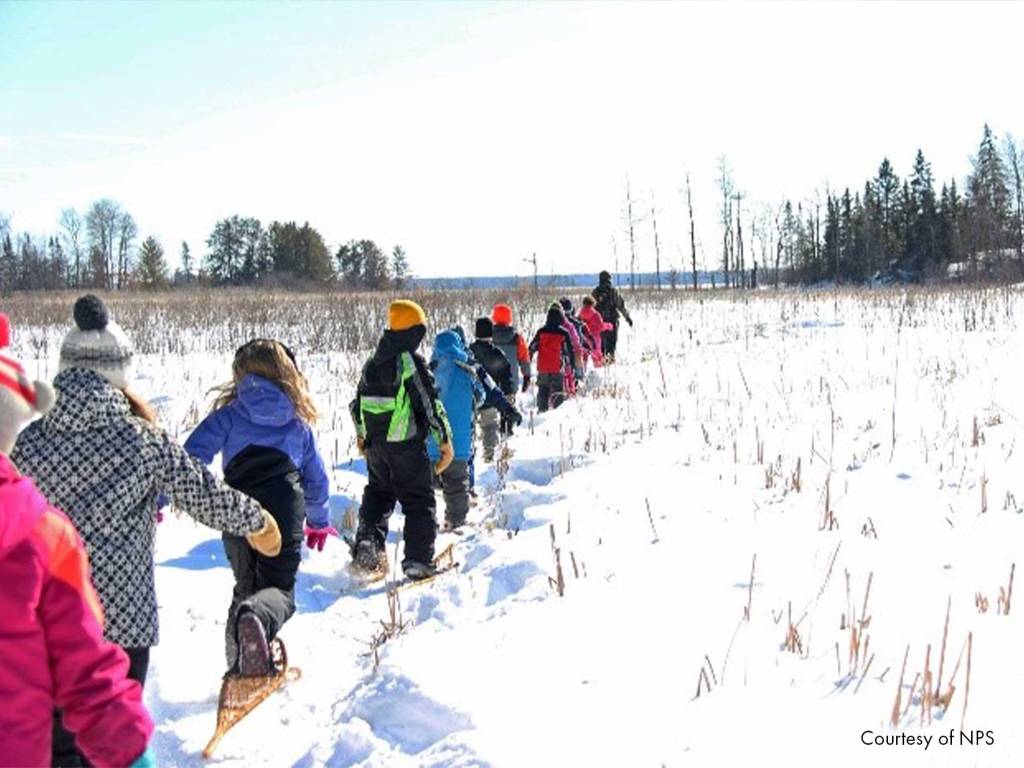
The park offers ski and snowshoe rentals at the Rainy Lake Visitor Center and also accepts advanced reservations by phone (218-286-5258) and online. Kids’ sizes are available.
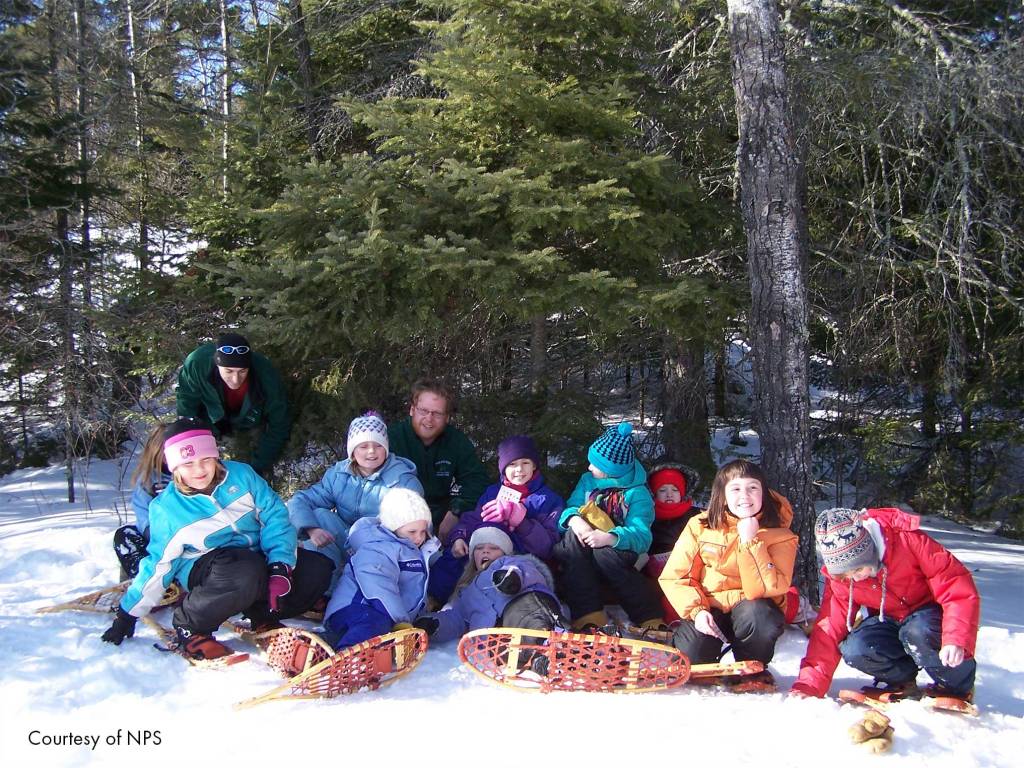
In case you’re wondering if kids enjoy these winter sports, check out this park video of a recent showshoe class.
Just as with snowmobiling, these activities are also reliant on adequate snowfall and ice formation. Park crews have been clearing and grooming trails through the woods and open land but are waiting for adequate ice thickness on the lakes before tackling those areas. Visitors can pick up this fold-out National Geographic map at JNPA’s park stores, which lists most of the park’s trails.
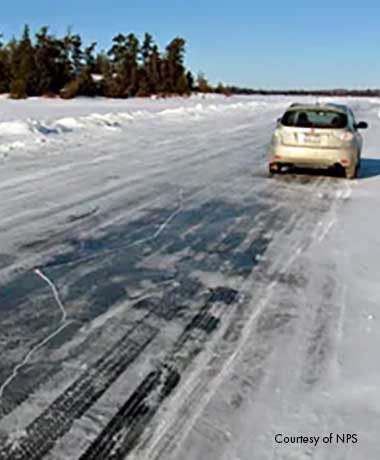
More “mild” activities at the park include sledding and driving the park’s ice roads. The two main ice roads begin at the visitor centers, but the routes vary from year to year. Cars and trucks weighing less than 7,000 lbs. are allowed, but the speed limit is 30 mph.
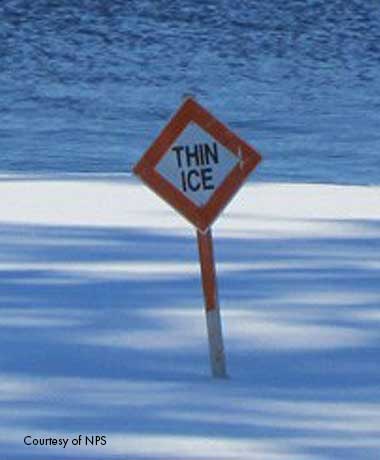
Naturally, safety is the prime consideration for every outdoor activity at Voyageurs. The park offers a comprehensive list of important safety tips for all winter sports, and urges visitors to consult rangers before setting out and to be on the lookout for posted signs throughout the park.
How do YOU celebrate the holidays? Your answer may depend upon your religious practices or your family traditions. But if you’d lived in the French colonial village of Ste. Geneviève in the 1700s, chances are you and your neighbors would have commemorated the winter holidays in very similar ways.
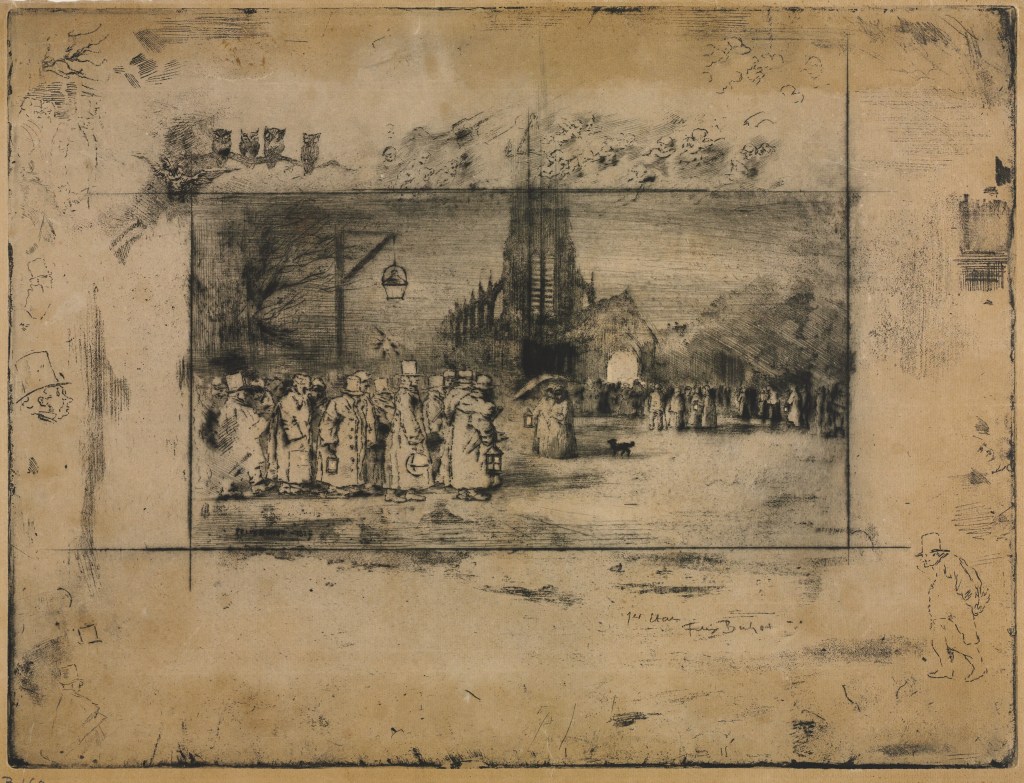
The Midnight Mass, Félix Hilaire Buhot
The townspeople of 18th-century Ste. Geneviève were predominantly Catholic, having brought their religious and cultural traditions from France. One of their most festive seasons of the year was December to mid-January. The four weeks prior to Christmas was Advent, a time of reflection, fasting, and merriment. The culmination of Advent was Christmas Eve, when most of the community attended midnight Mass.
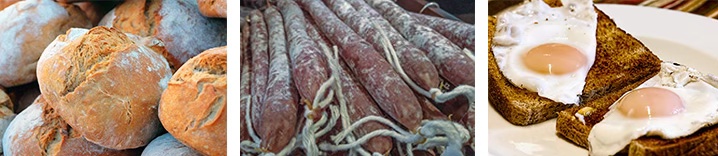
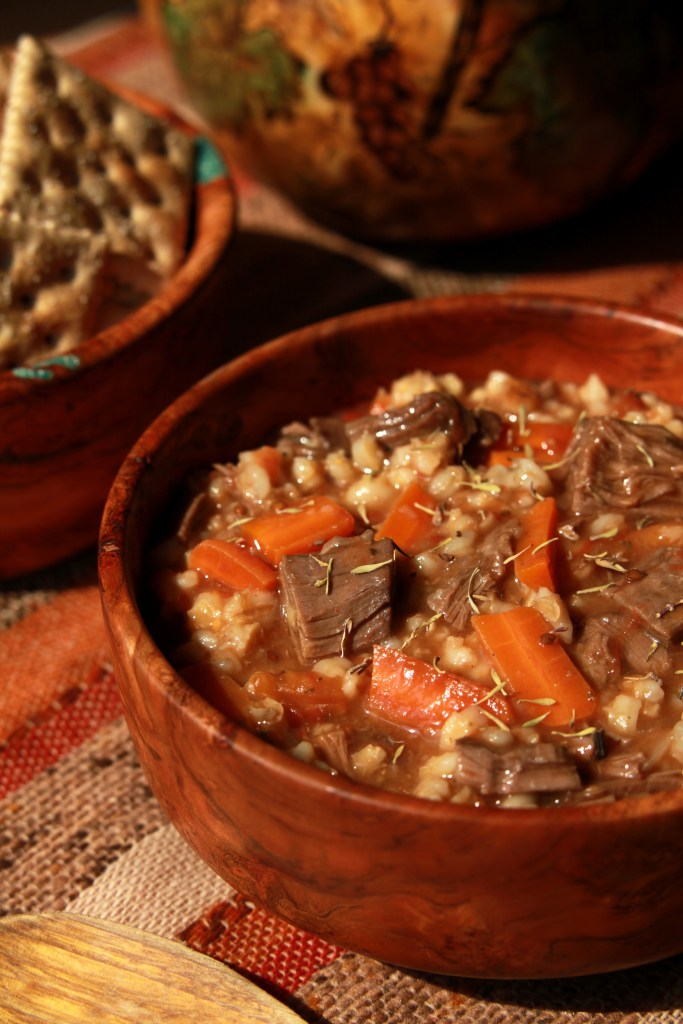
After the church service ended, the townsfolk gathered with their extended families for a feast called La Réveillon. This special breakfast would start in the early hours of the morning and proceed well into the next day. La Réveillon featured traditional breakfast foods such as eggs, sausage, and breads along with non-traditional items like puddings, stews, and cakes. Christmas Day festivities would continue throughout the day with more feasting, church services, and in some households, balls or parties.
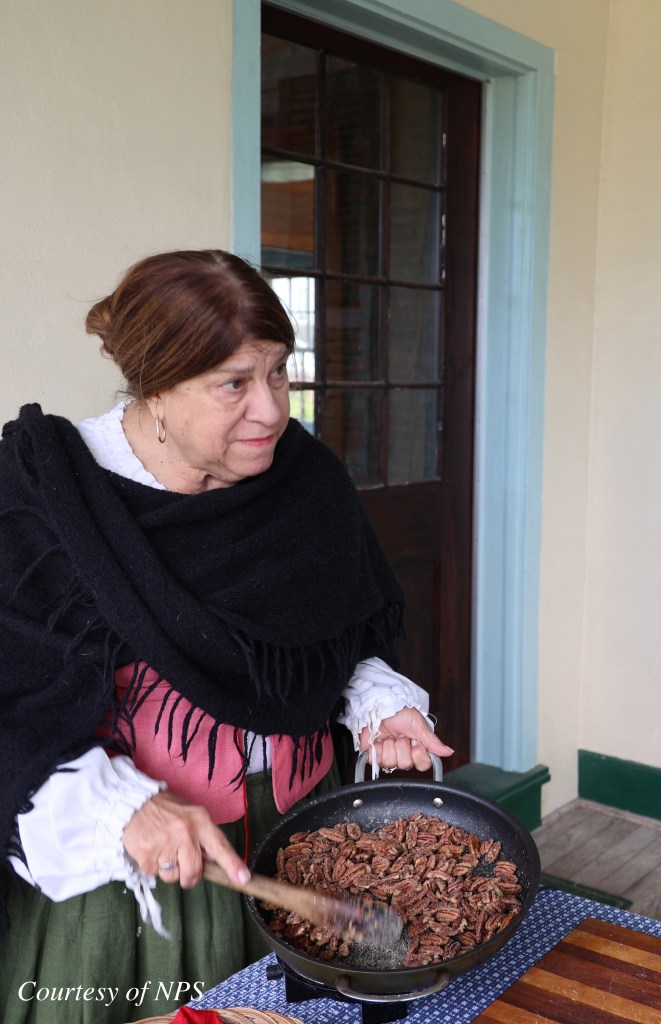
During this time of year the Frenchwomen of Ste. Geneviève were able to show off their cooking skills, using the new foods they found available in the New World, and incorporating African and Native American influences.
In 1811 Henry M. Brackenridge wrote that “The table was provided in a very different manner from that of the generality of Americans. With the poorest French peasant, cookery is an art well understood. They make great use of vegetables and prepared in a manner to be wholesome and palatable. Instead of roast and fried, they had soups and fricassees, and gumbos…”
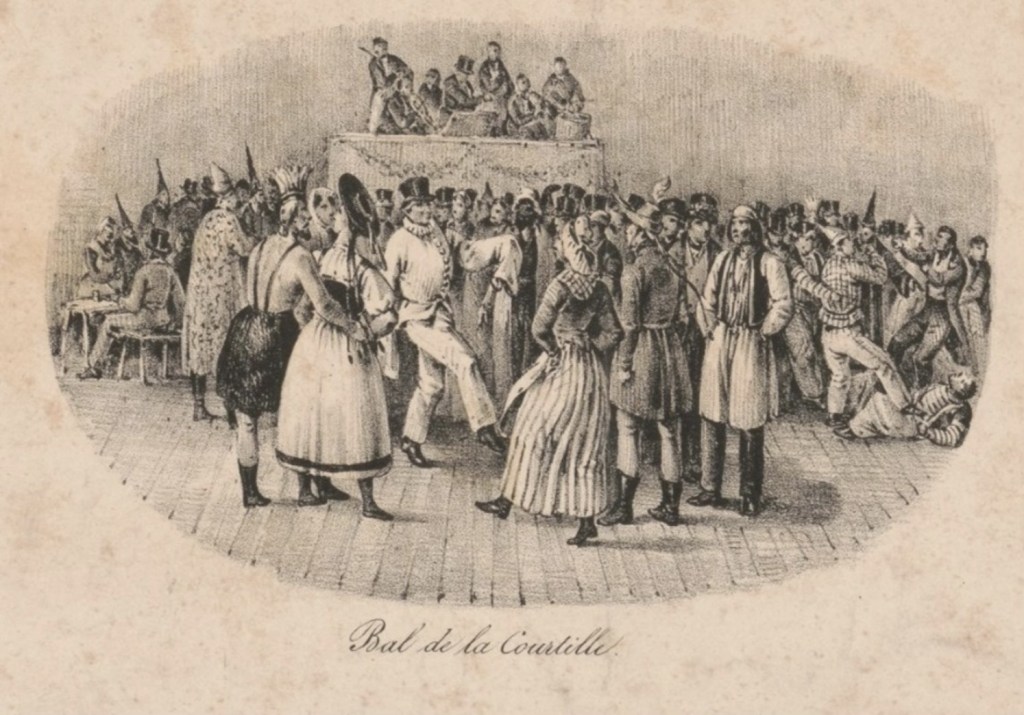
The Kings Ball featured finely dressed participants like those seen in this sketch of the “Bal de la Courtille” from 1820. Library of Congress)
The next holiday celebration, La Guiannée, took place on New Year’s Eve. On the evening of December 31st, a troupe of male singers dressed in costume went door-to-door throughout the community. As they sang, they asked for donations from each household for the upcoming Epiphany feast. The group collected things like lard, poultry, eggs, wheat, and candles to feed the community and decorate for the Epiphany Celebration. (The 250-year-old tradition of La Guiannée is still celebrated in Ste. Geneviève to this day.)
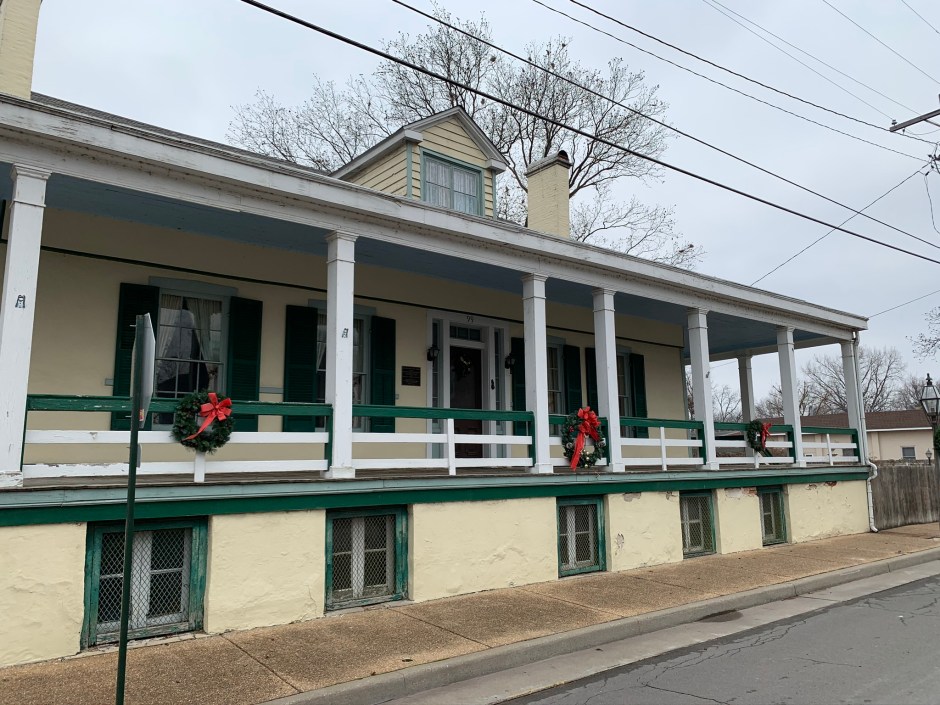
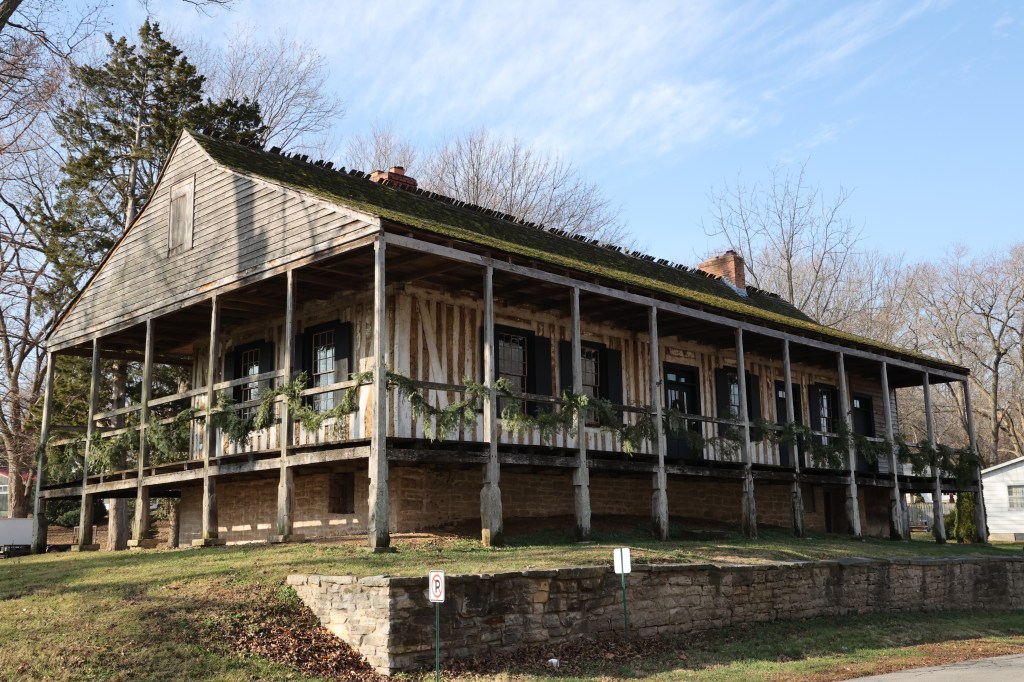
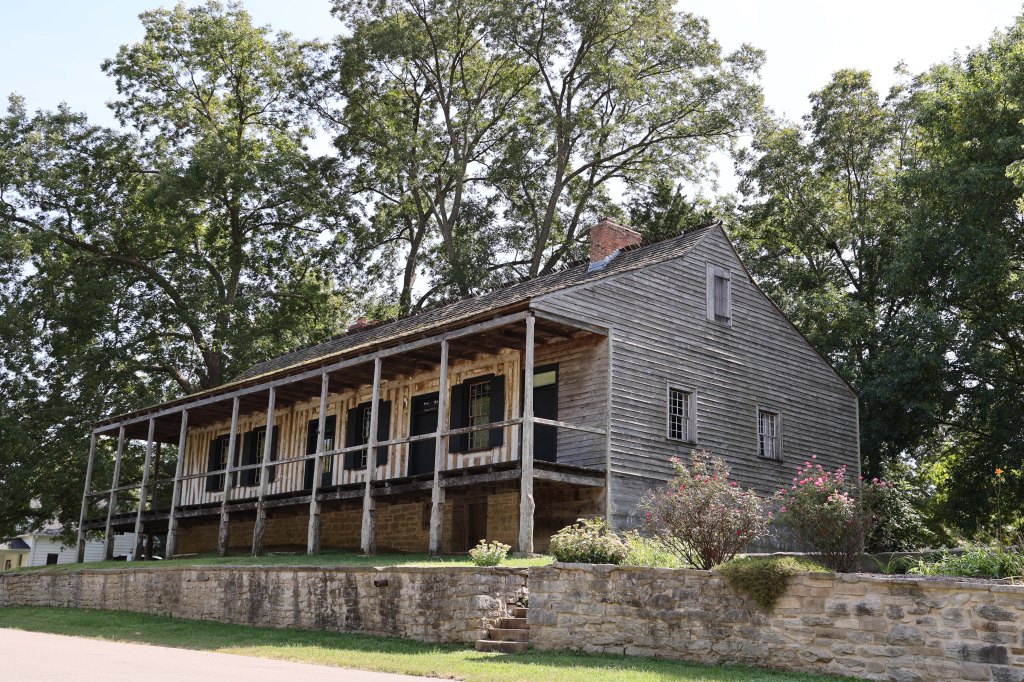
Green Tree Tavern, courtesy NPS
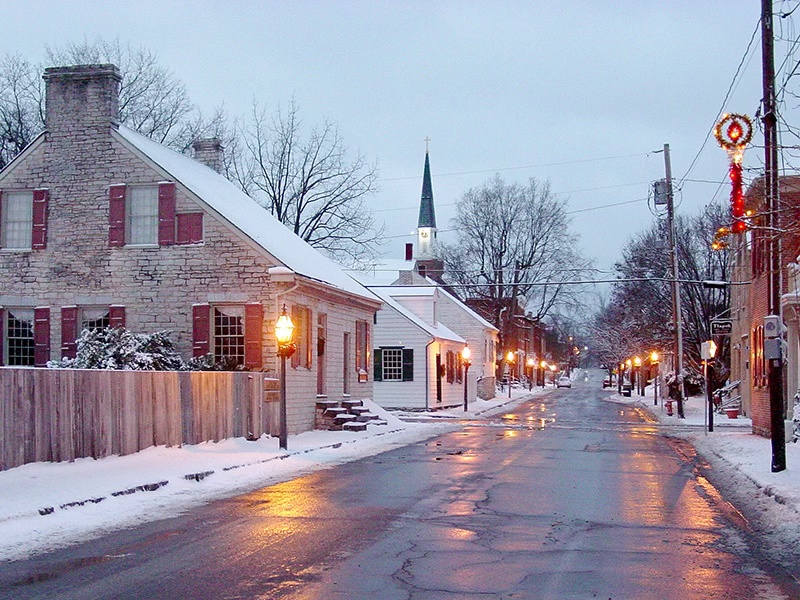
As the years went on and the village changed, the holiday traditions for the French Catholic residents of Ste. Geneviève ebbed and flowed. With the arrival of new residents from American and German backgrounds, new traditions emerged, and old traditions adapted to suit the growing community. The changes have allowed for many of the French Catholic traditions to continue into the present-day community.
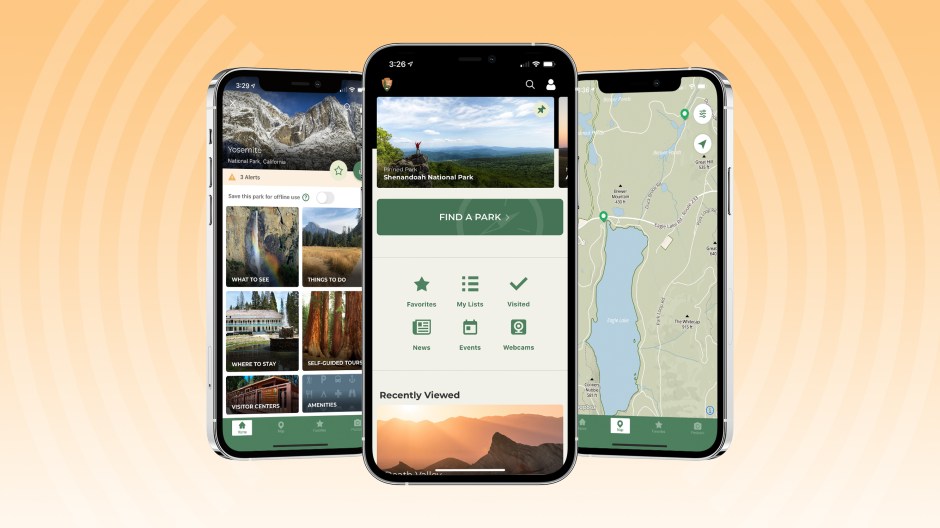
Are you planning a trip to a national park in 2024? Wouldn’t it be handy to have all the important information about the park at your fingertips, both before you go and while you’re there? Now you can – with the NPS app.
The free app was created by National Park Service rangers with visitors in mind. It provides up-to-date information about each of the nearly 430 national park sites across the country to help you make the most of your visit. You can even download content for offline use, which comes in handy if you’re exploring remote areas in parks or have concerns about data limits.
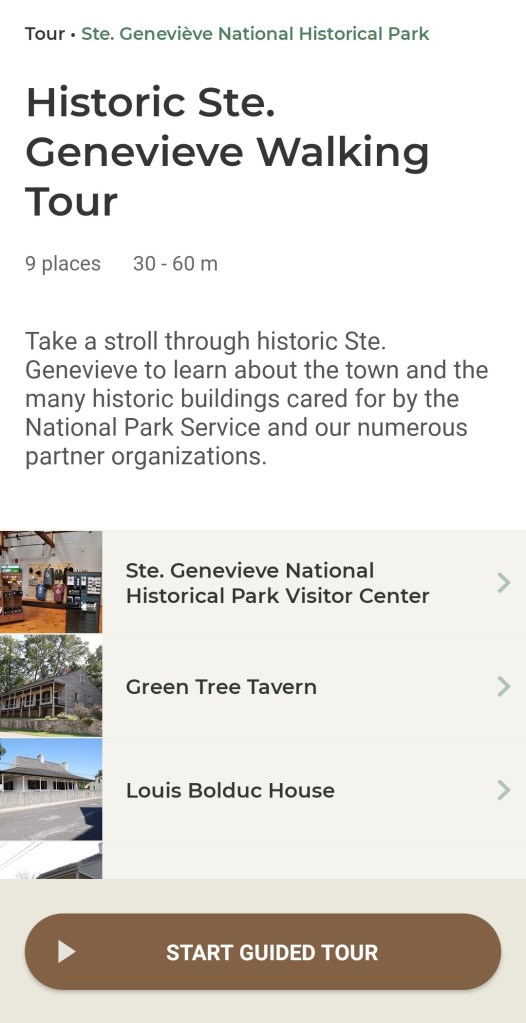
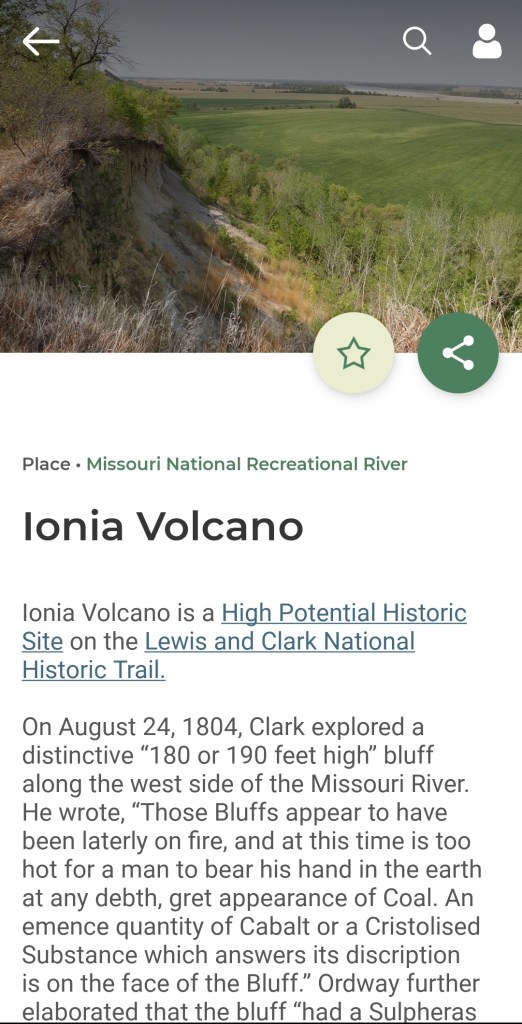
The tools provided by the app range from the basic to the esoteric. Once you click on the Explore Full Park tab, you’ll find directions and interactive maps; lists of park amenities like food, restrooms, shopping, and accessibility accommodations; information on special events, ranger programs, and self-guided tours; and recommendations for points of interest and recreation opportunities.
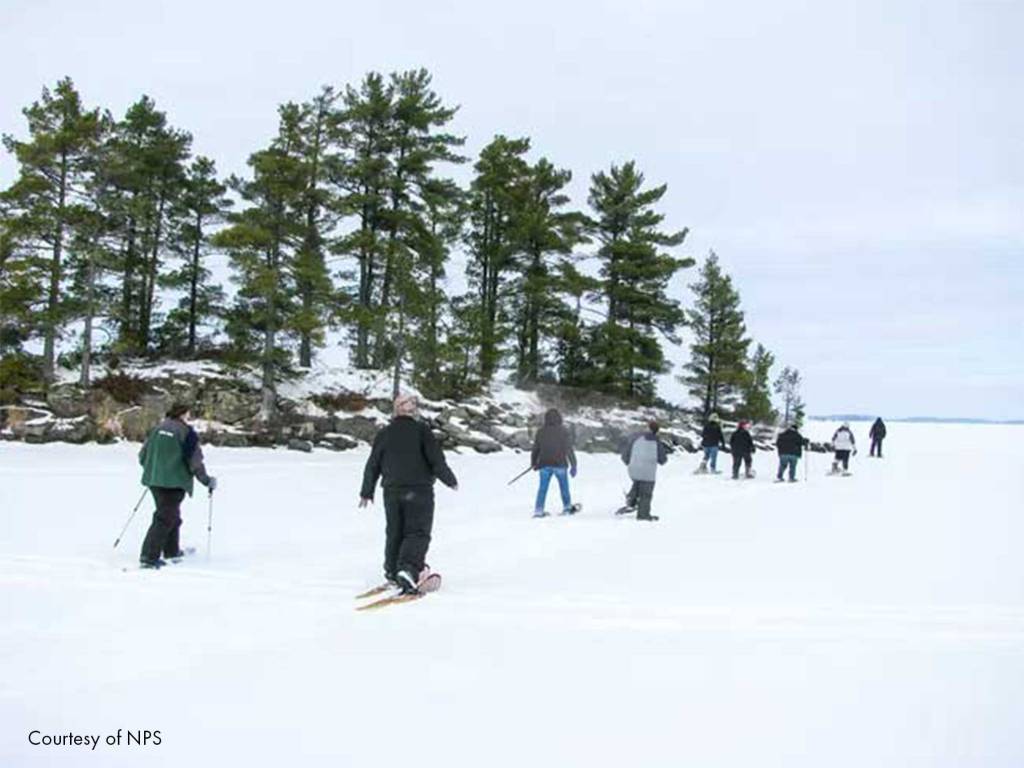
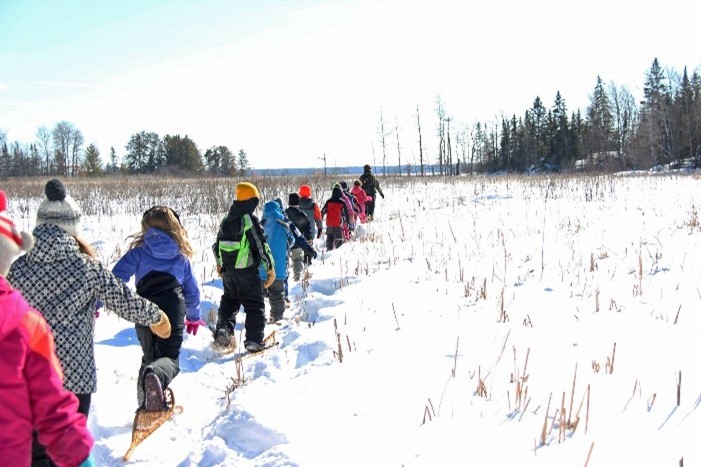
Snowshoeing at Voyageurs National Park
Some parks include more specialized information for visitors with unique interests. History buffs can find out how to access the archives at Ulysses S. Grant National Historic Site, for instance. Or winter sport enthusiasts can learn about snowshoeing or sledding opportunities at Voyageurs National Park.
Other examples of highlights that the app offers for visitors to our partner parks include information on how to:
If for no other reason, you’ll appreciate the app for its real-time updates on conditions within a park, such as road closures, long entry lines, weather advisory warnings, fees, and reservation information.
The NPS App is currently available for iOS- and Android-powered devices such as phones or tablets. You can download it for free through the App Store and Google Play.
Now that summer is in full swing, you’re probably making vacation plans. If a national park is on your travel agenda, we have a suggestion you won’t want to pass up: buy an America the Beautiful Pass.
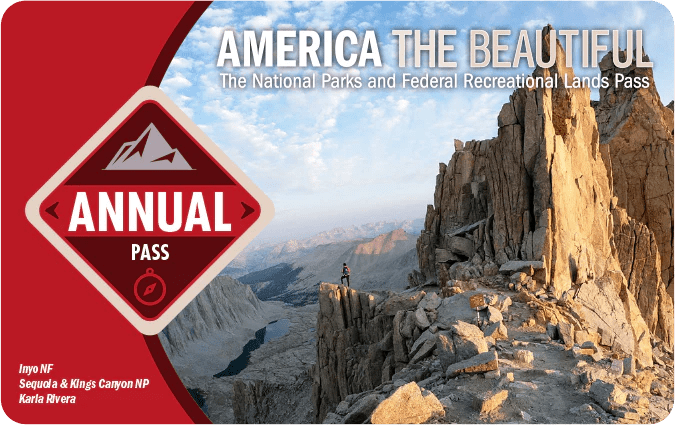
This $80 annual pass entitles you and three guests to free access to more than 2,000 public sites managed by five federal agencies for an unlimited number of visits during the year. And since some national parks charge up to $20 per person or $35 per vehicle, these savings can add up. What’s more, the proceeds from the purchase of each pass are dedicated to improving and enhancing visitor experiences at these federal recreation sites.
Ulysses S. Grant National Historic Site. Credit: NPS/David Newmann
Beyond the regular annual park pass, there are other options for certain groups:
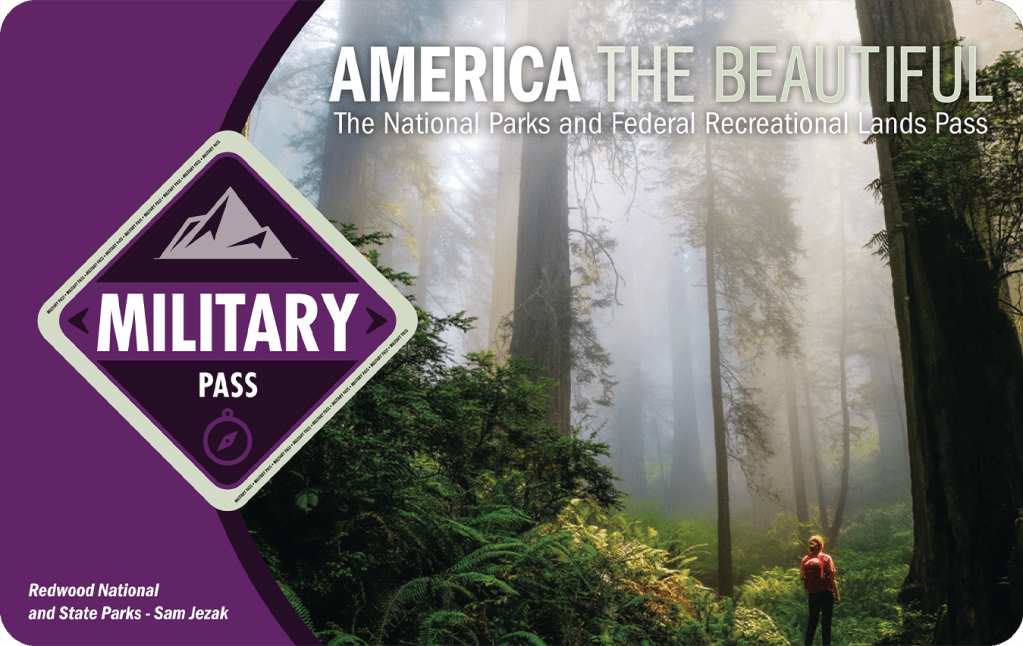
Members of the military and their dependents qualify for a free annual Military Pass;
Gold Star families and Veterans can receive a free lifetime Military Pass;
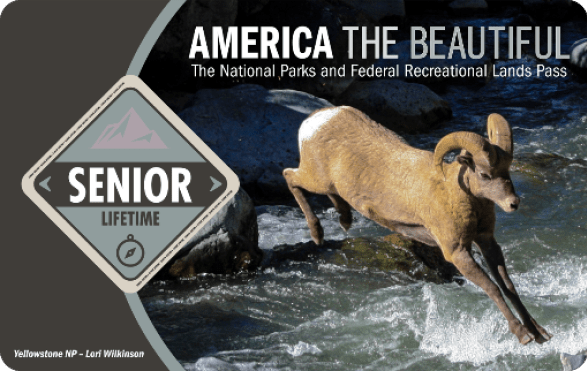
Those who are ages 62 and up can purchase a $20 annual Senior Pass or an $80 lifetime Senior Pass;
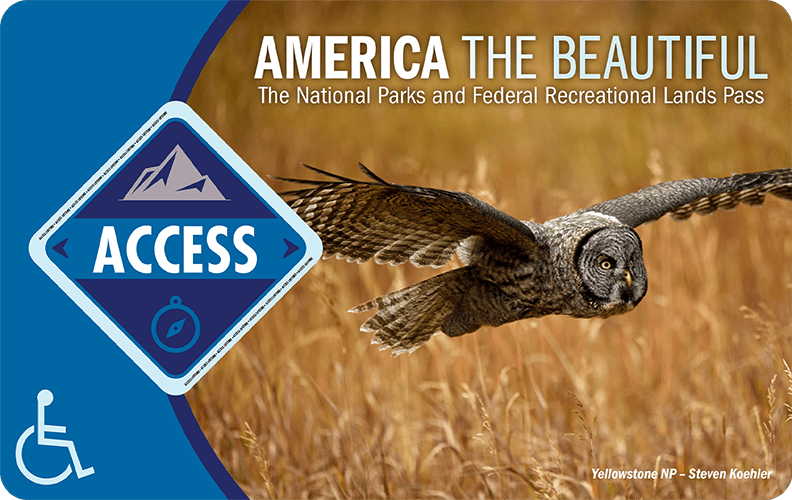
Those who have a permanent disability can qualify for a free lifetime Access Pass, regardless of their age.
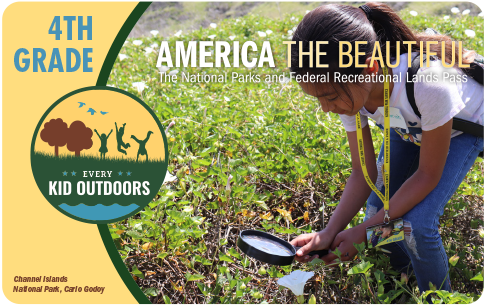
Children in 4th grade and their educators can take advantage of a free Every Kid Outdoors Annual 4th Grade Pass.
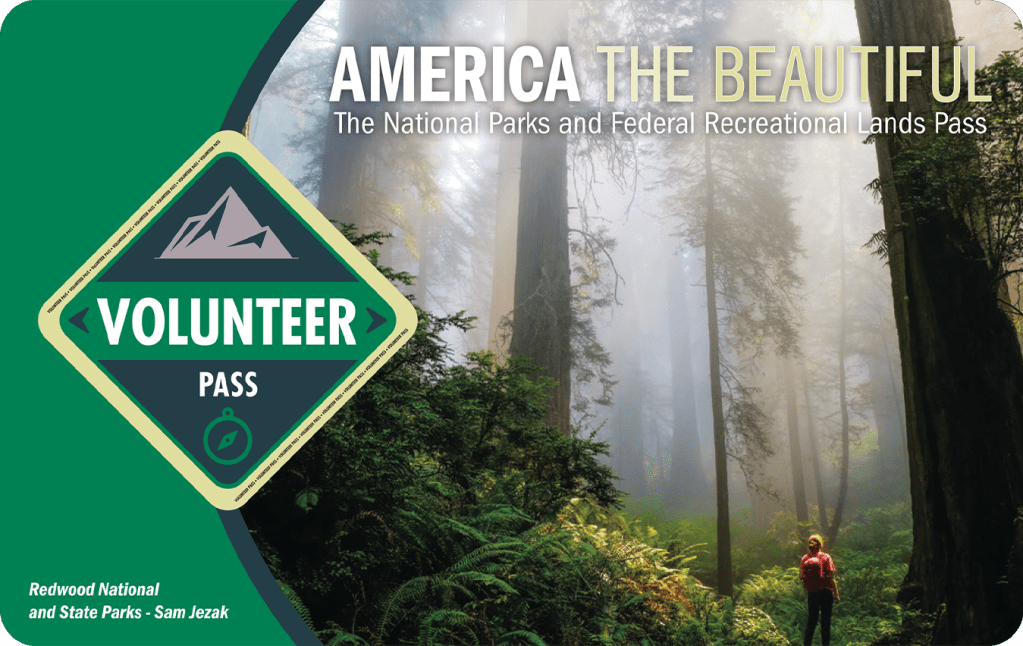
Those who volunteer for a federal recreation site for more than 250 hours are entitled to a one-year Volunteer Pass.
Where can you get one of these park passes? If your vacation is more than two weeks away, you’ll have time to order your passes online and have them mailed to you (there’s a $10 processing fee for online orders). But if you’re travelling sooner, you’ll want to buy your passes at one of more than 1,000 recreation sites managed by the National Park Service, Bureau of Land Management, U.S. Fish and Wildlife Service, U.S. Forest Service, and the U.S. Army Corps of Engineers. To find one near you, go here.
Feel like hitting the road? Check out our suggestions for a few fun weekend adventures.
Trip 1- St. Louis
Day 1– Let’s start this trip with St. Louis’ own iconic Gateway Arch! Your first stop will be the museum at Gateway Arch National Park, where you will learn all about the history of St. Louis, westward expansion, and the unique architecture contest which resulted in the construction of the Arch. Next, catch a showing of the documentary film Monument to the Dream followed by a tram ride to the top of the Arch. At 630 feet high, you can’t beat those views! For lunch, you can grab a bite at the Arch Café, have a picnic on the beautiful park grounds, or go check out the restaurants downtown. (St. Louis is known for its diverse food offerings.) In the afternoon, take a riverboat tour of the Mighty Mississippi before you do some exploring of Downtown St. Louis. Catch a Cardinals baseball game, go for a stroll through Citygarden Sculpture Park, or take a tour of the National Blues Museum. For dinner, check out the restaurants and nightlife at Ballpark Village.
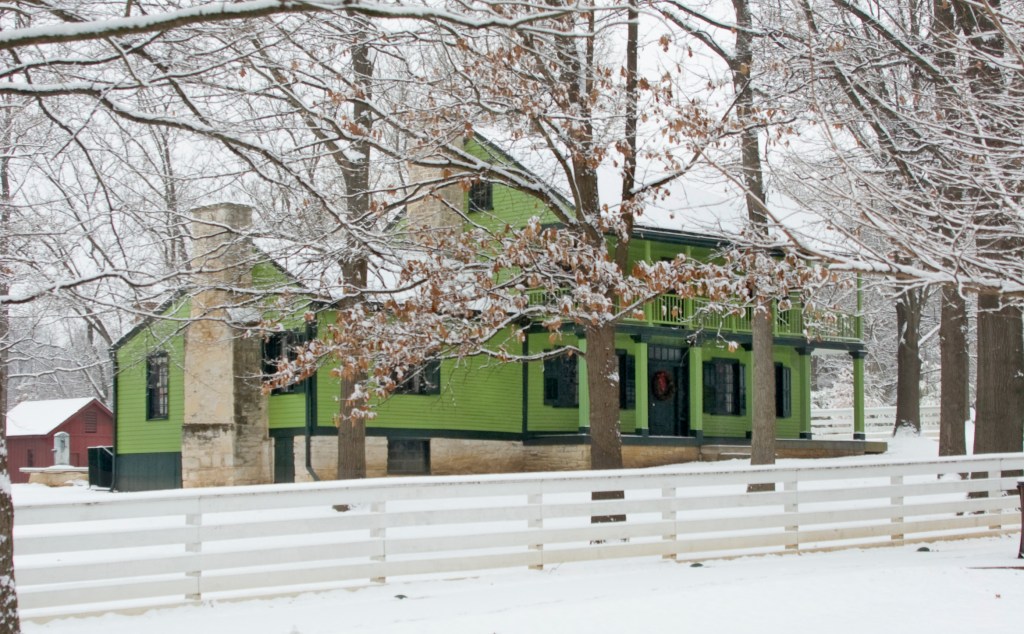
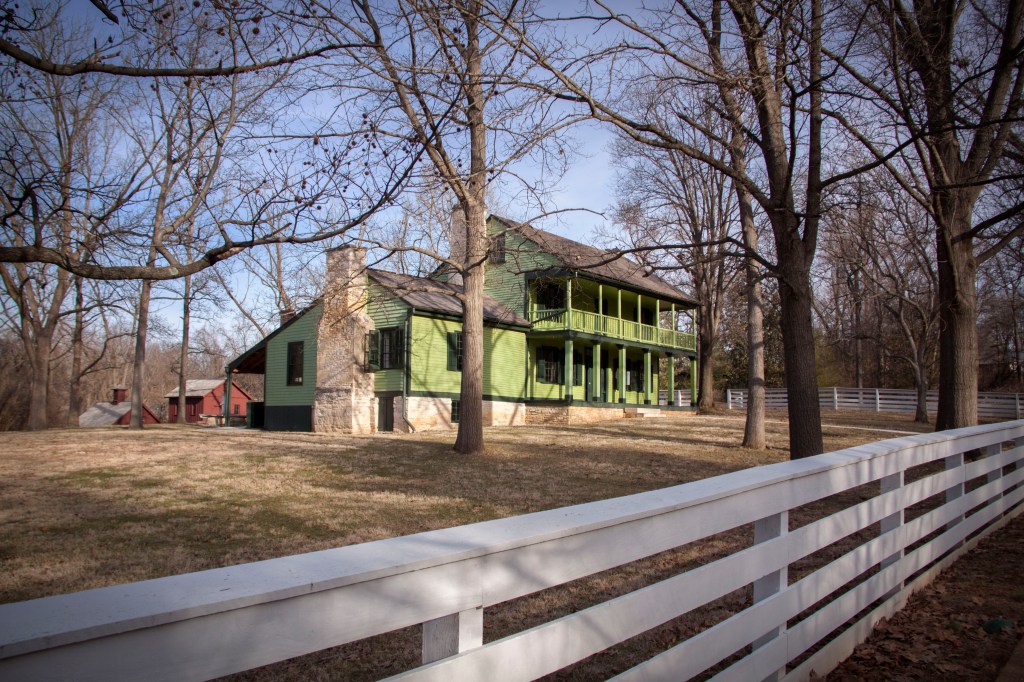
Day 2– Your main attraction for today will be Ulysses S. Grant National Historic Site in south St. Louis County. Check out the orientation film and take a self-guided tour of the park’s museum, housed in the historic 1872 horse stable that Grant himself designed. Then embark on a guided tour of White Haven, the home where Ulysses S. Grant and his wife, Julia, fell in love and made their life together. Next, head to brunch or lunch at The Barn restaurant before taking a tour of the Thomas Sappington House Museum next door. When you’re done, make sure to take a stroll through Father Dickson Cemetery, one of the first public cemeteries for African Americans in St. Louis. For dinner, take your pick from the many wonderful restaurants in nearby Crestwood, Kirkwood, or Webster Groves.
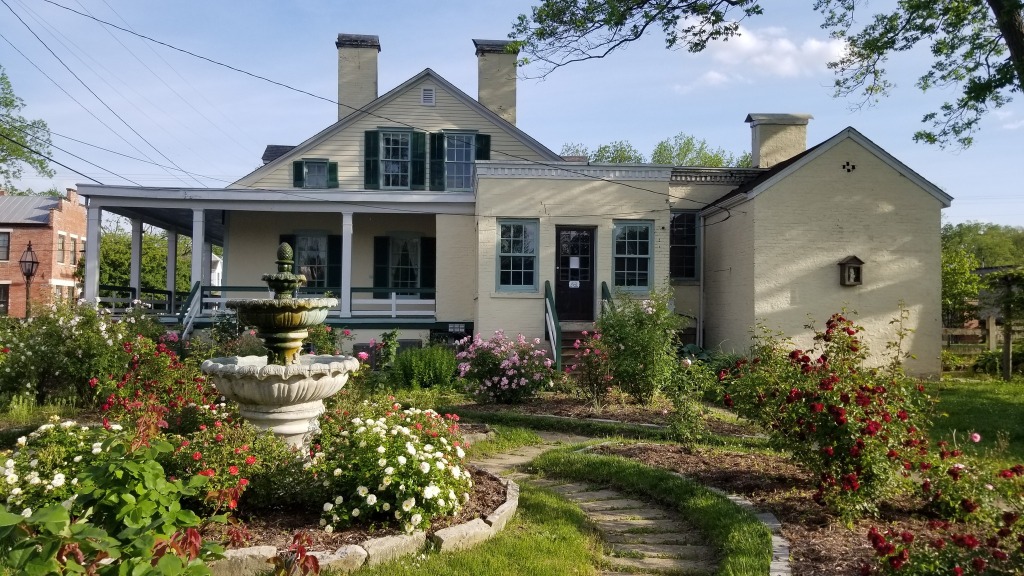
Green Tree TavernJean Baptiste Valle House
Day 3– On the final day of your weekend trip, you are going to head an hour south along the Mississippi to the beautiful Ste. Genevieve National Historical Park. This unique park is spread out across multiple buildings in the 18th century town of Ste. Genevieve. You can take ranger-led tours of the historic Green Tree Tavern and the Jean Baptiste Valle House. Next, you can wander through this picturesque small town and visit the multitude of shops, museums, and restaurants. For dinner, visit one of the six wineries on the Route du Vin Wine Trail.
Trip 2- Arkansas
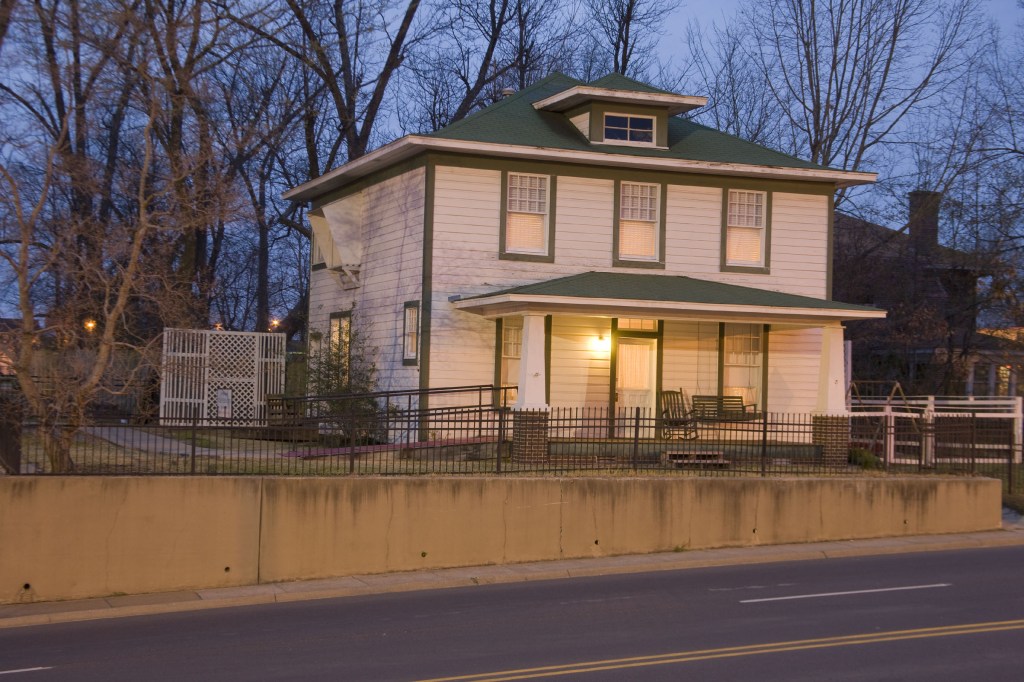
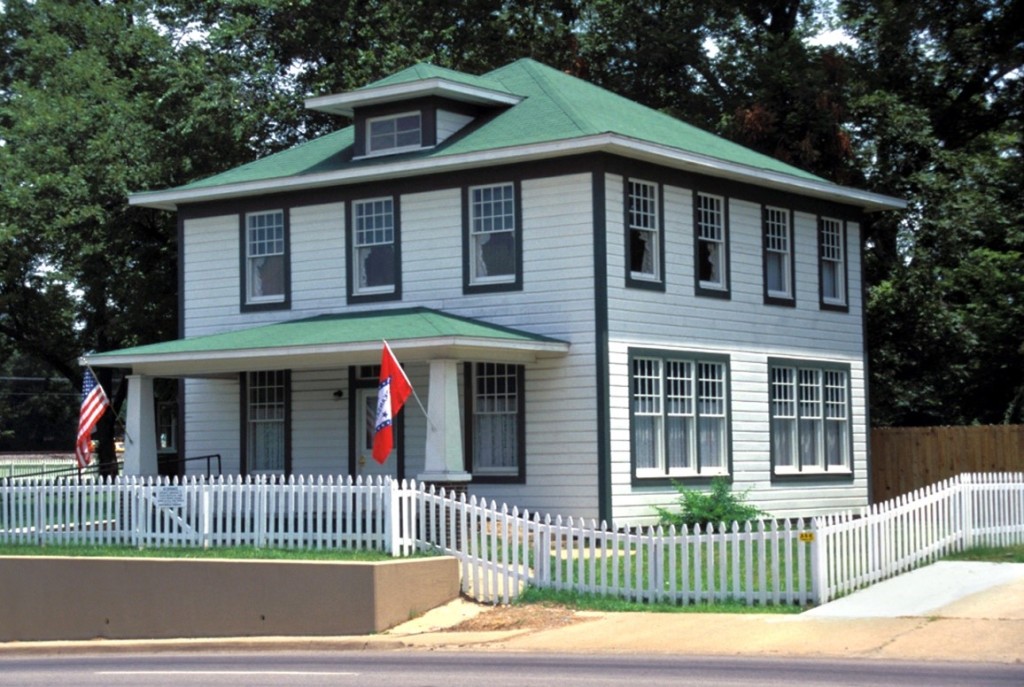
Day 1– Every good trip begins with a little hope, and for this trip, we are taking that literally! Your first stop is the President William Jefferson Clinton Birthplace Home National Historic Site in the quaint town of Hope, Arkansas. Stop by the park’s visitor center before taking a ranger-led tour of the home where our 42nd President was born. Next, head down the road for lunch at Tailgaters Burger Co. or one of the other local restaurants. In the afternoon, you can check out the Hope Visitor Center and Museum or the quirky Klipsch Museum of Audio History.
Credit: NPS/Calvin Smith
Day 2– About a 90-minute drive from Hope is the unique town of Hot Springs. One of the first “spa towns,” Hot Springs has a mix of historic architecture and natural beauty. Though Hot Springs National Park is not one of JNPA’s partner parks, we still don’t want you to miss this gem! Your first stop is the Fordyce Bathhouse Museum and Visitor Center to talk to a ranger and learn more about the history of the area. Next, you can check out historic Bathhouse Row or go for a hike on one of the park’s many miles of trails. For lunch, stop by the Superior Bathhouse Brewery, the only brewery located in a national park! In the afternoon and evening, go for a soak at one of the bathhouses, take another hike, or check out Downtown Hot Springs.
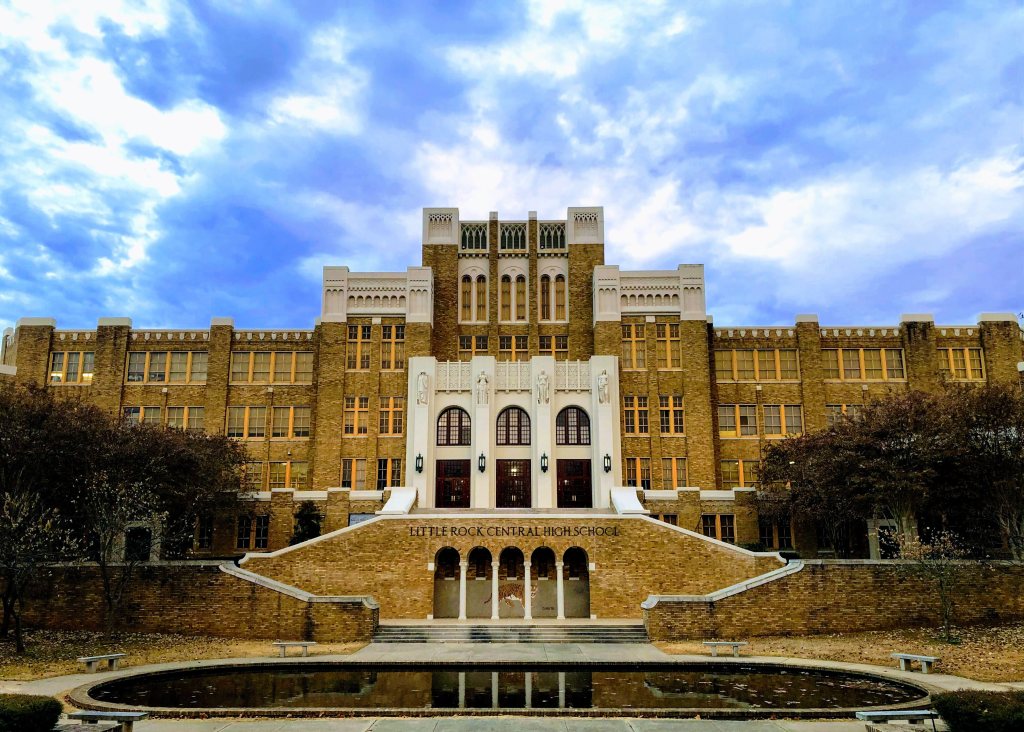
Day 3– Continuing northeast for an hour, this trip ends at the capital of Arkansas, the bustling city of Little Rock. At Little Rock Central High School National Historic Site, you will learn about the bravery of the Little Rock Nine and the rocky beginnings of the desegregation of America’s schools. Stop by the park’s visitor center first to view the exhibits and watch the interpretive film. Then, take a ranger-led tour of the school, which is still in use today. Ask the park rangers for a lunch recommendation before heading into the city to check out one of the many other cultural institutions. Don’t forget to visit the State Capitol Building, which offers free guided tours. Animal enthusiasts may want to see the Little Rock Zoo, or art aficionados may enjoy the Arkansas Museum of Fine Arts. For an outstanding ending to your Arkansas vacation, check out one of the many local restaurants for dinner.
Trip 3- Northern Minnesota
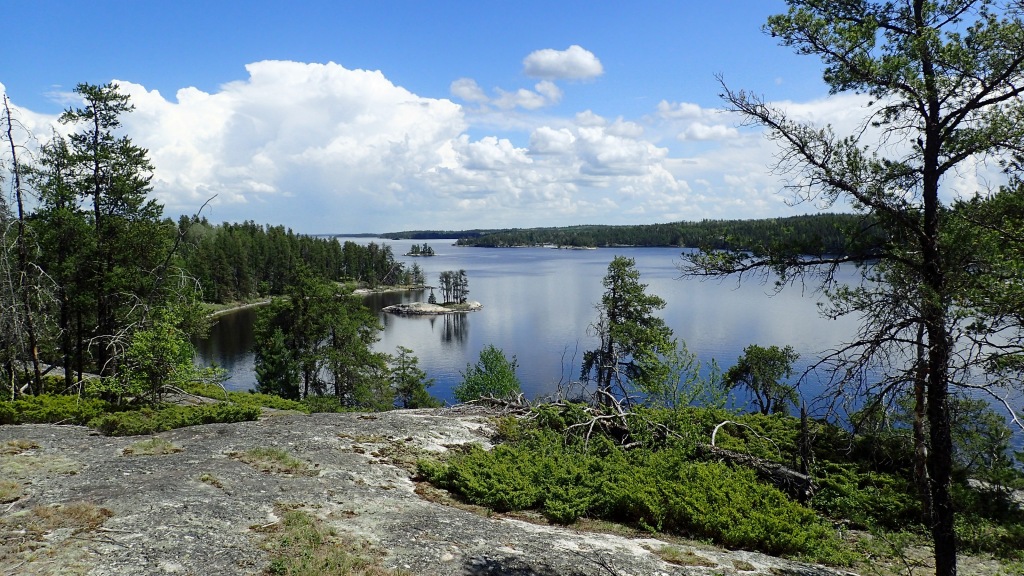
Day 1– At over 200,000 acres, Voyageurs National Park will take up all three days of this getaway. Your first stop will be one of the three visitor centers. The largest, Rainy Lake Visitor Center, offers exhibits, an orientation film about the park, and a bookstore (operated by you-know-who). Next, head out on one of the park’s many hiking trails to take in the scenery. Bring a picnic lunch to enjoy along the trail, but make sure to pack out what you pack in. End your day by getting settled into your lodgings. You could opt for the Kettle Falls Hotel or get a bit more adventurous: there are a variety of camping options at Voyageurs or you could even rent a houseboat!
Credit: NPS
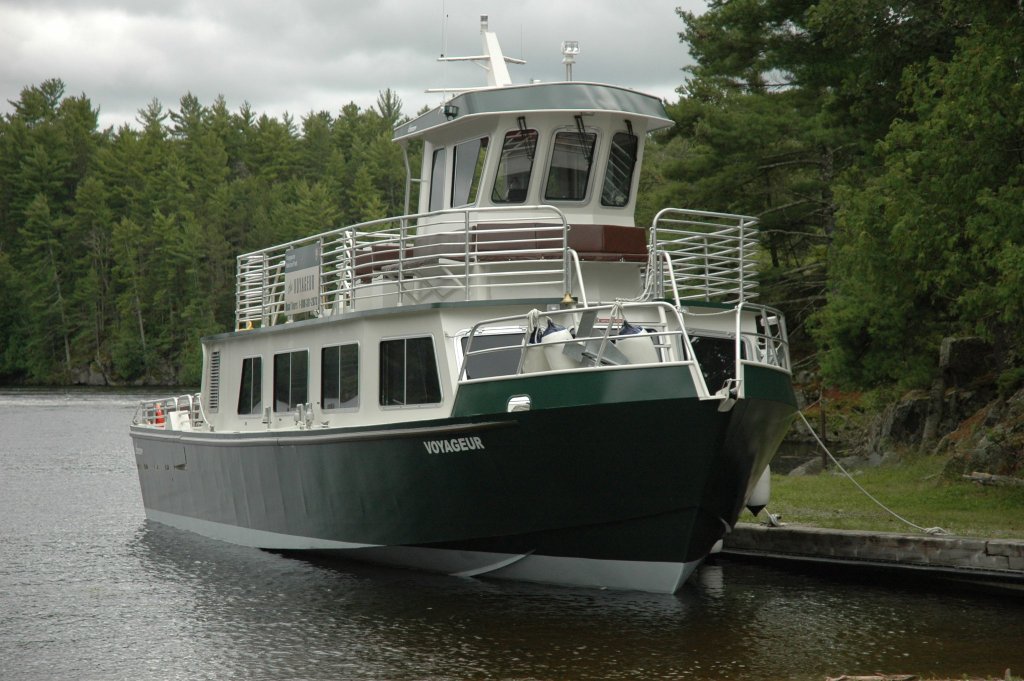
Day 2– For your only full day at the park, take the opportunity to participate in a guided tour or two. In the Rainy Lake district, you can take a boat tour aboard the Voyageur, or in the Namakan district, you can voyage on the park’s newest tour boat, the Ne-zho-dain. If you are feeling extra adventurous, sign up for one of the park’s North Canoe Voyages, where you can paddle a replica of a north canoe while being immersed in an on-the-water living history lesson!
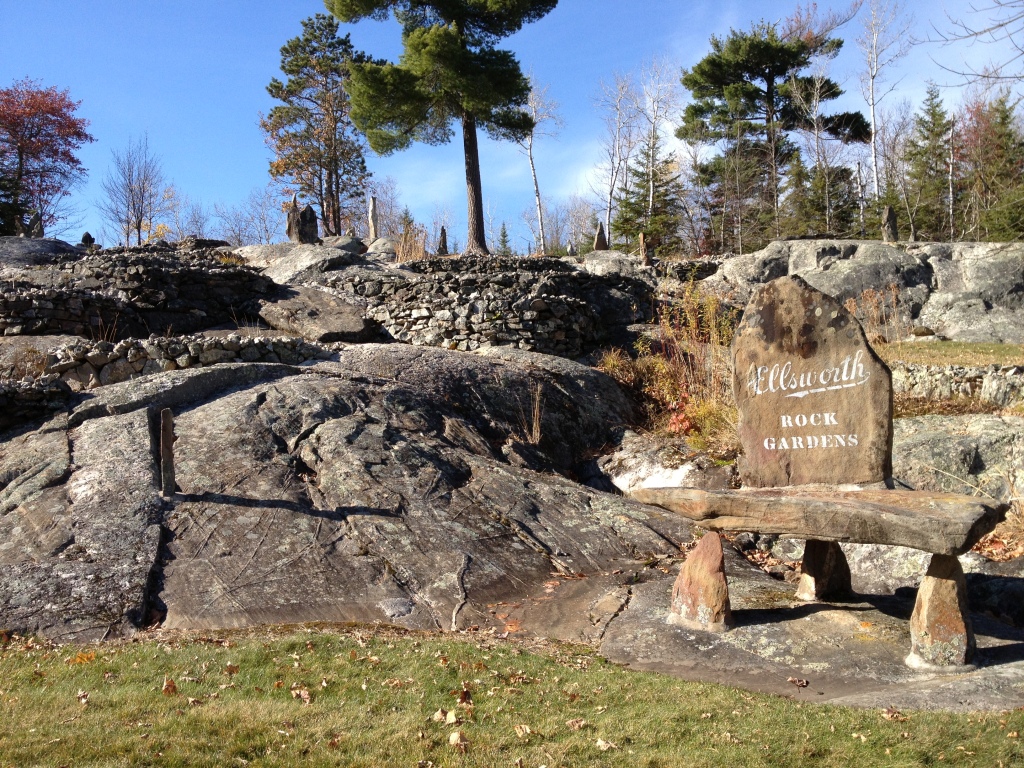
Day 3– For your final day at Voyageurs, take time to check out the Ellsworth Rock Gardens and the Harry Oveson Fish Camp, or do a bit of birdwatching. Then on your way out of the park, stop by one of the gateway communities, such as International Falls, to see the sights and restaurants they have to offer.





 JNPA Blog