
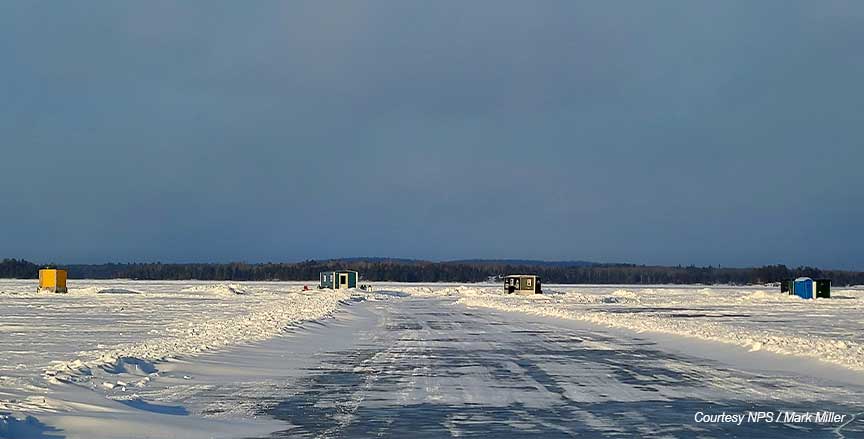
During harsh winter conditions, most of us do our utmost to avoid driving on icy roads. But not so at Voyageurs National Park, where visitors intentionally drive on ice!
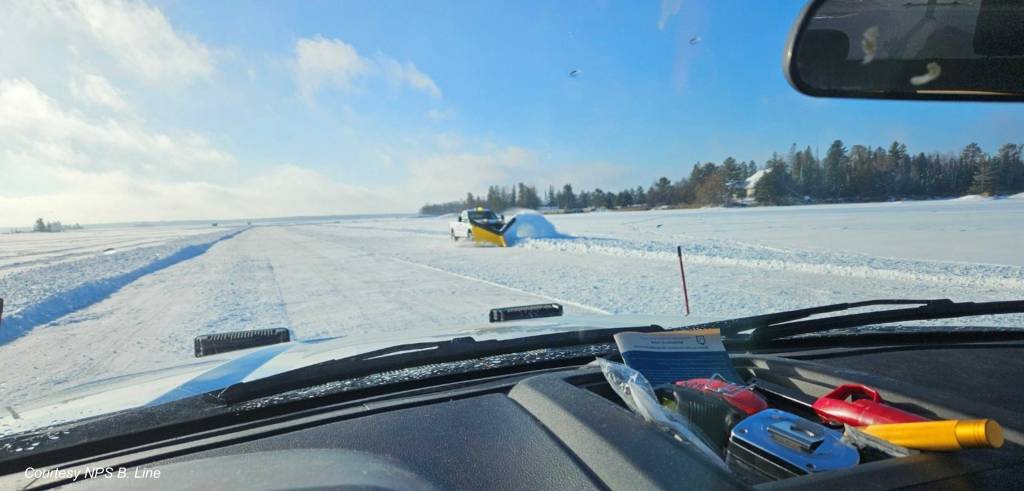
Every winter, park staff members clear snow from parts of Rainy Lake and Kabetogama Lake, creating ice roads that visitors can use. The roads are open to cars and trucks weighing less than 7,000 lbs. (Snowmobiles are not permitted). The speed limit is 30 mph. The roads are typically very wide – up to 60 feet or more – giving vehicles plenty of room to park and spread out.
Voyageurs’ two main ice roads begin at the park’s visitor centers, though the routes vary from year to year. Depending on weather conditions, they are open from early January to mid-March.
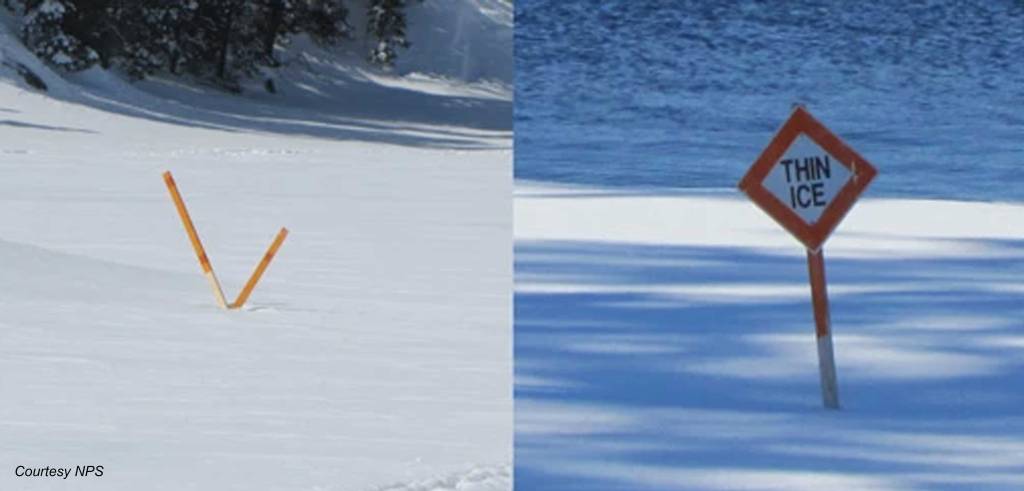
The park takes visitors’ safety very seriously. When heavy snow, slush, or thin ice exists, an ice road may be closed or shortened for safety. Specially trained staff test the ice thickness frequently and they post warning signs when the roads are unsafe for travel.
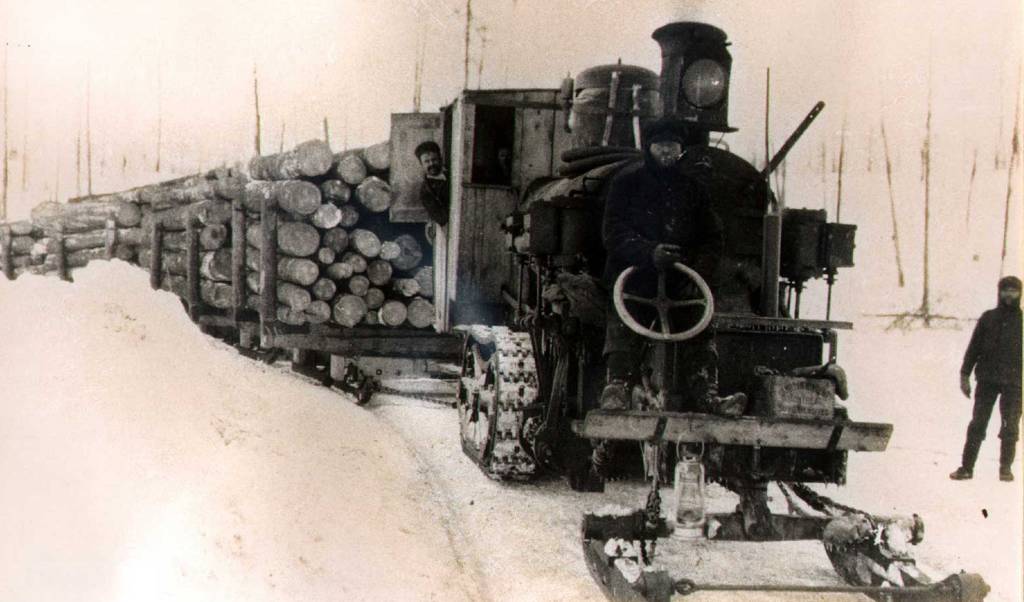
Northern Minnesota ice roads have a long history. Starting in the late 19th century, lumberjacks created ice roads to transport logs efficiently. And truckers carrying other loads commonly took advantage of the frozen lakes.
Why do park visitors use the ice roads today, you ask? Some use them to access cross country ski trails. Others take their kids to a popular sledding hill. Still other visitors drive to their favorite ice fishing spots, where they spend the day waiting at a fishing hole for a bite from below.
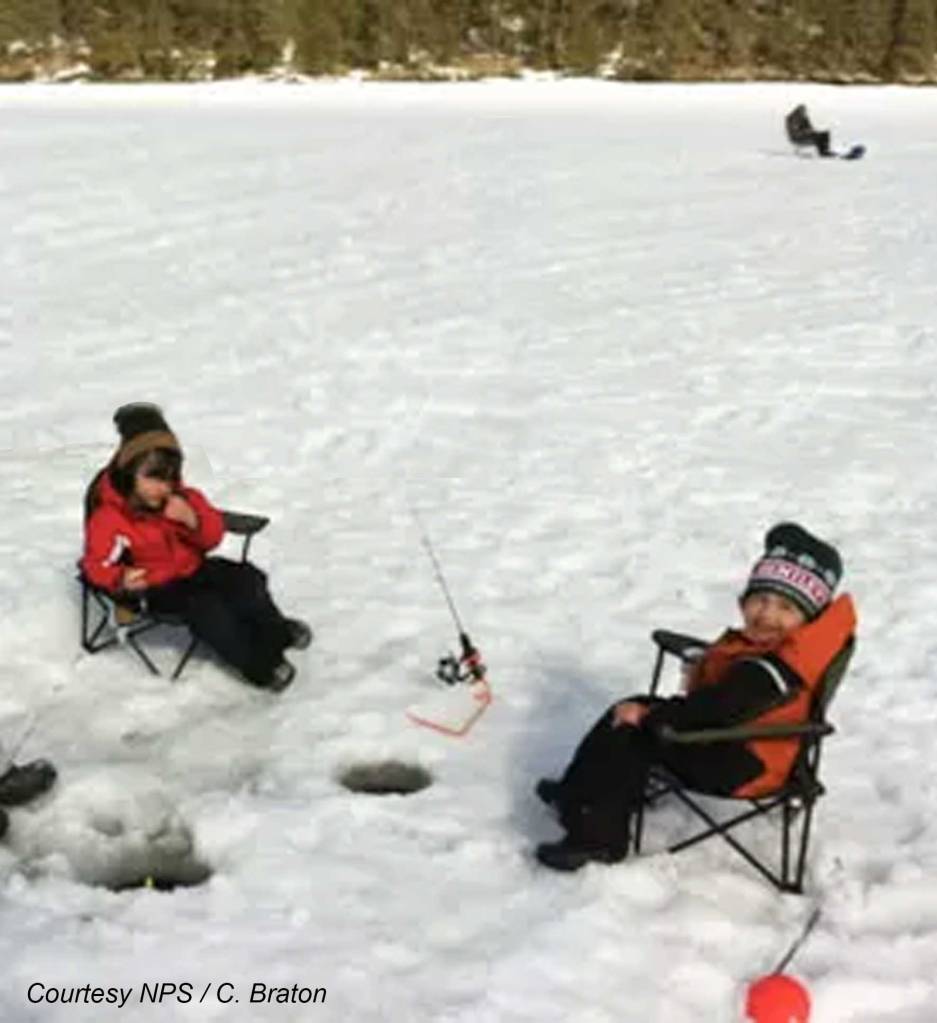
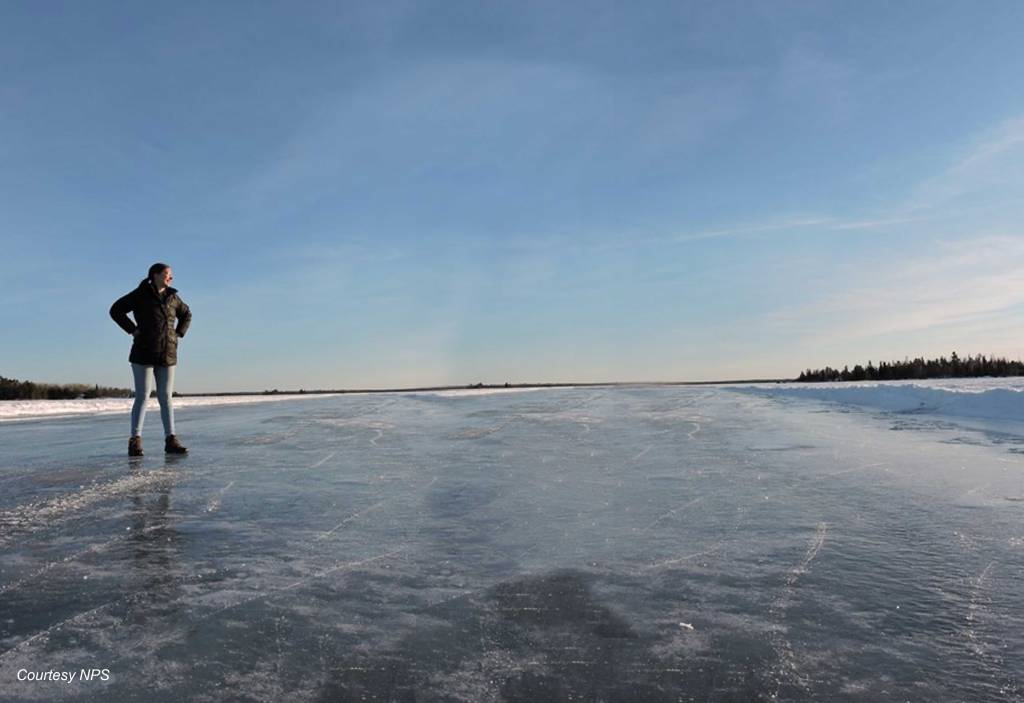
Whatever the reason, driving the ice roads is just another unique part of North Woods culture.
 JNPA Blog