A National Park named after a Saint?

One of our partner park sites – Ste. Geneviève National Historical Park – understandably carries the name of the small Missouri town where it’s located.  But have you ever wondered who the “real” Sainte Genevieve was?

Now known as the Patron Saint of Paris, Geneviève lived in 5th century France, where she was widely admired for her piety, devotion, and charitable works.  She had frequent visions of angels and saints, and she was appointed by the bishop of Paris to look after other religious women of the city. Though she was reportedly born to a wealthy family in a Paris suburb, Geneviève followed an austere lifestyle.  Not only did she impose strict punishments on herself, she ate only twice a week, surviving on small portions of barley bread and beans.

In 451 when Attila the Hun threatened to attack Paris, Geneviève persuaded the panic-stricken residents of the city not to flee but to pray.  When Attila’s army diverted to Orléans instead, many credited her intervention with saving Paris.  Years later she prevented famine by penetrating a military blockade and delivering much-needed grain to the city.

After living a remarkable 90 years, Geneviève was laid to rest in a Paris abbey.  Her burial site became a place of pilgrimage, as worshippers reported many instances of miracles and cures attributed to her intercession.  Even today, her name is invoked during natural disasters such as drought, flooding, and widespread fever. 

When the town of Ste. Geneviève was founded along the Mississippi River in the 1750s, the French Catholic immigrants named their settlement after Geneviève in the hopes she would protect them from the trials and hardships they would encounter in their new home. 

The staff at Ste. Geneviève National Historical Park also honor her legacy with a statue of the beloved saint on an outside wall of the historic Jean-Baptiste Vallé House.  Be sure to look for it next time you visit the park. 
The Amazing Discoveries of Lewis and Clark

If you fancy yourself an outdoor explorer, there are natural treasures waiting to be discovered amidst the hustle and bustle of downtown St. Louis.  Where, you ask?  Gateway Arch National Park, of course!

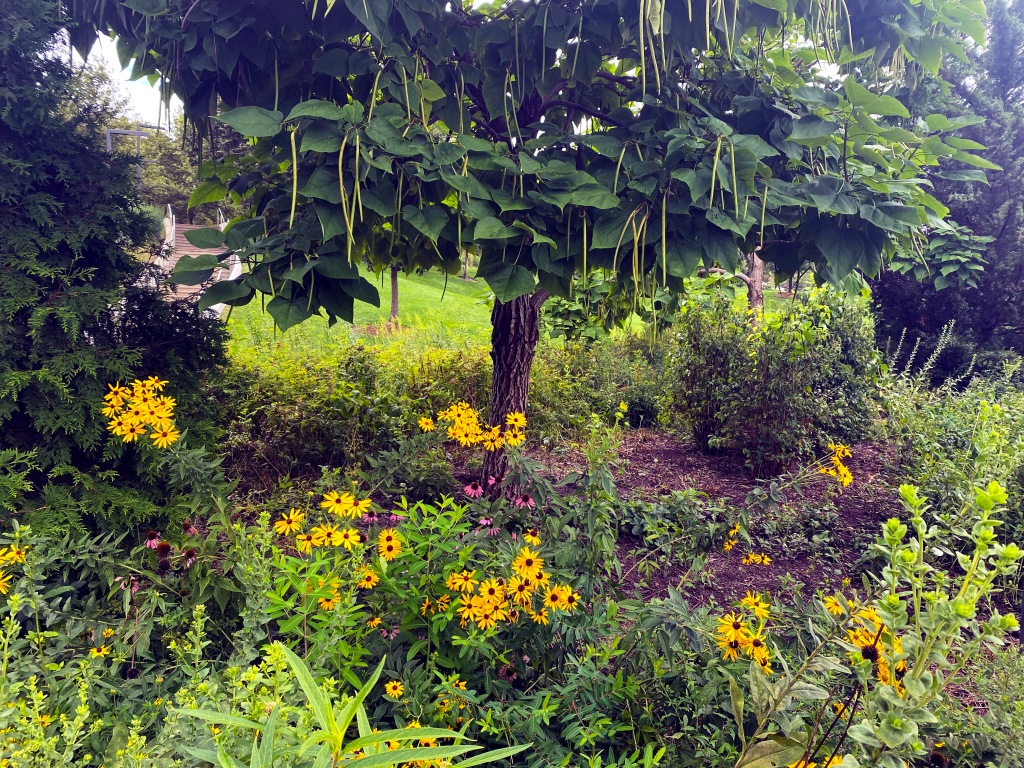
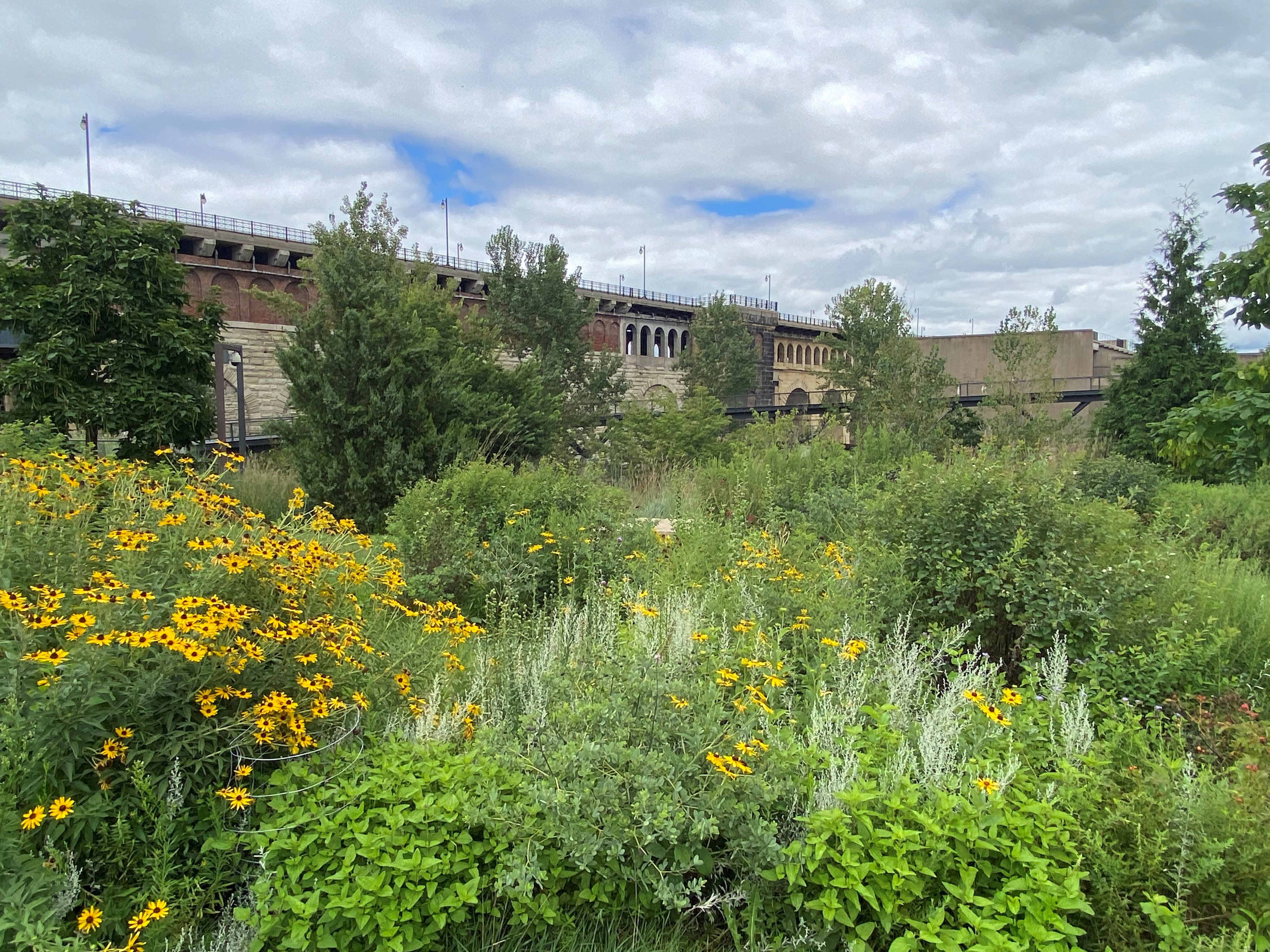
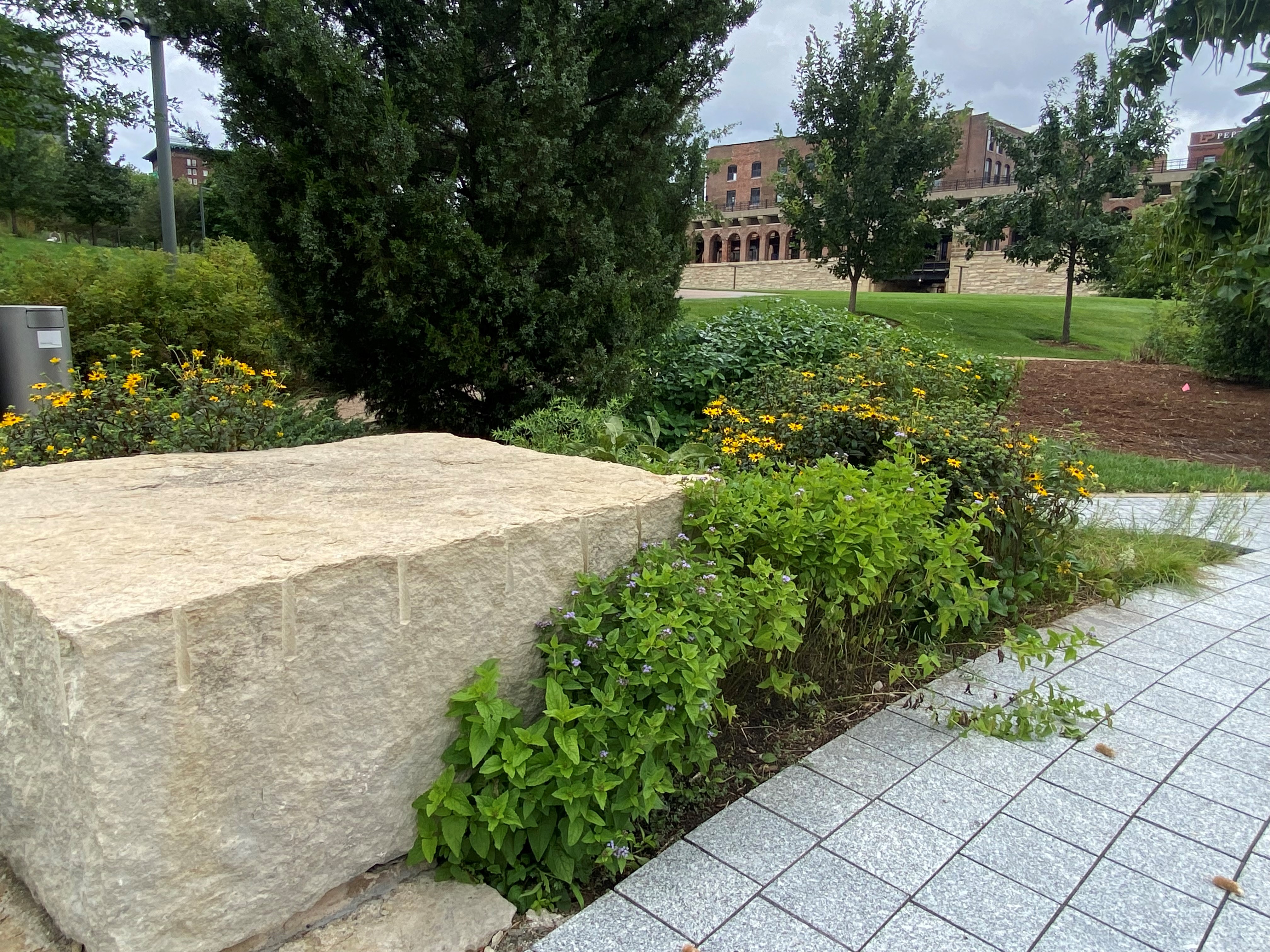
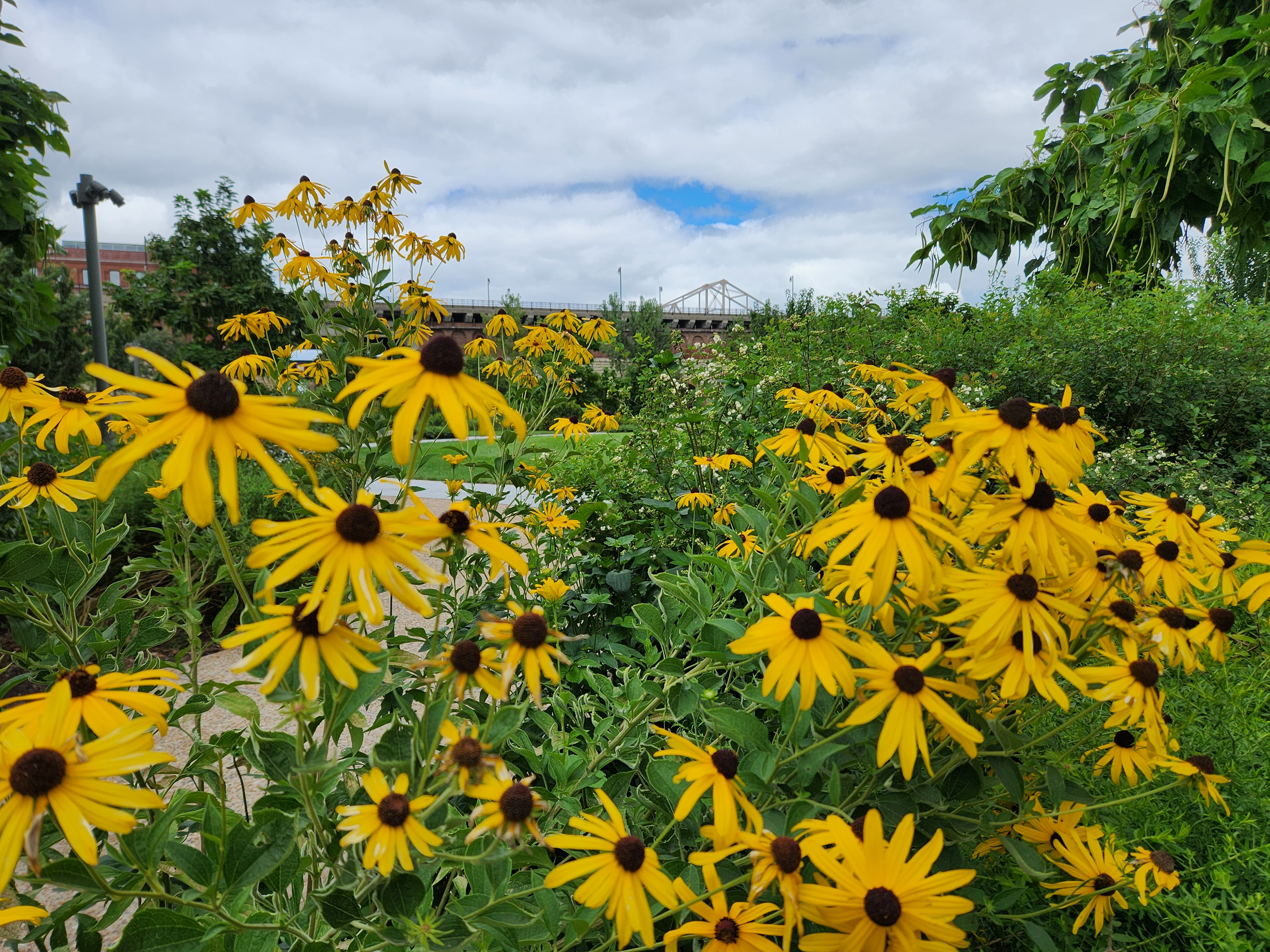
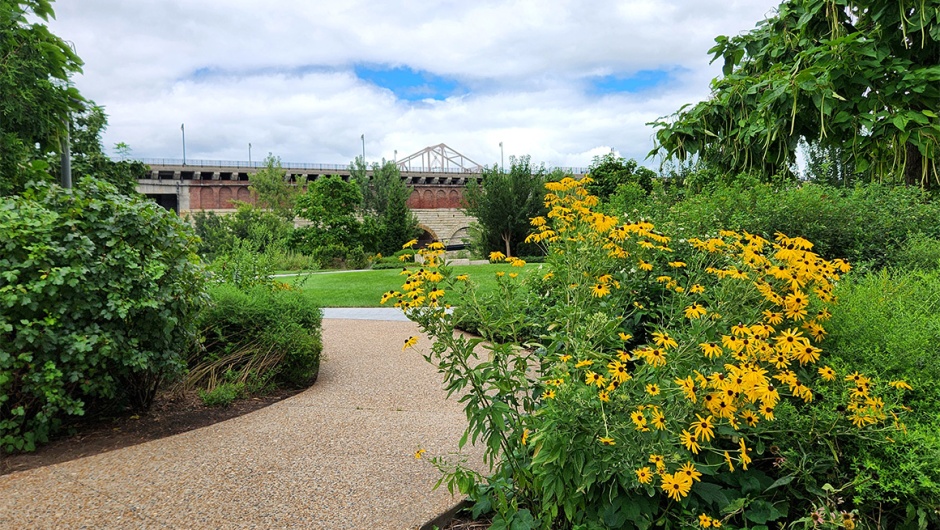
Although the 91-acre Arch grounds are dominated by manicured grassy areas, tree-lined paths, and sculptured ponds, there’s a small area at the north end of the park that looks a bit wilder.  This inviting little oasis – dubbed the Explorers’ Garden – is planted with some of the trees, bushes, and perennials that Lewis and Clark found on their famed expedition to the western U.S.  And it’s just waiting to be investigated!

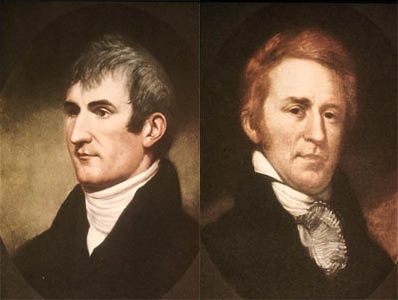
Meriwether Lewis (left) and William Clark (right)

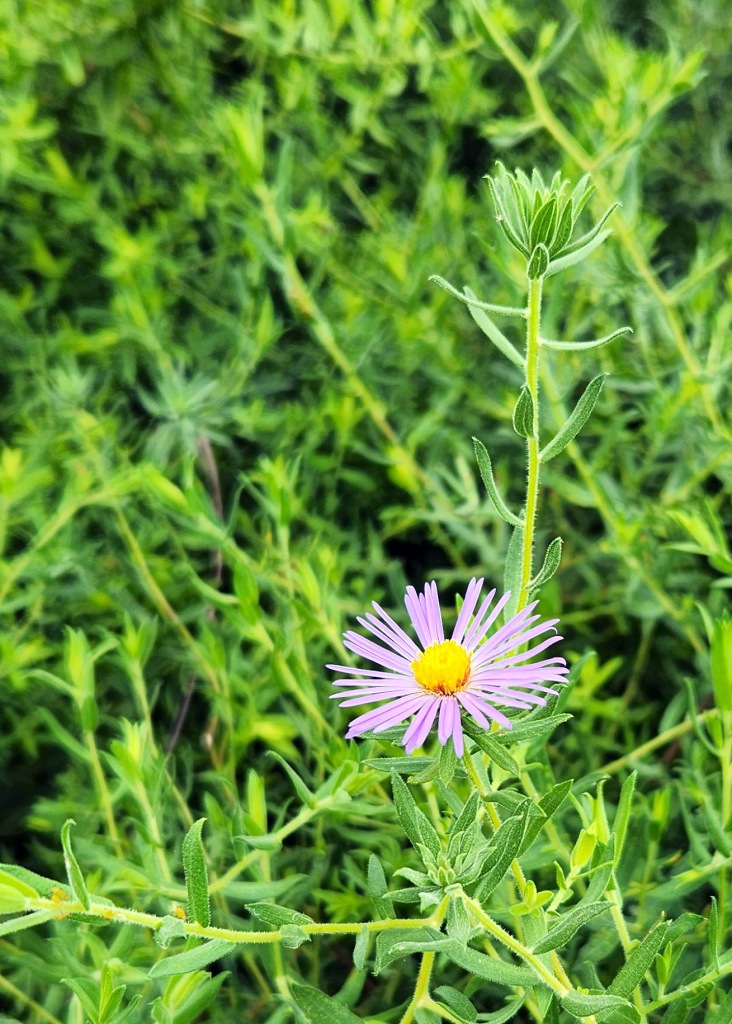
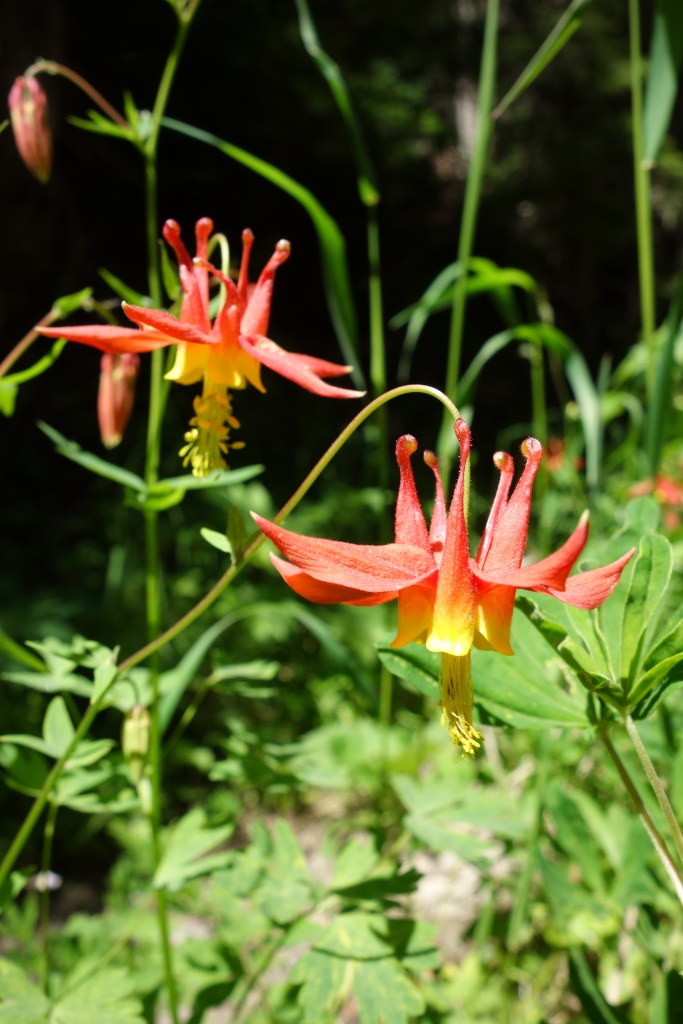
Between 1804 and 1806, Meriwether Lewis and William Clark were commissioned by President Thomas Jefferson to explore and map the newly acquired western portion of the continent.  Their extensive journals recorded measurements and observations of the rivers and landscapes, as well as accounts of the indigenous inhabitants they encountered. They also described at least 178 species of plants that were new to science, recording their habitat, growth and use by Native Americans.  These included the cottonwood tree, slender willow, aromatic aster, prickly pear, and red columbine.

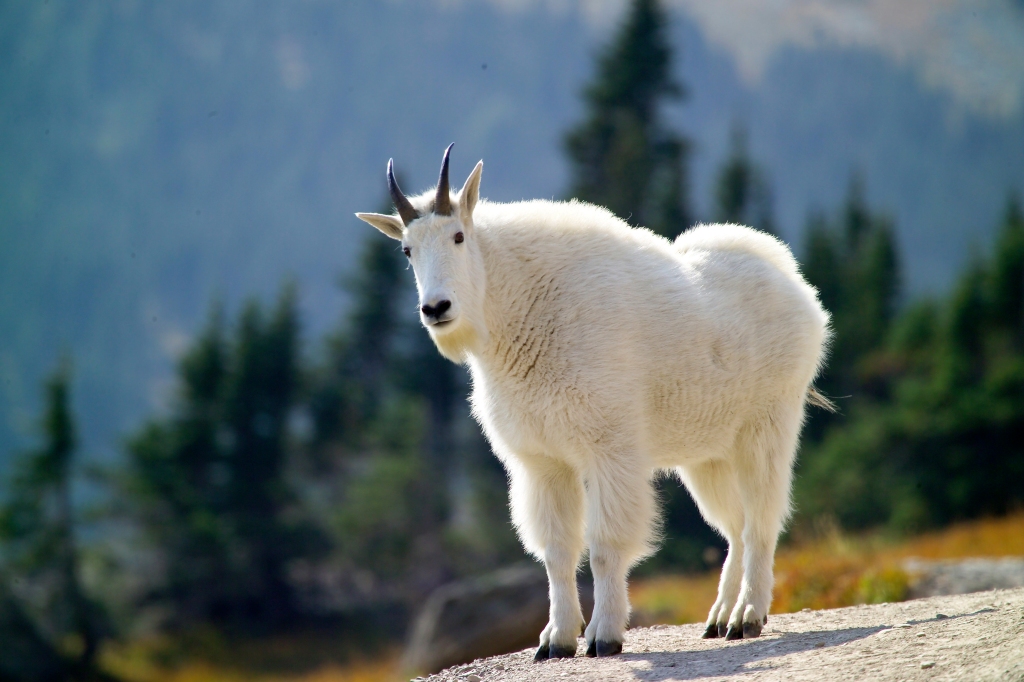
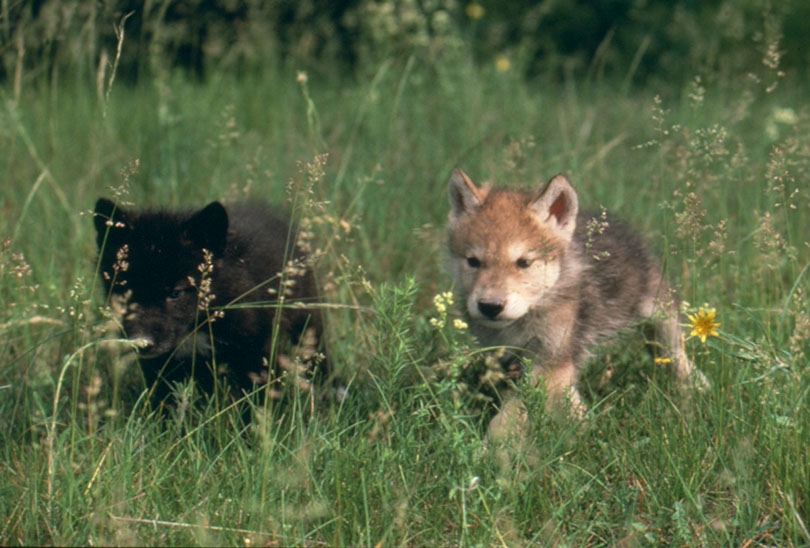
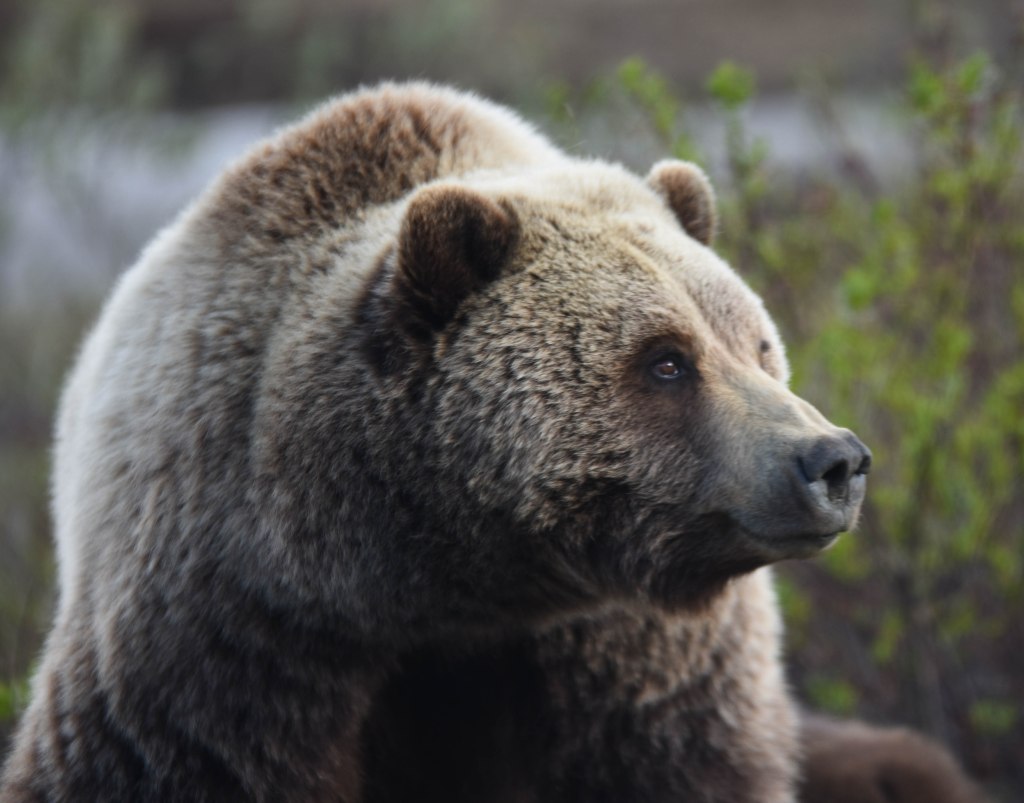
As for animals, the explorers described 122 new species of mammals, birds, reptiles, fish, and insects – including the grizzly bear, bighorn sheep, black tailed deer, mountain beaver, long-tailed weasel, mountain goat, coyote and various species of rabbit, squirrel, fox and wolf.

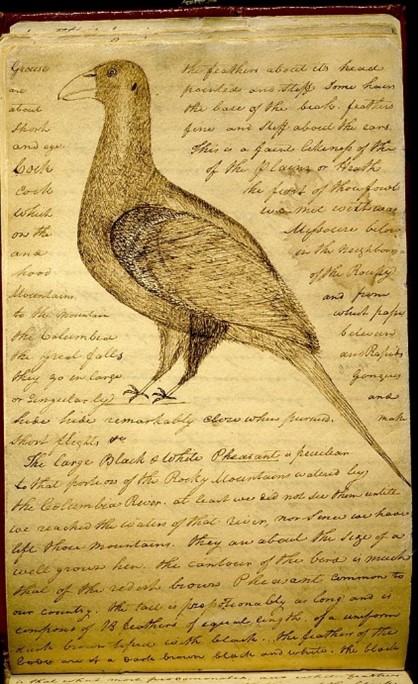
William Clark’s journal entry about a sage grouse, courtesy Missouri History Museum

You probably won’t find any of these animals in the Explorers’ Garden, but some of the plants that Lewis and Clark discovered are included among the variety of native plants that National Park Service staff have introduced there.  Go here to find the list of plants (click on Explorers’ Garden).  

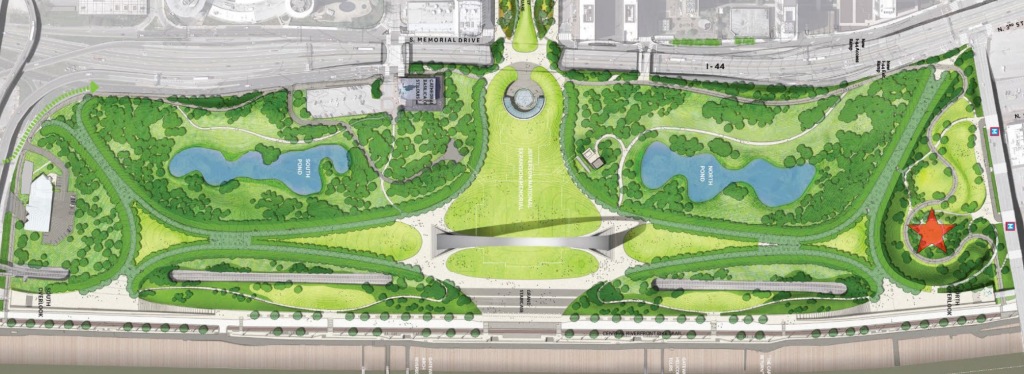
Map of Gateway Arch National Park highlighting the Explorers’ Garden

Many of these species were used by Native Americans and were described by Lewis and Clark in their expedition journals as they traveled west.  You’re invited to act as your own explorer and see what you can find – and be sure to bring the kids. The Explorers’ Garden provides a series of landscaped pathways scaled for children’s play as well as large stones they can climb. You’ll find the garden in the far northeast corner of the park grounds, in the shadow of historic Eads Bridge, the oldest bridge over the Mississippi River.

There’s no better time to visit the Explorers’ Garden than this Saturday Sept. 23, when the park will be celebrating National Public Lands Day.  History and gardening experts will be on hand to show you around, and there will be plenty of other family-friendly activities, so come on down!

If you want to help your kids learn about the famous explorers, they’ll enjoy this fun book Lewis and Clark for Kids: Their Journey of Discovery with 21 Activities.  It’s chock full of cool stories about their three-year journey, including information about the plants and animals they discovered.  You can pick it up at The Arch Store or order it from our online store.

The Hermit of the North Woods

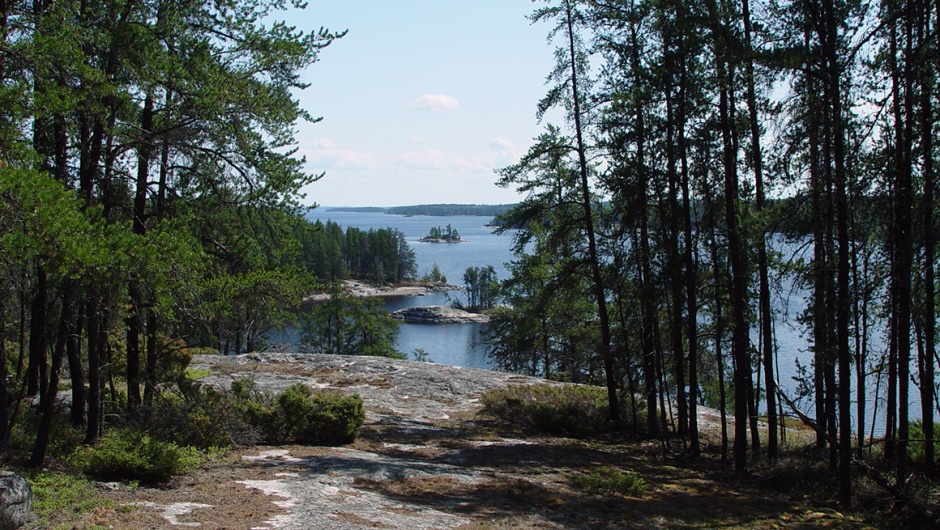
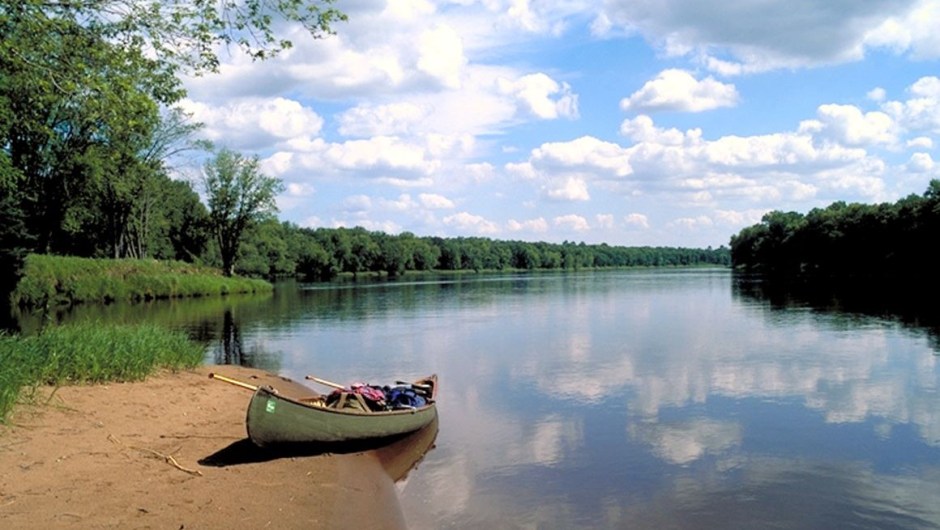
There are many secrets and hidden stories within the forests and waters of Voyageurs National Park.  But perhaps one of the strangest is that of a mysterious recluse who made his home in the rugged back woods near Namakan Lake.

Credit: NPS

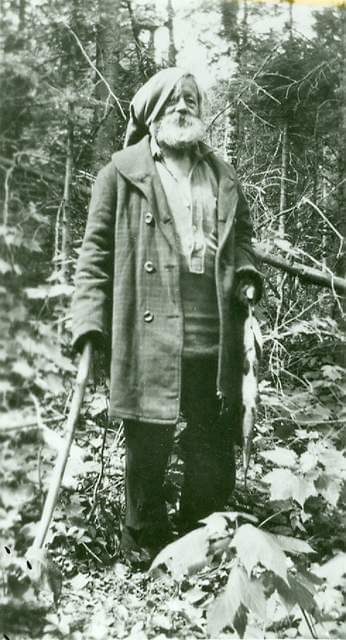
Sometime in the 1930s, locals spotted a small old man paddling a crude log raft on the park’s waters, earning him the nickname “Catamaran.”  No one knew where he came from or why he shunned civilization.  He seemed to be educated and reportedly spoke with a British accent.  He said his name was Bert Upton but refused to reveal more about himself.

Upton lived in a crude hut built over a dug-out hole in the ground, furnished with a homemade hammock but few other possessions.  He occasionally scavenged materials from logging camps but rejected offers of food and clothing from neighbors in the area.  He snared rabbits and other wildlife, and he also fished the local waters.  He seemed to enjoy his surroundings, forging paths in the woods and even planting attractive gardens around his hut.

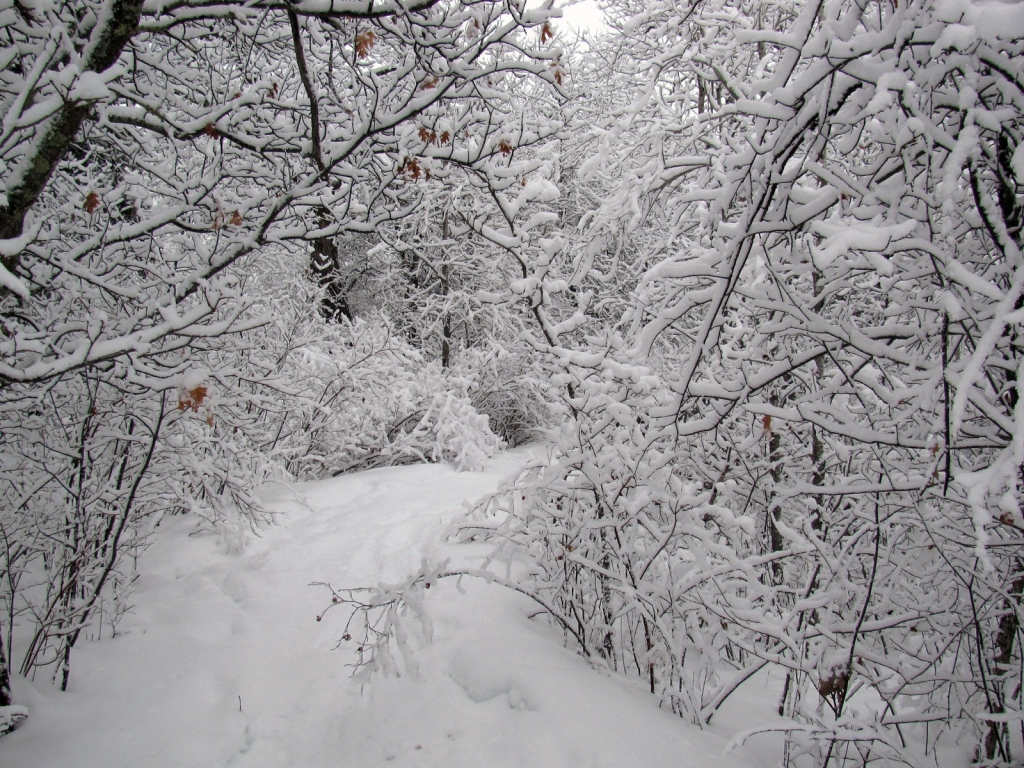
Just five feet tall and wildly unkempt, Upton wore hacked-off pants and walked with a large walking stick. He was usually clothed in a cast-off wool jacket and a long cap made from the legs of long underwear.  He walked about in bare feet most of the year, but he was seen wearing shoes during the harsh Minnesota winters.   It’s hard to believe he could survive the severe cold, though he reportedly followed the old-world custom of conserving body heat by spending most of the winter in bed.

Some suspected Catamaran was fleeing the law; others just considered him a bizarre outcast.  Everyone agreed he was peculiar since he often suspected any donations of food were poisoned.

Credit: NPS

Whatever his past, the end of his life was no mystery.  He was found frozen to death in the snow by a local explorer, just a half-mile from his home.

If you’re lucky enough to camp out in the magnificent forests of Voyageurs National Park, perhaps you’ll begin to appreciate what brought this mysterious recluse to the North Woods and why he stayed.

Remembering the Journey to Freedom

What was the Underground Railroad?  What was its significance?  Was it an actual subterranean rail route?

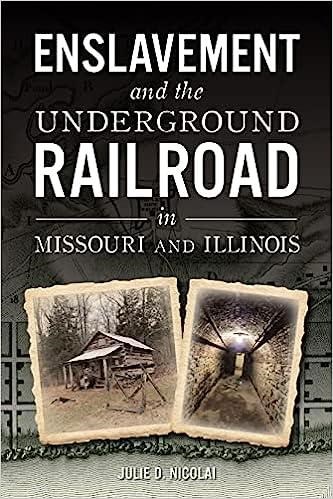
These and other questions will be explored at an event this Saturday at Ulysses S. Grant National Historic Site.  St. Louis historian Julia Nicolai will discuss her new book Enslavement and the Underground Railroad in Missouri and Illinois.  In addition to describing the horrors and challenges experienced by enslaved people in the Midwest, she will also recount their tales of courage and perseverance.

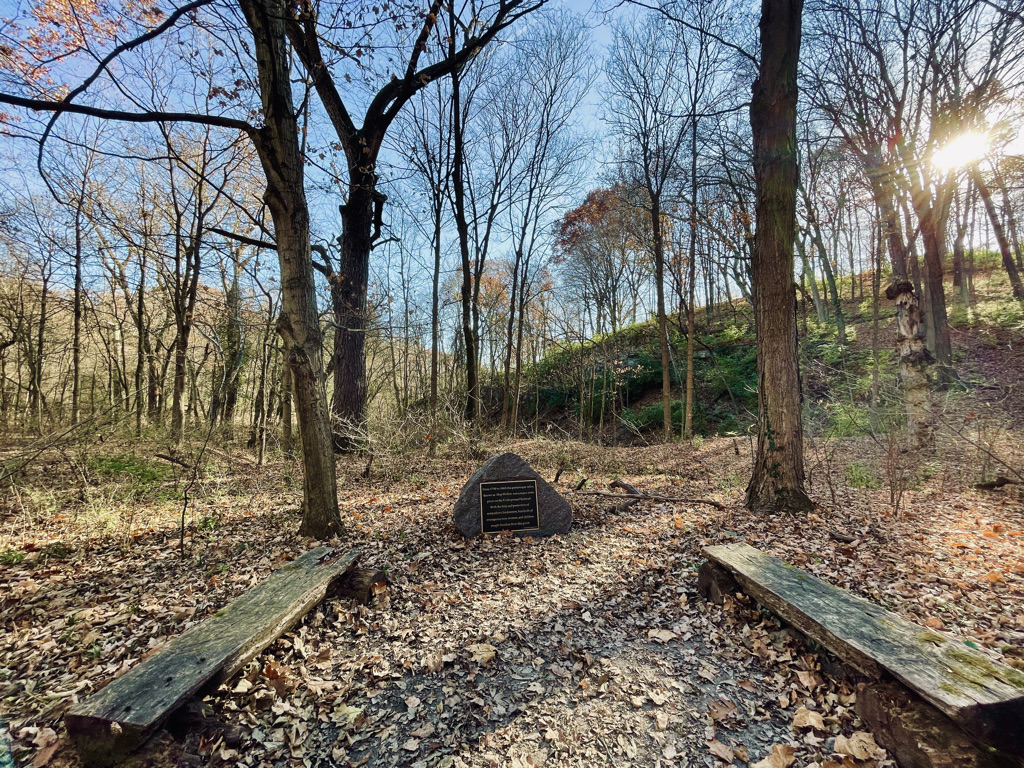
Marker for a stop on the Underground Railroad, Godfrey, IL

Enslaved people have always sought freedom.  From the earliest days of slavery in the 17th century and continuing through the mid-19th century, enslaved African Americans in the U.S. resisted bondage to gain their independence.  Some fled their captors by themselves; others ran away in families or groups, intent on establishing new communities in remote areas.

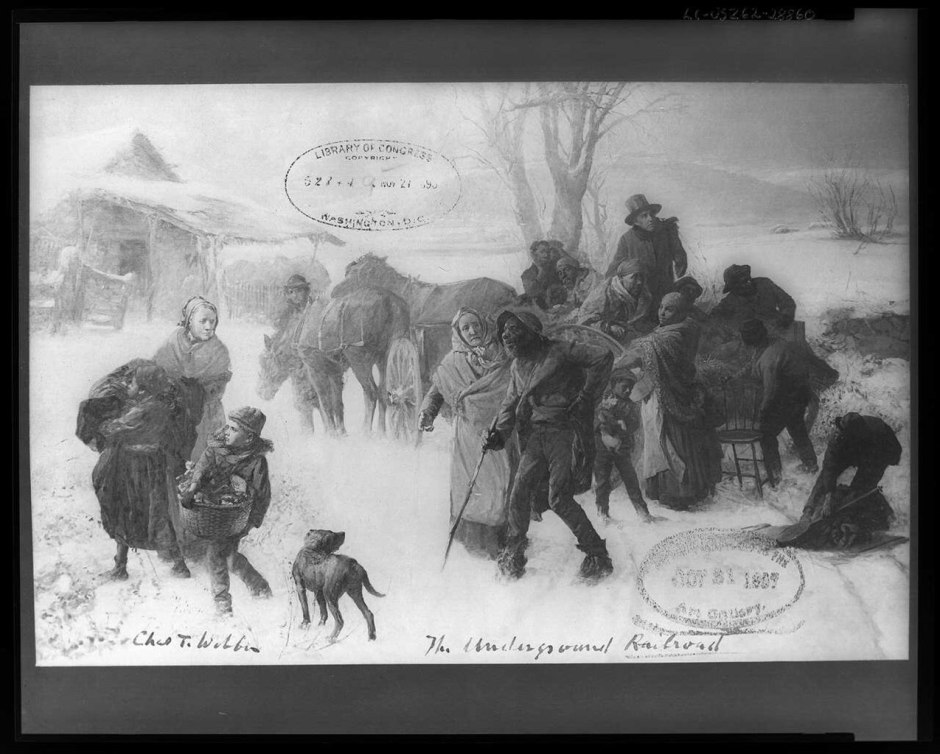
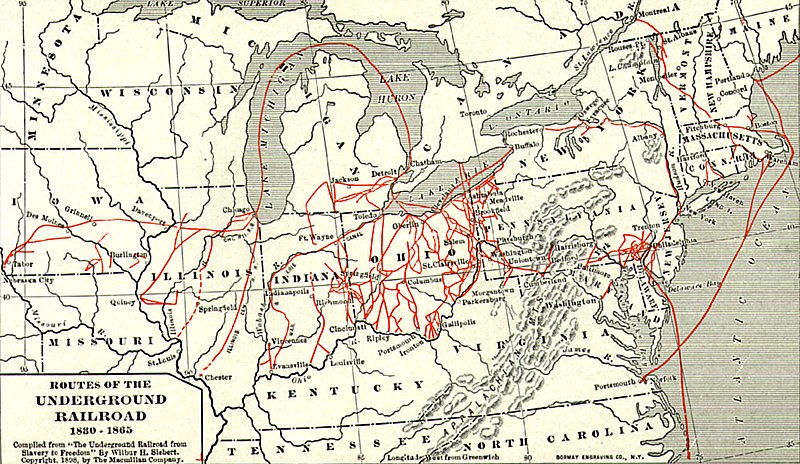
Many freedom seekers were able to embark on their journey with no assistance.  But over time, there developed an informal network of secret safehouses, routes, and resources across the country that helped enslaved African Americans escape bondage. Those seeking freedom and those who assisted them along the way united together to become what was known as the Underground Railroad.

Twenty-five years ago, the National Park Service formed the National Underground Railroad Network to Freedom  to honor, preserve, and promote the history of resistance to enslavement through escape and flight, which continues to inspire people worldwide.  The stories of escape recounted at these sites highlight the importance of the Underground Railroad in the eradication of slavery, and as a critical cornerstone of the national civil rights movement. 

The Network to Freedom program currently includes more than 740 locations nationwide with a verifiable connection to the Underground Railroad.  One such site in St. Louis is the Mary Meachum Freedom Crossing Site, which honors the efforts of the Rev. John Berry Meachum and his wife Mary for their work in helping enslaved people escape to Illinois, a free state where slavery was outlawed. 

This weekend’s Underground Railroad program at U.S. Grant National Historic Site will take place at 11:00 a.m. Saturday at the park’s Visitor Center theater.  It is free and reservations are not required.  Also pick up an autographed copy of Enslavement and the Underground Railroad in Missouri and Illinois in our park bookstore.

Whetting Your Child’s Appetite for Learning

Do you know a child who can spend hours looking at every plant, insect, and set of tracks they come across outside? What about a budding history buff who wants to know every detail of historical events? Are you a grown-up whose inner child never quite let go of your dream of being a paleontologist or train engineer or marine biologist? Whatever your child’s (or your inner child’s) interest, there is a National Park Service Junior Ranger program for you!

Credit: NPS

The NPS Junior Ranger program is an activity-based program aimed at 5- to 13-year olds that takes place in almost all national parks.  Children typically complete a series of activities during a park visit, share their answers with a park ranger, then receive an offical Junior Ranger patch and certificate. 

This very popular program got its start more than 90 years ago, beginning  as the “Yosemite Junior Nature School” in 1930. The school was held for six weeks every summer from 1930-1954 (with the exception of the years during WWII). Back then, earning an award (the equivalent of becoming a Junior Ranger today), was quite difficult! A child had to attend at least five meetings of the Junior Nature School as well as complete 25 out of the following 26 tests:

  1. Point out and give characteristics of ten trees.
  2. Point out and give characteristics of five shrubs.
  3. Demonstrate the ability to read tree history by means of tree rings.
  4. Tell the principal values of forests.
  5. Identify five birds by means of songs alone.
  6. Point out fifteen different kinds of birds.
  7. Name ten resident birds of Yosemite Valley, five predators, two waders, three wood borers, and fifteen perchers.
  8. Identify the nests of five birds.
  9. Point out the four principal minerals found in granite.
  10. Tell briefly the story of the origin of the Yosemite Valley.
  11. Illustrate the difference between stream-worn and glacial-worn boulders.
  12. Name and identify twenty-five different flowers.
  13. Know the principal parts of the flower.
  14. Explain the function of flowers in plant reproduction.
  15. Name and identify ten Yosemite mammals.
  16. Name and identify five Yosemite reptiles.
  17. Outline the life history of the bear.
  18. Tell four ways of identifying old Indian village sites.
  19. Tell how obsidian arrow points are made.
  20. Tell how the Yosemite [Native Americans] made acorn bread.
  21. Point out fifteen vegetable, ten animal, and three insect sources of food used by the Indians.
  22. Point out forty points of interest around Yosemite Valley.
  23. Identify four kinds of trout.
  24. Tell the methods of fish culture used in the hatchery.
  25. Demonstrate the ability to ‘read the trail-side like a book.’
  26. Identify the following: ant lion, termite, swallow-tail butterfly, grasshopper, wasp, dragon-fly, moth, and ladybird beetle.
Yosemite Junior Nature School, ca. 1935. Credit: NPS

In 1955, the Junior Nature School officially transitioned to the Junior Ranger program, which was much closer to how the program runs today. Now, children (and adults!) can earn a Junior Ranger badge and certificate at over 400 National Park sites across the country by completing activities from that park’s official Junior Ranger booklet. Additionally, there are many national themed booklets available which can be completed at home or at a nearby national park. Some of these themed Junior Ranger programs include Wildland Firefighter, Archeologist, and Underground Railroad Explorer.

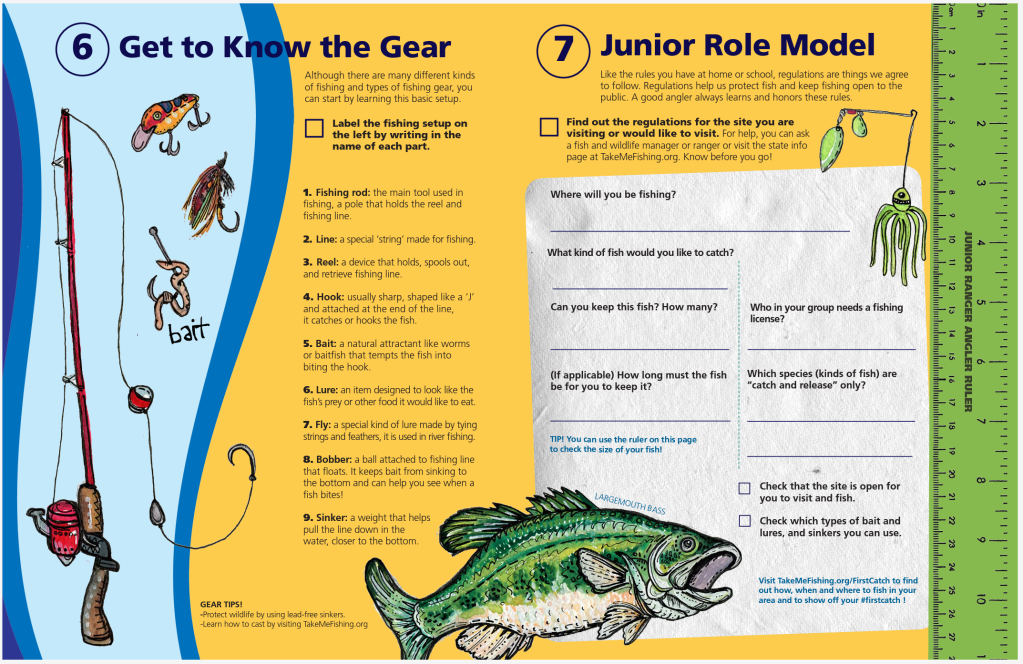
An excerpt from the “Junior Ranger- Let’s Go Fishing!” booklet

Each of JNPA’s partner parks participate in the Junior Ranger program, including:

Also, for a limited time, visitors to Gateway Arch National Park will have the opportunity to earn the “Riverboat Explorer” Junior Ranger badge. This program will be offered daily on riverboat cruises at 1:30pm and 3:00pm now through Labor Day.

Credit: NPS

The next time you visit a national park, make sure to check out their Junior Ranger Program. It is completely free, and you never know what new things you may learn! If you want to add to the experience, you can also purchase this Junior Ranger Hat and Junior Ranger Vest to proudly display all of your badges!

Grant’s Final Battle

“The greatest man I have ever had the privilege of knowing personally. And I have not known a man with a kinder nature or a purer character.”  – Mark Twain.

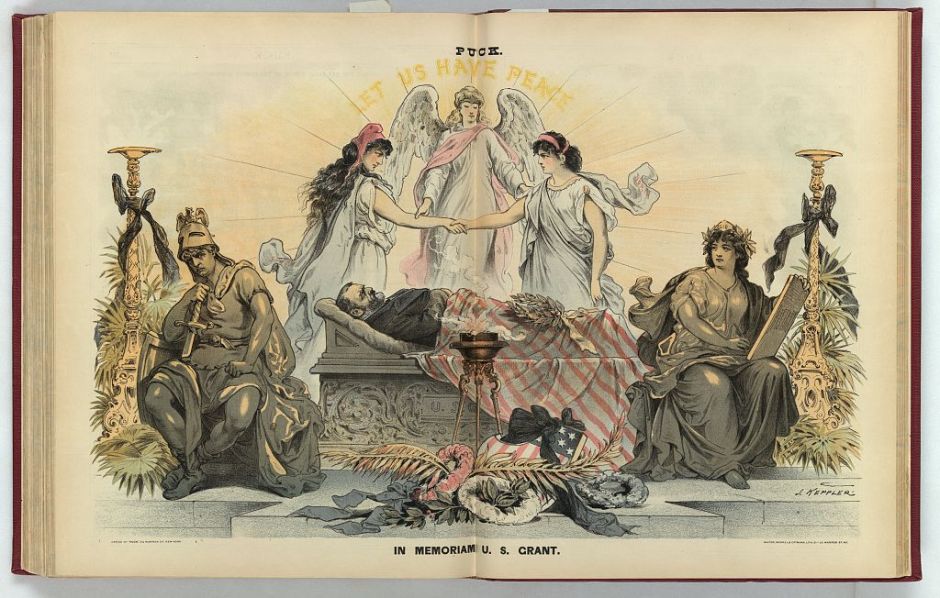
So said Twain upon learning of the death of his friend Ulysses S. Grant on July 23, 1885 – 138 years ago next week.  Grant, the nation’s 18th president and victorious Civil War general, died of throat cancer at the age of 63.  

Grant writing his memoirs [Library of Congress]

The final years of Grant’s life were filled with hardship. After retiring from the Presidency, he unwisely invested in a scandal-prone financial firm which eventually went bankrupt, leaving him destitute. About that time, he also learned he had throat cancer.  In order to earn enough money for his wife Julia to live on, he decided to write his personal memoirs, hoping that proceeds from the book’s sales would support his family after his death.  His writing chronicled his life as a soldier, from his early dates at West point to his service as general-in-chief of all Union armies.

As Grant’s memoirs progressed, so too did his cancer.  Racing against death, he kept writing despite debilitating pain and weakness.  He was encouraged by Twain, who offered him a generous publishing contract.   Just three days after completing the last page, Ulysses Grant died.  America mourned – his funeral in New York City was attended by 1½ million people.

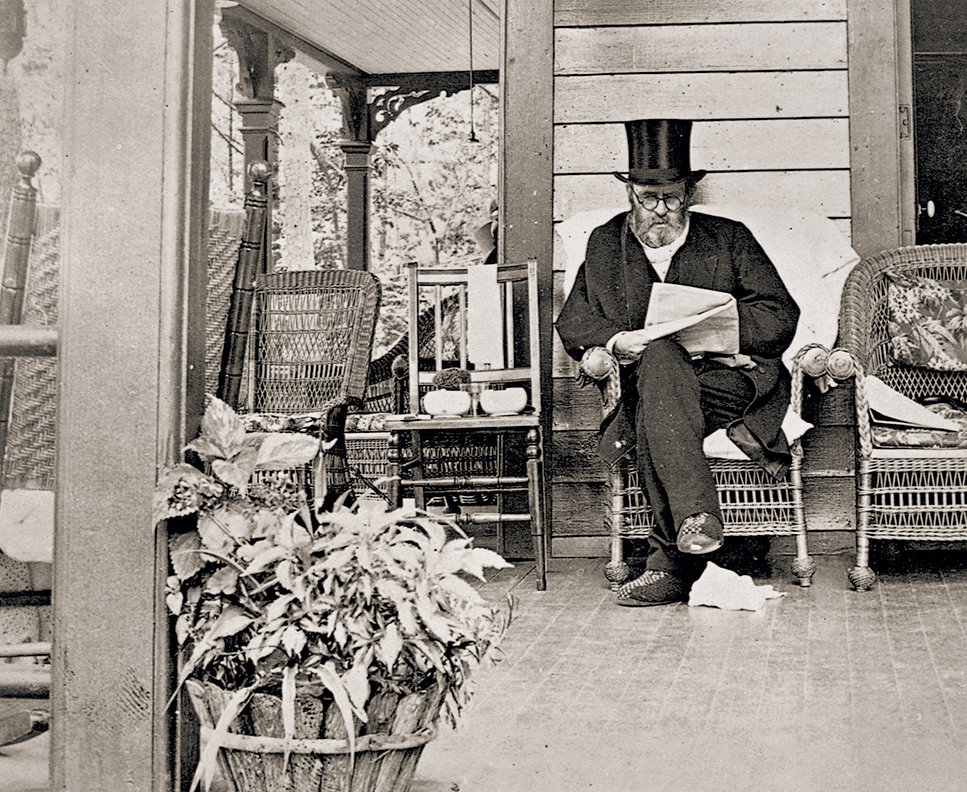
Last photo of Grant before his death. [Library of Congress]

Twain published Grant’s memoirs the same year he died.  They became an instant best-seller and proved a literary and financial success.  Julia Grant received royalties that totaled $450,000, roughly equivalent to more than $14 million today.

To learn more about Grant’s life, death, and legacy, we encourage you to visit our partner park Ulysses S. Grant National Historic Site.  While you’re there, be sure to pick up your own copy of the Personal Memoirs of Ulysses S. Grant at our bookstore, or order it online.

💥O Say Can You See💥

Looking for a memorable way to celebrate the Fourth of July this year?  Look no further than Gateway Arch National Park.   

Visitors who gather on the Arch grounds tomorrow evening will have a front row seat to one of the nation’s most spectacular fireworks displays.  The civic organization Fair Saint Louis will set off more than 1½ tons of fireworks from a barge in the Mississippi River, just beneath the Arch. It promises to be the largest fireworks show the organization has ever produced.

The show is scheduled to begin at 9:30 p.m., and last about 30 minutes.  Visitors are encouraged to bring blankets and lawn chairs and to picnic on the grass. No glass or alcohol is allowed. The Arch itself will not be open, but the grounds and riverfront will be accessible. 

This is the 42nd year that Fair Saint Louis will present its Fireworks Spectacular.  It will also host its 140th America’s Birthday Parade the morning of the Fourth.

Mug Shot

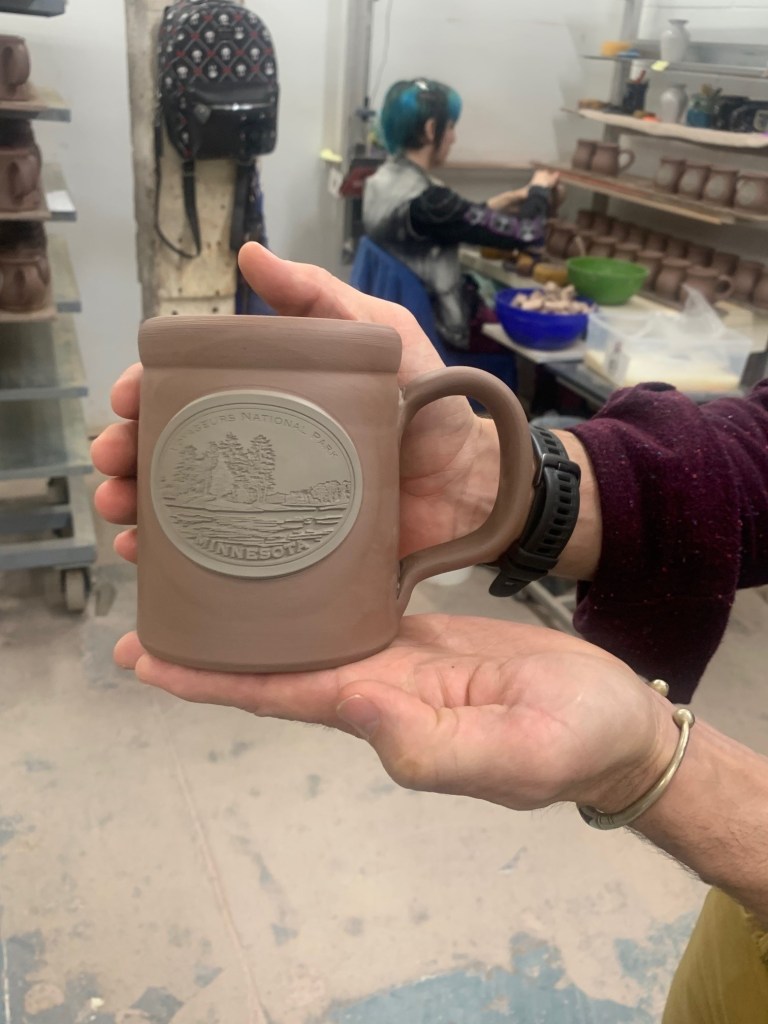
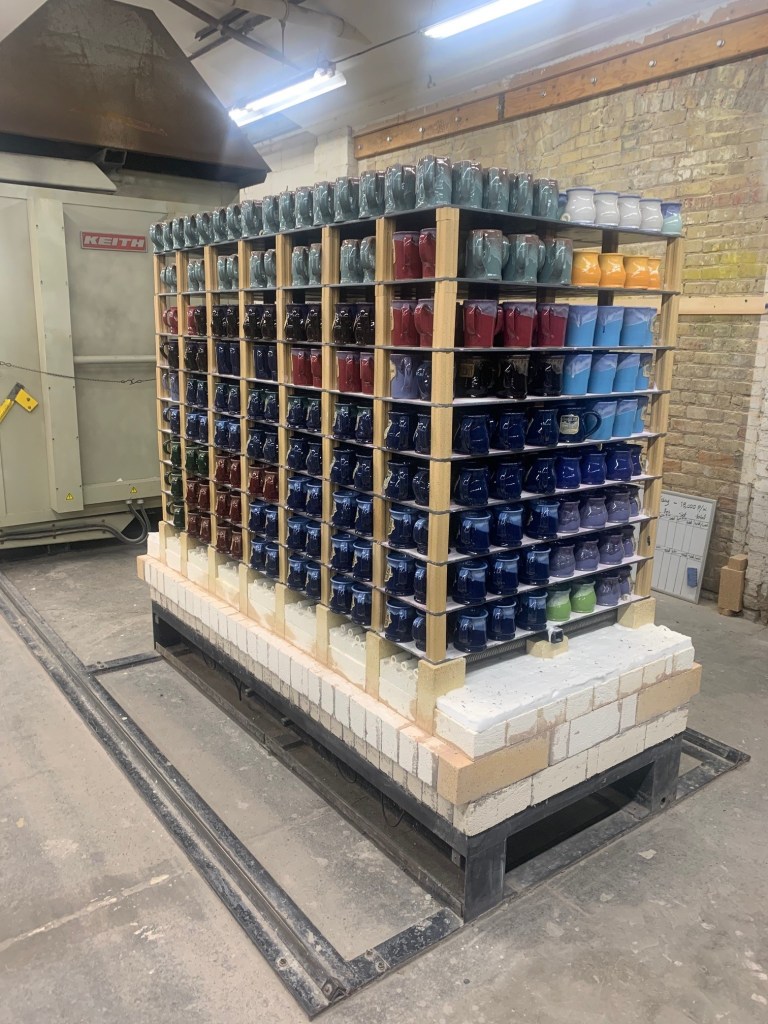
If you’ve visited one of JNPA’s stores at our national park partner sites, you may have noticed some unique ceramic mugs on our store shelves.  They usually bear the park’s name on a special medallion emblazoned on one side.  Chances are these beautiful mugs came from Deneen Pottery, a small production house in Minnesota that makes custom pottery for parks, museums, restaurants, and colleges.

JNPA has partnered with Deneen for many years.  We know our customers appreciate the beauty and craftmanship of the company’s mugs, each of which is handmade.  They also enjoy the feel of the glazed stoneware in their hands, as well as the sturdy handle. 

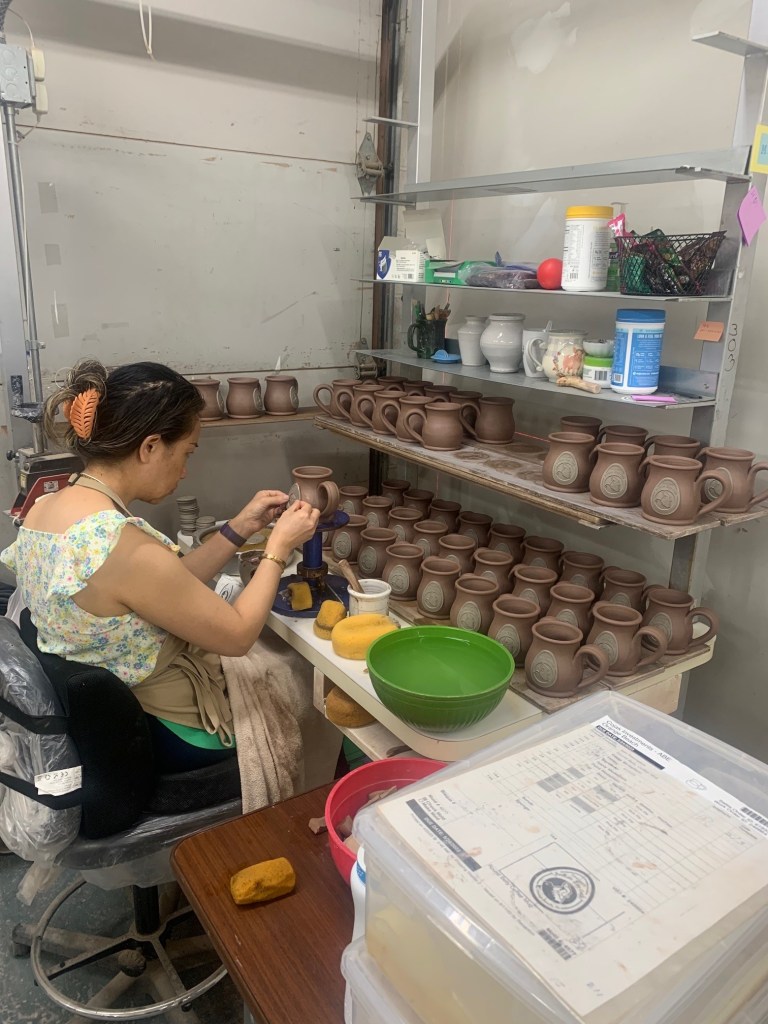
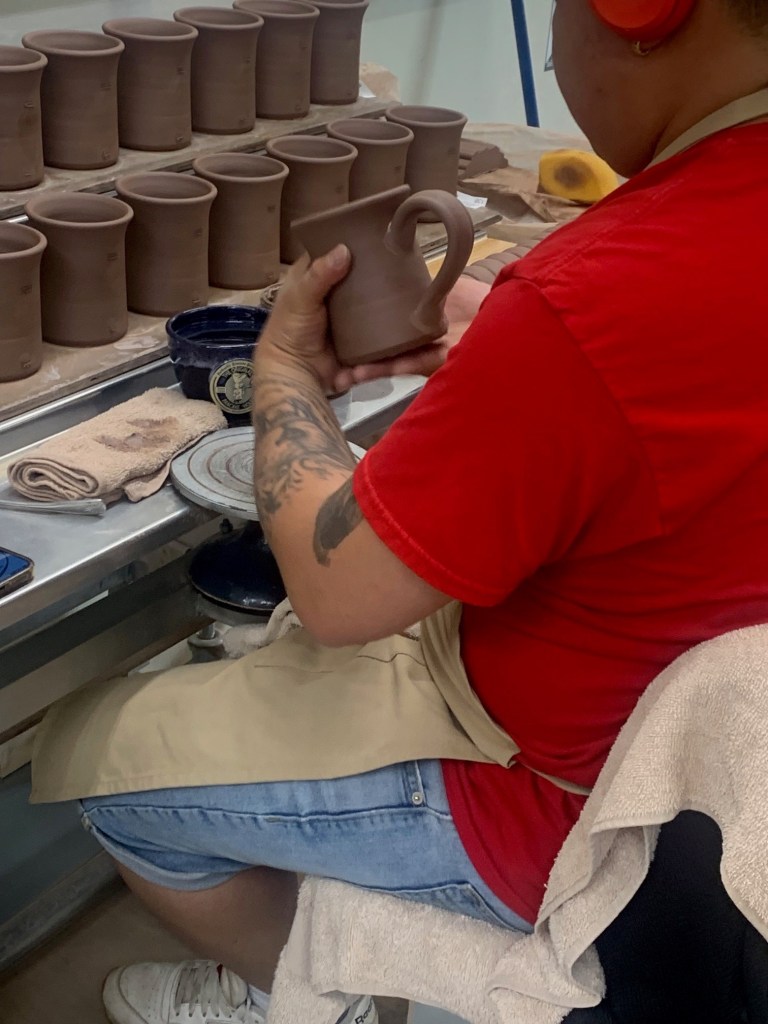
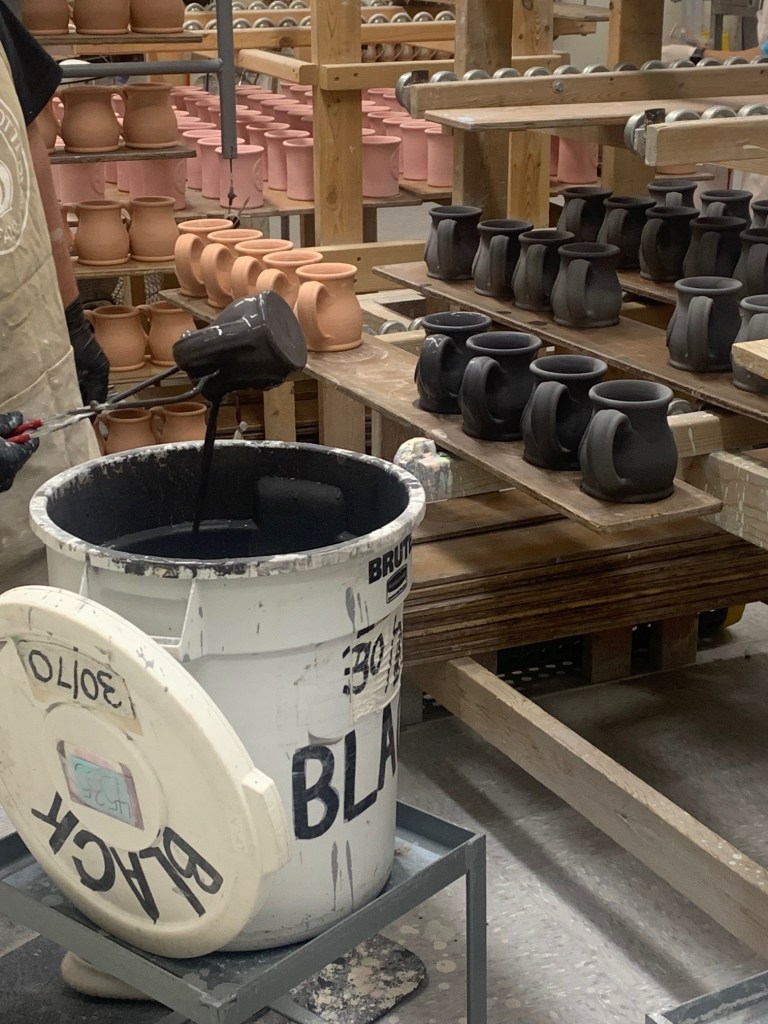
We recently took a tour of the Deneen factory in St. Paul, MN, and watched the mug production process – starting with lumps of clay…progressing to wheel-thrown shapes… to the application of handles and medallions…to final glazing.  All in all, more than 24 craftsmen have a role in creating each mug – a far cry from the machine-made mugs most factories turn out.

“We think our customers appreciate the fact that these mugs are made in America by skilled craftspeople who care about quality,” says Rick Trigg, JNPA’s Retail Operations Manager.

Among our park stores that feature Deneen mugs are those at Ste. Genevieve National Historic Site, Ulysses S. Grant National Historic Site, and Gateway Arch National Park.
The Metaverse Has Come to the Arch!

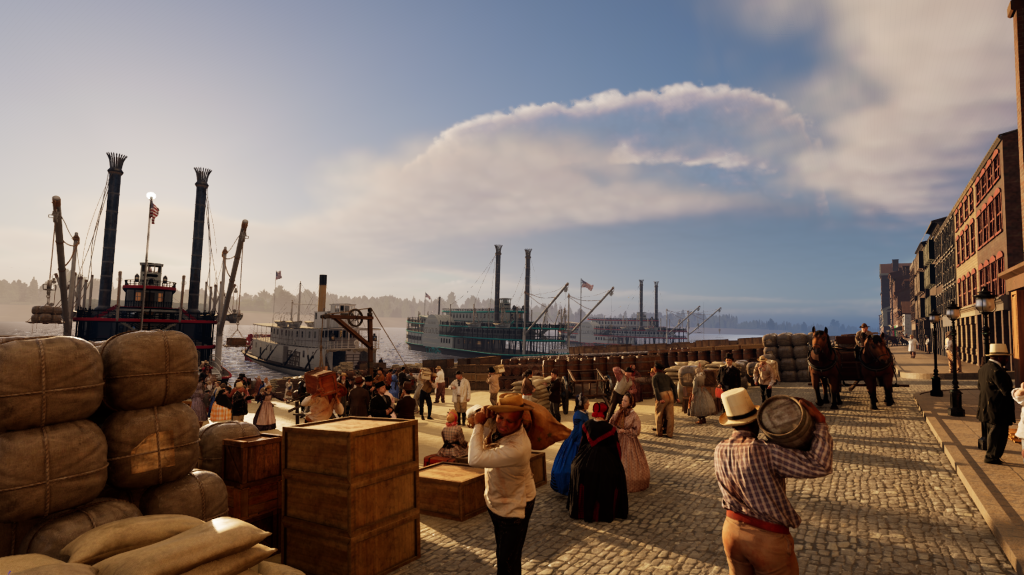
Gateway Arch National Park has added a new attraction to its already-full list of activities…and it just might blow your mind.  It’s a virtual reality (VR) experience that transports visitors to a 360⁰ depiction of the 1850s St. Louis riverfront.  And it all takes place in a newly designed area on the lower level of the Arch visitor center.
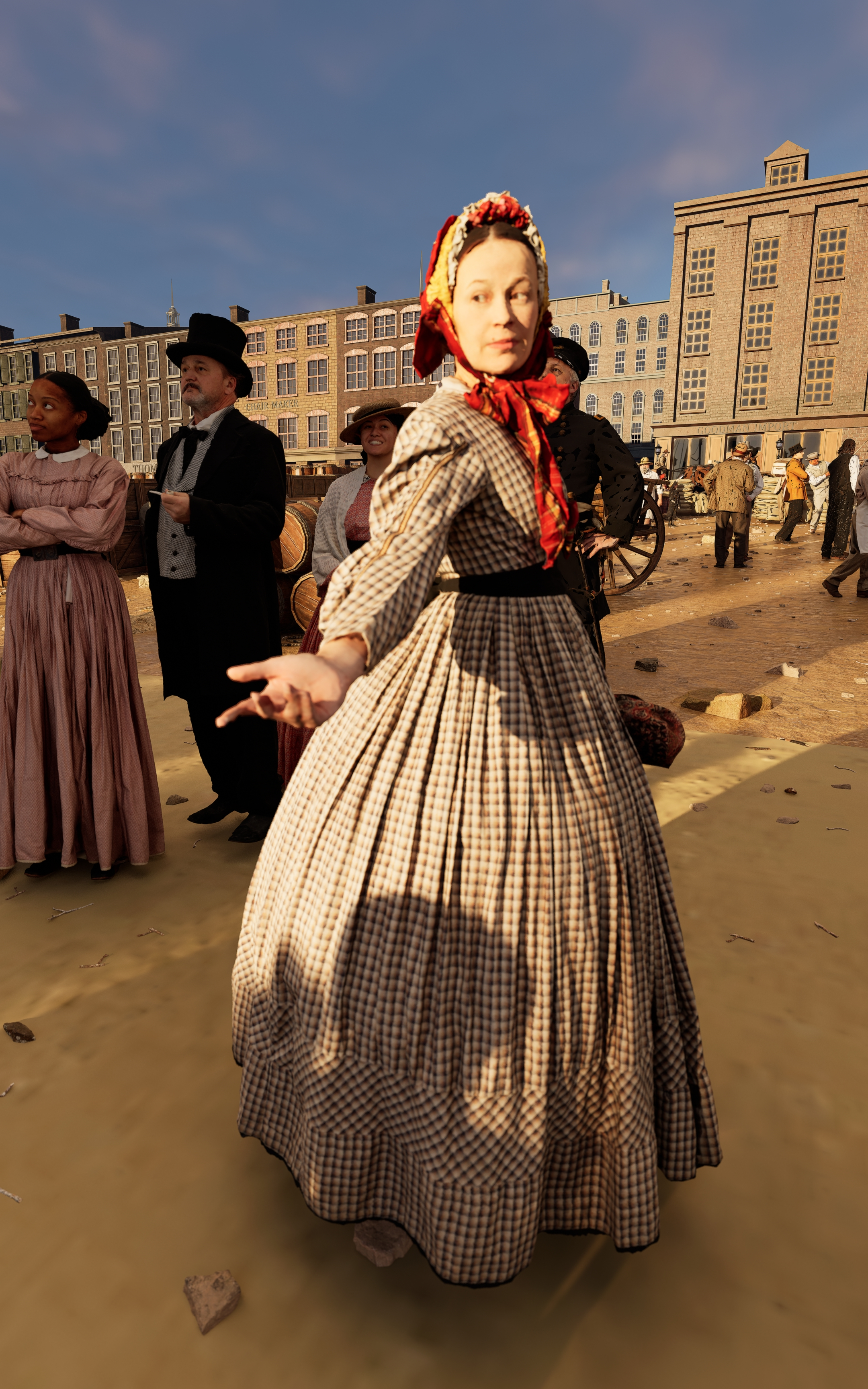
When you put on a special 3D headset, you’ll be immersed in the sights and sounds of the St. Louis levee in the 1850s, an era when the city was an important crossroads for America’s westward migration. Watch as steamboats deliver travelers and goods from around the world. And hear the stories of courage, struggle, and hopes of some of the real people who crossed paths there.  The VR program aligns with one of the historic eras that visitors can also learn about in the Arch museum, though it brings it to life in a very unique way.

Jefferson National Parks Association and park staff have teamed up to bring this production – titled Cobblestones & Courage – to park visitors. JNPA funded the work and selected TimeLooper – a pioneering interpretive design firm – to develop the programming.

“Gateway Arch National Park is constantly seeking new and engaging ways to share the story of America’s westward expansion with visitors,” says David Grove, President and CEO of JNPA. “As a park partner, we’re thrilled to bring this unique experience to visitors. Cobblestones & Courage brings history to life in a tangible way using 3D technology to diversify the park’s storytelling methods.”

The new Virtual Reality Theater is located in the lower Gateway Arch lobby, right outside The Arch Store, which JNPA also operates. Tickets are $10 for adults, $8 children (ages 5-15). Reservations are encouraged and tickets can be pre-purchased here

If you’ve ever wanted to travel back in time, this is the way to do it.  Check it out!  And also take a look at a preview video of the production.

Don’t “Pass” This Up!

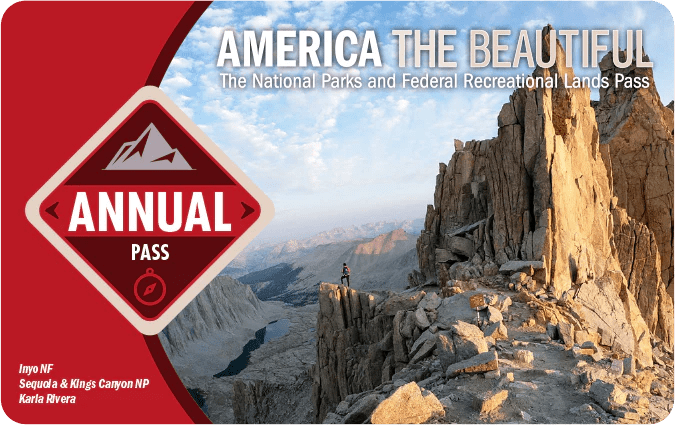
Now that summer is in full swing, you’re probably making vacation plans. If a national park is on your travel agenda, we have a suggestion you won’t want to pass up:  buy an America the Beautiful Pass

This $80 annual pass entitles you and three guests to free access to more than 2,000 public sites managed by five federal agencies for an unlimited number of visits during the year.  And since some national parks charge up to $20 per person or $35 per vehicle, these savings can add up.  What’s more, the proceeds from the purchase of each pass are dedicated to improving and enhancing visitor experiences at these federal recreation sites.

Ulysses S. Grant National Historic Site. Credit: NPS/David Newmann

Beyond the regular annual park pass, there are other options for certain groups: 

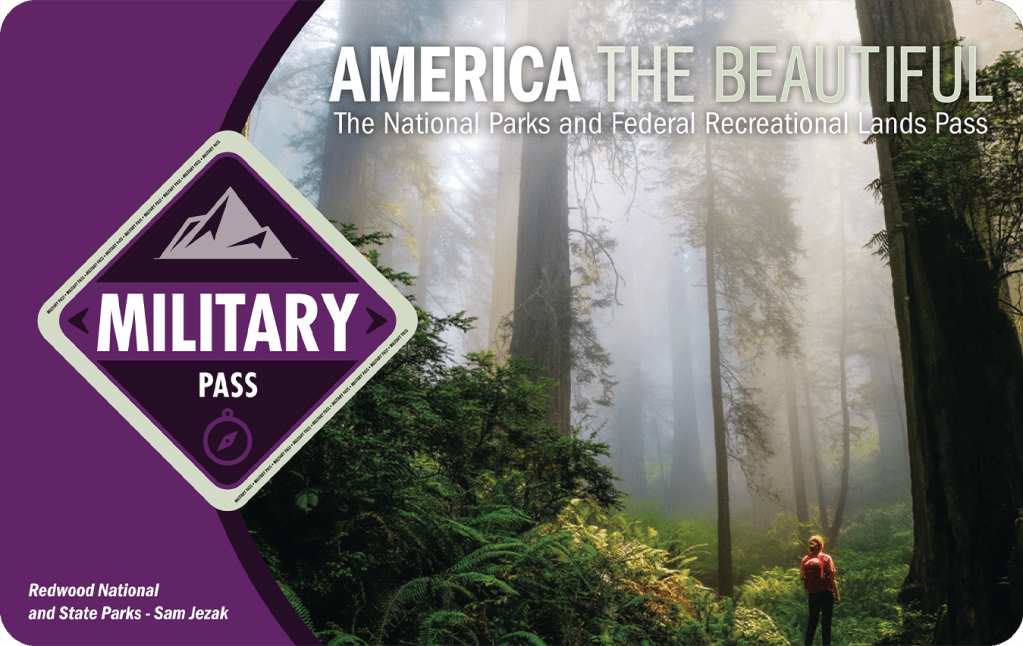
  • Members of the military and their dependents qualify for a free annual Military Pass;
  • Gold Star families and Veterans can receive a free lifetime Military Pass;
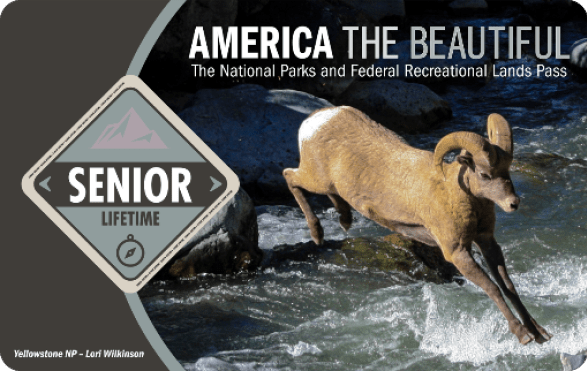
  • Those who are ages 62 and up can purchase a $20 annual Senior Pass or an $80 lifetime Senior Pass;
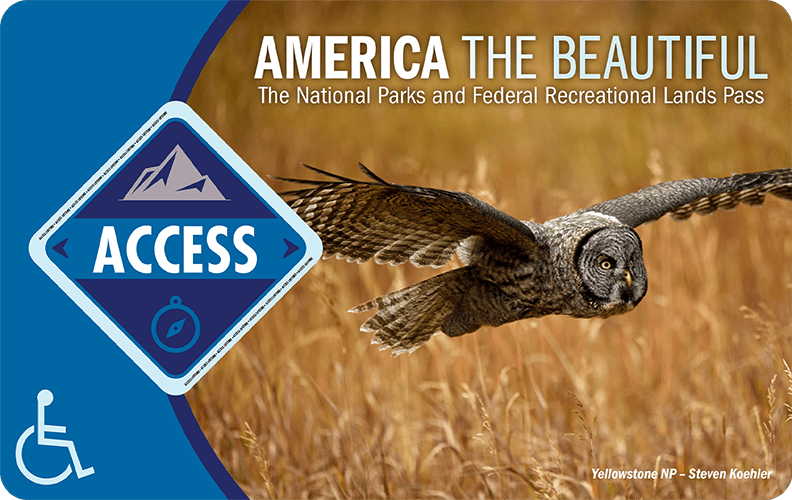
  • Those who have a permanent disability can qualify for a free lifetime Access Pass, regardless of their age.
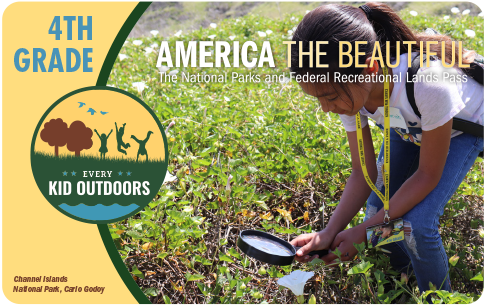
  • Children in 4th grade and their educators can take advantage of a free Every Kid Outdoors Annual 4th Grade Pass.
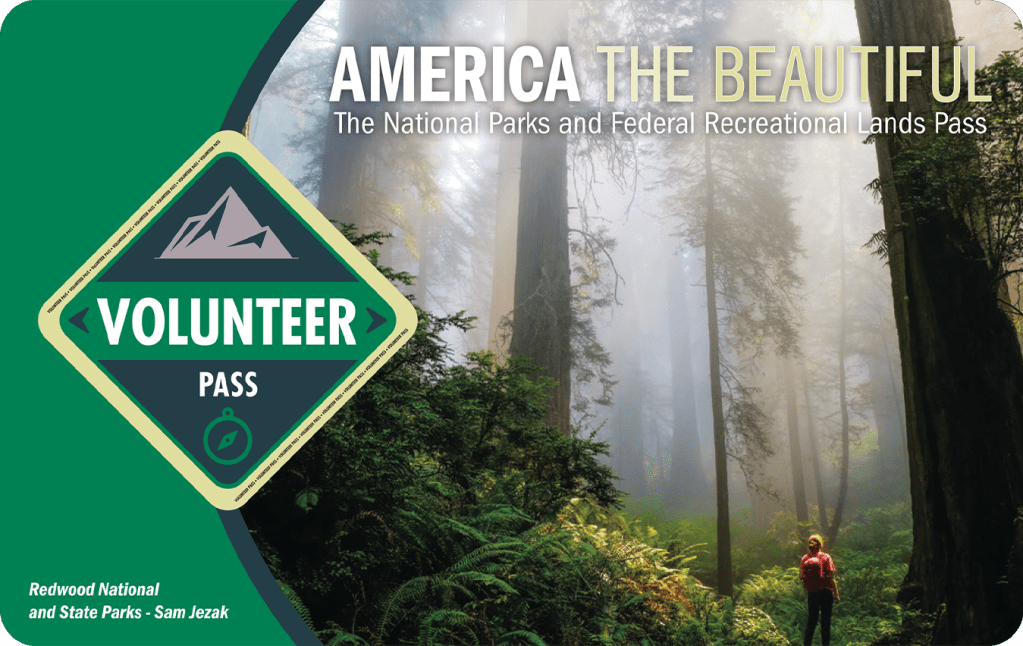
  • Those who volunteer for a federal recreation site for more than 250 hours are entitled to a one-year Volunteer Pass.

Where can you get one of these park passes?  If your vacation is more than two weeks away, you’ll have time to order your passes online and have them mailed to you (there’s a $10 processing fee for online orders).  But if you’re travelling sooner, you’ll want to buy your passes at one of more than 1,000 recreation sites managed by the National Park Service, Bureau of Land Management, U.S. Fish and Wildlife Service, U.S. Forest Service, and the U.S. Army Corps of Engineers.  To find one near you, go here.

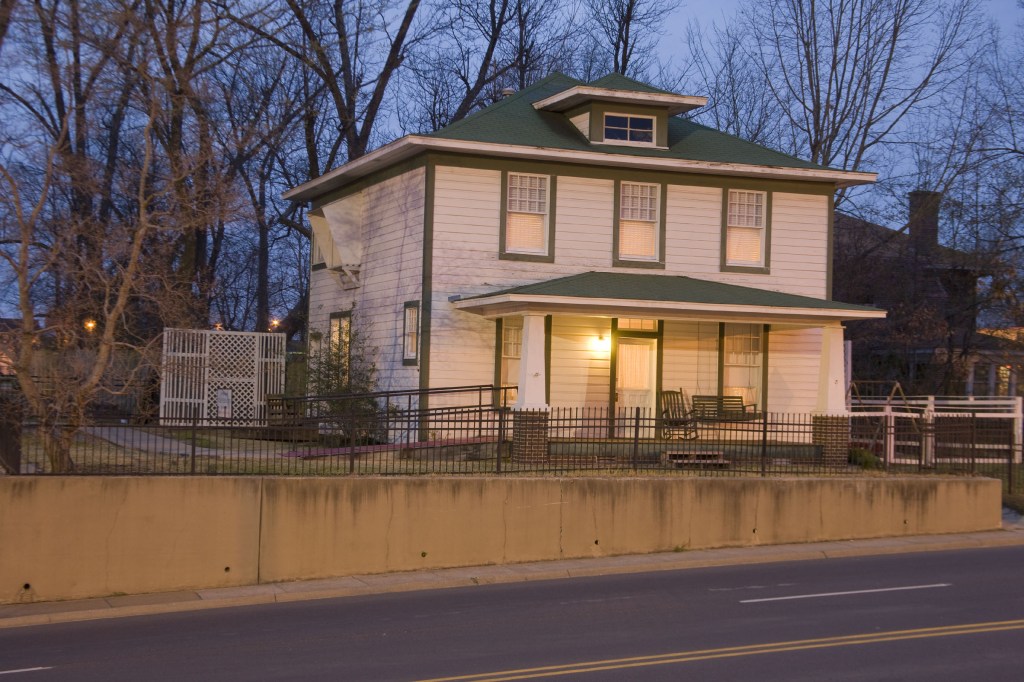
Clinton Birthplace Home National Historic Site

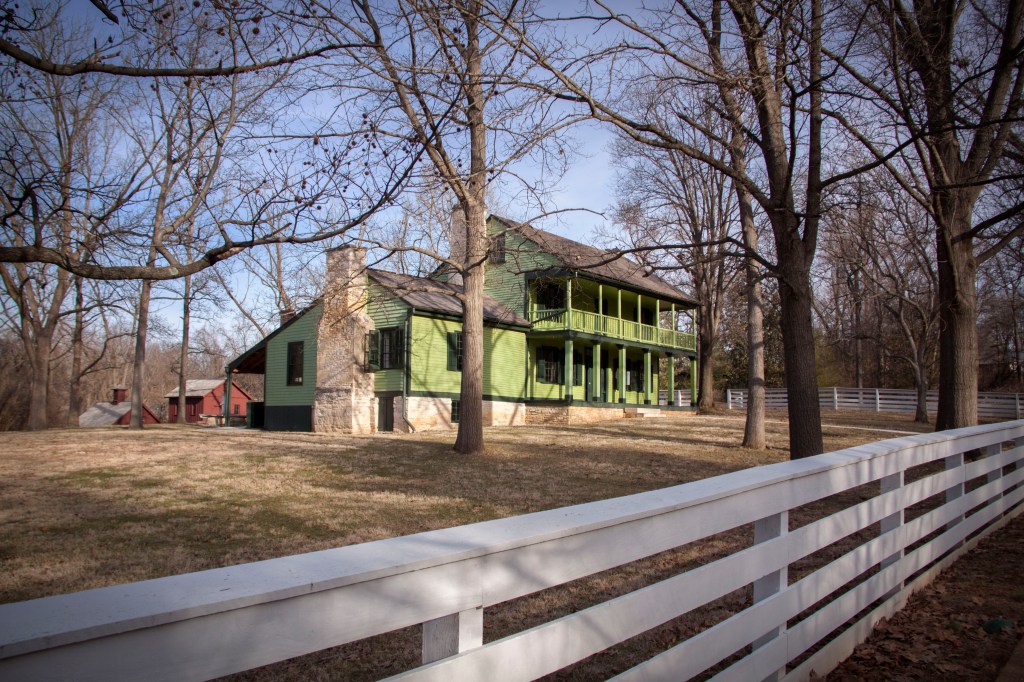
A number of JNPA partner parks sell passes at their visitor centers:  Gateway Arch National Park, Ulysses S. Grant National Historic Site, Little Rock Central High School National Historic Site, Clinton Birthplace Home National Historic Site, and Lewis & Clark Visitor Center.

Enjoy your summer travels!