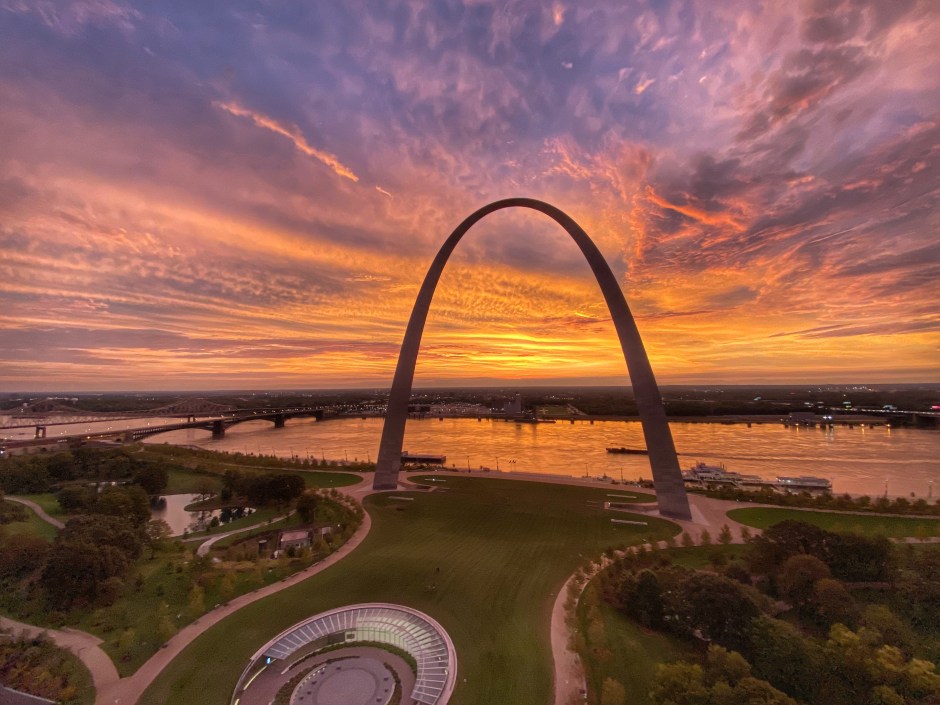
If you fancy yourself an outdoor explorer, there are natural treasures waiting to be discovered amidst the hustle and bustle of downtown St. Louis. Where, you ask? Gateway Arch National Park, of course!
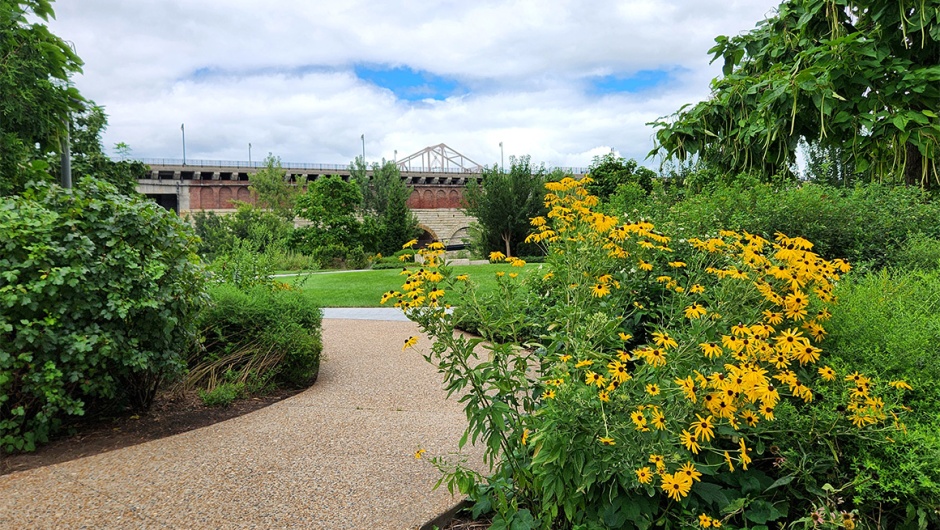
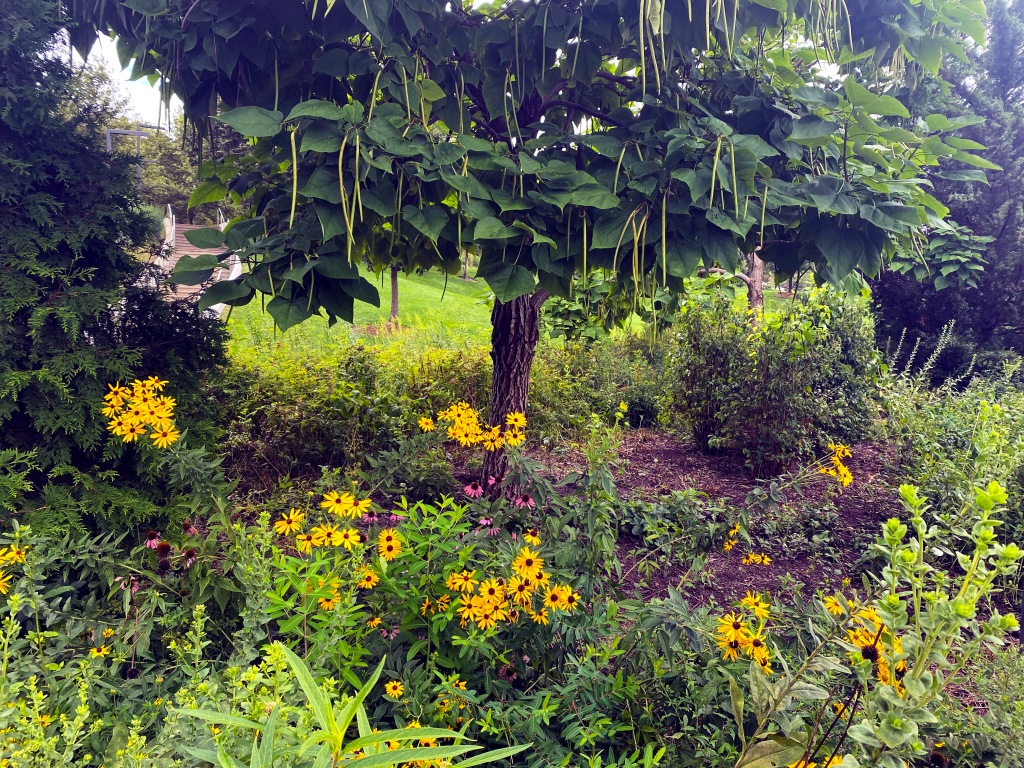
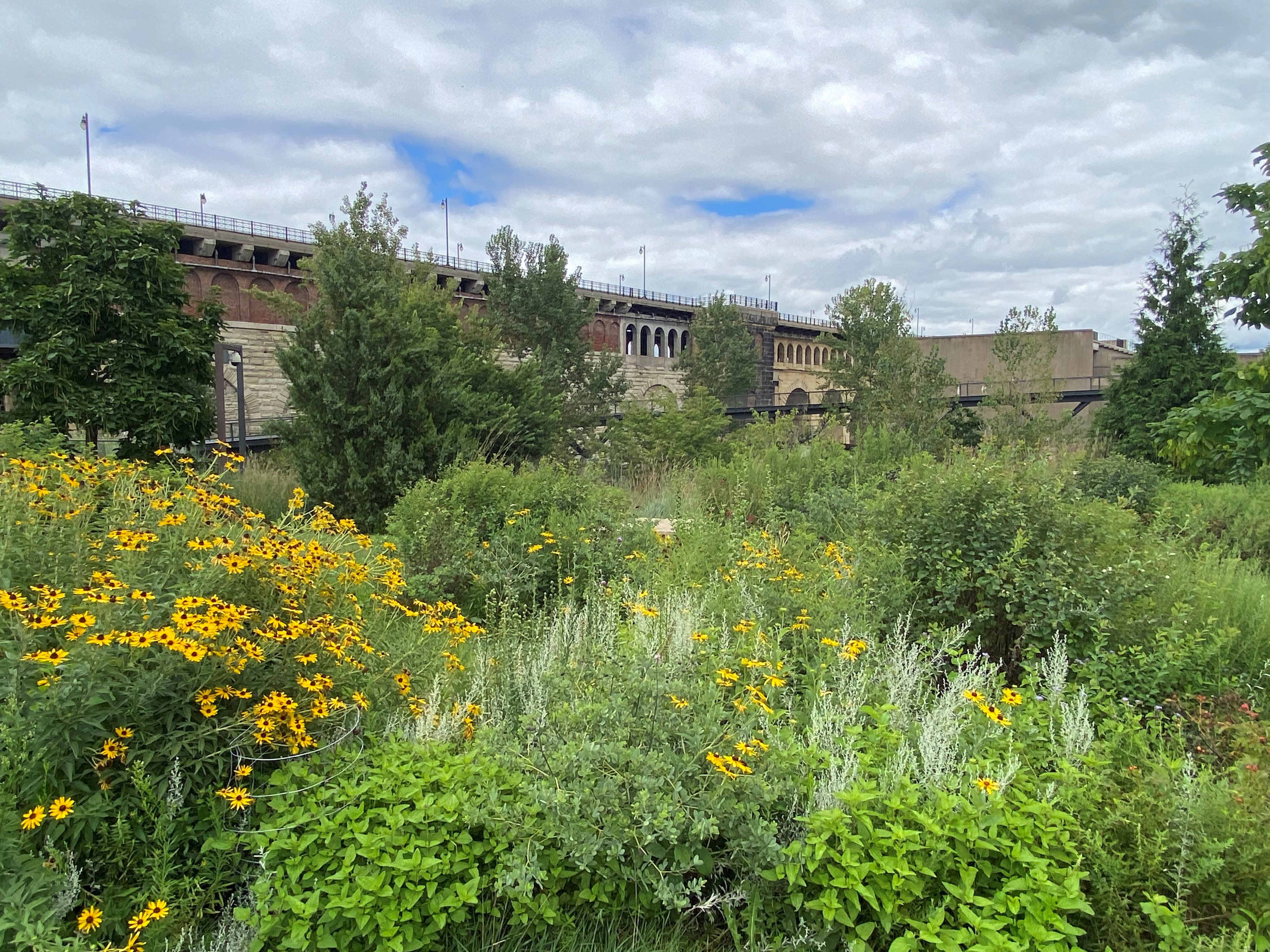
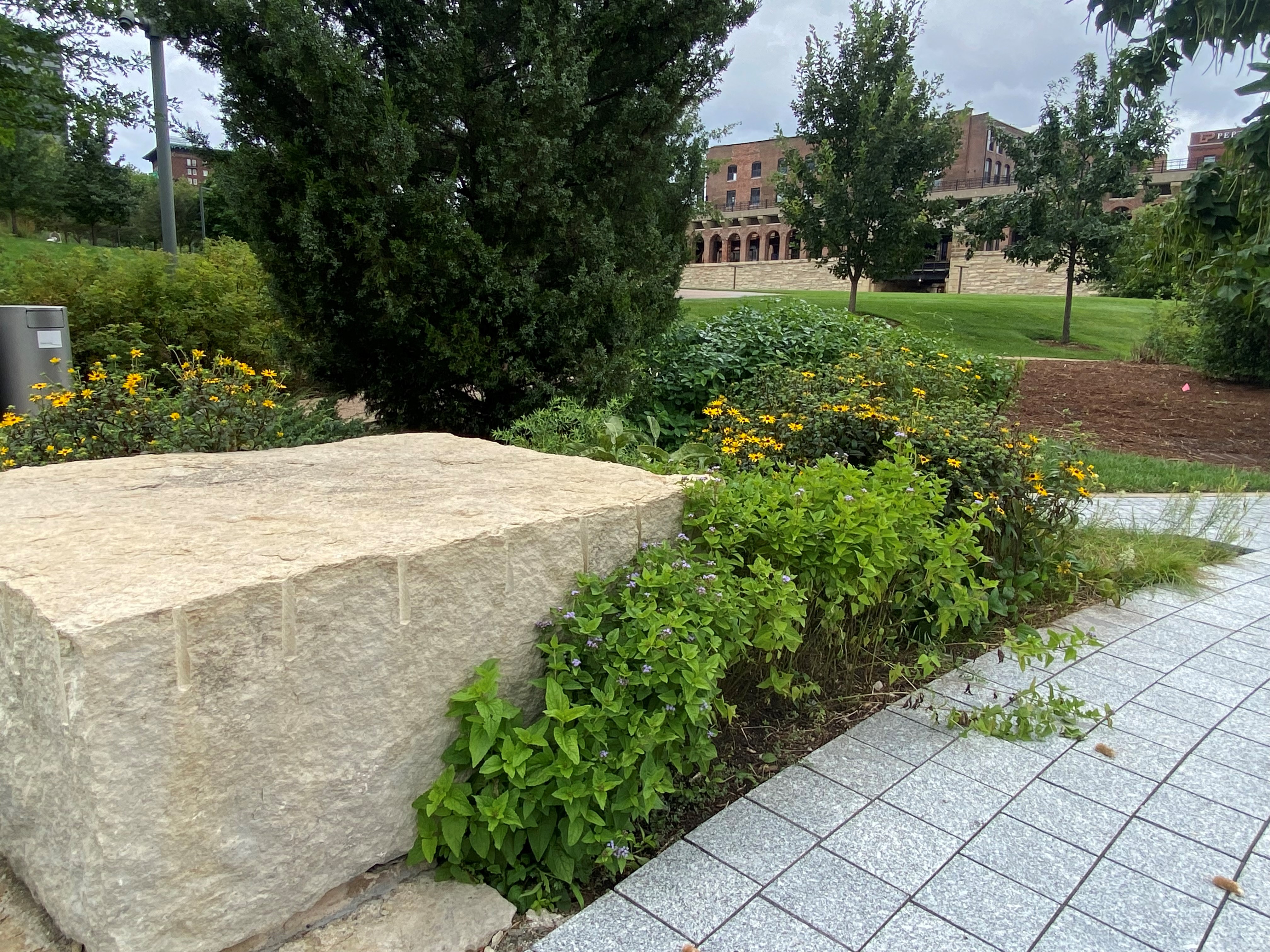
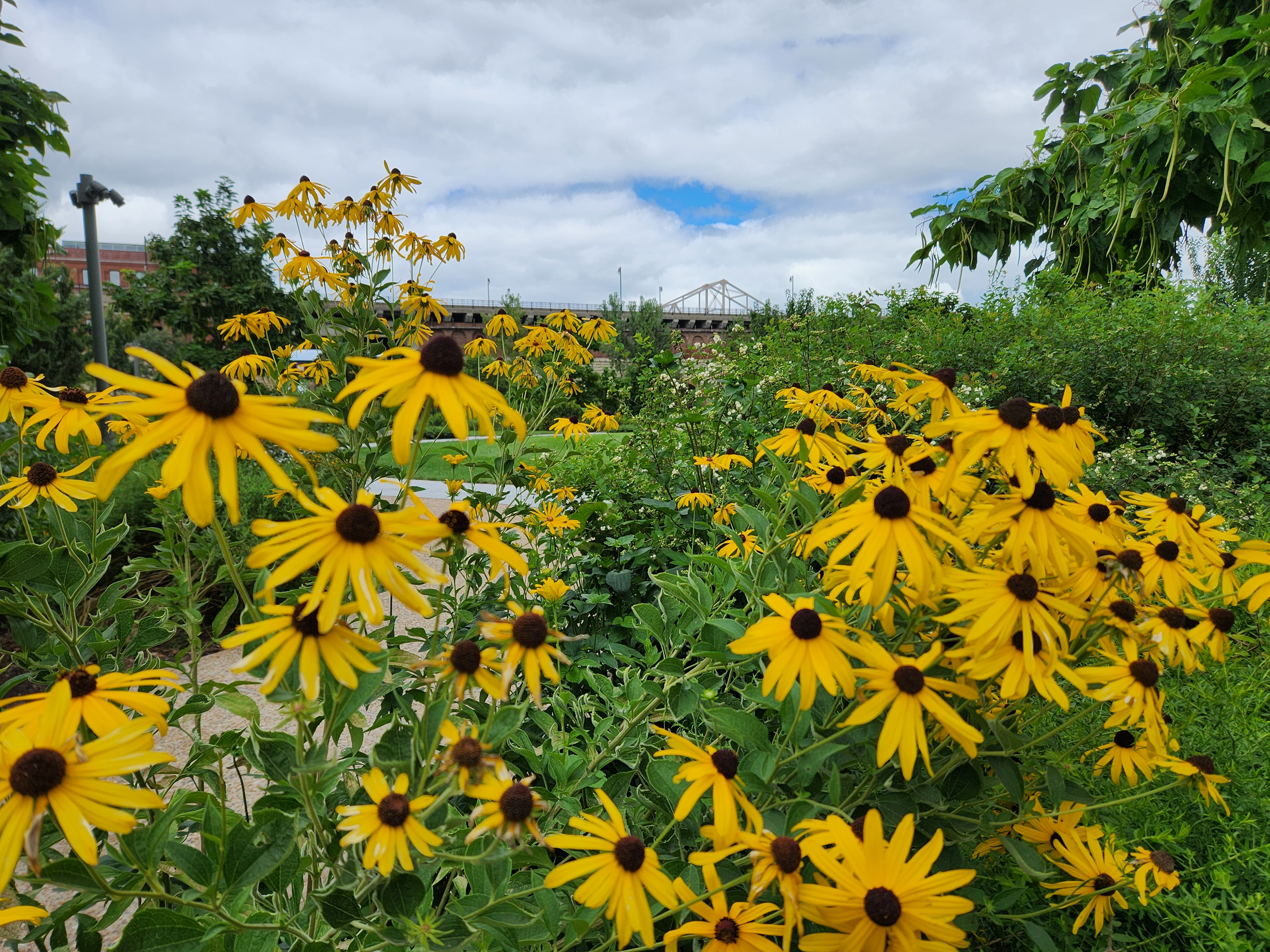
Although the 91-acre Arch grounds are dominated by manicured grassy areas, tree-lined paths, and sculptured ponds, there’s a small area at the north end of the park that looks a bit wilder. This inviting little oasis – dubbed the Explorers’ Garden – is planted with some of the trees, bushes, and perennials that Lewis and Clark found on their famed expedition to the western U.S. And it’s just waiting to be investigated!
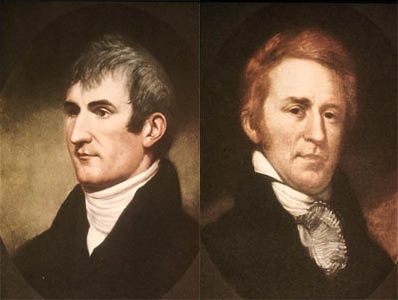
Meriwether Lewis (left) and William Clark (right)
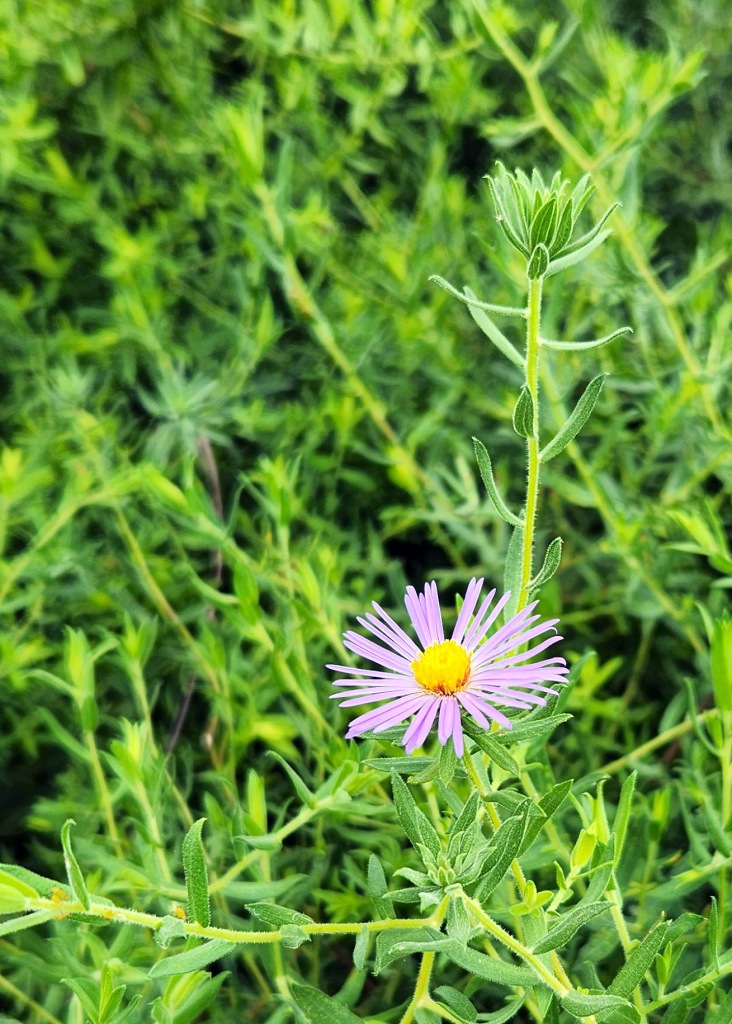
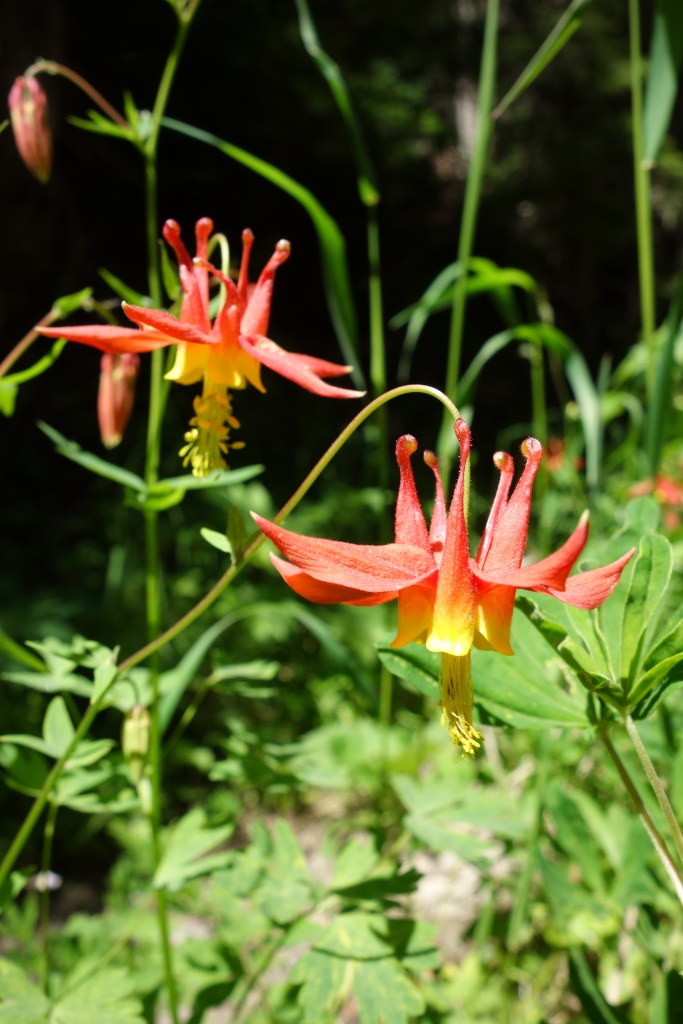
Between 1804 and 1806, Meriwether Lewis and William Clark were commissioned by President Thomas Jefferson to explore and map the newly acquired western portion of the continent. Their extensive journals recorded measurements and observations of the rivers and landscapes, as well as accounts of the indigenous inhabitants they encountered. They also described at least 178 species of plants that were new to science, recording their habitat, growth and use by Native Americans. These included the cottonwood tree, slender willow, aromatic aster, prickly pear, and red columbine.
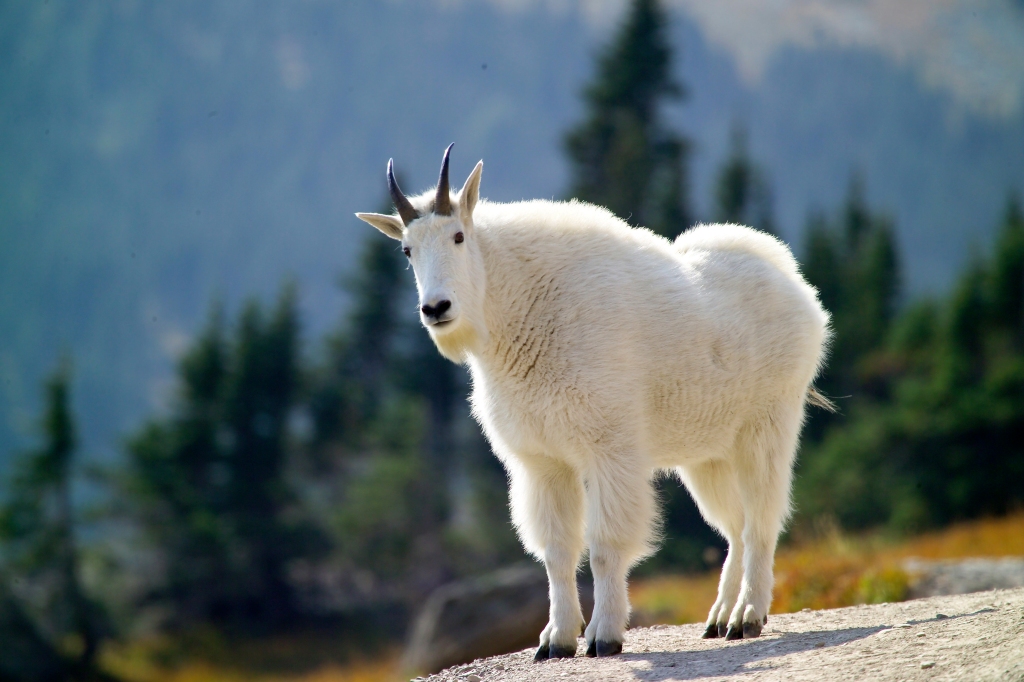
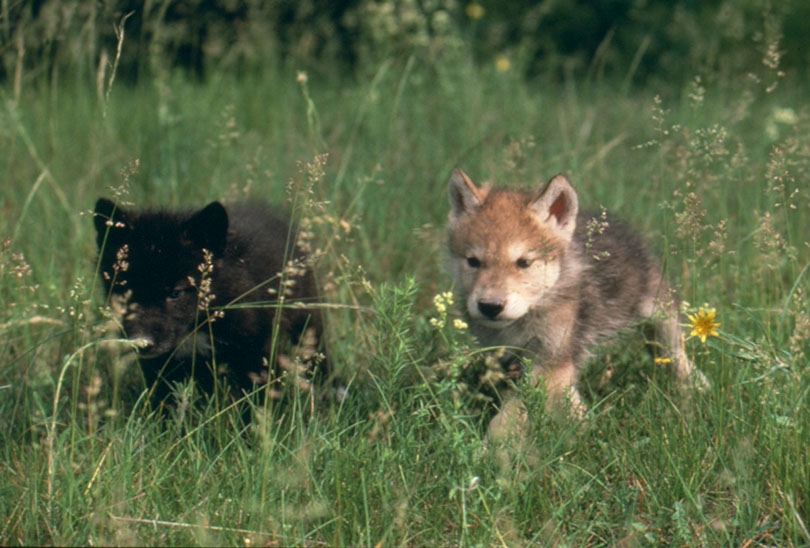
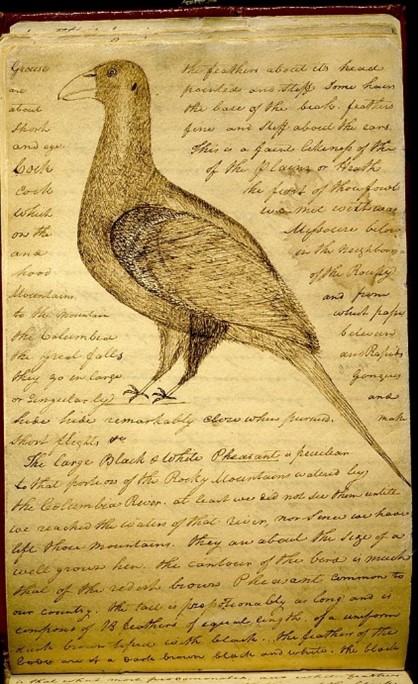
As for animals, the explorers described 122 new species of mammals, birds, reptiles, fish, and insects – including the grizzly bear, bighorn sheep, black tailed deer, mountain beaver, long-tailed weasel, mountain goat, coyote and various species of rabbit, squirrel, fox and wolf.
William Clark’s journal entry about a sage grouse, courtesy Missouri History Museum
You probably won’t find any of these animals in the Explorers’ Garden, but some of the plants that Lewis and Clark discovered are included among the variety of native plants that National Park Service staff have introduced there. Go here to find the list of plants (click on Explorers’ Garden).
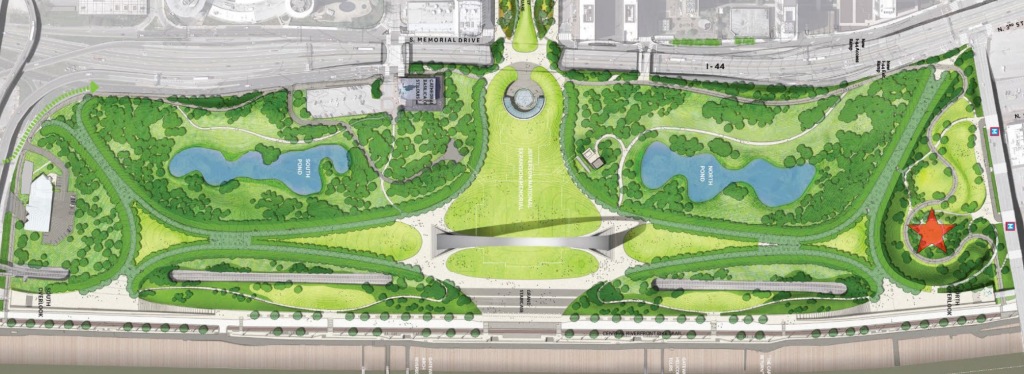
Map of Gateway Arch National Park highlighting the Explorers’ Garden
Many of these species were used by Native Americans and were described by Lewis and Clark in their expedition journals as they traveled west. You’re invited to act as your own explorer and see what you can find – and be sure to bring the kids. The Explorers’ Garden provides a series of landscaped pathways scaled for children’s play as well as large stones they can climb. You’ll find the garden in the far northeast corner of the park grounds, in the shadow of historic Eads Bridge, the oldest bridge over the Mississippi River.
There’s no better time to visit the Explorers’ Garden than this Saturday Sept. 23, when the park will be celebrating National Public Lands Day. History and gardening experts will be on hand to show you around, and there will be plenty of other family-friendly activities, so come on down!
If you want to help your kids learn about the famous explorers, they’ll enjoy this fun book Lewis and Clark for Kids: Their Journey of Discovery with 21 Activities. It’s chock full of cool stories about their three-year journey, including information about the plants and animals they discovered. You can pick it up at The Arch Store or order it from our online store.
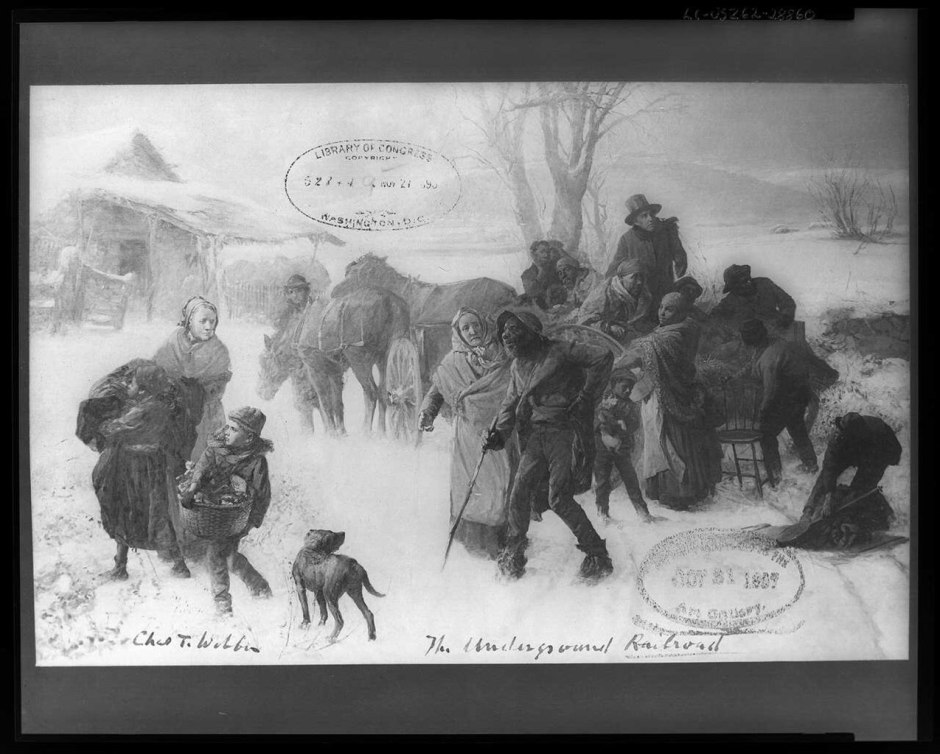
What was the Underground Railroad? What was its significance? Was it an actual subterranean rail route?
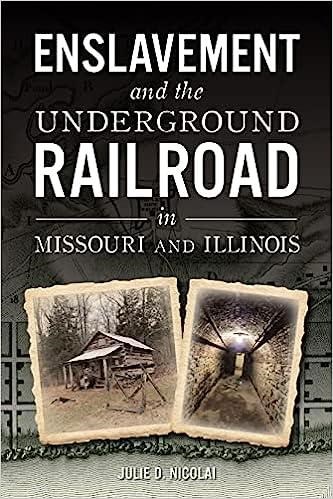
These and other questions will be explored at an event this Saturday at Ulysses S. Grant National Historic Site. St. Louis historian Julia Nicolai will discuss her new book Enslavement and the Underground Railroad in Missouri and Illinois. In addition to describing the horrors and challenges experienced by enslaved people in the Midwest, she will also recount their tales of courage and perseverance.
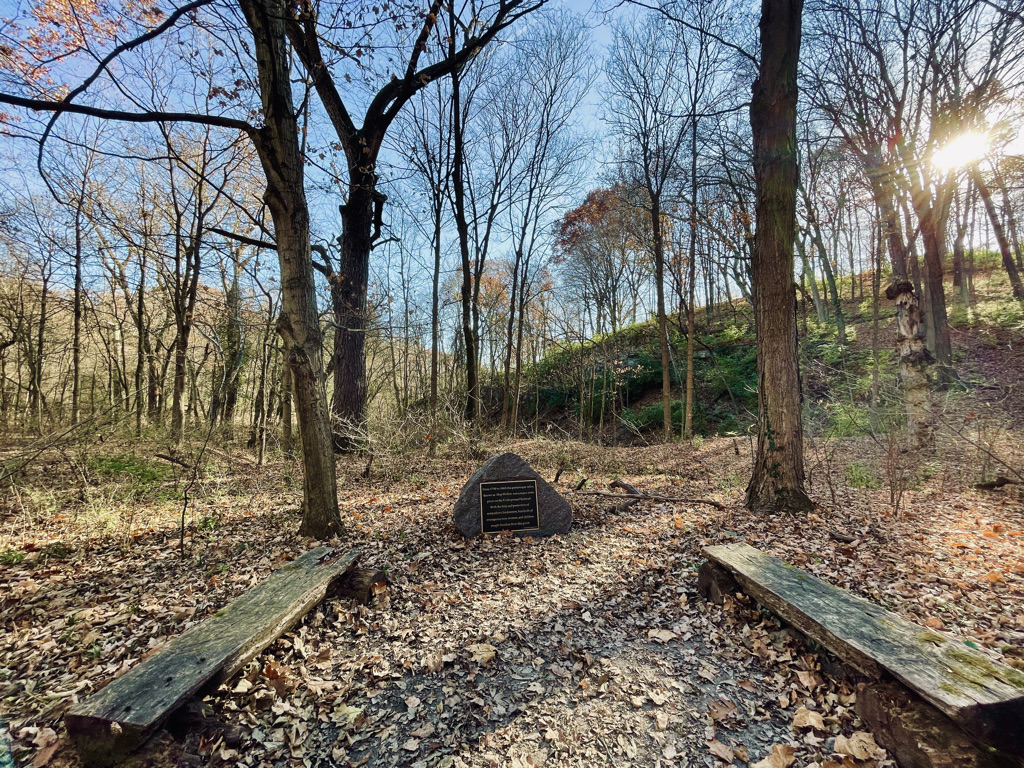
Marker for a stop on the Underground Railroad, Godfrey, IL
Enslaved people have always sought freedom. From the earliest days of slavery in the 17th century and continuing through the mid-19th century, enslaved African Americans in the U.S. resisted bondage to gain their independence. Some fled their captors by themselves; others ran away in families or groups, intent on establishing new communities in remote areas.
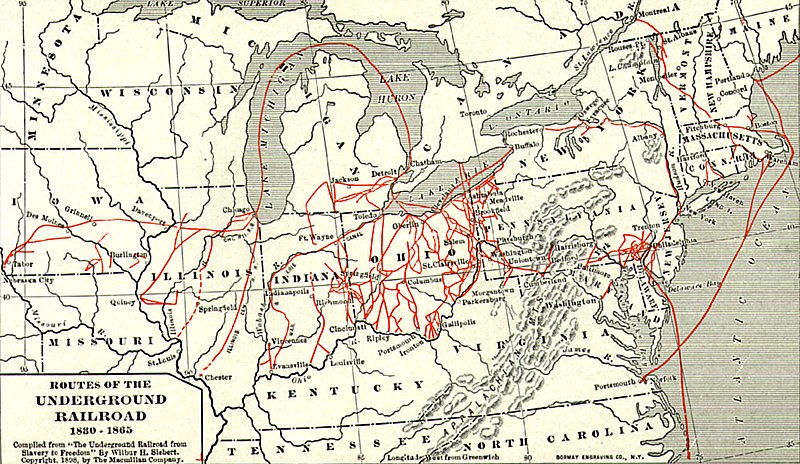
Many freedom seekers were able to embark on their journey with no assistance. But over time, there developed an informal network of secret safehouses, routes, and resources across the country that helped enslaved African Americans escape bondage. Those seeking freedom and those who assisted them along the way united together to become what was known as the Underground Railroad.
Twenty-five years ago, the National Park Service formed the National Underground Railroad Network to Freedom to honor, preserve, and promote the history of resistance to enslavement through escape and flight, which continues to inspire people worldwide. The stories of escape recounted at these sites highlight the importance of the Underground Railroad in the eradication of slavery, and as a critical cornerstone of the national civil rights movement.
The Network to Freedom program currently includes more than 740 locations nationwide with a verifiable connection to the Underground Railroad. One such site in St. Louis is the Mary Meachum Freedom Crossing Site, which honors the efforts of the Rev. John Berry Meachum and his wife Mary for their work in helping enslaved people escape to Illinois, a free state where slavery was outlawed.
This weekend’s Underground Railroad program at U.S. Grant National Historic Site will take place at 11:00 a.m. Saturday at the park’s Visitor Center theater. It is free and reservations are not required. Also pick up an autographed copy of Enslavement and the Underground Railroad in Missouri and Illinois in our park bookstore.
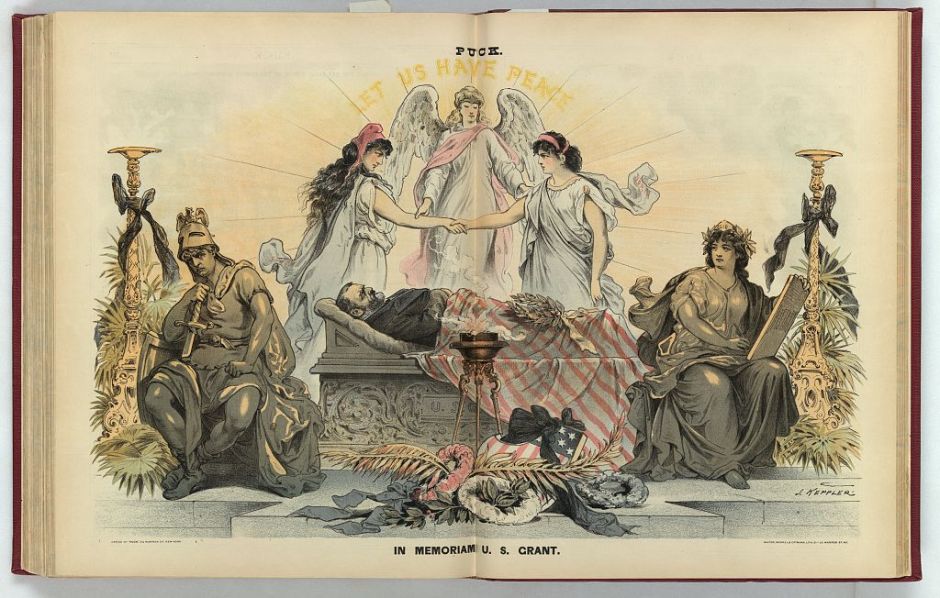
“The greatest man I have ever had the privilege of knowing personally. And I have not known a man with a kinder nature or a purer character.” – Mark Twain.
So said Twain upon learning of the death of his friend Ulysses S. Grant on July 23, 1885 – 138 years ago next week. Grant, the nation’s 18th president and victorious Civil War general, died of throat cancer at the age of 63.
Grant writing his memoirs [Library of Congress]
The final years of Grant’s life were filled with hardship. After retiring from the Presidency, he unwisely invested in a scandal-prone financial firm which eventually went bankrupt, leaving him destitute. About that time, he also learned he had throat cancer. In order to earn enough money for his wife Julia to live on, he decided to write his personal memoirs, hoping that proceeds from the book’s sales would support his family after his death. His writing chronicled his life as a soldier, from his early dates at West point to his service as general-in-chief of all Union armies.
As Grant’s memoirs progressed, so too did his cancer. Racing against death, he kept writing despite debilitating pain and weakness. He was encouraged by Twain, who offered him a generous publishing contract. Just three days after completing the last page, Ulysses Grant died. America mourned – his funeral in New York City was attended by 1½ million people.
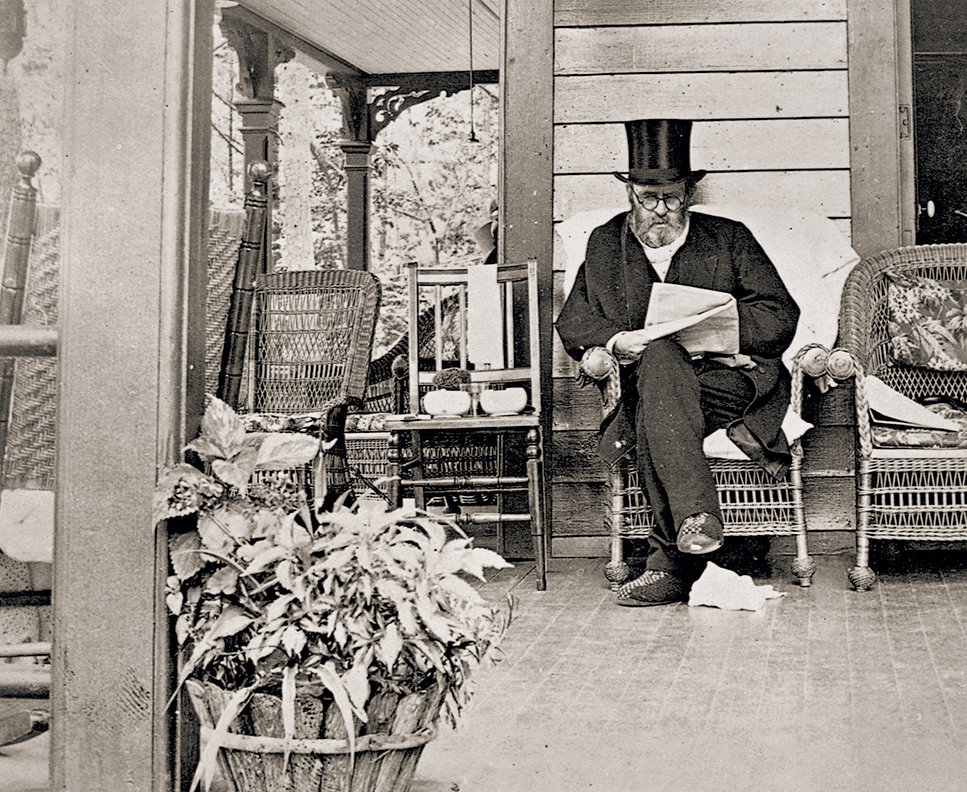
Last photo of Grant before his death. [Library of Congress]
Twain published Grant’s memoirs the same year he died. They became an instant best-seller and proved a literary and financial success. Julia Grant received royalties that totaled $450,000, roughly equivalent to more than $14 million today.
To learn more about Grant’s life, death, and legacy, we encourage you to visit our partner park Ulysses S. Grant National Historic Site. While you’re there, be sure to pick up your own copy of the Personal Memoirs of Ulysses S. Grant at our bookstore, or order it online.
Looking for a memorable way to celebrate the Fourth of July this year? Look no further than Gateway Arch National Park.
Visitors who gather on the Arch grounds tomorrow evening will have a front row seat to one of the nation’s most spectacular fireworks displays. The civic organization Fair Saint Louis will set off more than 1½ tons of fireworks from a barge in the Mississippi River, just beneath the Arch. It promises to be the largest fireworks show the organization has ever produced.
The show is scheduled to begin at 9:30 p.m., and last about 30 minutes. Visitors are encouraged to bring blankets and lawn chairs and to picnic on the grass. No glass or alcohol is allowed. The Arch itself will not be open, but the grounds and riverfront will be accessible.
This is the 42nd year that Fair Saint Louis will present its Fireworks Spectacular. It will also host its 140th America’s Birthday Parade the morning of the Fourth.
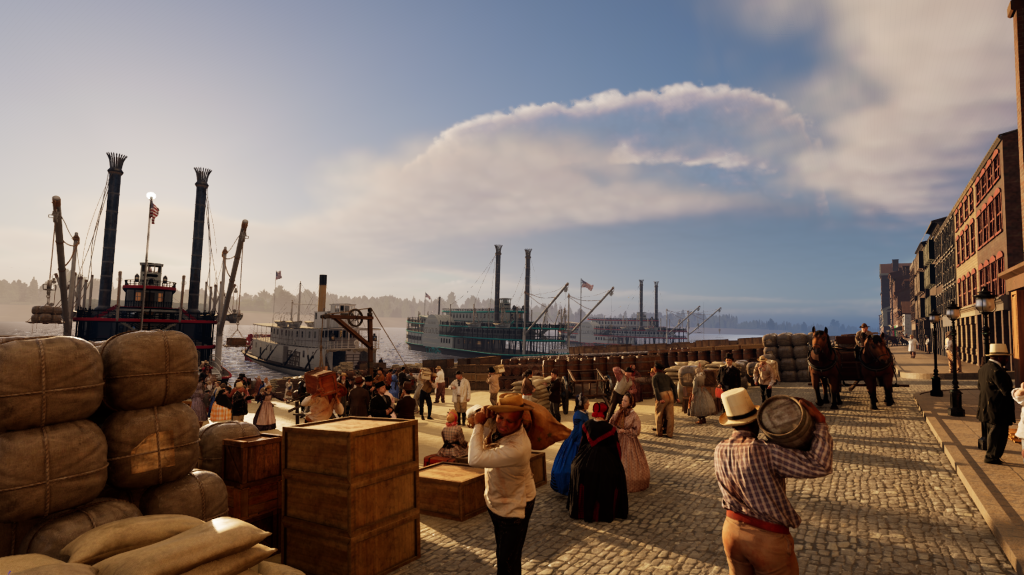
Gateway Arch National Park has added a new attraction to its already-full list of activities…and it just might blow your mind. It’s a virtual reality (VR) experience that transports visitors to a 360⁰ depiction of the 1850s St. Louis riverfront. And it all takes place in a newly designed area on the lower level of the Arch visitor center.
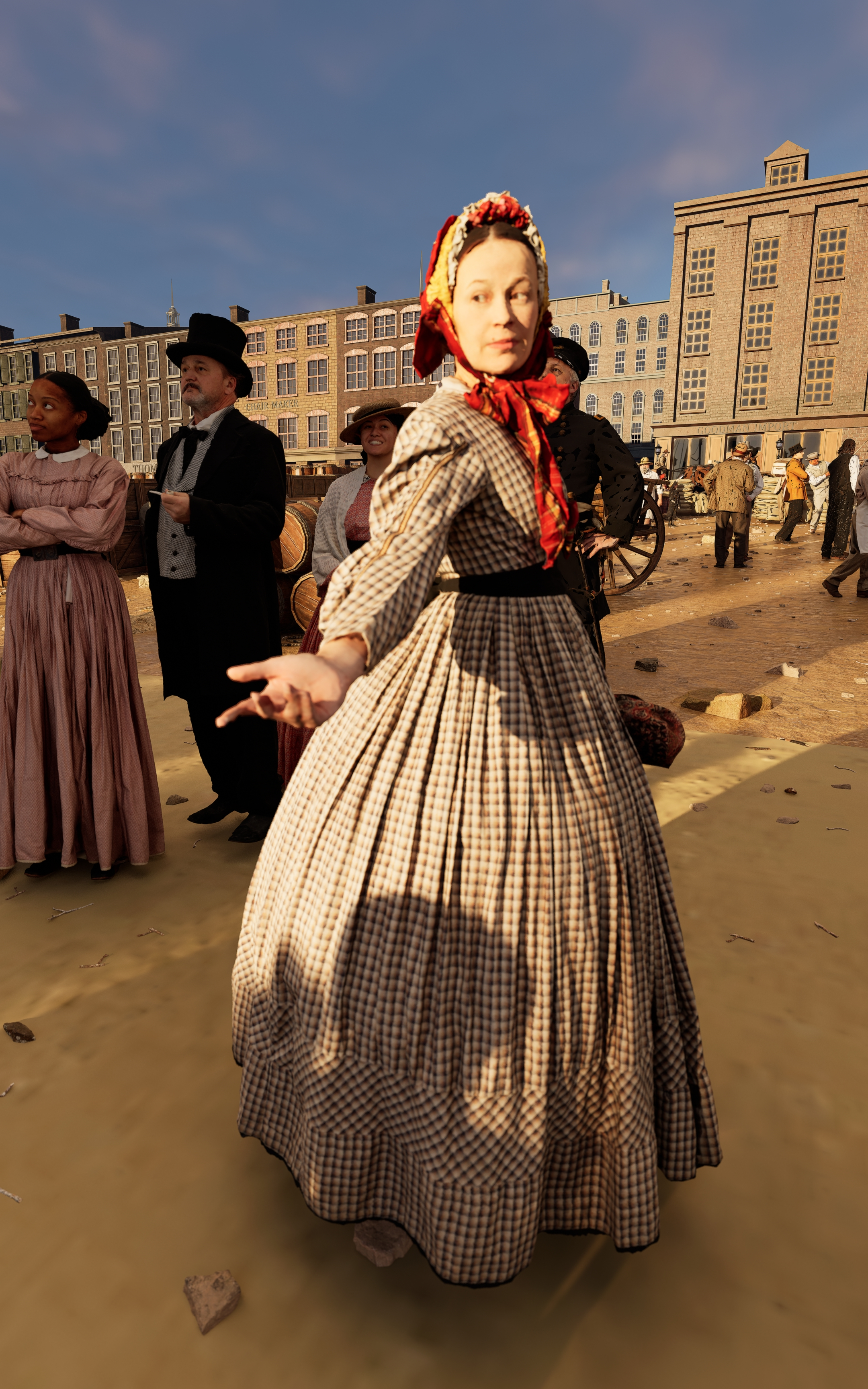
When you put on a special 3D headset, you’ll be immersed in the sights and sounds of the St. Louis levee in the 1850s, an era when the city was an important crossroads for America’s westward migration. Watch as steamboats deliver travelers and goods from around the world. And hear the stories of courage, struggle, and hopes of some of the real people who crossed paths there. The VR program aligns with one of the historic eras that visitors can also learn about in the Arch museum, though it brings it to life in a very unique way.
Jefferson National Parks Association and park staff have teamed up to bring this production – titled Cobblestones & Courage – to park visitors. JNPA funded the work and selected TimeLooper – a pioneering interpretive design firm – to develop the programming.
“Gateway Arch National Park is constantly seeking new and engaging ways to share the story of America’s westward expansion with visitors,” says David Grove, President and CEO of JNPA. “As a park partner, we’re thrilled to bring this unique experience to visitors. Cobblestones & Courage brings history to life in a tangible way using 3D technology to diversify the park’s storytelling methods.”
The new Virtual Reality Theater is located in the lower Gateway Arch lobby, right outside The Arch Store, which JNPA also operates. Tickets are $10 for adults, $8 children (ages 5-15). Reservations are encouraged and tickets can be pre-purchased here.
If you’ve ever wanted to travel back in time, this is the way to do it. Check it out! And also take a look at a preview video of the production.
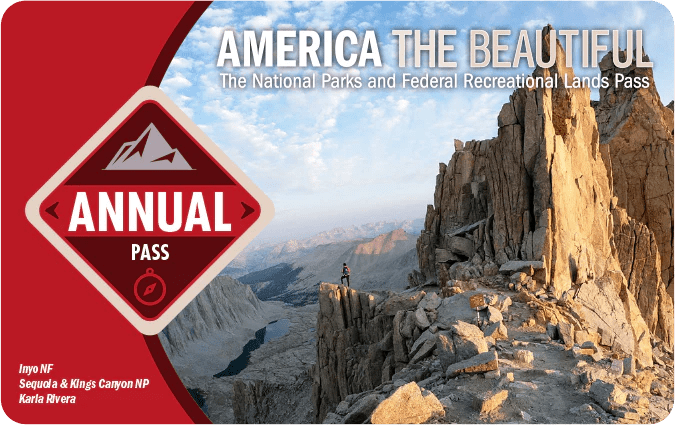
Now that summer is in full swing, you’re probably making vacation plans. If a national park is on your travel agenda, we have a suggestion you won’t want to pass up: buy an America the Beautiful Pass.
This $80 annual pass entitles you and three guests to free access to more than 2,000 public sites managed by five federal agencies for an unlimited number of visits during the year. And since some national parks charge up to $20 per person or $35 per vehicle, these savings can add up. What’s more, the proceeds from the purchase of each pass are dedicated to improving and enhancing visitor experiences at these federal recreation sites.
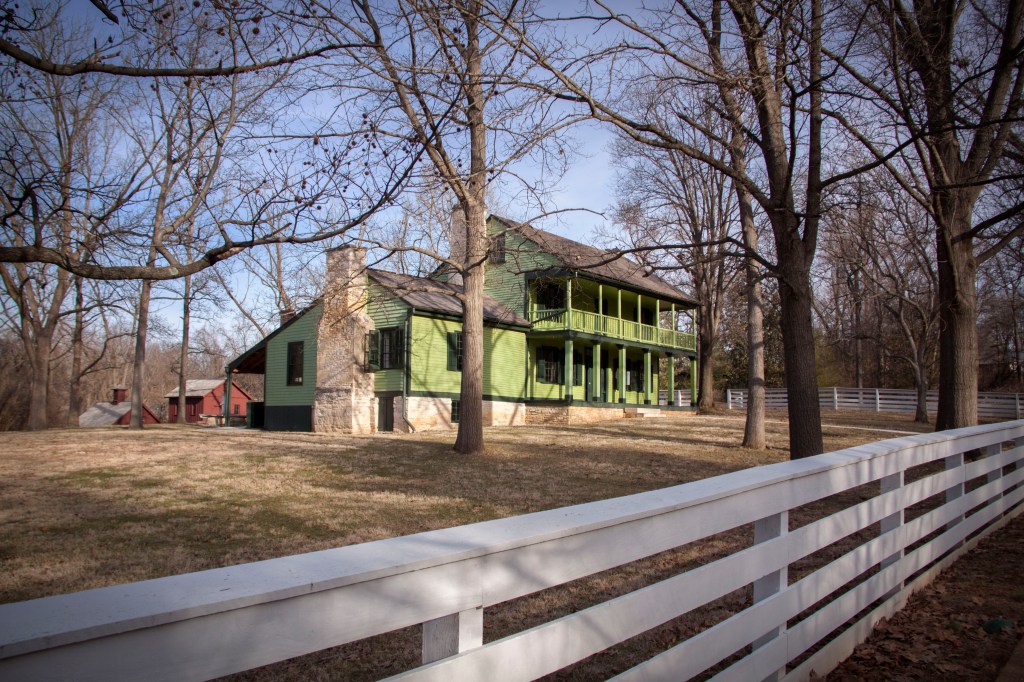
Ulysses S. Grant National Historic Site. Credit: NPS/David Newmann
Beyond the regular annual park pass, there are other options for certain groups:
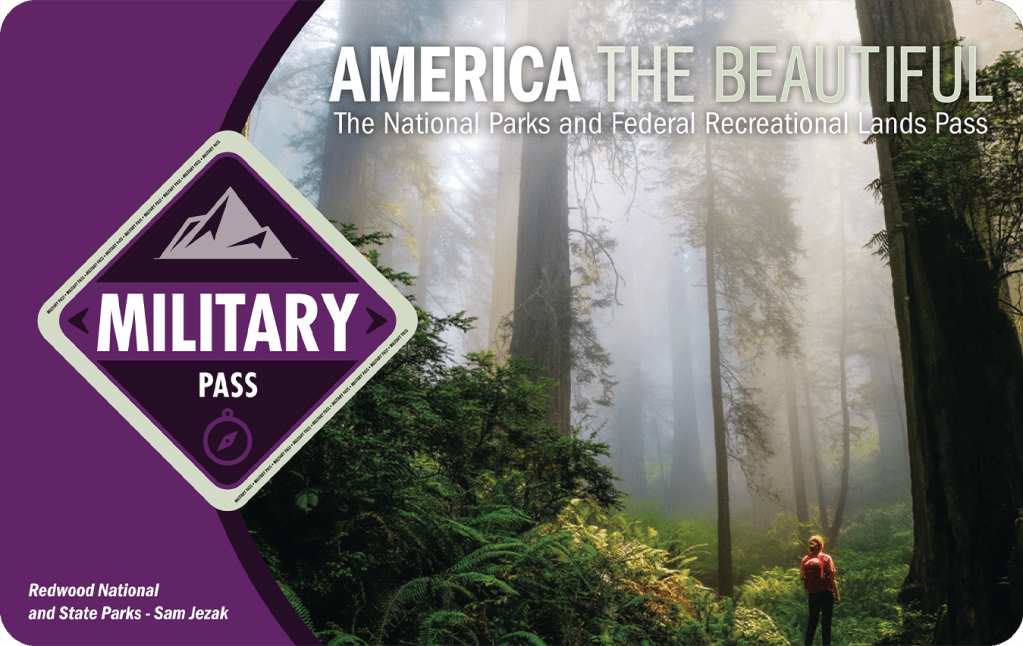
Members of the military and their dependents qualify for a free annual Military Pass;
Gold Star families and Veterans can receive a free lifetime Military Pass;
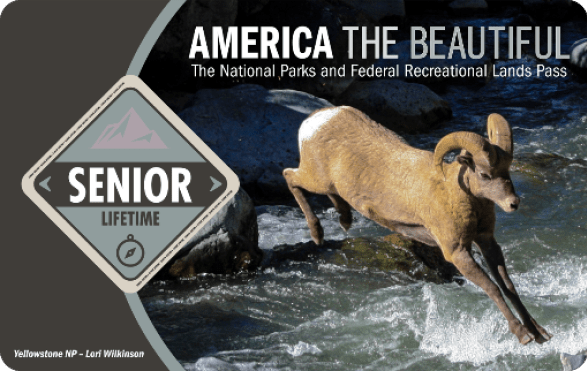
Those who are ages 62 and up can purchase a $20 annual Senior Pass or an $80 lifetime Senior Pass;
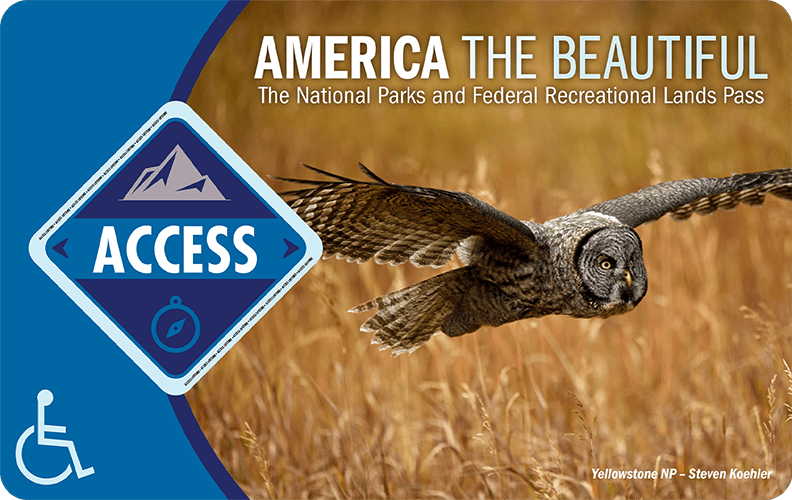
Those who have a permanent disability can qualify for a free lifetime Access Pass, regardless of their age.
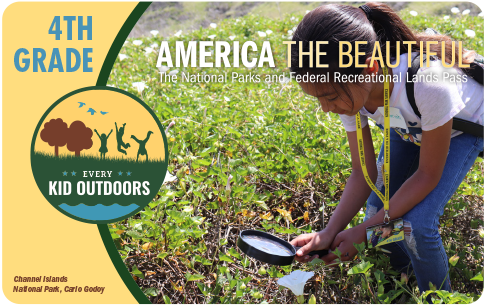
Children in 4th grade and their educators can take advantage of a free Every Kid Outdoors Annual 4th Grade Pass.
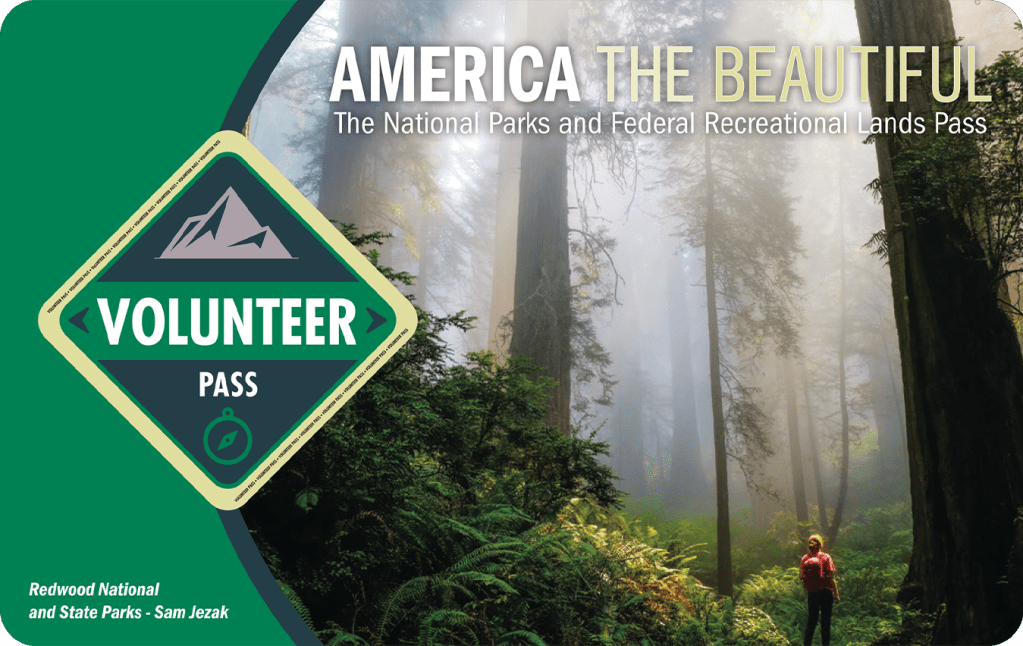
Those who volunteer for a federal recreation site for more than 250 hours are entitled to a one-year Volunteer Pass.
Where can you get one of these park passes? If your vacation is more than two weeks away, you’ll have time to order your passes online and have them mailed to you (there’s a $10 processing fee for online orders). But if you’re travelling sooner, you’ll want to buy your passes at one of more than 1,000 recreation sites managed by the National Park Service, Bureau of Land Management, U.S. Fish and Wildlife Service, U.S. Forest Service, and the U.S. Army Corps of Engineers. To find one near you, go here.
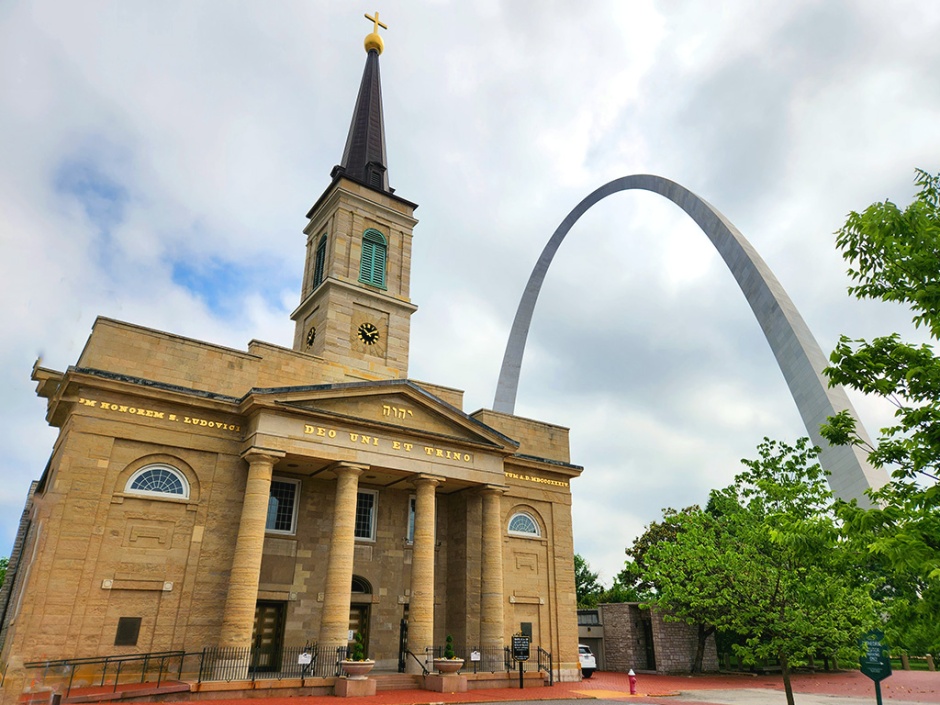
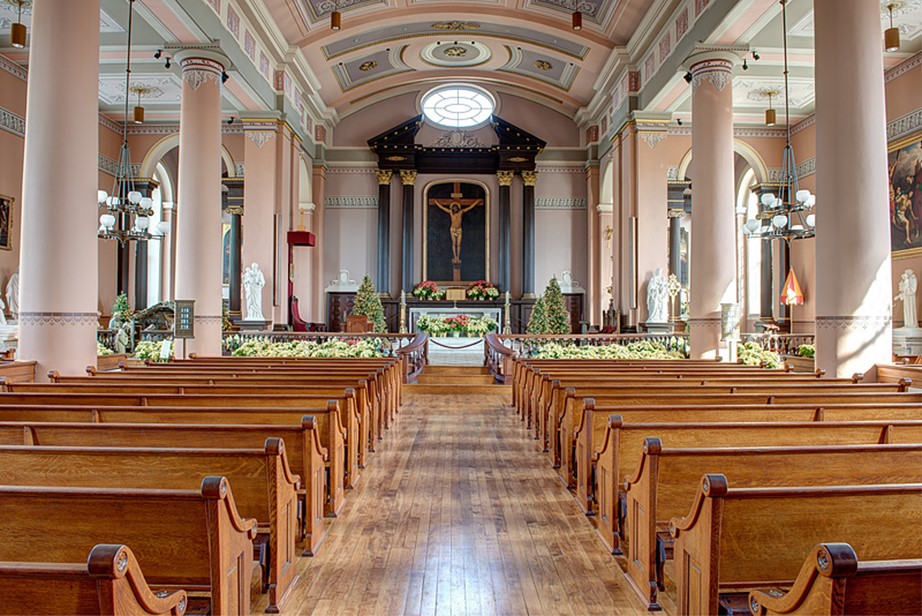
When you visit Gateway Arch National Park, you may not expect to see a Catholic Church perched on the edge of the Arch grounds. Nor is just any church – it’s the first cathedral west of the Mississippi River.
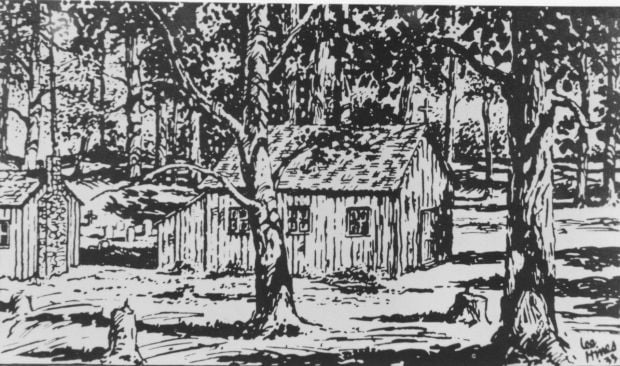
Depiction of the original log church c. 1770
This handsome stone building is formally known as the Basilica of Saint Louis, King of France, but St. Louisans refer to it as simply the Old Cathedral. In 1764, St. Louis was established as a French fur trading post. Since then, the city has fallen under the control of three different countries (France, Spain, and the United States) and the church served a wide variety of purposes. One thing, however, has remained the same since 1770: the ownership of the land where the Old Cathedral sits. Although the building has been changed several times, for the last 253 years the property has been home to a Catholic church.
Old Cathedral c. 1834. Credit: Missouri Historical Society
Beginning as a simple log building, the Catholic church was the only house of worship in the area of any denomination until the early 1800s. Over the years, it was renovated and expanded, until construction of the “new” cathedral began in 1831. As the social hub of the region, the church played host to many significant people and stood witness to a number of historic events. Jean Baptiste Charbonneau, the son of Sacagawea, was baptized at the church, as were explorer William Clark’s children. The church survived war, cholera, fire, influenza, tornados, and many other tragedies that befell the St. Louis region.
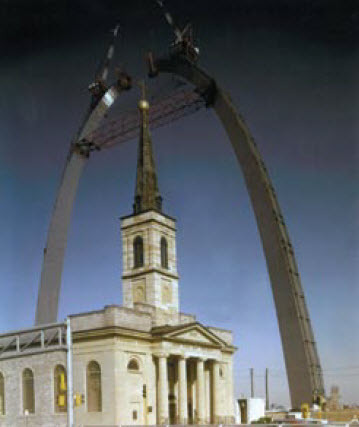
Old Cathedral c. 1965. Credit: Basilica of Saint Louis, King of France
Because of its historical significance, Pope John XXIII designated the Old Cathedral as “The Basilica of Saint Louis, King of France” in 1961. However, at that time, the building was in disrepair, and much of the riverfront had been cleared to make room for the future Jefferson National Expansion Memorial (now Gateway Arch National Park). The cathedral was one of only two buildings on the future park grounds that was spared from demolition (the other being the Old Courthouse). The archbishop of St. Louis, Cardinal Joseph Ritter, decided to keep the designation a secret when he launched a restoration project of the Old Cathedral. The news of its elevated title was not announced until the project was completed in 1963, right before the St. Louis Bicentennial in 1964 and the completion of the Arch in 1965.
Credit: Basilica of Saint Louis, King of France
Now, the Old Cathedral stands next to the Gateway Arch as a testament to the beginnings of the Village of St. Louis and how far our city has come. It invites visitors to attend Mass and offers free tours on the first Sunday of each month following the noon Mass.
Feel like hitting the road? Check out our suggestions for a few fun weekend adventures.
Trip 1- St. Louis
Day 1– Let’s start this trip with St. Louis’ own iconic Gateway Arch! Your first stop will be the museum at Gateway Arch National Park, where you will learn all about the history of St. Louis, westward expansion, and the unique architecture contest which resulted in the construction of the Arch. Next, catch a showing of the documentary film Monument to the Dream followed by a tram ride to the top of the Arch. At 630 feet high, you can’t beat those views! For lunch, you can grab a bite at the Arch Café, have a picnic on the beautiful park grounds, or go check out the restaurants downtown. (St. Louis is known for its diverse food offerings.) In the afternoon, take a riverboat tour of the Mighty Mississippi before you do some exploring of Downtown St. Louis. Catch a Cardinals baseball game, go for a stroll through Citygarden Sculpture Park, or take a tour of the National Blues Museum. For dinner, check out the restaurants and nightlife at Ballpark Village.
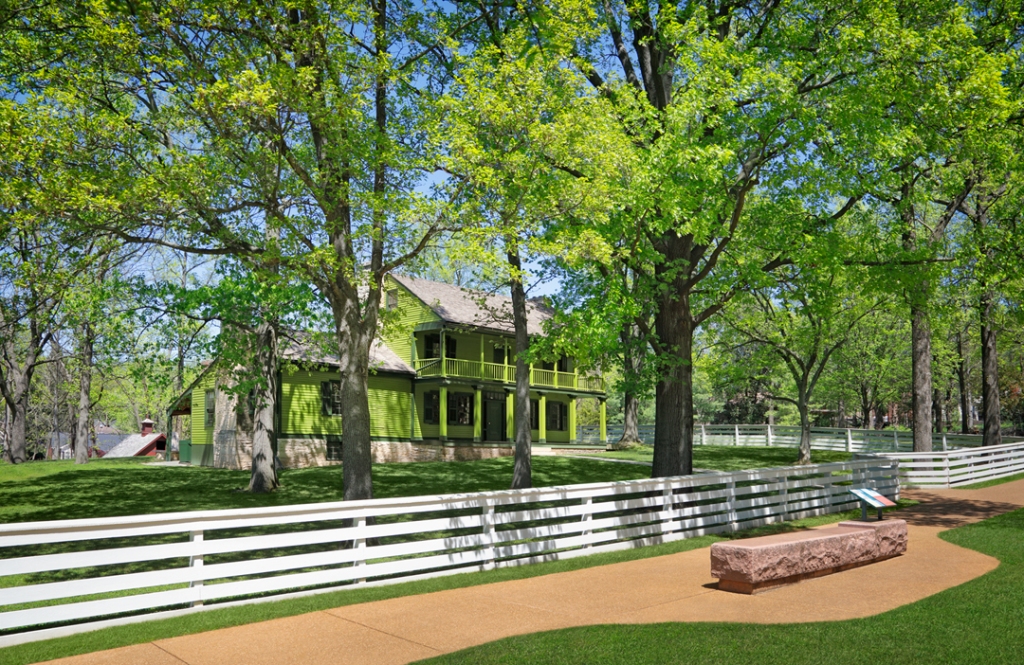
Day 2– Your main attraction for today will be Ulysses S. Grant National Historic Site in south St. Louis County. Check out the orientation film and take a self-guided tour of the park’s museum, housed in the historic 1872 horse stable that Grant himself designed. Then embark on a guided tour of White Haven, the home where Ulysses S. Grant and his wife, Julia, fell in love and made their life together. Next, head to brunch or lunch at The Barn restaurant before taking a tour of the Thomas Sappington House Museum next door. When you’re done, make sure to take a stroll through Father Dickson Cemetery, one of the first public cemeteries for African Americans in St. Louis. For dinner, take your pick from the many wonderful restaurants in nearby Crestwood, Kirkwood, or Webster Groves.
Green Tree TavernJean Baptiste Valle House
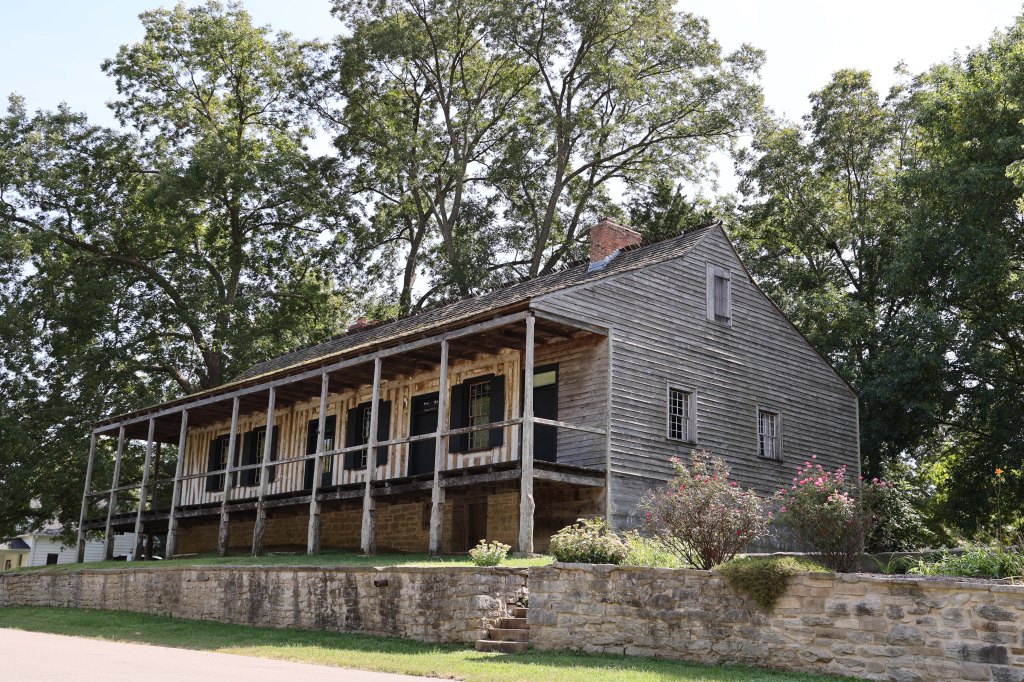
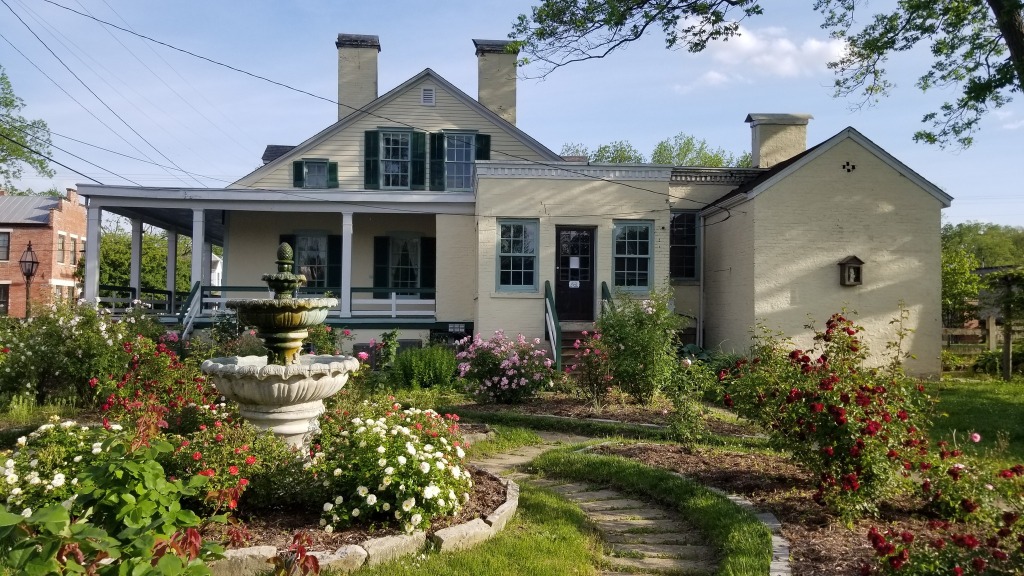
Day 3– On the final day of your weekend trip, you are going to head an hour south along the Mississippi to the beautiful Ste. Genevieve National Historical Park. This unique park is spread out across multiple buildings in the 18th century town of Ste. Genevieve. You can take ranger-led tours of the historic Green Tree Tavern and the Jean Baptiste Valle House. Next, you can wander through this picturesque small town and visit the multitude of shops, museums, and restaurants. For dinner, visit one of the six wineries on the Route du Vin Wine Trail.
Trip 2- Arkansas
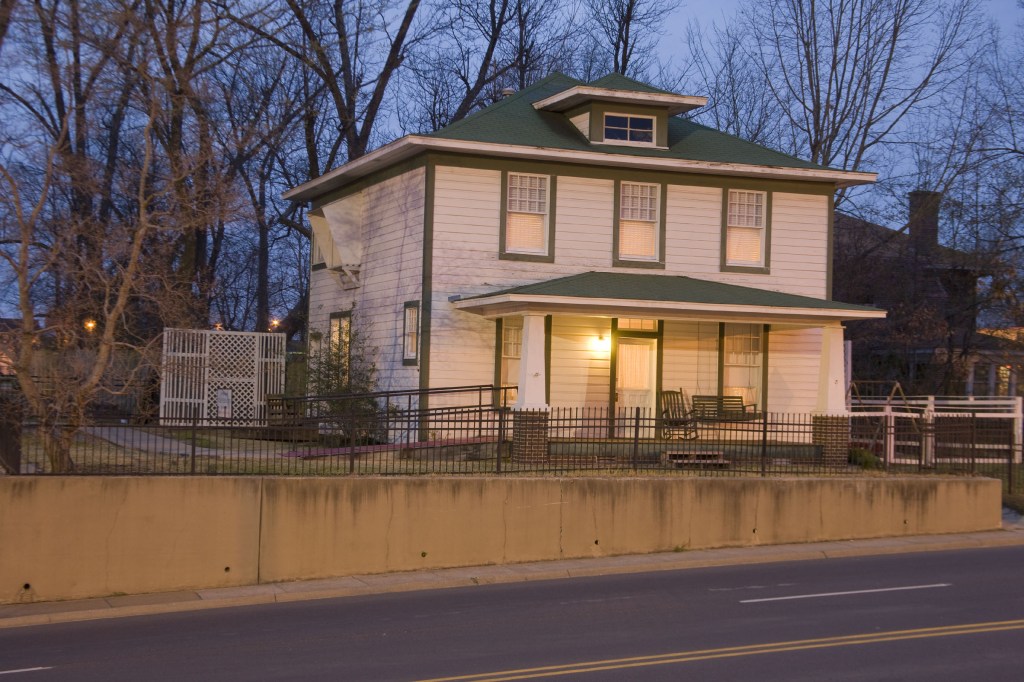
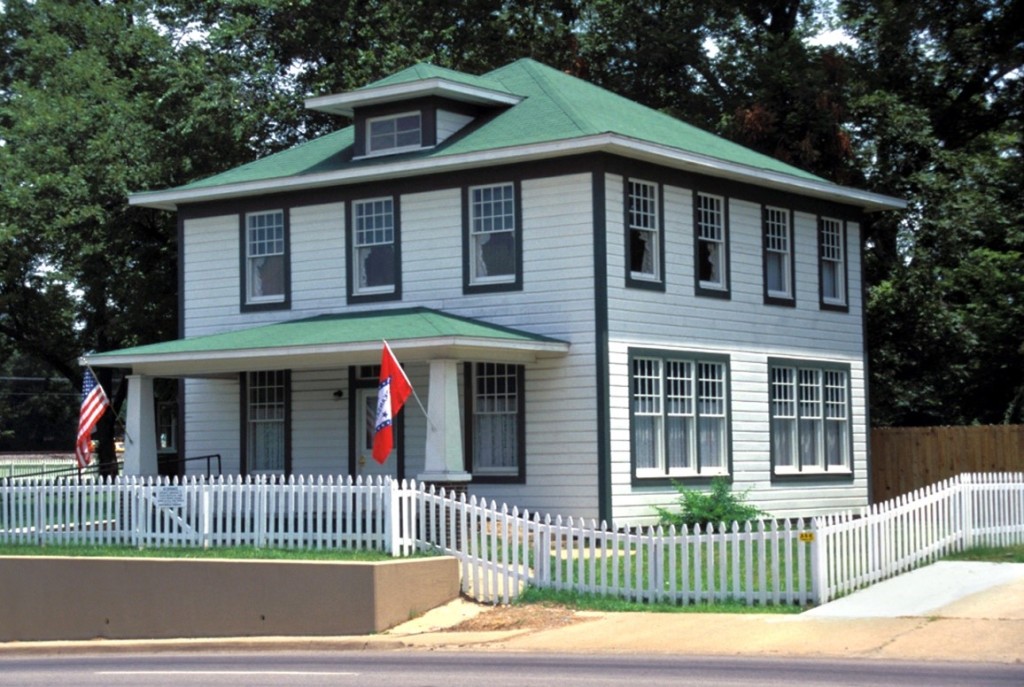
Day 1– Every good trip begins with a little hope, and for this trip, we are taking that literally! Your first stop is the President William Jefferson Clinton Birthplace Home National Historic Site in the quaint town of Hope, Arkansas. Stop by the park’s visitor center before taking a ranger-led tour of the home where our 42nd President was born. Next, head down the road for lunch at Tailgaters Burger Co. or one of the other local restaurants. In the afternoon, you can check out the Hope Visitor Center and Museum or the quirky Klipsch Museum of Audio History.
Credit: NPS/Calvin Smith
Day 2– About a 90-minute drive from Hope is the unique town of Hot Springs. One of the first “spa towns,” Hot Springs has a mix of historic architecture and natural beauty. Though Hot Springs National Park is not one of JNPA’s partner parks, we still don’t want you to miss this gem! Your first stop is the Fordyce Bathhouse Museum and Visitor Center to talk to a ranger and learn more about the history of the area. Next, you can check out historic Bathhouse Row or go for a hike on one of the park’s many miles of trails. For lunch, stop by the Superior Bathhouse Brewery, the only brewery located in a national park! In the afternoon and evening, go for a soak at one of the bathhouses, take another hike, or check out Downtown Hot Springs.
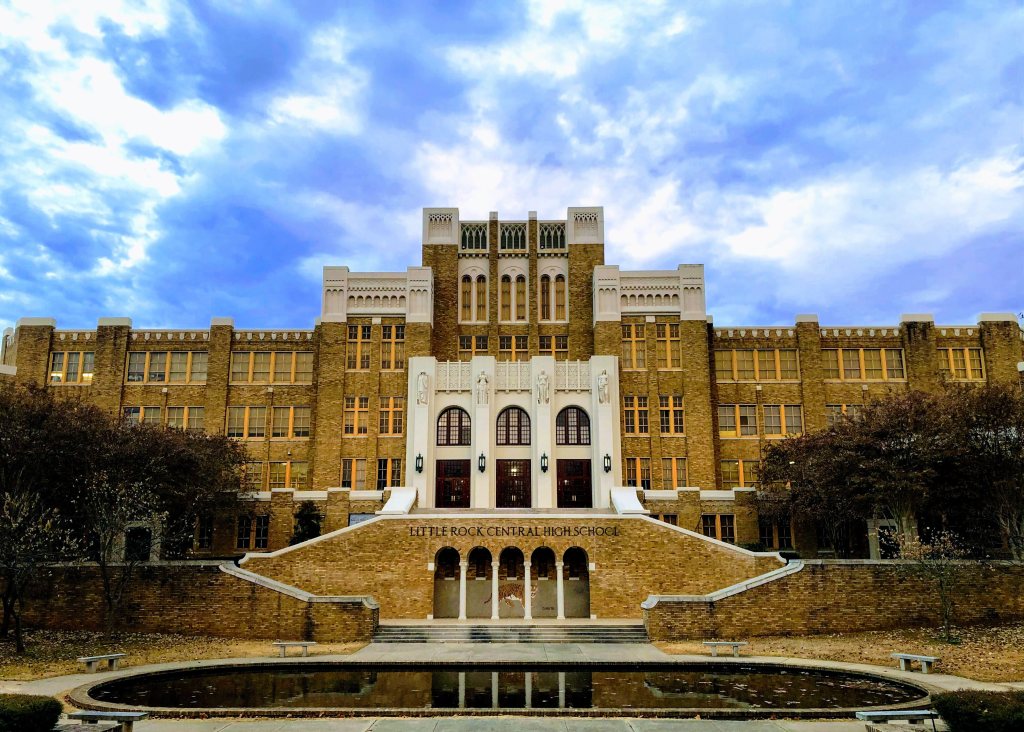
Day 3– Continuing northeast for an hour, this trip ends at the capital of Arkansas, the bustling city of Little Rock. At Little Rock Central High School National Historic Site, you will learn about the bravery of the Little Rock Nine and the rocky beginnings of the desegregation of America’s schools. Stop by the park’s visitor center first to view the exhibits and watch the interpretive film. Then, take a ranger-led tour of the school, which is still in use today. Ask the park rangers for a lunch recommendation before heading into the city to check out one of the many other cultural institutions. Don’t forget to visit the State Capitol Building, which offers free guided tours. Animal enthusiasts may want to see the Little Rock Zoo, or art aficionados may enjoy the Arkansas Museum of Fine Arts. For an outstanding ending to your Arkansas vacation, check out one of the many local restaurants for dinner.
Trip 3- Northern Minnesota
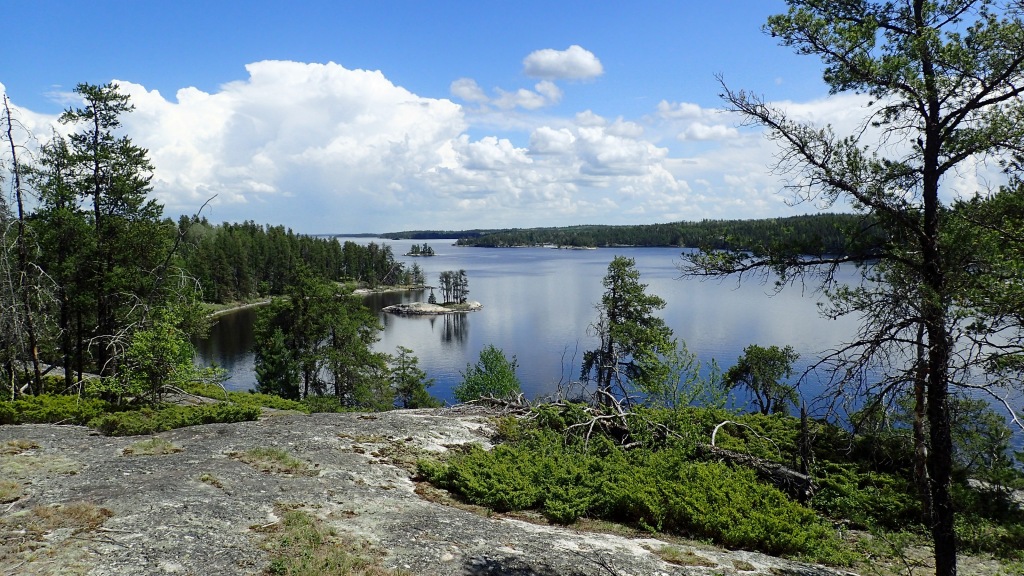
Day 1– At over 200,000 acres, Voyageurs National Park will take up all three days of this getaway. Your first stop will be one of the three visitor centers. The largest, Rainy Lake Visitor Center, offers exhibits, an orientation film about the park, and a bookstore (operated by you-know-who). Next, head out on one of the park’s many hiking trails to take in the scenery. Bring a picnic lunch to enjoy along the trail, but make sure to pack out what you pack in. End your day by getting settled into your lodgings. You could opt for the Kettle Falls Hotel or get a bit more adventurous: there are a variety of camping options at Voyageurs or you could even rent a houseboat!
Credit: NPS
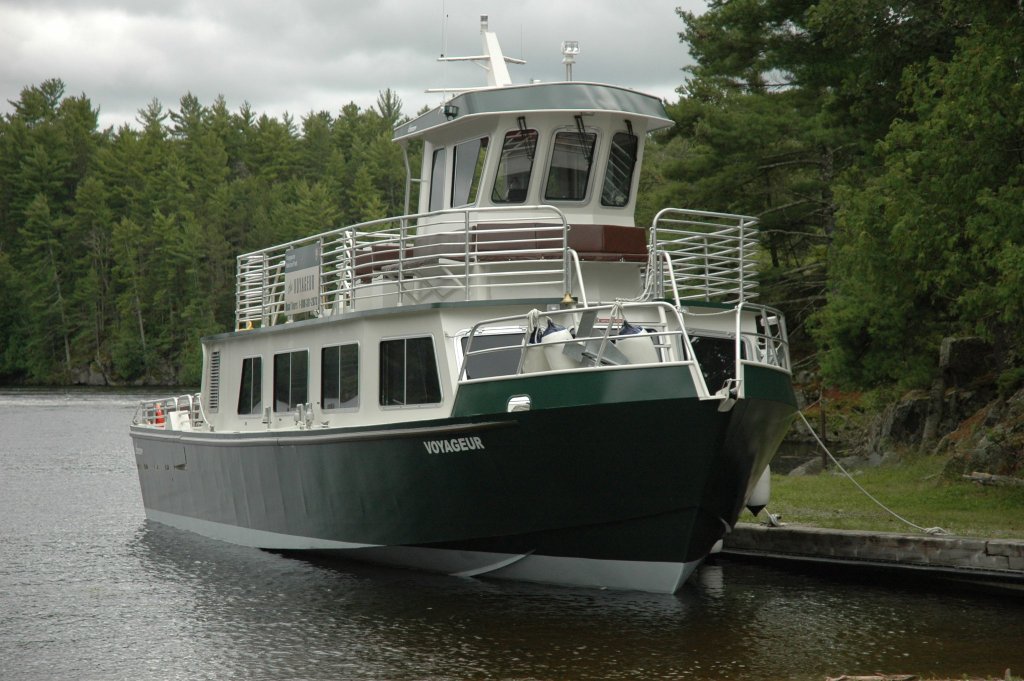
Day 2– For your only full day at the park, take the opportunity to participate in a guided tour or two. In the Rainy Lake district, you can take a boat tour aboard the Voyageur, or in the Namakan district, you can voyage on the park’s newest tour boat, the Ne-zho-dain. If you are feeling extra adventurous, sign up for one of the park’s North Canoe Voyages, where you can paddle a replica of a north canoe while being immersed in an on-the-water living history lesson!
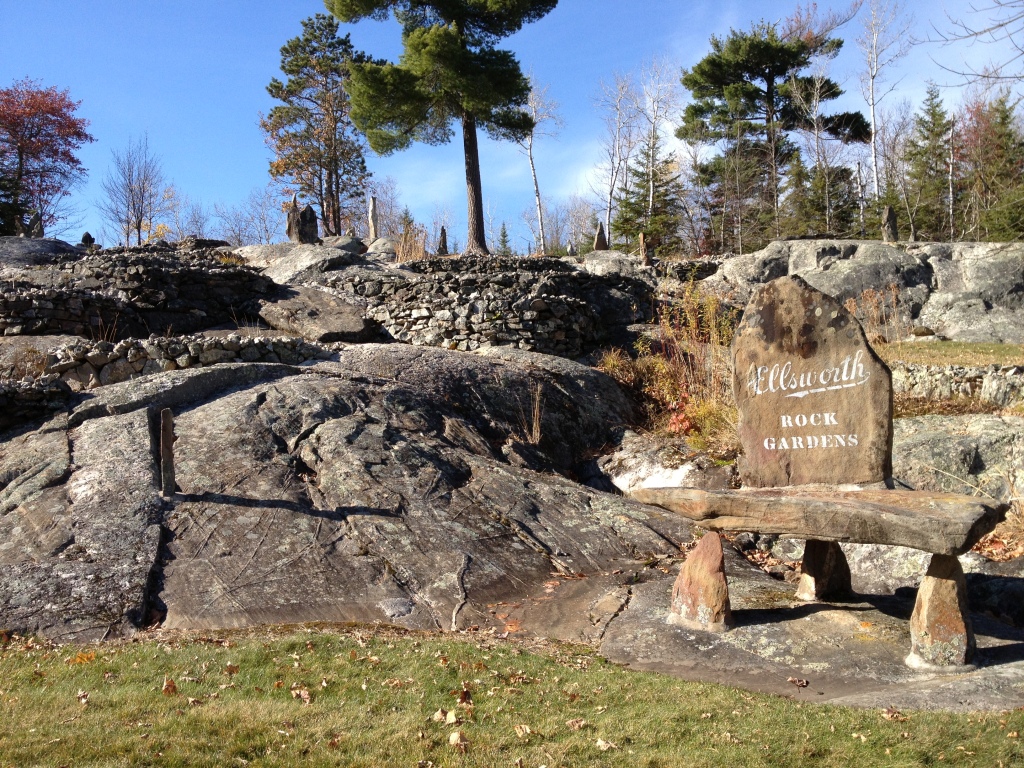
Day 3– For your final day at Voyageurs, take time to check out the Ellsworth Rock Gardens and the Harry Oveson Fish Camp, or do a bit of birdwatching. Then on your way out of the park, stop by one of the gateway communities, such as International Falls, to see the sights and restaurants they have to offer.
When you think of National Parks that support wildlife conservation, you may think of Yellowstone, Voyageurs, or Great Smoky Mountains. However, urban parks like Gateway Arch National Park can also have a big impact on wildlife conservation. That’s why the park is snuffing out the lights that illuminate the Arch this month.
Wait, what?
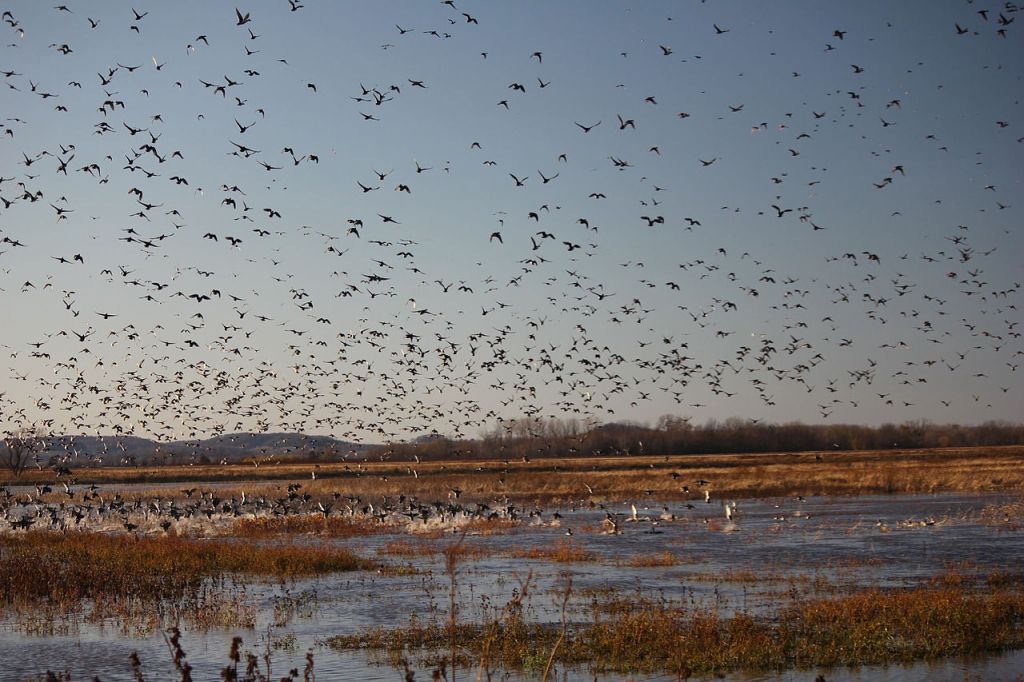
Let us explain. The Mississippi River, with its wide banks and flowing waters, cuts a path through the heart of our continent that is free from mountains or ridges. This provides a perfect path for over 300 species of migrating birds, known as the Mississippi Flyway. During the months of May and September, songbirds and waterfowl use the over 2,500-mile-long route to move between their summer breeding grounds in Canada and their wintering grounds in Mexico. However, bright lights from buildings, including the Arch, can confuse these long-distance flyers, most of which migrate at night.
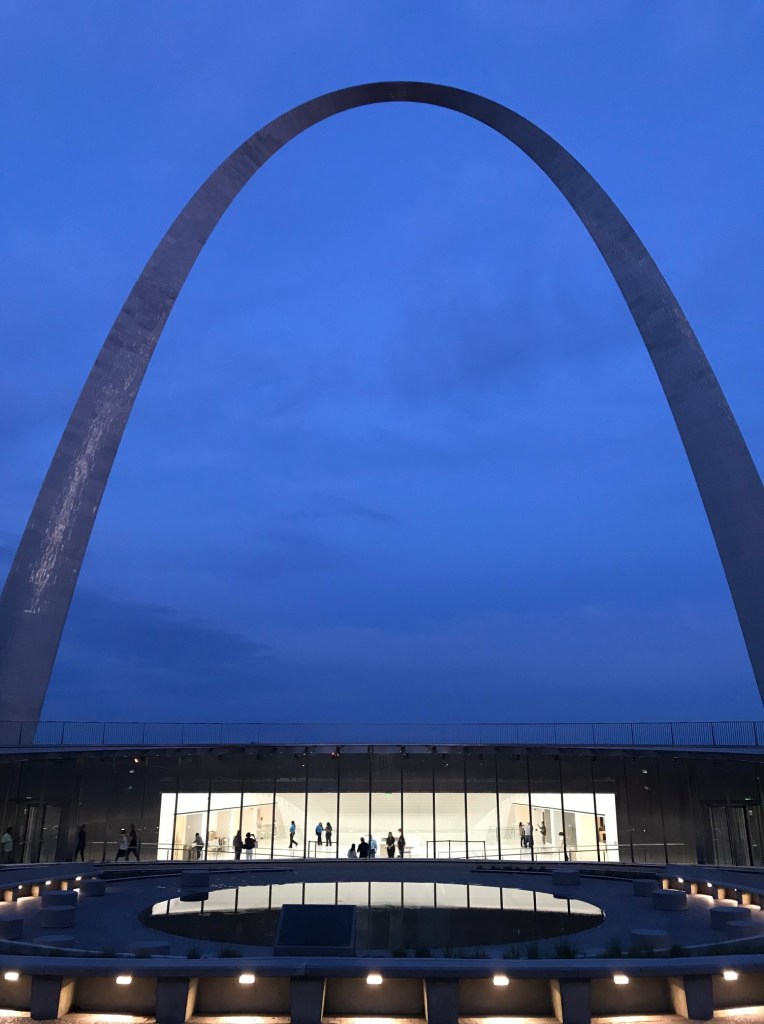
Gateway Arch National Park is doing its part to help the migrating birds by partnering with Lights Out Heartland to reduce light pollution. Throughout the month of May, the National Park Service will not illuminate the Gateway Arch at night.
“St. Louis sits right beneath the Mississippi Flyway, a major migration highway,” said Jeremy Sweat, Superintendent of Gateway Arch National Park. “For over a decade Gateway Arch’s exterior lights have been turned off for two weeks each May and September to help minimize the possible disorienting effect the lights may have on birds that migrate at night. As migration patterns have changed, this year the park will extend the lights off for the entire month of May.”
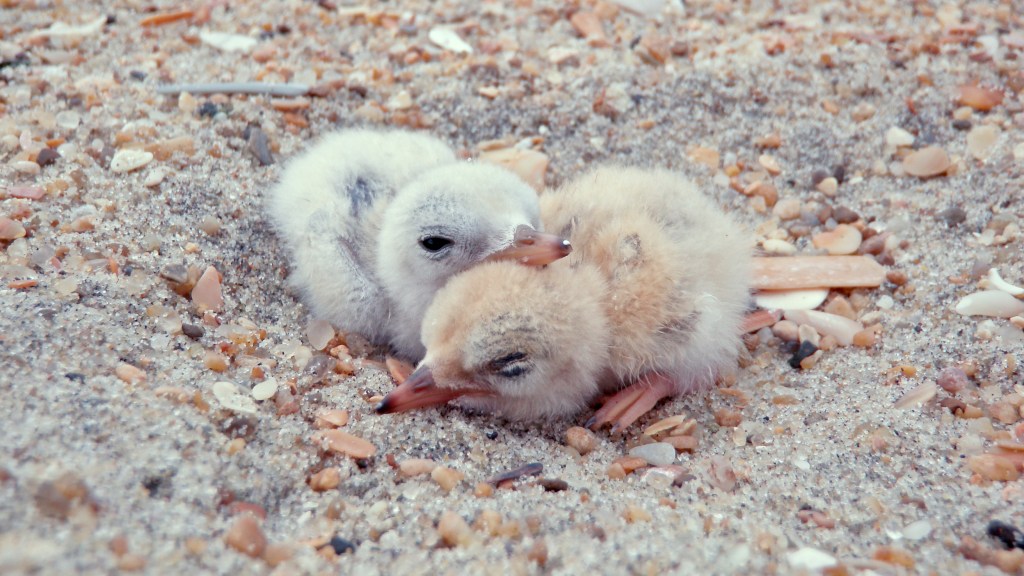
Least Tern chicks. Credit-NPS
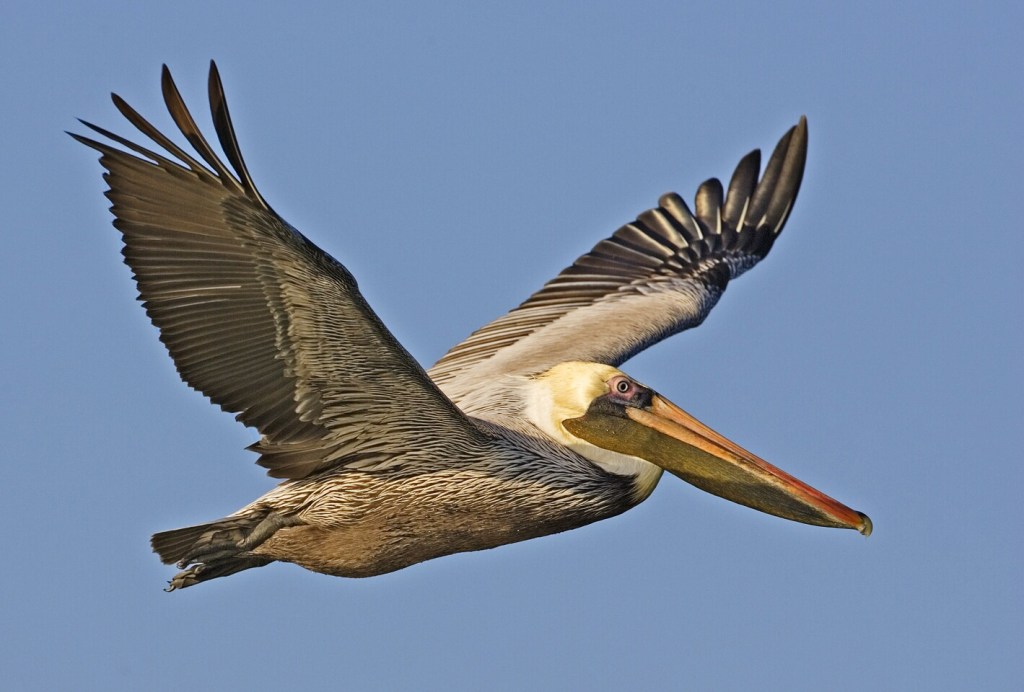
Many of the species traveling along the flyway have been impacted by environmental disasters such as oil spills and habitat loss, meaning that they require more protection to ensure their species’ survival. The Audubon Society has identified several “priority birds” that frequent the Mississippi Flyway, such as Brown Pelican, Little Blue Heron, Least Tern, and Seaside Sparrow.
Brown Pelican. Credit-NPS
You can do your part to help migrating birds like these. During migration season, turn off decorative lights outside your home between the hours of 11 PM and 6 AM and use window coverings to reduce the impact of interior lighting. You can also ask owners of office buildings and apartment complexes to dim all unnecessary lights in May and September (and many are voluntarily doing that already). After all, it’s for the birds!
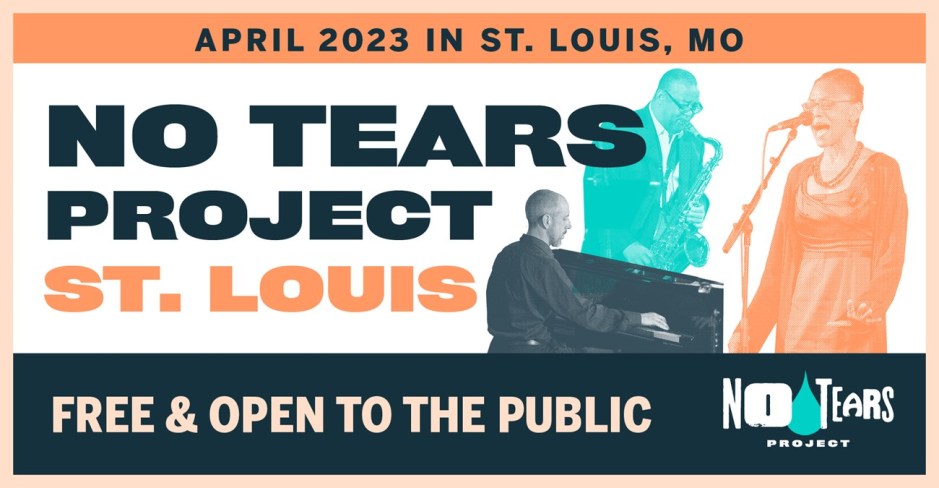
When examining the complex history of civil rights in St. Louis, and the country as a whole, you may turn to books, documentaries, the internet, or… music? Yes! Thanks to one unique program, many of our nation’s civil rights stories have been interpreted through jazz music. This month, Gateway Arch National Park has partnered with Oxford American and Jazz St. Louis to develop the No Tears Project – St. Louis, “a multi-day residency of free events that will use music and conversation to engage communities in civil rights education and storytelling.”
The No Tears Project began in 2019 by interpreting the story of the Little Rock Nine in Little Rock, Arkansas, and has since gone on to develop programs in New Orleans, Louisiana; Fayetteville, Arkansas; and Tulsa, Oklahoma.
No Tears Suite – Little Rock
Throughout the month of April, the project is using youth education events, panel discussions, and community concerts to interpret St. Louis’ role in the broader American civil rights story. Many notable guests will be featured during the project events, including Lynne Jackson, great-great granddaughter of Dred and Harriett Scott and founder of the Dred Scott Heritage Foundation; Percy Green, civil rights activist; and Elizabeth Eckford, a member of the Little Rock Nine.
“It’s an honor to work with these people and organizations to present an arts-based civil rights program like No Tears Project in St. Louis—a city so rich in cultural and musical heritage,” said Ryan Harris, No Tears Project Director and consultant to Oxford American. “Like all communities, St. Louis can become a better place through continued dialogue that honestly addresses its past, forging a deeper understanding of each other to move forward together, and create a better future. The fact that two of the city’s major cultural institutions, Gateway Arch National Park and Jazz St. Louis, are creating the space for these programs and this music reiterates their own commitment to the work and the importance of these conversations.”
“We’re excited to be working with Oxford American, Jazz St. Louis, local partners and community leaders on No Tears Project,” said Tarona Armstrong, Deputy Superintendent of Gateway Arch National Park. “The events will foster relevant and constructive conversations through education workshops and live performances, while connecting and engaging diverse audiences and youth to the history of our park and the civil rights movement.”
This week, the project is culminating in a panel discussion at the Arch on Wednesday, April 26, followed by live concerts at Jazz St. Louis on Friday, April 28 and Saturday, April 29. All of the events are free to the public, but registration is required. Details can be found here.
The No Tears Project – St. Louis residency is made possible by a consortium of generous funders led by Jefferson National Parks Association with additional support from Gateway Arch Park Foundation and the Stella Boyle Smith Trust.














 JNPA Blog