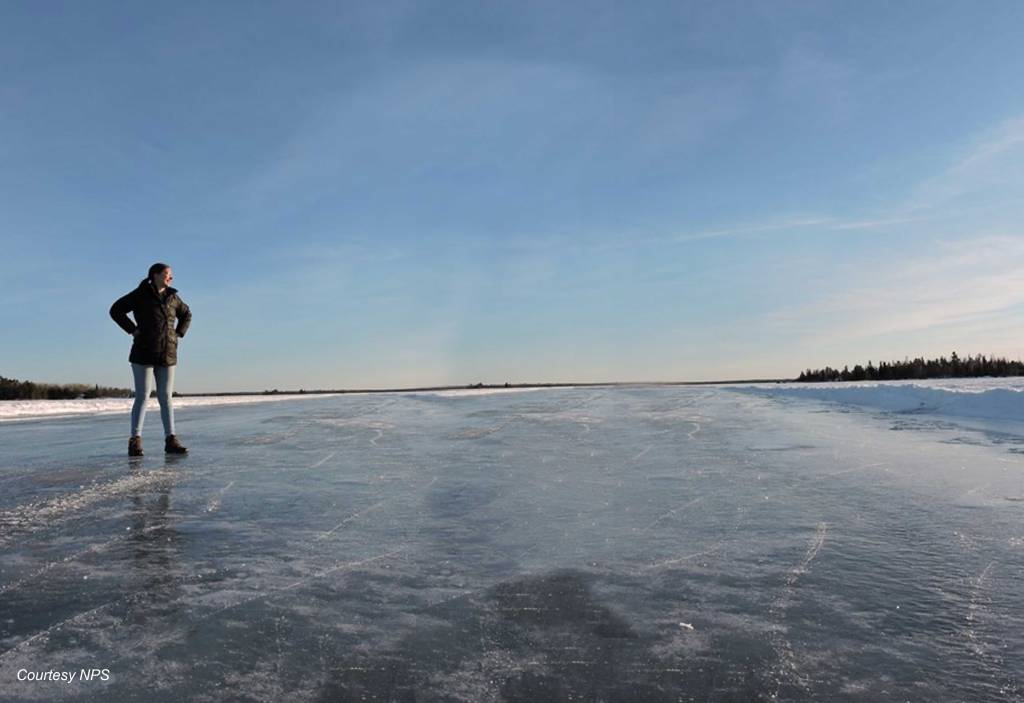
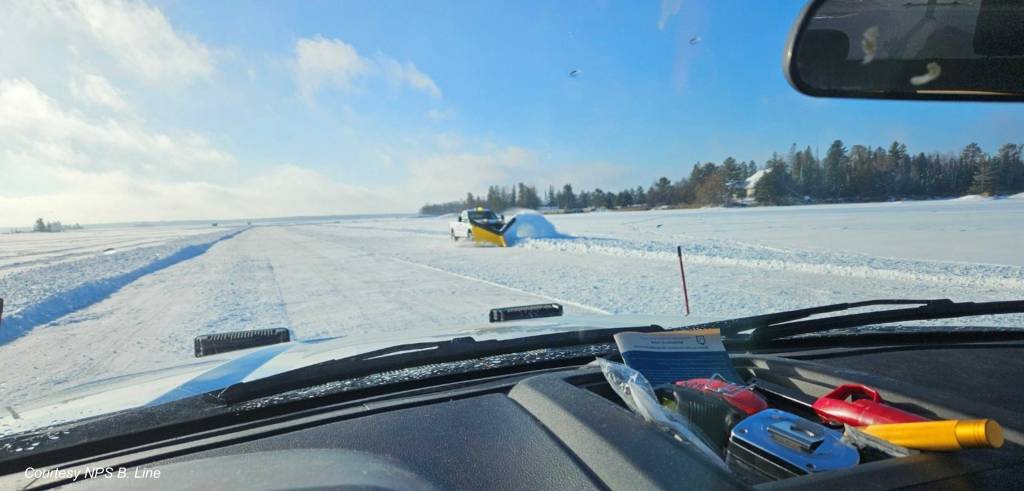
During harsh winter conditions, most of us do our utmost to avoid driving on icy roads. But not so at Voyageurs National Park, where visitors intentionally drive on ice!
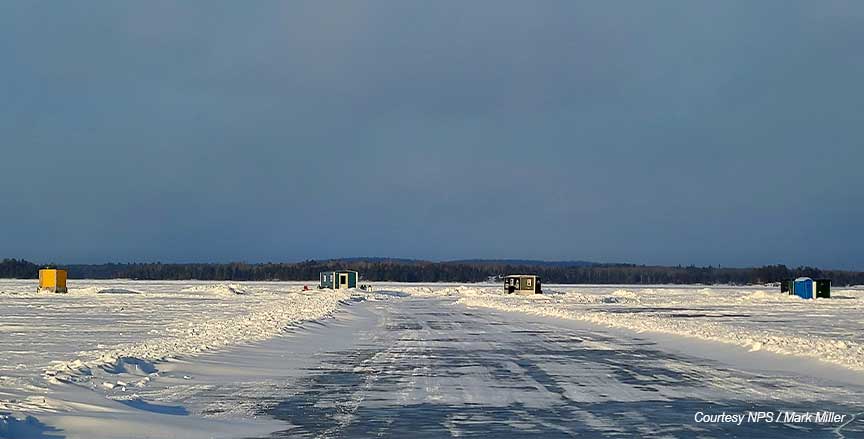
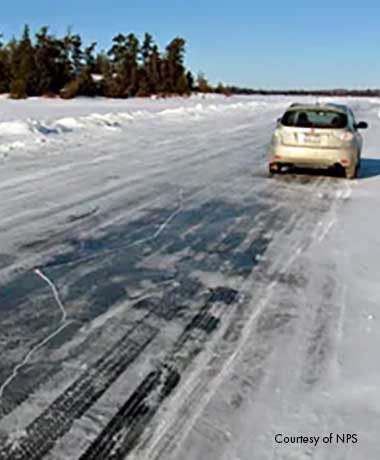
Every winter, park staff members clear snow from parts of Rainy Lake and Kabetogama Lake, creating ice roads that visitors can use. The roads are open to cars and trucks weighing less than 7,000 lbs. (Snowmobiles are not permitted). The speed limit is 30 mph. The roads are typically very wide – up to 60 feet or more – giving vehicles plenty of room to park and spread out.
Voyageurs’ two main ice roads begin at the park’s visitor centers, though the routes vary from year to year. Depending on weather conditions, they are open from early January to mid-March.
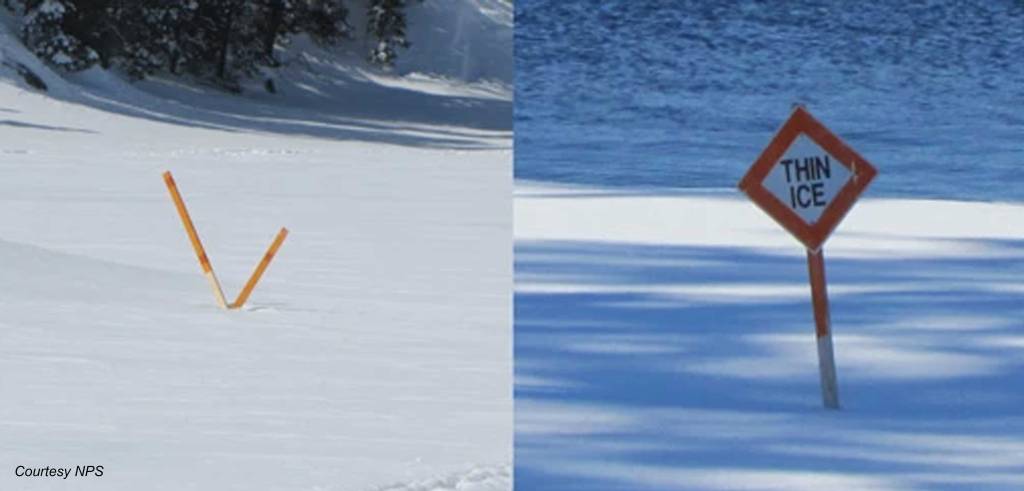
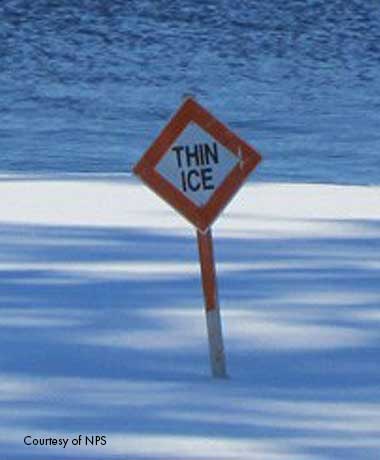
The park takes visitors’ safety very seriously. When heavy snow, slush, or thin ice exists, an ice road may be closed or shortened for safety. Specially trained staff test the ice thickness frequently and they post warning signs when the roads are unsafe for travel.
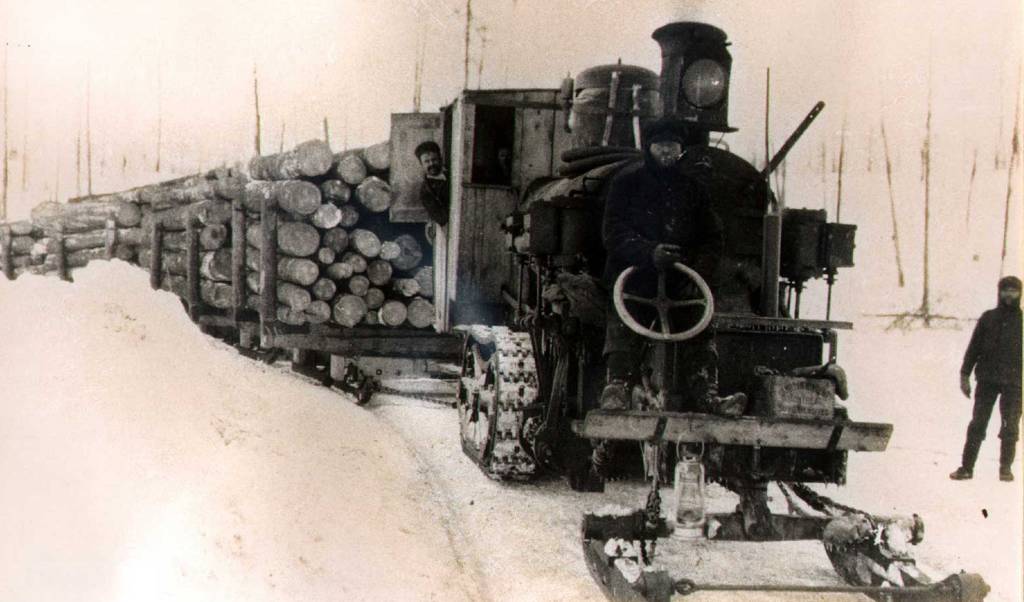
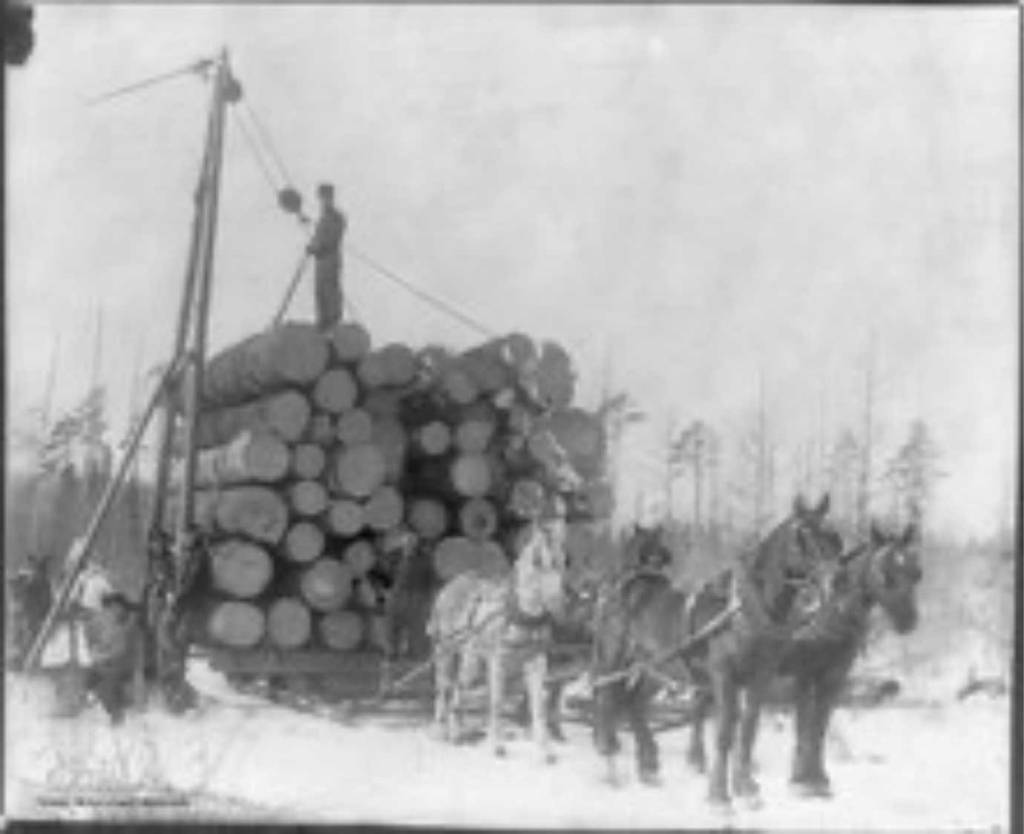
Steam log hauler, 1915
Northern Minnesota ice roads have a long history. Starting in the late 19th century, lumberjacks created ice roads to transport logs efficiently. And truckers carrying other loads commonly took advantage of the frozen lakes.
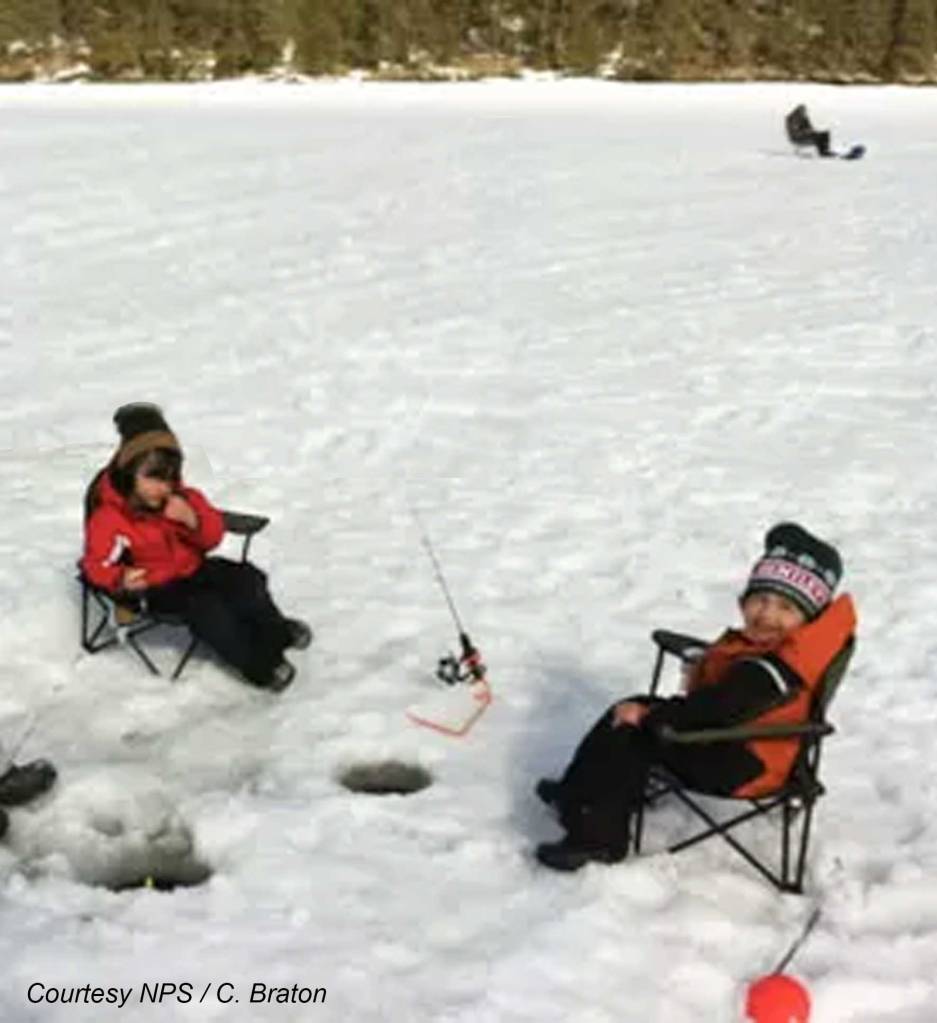
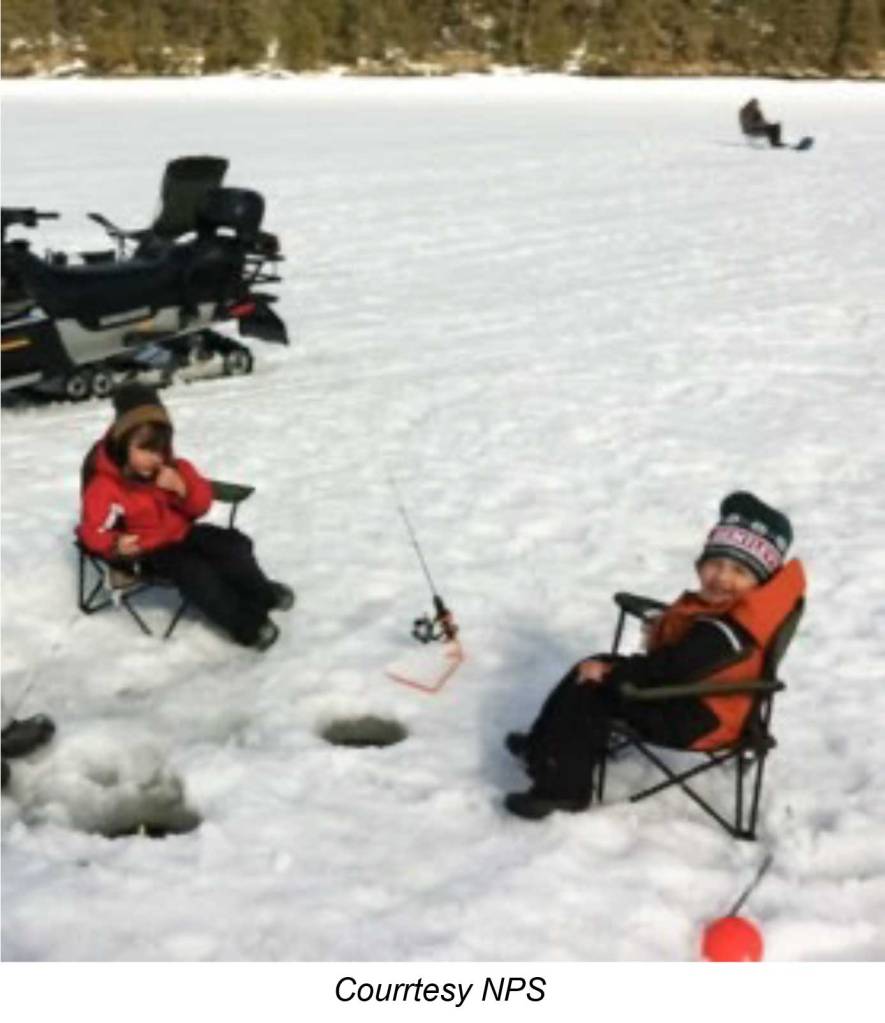
Why do park visitors use the ice roads today, you ask? Some use them to access cross country ski trails. Others take their kids to a popular sledding hill. Still other visitors drive to their favorite ice fishing spots, where they spend the day waiting at a fishing hole for a bite from below.
Whatever the reason, driving the ice roads is just another unique part of North Woods culture.
November is Native American Heritage Month, an opportunity to celebrate the traditions, histories, and cultures of Indigenous American communities across the country. What a fitting time to honor the original inhabitants of what is now Voyageurs National Park.
(Courtesy Eli Bennett)
People have occupied the lands in northern Minnesota as far back as 10,000 years ago. Small family groups of Paleo-Indians entered the region as the waters of the vast glacial Lake Agassiz receded. These were nomadic hunter-gatherers who made use of the abundant resources the lakes and forests provided. They followed the migrating game, fished the rivers and lakes, and collected edible and medicinal plants.
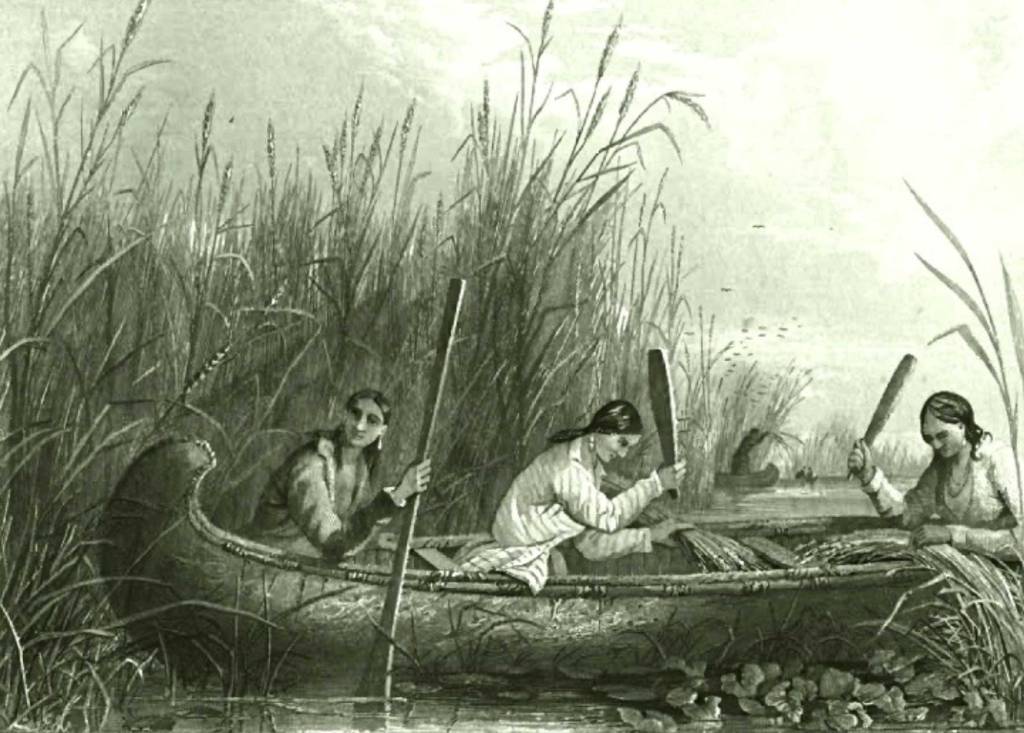
Tribal women harvesting wild rice
As time went on, the Native Americans increased their reliance on local wild rice, which once grew in abundance along the lake shores. They particularly valued this nutritious food source because it could be stored for later use during the difficult winters. Because the people didn’t have to travel so often in search of game, they could adopt a somewhat more sedentary lifestyle.
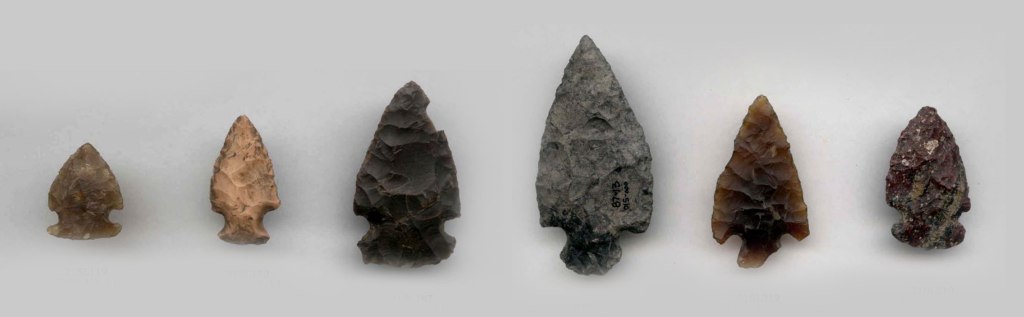
(Courtesy NPS)
It was during this so-called Woodland Period (100 CE to 900 CE) that the Indigenous populations began using ceramic materials to create arrowheads and projectile weapon points. Samples of these tools have been found at hundreds of archeological sites within the park’s boundaries, giving researchers a window into the lives of these long-gone people.
Ojibwe in Minnesota
When Europeans first arrived in the Midwest in the mid-1600s, they encountered several different Indigenous groups living in Minnesota. European settlements on the East Coast had forced some tribes west, including the Chippewa (also called the Ojibwe), the primary American Indian group who wound up occupying present-day Voyageurs National Park. National Park Service archeologists have pieced together the daily lives of the Bois Forte people, the main Chippewa group, who left evidence of their lives from the late 19th and early 20th centuries.
The Ojibwe willingly traded with the newly arrived Europeans, both with the settlers and with the French-Canadian “voyageurs” who navigated the area’s waterways in the 1700s and 1800s for the fur trade (and for whom the national park is named). The tribes supplied the newcomers with furs and with vital supplies like food, fish, and canoes.
There was also a significant cultural exchange between the two groups. Many Europeans adopted Native American diets as well as some aspects of their semi-nomadic lifestyle, while both groups sometimes celebrated holidays together.
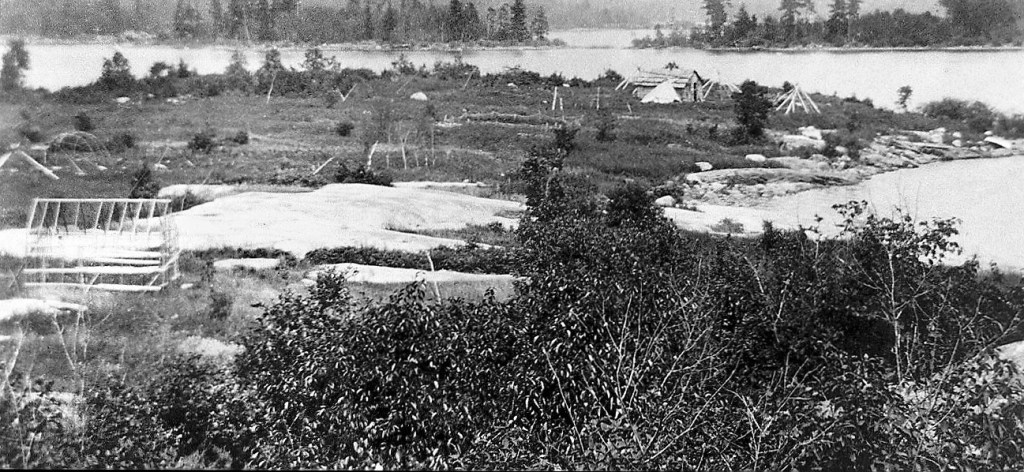
Structures on the eastern portion of Chief Wooden Frog Island in 1913 (Courtesy NPS)
By the mid-1800s, the Bois Forte Chippewa numbered about 600 to 1,000 people. But contact with Europeans ultimately brought sweeping changes to their society, as the white settlers introduced new lifestyles, ideas, technologies, and even deadly diseases. Treaties in 1854 and 1866 ultimately stripped the Bois Forte of two million acres of their homeland, which was coveted by timber companies. Dams built to facilitate logging had destroyed the vast wild rice beds of the local watershed.
Logging operations in Minnesota, 1895 (Courtesy Library of Congress)
Gradually, the local Ojibwe moved to the Nett Lake reservation. By the 1930s, only a few scattered groups of Bois Forte people lived in the park permanently, though larger numbers returned seasonally for blueberry picking and other harvesting. Despite the decimation of their society, the tribe never warred with the white settlers
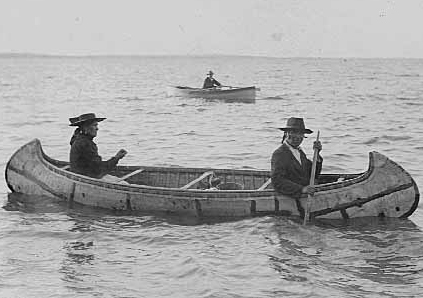
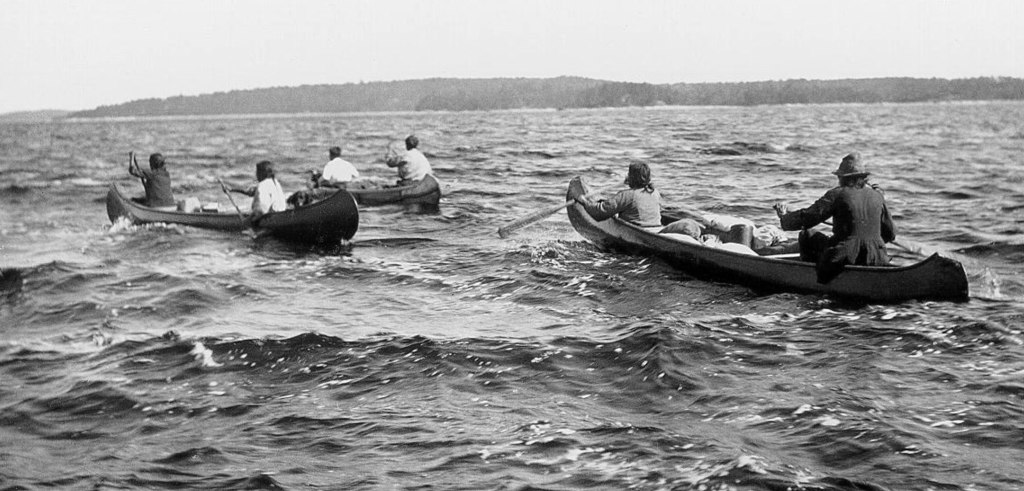
Bois Forte canoes on Namakan Lake, possibly hauling blueberries in early 20th century (Courtesy NPS)
Today, it’s hard to find evidence of the Bois Forte Chippewa within Voyageurs National Park; only a few locations bear names that reference the tribe’s presence. And yet, a number of modern Native American nations continue to have connections to the area. The park staff is collaborating with a variety of Tribal governments to better involve them in the stewardship of the park. This past summer, the NPS and the Voyageurs Conservancy hosted a series of workshops to help integrate Tribal knowledge into park management, stewardship, interpretation, and education.
You don’t have to be a birdwatcher to appreciate the need for preserving our feathered friends. Beyond their beauty and fascinating behaviors, birds are critical components of nearly every ecosystem on Earth. They play many roles – as predators, prey, scavengers, seed dispersers, and pollinators. They also respond quickly to changes in their surroundings, making them good indicators of environmental conditions. Monitoring bird population numbers is an important way for biologists to assess the health of local habitats.
The National Park Service regularly monitors birds at many of its parks, both to study the wellbeing of its sites and to monitor the effects of climate change and other human-caused disruptions. These efforts provide crucial conservation data, helping park managers improve the health and function of their sites’ habitats.
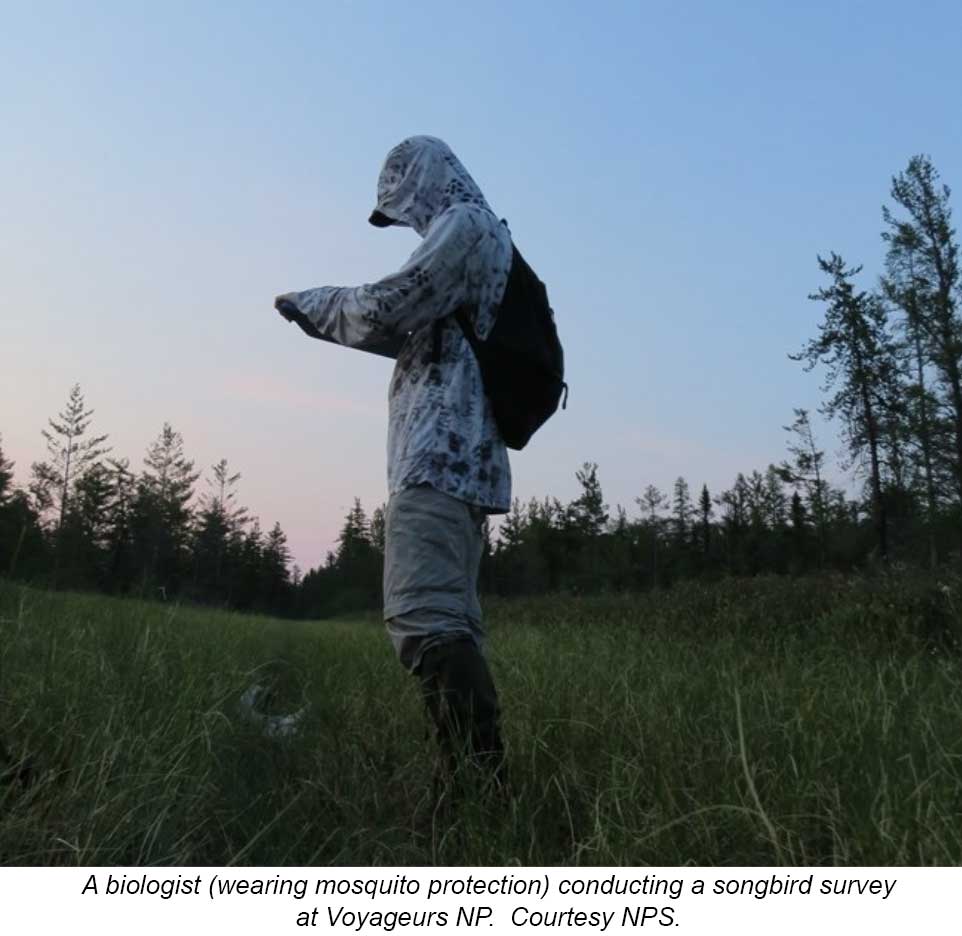
NPS biologists have been monitoring songbird populations at Voyageurs National Park in northern Minnesota since 1995, conducting annual songbird surveys each June at 60 different points across the vast park. More than 100 species of songbirds have been documented there.
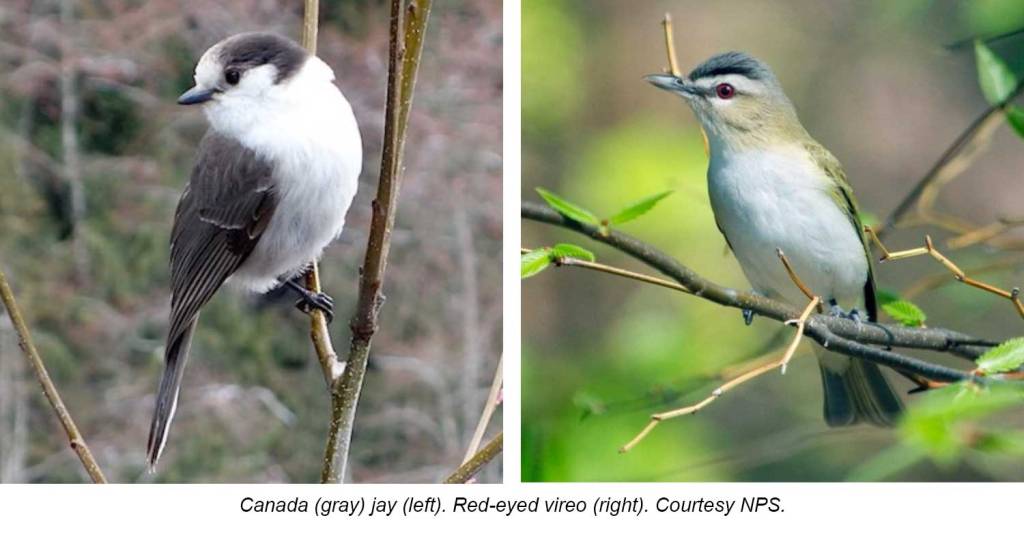
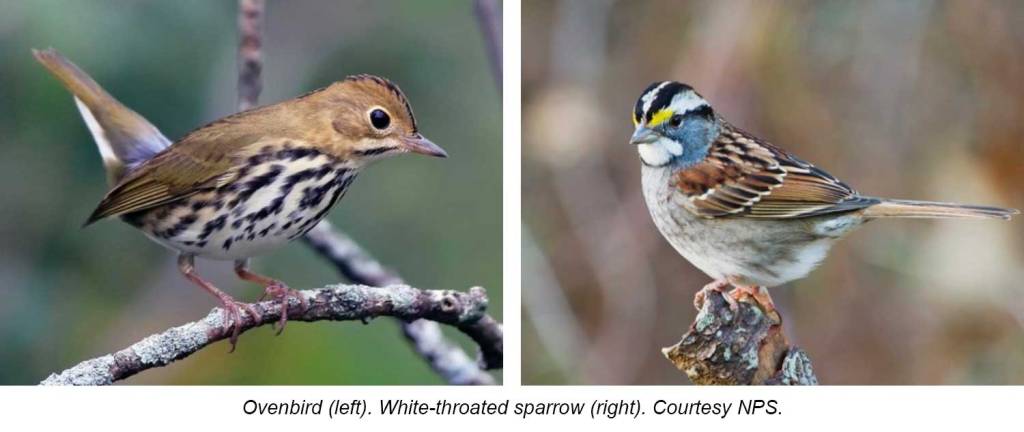
The six most common were the ovenbird, red-eyed vireo, Nashville warbler, white-throated sparrow, and blue jay, in that order. Many birds, such as the white-throated sparrow and the Canada jay, find their way to the park from conifer forests extending all the way to the Arctic.
But the bird surveys at Voyageurs are showing mixed results. The white-throated sparrow has shown a 49% decline in observations since 2019, followed by a 22% decline in ovenbird observations.
In fact, the total number of individuals of all species recorded in Voyageurs is down 21% from 2020 to 2025. Species richness, or the number of species recorded, is down 7% over the same period. Some of this can be explained by missing some survey locations due to inclement weather, and limited time and/or personnel to conduct the surveys.
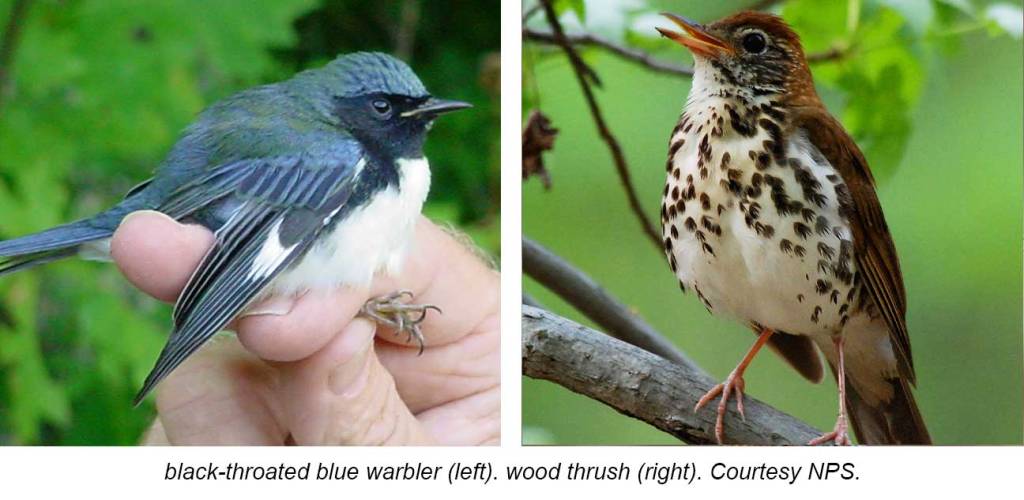
On a more positive note, the black-throated blue warbler, blue-headed vireo, and wood thrush are showing the highest increases in observations over the last five years, all of them over 200%. Biologists are still assessing the reasons behind these fluctuations.
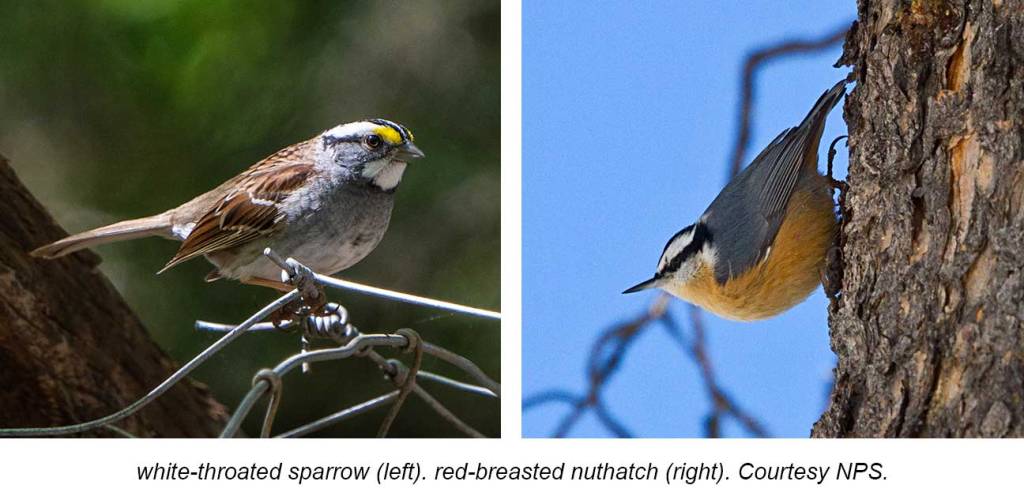
Researchers also predict a good news/bad news scenario in the future. One NPS study analyzing two different climate scenarios predicted a high turnover of species in the park by mid-century (2041–2070) if the nation continues on its current path of rising greenhouse gas emissions. In fact, two of the most common species at Voyageurs today – the red-breasted nuthatch and the white-throated sparrow – are predicted to disappear from the park by mid-century, while the nuthatch may only appear during the winter months.
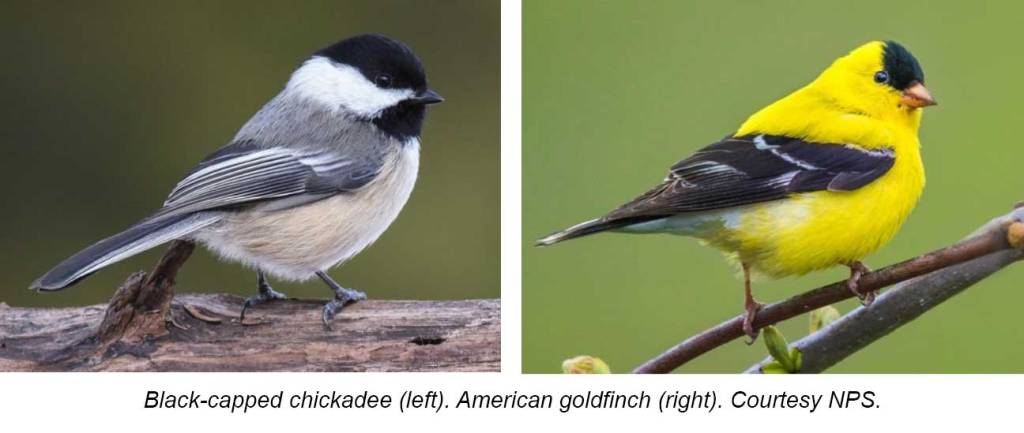
Meanwhile, the populations of birds more commonly found in open country and residential areas such as the blue jay, American goldfinch, Baltimore oriole, and common grackle are predicted to improve, and additional species are expected to move in.
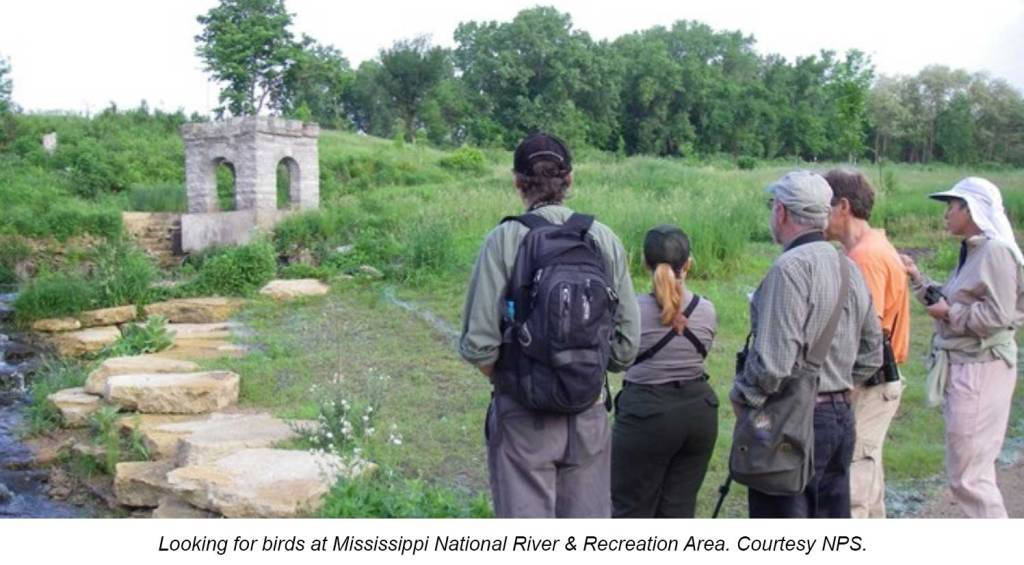
The situation for bird life is comparable at Mississippi National River & Recreation Area in Minnesota. NPS researchers there annually conduct songbird surveys at 49 locations scattered among nine city, county, and regional parks in the 72-mile length of the national park boundary. A total of 88 species has been documented, (an average of 62 species per year) since the studies began in 2015.
The black-capped chickadee was the most densely populated species in the park followed by American goldfinch and American robin (84 birds/mi2). Populations of the Eastern wood-pewee are also on the rise.
But scientists are tracking the small declines in insect-eating birds like warblers and flycatchers, as well as other species. They are also concerned that the effects of climate change may cause a decrease in the numbers of goldfinches and robins in the summer, though they’re predicted to fare better in the winter.
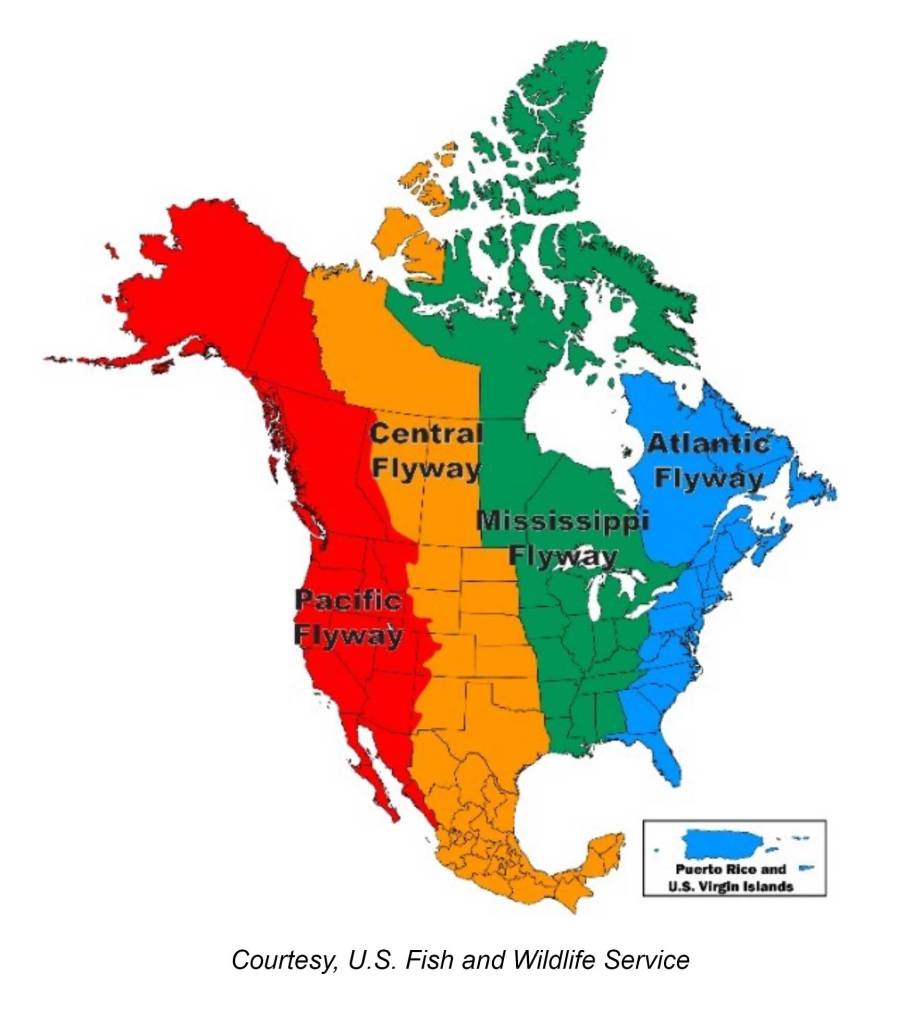
This Twin Cities park and its surrounding areas benefit from their position along the Mississippi River, one of North America’s four major flyways for migrating birds. An estimated 325 bird species use this route twice a year, flying between their breeding grounds in Canada and the northern U.S. and their wintering grounds along the Gulf of Mexico and in Central and South America.
The rich diversity of habitats along the Mississippi River valley are a haven for many birds who stay for the summer to nest and raise young. It is little wonder that this large, south-flowing river forms the core of one of North America’s great flyways and offers birders wonderful opportunities to observe a wide variety of species.
It’s doubtful that a day will come when songbirds are completely absent from our national parks. They will continue to enchant us with their song, though some of the future performers may be new.
If you’re interested in identifying birds that you see in the wild, or just in your own backyard, the National Park Service can help. Check out this simple identification key that can help you recognize just who you’ve spotted, and will link you to more information about your feathered friends.
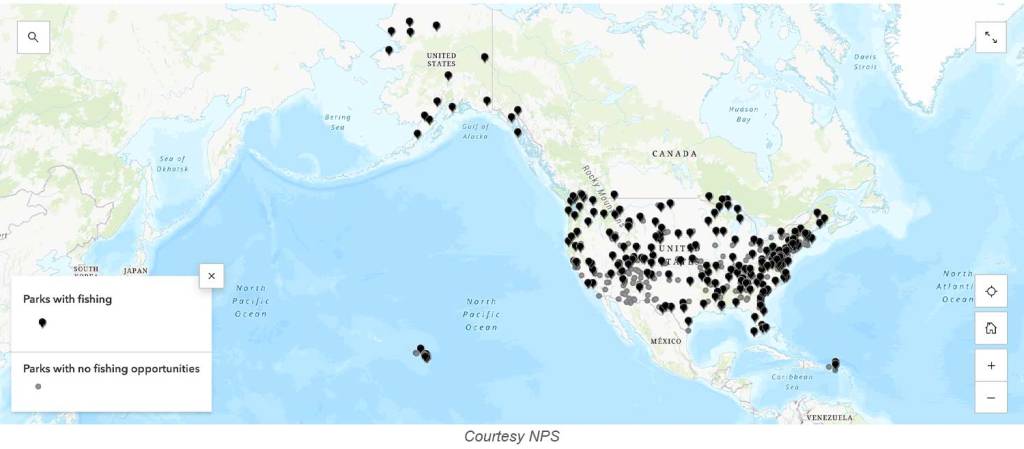
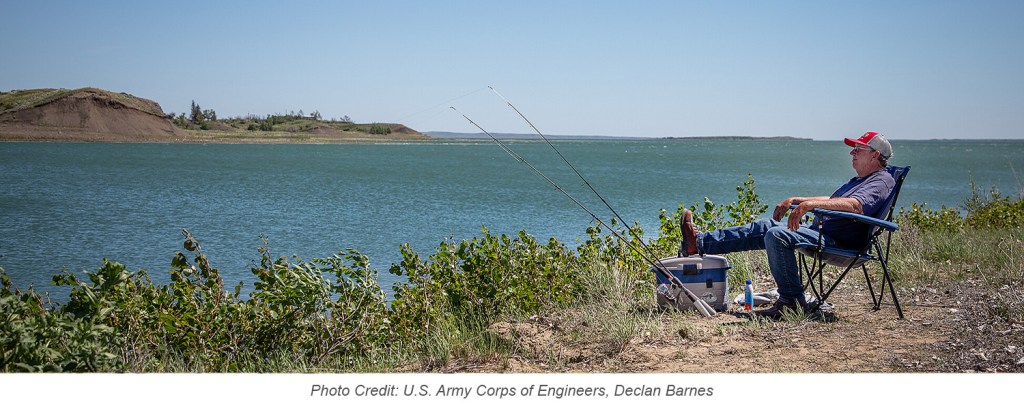
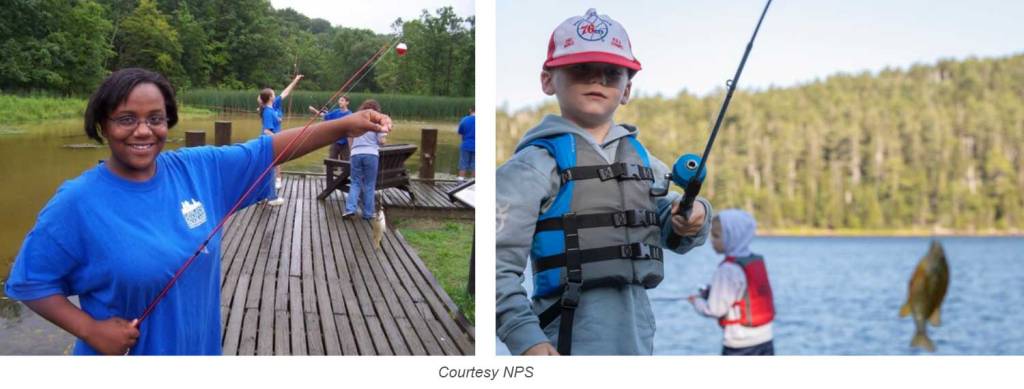
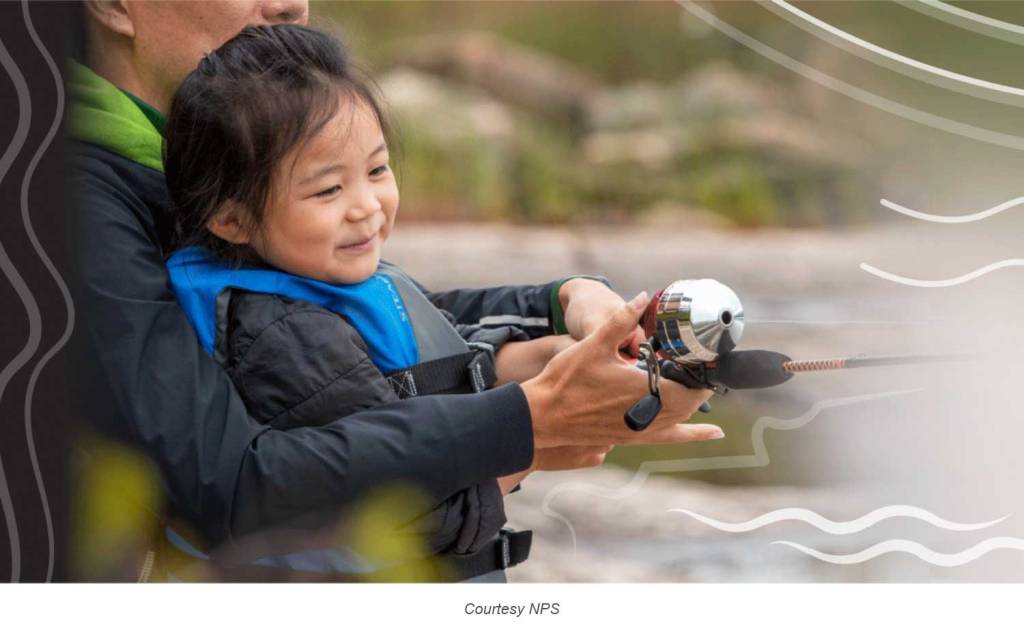
If your idea of a perfect way to spend a day outdoors is dropping a line in a stream or lake and seeing what bites, then you’ll want to check out the great fishing opportunities at our national parks. More than 200 sites in the National Park Service offer recreational fishing for the general public, including fly fishing, casting, bait fishing, trolling, and even ice fishing (brrrr!).
Of course, since fishing can affect local animal populations, each national park site regulates the fishing activities within its borders, usually by conforming with the regulations of the state where the park is located. Before setting out, it’s wise to check a park’s regulations, including learning what permits might be needed and where to find the best fishing spots. By following the park’s rules, such as practicing catch and release fishing of native fish, anglers can help ensure that native fish in our national parks will be enjoyed for generations to come.
A number of JNPA’s partner parks offer visitors a chance to fish their waters:
Voyageurs National Park has many options for both aspiring and experienced anglers. Fish abound in the park’s 30 named lakes, which consist of four large lakes and 26 smaller interior lakes. So far 54 fish species have been identified in the park’s aquatic habitats. Some of the better-known are walleye, sauger, Northern pike, smallmouth bass, yellow perch, and black crappie.
And if winter fishing is your thing, Voyageurs is a must-visit. Rugged piney shorelines, ultra-quiet conditions, and PLENTY of lake ice make the park an ice angler’s dream. Always check the park’s ice conditions before setting out and review the rules about placement of icehouses.
You can also put your angling skills to the test at Missouri National Recreational River. Walleye, sauger, paddlefish, and many more game species are waiting within the two reaches of the Missouri River, 20 miles of the lower Niobrara River, and eight miles of the lower Verdigre Creek. Since most of the park lies on the state boundary between Nebraska and South Dakota, you should be aware of license information and regulations for both states.
The great fishing opportunities near the Lewis and Clark Visitor Center attract thousands of anglers year-round. The park’s website lists the prime fishing spots and seasons where anglers can find their favorite fish species. Accessible fishing piers are located on the south shore of Lake Yankton and in the Nebraska Tailwaters area. There are separate regulations for residents and non-residents of South Dakota and Nebraska, so be sure to check before you go.
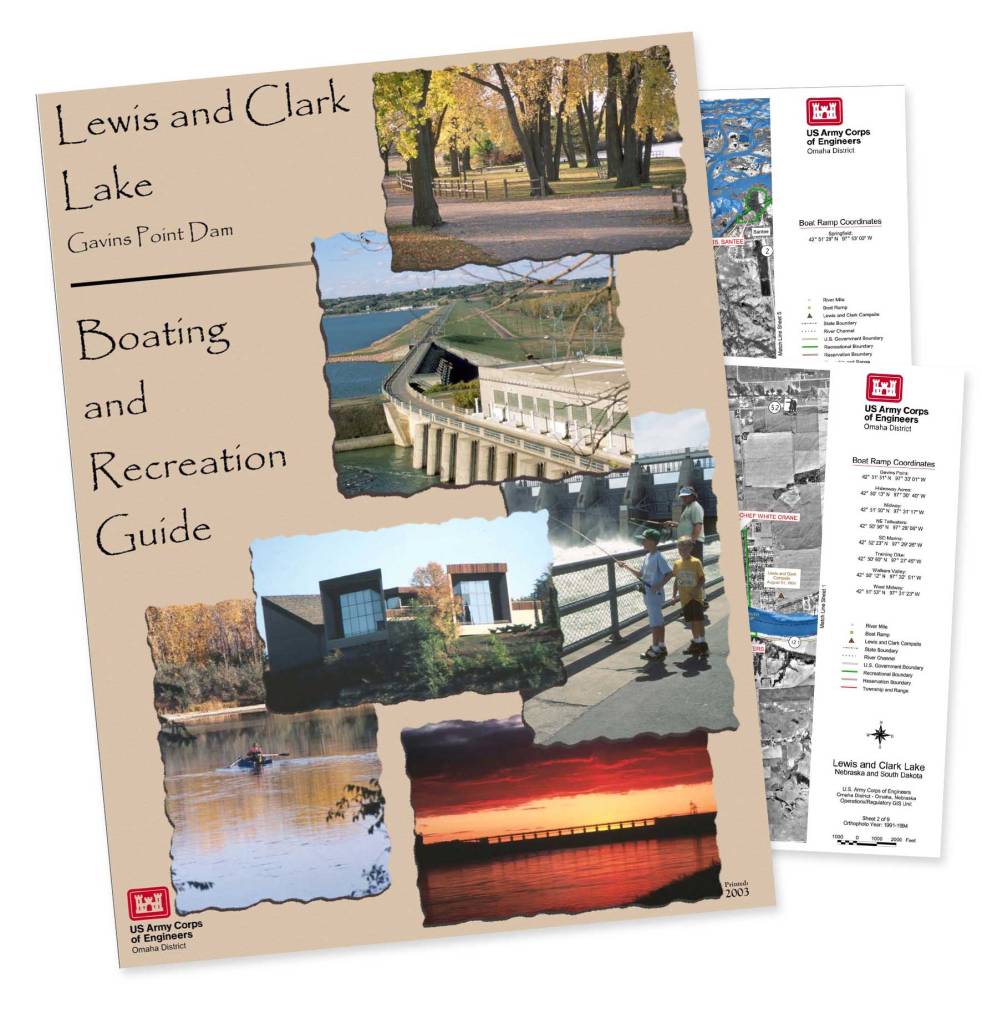
Learn about endangered and threatened species, historical information, or water safety and reservoir navigation with the Lewis and Clark Lake Gavins Point Dam Boating and Recreation Guide. You can pick up a copy at the site, or order it from JPNA’s online store.
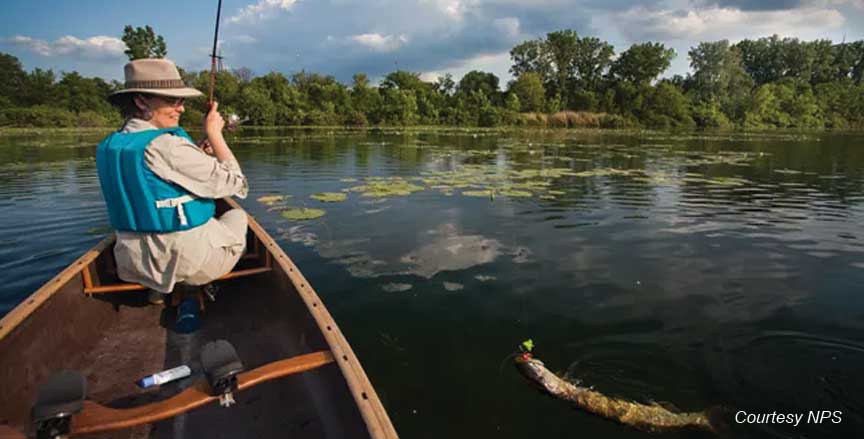
There are plenty of locations for both boat-fishing and shoreline fishing within Mississippi National River and Recreation Area. The Mississippi River in the northern suburbs and further north is a nationally recognized smallmouth bass fishery. Walleyes are plentiful below Lock and Dam #1. And floodplain lakes contain trout, panfish, northern pike, and largemouth bass. The park’s website offers more suggested fishing locations.
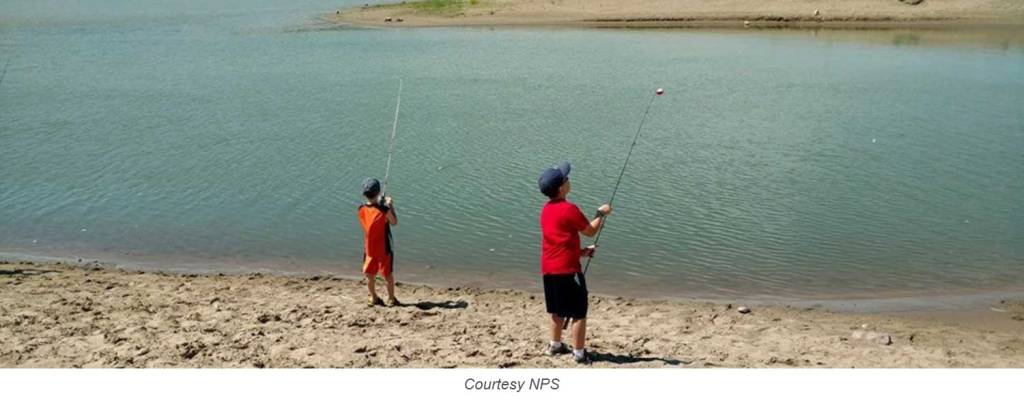
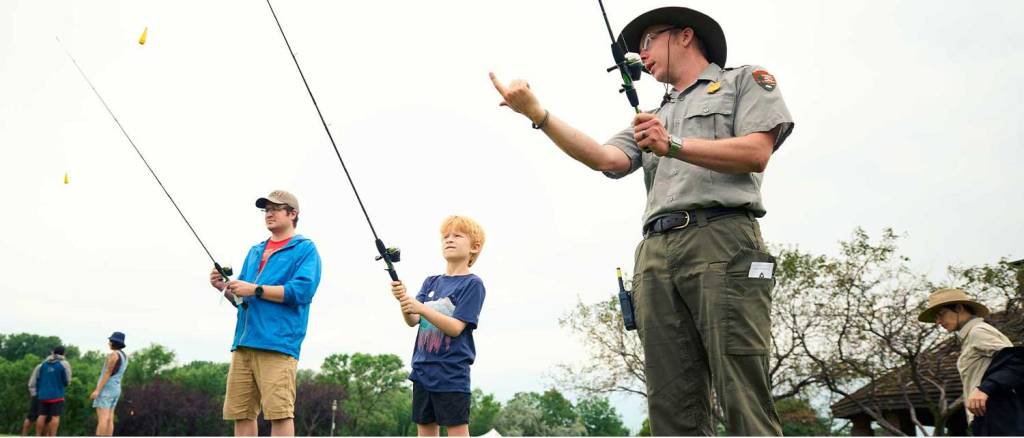
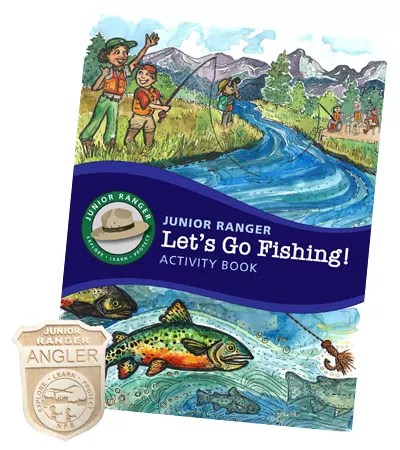
To get kids involved, park rangers hold fishing clinics at certain times of the year. Younger anglers who complete the clinic can earn a Junior Ranger Angler Badge as well as their own fishing kit.
Speaking of kids, the NPS Junior Ranger Angler program is a perfect way to get youngsters interested in the sport. Many national park sites that permit fishing offer the program’s special activity booklet as well as Junior Ranger Angler badges. You can find participating parks on the National Park Service Fish & Fishing website.
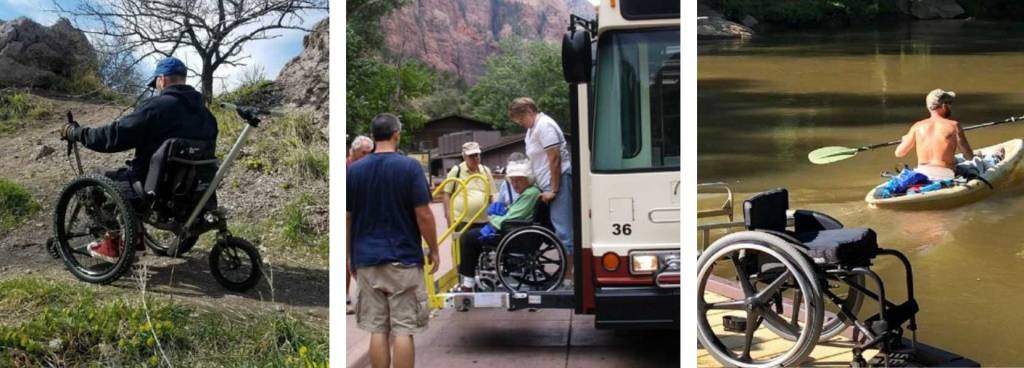
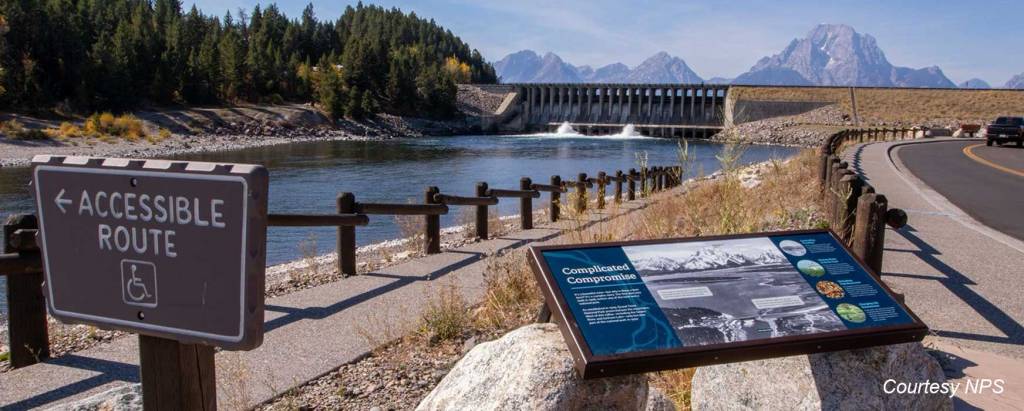
As the Americans with Disabilities Act (ADA) turns 35 years old this month, the Centers for Disease Control reports that more than one in four Americans – roughly 70 million people – are living with a disability. This can include a wide range of conditions from mobility issues and hearing loss to vision impairment and cognitive limitations.
Yet there’s no reason people with physical challenges can’t enjoy our national parks. In fact, the National Park Service “strives to make its parks, monuments, and historic sites available to all.” And it offers a wide range of accessible experiences across its 400+ park sites.
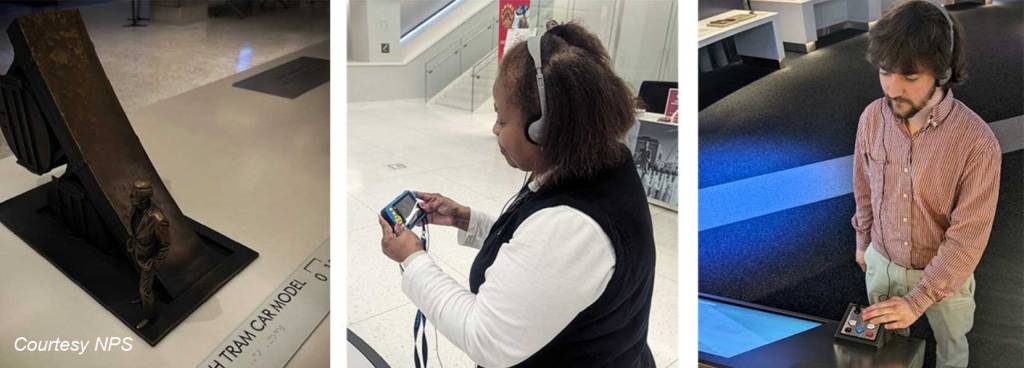
As challenging as some of these physical accommodations are, making museum exhibits accessible is even more complicated. Designers of the new museum at Gateway Arch National Park, for instance, fully embraced the concept of Universal Design when planning new exhibits. The museum includes multiple accessibility features, like tactile exhibits and interactive computer simulations that are visitor-directed through a touchscreen. Visitors can make use of Braille signage, large-print, high-contrast text versions of exhibit copy, assisted listening and captioning devices, as well as a new device that allows non-speaking guests to type questions for museum staff. Similar accommodations are available in the park’s theater.
And since the tram ride to the top of the Arch is not wheelchair accessible, designers created the next best thing. Inside a full-size replica of the final piece of the Gateway Arch, video screens show live views from each side of the top observation deck, replicating the experience as much as possible for visitors who cannot make the trip to the top.
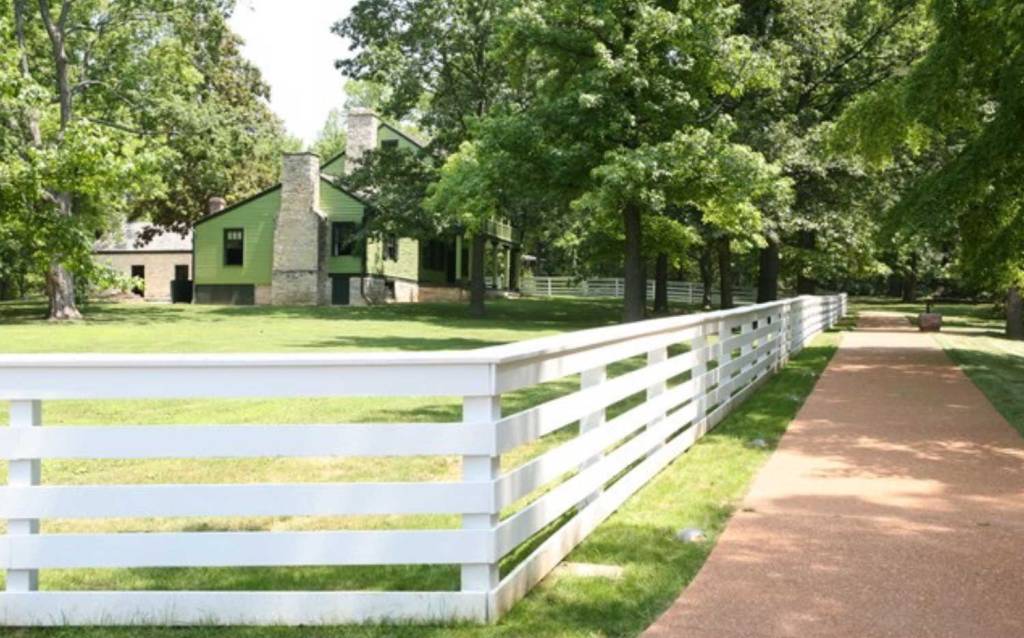
Ulysses S. Grant National Historic Site also offers a range of accessibility services, including free wheelchair use, assisted listening devices for guided tours, audio descriptions of park films, and Braille and large-format brochures.
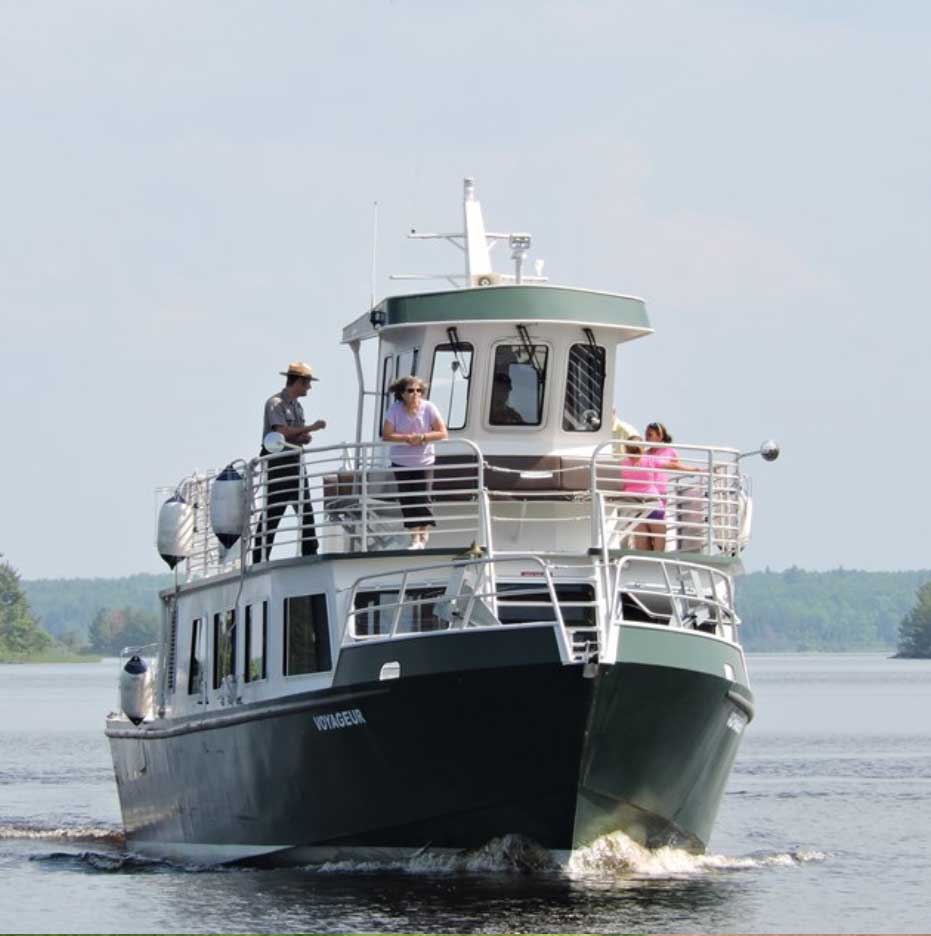
At Voyageurs National Park boating, fishing, and camping are the primary activities. All NPS boats are accessible. And visitors can make use of accessible lifts at boat launches as well as accessible campsites.
Similar accommodations are available at Missouri National Recreational River and the Lewis and Clark Visitor Center, both of which are popular with anglers. In addition to taking advantage of accessible trails, shelters, and cabins, visitors can fish from several piers that are reachable by those in wheelchairs.
All in all, NPS efforts to improve accessibility have principally focused on well-developed areas within easier reach, such as park visitor centers and established campgrounds. But accessibility advocates want to see more trails, shelters, and other park areas comply with ADA standards, particularly in more remote natural areas. Park Service officials acknowledge there’s a nationwide backlog of existing trails and structures that don’t meet accessibility standards, especially in the backcountry. But they say they’re making progress where they can.
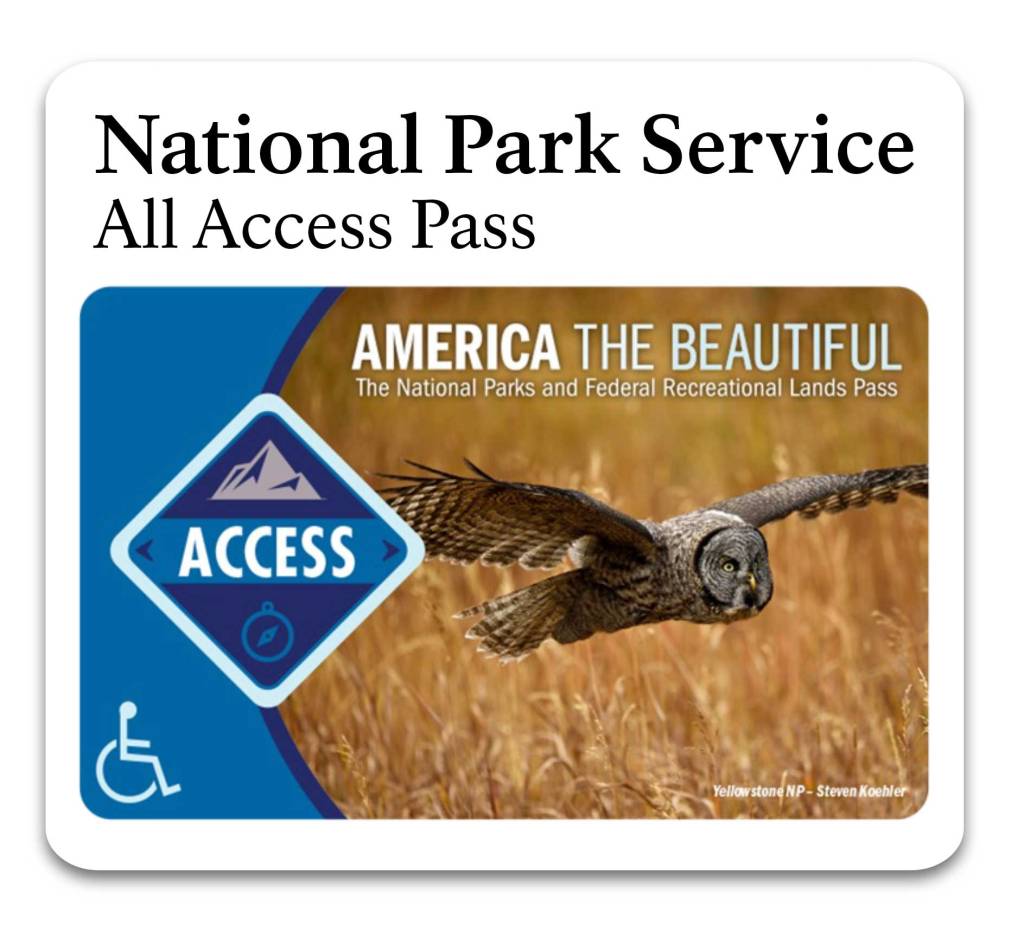
Americans with permanent disabilities are eligible to receive the National Park Service All Access Pass, which provides lifetime benefits at federal lands managed by six agencies, including free entrance to parks managed by the National Park Service that charge an entrance fee. The free passes are available at certain federal recreation sites or can be ordered online (for a small shipping fee).
National parks aren’t just for adults. If you’re planning a trip to a park with your kids this summer, make sure you check out the site’s Junior Ranger activities when you visit. These programs help children appreciate and connect to our parks – whether it’s walking in the footsteps of famous people, exploring beautiful landscapes, developing new interests, or just having fun.
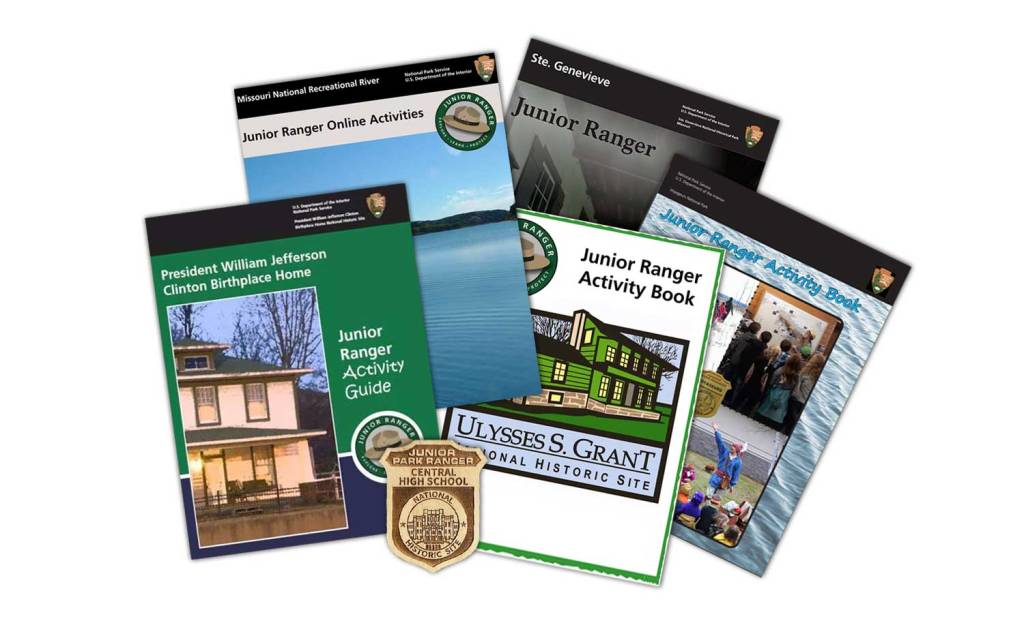
Here’s how it works: Before your visit, go to the park’s webpage to learn about its special kids’ activities. Most of the nation’s 400+ national park sites offer Junior Ranger programs. When you’re on site, check in at the visitor center. That’s where kids will typically receive a free park-specific activity book that helps them learn about the landmarks, history, wildlife, geology or other themes unique to that park.
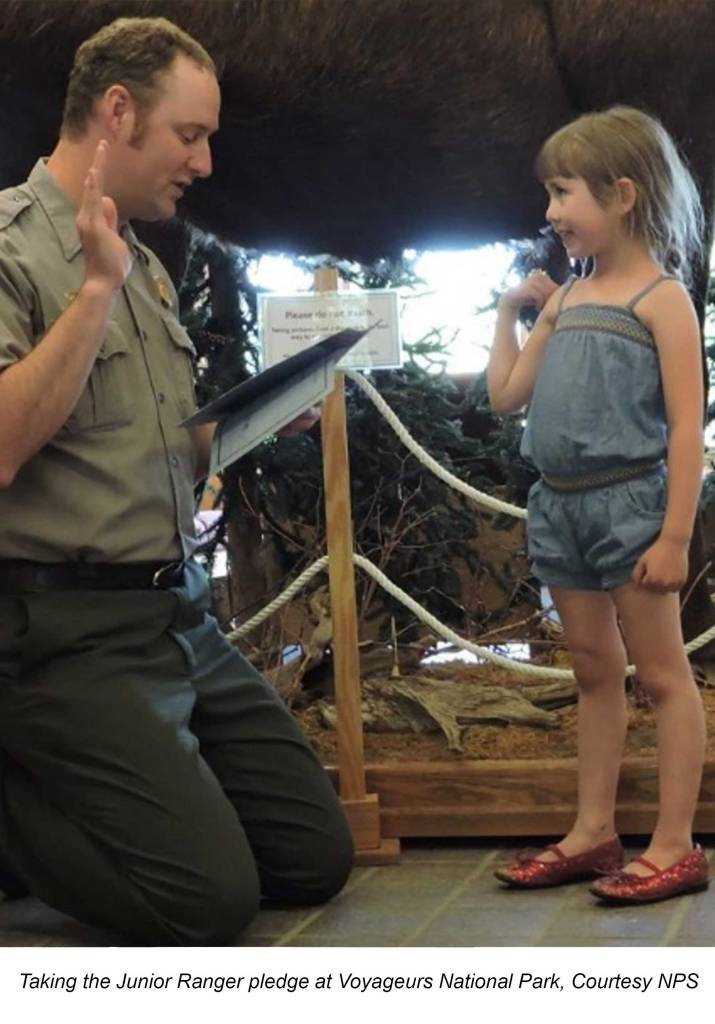
After your kids complete the activities in the book, they’ll need to present it to a park ranger to receive a special Junior Ranger badge and certificate. Often, they’ll also take a pledge to learn, protect, and explore their national parks.
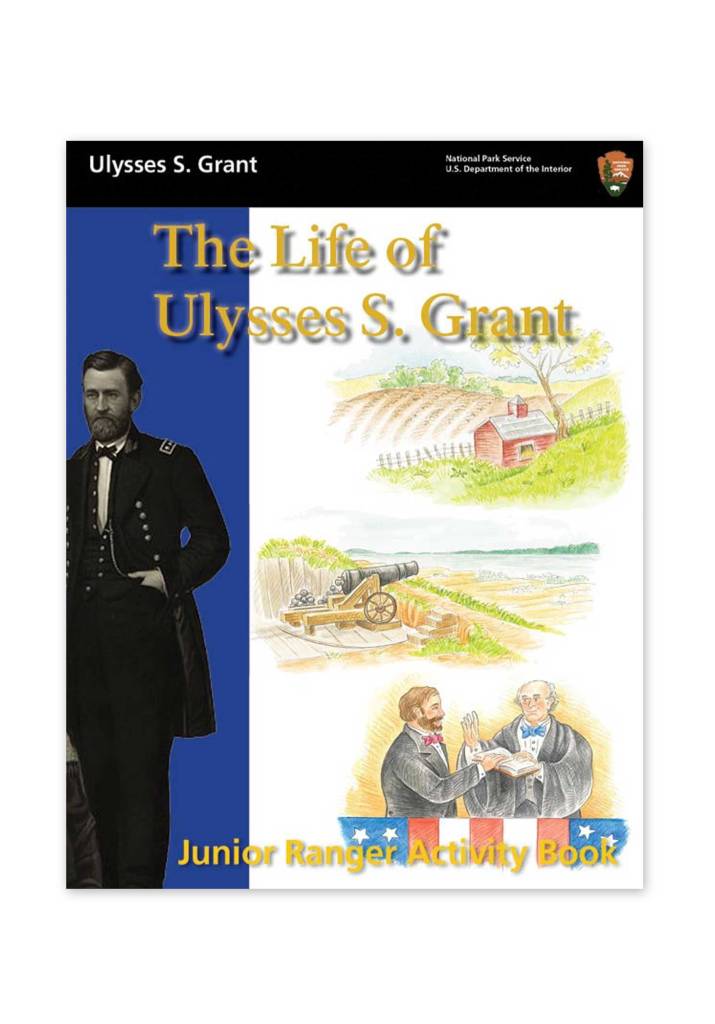
For kids who can’t visit in person, the National Park Service website offers a Junior Ranger Online section featuring videos, games, and songs, allowing families at home to connect with parks around the country. And many parks have their own Virtual Junior Ranger programs. Voyageurs National Park, for instance, includes fun activities on its website, as well as the opportunity to download the Virtual Ranger badge. U.S. Grant National Historic Site created a special Bicentennial Virtual Ranger Activity Book to celebrate the 200th anniversary of Grant’s birth.
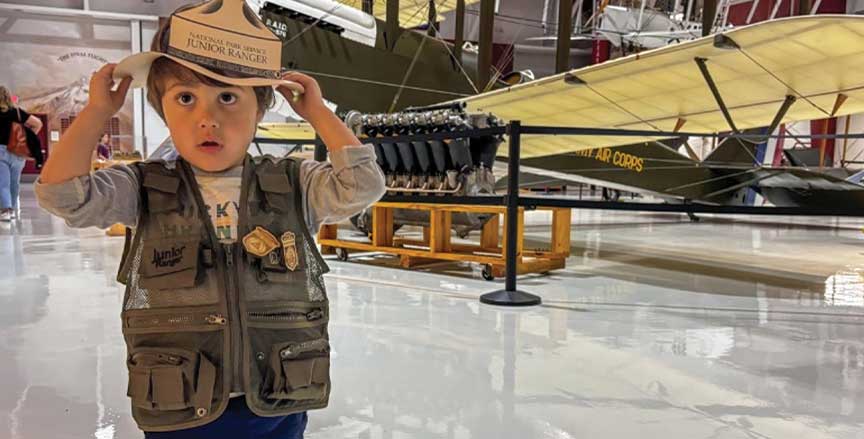
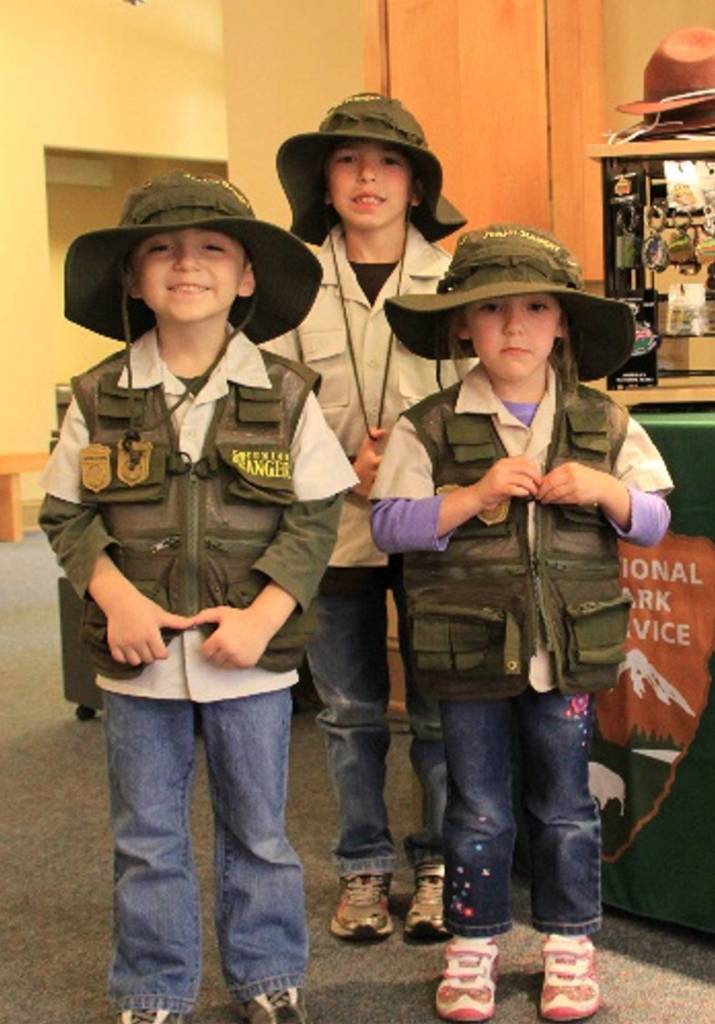
Finally, for those kids who want to go the extra mile, why not let them dress like a park ranger with a special Junior Ranger Vest and Flat Hat! JNPA carries a wide range of Junior Ranger products like these in our online store, including mini building blocks, pins, and activity books.
However you introduce national parks to your kids, they’ll be sure to get more out of their visits when they become Junior Rangers!
We join our friends at Voyageurs National Park as they proudly celebrate the park’s 50th year with the National Park Service: quite an impressive anniversary. Since 1975, this pristine site in northern Minnesota has been a sanctuary of natural beauty, cultural heritage, and outdoor recreation. Yet as notable an achievement as this is, the history of the park’s 281,000 acres goes back much farther – and we mean wayback.
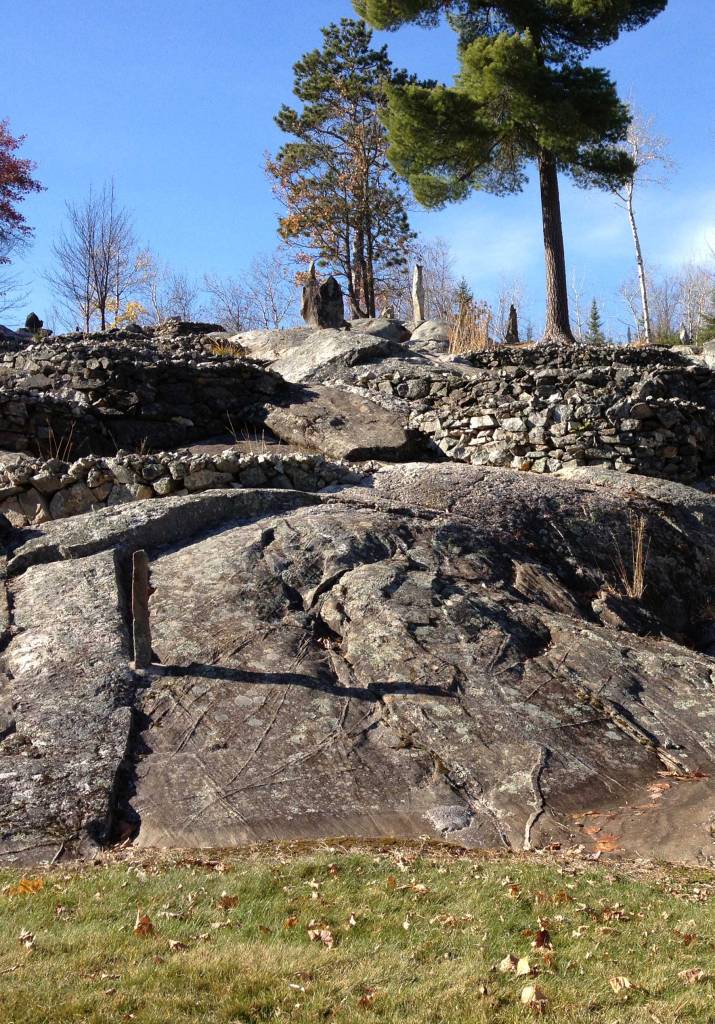
Voyageurs National Park is one of the few places in North America where you can touch rocks half the age of the Earth. The exposed rock that greets visitors today dates from the creation of the continent, representing the southern edge of the volcanic bedrock that forms the core of North America.
At one time, massive, explosive volcanoes deposited layer after layer of ash and lava. Subsequent uplifting, folding, tremendous pressure, and superheating created the park’s igneous and metamorphic rock. Over time, erosion wore down the volcanic mountain range, and the ice ages brought glaciers that moved rivers of ice and exposed ancient Precambrian rocks that had formed over two billion years ago!
As the glaciers receded, torrents of melted water filled low-lying areas, creating the numerous lakes, streams, and bogs of today’s landscape. Another byproduct of glaciation are rocks known as “glacial erratics” that were carried on sheets of ice. These displaced blocks – ranging in size from pebbles to blocks the size of automobiles – are evident throughout the park today, helping form its undulating topography.
Although not nearly as old as the park’s geology, the first signs of humans’ arrival go back at least 10,000 years. Evidence of Native Americans, fur-trading voyageurs, European settlers and homesteaders, and of early logging, mining, and commercial fishing operations are scattered throughout the park.
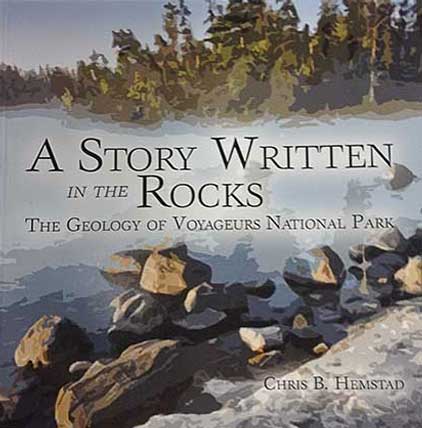
The best way to experience the magnificence of Voyageurs National Park is by visiting. Short of that, you can read more about the park’s geologic features by ordering a copy of A Story Written in the Rocks from JNPA’s online store.
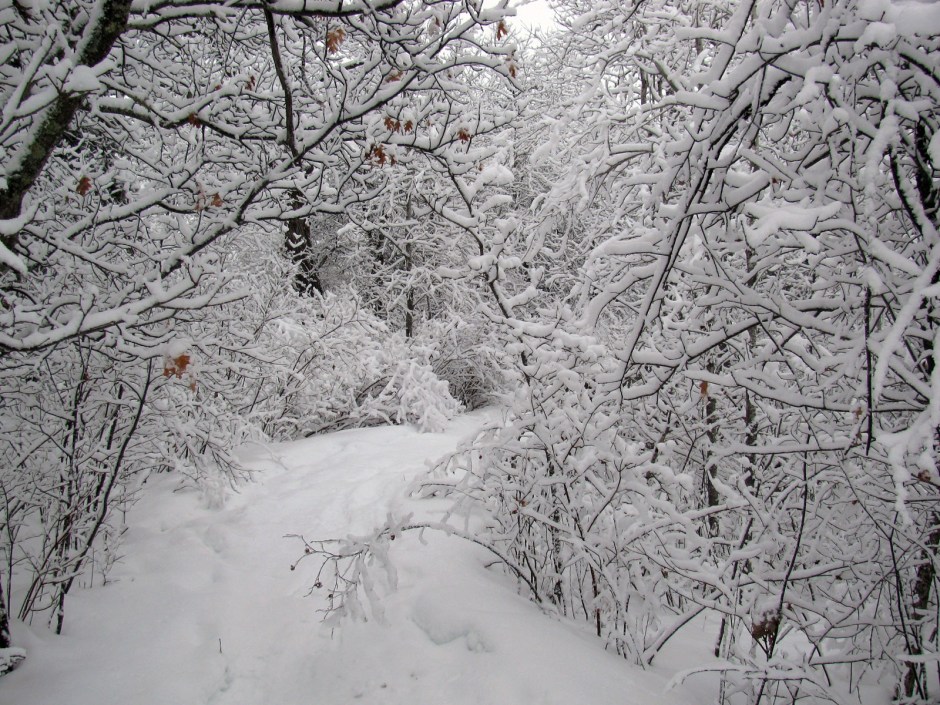
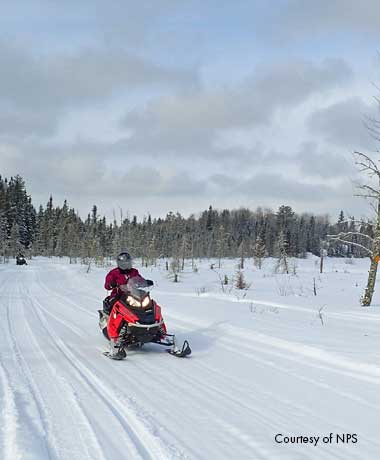
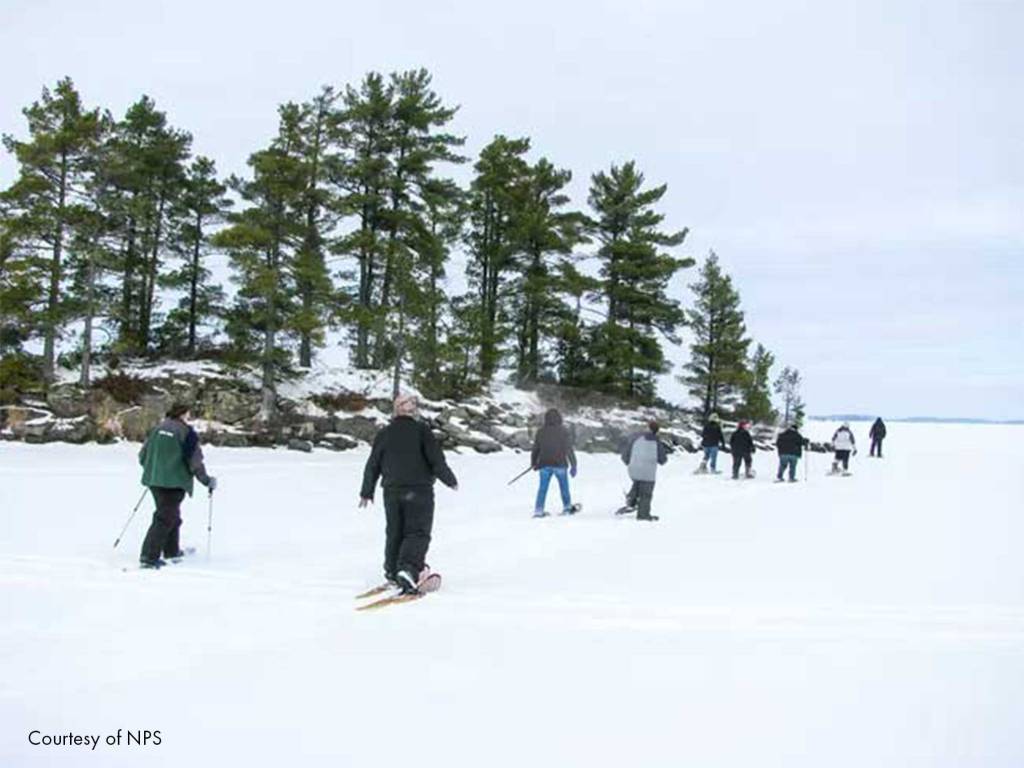
If you’re a cold-hardy adventurer, there’s no better way to experience the magnificence of snow-draped landscapes than with a winter visit to Voyageurs National Park. This stunning 218,000-acre park in northern Minnesota offers numerous ways to enjoy its natural splendor: from snowmobiling, cross-country skiing, and hiking to ice-fishing, sledding, and snowshoeing. And for less athletically inclined visitors, there’s always driving your car on the park’s ice roads!
Snowmobilers flock to Voyageurs every winter for the park’s 110 miles of groomed trails. However, since many of the snowmobile trails cross frozen lakes, it’s imperative to pay attention to the ice thickness on many bodies of water. A mid-December report showed there is not enough solid ice to open the frozen lakes to vehicle traffic. The park lists current conditions on its website.
Cross-country skiers can enjoy a number of beginner- and intermediate-level loop trails through pine and birch forests, some with a view of an active beaver pond.
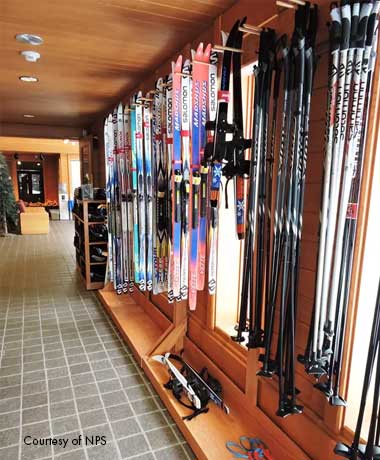
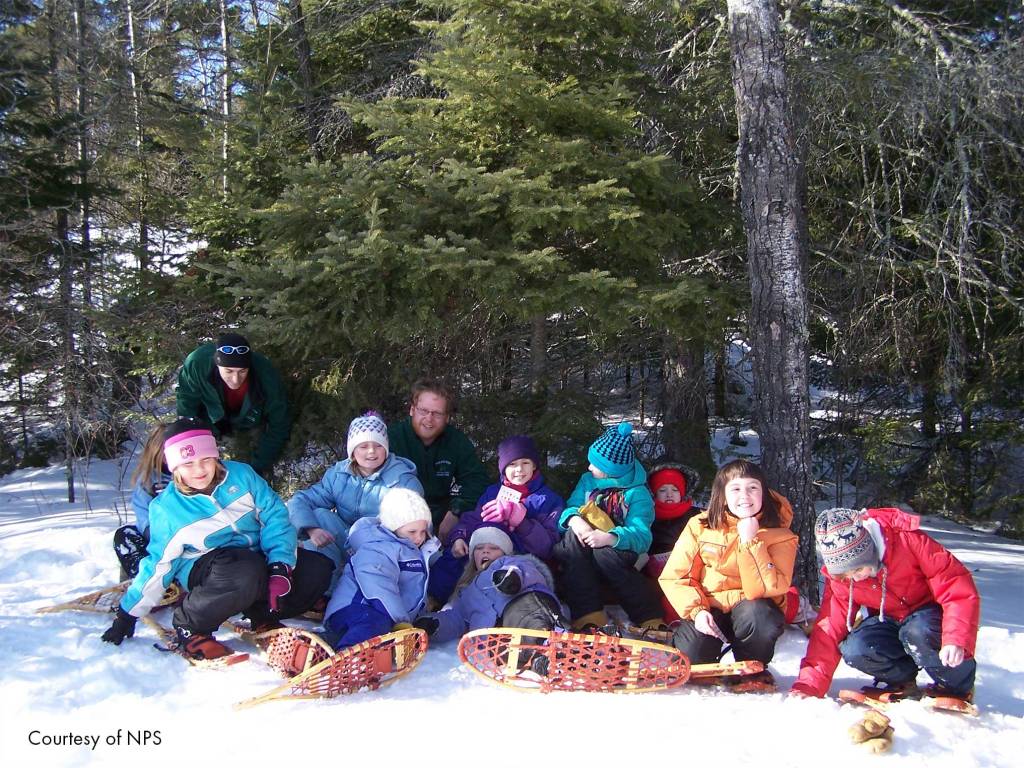
The park offers ski and snowshoe rentals at the Rainy Lake Visitor Center and also accepts advanced reservations by phone (218-286-5258) and online. Kids’ sizes are available.
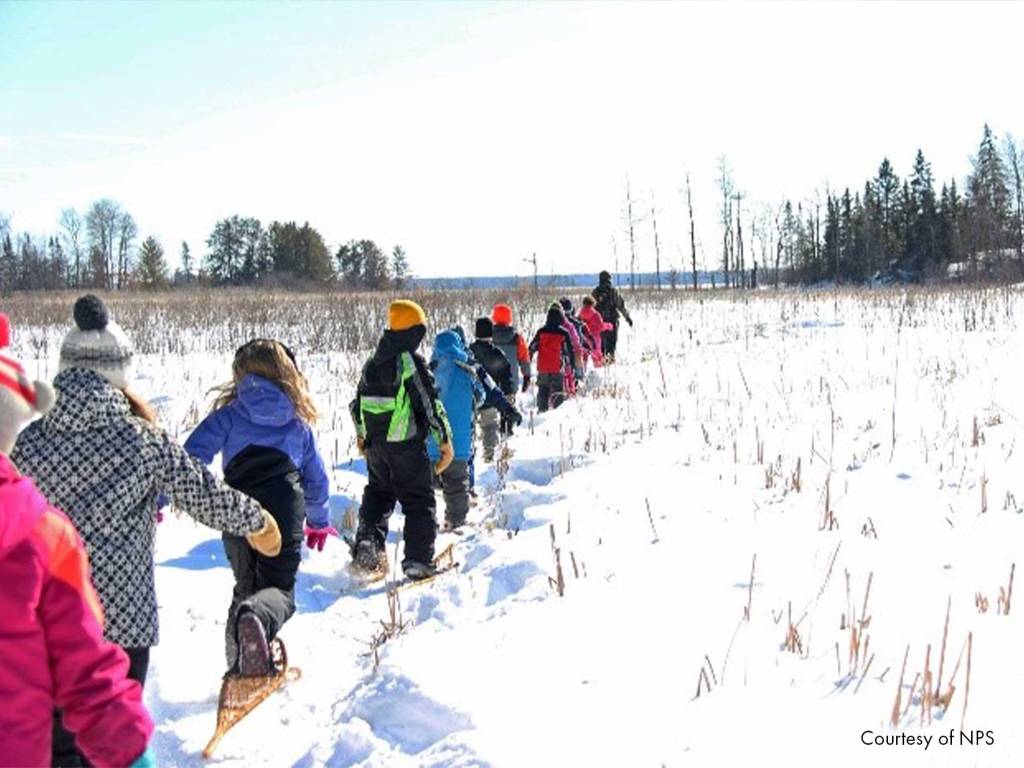
In case you’re wondering if kids enjoy these winter sports, check out this park video of a recent showshoe class.
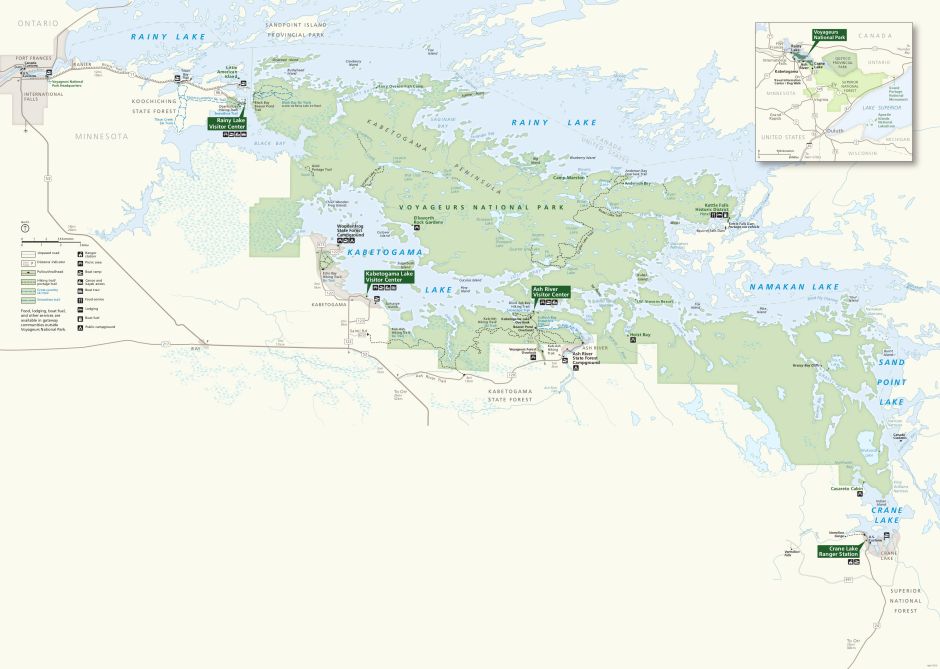
Just as with snowmobiling, these activities are also reliant on adequate snowfall and ice formation. Park crews have been clearing and grooming trails through the woods and open land but are waiting for adequate ice thickness on the lakes before tackling those areas. Visitors can pick up this fold-out National Geographic map at JNPA’s park stores, which lists most of the park’s trails.
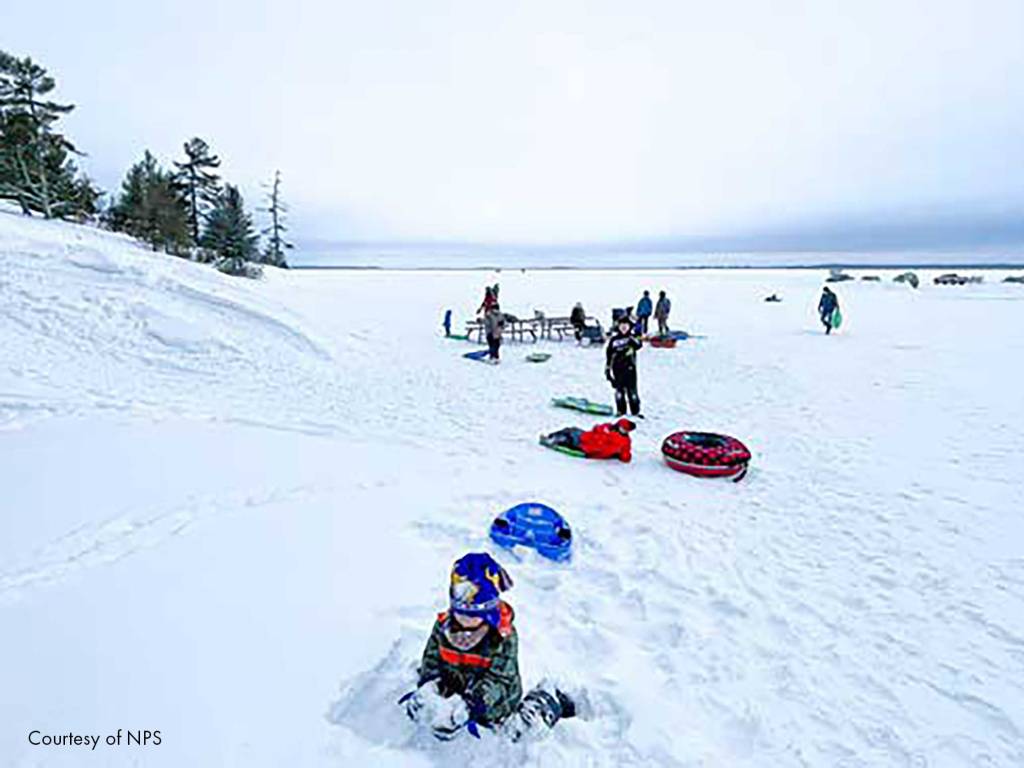
More “mild” activities at the park include sledding and driving the park’s ice roads. The two main ice roads begin at the visitor centers, but the routes vary from year to year. Cars and trucks weighing less than 7,000 lbs. are allowed, but the speed limit is 30 mph.
Naturally, safety is the prime consideration for every outdoor activity at Voyageurs. The park offers a comprehensive list of important safety tips for all winter sports, and urges visitors to consult rangers before setting out and to be on the lookout for posted signs throughout the park.
As we approach the end of Native American Heritage month, we wanted to honor the first people who occupied the lands we now call Voyageurs National Park. And to praise their artistry in the design of the remarkable birchbark canoe.
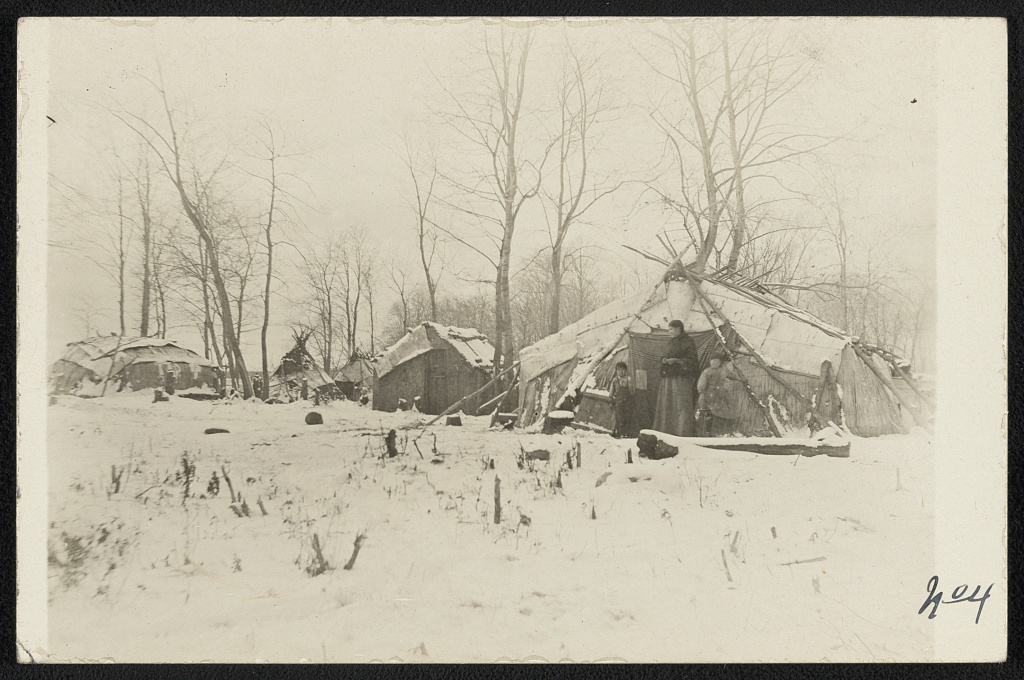
Ojibwe village 1910, Library of Congress
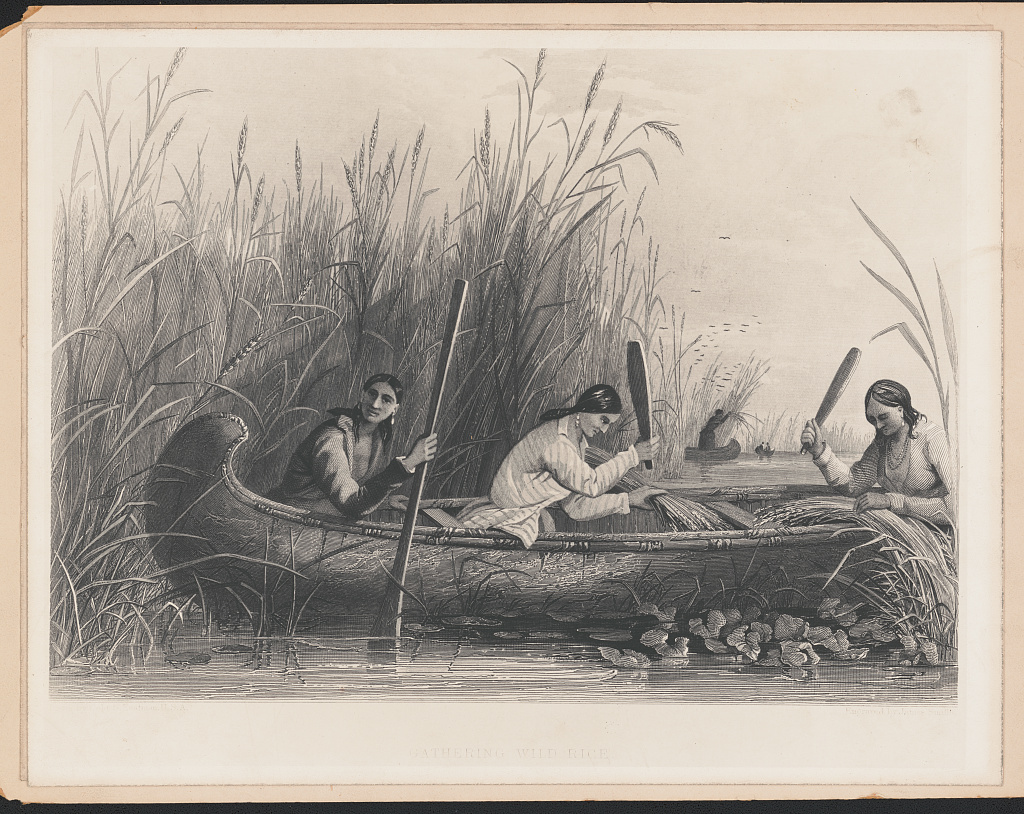
As glacial waters in northern Minnesota began to retreat nearly 10,000 years ago, small groups of people were able to move into the area, pursuing primarily a hunting and gathering lifestyle. The dense forests and the four major lakes within the 218,000 acres of today’s Voyageurs provided abundant natural resources for these Indigenous settlers. Fishing was their major source of food, as was the harvesting of native plants like wild rice.
Ojibwe women harvesting wild rice, Seth Eastman 1848, Library of Congress
The dominant tribe in the area was the Ojibwe (also known as the Chippewa). Over time they played a key role in the region’s commerce as suppliers of food, furs, and canoes. The Ojibwes’ intimate knowledge of the local geography and resources also made them excellent guides for the European fur traders who later arrived in the area.
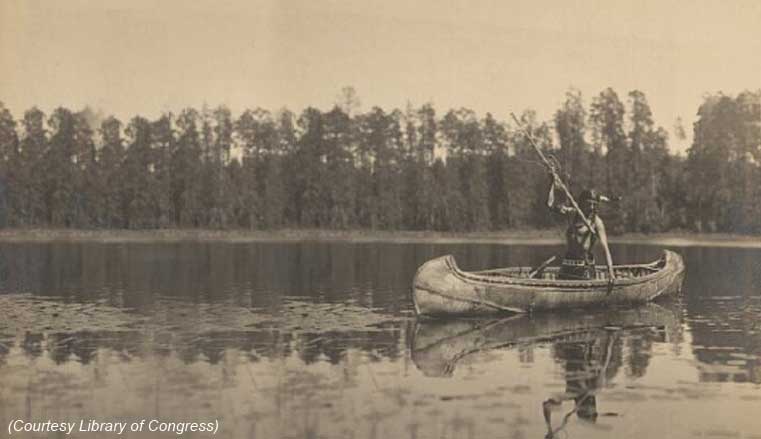
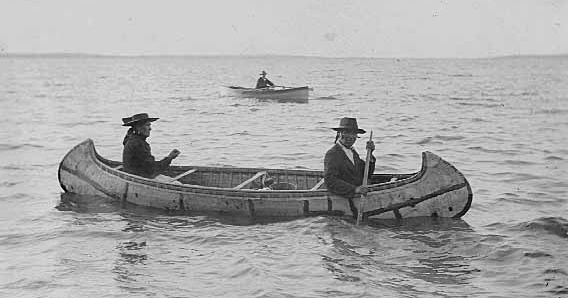
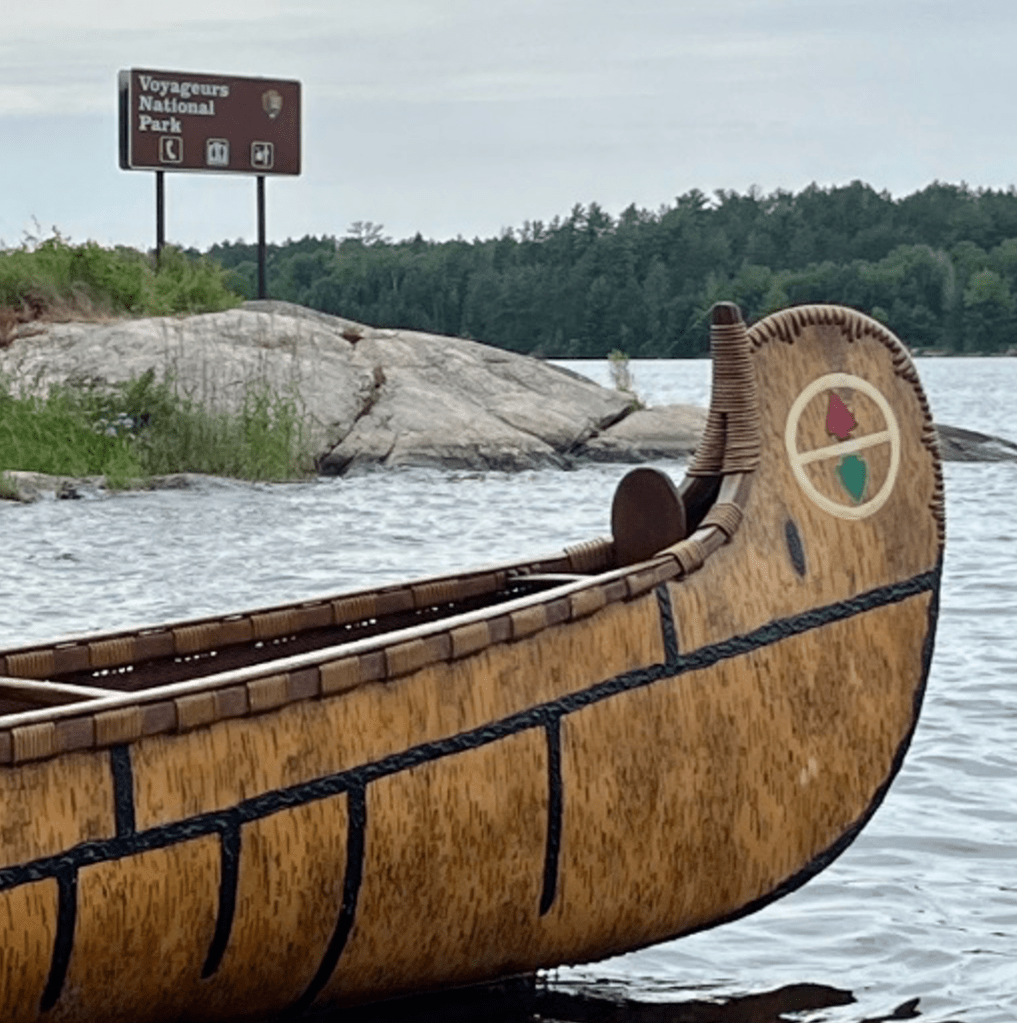
Ojibwe birchbark canoe 1910
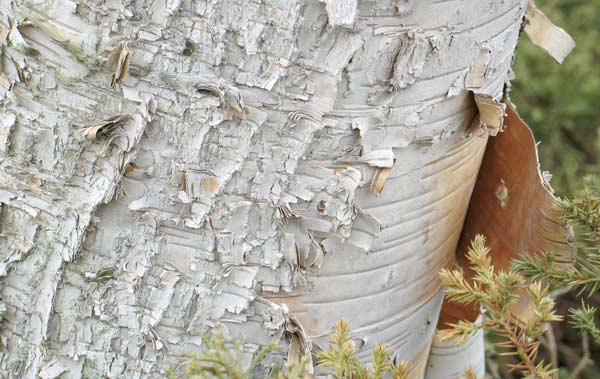
Since there were no roads or established trails in the early days of Minnesota, the Ojibwes’ primary mode of transportation was the birchbark canoe. They discovered that the outer rind of a birch tree can be stripped off without damaging the tree itself. When used for the outer skin of a canoe, birchbark is a naturally waterproof, resilient material, suitable for canoes that must navigate rivers, lakes, and even rapids. And its light weight made the canoes easy to carry over land.
Paper birch tree , credit Sue Sweeney, Wikimedia Commons
The Ojibwe canoe builders’ construction methods were impressive. They “make no use of nails and screws but everything is sewn and tied together,” reported a 19th-century observer. “The seams, stitches and knots are so regular, firm and artistic that nothing better could be asked for.”
The simple design integrates birch bark for the skin, cedar for the framework, split spruce-roots for sewing the bark to the frame, and a sealing compound made from cedar ashes and heated pine pitch for closing the seams. In the heyday of the fur trade, birchbark canoes were in high demand. The area that is now Voyageurs National Park became a canoe-building hub due to the abundance of birchbark and the artisanry of the Ojibwe.
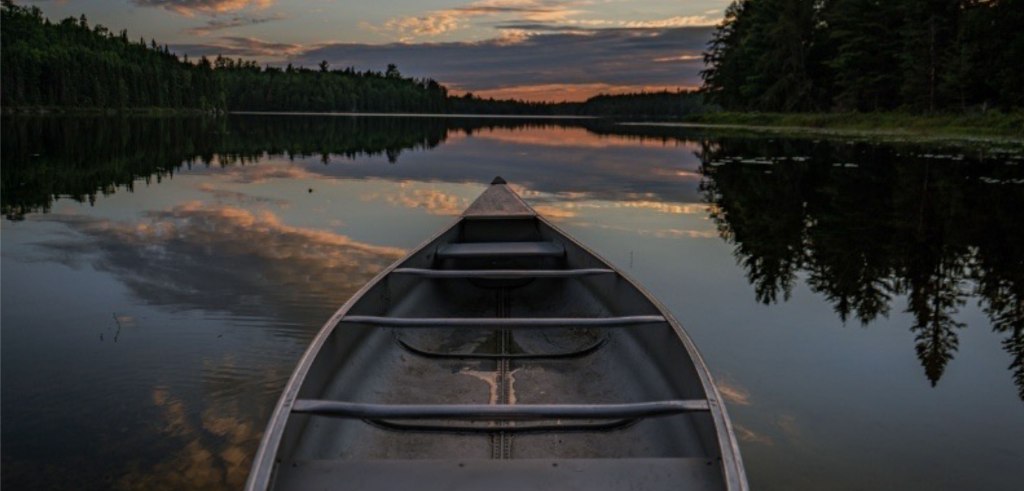
To get the full experience of a birchbark canoe, you’ll want to travel to Voyageurs next summer. The staff will invite you to participate in one of their programs featuring a replica of a 26-foot birchbark canoe – you might even get to paddle it!
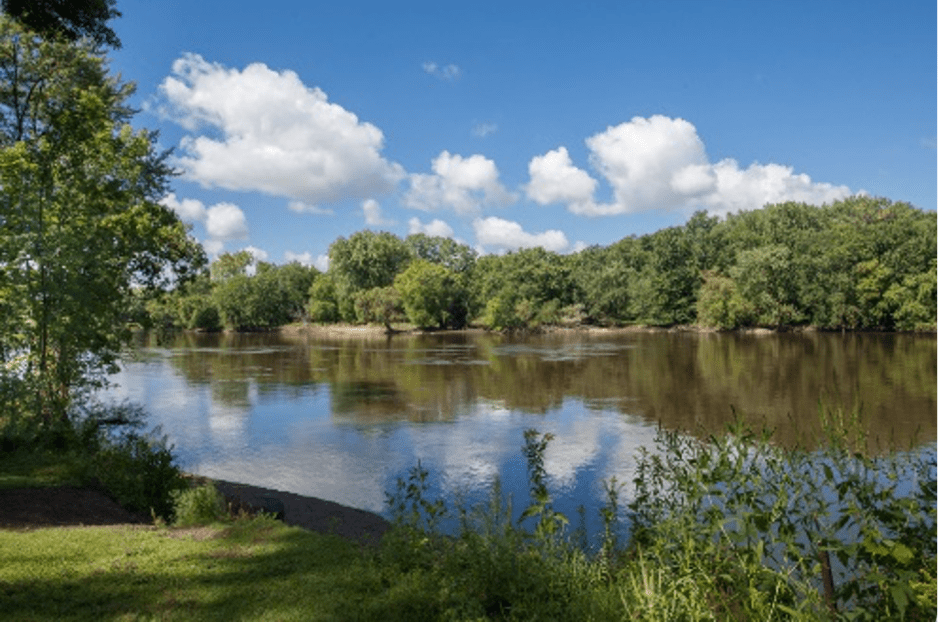
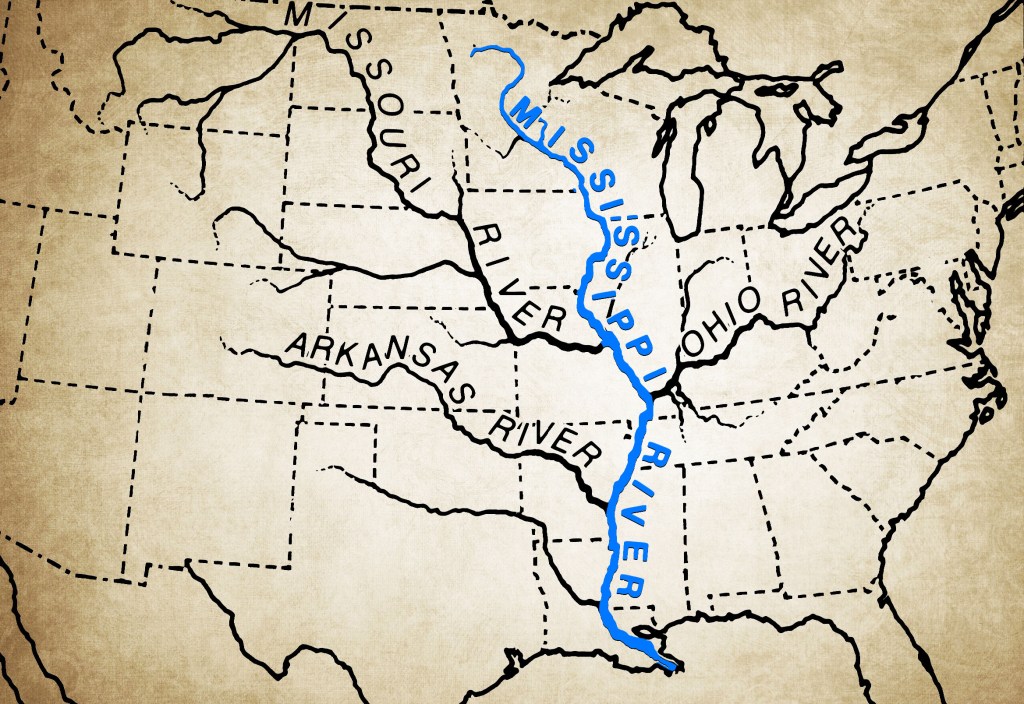
Early Ojibwe Indians called it misi-ziibi (meaning Great River). French explorers called it La Rivière de Saint Louis. The Spanish named it Río del Espíritu Santo. Today, we refer to it as the Big Muddy, Ol’ Man River, Old Blue, or the Mighty Mississippi.
No matter how you look at it, the Mississippi is impressive. It measures 2,340 miles in length, stretching from its tiny source in northern Minnesota to the Gulf of Mexico. (In case you were wondering, it can take 90 days for a drop of water to travel that entire length!) Water from parts or all of 31 states and two Canadian provinces drains into the Mississippi, making it the third largest watershed in the world.
Images courtesy of NPS
The river is home to an estimated 260 species of fish (25% of all North American species), 326 species of birds, more than 145 species of amphibians, and more than 50 species of mammals. Sixty percent of all North American birds use the river basin as their migratory flyway.
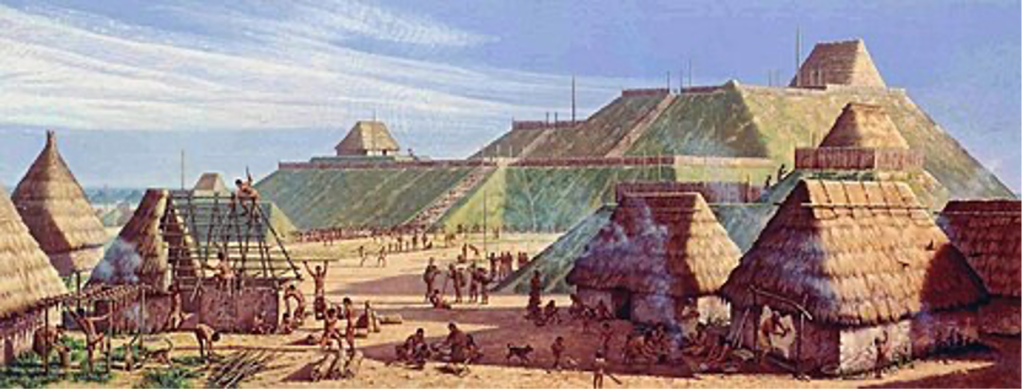
Reconstruction of Cahokia Mounds site, courtesy Michael Hampshire for the Cahokia Mounds State Historic Site
Humans, of course, have relied on the waters of the Mississippi for millennia. Native Americans have lived along its banks and tributaries for thousands of years. Most were hunter-gatherers, but some, such as the Mound Builders, formed prolific agricultural and urban civilizations. The ancient metropolis of Cahokia, Illinois, for instance, was more populous than London in the year A.D. 1250.
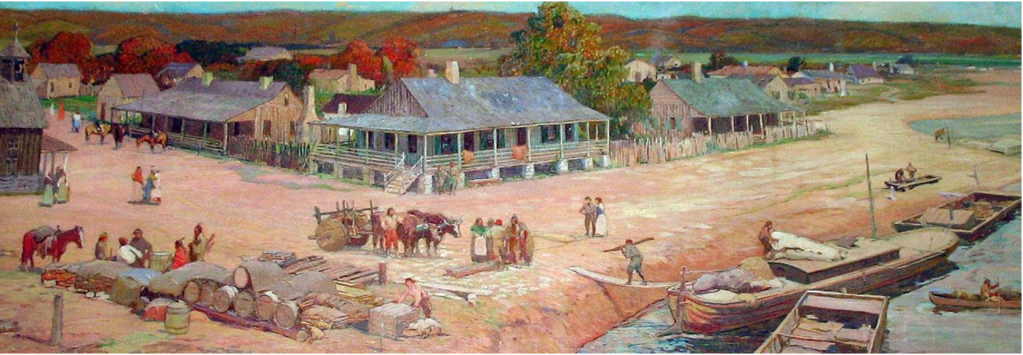
Settlers in early Ste. Geneviève, on the banks of the river. From Missouri State Capitol mural by Oscar E. Berninghaus.
The arrival of Europeans in the 16th century changed the native way of life as first explorers, then settlers, ventured into the river basin in increasing numbers. Early European explorers used the Mississippi to explore the interior and northern reaches of the continent. Fur traders plied their trade on the river, and at various times soldiers of several nations garrisoned troops at strategic points along the river when the area was still on the frontier.
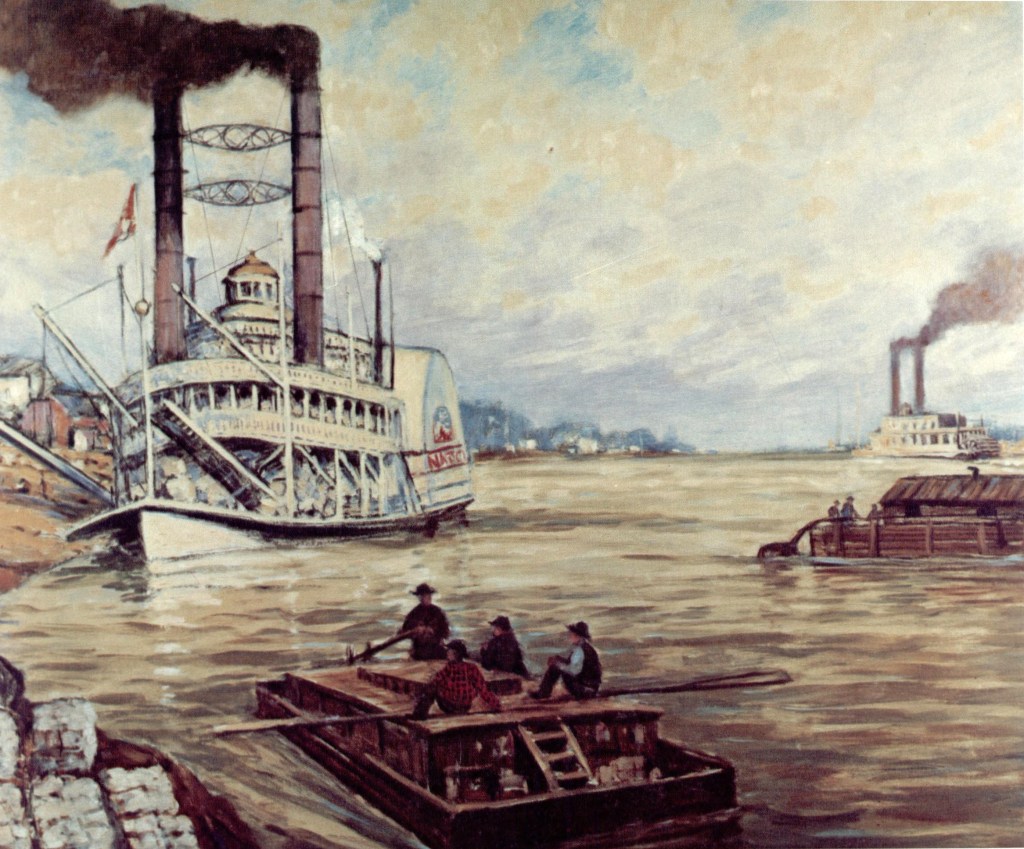
Starting in the 1800s, white settlers from Europe and America (and often their enslaved people) travelled the Mississippi on steamboats, further dispossessing the Native Americans of their lands and converting the landscape into farms and cities. They brought with them new traditions and cultures, and it wasn’t long before original American musical genres sprang up throughout the river basin.
Image courtesy of NPS
Jazz, blues, gospel, bluegrass, Dixieland, country, folk—all find their musical origins along the Mississippi’s banks. Our partner park Mississippi National River and Recreation Area has collected some original Songs of the Mississippi River, reflecting eight educational themes focused on the river. Take a listen to each one and imagine yourself as one of the unique characters who called the Mississippi home.








 JNPA Blog