
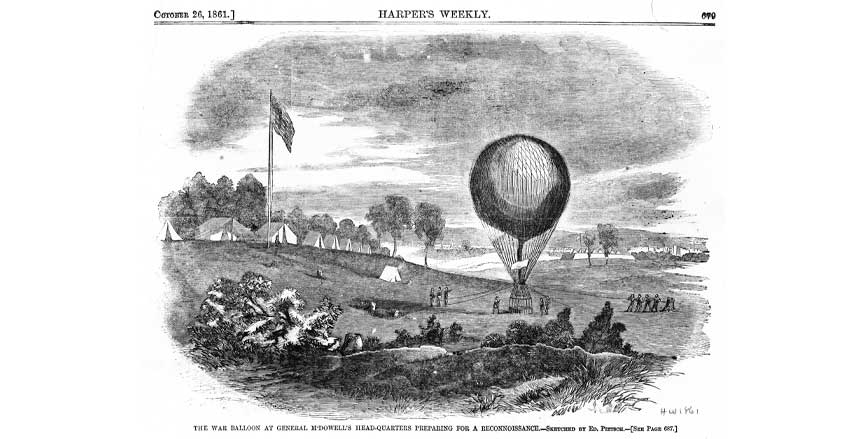
Now here’s a new one (at least to us) – waging war from a hot air balloon. Yes, you read that right. Forget your traditional image of a colorful balloon peacefully drifting over a bucolic landscape. During the Civil War, the Union Army used hot air and hydrogen balloons to spy on Confederate positions and to direct artillery fire on the enemy.

This unique chapter of American history began in 1861 at the outset of the war, when President Abraham Lincoln commissioned a miliary aeronautics division, primarily for map making and aerial reconnaissance. Professor Thaddeus Lowe was named Chief Aeronaut of the newly created Union Army Balloon Corps. When airborne, Lowe was able to direct flag signals to gunners on the ground, helping them fire accurately at targets they could not see – a military first.

photo by Mathew Brady
The largest Union balloons, the Intrepid and the Union, could carry up to five people and reach elevations of 1,000 feet. This height permitted the Army a vantage point that was heretofore unavailable. The Balloon Corps constructed an additional five smaller hot air balloons outfitted for military service.
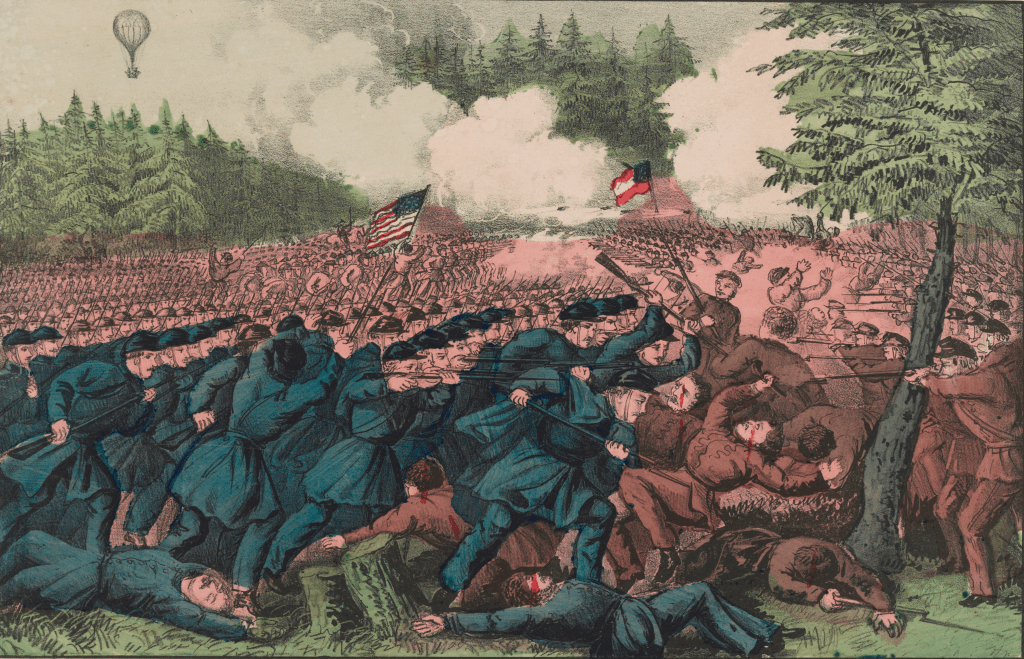
Most balloons that ascended during the Civil War were used in the Eastern Theater. Lowe sent the first air-to-ground battlefield reconnaissance report on July 21, 1861, at the first battle at Bull Run. By late spring 1862, he had three balloons in operation and each ascended multiple times daily to track enemy movements.
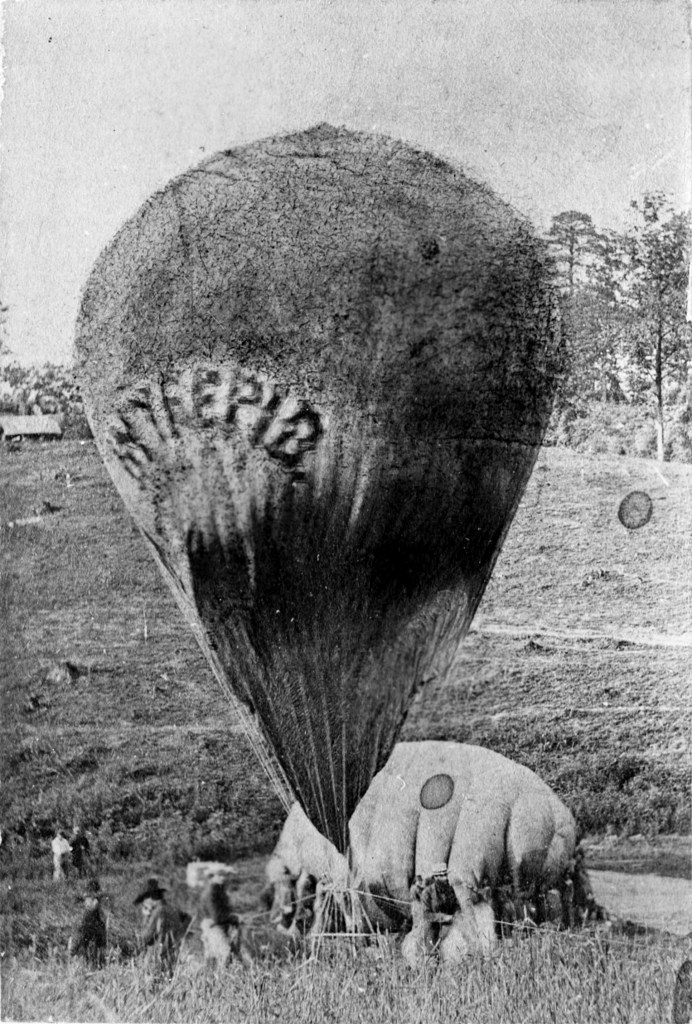
The Intrepid was the largest balloon in the Union Army inventory, inflated via hydrogen gas generators that were transported in special field wagons and sometimes cross-filled from the Constitution, a second balloon. Lowe conducted aerial reconnaissance from the Intrepid during the 1862 Battle of Fair Oaks in Virginia. He was able to spot concealed Confederate troop movements and send back reports to commanders via telegraph, alerting them to prepare for a full-scale offensive.
The Confederate Army also tried using hot air balloons during the war but was hampered by the unavailability of critical supplies needed to both build and inflate them. And ultimately, the Union Army’s balloons became increasingly unpopular with military commanders. In 1863, Lowe’s Balloon Corps was disbanded.
If you want to learn more about this curious chapter of Civil War history, be sure to attend the upcoming ranger talk at Ulysses S. Grant National Historic Site on Saturday August 29 at 10 a.m. Park Ranger Jonas will explore the use of hot air and hydrogen balloons during the war. He will also discuss Thaddeus Lowe, the eccentric scientist and architect behind the Union Army’s balloon experiment.
The program is free but please call 314-842-1867 ext. 230 for reservations.

