Celebrating the Holidays in Colonial Ste. Genevieve

How do YOU celebrate the holidays? Your answer may depend upon your religious practices or your family traditions. But if you’d lived in the French colonial village of Ste. Geneviève in the 1700s, chances are you and your neighbors would have commemorated the winter holidays in very similar ways.
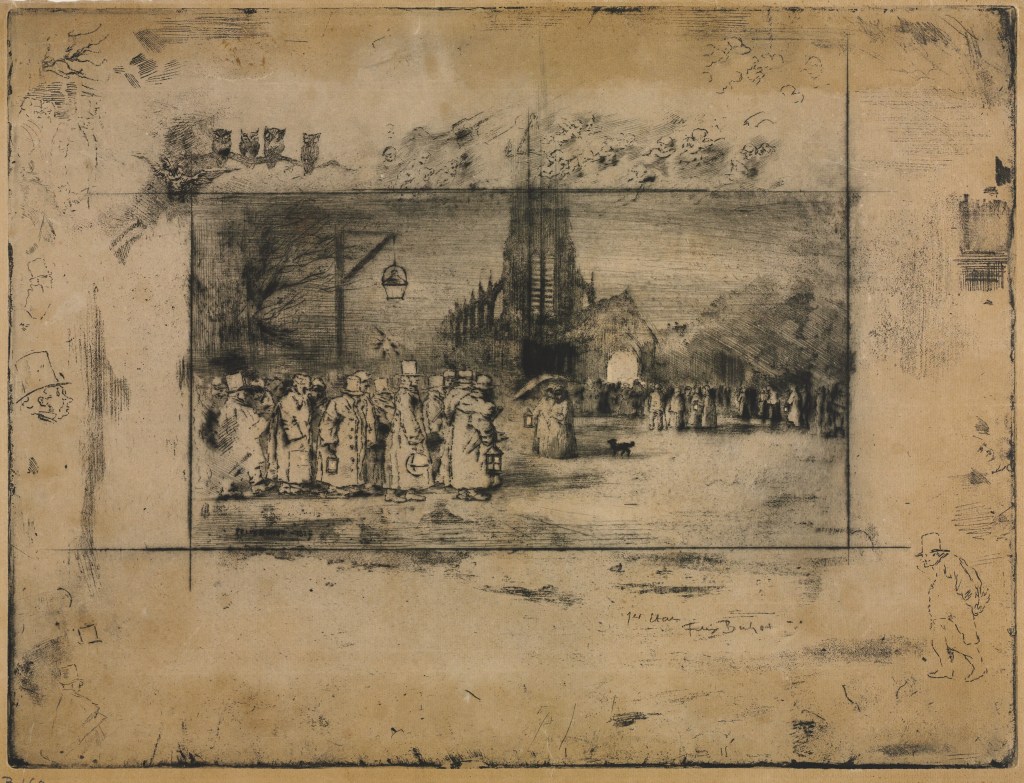
The Midnight Mass, Félix Hilaire Buhot

The townspeople of 18th-century Ste. Geneviève were predominantly Catholic, having brought their religious and cultural traditions from France. One of their most festive seasons of the year was December to mid-January. The four weeks prior to Christmas was Advent, a time of reflection, fasting, and merriment. The culmination of Advent was Christmas Eve, when most of the community attended midnight Mass.
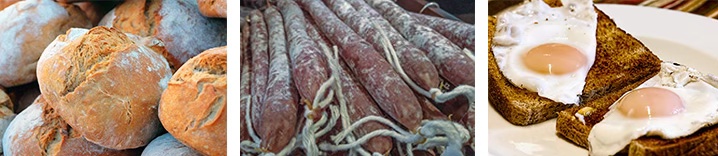
After the church service ended, the townsfolk gathered with their extended families for a feast called La Réveillon. This special breakfast would start in the early hours of the morning and proceed well into the next day. La Réveillon featured traditional breakfast foods such as eggs, sausage, and breads along with non-traditional items like puddings, stews, and cakes. Christmas Day festivities would continue throughout the day with more feasting, church services, and in some households, balls or parties.
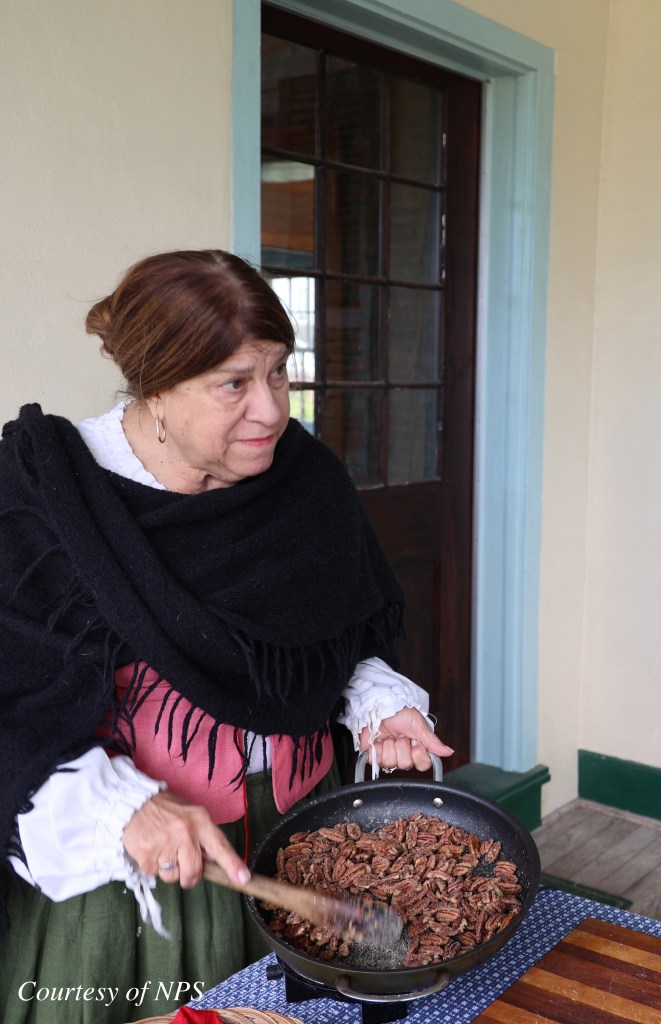
During this time of year the Frenchwomen of Ste. Geneviève were able to show off their cooking skills, using the new foods they found available in the New World, and incorporating African and Native American influences.
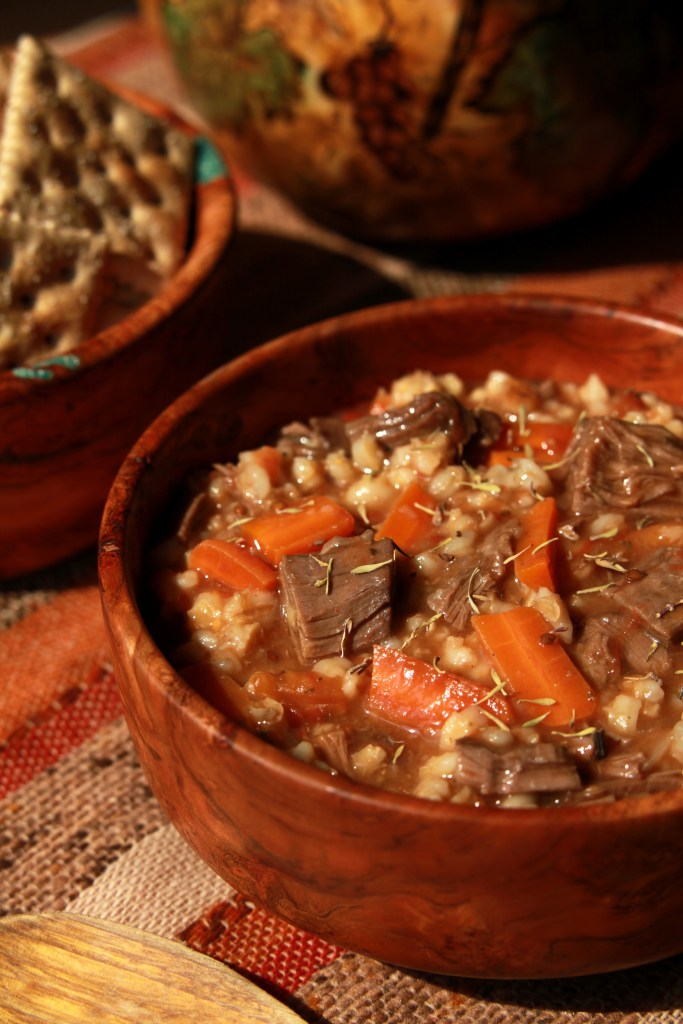
In 1811 Henry M. Brackenridge wrote that “The table was provided in a very different manner from that of the generality of Americans. With the poorest French peasant, cookery is an art well understood. They make great use of vegetables and prepared in a manner to be wholesome and palatable. Instead of roast and fried, they had soups and fricassees, and gumbos…” 
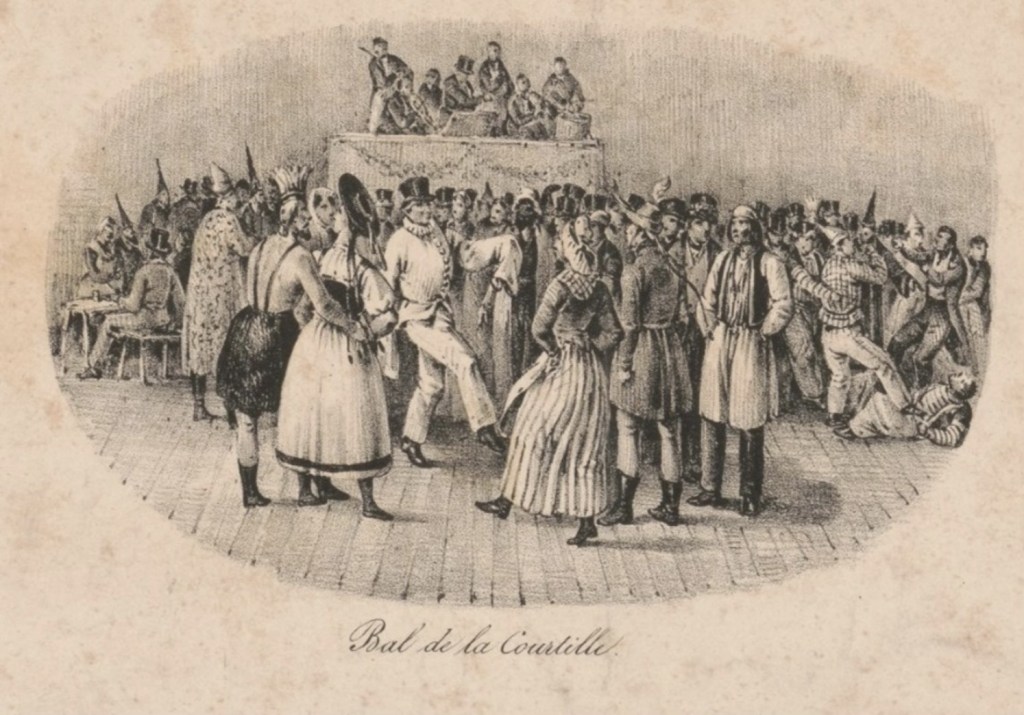
The Kings Ball featured finely dressed participants like those seen in this sketch of the “Bal de la Courtille”
from 1820.  Library of Congress)  

The next holiday celebration, La Guiannée, took place on New Year’s Eve.  On the evening of December 31st, a troupe of male singers dressed in costume went door-to-door throughout the community. As they sang, they asked for donations from each household for the upcoming Epiphany feast. The group collected things like lard, poultry, eggs, wheat, and candles to feed the community and decorate for the Epiphany Celebration.  (The 250-year-old tradition of La Guiannée is still celebrated in Ste. Geneviève to this day.)
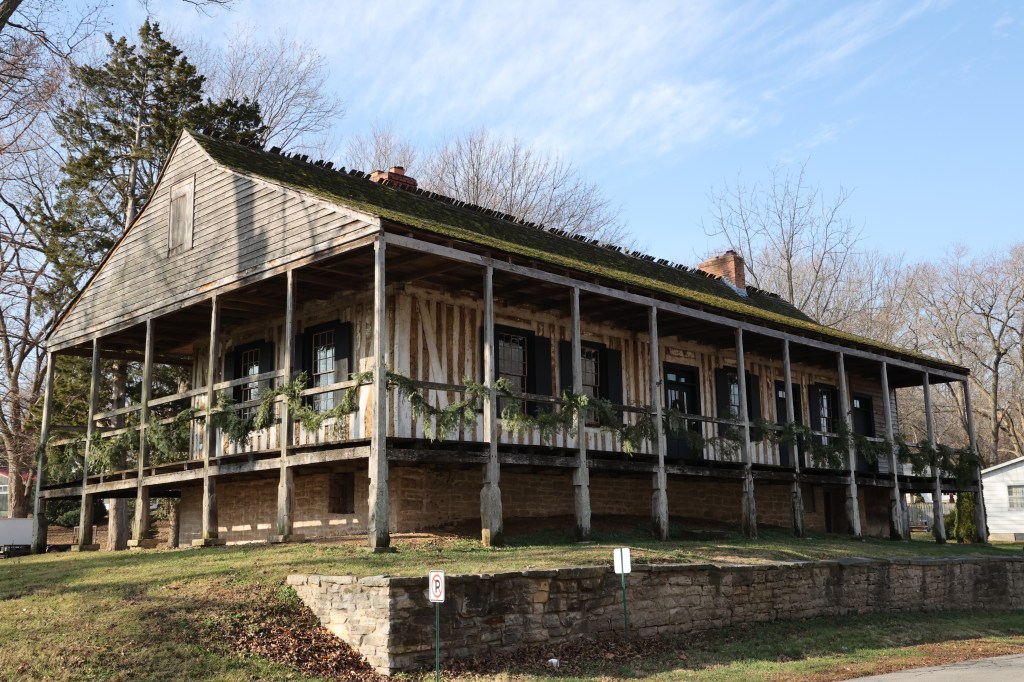
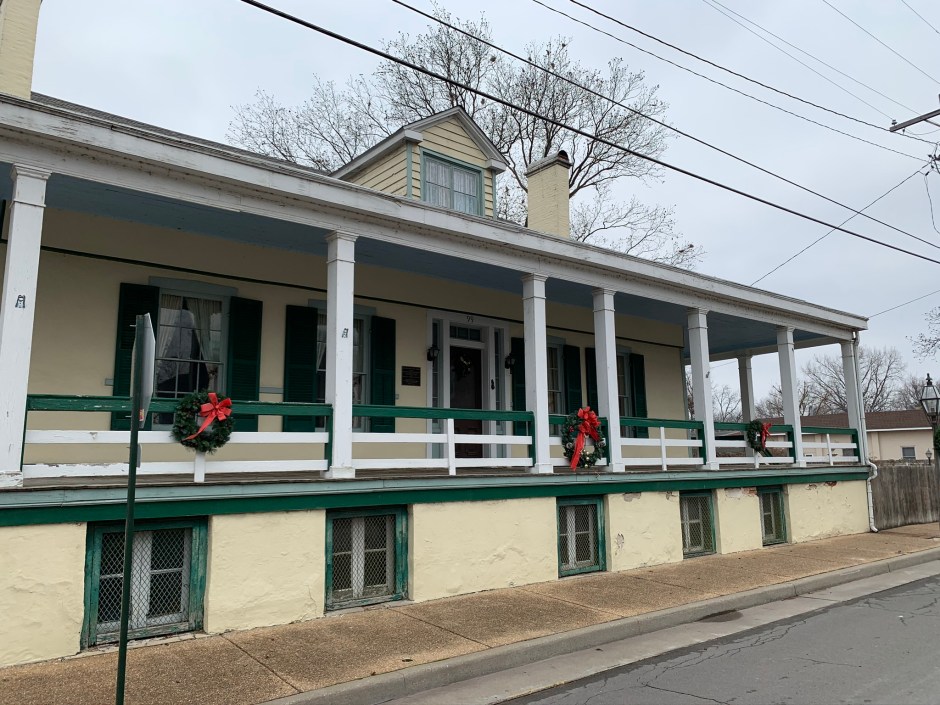
Green Tree Tavern, courtesy NPS

As the years went on and the village changed, the holiday traditions for the French Catholic residents of Ste. Geneviève ebbed and flowed. With the arrival of new residents from American and German backgrounds, new traditions emerged, and old traditions adapted to suit the growing community. The changes have allowed for many of the French Catholic traditions to continue into the present-day community. 

If you haven’t yet visited the town, or our park partner Ste. Geneviève National Historical Park, winter can be a great time to stop by.  Be sure to check the park’s website for upcoming activities before you go.
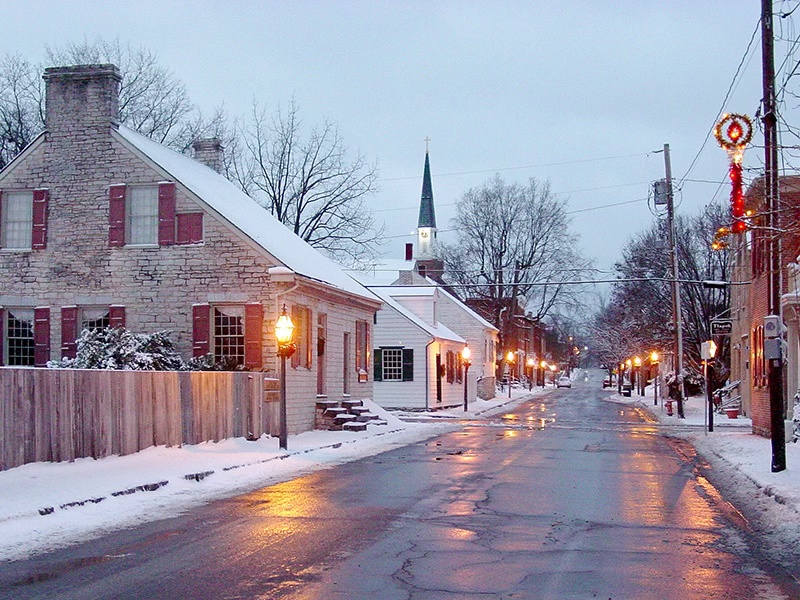
Courtesy of Robert Mueller, Ste. Genevieve Tourism

Presidential Election! (19th-century style)

We can’t imagine that anyone is tired of hearing about U.S. presidential elections, right? (heh-heh). But wait – we’re not asking you to vote again anytime soon! We’re talking about a few fascinating presidential contests from more than 150 years ago, involving Ulysses S. Grant. 


When the U.S. Civil War ended in 1865, Abraham Lincoln was serving his second term as President. General Grant, the military hero of the Union war effort, agreed with many of his policies and had little interest in seeking elected office. “Everybody who knows me knows that I have no political aspirations either now or for the future,” he wrote in a letter. “I hope to remain a soldier as long as I live.”

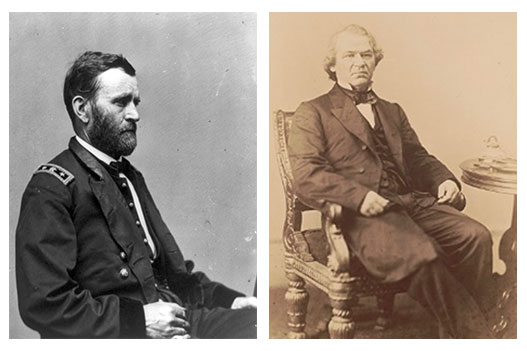
President Grant, photo by Matthew Brady (Library of Congress)
President Johnson, photo by A. Gardner (Library of Congress)

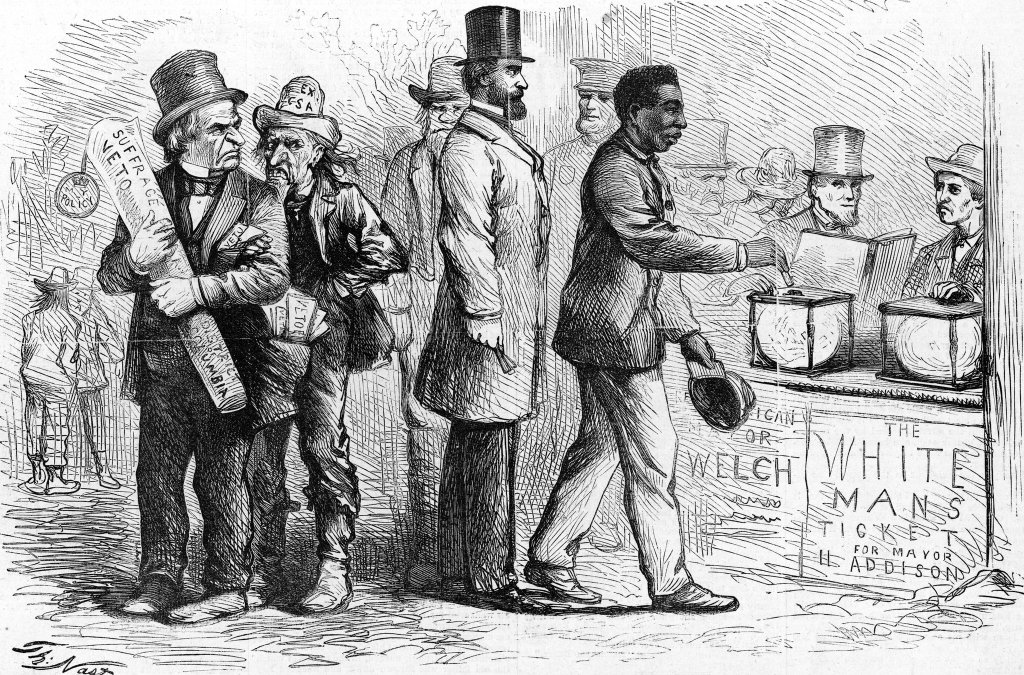
However, Grant’s political aspirations changed after the assassination of President Lincoln. Lincoln’s successor, Andrew Johnson, was a Unionist Southerner who became increasingly lenient toward former Confederates. Johnson vetoed all civil rights legislation passed by Congress, putting him at odds with numerous prominent leaders including Grant, a supporter of African American civil rights.  

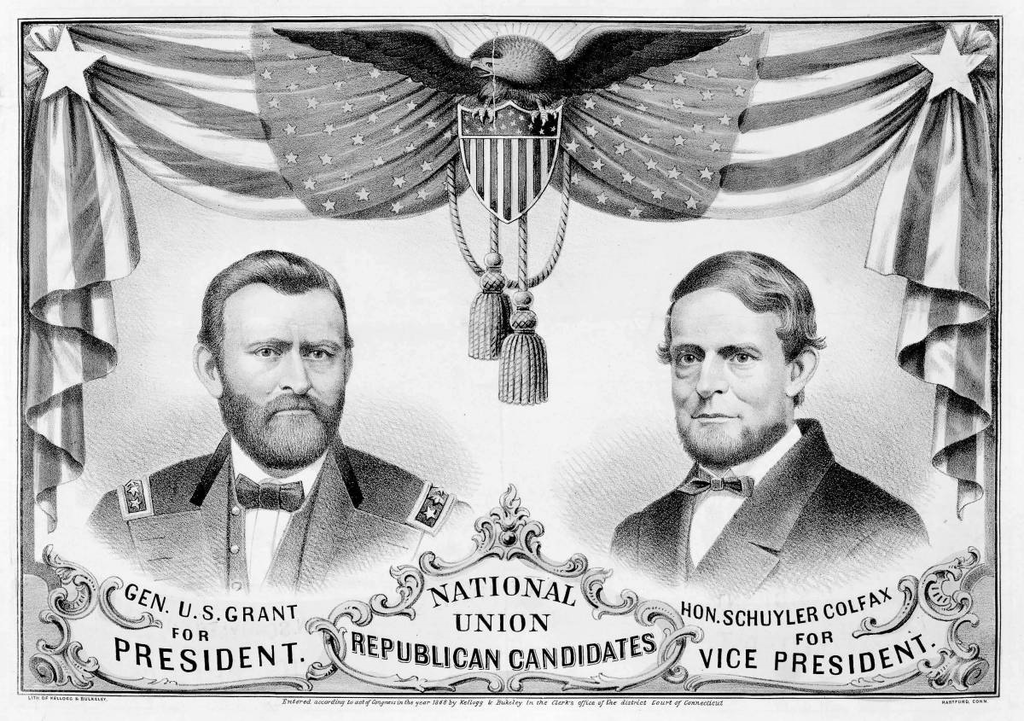
Campaign flyer from the 1868 presidential election

The Republican Party persuaded Grant to run for president in 1868 against New York governor Horatio Seymour. The party’s platform included ongoing support for Reconstruction, protecting the rights of loyal southerners including African Americans, and ultimately granting all male citizens the right to vote. Other issues included reducing taxes, working towards the elimination of the national debt, and promoting westward expansion and economic growth. Grant’s campaign slogan was “Let Us Have Peace.” He won the 1868 popular vote by 300,000, helped by the newly enfranchised Blacks in some Southern reconstructed states.  

Thomas Nast – 1867 Harper’s Weekly

After his first term in office, Grant’s popularity was still high, though there was increasing opposition from those who favored replacing Reconstruction in the South with local self-government, i.e., white rule. The Democratic party nominated Horace Greeley as its candidate in 1872, but once again Grant prevailed, this time by a margin of 56 to 44 percent.  

Grant’s two terms as the 18th U.S. president are marked by a number of accomplishments. He supported and signed the 15th Amendment to the Constitution, giving African American men the right to vote. He fought to protect Native Americans from people who wanted their land, although the eventual results of this “peace policy” were mixed. He sought free public education for all, regardless of race, gender, or religion. Grant signed legislation establishing Yellowstone as the nation’s first national park in 1872. And on the international front, he peacefully settled major disputes with England over its support for the Confederacy during the Civil War.

After eight years in office, Grant looked forward to retirement, and Rutherford B. Hayes was elected president in 1876. But as the 1880 elections loomed, supporters of Grant urged him to run for an unprecedented third term. They favored his strong advocacy for Black civil rights and his diplomatic efforts to strengthen the U.S. at home and abroad. Others, however, were concerned about corruption among some of Grant’s former White House aides, and they formed an “anybody but Grant” coalition. 

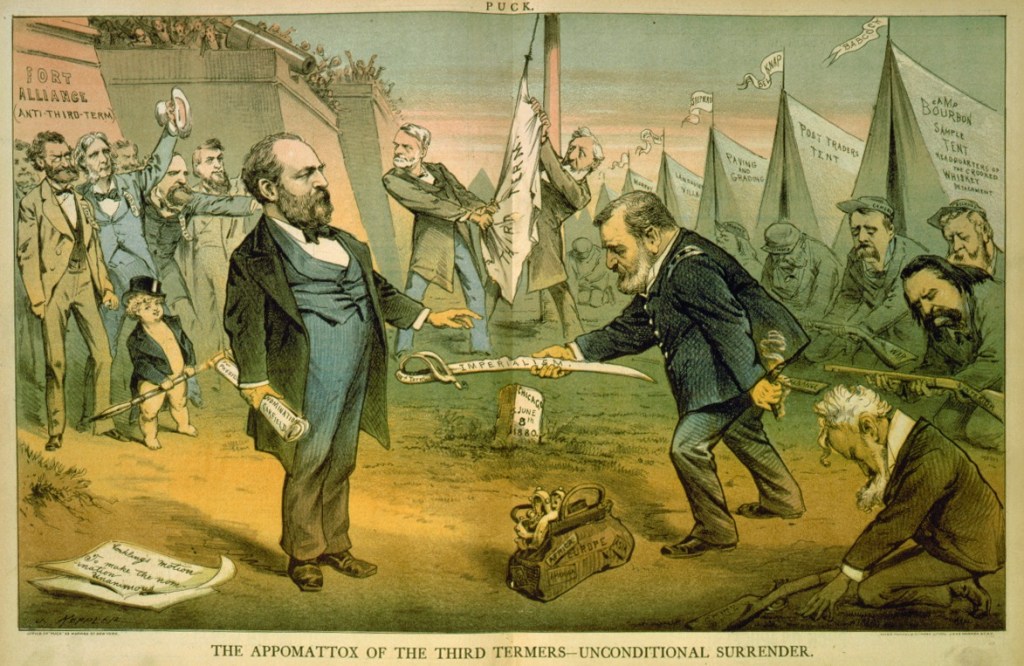
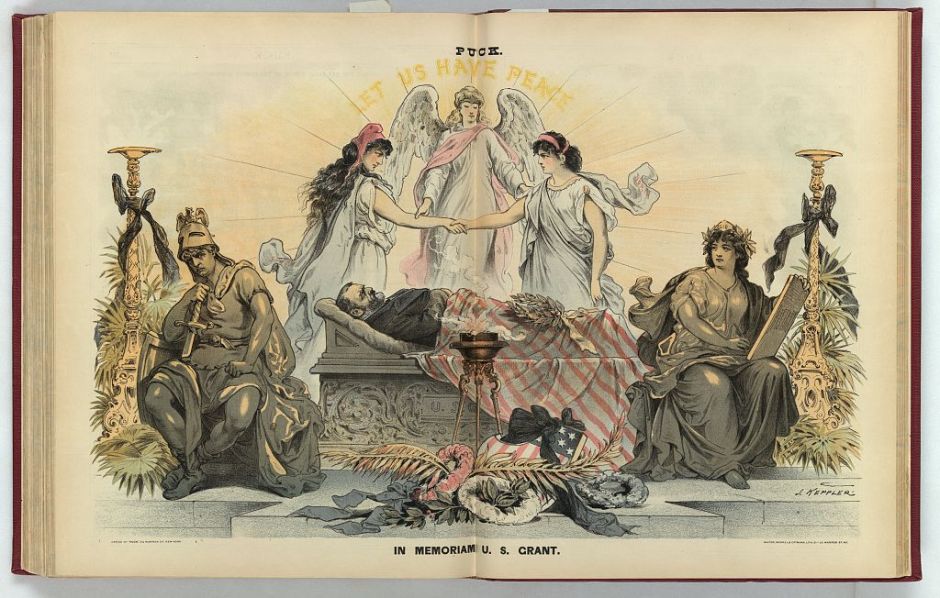
Grant “surrenders” the party’s nomination to Garfield. Puck Magazine 1880, Library of Congress

Grant did not actively seek the Republican Party’s 1880 nomination, but he didn’t turn it down either. He stood for election during the party’s convention
in Chicago, as did several other candidates. But after numerous votes, the delegates failed to select a presidential candidate. Congressman James A. Garfield made a persuasive speech calling for party unity, after which the party nominated him. Garfield went on to be elected president later that year. 

If you’re interested in learning more about the 1880 election, the staff at Ulysses S. Grant National Historic Site has compiled a small temporary exhibit in the site’s visitor center that examines Grant’s “surrendering” the nomination to Garfield. It runs through mid-November. 

What Will YOU be for Halloween? 👻

Halloween is here! That time of year when young (and not so young) trick-or-treaters dress up as ghosts, superheroes, princesses, and cowboys. What will your kids (or you) be this year?

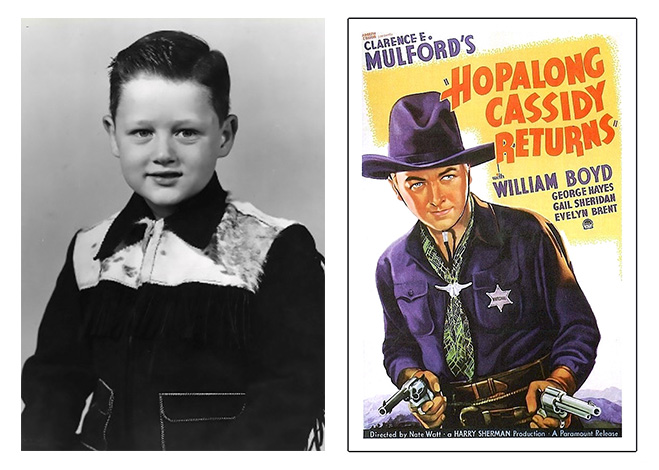
Left: 6-year-old Billy Blythe (Clinton) as Hopalong Cassidy. Courtesy of NPS.

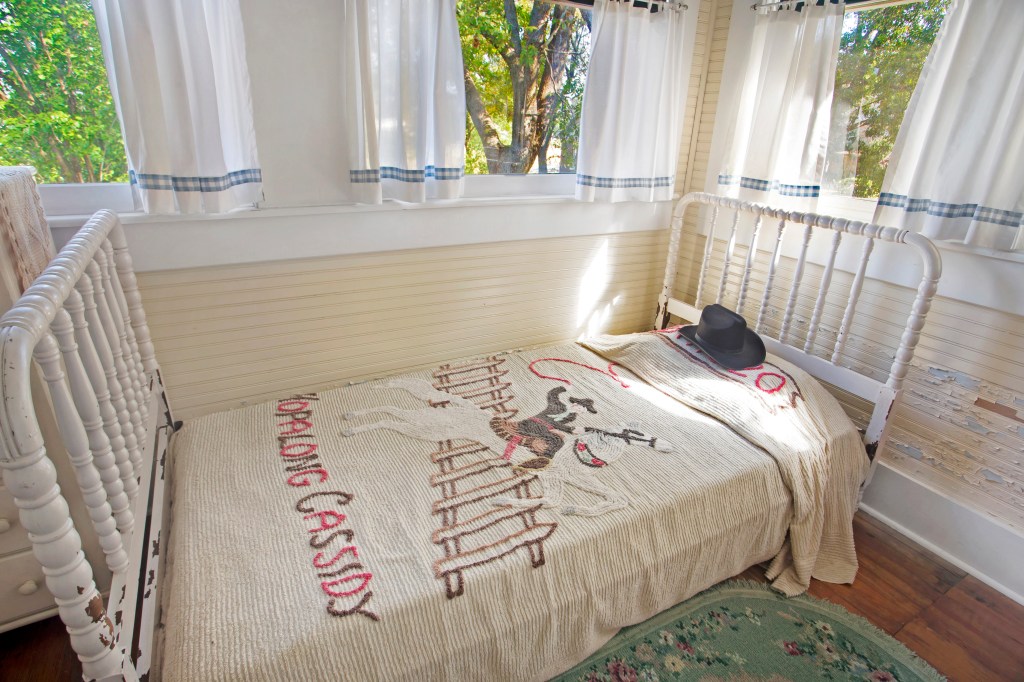
One now-famous little boy had no problem picking his Halloween costume.  Young Billy Blythe (later President William Jefferson Clinton) was obsessed with the cowboy star Hopalong Cassidy. He dressed up in western outfits whenever he could and was particularly proud of his childhood bedspread embroidered with his hero’s name. (Check out his bedroom when you visit President William Jefferson Clinton Birthplace Home National Historic Site.)

Was little Billy attracted to Hopalong Cassidy because he often rescued honest citizens from despicable outlaws? Or was it because the film and TV star shared the same last name as his maternal grandparents, Eldridge and Edith Cassidy?  Whatever the reason, he remained fascinated with his idol for many years.


Courtesy of NPS

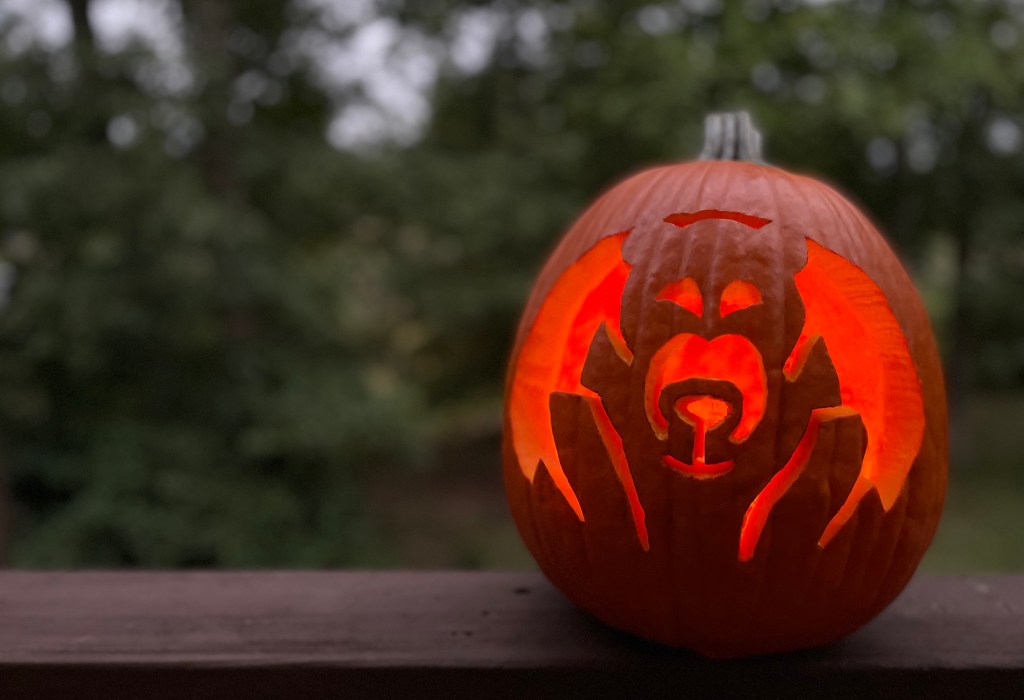
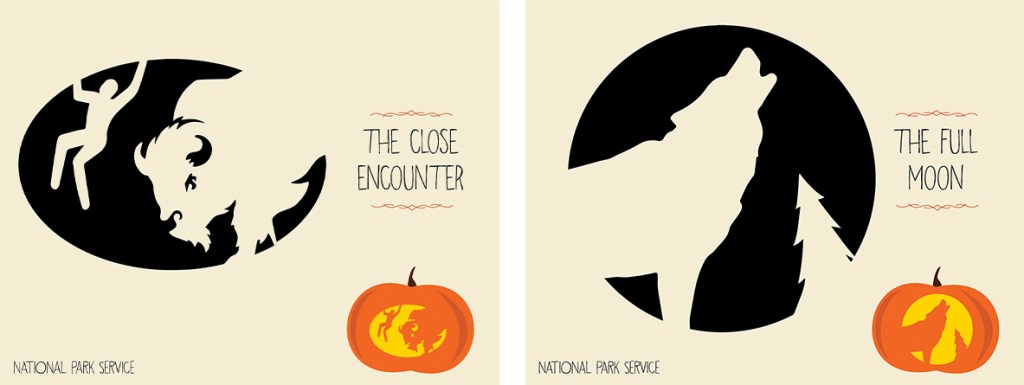
While we’re on the subject of Halloween, how about some clever ideas for how to carve your pumpkins? The National Park Service offers a fun selection of downloadable pumpkin carving templates, including a fat bear (shown above), a bat (did you know more than 45 species of bats live in national parks?), a bison butting a park visitor (!), and a coyote howling at the moon.  What will YOUR jack-o-lantern look like?

Spooky Halloween wishes from JNPA!!!

If These Walls Could Talk

Visitors to the White Haven estate at Ulysses S. Grant National Historic Site sometimes happen upon a curious stone building behind the historic house.  This humble little structure looks a bit out of place amid the other wooden buildings on the site, and it has undergone several transformations since it was built.  What was it used for?

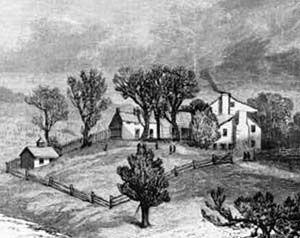
White Haven, circa 1850. Stone building is visible to the immediate left of the main house. Photo credit: NPS

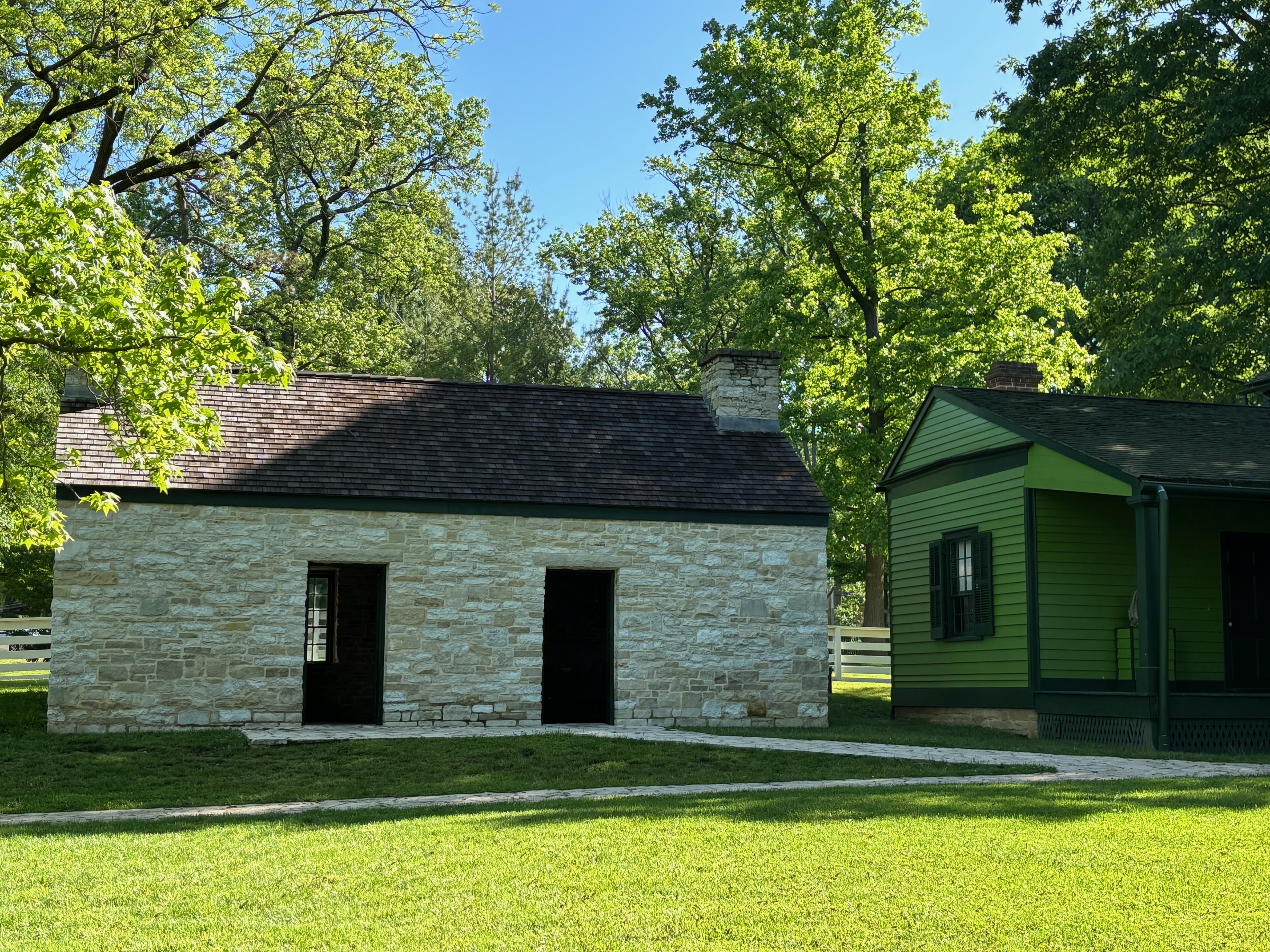
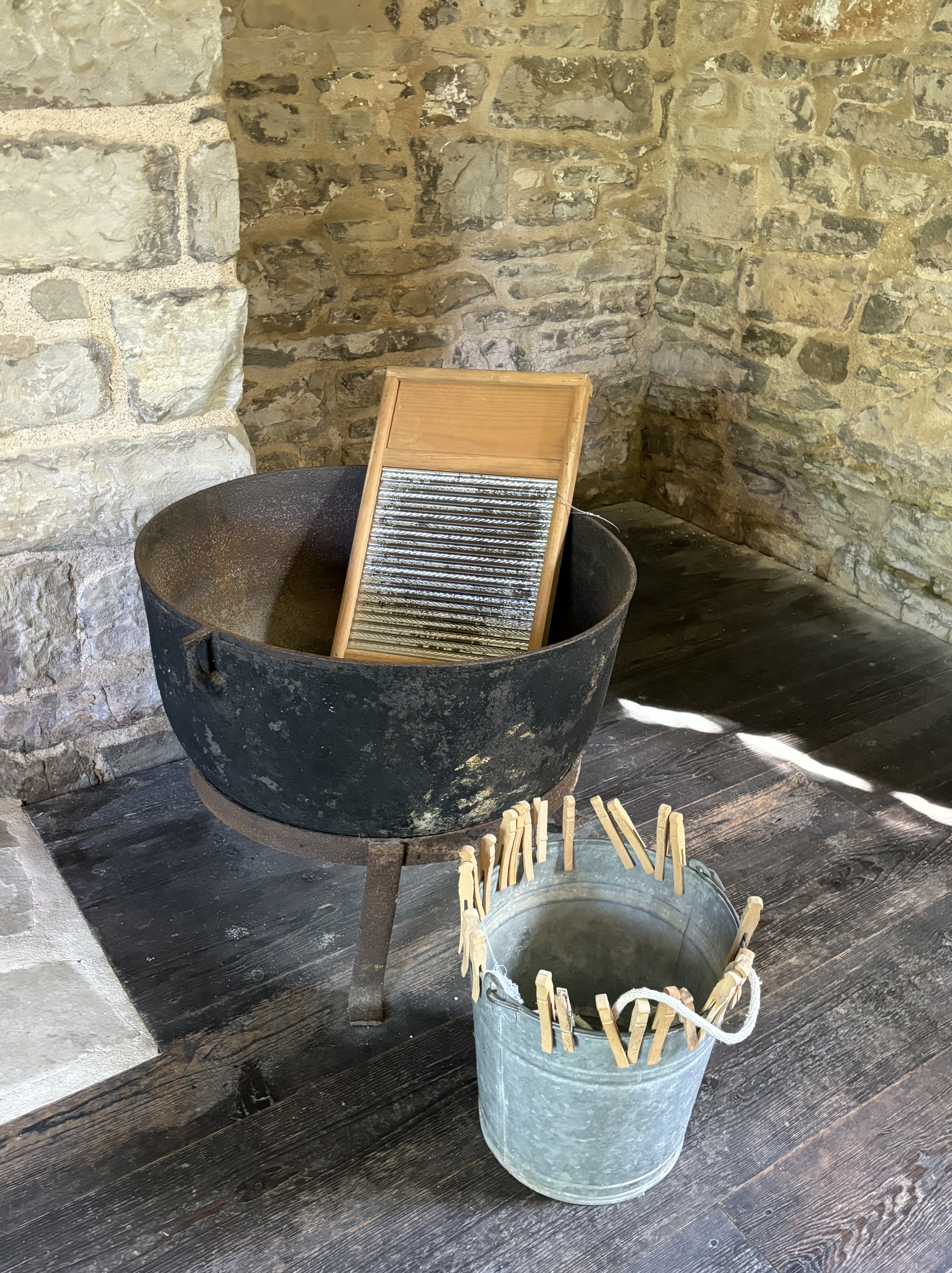
National Park Service archeologists believe the stone building was probably built well before the Civil War – perhaps as early as 1840 – when Grant’s in-laws, Frederick and Ellen Dent, owned and farmed the 850-acre slave plantation.  Enslaved laborers are thought to have worked there, cooking food, sewing clothing, and cleaning laundry; and some enslaved cooks may even have lived in the attic. 

 Although the main house on the estate featured a basement kitchen, its wood construction would have been prone to catching fire during the cold winter months, so cooking duties would probably have shifted to the cooler stone kitchen during the summer. 

Photo credit: NPS

Yet a workplace for enslaved people wasn’t the end of the little building’s story. Sometime after slavery was abolished, a permanent kitchen was established on the first floor of the main residence and the stone building ceased to function as a summer kitchen. The roof and walls of the neglected building collapsed.

Photo credit: NPS

Then in the 1940s or 1950s, the private owners of White Haven expanded the west wall of the stone building, rebuilt and re-roofed it, and used it as a three-car garage. Changes to the structure included rebuilding exterior walls, removal of the wall dividing the two rooms, replacement of the gabled roof with a shed roof, and a concrete floor.

Photo credit: NPS

After the National Park Service acquired ownership of White Haven in 1990 (a purchase facilitated by JNPA), workers restored the stone building to its original appearance.  Archaeological digs yielded numerous broken dishes, crockery, silverware, as well as sewing equipment from the nineteenth century – further evidence of the domestic tasks enslaved laborers were performing at this site.

On your next visit to the park, be sure to pay a visit to the summer kitchen building, where you’ll find additional information about its many uses. 

Get Involved at a National Park!

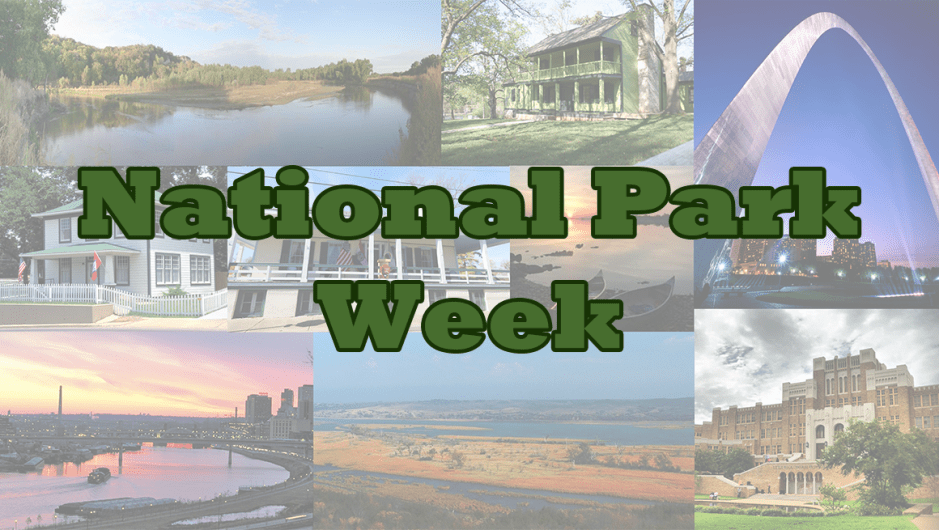
Are you a fan of national parks?  Beyond just paying them a visit, do you want to get more involved in their events and activities?  Then National Park Week is for you!!

In August of 1991, the very first National Park Week was established to honor the National Park Service’s 75th anniversary. Since then, it has been celebrated in April alongside Earth Day. This year, National Park Week is April 20-28, and each day is themed around a unique aspect of the national parks.

April 20 – Discovery/ Park Rx Day

To kick off the week and also encourage people to discover a new park, entrance fees at all national parks are waived on April 20!

It is also Park Rx Day, focusing on the connection between the health of people, the health of parks, and the health of our planet.

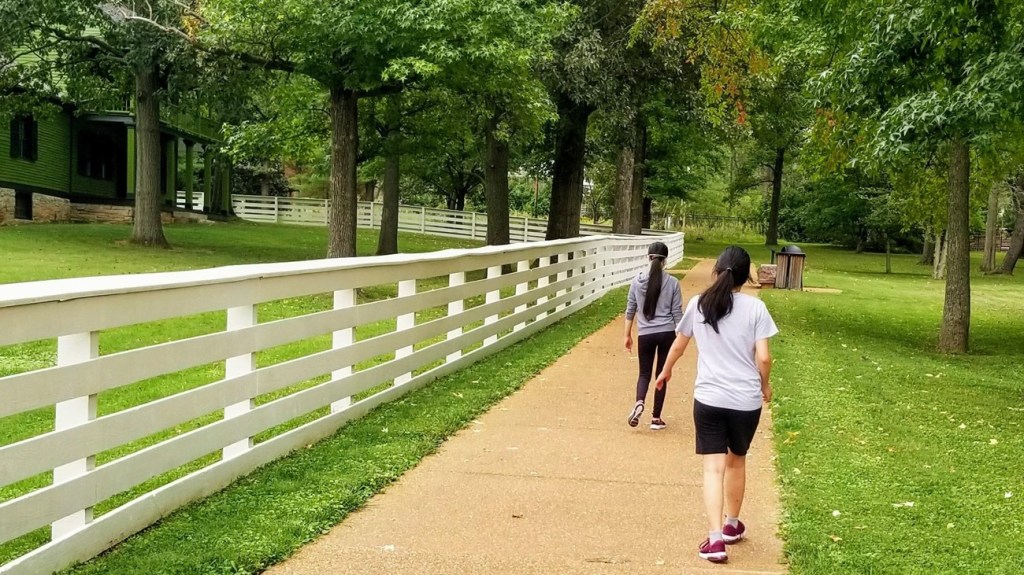
If you are in Missouri, we highly recommend attempting the NPS Wellness Challenge. All seven of the national park sites in Missouri offer challenges in three categories that visitors can complete: mental, physical, and learning. If you complete a challenge, you can earn a Wellness Challenge Badge!

Visitors take a walk through history as part of the NPS Wellness Challenge at Ulysses S. Grant National Historic Site. Credit: NPS

April 21 – Volunteers

Have you ever wanted to volunteer at a national park but either lived too far away or could not find activities that fit your schedule? Now you can volunteer VIRTUALLY as a citizen archivist! Ahead of the upcoming 250th anniversary of American Independence, the National Archives and Records Administration is collaborating with the National Park Service to have volunteers transcribe Revolutionary War Pension Records. These records hold incredible, untold stories of the American Revolution, and once transcribed, will be a permanent contribution to our country’s historical record.

Want to get outside to volunteer? Gateway Arch National Park is having its first ever BioBlitz on April 28. Volunteers will use the iNaturalist app to document various types of wildlife found in the park.

April 22 – Earth Day

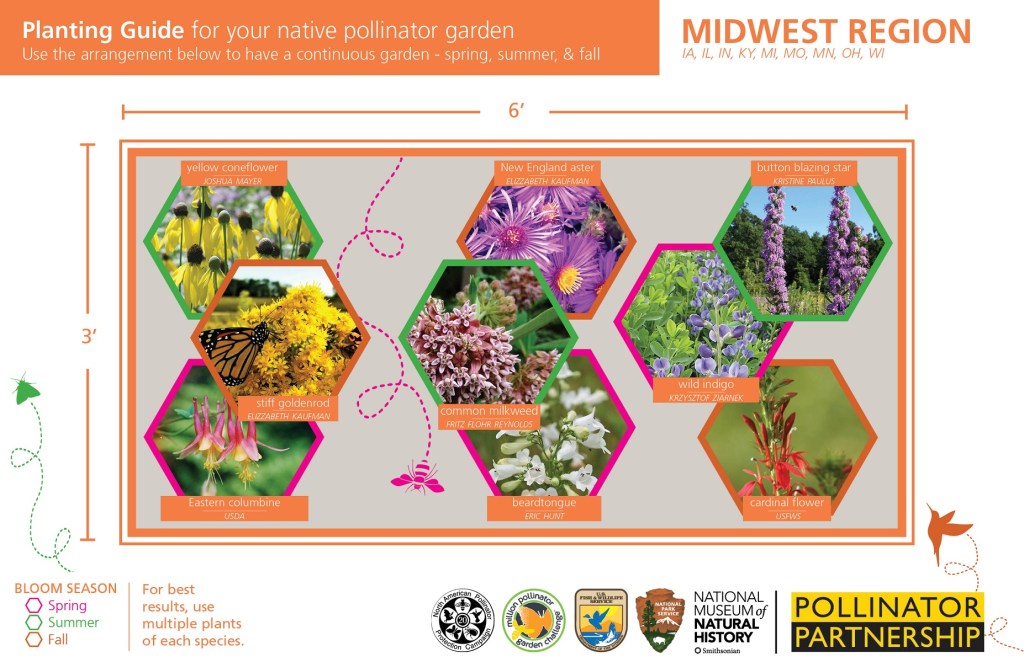
On Earth Day, you can join an event at a park near you, or you can learn about all the great ways to practice conservation at home. By taking a few small steps, you can do your part to help protect pollinators, birds, bats, oceans, and even our night skies!

April 23 – Innovation

National Park sites are full of innovative ideas, programs, and technology. For Innovation Day, check out a few of our past blog posts about innovation in some of our partner parks:

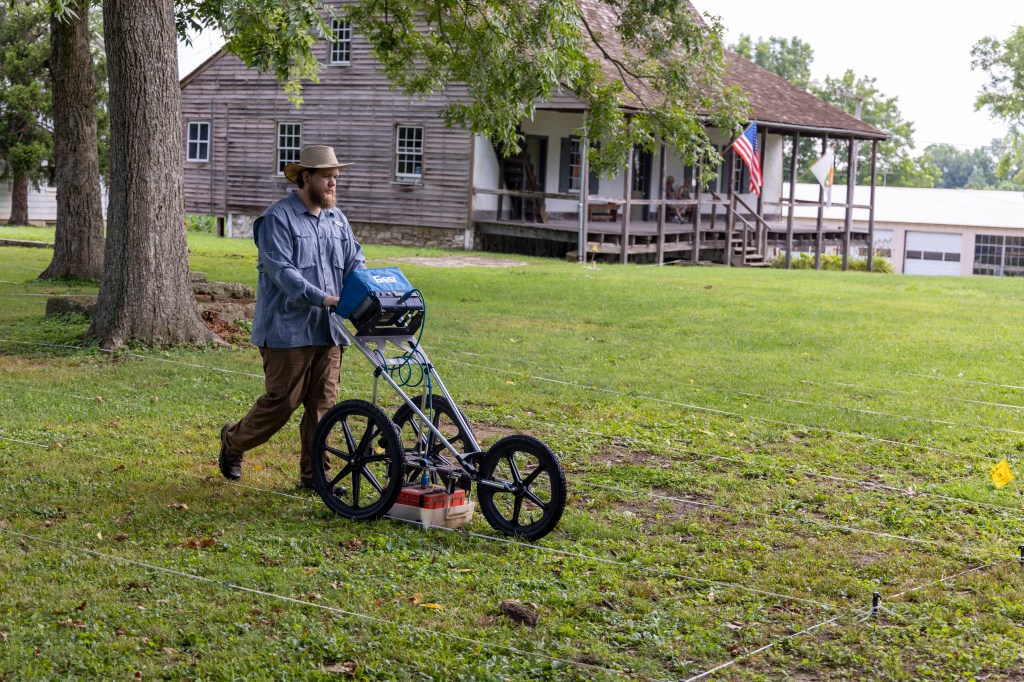
Archeological exploration at Ste. Geneviève National Historical Park. Credit: NPS

April 24 – Workforce Wednesday

On April 24, the National Park Service is hosting a special virtual event, “Then/Now/Tomorrow: Empowering Our Future Conservation and Climate Stewards.” This is a great opportunity for teens and young adults to learn about volunteer and career opportunities in parks!

April 25 – Youth Engagement

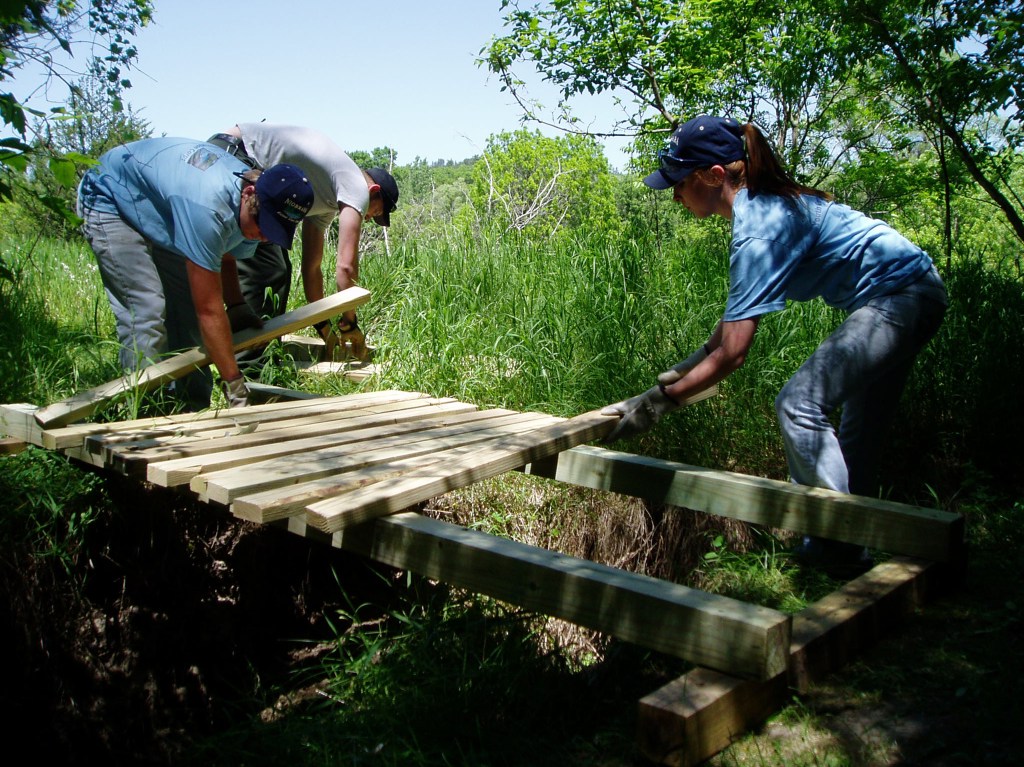
After joining the webinar on Workforce Wednesday, young people between the ages of 15 and 18 can take the next step on their National Park Journey by researching and applying for opportunities with the Youth Conservation Corps! One of our partner parks, Voyageurs National Park, even has an upcoming opportunity May 13 – June 13 for Corps members to repair boardwalks and complete trail maintenance in the park.

Youth Conservation Corps installing a bridge at Niobrara National Scenic River. Credit: NPS

April 26 – Community Connections

Did you know that the National Park Service’s work does not stop at a park’s boundary? Every day, parks across the country partner with their surrounding communities to expand their mission of conserving the natural and cultural resources of our country for the “enjoyment, education, and inspiration of this and future generations.” A few notable examples in the JNPA network of sites include:

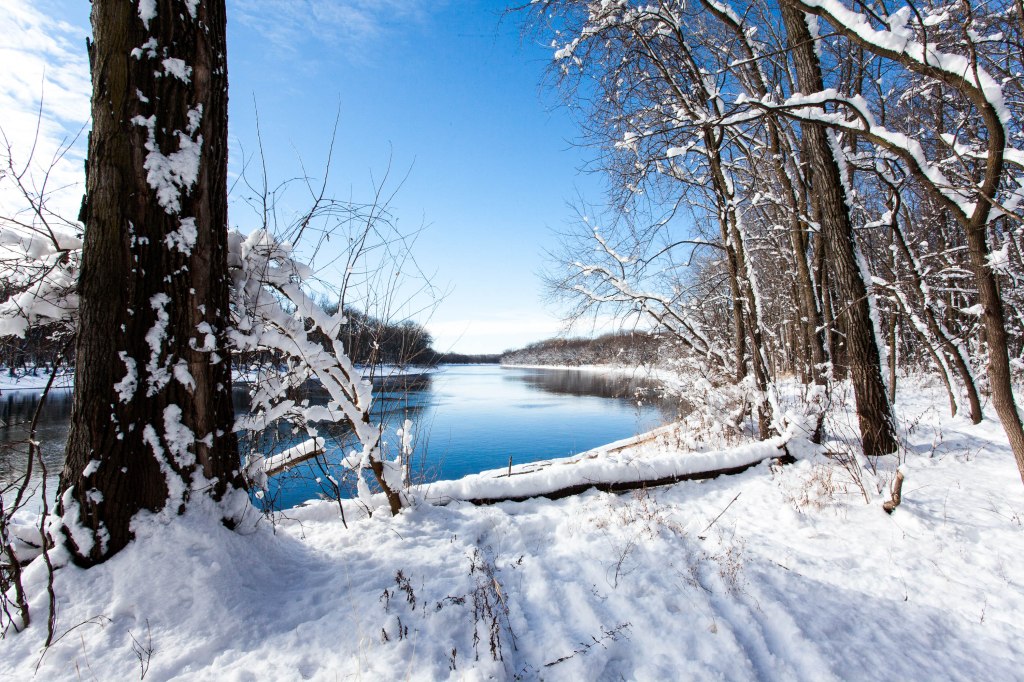
Crosby Farm at Mississippi National River and Recreation Area. Credit: NPS

April 27 – Junior Ranger Day

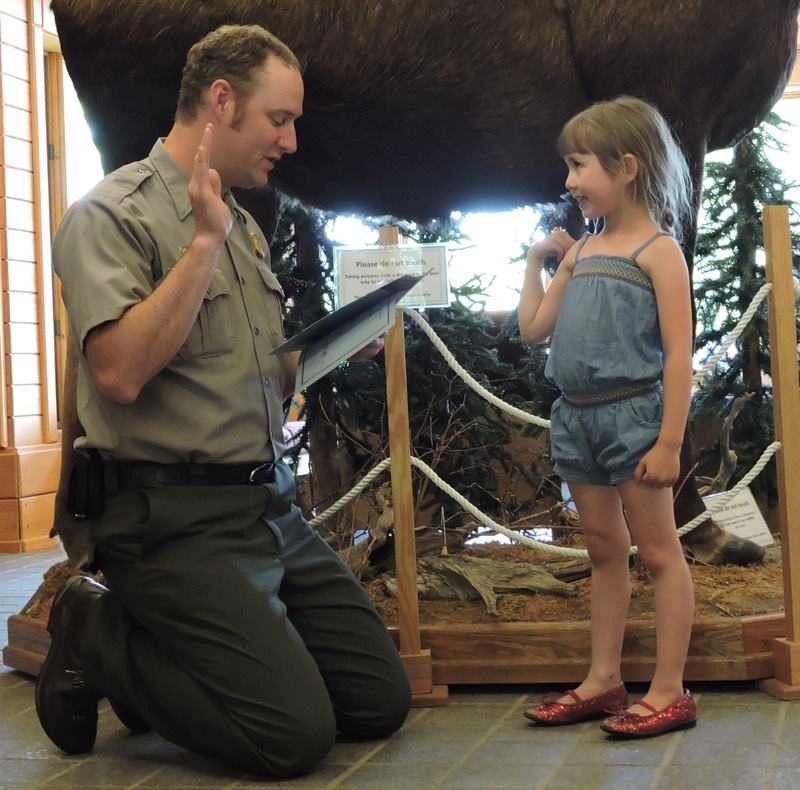
“Explore. Learn. Protect.” This is the motto of the NPS Junior Ranger program, an activity-based program to help kids of all ages learn about parks. On Junior Ranger Day, a variety of special events will be hosted at parks across the country, including Mississippi National River and Recreation Area, Ste. Geneviève National Historical Park, and Ulysses S. Grant National Historic Site.

Swearing in a Junior Ranger at Voyageurs National Park   Credit: NPS

April 28 – Arts in the Parks

When you think of national parks, art may not be the first thing that comes to mind. However, all five of the “fine arts” play an important role at national park sites.

  • Painting – Beginning in the 1800’s, beautiful landscapes of the American West were captured by the painters of the Hudson River School. These paintings helped inspire support for the creation of the national parks. This tradition continues today with the NPS Artist-in-Residence program.
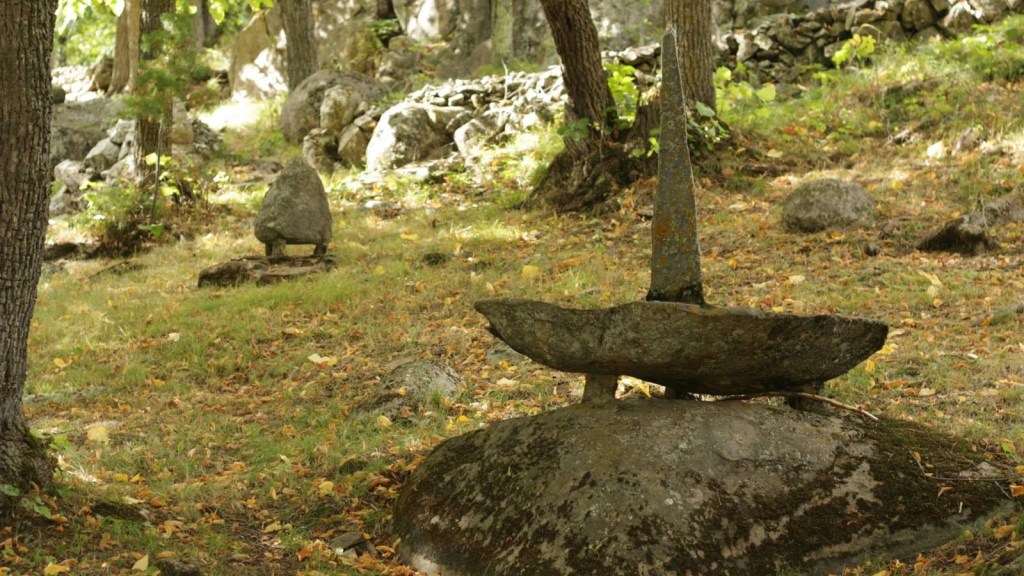
  • Sculpture – The Ellsworth Rock Gardens at Voyageurs National Park is home to over 200 abstract rock sculptures.
  • Architecture– Standing at 630 ft, one of the most iconic architectural marvels in the National Park Service is the Gateway Arch.
  • Music – Little Rock Central High School National Historic Site, Oxford American, and composers Christopher Parker and Kelley Hurt partnered to create a musical tribute to the Little Rock Nine, a jazz composition entitled “The No Tears Suite.”
  • Poetry – A new initiative this year is “Poetry in Parks.” U.S. National Poet Laureate Ada Limón selected historic American poems which will be displayed as public works of art on picnic tables in seven national parks. The installations will be unveiled throughout the summer and fall.
Rock sculptures at Ellsworth Rock Gardens/Voyageurs National Park. Credit: NPS

No matter what theme speaks to you, no matter how old you are, no matter if you visit in person or virtually, go to a national park next week!

High School Students Solve Real-World Engineering Problems at Gateway Arch National Park

The Gateway Arch tram system is a one-of-a-kind invention that incorporates components of both Ferris Wheels and elevators in its design. There is nothing else quite like it in the world – and it was invented in only two weeks by Richard Bowser.

It is in this engineering spirit that the Gateway Arch National Park Engineering Contest was created. The contest, held in association with Washington University McKelvey School of Engineering, challenges teams of high school students to create a solution for a real engineering problem that exists in the park. The winning team takes home the coveted Richard Bowser Trophy, which they keep until next year’s competition.

Nine teams from area high schools participated in the 7th Annual Gateway Arch National Park Engineering Contest, making this year’s competition the fiercest yet.  Each year students are presented with a different engineering challenge. This year’s challenge asked students to engineer a system for automatically adjusting the Riverboats at the Gateway Arch dock to the appropriate level as the river rises and falls.

Situated on the river beneath the shadow of the Gateway Arch, the Riverboats at the Gateway Arch have been cruising the Mississippi since 1910. The Riverboats offer daily sightseeing cruises, dinner cruises, private charters, and specialty cruises to tourists and locals.

The boats’ dock structure is 303 feet long and consists of 4 barges. Keeping the dock tethered to the levee are four electric winches, one hydroelectric winch, and five cables. There are also utility lines that must be moved as the dock position varies with the water levels.

With the river level fluctuating daily, the dock must be frequently adjusted, so the ramps are not in the water and the docks themselves do not become grounded. Currently, these adjustments are made by hand, a time-consuming process that requires the full crew. 

In September 2023, students participating in the contest toured the dock with a park ranger and members of the Riverboats at the Gateway Arch team, so they could see how the winches are used, measure the area, take photographs, receive blueprints, and have any initial questions answered. Using this information, the students produced an executive summary that included pictures, diagrams and other visual aids to communicate their design, as well as a budget for the project.

The competition final was held at Washington University’s McKelvey Engineering complex in Whitaker Hall on Saturday, November 11, 2023. Each of the nine teams presented an executive summary to a panel of six judges (all professional engineers). The teams were judged on both their executive summary content and presentation.  They were scored in categories ranging from innovative design, functionality, and ease of use to responsible budget and realistic possibility of the design.

According to Gateway Arch National Park, this year’s contest was fierce and the most competitive yet, with the first-place school winning the trophy by only half a point! Christian Brothers College High School placed first, with teams from St. Louis Centers for Advanced Professional Studies (STL CAPS) taking second and third place. Both STL CAPS teams received the award for Best Executive Summary, as they remarkably tied with a 45.83 score out of 50 points.

The Parkway Spark! program also had two teams enter the competition. The Sparkles took home the award for Best Presentation after receiving a near-perfect presentation score of 49.33 out of 50. Student Ryder Risko of the Parkway Spark! River Tech team received the Charles Janson MVP Award.

The Taylor Tuleja McKelvey Award for Creativity and Ingenuity went to Kate Hulsen of St. Joseph’s Academy.

Other participating teams included Gateway Science Academy of St. Louis – High School, St. Louis University High School, and Gibault Catholic High School, the 2022 contest winner. 

In addition to the competition component, the contest final included a presentation from a professional engineer, a luncheon, and a guided tour of McKelvey School of Engineering for all contest participants and their families and friends in attendance – an excellent opportunity for students considering the engineering field.

For more information on this year’s contest visit gatewayarchengineeringcontest.com. To inquire about participating in the 8th Annual Gateway Arch National Park Engineering Contest in 2024, contact Anthony Gilpin, at tony_gilpin@nps.gov.

A National Park named after a Saint?

One of our partner park sites – Ste. Geneviève National Historical Park – understandably carries the name of the small Missouri town where it’s located.  But have you ever wondered who the “real” Sainte Genevieve was?

Now known as the Patron Saint of Paris, Geneviève lived in 5th century France, where she was widely admired for her piety, devotion, and charitable works.  She had frequent visions of angels and saints, and she was appointed by the bishop of Paris to look after other religious women of the city. Though she was reportedly born to a wealthy family in a Paris suburb, Geneviève followed an austere lifestyle.  Not only did she impose strict punishments on herself, she ate only twice a week, surviving on small portions of barley bread and beans.

In 451 when Attila the Hun threatened to attack Paris, Geneviève persuaded the panic-stricken residents of the city not to flee but to pray.  When Attila’s army diverted to Orléans instead, many credited her intervention with saving Paris.  Years later she prevented famine by penetrating a military blockade and delivering much-needed grain to the city.

After living a remarkable 90 years, Geneviève was laid to rest in a Paris abbey.  Her burial site became a place of pilgrimage, as worshippers reported many instances of miracles and cures attributed to her intercession.  Even today, her name is invoked during natural disasters such as drought, flooding, and widespread fever. 

When the town of Ste. Geneviève was founded along the Mississippi River in the 1750s, the French Catholic immigrants named their settlement after Geneviève in the hopes she would protect them from the trials and hardships they would encounter in their new home. 

The staff at Ste. Geneviève National Historical Park also honor her legacy with a statue of the beloved saint on an outside wall of the historic Jean-Baptiste Vallé House.  Be sure to look for it next time you visit the park. 

Remembering the Journey to Freedom

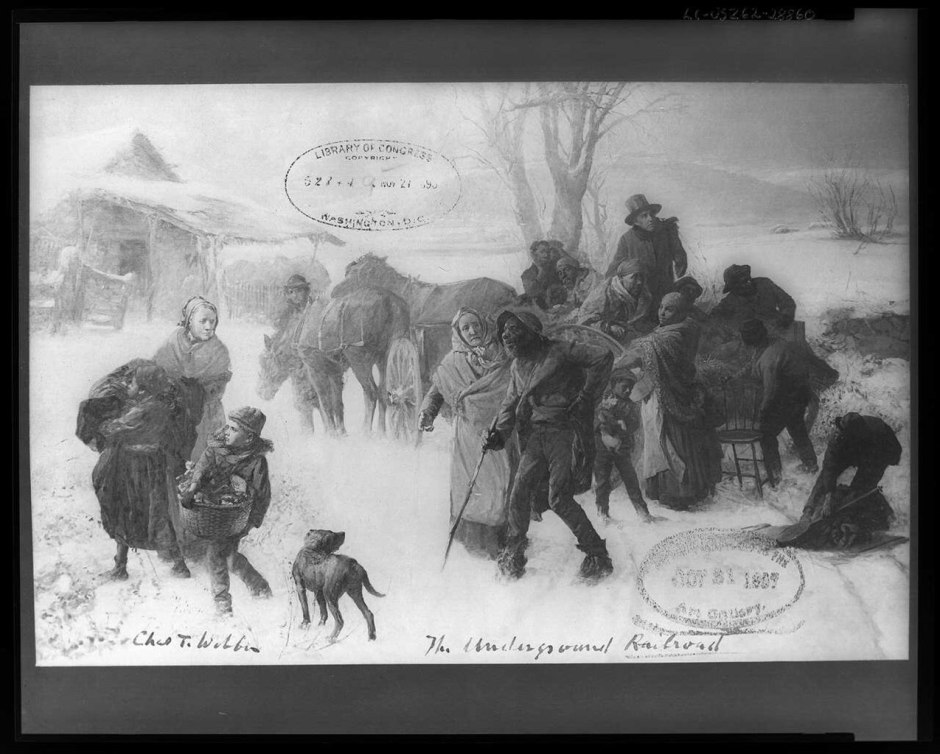
What was the Underground Railroad?  What was its significance?  Was it an actual subterranean rail route?

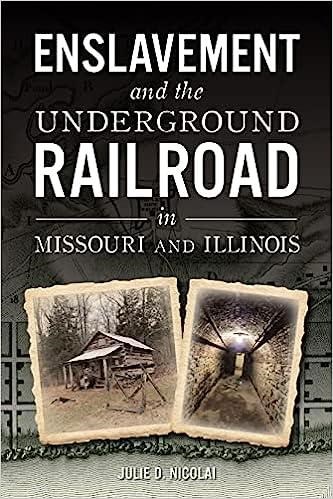
These and other questions will be explored at an event this Saturday at Ulysses S. Grant National Historic Site.  St. Louis historian Julia Nicolai will discuss her new book Enslavement and the Underground Railroad in Missouri and Illinois.  In addition to describing the horrors and challenges experienced by enslaved people in the Midwest, she will also recount their tales of courage and perseverance.

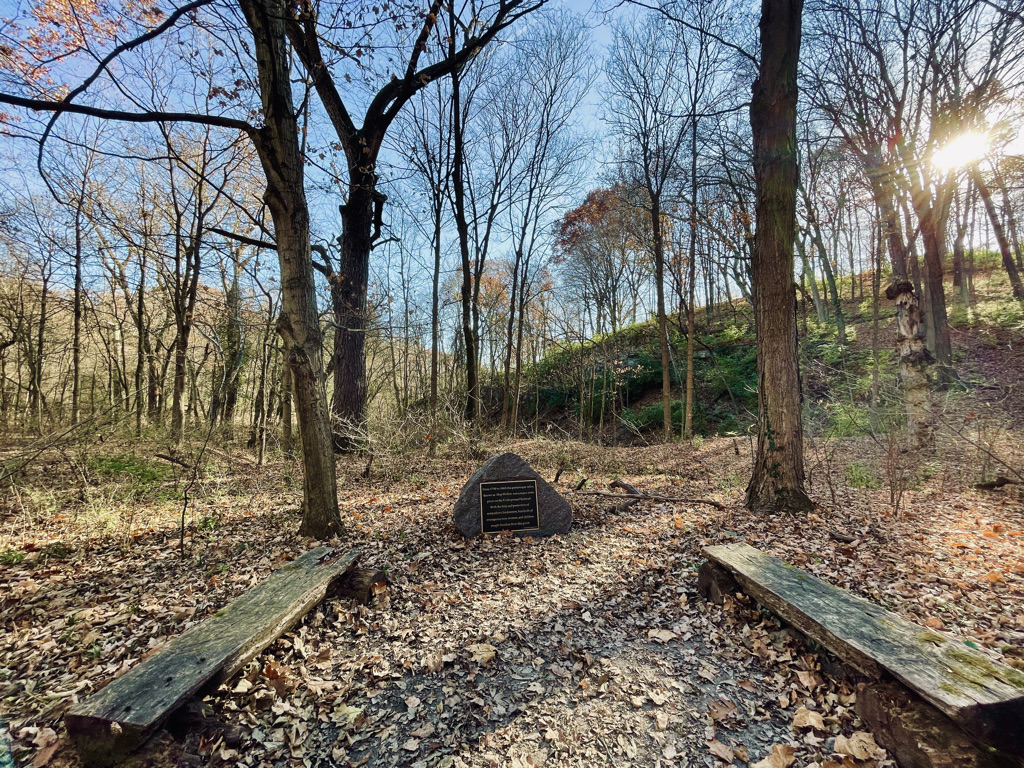
Marker for a stop on the Underground Railroad, Godfrey, IL

Enslaved people have always sought freedom.  From the earliest days of slavery in the 17th century and continuing through the mid-19th century, enslaved African Americans in the U.S. resisted bondage to gain their independence.  Some fled their captors by themselves; others ran away in families or groups, intent on establishing new communities in remote areas.

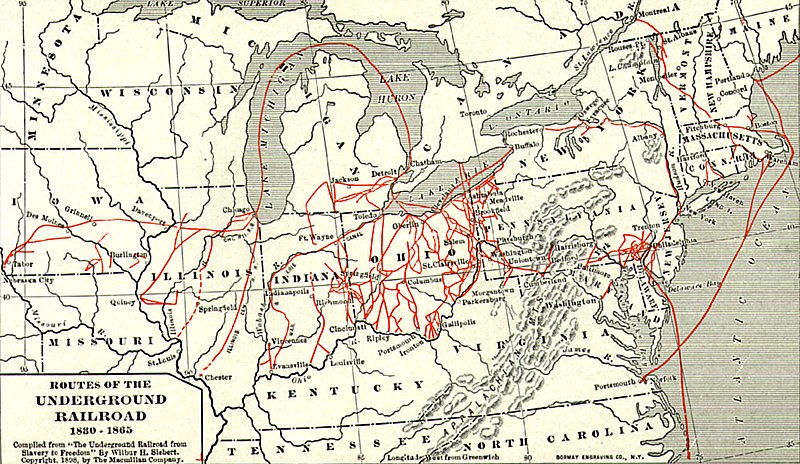
Many freedom seekers were able to embark on their journey with no assistance.  But over time, there developed an informal network of secret safehouses, routes, and resources across the country that helped enslaved African Americans escape bondage. Those seeking freedom and those who assisted them along the way united together to become what was known as the Underground Railroad.

Twenty-five years ago, the National Park Service formed the National Underground Railroad Network to Freedom  to honor, preserve, and promote the history of resistance to enslavement through escape and flight, which continues to inspire people worldwide.  The stories of escape recounted at these sites highlight the importance of the Underground Railroad in the eradication of slavery, and as a critical cornerstone of the national civil rights movement. 

The Network to Freedom program currently includes more than 740 locations nationwide with a verifiable connection to the Underground Railroad.  One such site in St. Louis is the Mary Meachum Freedom Crossing Site, which honors the efforts of the Rev. John Berry Meachum and his wife Mary for their work in helping enslaved people escape to Illinois, a free state where slavery was outlawed. 

This weekend’s Underground Railroad program at U.S. Grant National Historic Site will take place at 11:00 a.m. Saturday at the park’s Visitor Center theater.  It is free and reservations are not required.  Also pick up an autographed copy of Enslavement and the Underground Railroad in Missouri and Illinois in our park bookstore.

Grant’s Final Battle

“The greatest man I have ever had the privilege of knowing personally. And I have not known a man with a kinder nature or a purer character.”  – Mark Twain.

So said Twain upon learning of the death of his friend Ulysses S. Grant on July 23, 1885 – 138 years ago next week.  Grant, the nation’s 18th president and victorious Civil War general, died of throat cancer at the age of 63.  

Grant writing his memoirs [Library of Congress]

The final years of Grant’s life were filled with hardship. After retiring from the Presidency, he unwisely invested in a scandal-prone financial firm which eventually went bankrupt, leaving him destitute. About that time, he also learned he had throat cancer.  In order to earn enough money for his wife Julia to live on, he decided to write his personal memoirs, hoping that proceeds from the book’s sales would support his family after his death.  His writing chronicled his life as a soldier, from his early dates at West point to his service as general-in-chief of all Union armies.

As Grant’s memoirs progressed, so too did his cancer.  Racing against death, he kept writing despite debilitating pain and weakness.  He was encouraged by Twain, who offered him a generous publishing contract.   Just three days after completing the last page, Ulysses Grant died.  America mourned – his funeral in New York City was attended by 1½ million people.

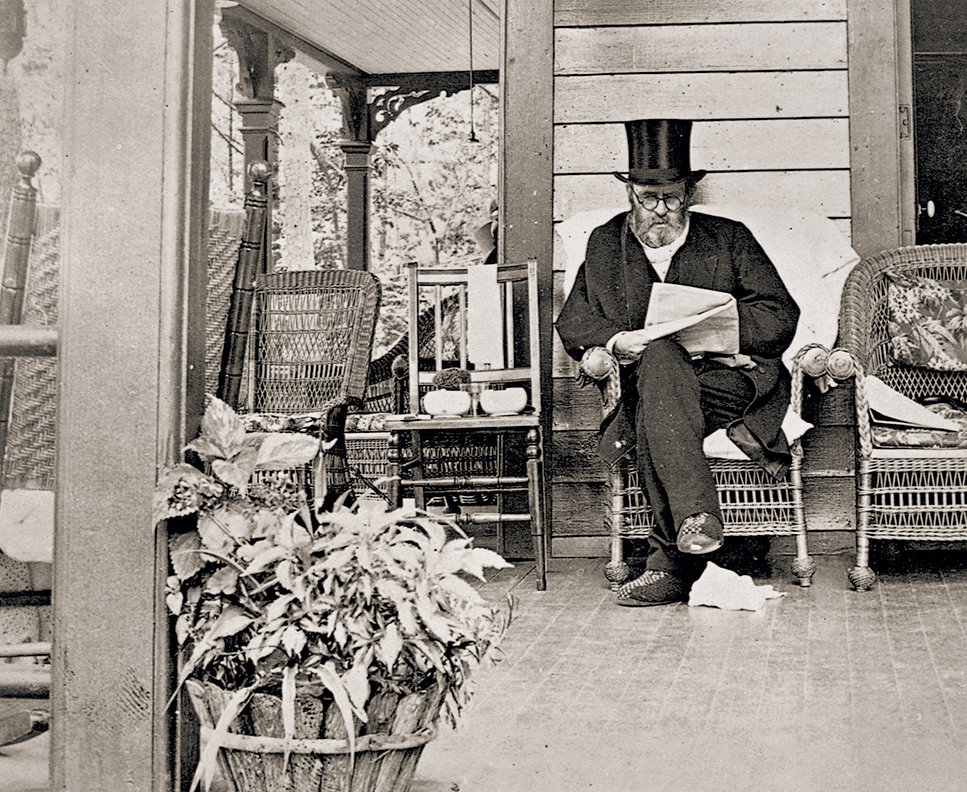
Last photo of Grant before his death. [Library of Congress]

Twain published Grant’s memoirs the same year he died.  They became an instant best-seller and proved a literary and financial success.  Julia Grant received royalties that totaled $450,000, roughly equivalent to more than $14 million today.

To learn more about Grant’s life, death, and legacy, we encourage you to visit our partner park Ulysses S. Grant National Historic Site.  While you’re there, be sure to pick up your own copy of the Personal Memoirs of Ulysses S. Grant at our bookstore, or order it online.

💥O Say Can You See💥

Looking for a memorable way to celebrate the Fourth of July this year?  Look no further than Gateway Arch National Park.   

Visitors who gather on the Arch grounds tomorrow evening will have a front row seat to one of the nation’s most spectacular fireworks displays.  The civic organization Fair Saint Louis will set off more than 1½ tons of fireworks from a barge in the Mississippi River, just beneath the Arch. It promises to be the largest fireworks show the organization has ever produced.

The show is scheduled to begin at 9:30 p.m., and last about 30 minutes.  Visitors are encouraged to bring blankets and lawn chairs and to picnic on the grass. No glass or alcohol is allowed. The Arch itself will not be open, but the grounds and riverfront will be accessible. 

This is the 42nd year that Fair Saint Louis will present its Fireworks Spectacular.  It will also host its 140th America’s Birthday Parade the morning of the Fourth.