Grant’s Christmas Present to the Nation

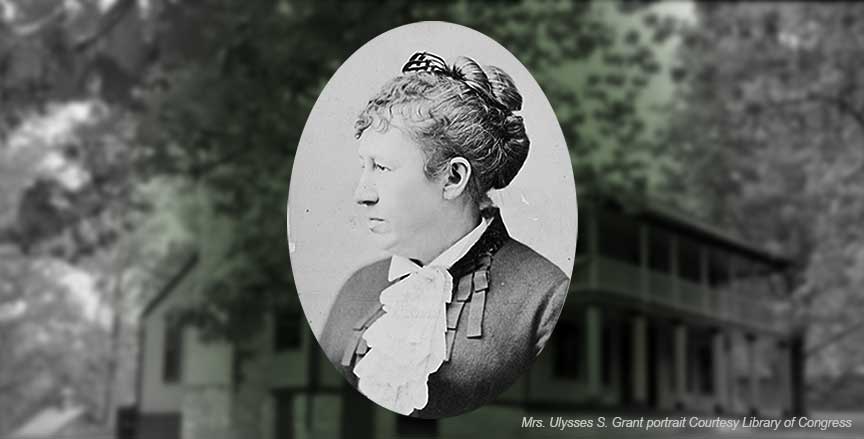
Most of us probably assume that Christmas Day has always been a holiday in the U.S., even during colonial days. Not so – it wasn’t until 1870 that December 25 was proclaimed a national holiday. And we have President Ulysses S. Grant to thank for that official declaration.
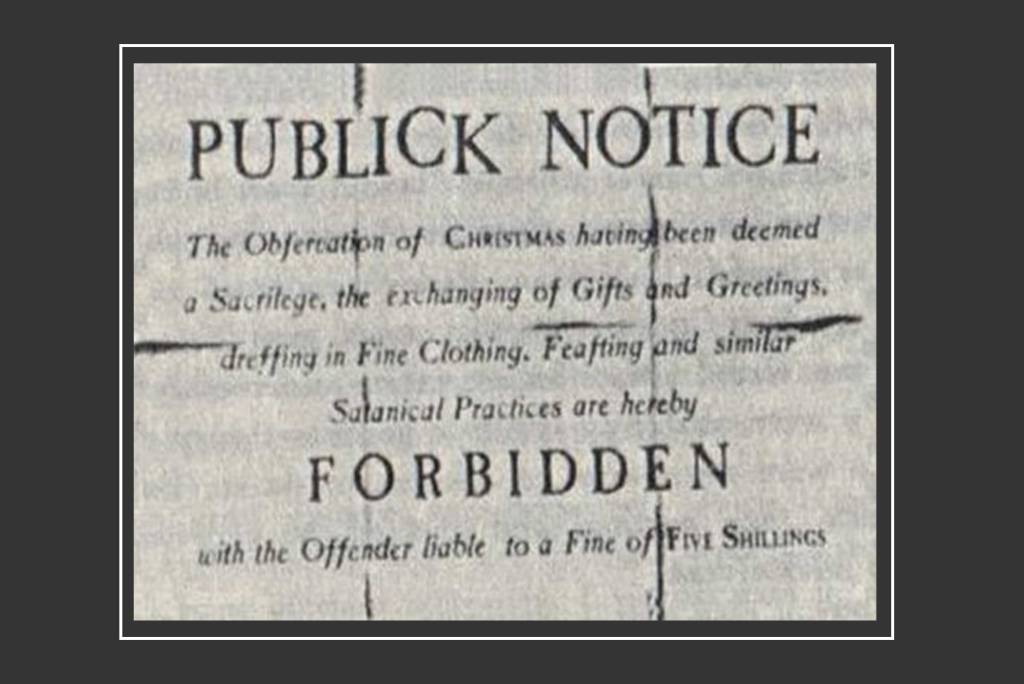
Early Americans’ observance of Christmas depended on where you lived. The Dutch colonists in New York celebrated the day, as did the British in Virginia. But many Puritans in New England looked upon Christmas as a pagan festival; in many communities, including Boston, it was actually a crime to celebrate on Dec. 25. The strict and pious Puritans disapproved of the drinking, feasting, and dancing associated with Christmas, regarding it instead as a muted, solemn affair more appropriate for church services and praying.  

1659 public notice banning Christmas celebrations in Boston 

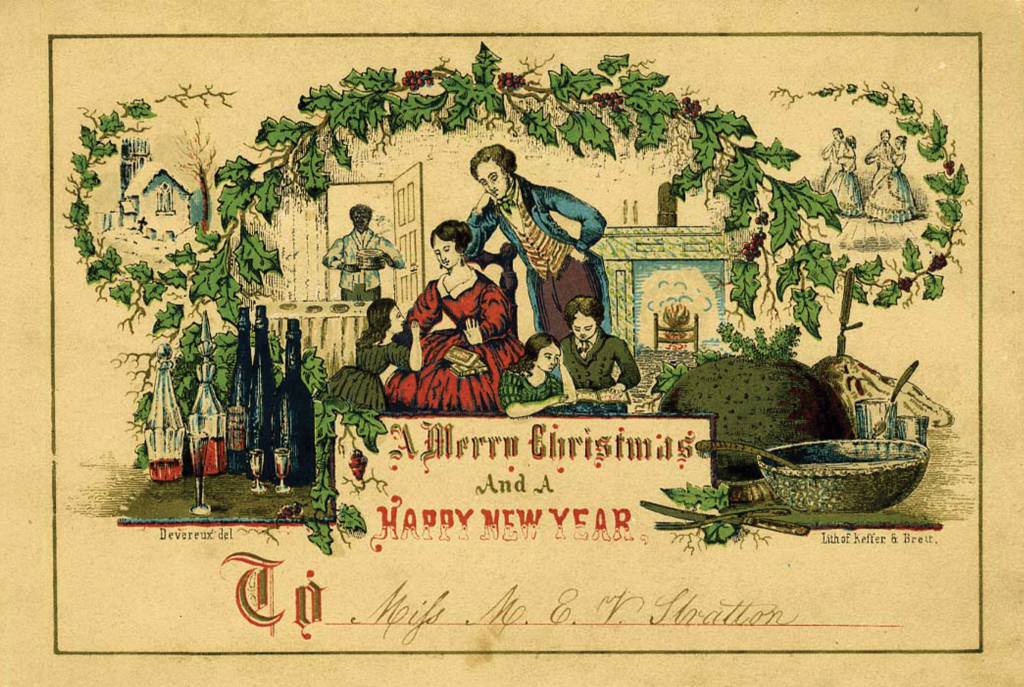
In the early 1800s, Christmas became increasingly popular in the South, and newly arrived European immigrants in New England managed to lift the local bans on celebrating the holiday. A number of states (beginning with Louisiana in 1830) declared Dec. 25 a holiday. Families started sending Christmas cards, decorating fir trees, and preparing festive meals.

Early American Christmas card, 1850

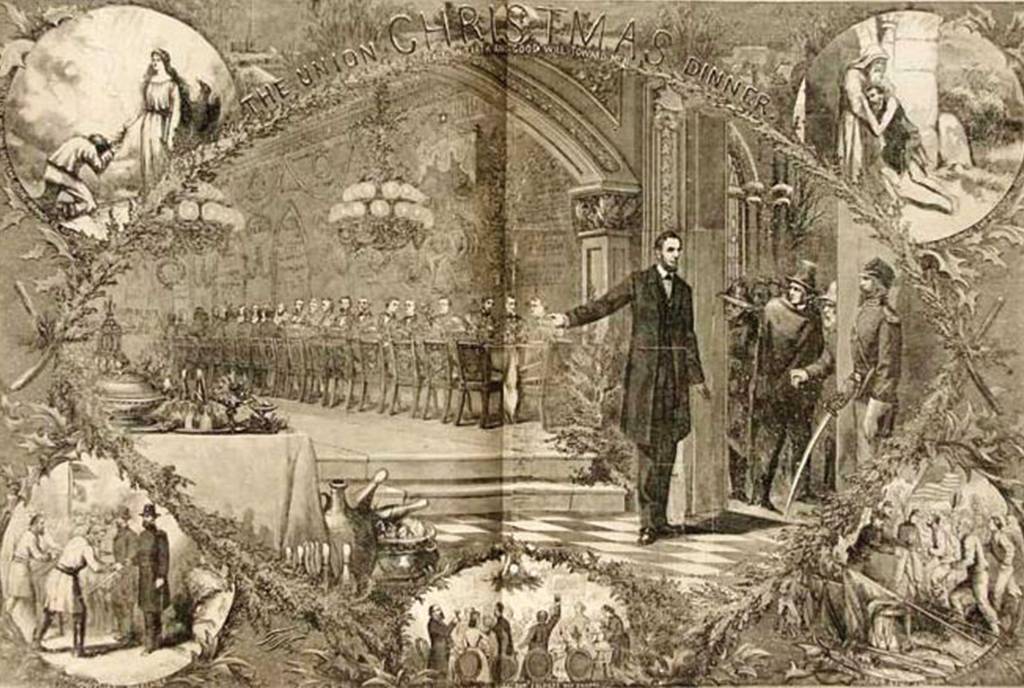
During the Civil War, soldiers celebrated by decorating their camp trees and singing carols. During the first year of the war President Lincoln and his family observed the day by holding a Christmas party at the White House.

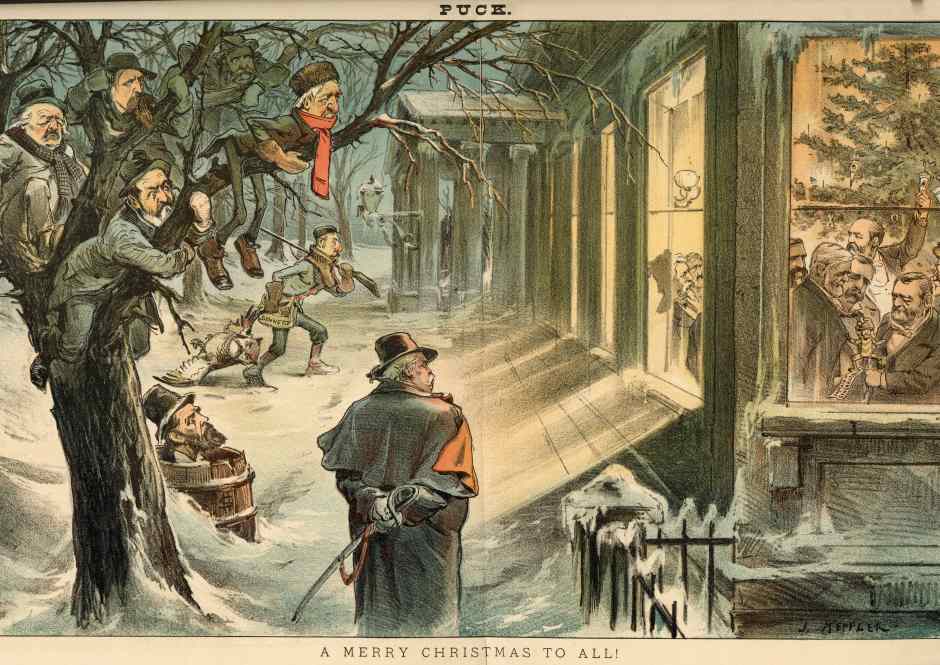
Thomas Nast illustration of Abraham Lincoln welcoming Confederates to Christmas dinner, 1864  

It wasn’t long before business leaders became frustrated with the patchwork holiday celebrations that varied state by state, interrupting their businesses on different days in different places. They encouraged politicians to formalize the Christmas observance nationwide.  

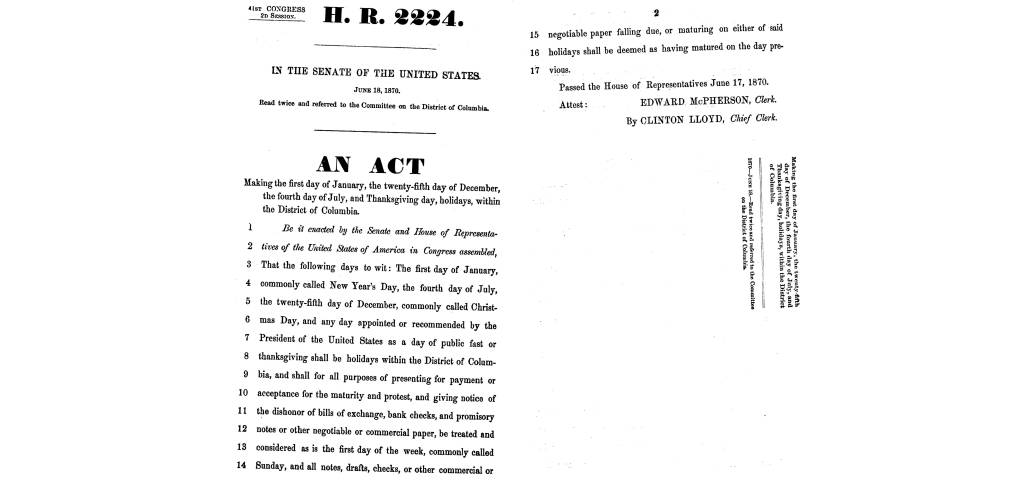
In June 1870, President Ulysses S. Grant signed a bill into law establishing Christmas Day and New Years Day, among others, as nationally observed holidays. In addition to appeasing the business community, it was hoped the move would help unify a nation still divided by the Civil War. 

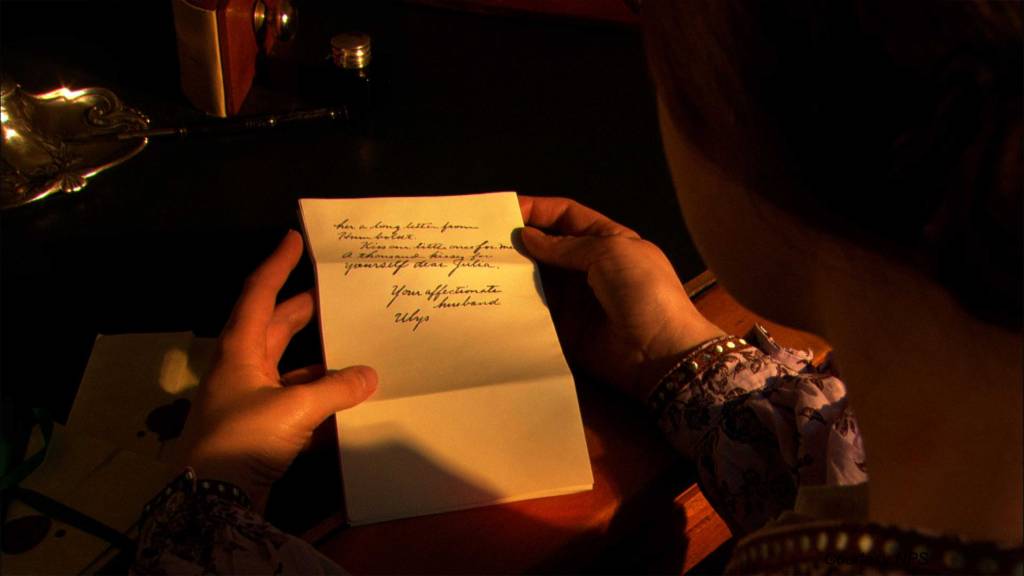
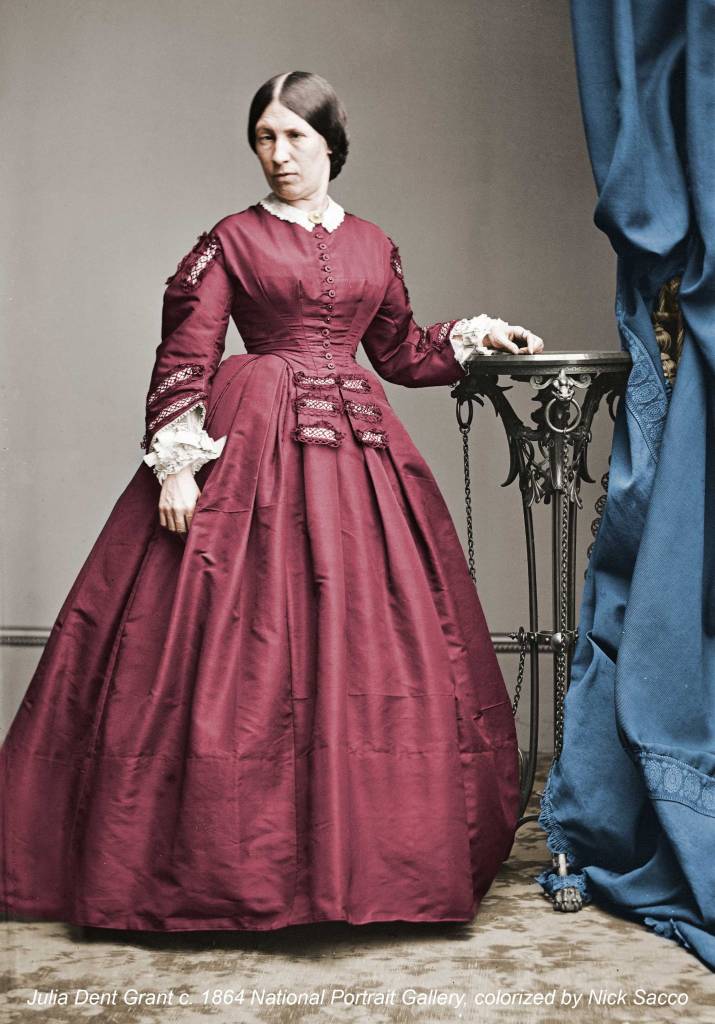
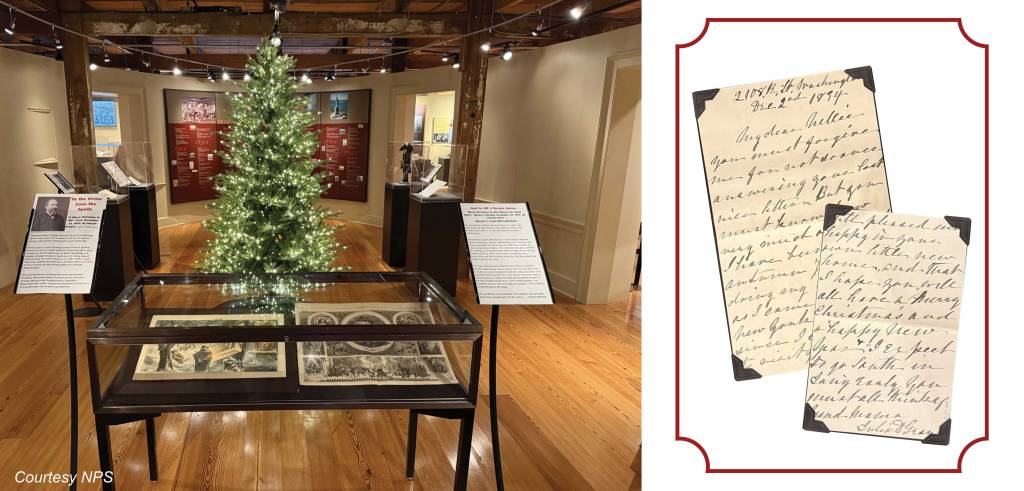
To honor Grant’s historic act, Ulysses S. Grant National Historic Site has created a special Christmas exhibit in the park’s museum. Artifacts on display include holiday letters from Julia Dent Grant to family members, seasonal political cartoons, and a nutcracker representing Grant. The exhibit will last through early January.

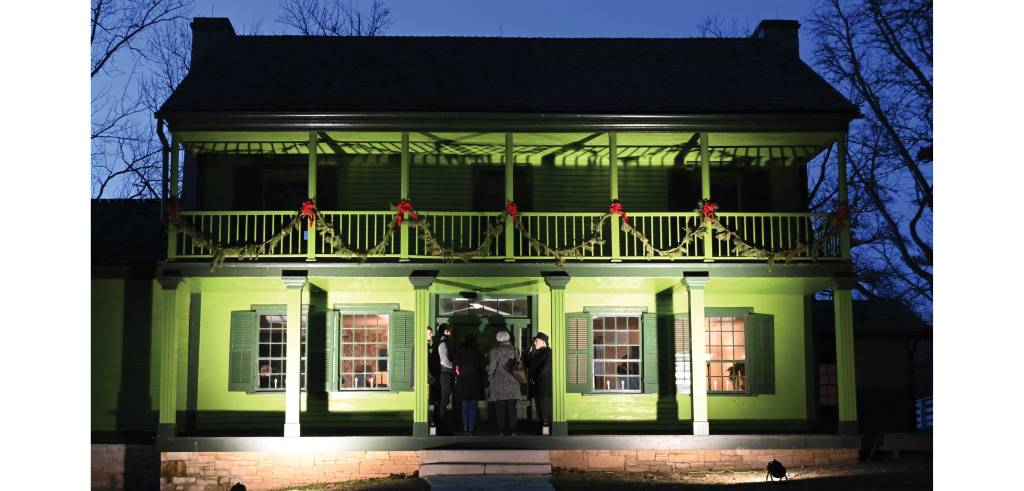
You’ll also want to visit the park at 5:30 Sunday December 14 to experience White Haven by Candlelight. Lights and decorations will adorn the historic house both inside and out, carolers and musicians will entertain guests, and 19th century foods will be on hand. At 7:00, visitors can enjoy a concert by the Buckhhannon Brothers in the park’s theater.

Accessible to All

As the Americans with Disabilities Act (ADA) turns 35 years old this month, the Centers for Disease Control reports that more than one in four Americans – roughly 70 million people – are living with a disability. This can include a wide range of conditions from mobility issues and hearing loss to vision impairment and cognitive limitations.  

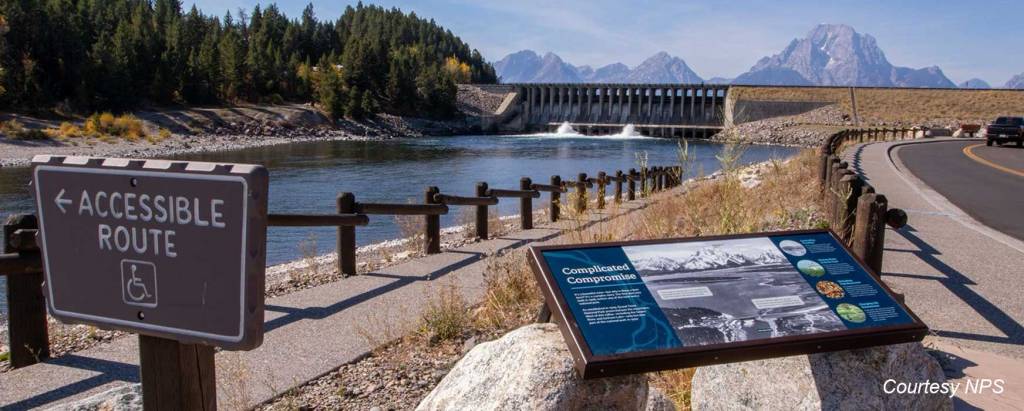
Yet there’s no reason people with physical challenges can’t enjoy our national parks. In fact, the National Park Service “strives to make its parks, monuments, and historic sites available to all.” And it offers a wide range of accessible experiences across its 400+ park sites.

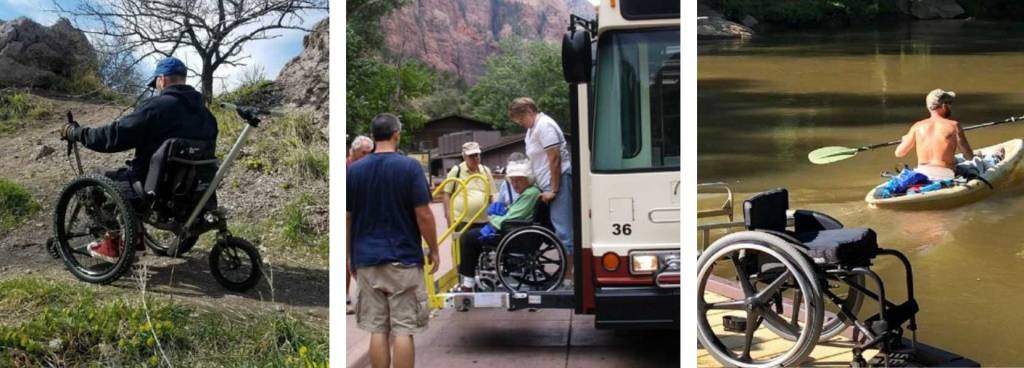
Each park has its own accessibility section on its website, where visitors can find details about its accessibility services and programs. These can go way beyond more traditional services like sign language interpretation of tours, accessible camping sites, paved trails, and ramps. Newer accommodations include all-terrain wheelchairsaudio cave tours,  tactile maps and accessible shuttle buses, and Wheels to Water floating kayak launches

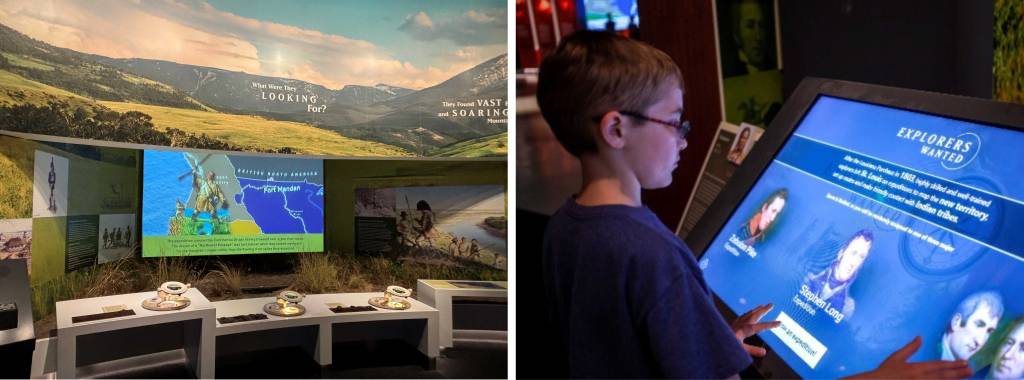
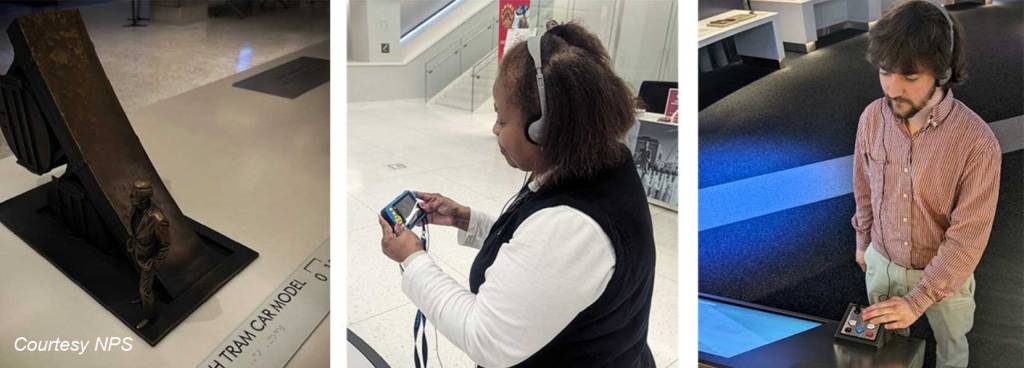
As challenging as some of these physical accommodations are, making museum exhibits accessible is even more complicated. Designers of the new museum at Gateway Arch National Park, for instance, fully embraced the concept of Universal Design when planning new exhibits. The museum includes multiple accessibility features, like tactile exhibits and interactive computer simulations that are visitor-directed through a touchscreen. Visitors can make use of Braille signage, large-print, high-contrast text versions of exhibit copy, assisted listening and captioning devices, as well as a new device that allows non-speaking guests to type questions for museum staff. Similar accommodations are available in the park’s theater.

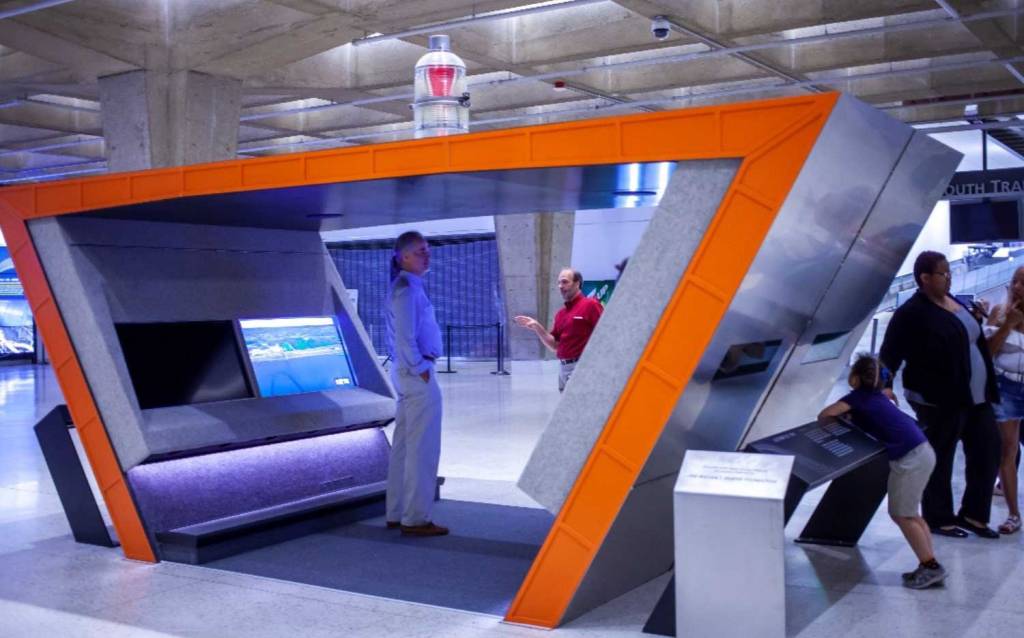
And since the tram ride to the top of the Arch is not wheelchair accessible, designers created the next best thing. Inside a full-size replica of the final piece of the Gateway Arch, video screens show live views from each side of the top observation deck, replicating the experience as much as possible for visitors who cannot make the trip to the top. 

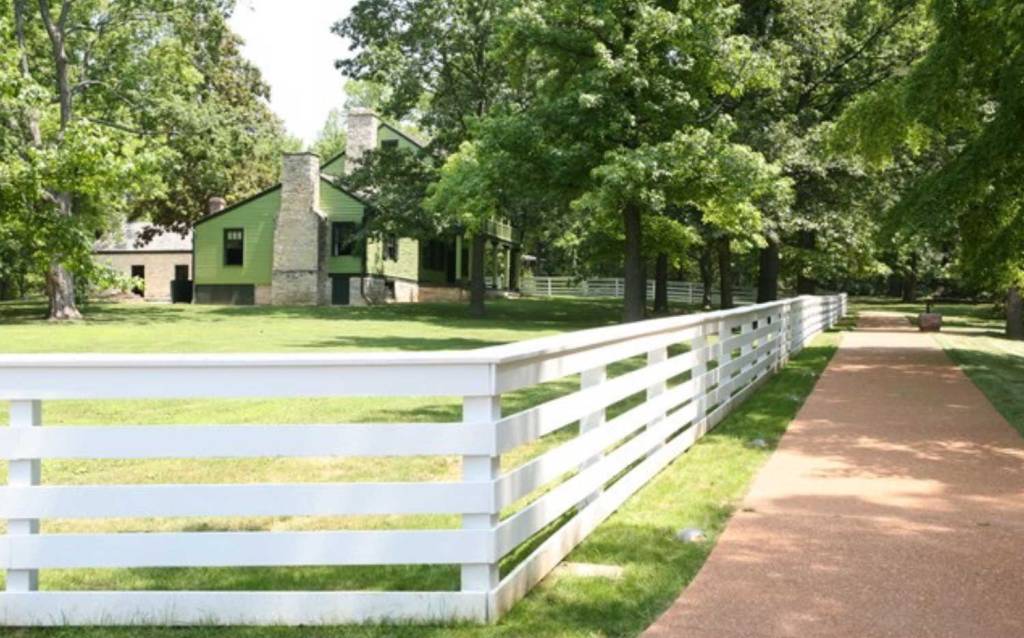
Ulysses S. Grant National Historic Site also offers a range of accessibility services, including free wheelchair use, assisted listening devices for guided tours, audio descriptions of park films, and Braille and large-format brochures.  

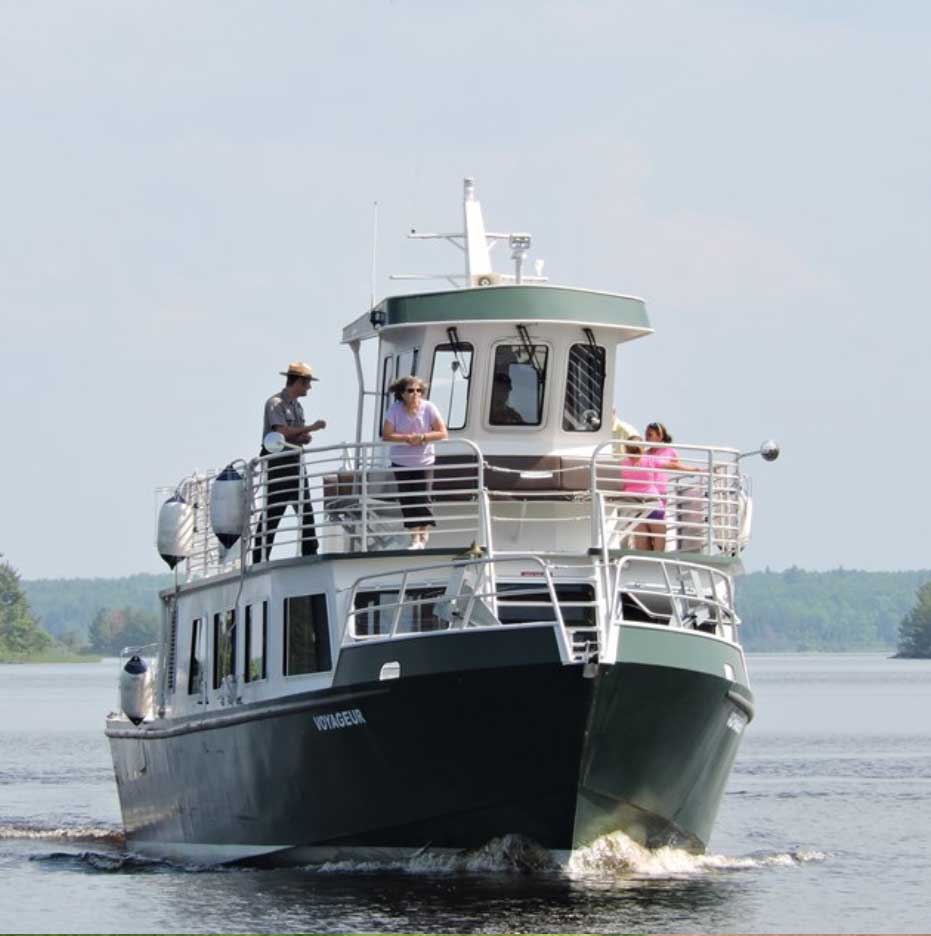
At Voyageurs National Park boating, fishing, and camping are the primary activities. All NPS boats are accessible. And visitors can make use of accessible lifts at boat launches as well as accessible campsites.

Similar accommodations are available at Missouri National Recreational River and the Lewis and Clark Visitor Center, both of which are popular with anglers.  In addition to taking advantage of accessible trails, shelters, and cabins, visitors can fish from several piers that are reachable by those in wheelchairs. 

All in all, NPS efforts to improve accessibility have principally focused on well-developed areas within easier reach, such as park visitor centers and established campgrounds. But accessibility advocates want to see more trails, shelters, and other park areas comply with ADA standards, particularly in more remote natural areas. Park Service officials acknowledge there’s a nationwide backlog of existing trails and structures that don’t meet accessibility standards, especially in the backcountry. But they say they’re making progress where they can.

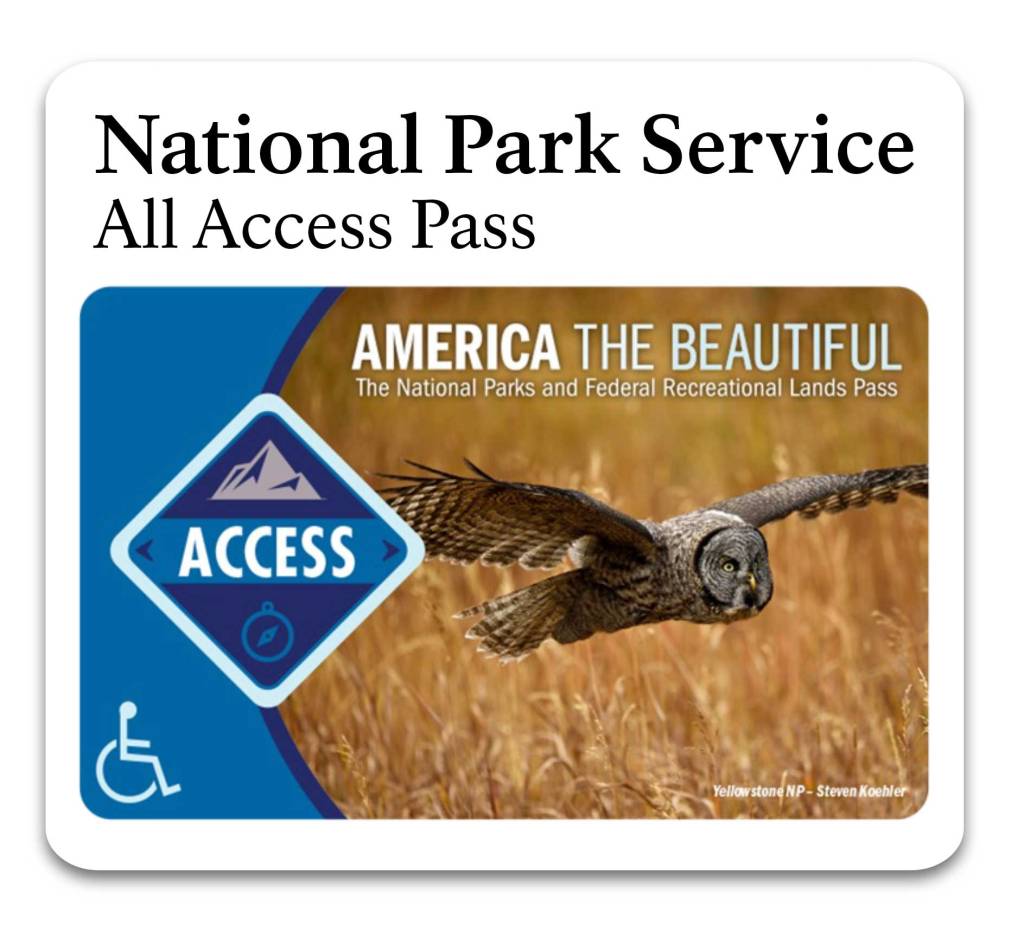
Americans with permanent disabilities are eligible to receive the National Park Service All Access Pass, which provides lifetime benefits at federal lands managed by six agencies, including free entrance to parks managed by the National Park Service that charge an entrance fee. The free passes are available at certain federal recreation sites or can be ordered online (for a small shipping fee). 

Have a “Pawsitive” Experience in Your National Parks

(Reader alert – if you’re allergic to puns, don’t read on. We’ve made generous and shameless use of many howl-arious puns in this blog post!)

Dog-gone-it – sometimes our canine friends have a ruff life. Especially when their human owners go on a fun vacation, and Fido gets left behind. Howl can we do that to them?  

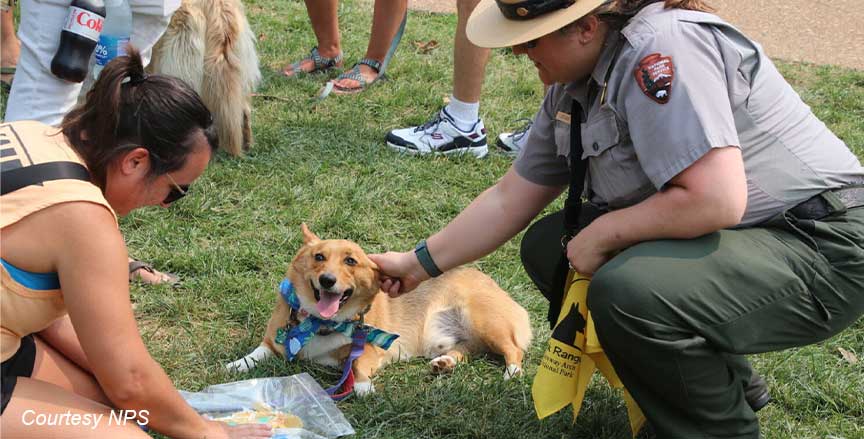
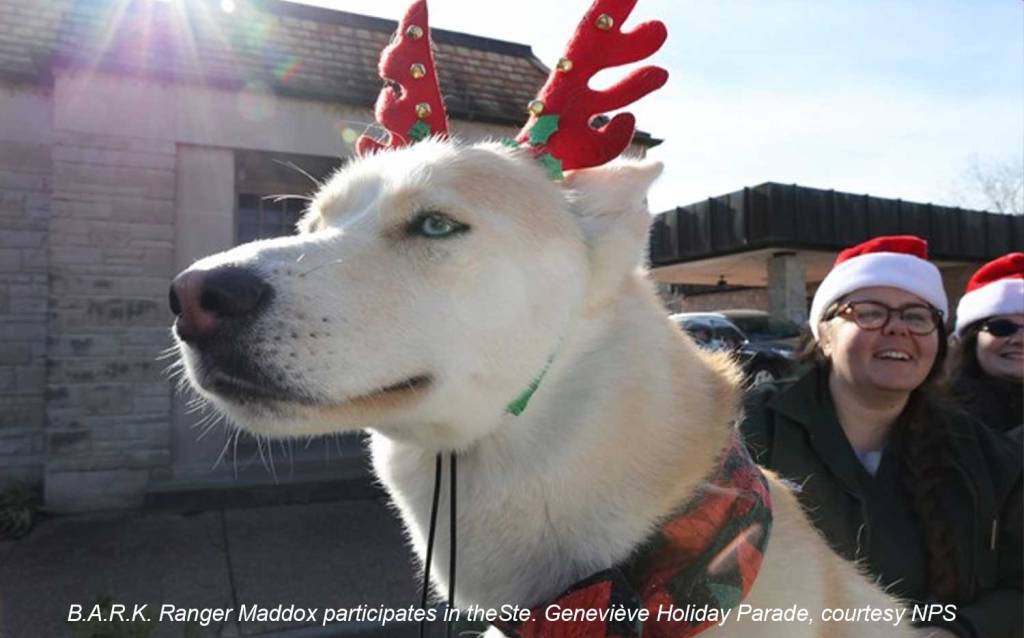
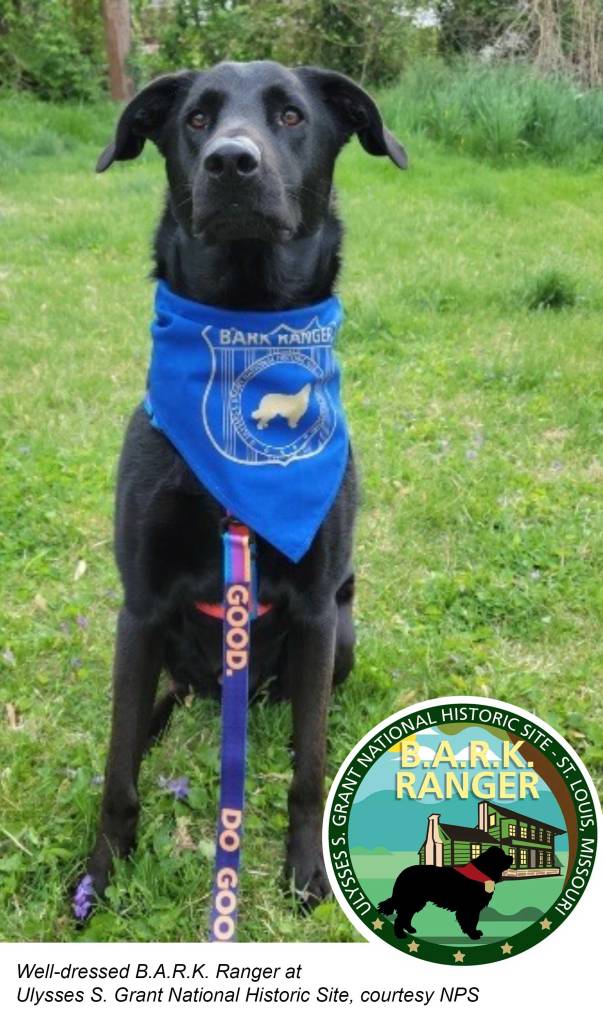
Well, the National Park Service believes that dogs deserve a round of a-paws.  That’s why dozens of parks offer our four-legged friends special programs, tasty treats, and fun adventures when they visit with their human owners. It’s all part of the NPS B.A.R.K. Ranger program, a project of the agency’s Healthy People Healthy Parks Initiative.   

What does B.A.R.K. stand for?  Glad you asked, since there are a few simple rules (none of them too far-fetched) that pet owners should follow when they visit a park:

  • Bag your pet’s waste
  • Always leash your pet
  • Respect wildlife
  • Know where you can go

B.A.R.K. Ranger programs vary from park to park and are tailored to each site’s unique setting.  Some parks offer a walk with a ranger program. Some have a pledge that owners take with their pets. Most sites adopt an honor system that assumes owners will follow the B.A.R.K. principles on their visit. (Well, anything is paw-sible…)

In return for abiding by the B.A.R.K. rules, pets can earn a variety of rewards. At Ulysses S. Grant National Historic Site, dogs who take the pledge earn a special bandana (looks very fetching) and a signed certificate.  

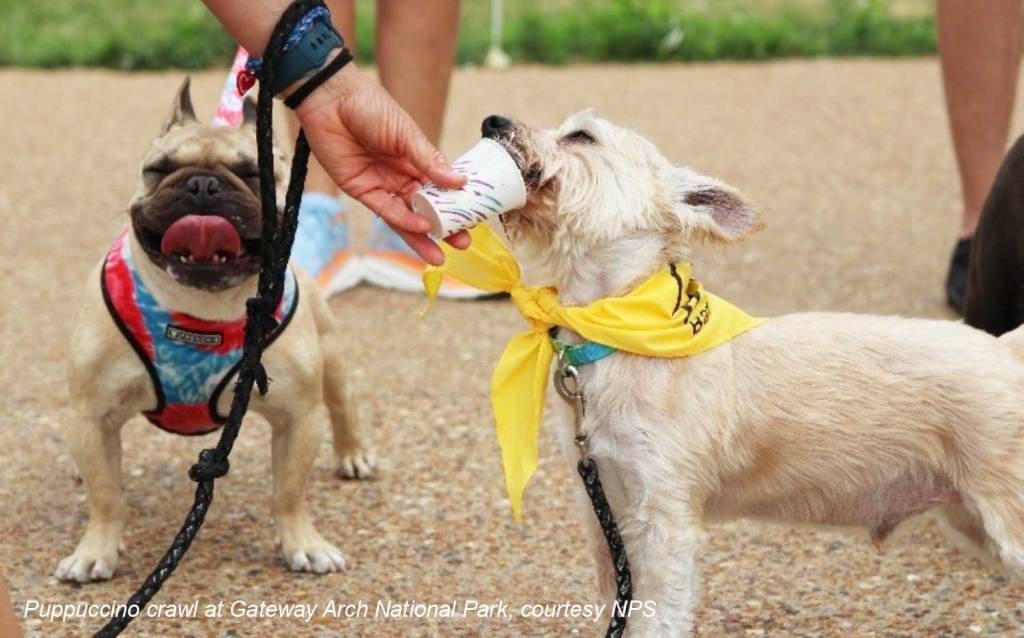
Dogs who attend one of the many annual B.A.R.K. Ranger events at Gateway Arch National Park can create special artwork or enjoy a cup of Puppuccino during their visit. Check out the upcoming B.A.R.K. events at the Arch in July, September, and October. Your pooch will be hounding you to attend!

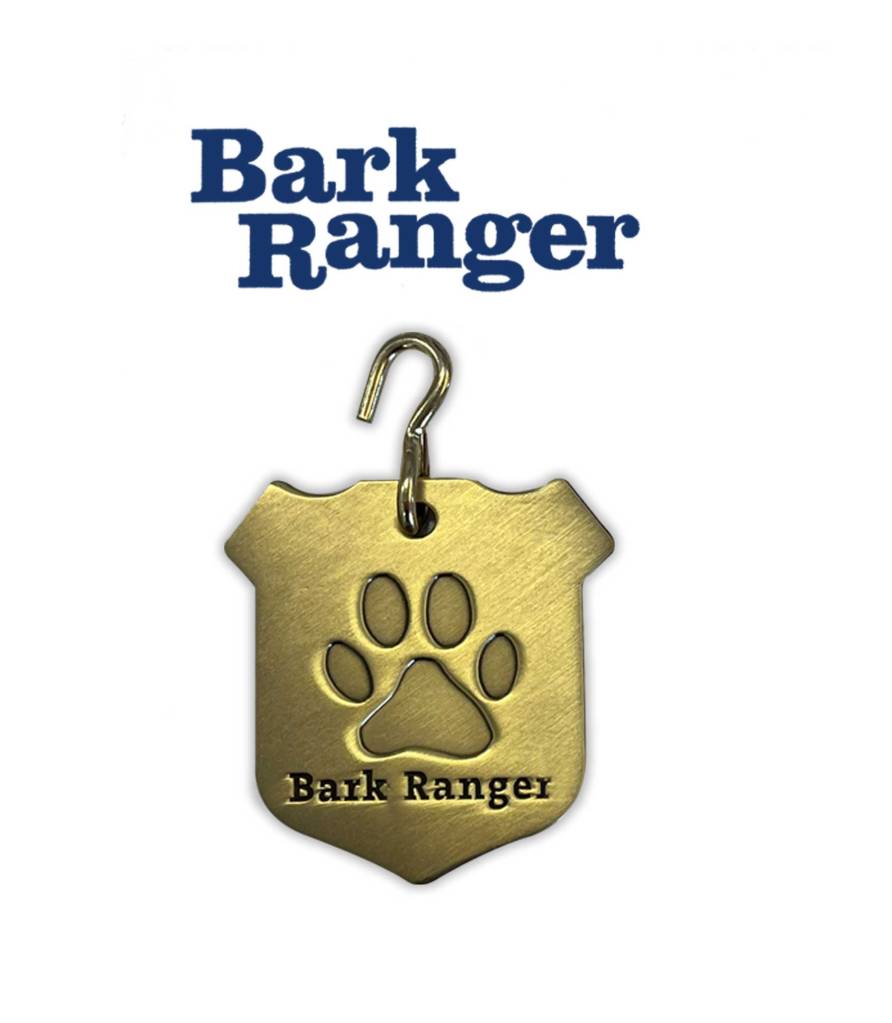
If you and your dog visit a park that doesn’t offer special rewards, you can still fetch a special B.A.R.K. Ranger collar tag. Try the park’s gift shop, or purchase one at The Arch Store or online . Your pup will go mutts about the new jewelry!

But what about cats, you ask? Are they feline left out with all this attention on dogs, fur crying out loud? What a cat-astrophe!  (Too much?)

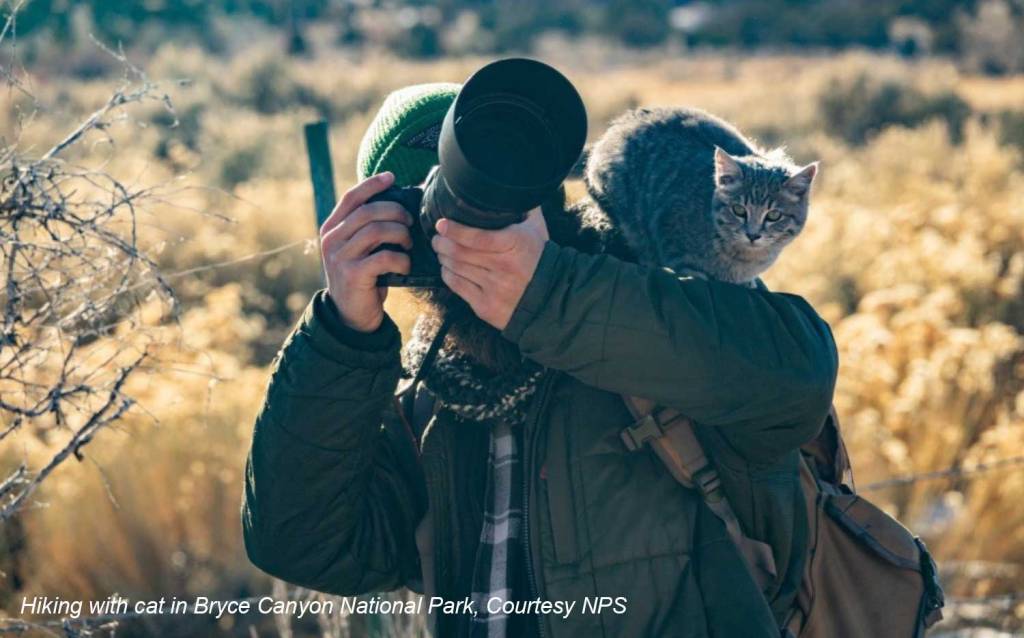
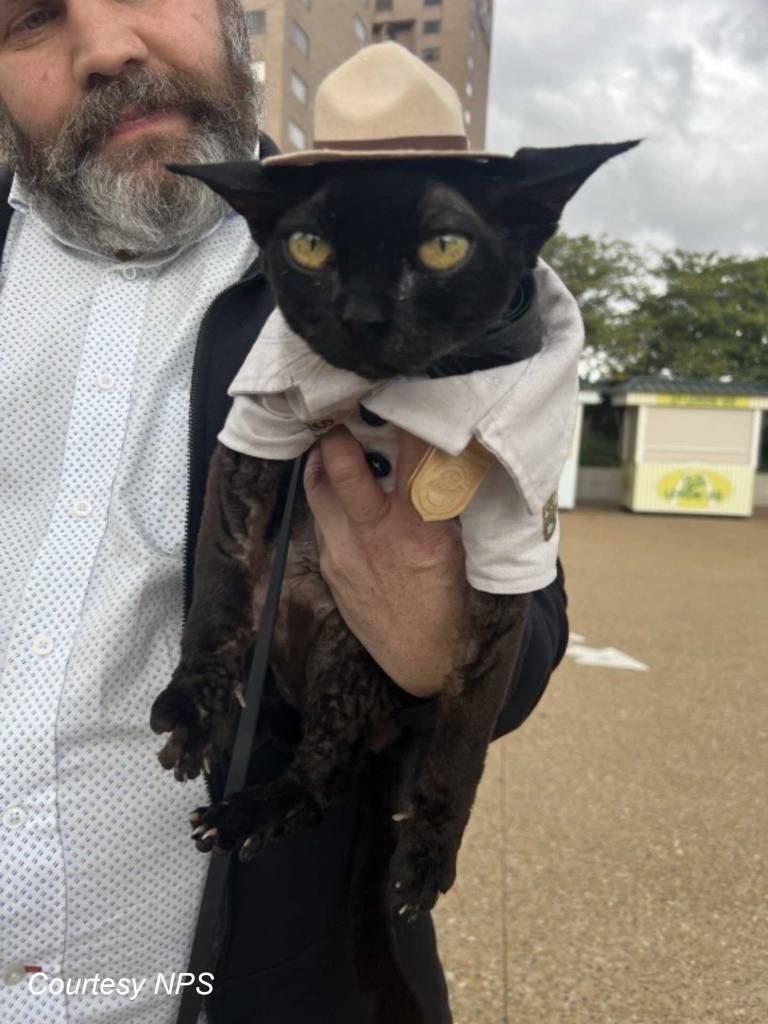
Never fear, some national parks allow cats as long as they are leashed or restrained. One dedicated cat owner recently dressed his feline friend for an outing at Gateway Arch National Park. Hiss-terical!

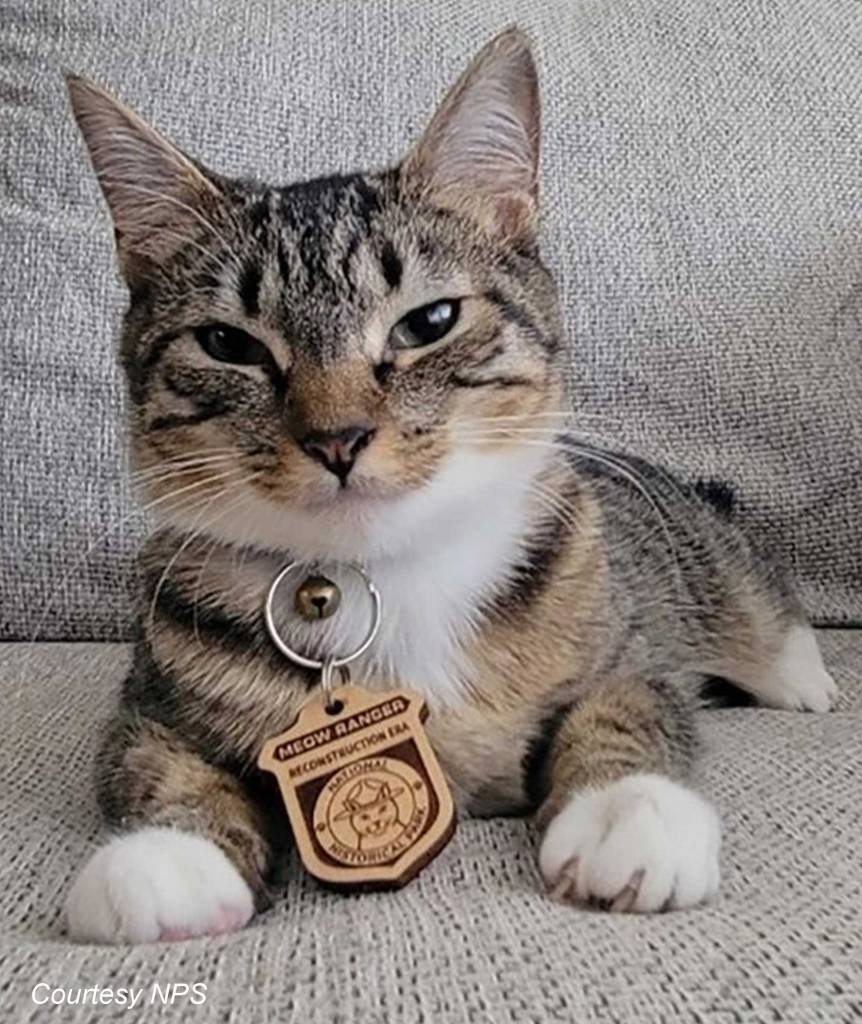
And another NPS site even inaugurated a M.E.O.W. Ranger program, complete with a special collar tag for participating kitties.  

No matter which furry friend you want to bring to a national park site, it’s always smart to check before you visit to learn about any restrictions and rules that might apply. Here’s wishing you and your companions a pawsitive park experience!  

A Home Called Hardscrabble

It’s hard to overstate the notable accomplishments of Ulysses S. Grant: military strategist, Commanding General of the U.S. Army, 18th president of the United States, supporter of the Fifteenth Amendment (which banned racial discrimination in voting), loving husband and father – the list goes on and on.  However, there was one area where it seems Grant didn’t exactly shine: homebuilder. 

When Grant resigned from the military in 1854, he returned home to his in-laws’ plantation outside St. Louis and turned to farming as a way of supporting his wife Julia and their young children. With the help of enslaved laborers, he cultivated fruit and vegetable crops on the 80 acres he was given as a wedding present, and harvested and sold firewood. 

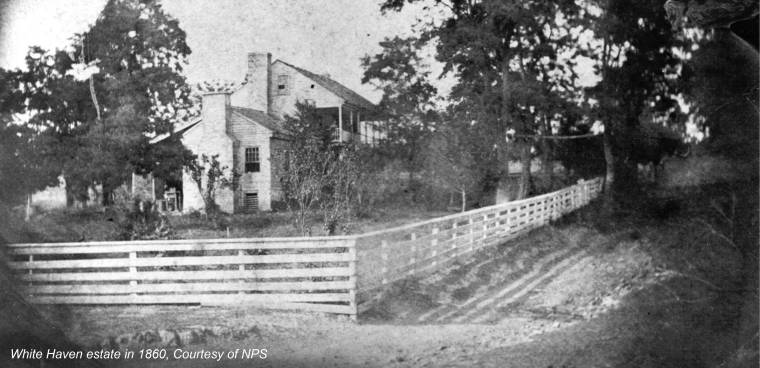
Grant also began constructing a house for his young family so they could live independently from his in-laws. In the fall of 1855, he started cutting, hewing, and notching logs for the cabin; the following spring he dug a cellar and laid stones for the foundation. Julia organized a house-raising with neighbors and enslaved laborers, but otherwise, Grant completed much of the work himself, including shingling the roof, laying floors, and building the stairs. 

The family moved into the modest four-room log cabin during the fall of 1856, but their stay was short-lived. Accustomed to the relative finery of her upbringing at White Haven, Julia was unimpressed by the roughness of the log cabin, which she felt was beneath her standards. (Her father had discouraged Ulysses from constructing a frame house, saying a log cabin would be warmer.)  Julia later recalled in her memoirs: 

Quote from The Personal Memoirs of Julia Dent Grant
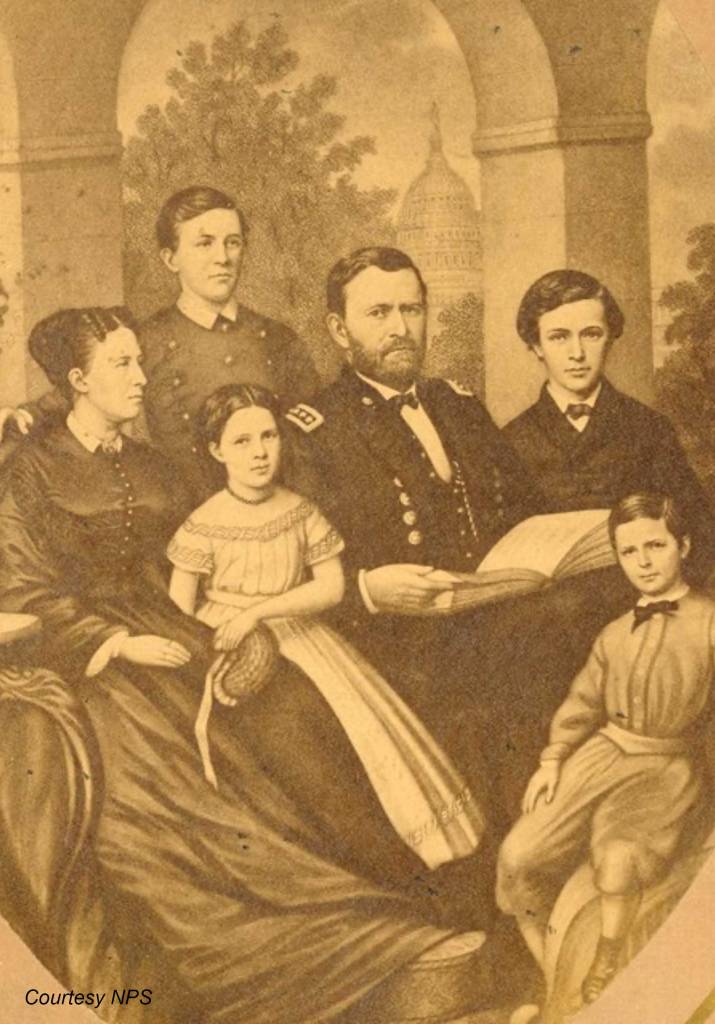
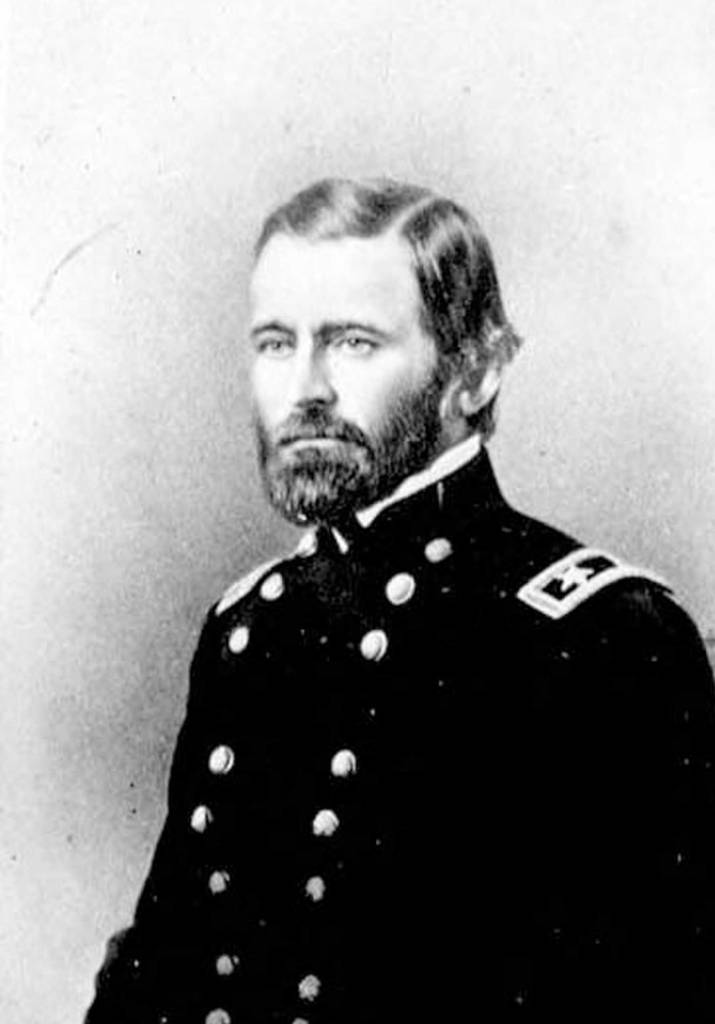
Left:Julia Dent Grant with Frederic & Ulysses Jr. Right: Ulysses S. Grant circa 1860

Hardscrabble was abandoned in early 1857 when Julia’s mother Ellen died and the Grants moved back into White Haven at her father’s request. They never re-occupied the log cabin.   

But Hardscrabble eventually acquired a history of its own because of its association with the famous general and president. It was dismantled and moved three times, including to the site of the 1904 World’s Fair in St. Louis, where it became an attraction featuring refreshments and souvenirs!   

Image of Hardscrabble on grounds of 1904 World’s Fair. General Frederick Dent Grant, eldest son of Ulysses, is shown in center.
Courtesy of NPS 

In 1907 Hardscrabble was finally moved to its current location at “Grant’s Farm,” a public attraction owned and operated by Anheuser-Busch and adjacent to Ulysses S. Grant National Historic Site. The cabin is currently not available for tours, though visitors to Grant’s Farm can view it during a tram tour of the park. 

Present-day interior of cabin, courtesy NPS

Hardscrabble is the only existing structure hand-built by a U.S. president prior to assuming office. For now, there are no plans to relocate it in the future. 

“The Kindest Man I Have Ever Known”

With Father’s Day just around the corner, we wanted to send a shout-out to a very influential grandfather. The name Eldridge Cassidy may not be famous, but this modest Southerner had an outsized impact on the 42nd president of the United States.

When William Jefferson Blythe III was born in Hope, Arkansas, in 1946, his father had already died in a car accident several months before. So little Billy was raised by his mother Virginia and his maternal grandparents, Eldridge and Edith Cassidy. (He later took the name Clinton when his mother remarried.) 

During Bill Clinton’s formative years Eldridge owned a small grocery store in an African American neighborhood of Hope. The store was one of the most integrated establishments in Hope, an otherwise segregated town. And Eldridge would serve anyone who shopped at his store, regardless of their race or background.  

Bill Clinton credits his grandfather for his lifelong respect for all people, regardless of their race or background:

Photo courtesy of the Clinton Foundation

Clinton has described his grandfather as “the kindest man I have ever known,” instilling in the young boy the concepts of social justice, equality, dignity. Even after Eldridge’s early death of a heart attack, he kept his grandfather’s photograph on his desk. 

When Clinton accepted the presidential nomination at the Democratic National Convention in 1992, he honored Eldridge Cassidy this way:

For a fascinating exploration of the early years of President Bill Clinton, be sure to pay a visit to the President William Jefferson Clinton Birthplace Home National Historic Site in Hope.  And pick up a copy of His Story Started in Hope, Arkansas at the park gift shop or online.

Hey Kids, You Can Become a Junior Ranger!!!

National parks aren’t just for adults. If you’re planning a trip to a park with your kids this summer, make sure you check out the site’s Junior Ranger activities when you visit. These programs help children appreciate and connect to our parks – whether it’s walking in the footsteps of famous people, exploring beautiful landscapes, developing new interests, or just having fun.  

Here’s how it works: Before your visit, go to the park’s webpage to learn about its special kids’ activities. Most of the nation’s 400+ national park sites offer Junior Ranger programs. When you’re on site, check in at the visitor center. That’s where kids will typically receive a free park-specific activity book that helps them learn about the landmarks, history, wildlife, geology or other themes unique to that park.  

After your kids complete the activities in the book, they’ll need to present it to a park ranger to receive a special Junior Ranger badge and certificate. Often, they’ll also take a pledge to learn, protect, and explore their national parks. 

For kids who can’t visit in person, the National Park Service website offers a Junior Ranger Online section featuring videos, games, and songs, allowing families at home to connect with parks around the country. And many parks have their own Virtual Junior Ranger programs. Voyageurs National Park, for instance, includes fun activities on its website, as well as the opportunity to download the Virtual Ranger badge. U.S. Grant National Historic Site created a special Bicentennial Virtual Ranger Activity Book to celebrate the 200th anniversary of Grant’s birth.  

Finally, for those kids who want to go the extra mile, why not let them dress like a park ranger with a special Junior Ranger Vest and Flat Hat! JNPA carries a wide range of Junior Ranger products like these in our online store, including mini building blocks, pins, and activity books.  

However you introduce national parks to your kids, they’ll be sure to get more out of their visits when they become Junior Rangers!

The Old Courthouse Reopens

If you haven’t yet visited the newly renovated Old Courthouse at Gateway Arch National Park, be sure to add it to your ‘must see’ list. The grand old building reopened to the public on May 3 after being closed for several years, both to accommodate extensive structural improvements and to install new exhibits.

The Courthouse has played a seminal role in St. Louis history, and in the national struggle for civil rights. Slave auctions were held on its steps. Inside its walls more than 300 enslaved African Americans filed suit for their freedom.  Among the most prominent cases were the first two trials of Dred and Harriet Scott’s bid for freedom from enslavement. The building was also the scene of Virginia Minor’s efforts to secure women’s right to vote.  

“The Old Courthouse has been the site of some of the most pivotal moments in American history, and now it will offer visitors an even deeper connection to its past,” said Jeremy Sweat, Superintendent of Gateway Arch National Park. “With the new exhibits, enhanced accessibility, and structural updates, the Old Courthouse will continue to be a vital educational and cultural resource for generations to come.”

The Old Courthouse renovation marks the final phase of the $380 million CityArchRiver project—the largest public-private partnership in National Park Service history. The building’s updates enhance visitors’ experiences while preserving its architectural beauty:

All-New Exhibits: Compelling galleries that delve into the stories of Dred and Harriet Scott, African American life in St. Louis, the continued struggle for civil rights, and the courthouse’s architectural and legal legacy.

New Accessibility Features: Installation of the first elevator in the building’s history, which allows all visitors access to the second floor to tour the historic courtrooms.

Structural and System Improvements: Renovated ceilings and flooring, a state-of-the-art fire suppression system, upgraded heating, ventilation, and air conditioning systems, and general restoration and improvements.

The renovations included major updates to JNPA’s gift shop inside the Courthouse. The 1,400-square-foot space was carefully designed to complement the historic architecture of the building. From custom fixtures to interpretive banners, every detail was chosen to reflect the building’s distinctive character and storied past. In addition to the thoughtfully curated book collection, the shop offers Old Courthouse-inspired apparel, accessories, drinkware and memorabilia. We invite you to stop in during your visit, or order from our online store.

Doubling the Size of America – at 4¢ an Acre!

Tomorrow we commemorate an important milestone in the history of our nation. On April 30, 1803, the United States and France signed the Louisiana Purchase agreement. With one stroke of a pen, the U.S. purchased 828,000 square miles of land west of the Mississippi River at a cost of $15 million (approximately $371 million in today’s dollars).  For roughly 4 cents an acre, our nation doubled its size, expanding our borders westward.

The historic purchase included land from 15 current U.S. states and two Canadian provinces:  the entirety of Arkansas, Missouri, Iowa, Oklahoma, Kansas, and Nebraska; large portions of North Dakota and South Dakota; parts of Montana, Wyoming, and Colorado east of the Continental Divide; the portion of Minnesota west of the Mississippi River; parts of New Mexico and Texas; New Orleans and the area of present-day Louisiana west of the Mississippi River; and small portions of Alberta and Saskatchewan. (The western and northern borders of the acquired land were later amended by subsequent treaties with Spain and Great Britain.)

Architect of the Capitol, Wikimedia Commons

President Thomas Jefferson had long been eager to acquire the Louisiana Territory, especially the strategically crucial port of New Orleans. He authorized his negotiators to pay France up to $10 million just for New Orleans and the Floridas. But when they were offered the entire territory for an additional $5 million, they quickly agreed to the deal. Eventually Congress was persuaded to ratify the agreement and fund the purchase. 

Three Flags Day ceremony, courtesy of the Missouri History Museum Collections

Though the Louisiana Purchase agreement was officially signed on April 30, the U.S. did not take immediate possession of the land. Spain had been in control of the territory since 1763. And although France re-acquired it in a secret deal in 1800, the region was still administered by Spain and needed to be formally turned over to France. It would be nearly a year before this was completed. Eventually on March 9, 1804, the transfer began in St. Louis. The Spanish flag was lowered and the French flag hoisted. It would fly for 24 hours before being removed and replaced by the American flag.

The event, often called Three Flags Day, officially cleared the way for Lewis and Clark to begin their expedition westward.   It is commemorated in the Museum at Gateway Arch National Park.

In actuality, France controlled only a small portion of the Louisiana Territory when it was deeded to the U.S. Most of the land was inhabited by thousands of Native Americans, representing dozens of tribes. So in addition to the French possession, we purchased the right to obtain Native lands by treaty or by conquest, to the exclusion of other colonial powers. 

Courtesy New Orleans Museum of Art

As we now know, for Indigenous people west of the Mississippi River, the Louisiana Purchase was the beginning of more than a century of land loss, forced relocation, and threats to traditional lifeways. As additional territories and U.S. states were established, more and more Americans from the East traveled west, leading to conflict with Indigenous peoples. Ultimately, Native tribes were forcibly moved onto reservations, losing vast swaths of their homelands. It wasn’t long before the federal government would force them to change their ways of life and try to erase their religions and cultural heritage.

The fate of enslaved and free African Americans also became entangled in the newly acquired lands. As states organized within the Louisiana territory, the tensions between the pro-slavery South and the anti-slavery North intensified. The desire to maintain a balance between “free states” and “slave states” required a series of fragile compromises. The Missouri Compromise of 1820 was a temporary solution, though as agreements became more difficult to achieve, civil war became inevitable.

Now THAT’S Old!

We join our friends at Voyageurs National Park as they proudly celebrate the park’s 50th year with the National Park Service:  quite an impressive anniversary. Since 1975, this pristine site in northern Minnesota has been a sanctuary of natural beauty, cultural heritage, and outdoor recreation. Yet as notable an achievement as this is, the history of the park’s 281,000 acres goes back much farther – and we mean way back.

Voyageurs National Park is one of the few places in North America where you can touch rocks half the age of the Earth. The exposed rock that greets visitors today dates from the creation of the continent, representing the southern edge of the volcanic bedrock that forms the core of North America.  

At one time, massive, explosive volcanoes deposited layer after layer of ash and lava. Subsequent uplifting, folding, tremendous pressure, and superheating created the park’s igneous and metamorphic rock. Over time, erosion wore down the volcanic mountain range, and the ice ages brought glaciers that moved rivers of ice and exposed ancient Precambrian rocks that had formed over two billion years ago!  

As the glaciers receded, torrents of melted water filled low-lying areas, creating the numerous lakes, streams, and bogs of today’s landscape. Another byproduct of glaciation are rocks known as “glacial erratics” that were carried on sheets of ice. These displaced blocks – ranging in size from pebbles to blocks the size of automobiles – are evident throughout the park today, helping form its undulating topography. 

Although not nearly as old as the park’s geology, the first signs of humans’ arrival go back at least 10,000 years.  Evidence of Native Americansfur-trading voyageurs,  European settlers and homesteaders, and of early logging, mining, and commercial fishing operations are scattered throughout the park. 

The best way to experience the magnificence of Voyageurs National Park is by visiting. Short of that, you can read more about the park’s geologic features by ordering a copy  of A Story Written in the Rocks from JNPA’s online store.

Preserving a Hard but Important Chapter of American History

A difficult chapter in the history of race relations in America is the focus of one of JNPA’s newest park partners. Springfield 1908 Race Riot National Monument was included as a National Park Service site in 2024. It commemorates the events of August 1908, when African American residents of Springfield, Illinois, were targeted and attacked by thousands of White residents.

Courtesy of NPS

The riot erupted after two Black men were accused of crimes (many of them later unsubstantiated) against White residents. As with many other race riots of this era, the accusations served as a pretext to force Black residents from their communities. White mobs in Springfield destroyed Black homes and businesses and lynched two Black men. After three days of violence, the state militia helped restore order, arresting approximately 150 participants. Few, however, were ever convicted.  

Courtesy of NPS

This shameful episode was just one of numerous incidents of racially motivated riots and violent acts that took place in many American cities in the late 19th and early 20th-centuries.  This particular riot captured national attention because it took place in Abraham Lincoln’s hometown.  It eventually led to the founding of the National Association for the Advancement of Colored People (NAACP) in 1909.

Archeological excavation at the site.  Courtesy of NPS

The National Monument was established in August 2024 very near where the 1908 riot started. While there is nothing left of the original buildings, archeological evidence gives a rare glimpse into a community devastated by racial hatred. The foundations of five homes and related artifacts show how residents lived in the predominately Black neighborhood called the “Badlands.”  The site is a rare surviving resource directly associated with race riots in America.

Those interested in visiting the Springfield Race Riot site can begin their journey at Lincoln Home National Historic Site, just one mile away. There they can get information about the new National Monument and discover a self-guided walking tour of the park. Eventually, the National Park Service plans to develop programs and facilities to breathe new life into the stories surrounding the Springfield race riot. This is part of the agency’s ongoing commitment to telling a more complete story of the civil rights movement in America. JNPA is proud to be a partner in this endeavor.