(Reader alert – if you’re allergic to puns, don’t read on. We’ve made generous and shameless use of many howl-arious puns in this blog post!)
Dog-gone-it – sometimes our canine friends have a ruff life. Especially when their human owners go on a fun vacation, and Fido gets left behind. Howl can we do that to them?
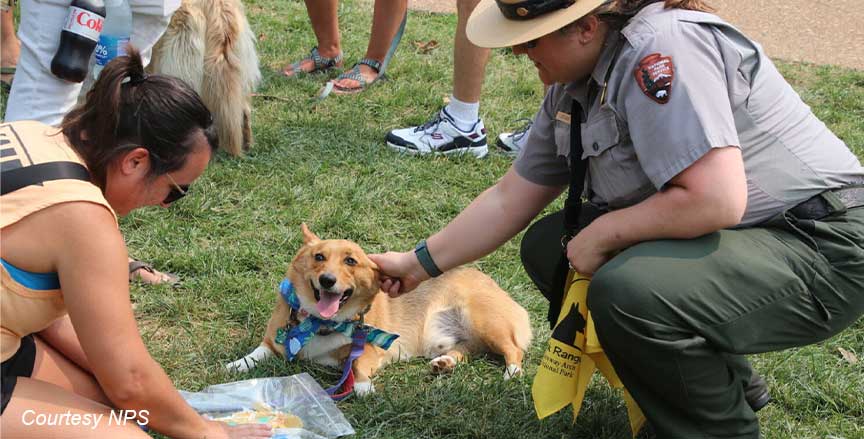
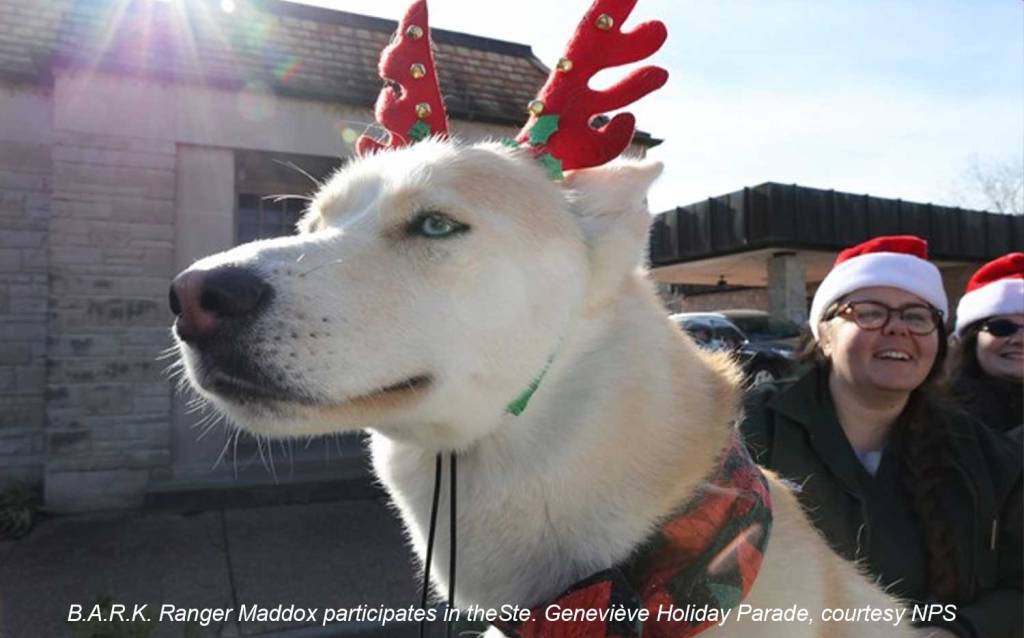
Well, the National Park Service believes that dogs deserve a round of a-paws. That’s why dozens of parks offer our four-legged friends special programs, tasty treats, and fun adventures when they visit with their human owners. It’s all part of the NPS B.A.R.K. Ranger program, a project of the agency’s Healthy People Healthy Parks Initiative.
What does B.A.R.K.stand for? Glad you asked, since there are a few simple rules (none of them too far-fetched) that pet owners should follow when they visit a park:
Bag your pet’s waste
Always leash your pet
Respect wildlife
Know where you can go
B.A.R.K.Ranger programs vary from park to park and are tailored to each site’s unique setting. Some parks offer a walk with a ranger program. Some have a pledge that owners take with their pets. Most sites adopt an honor system that assumes owners will follow the B.A.R.K. principles on their visit. (Well, anything is paw-sible…)
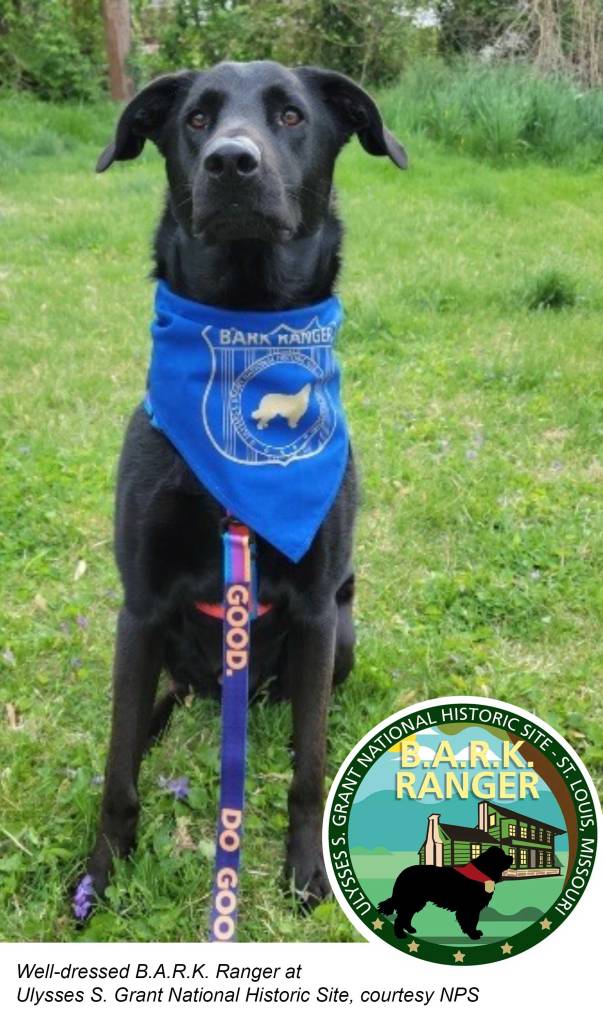
In return for abiding by the B.A.R.K. rules, pets can earn a variety of rewards. At Ulysses S. Grant National Historic Site, dogs who take the pledge earn a special bandana (looks very fetching) and a signed certificate.
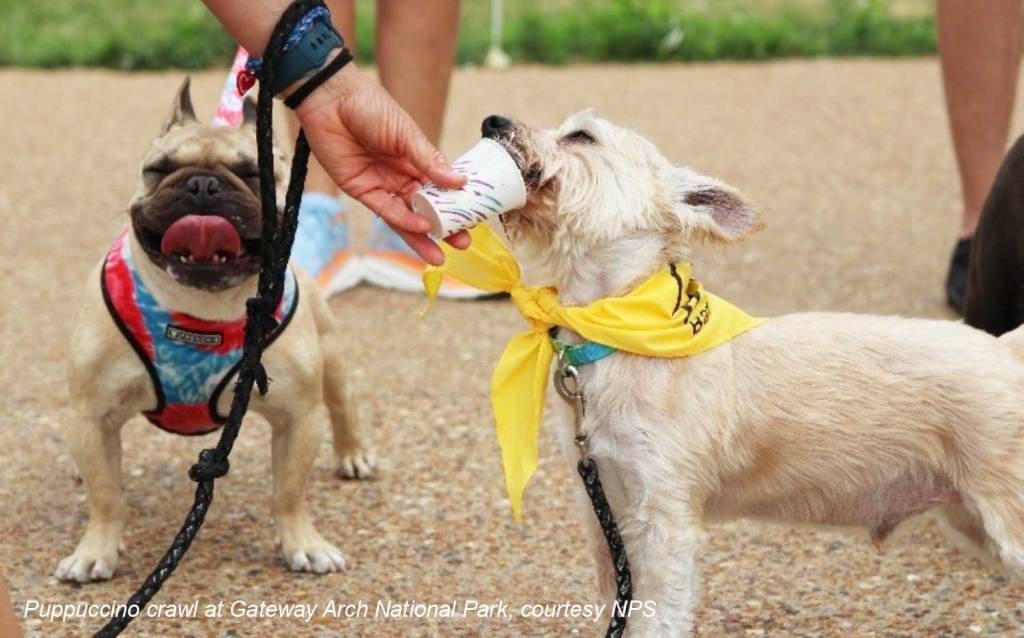
Dogs who attend one of the many annual B.A.R.K.Ranger events at Gateway Arch National Park can create special artwork or enjoy a cup of Puppuccino during their visit. Check out the upcoming B.A.R.K. events at the Arch in July, September, and October. Your pooch will be hounding you to attend!
If you and your dog visit a park that doesn’t offer special rewards, you can still fetch a special B.A.R.K.Ranger collar tag. Try the park’s gift shop, or purchase one at The Arch Store or online . Your pup will go mutts about the new jewelry!
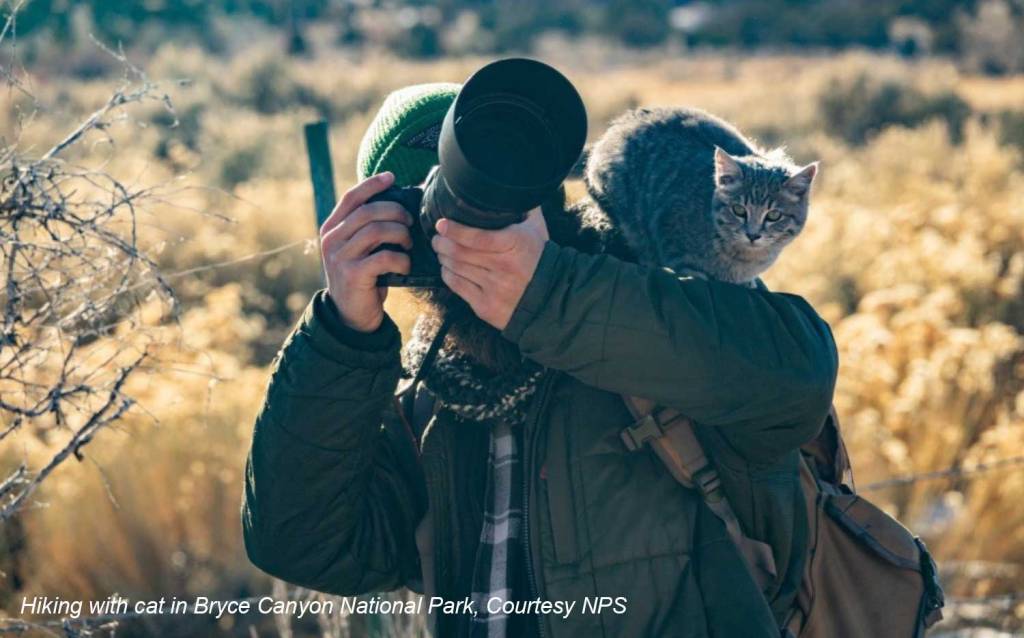
But what about cats, you ask? Are they feline left out with all this attention on dogs, fur crying out loud? What a cat-astrophe! (Too much?)
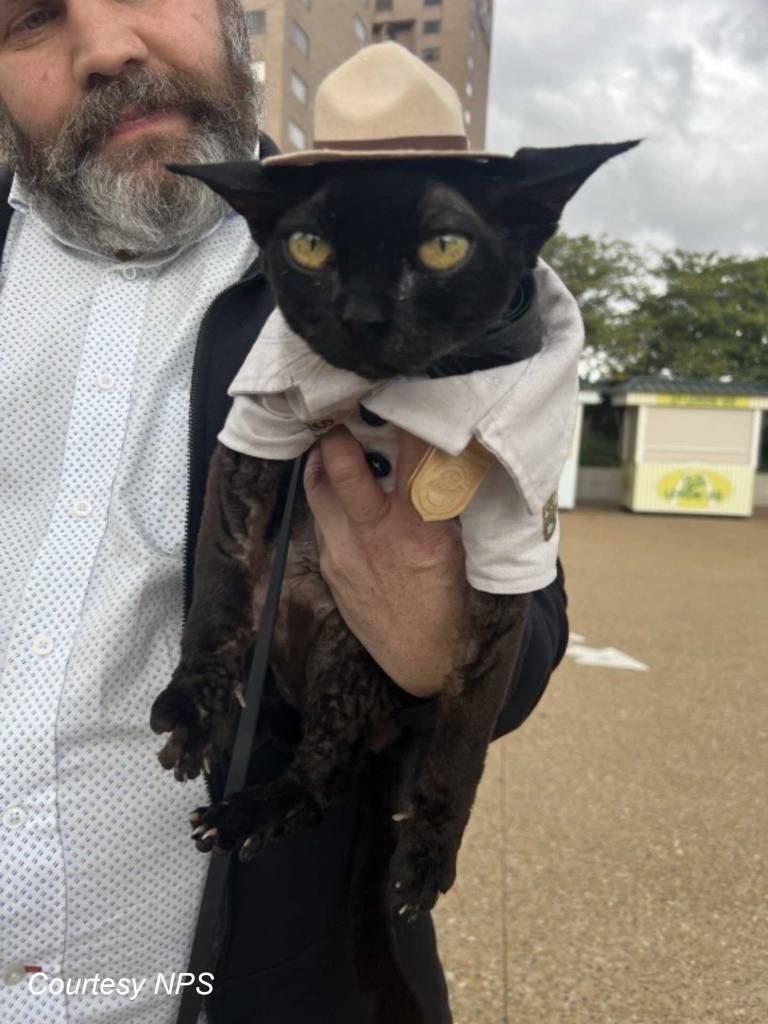
Never fear, some national parks allow cats as long as they are leashed or restrained. One dedicated cat owner recently dressed his feline friend for an outing at Gateway Arch National Park. Hiss-terical!
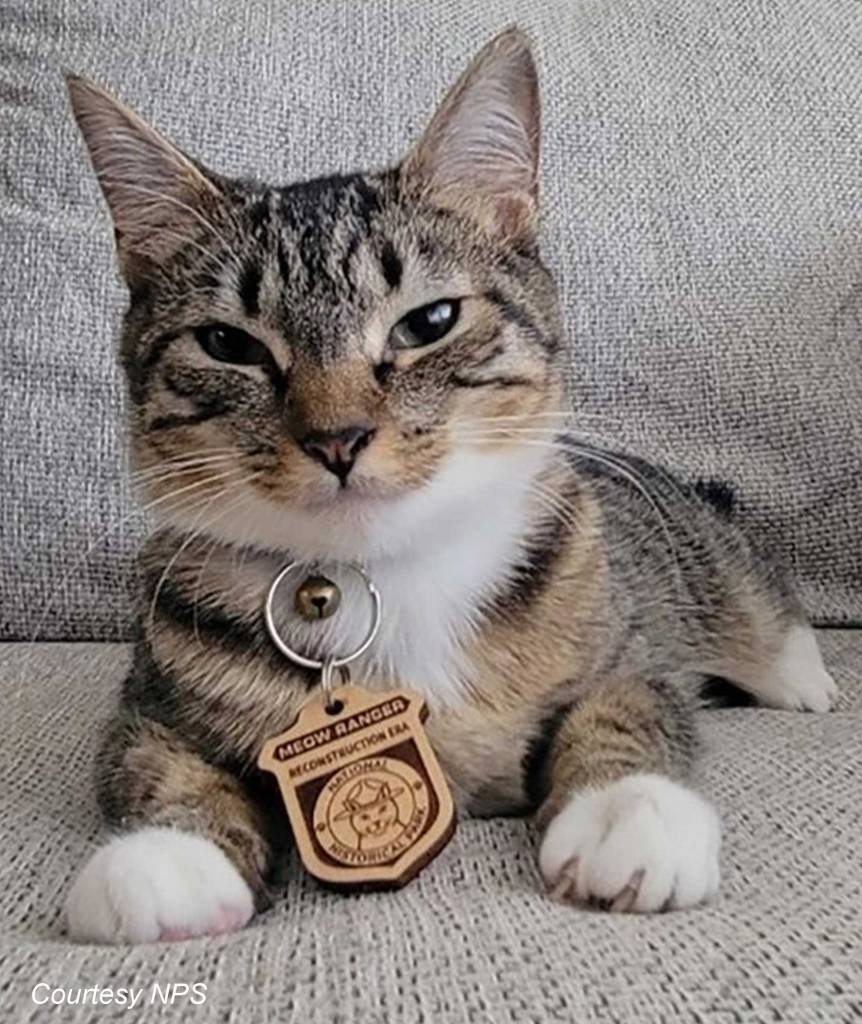
And another NPS site even inaugurated a M.E.O.W. Ranger program, complete with a special collar tag for participating kitties.
No matter which furry friend you want to bring to a national park site, it’s always smart to check before you visit to learn about any restrictions and rules that might apply. Here’s wishing you and your companions a pawsitive park experience!
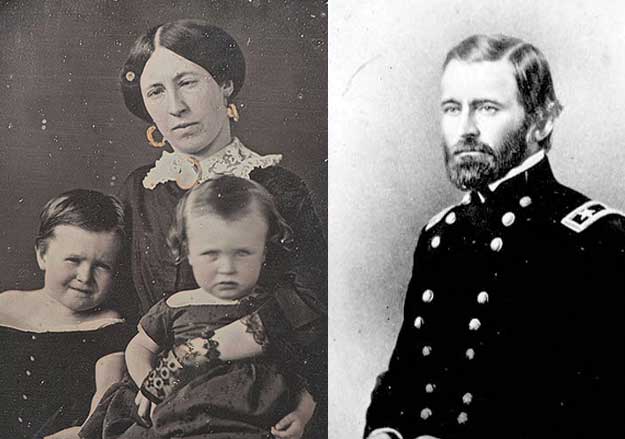
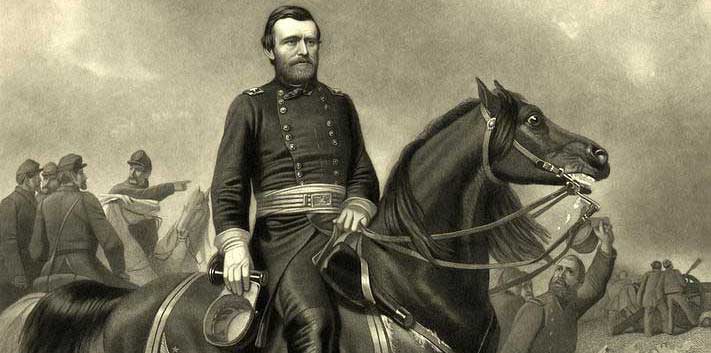
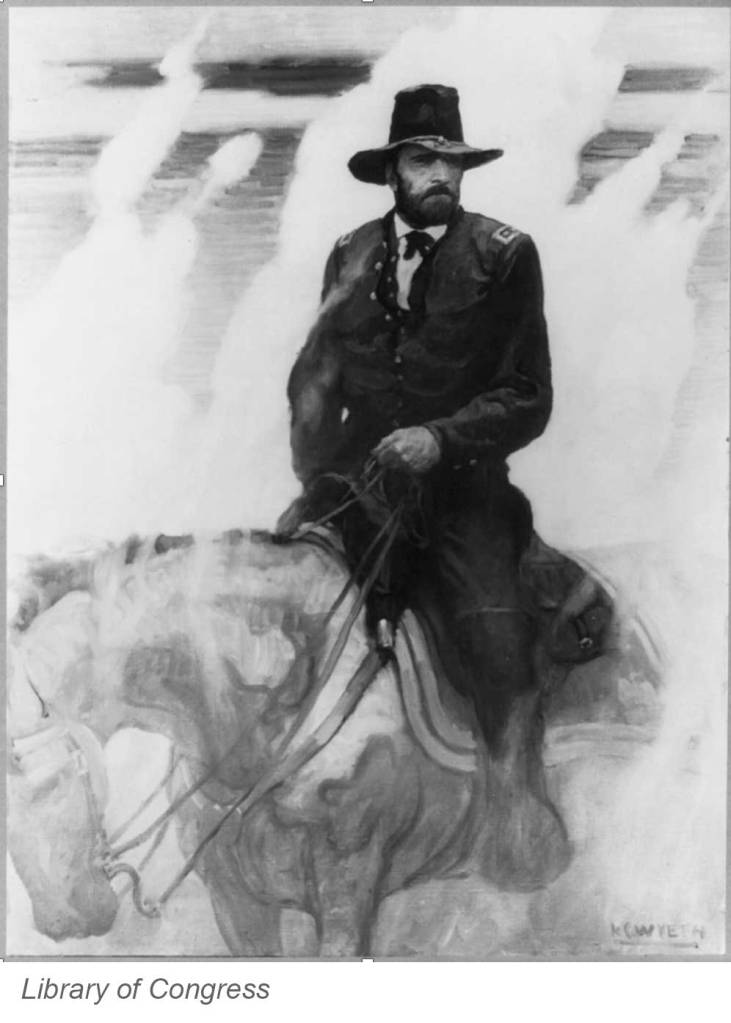
It’s hard to overstate the notable accomplishments of Ulysses S. Grant: military strategist, Commanding General of the U.S. Army, 18th president of the United States, supporter of the Fifteenth Amendment (which banned racial discrimination in voting), loving husband and father – the list goes on and on. However, there was one area where it seems Grant didn’t exactly shine: homebuilder.
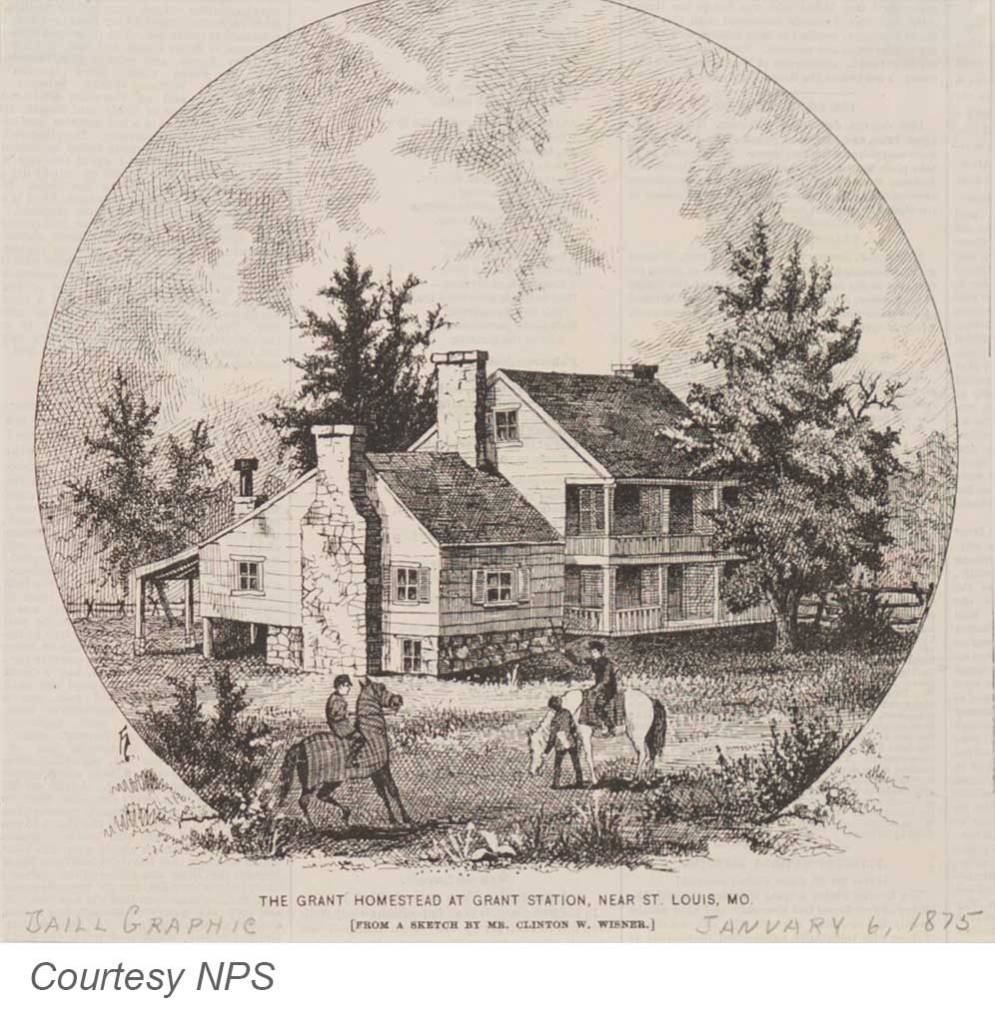
When Grant resigned from the military in 1854, he returned home to his in-laws’ plantation outside St. Louis and turned to farming as a way of supporting his wife Julia and their young children. With the help of enslaved laborers, he cultivated fruit and vegetable crops on the 80 acres he was given as a wedding present, and harvested and sold firewood.
Grant also began constructing a house for his young family so they could live independently from his in-laws. In the fall of 1855, he started cutting, hewing, and notching logs for the cabin; the following spring he dug a cellar and laid stones for the foundation. Julia organized a house-raising with neighbors and enslaved laborers, but otherwise, Grant completed much of the work himself, including shingling the roof, laying floors, and building the stairs.
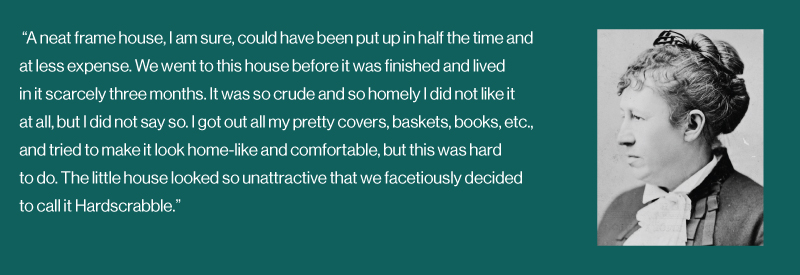
The family moved into the modest four-room log cabin during the fall of 1856, but their stay was short-lived. Accustomed to the relative finery of her upbringing at White Haven, Julia was unimpressed by the roughness of the log cabin, which she felt was beneath her standards. (Her father had discouraged Ulysses from constructing a frame house, saying a log cabin would be warmer.) Julia later recalled in her memoirs:
Hardscrabble was abandoned in early 1857 when Julia’s mother Ellen died and the Grants moved back into White Haven at her father’s request. They never re-occupied the log cabin.
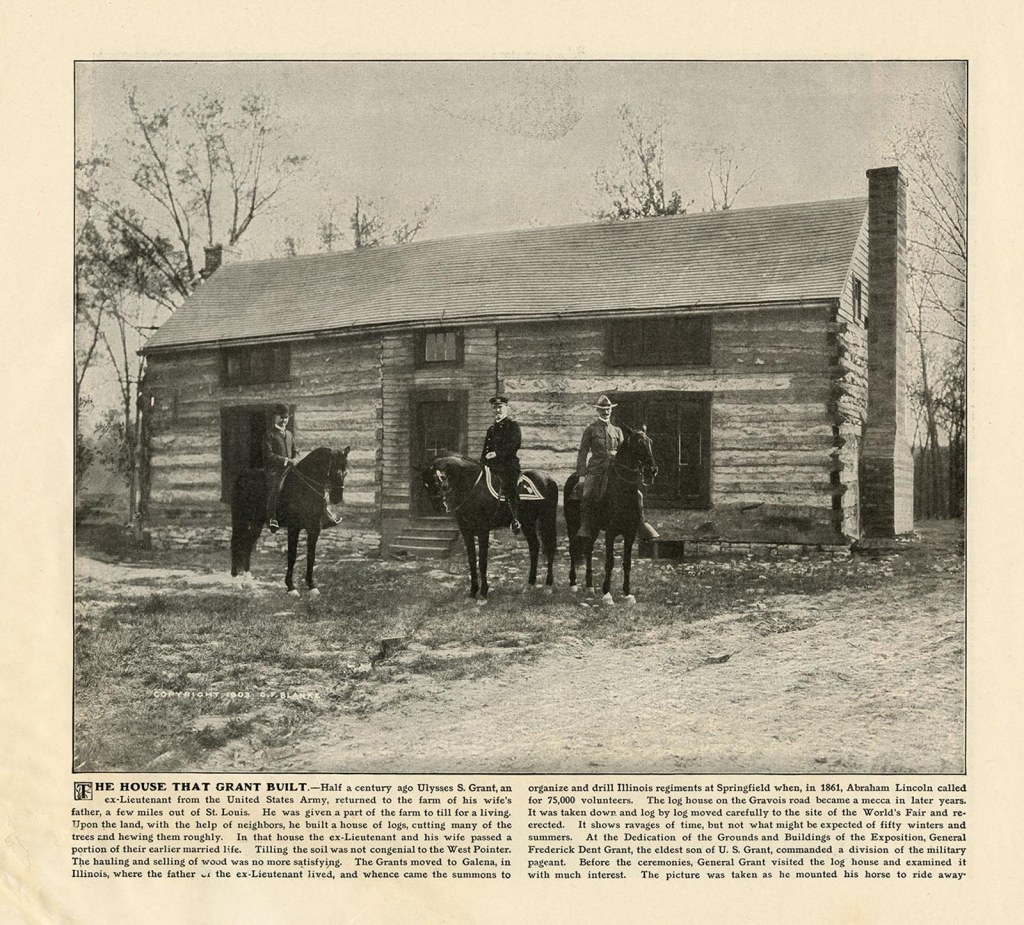
But Hardscrabble eventually acquired a history of its own because of its association with the famous general and president. It was dismantled and moved three times, including to the site of the 1904 World’s Fair in St. Louis, where it became an attraction featuring refreshments and souvenirs!
Image of Hardscrabble on grounds of 1904 World’s Fair. General Frederick Dent Grant, eldest son of Ulysses, is shown in center. Courtesy of NPS
In 1907 Hardscrabble was finally moved to its current location at “Grant’s Farm,” a public attraction owned and operated by Anheuser-Busch and adjacent to Ulysses S. Grant National Historic Site. The cabin is currently not available for tours, though visitors to Grant’s Farm can view it during a tram tour of the park.
Present-day interior of cabin, courtesy NPS
Hardscrabble is the only existing structure hand-built by a U.S. president prior to assuming office. For now, there are no plans to relocate it in the future.
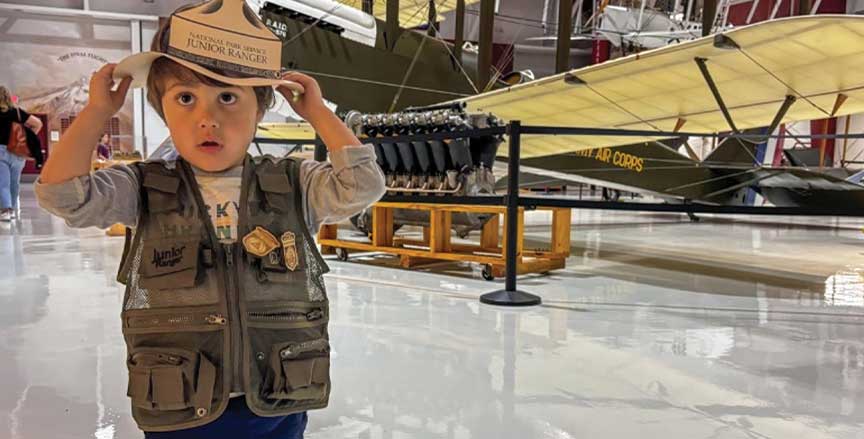
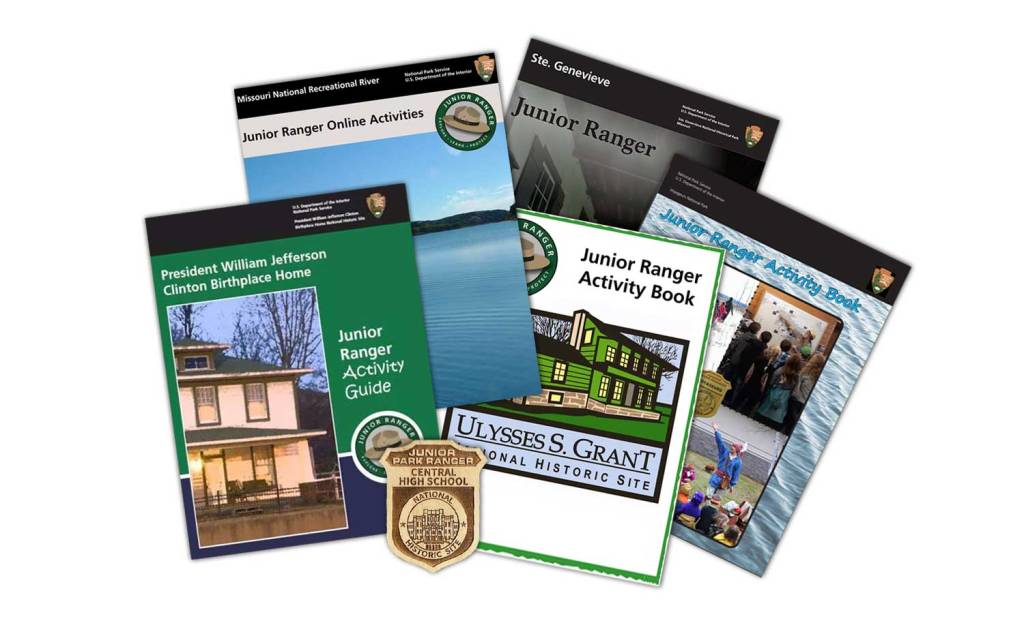
National parks aren’t just for adults. If you’re planning a trip to a park with your kids this summer, make sure you check out the site’s Junior Ranger activities when you visit. These programs help children appreciate and connect to our parks – whether it’s walking in the footsteps of famous people, exploring beautiful landscapes, developing new interests, or just having fun.
Here’s how it works: Before your visit, go to the park’s webpage to learn about its special kids’ activities. Most of the nation’s 400+ national park sites offer Junior Ranger programs. When you’re on site, check in at the visitor center. That’s where kids will typically receive a free park-specific activity book that helps them learn about the landmarks, history, wildlife, geology or other themes unique to that park.
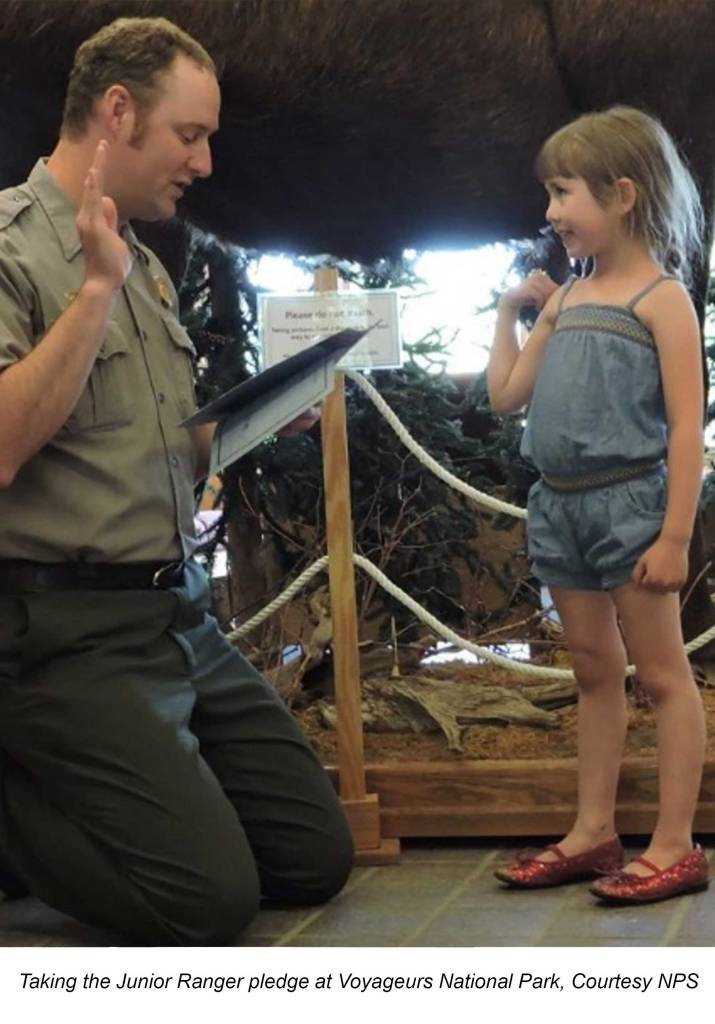
After your kids complete the activities in the book, they’ll need to present it to a park ranger to receive a special Junior Ranger badge and certificate. Often, they’ll also take a pledge to learn, protect, and explore their national parks.
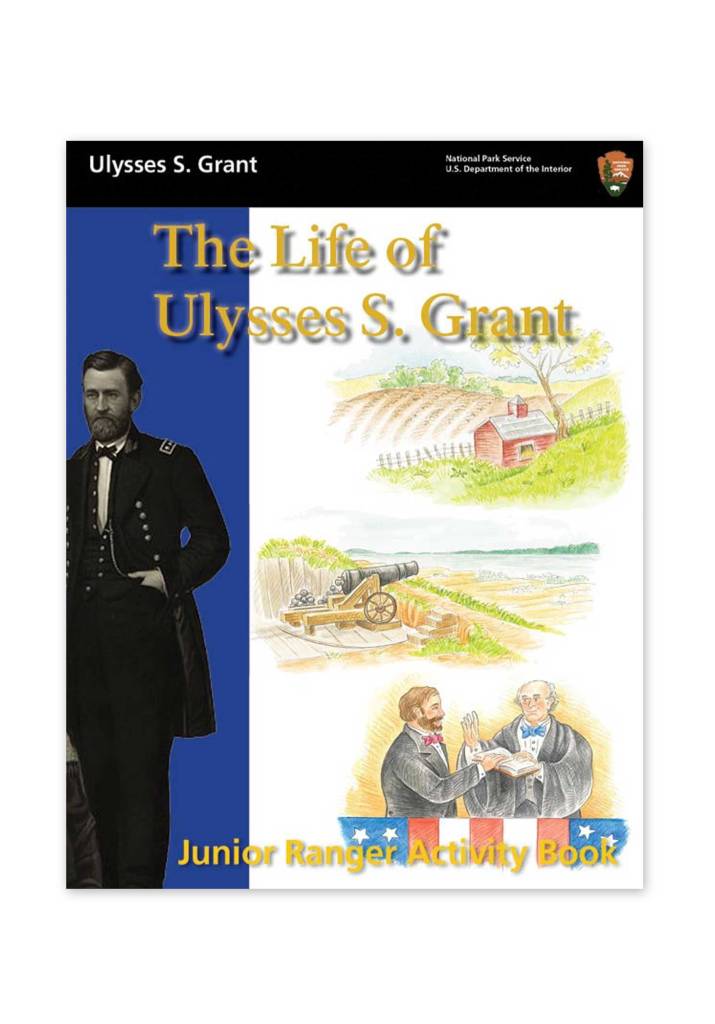
For kids who can’t visit in person, the National Park Service website offers a Junior Ranger Online section featuring videos, games, and songs, allowing families at home to connect with parks around the country. And many parks have their own Virtual Junior Ranger programs. Voyageurs National Park, for instance, includes fun activities on its website, as well as the opportunity to download the Virtual Ranger badge. U.S. Grant National Historic Site created a special Bicentennial Virtual Ranger Activity Book to celebrate the 200th anniversary of Grant’s birth.
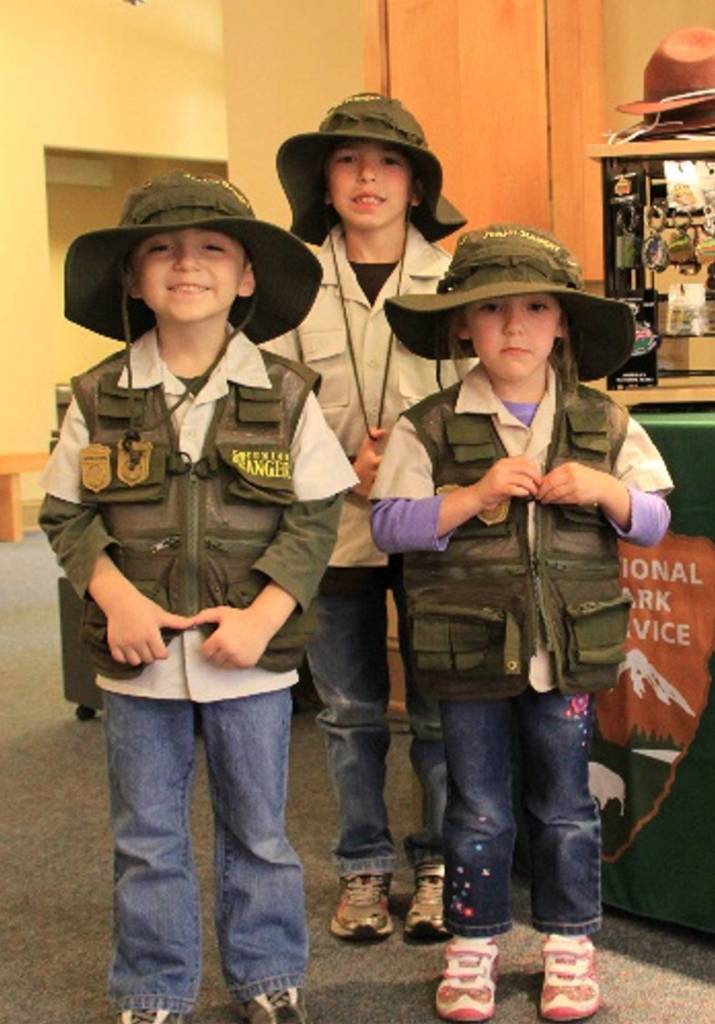
Finally, for those kids who want to go the extra mile, why not let them dress like a park ranger with a special Junior Ranger Vest and Flat Hat! JNPA carries a wide range of Junior Ranger products like these in our online store, including mini building blocks, pins, and activity books.
However you introduce national parks to your kids, they’ll be sure to get more out of their visits when they become Junior Rangers!
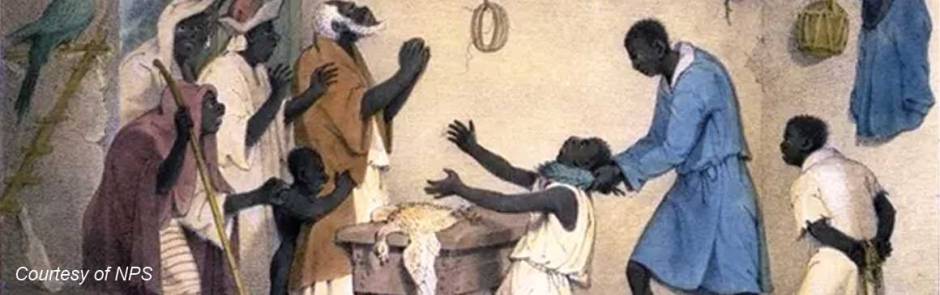
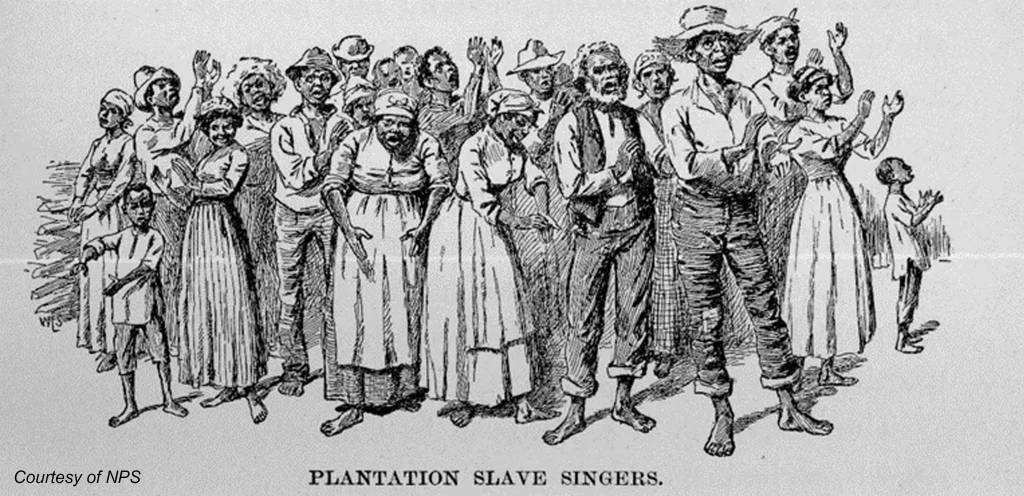
When Africans were captured as slaves and transported to the Americas, they naturally brought with them many of the traditions and cultural practices from their homelands. One cultural practice that had tribal origins in Central and West Africa was hoodoo, a spiritual tradition that was popular among enslaved people on numerous American plantations, including White Haven. What exactly WAS hoodoo?
Hoodoo (not to be confused with voodoo) is not a religion per se. It is a collection of rituals such as herbal healings, ancestor worship, song, and folk magic inspired by African religious practices. The practice of hoodoo arose when enslaved workers were forced to become Christians upon arrival in North America. Although the rituals were historically used for curative and protective purposes, they also provided empowerment and comfort for people who had little agency over their lives. Often, hoodoo practitioners attempted to communicate with ancestors and created spells that called for justice and vengeance. Because it was a crime for the enslaved to practice African traditions, many hoodoo practices were hidden from slave owners.
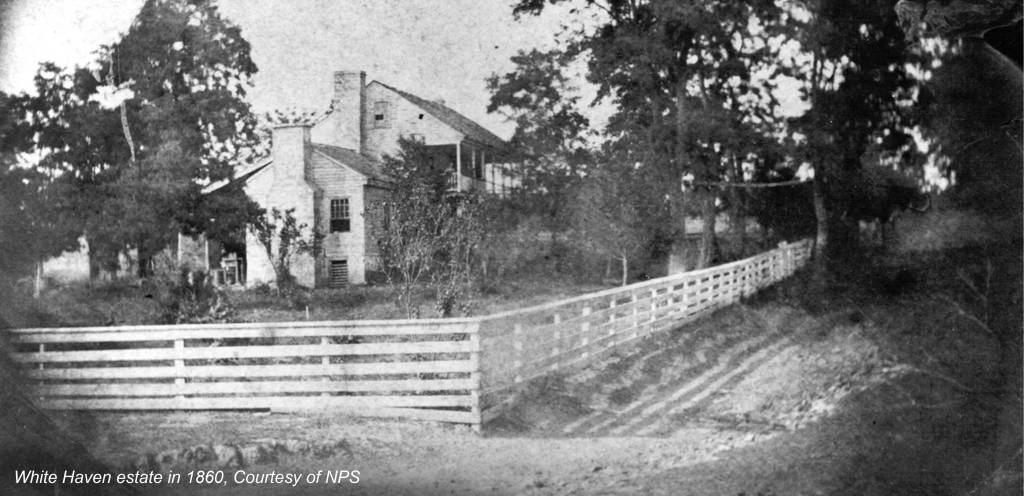
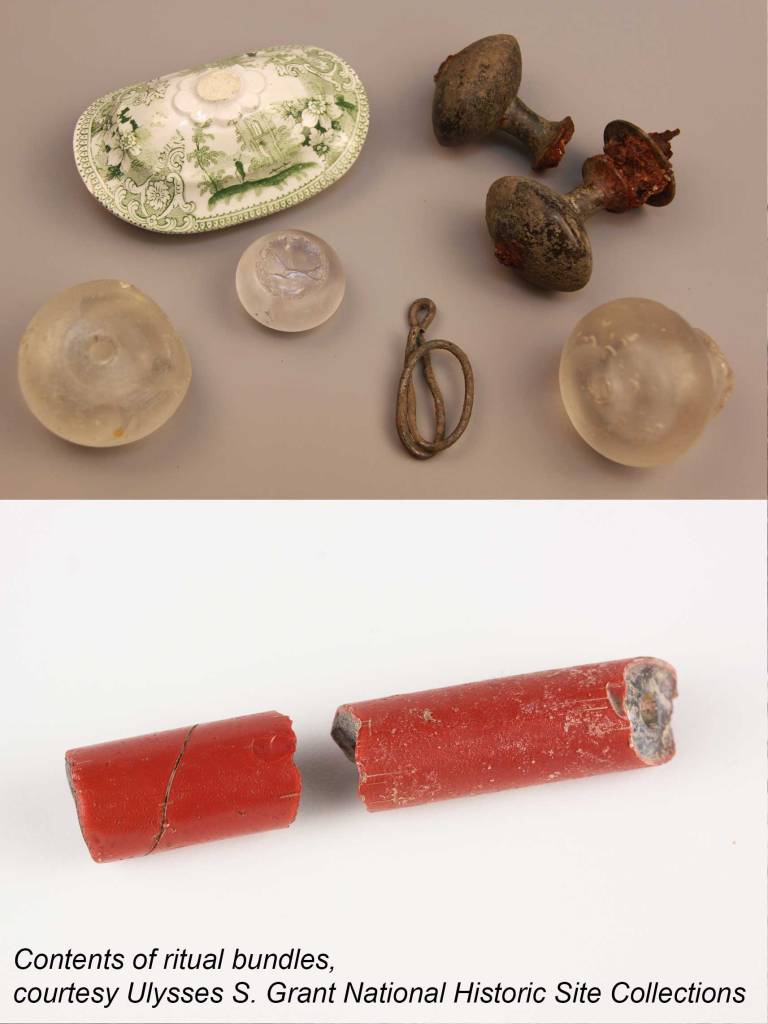
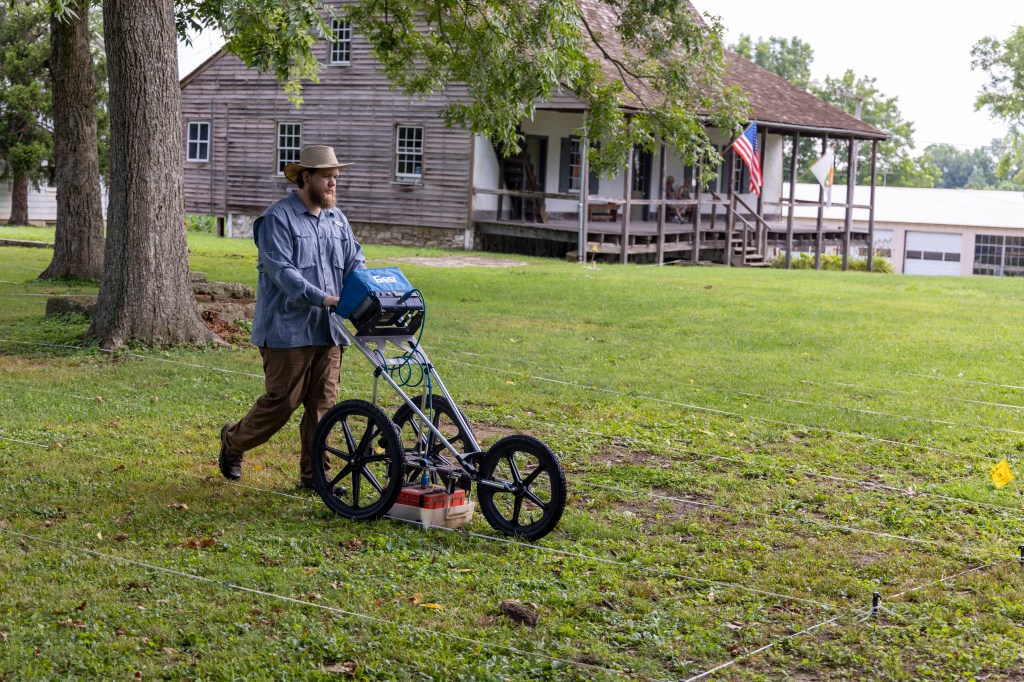
Archeologists and historians working in the 1990s discovered evidence that hoodoo was practiced by the slave community at Ulysses S. Grant National Historic Site. They found cloth bundles known as minkisi buried beneath the floorboards at White Haven. These bundles purportedly contain spirits that inhabit objects created by a conjurer.
The objects found inside the White Haven minkisi included beads, buttons, crab claws, a peach pit, crystals, seashells, iron, and sharp projectile points – each of which carried a spiritual meaning. Silver dimes were found in the site’s Winter Kitchen, often used in hoodoo as protective charms. Other items found in minkisi bundles at the historic site were similar to those found in conjure bundles on other slave plantations.
Hoodoo practices did not end when slavery was abolished in the U.S. In the late 19th century and well into the 20thcentury, some African Americans turned to hoodoo to help them find jobs or to protect them from law enforcement and racial violence. They also practiced hoodoo to treat illnesses using herbal remedies. These African-derived practices and beliefs continue in some African American communities today.
Many of us shudder at the prospect of enduring bone-chilling weather. But imagine having to endure sub-zero temperatures on a multi-day outdoor journey, on bad roads through rugged wilderness, and on horseback! That’s what Ulysses S. Grant had to face during the winter of 1864 as he searched for supply lines for his Union troops fighting the U.S. Civil War.
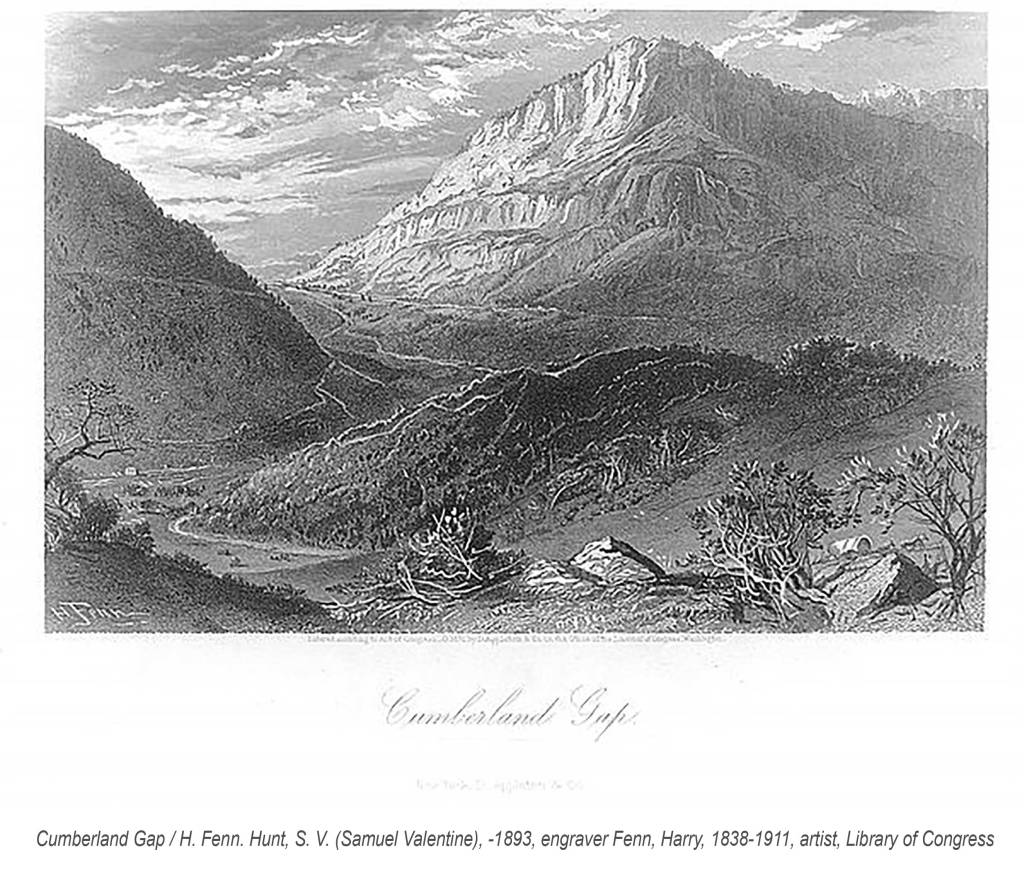
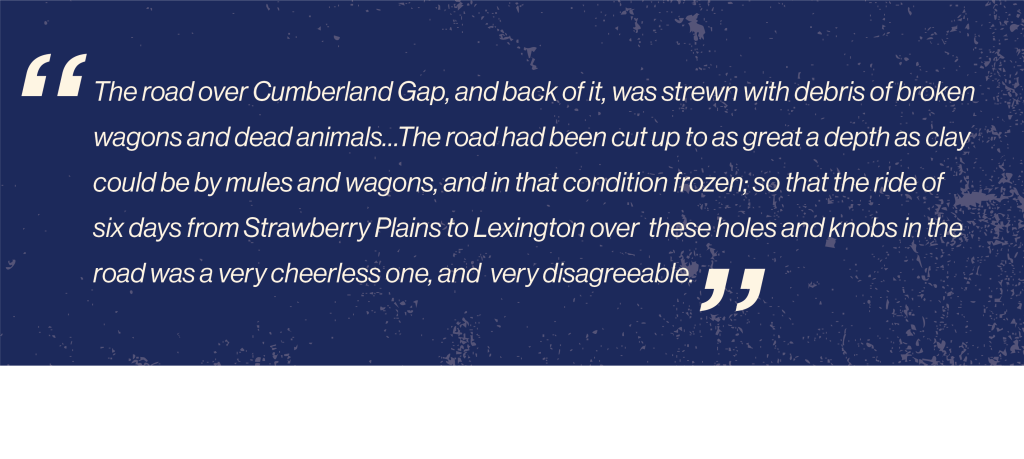
The Union general was laying plans to capture Atlanta, well before that assignment fell to General William Sherman. As Grant explored possible supply routes that would provide easy access to the front in Georgia, he was hoping the Cumberland Gap – straddling Kentucky, Virginia and Tennessee – would fit the bill. The mountain passes in the Gap were valued by both Union and Confederate armies as a way to move men and supplies between the eastern and western theaters of war. But when Grant reached the area in January 1864, what he found was quite unpleasant:
This assessment must have been particularly disheartening for such an accomplished horseman as Grant. From an early age, he became adept at riding, training, and caring for horses, and used those skills during his military career and private life. Some historians believe he bought the White Haven property (now Ulysses S. Grant National Historic Site) from his wife’s family after the Civil War mainly to breed and raise horses.
Grant ultimately had to abandon his plans to move troops through the Gap that freezing cold winter. He might have succeeded in reaching Atlanta by other routes, but President Lincoln interrupted that strategy. Lincoln promoted him to the rank of Lt. General in March 1864, and placed him in command of the Union armies.
Grant’s eventual plan to win the war involved immobilizing General Robert E. Lee’s army near Richmond, Virginia, while General Sherman led the Union army through Georgia. Grant went on to force the Confederates to surrender in 1865.
Several of our partner parks are planning events to honor Juneteenth, one of the oldest known commemorations related to the abolition of slavery in the United States. The holiday marks the day that enslaved people in Texas learned they had been freed. News of the Emancipation Proclamation had taken two-and-a-half years to reach Texas, arriving June 19, 1865.
Staff at Ste. Geneviève National Historical Park have found a unique way to honor the enslaved residents of the park’s historic houses during the annual Juneteenth commemoration. They place flowers on the porches of the Jean Baptiste Vallé House, Bauvais-Amoureux House, and Green Tree Tavern. Each flower memorializes an individual who was enslaved at that home.
Credit: NPS
This project is an outgrowth of the park’s ongoing effort to learn more about the early Black residents of Ste. Genevieve. So far, staff and volunteers have confirmed the names of 46 individuals who were enslaved at the three NPS-managed houses. They hope to uncover the larger narratives of these residents and learn about their connections among the free and enslaved people of color in the historic community. The park plans to share the details of these findings through public events like Juneteenth.
Lynne Jackson
Another Juneteenth-related program will take place at the park on Saturday June 22. Lynne Jackson, a descendant of Dred and Harriet Scott, will share the story of her famous ancestors’ long-awaited emancipation in 1857. She will also discuss the Freedom Suit Memorial in St. Louis, a bronze sculpture erected in 2022 commemorating the many lawsuits that enslaved people filed against slaveholders in an effort to gain their freedom.
The lecture begins at 1:30 at the park’s Welcome Center. The event is free, but reservations are recommended; reserve your spot by calling 573-880-7189.
Peggy Harris
Ulysses S. Grant National Historic Site will celebrate Juneteenth on Saturday June 15 with a unique program– Rhythms, Rhymes and Cultural Times. This one-woman show by performer Peggy Harris is a collection of narratives depicting the lives of various strong Black women, including an African Royal’s recounting of the slave trade, Harriett Tubman’s journey to freedom, Harriet Scott’s support of her husband Dred, and Luisah Teish’s call to join women of color together to embrace their culture and spirituality.
The free program takes place at the park at 1:00 p.m. For reservations call 314-842-1867 ext. 230.
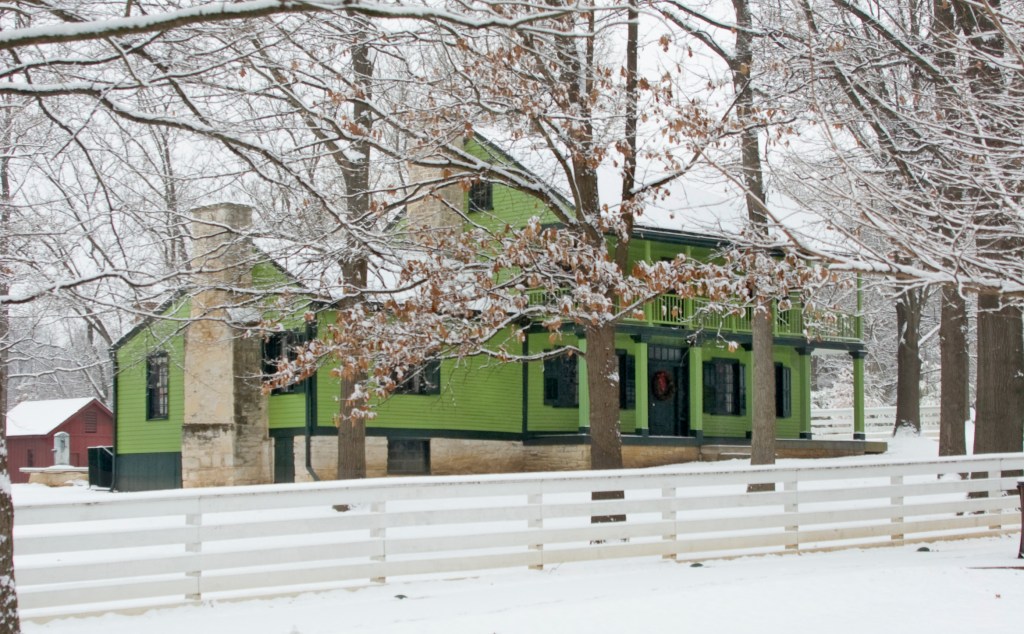
Visitors to the White Haven estate at Ulysses S. Grant National Historic Site sometimes happen upon a curious stone building behind the historic house. This humble little structure looks a bit out of place amid the other wooden buildings on the site, and it has undergone several transformations since it was built. What was it used for?
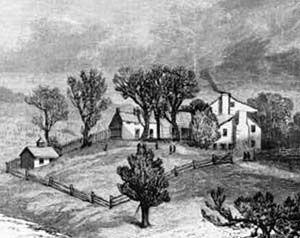
White Haven, circa 1850. Stone building is visible to the immediate left of the main house. Photo credit: NPS
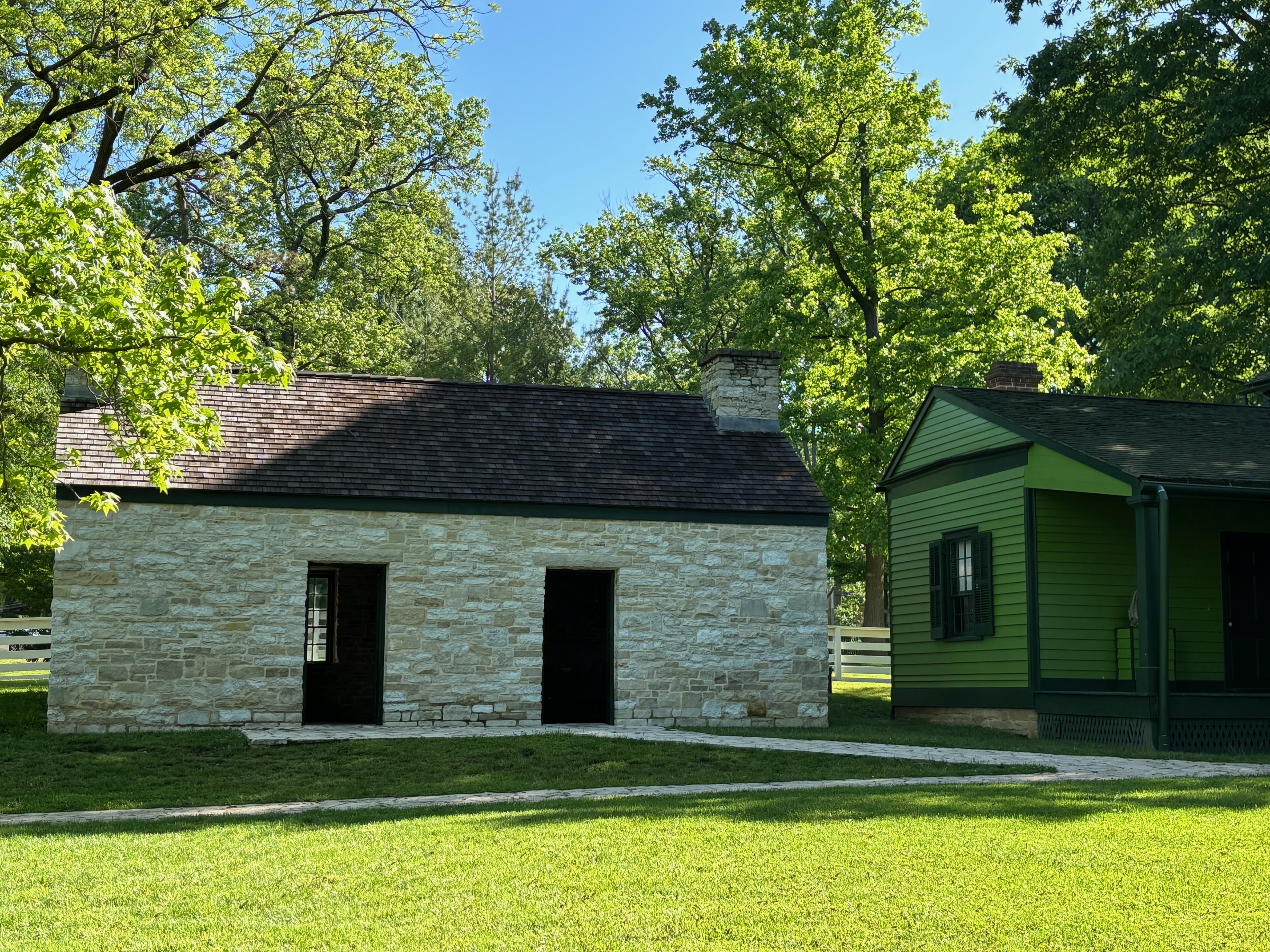
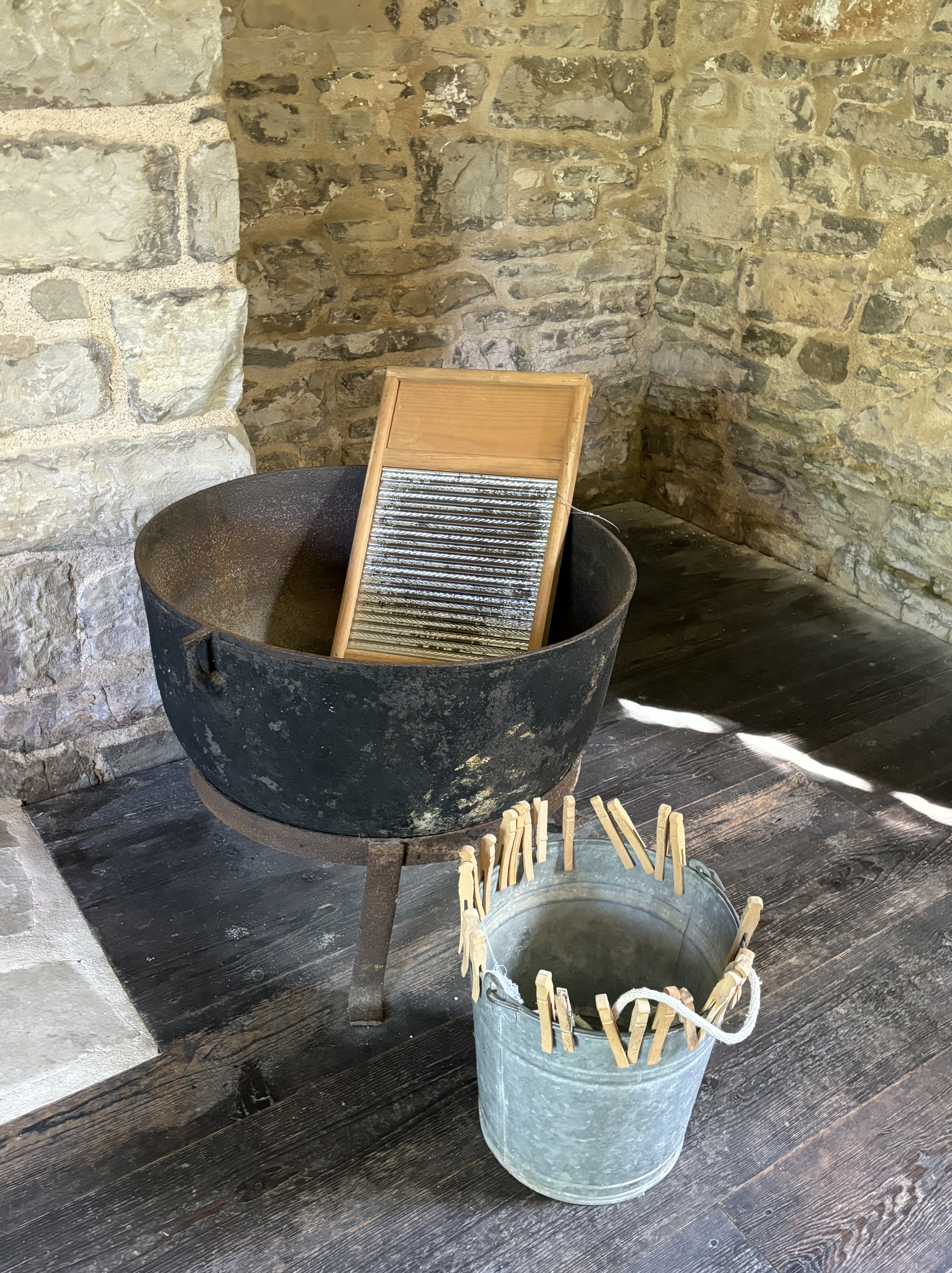
National Park Service archeologists believe the stone building was probably built well before the Civil War – perhaps as early as 1840 – when Grant’s in-laws, Frederick and Ellen Dent, owned and farmed the 850-acre slave plantation. Enslaved laborers are thought to have worked there, cooking food, sewing clothing, and cleaning laundry; and some enslaved cooks may even have lived in the attic.
Although the main house on the estate featured a basement kitchen, its wood construction would have been prone to catching fire during the cold winter months, so cooking duties would probably have shifted to the cooler stone kitchen during the summer.
Photo credit: NPS
Yet a workplace for enslaved people wasn’t the end of the little building’s story. Sometime after slavery was abolished, a permanent kitchen was established on the first floor of the main residence and the stone building ceased to function as a summer kitchen. The roof and walls of the neglected building collapsed.
Photo credit: NPS
Then in the 1940s or 1950s, the private owners of White Haven expanded the west wall of the stone building, rebuilt and re-roofed it, and used it as a three-car garage. Changes to the structure included rebuilding exterior walls, removal of the wall dividing the two rooms, replacement of the gabled roof with a shed roof, and a concrete floor.
Photo credit: NPS
After the National Park Service acquired ownership of White Haven in 1990 (a purchase facilitated by JNPA), workers restored the stone building to its original appearance. Archaeological digs yielded numerous broken dishes, crockery, silverware, as well as sewing equipment from the nineteenth century – further evidence of the domestic tasks enslaved laborers were performing at this site.
On your next visit to the park, be sure to pay a visit to the summer kitchen building, where you’ll find additional information about its many uses.
Are you a fan of national parks? Beyond just paying them a visit, do you want to get more involved in their events and activities? Then National Park Week is for you!!
In August of 1991, the very first National Park Week was established to honor the National Park Service’s 75th anniversary. Since then, it has been celebrated in April alongside Earth Day. This year, National Park Week is April 20-28, and each day is themed around a unique aspect of the national parks.
It is also Park Rx Day, focusing on the connection between the health of people, the health of parks, and the health of our planet.
If you are in Missouri, we highly recommend attempting the NPS Wellness Challenge. All seven of the national park sites in Missouri offer challenges in three categories that visitors can complete: mental, physical, and learning. If you complete a challenge, you can earn a Wellness Challenge Badge!
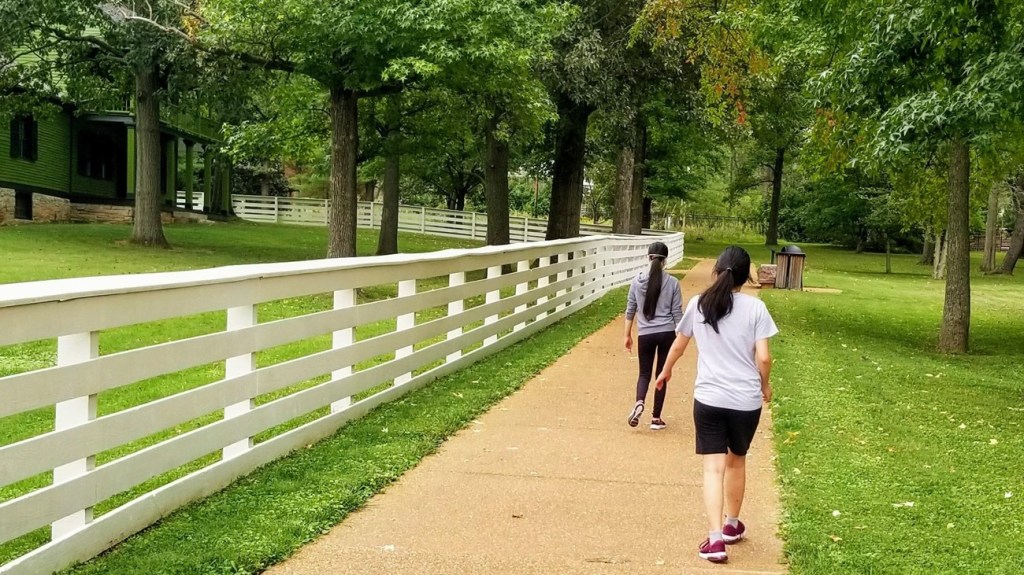
Visitors take a walk through history as part of the NPS Wellness Challenge at Ulysses S. Grant National Historic Site. Credit: NPS
April 21 – Volunteers
Have you ever wanted to volunteer at a national park but either lived too far away or could not find activities that fit your schedule? Now you can volunteer VIRTUALLY as a citizen archivist! Ahead of the upcoming 250th anniversary of American Independence, the National Archives and Records Administration is collaborating with the National Park Service to have volunteers transcribe Revolutionary War Pension Records. These records hold incredible, untold stories of the American Revolution, and once transcribed, will be a permanent contribution to our country’s historical record.
Want to get outside to volunteer? Gateway Arch National Park is having its first ever BioBlitz on April 28. Volunteers will use the iNaturalist app to document various types of wildlife found in the park.
April 22 – Earth Day
On Earth Day, you can join an event at a park near you, or you can learn about all the great ways to practice conservation at home. By taking a few small steps, you can do your part to help protect pollinators, birds, bats, oceans, and even our night skies!
April 23 – Innovation
National Park sites are full of innovative ideas, programs, and technology. For Innovation Day, check out a few of our past blog posts about innovation in some of our partner parks:
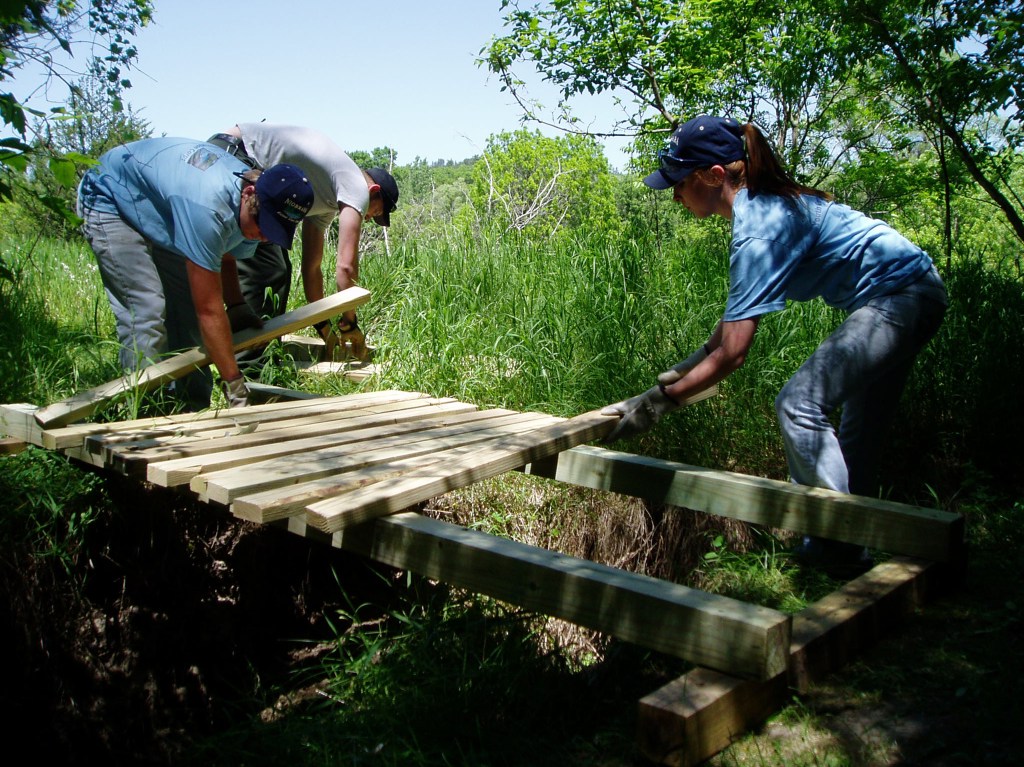
After joining the webinar on Workforce Wednesday, young people between the ages of 15 and 18 can take the next step on their National Park Journey by researching and applying for opportunities with the Youth Conservation Corps! One of our partner parks, Voyageurs National Park, even has an upcoming opportunity May 13 – June 13 for Corps members to repair boardwalks and complete trail maintenance in the park.
Youth Conservation Corps installing a bridge at Niobrara National Scenic River. Credit: NPS
April 26 – Community Connections
Did you know that the National Park Service’s work does not stop at a park’s boundary? Every day, parks across the country partner with their surrounding communities to expand their mission of conserving the natural and cultural resources of our country for the “enjoyment, education, and inspiration of this and future generations.” A few notable examples in the JNPA network of sites include:
Mississippi National River and Recreation Area– This park is incredibly unique because the National Park Service owns only 67 of the 54,000 acres that the park encompasses. The rest is made up of city, state, and regional parks, a national wildlife refuge, and private businesses and homes. This “partnership park” can only achieve its mission by working closely with the community to achieve their shared goals.
Lower Mississippi Delta Initiative (LMDI)- This outstanding grant program is funded by the National Park Service and co-administered by JNPA. These grants fund small-scale cultural heritage projects at not-for-profit community organizations in the Lower Mississippi Delta Region.
Crosby Farm at Mississippi National River and Recreation Area. Credit: NPS
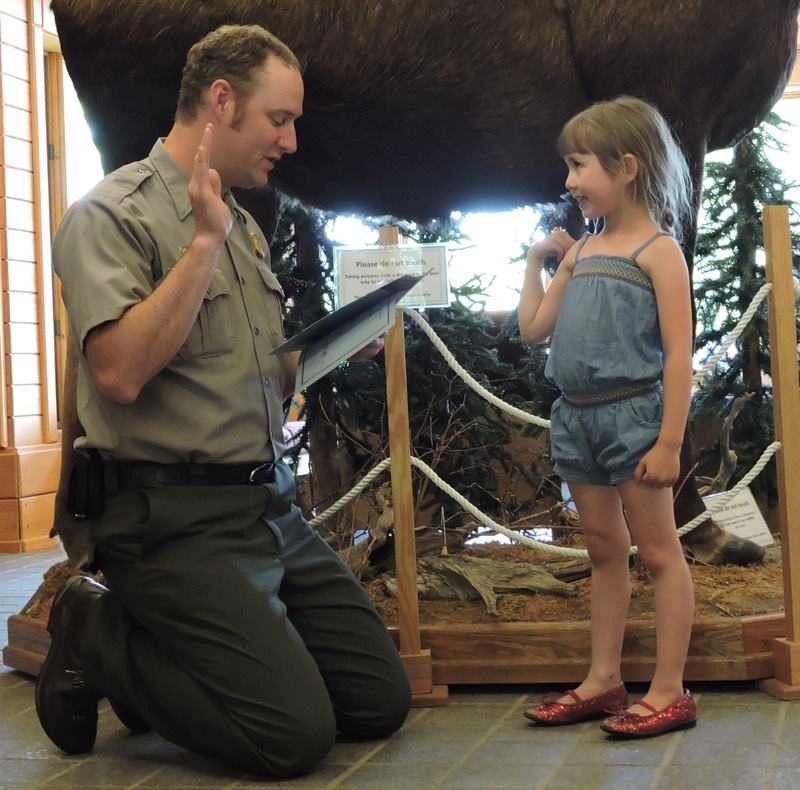
Swearing in a Junior Ranger at Voyageurs National Park Credit: NPS
April 28 – Arts in the Parks
When you think of national parks, art may not be the first thing that comes to mind. However, all five of the “fine arts” play an important role at national park sites.
Painting – Beginning in the 1800’s, beautiful landscapes of the American West were captured by the painters of the Hudson River School. These paintings helped inspire support for the creation of the national parks. This tradition continues today with the NPS Artist-in-Residence program.
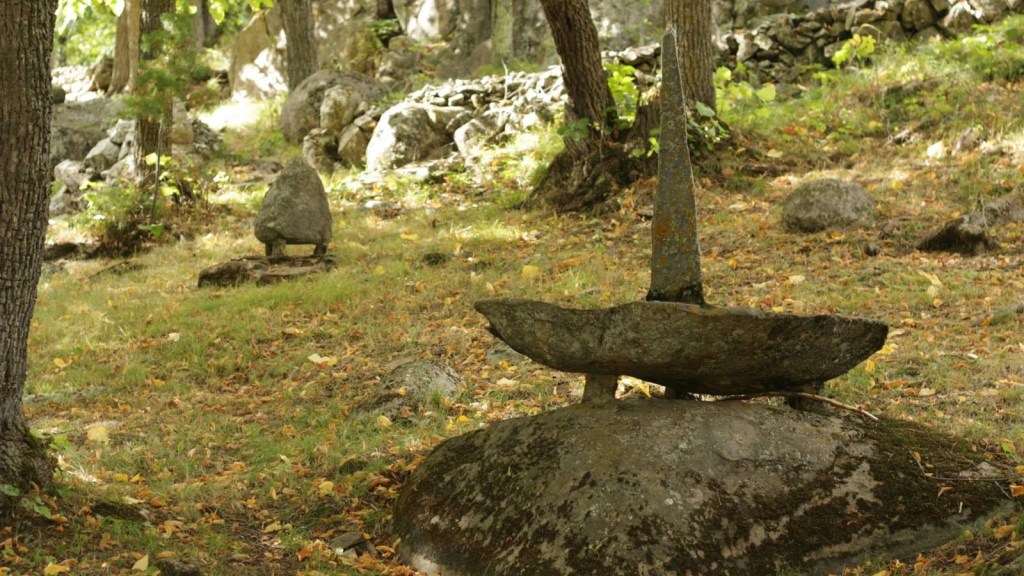
Sculpture – The Ellsworth Rock Gardens at Voyageurs National Park is home to over 200 abstract rock sculptures.
Architecture– Standing at 630 ft, one of the most iconic architectural marvels in the National Park Service is the Gateway Arch.
Music – Little Rock Central High School National Historic Site, Oxford American, and composers Christopher Parker and Kelley Hurt partnered to create a musical tribute to the Little Rock Nine, a jazz composition entitled “The No Tears Suite.”
Poetry – A new initiative this year is “Poetry in Parks.” U.S. National Poet Laureate Ada Limón selected historic American poems which will be displayed as public works of art on picnic tables in seven national parks. The installations will be unveiled throughout the summer and fall.
Rock sculptures at Ellsworth Rock Gardens/Voyageurs National Park. Credit: NPS
No matter what theme speaks to you, no matter how old you are, no matter if you visit in person or virtually, go to a national park next week!
When the days get shorter and the weather gets colder, families can start to get cabin fever. If you and your loved ones are looking for fun activities, we’ve got you covered! Lucky for national park enthusiasts, there are several activities inspired by our favorite parks that can help pass the time during the long winter months.
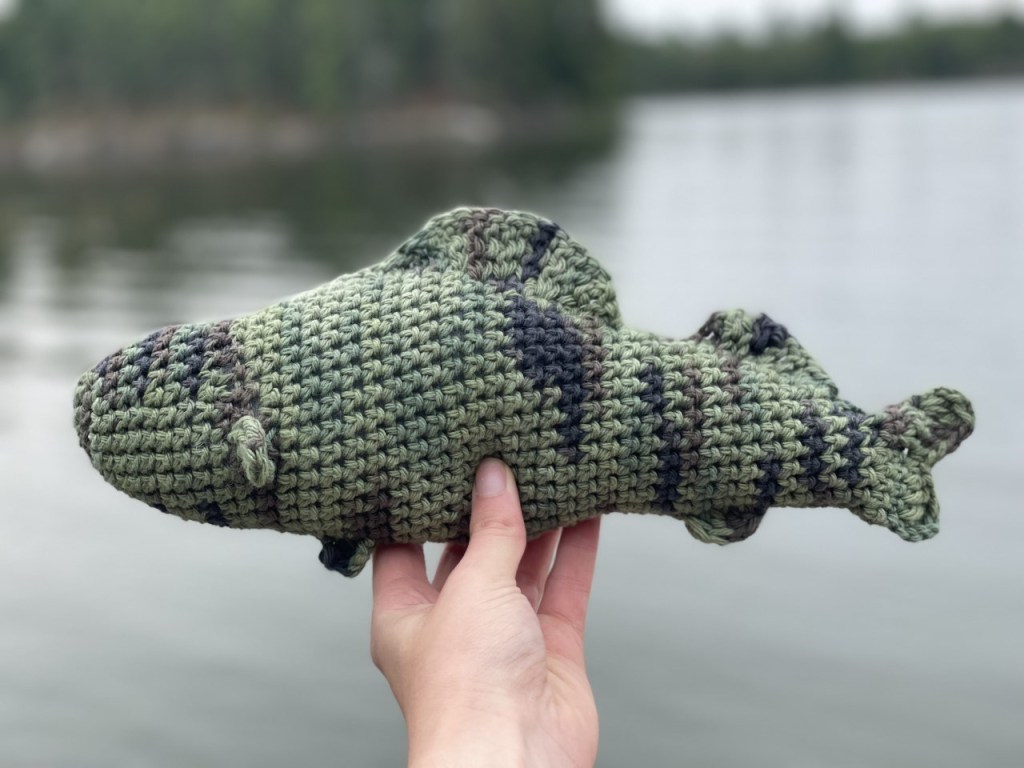
Crochet a Walleye
Voyageurs National Park has 54 species of fish that can be found in the park’s aquatic habitats! Walleyes are some of the most popular, and you can make a cute, cuddly one for yourself. This activity is great for both older kids and adults. If you are new to crocheting, this is a great pattern to try, since it is on the simpler side. Click here to view the instructions.
Credit: NPS
Make a Telescope
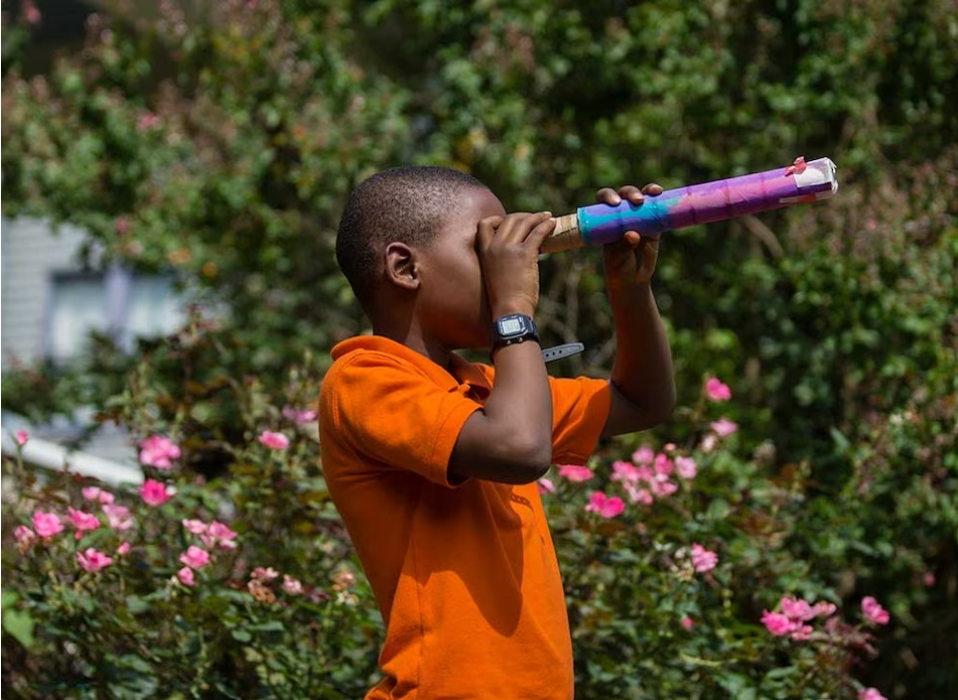
On May 14, Lewis and Clark’s Corps of Discovery embarked from St. Louis, MO on an expedition to find a route to the Pacific Ocean. This expedition has been commemorated by many public lands sites along the route they journeyed, including Gateway Arch National Park and the Lewis and Clark Visitor Center at Gavin’s Point Dam. While the kids in your life are cooped up indoors, you can make these working telescopes and go on your own pretend expedition. Since the telescopes are actually functional, you can also use them to view the winter landscape and wildlife out your window! Click here to view the instructions.
Credit: National Geographic Kids
Bake an Old-Fashioned Apple Pie
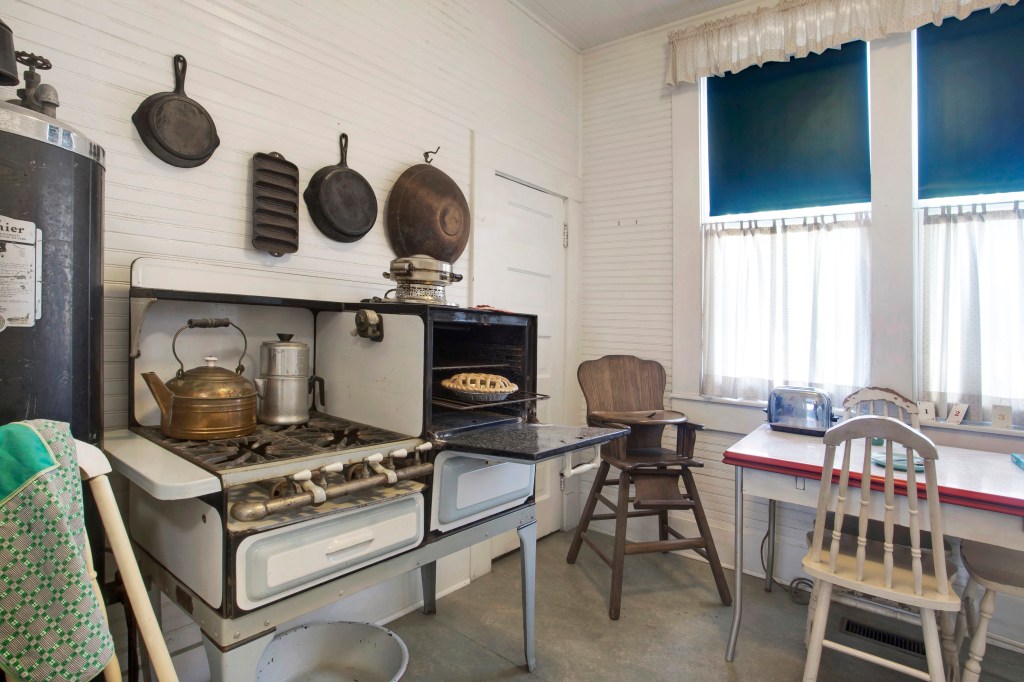
One of visitors’ favorite rooms at President William Jefferson Clinton Birthplace Home National Historic Site is the quaint 1940s-era kitchen, which is fitted out to look as it did when President Clinton lived in the home as a child. It is easy to imagine the family enjoying many warm meals in the modest home, including a nice pie like the one on display. If you want to recreate that same cozy feeling, try baking a delicious old-fashioned apple pie. You can serve it warm on a chilly day or make it à la mode with some vanilla ice cream! Click here to view the instructions.
William Jefferson Clinton Birthplace Home National Historic Site
Weave a Diversity Heart
On September 23, 1957, nine African American teenagers entered Little Rock Central High School, defying an angry mob of adults protesting the desegregation of the school. Today, Little Rock Central High School National Historic Site commemorates the story of those brave students as well as the broader civil rights movement in the United States. It is vital that we learn about and remember the struggles in our nation’s history.
If you’d like to help a young person learn to respect people with all shades of skin color, we have a fun craft for you – create a diversity heart. This charming activity was created for classroom students but it’s easy to do at home and doesn’t require many materials. Once it’s complete, it can display the many different skin tones we see in the world, including yours! Just follow the step-by-step instructions here.
Credit: Teach Starter
Create a Stuffed Horse
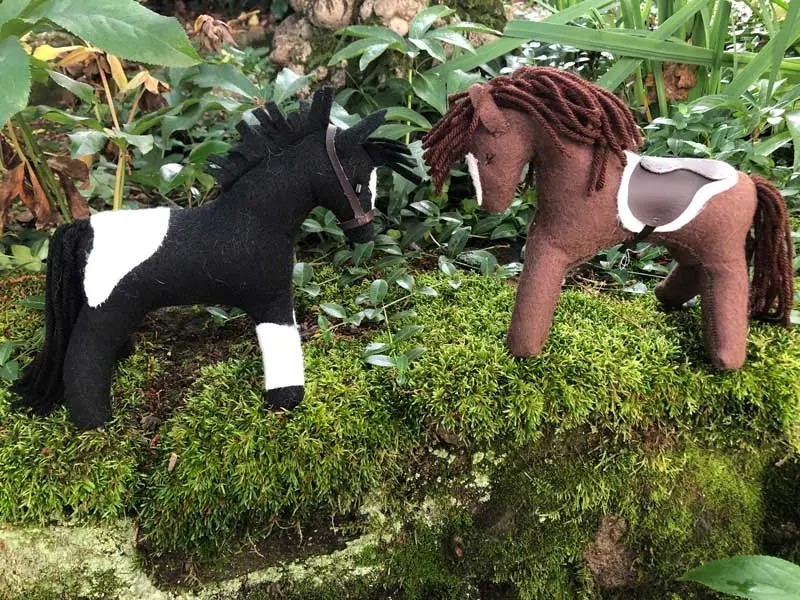
Fans of Ulysses S. Grant probably know the former U.S. president was a superb horseman who kept a number of horses while he lived at White Haven. How about creating a little horse of your own? Younger kids will probably need help making this unique little craft, but the teamwork will be half the fun!
You’ll find complete instructions on making your stuffed horse here.
Credit: Allpony
Make a Whirligig
Kids have always played with toys, but a few hundred years ago there were no stores or websites that sold toys. So what did a child play with when growing up in French Colonial America, like in Ste. Geneviève, Missouri? They created their own toys!
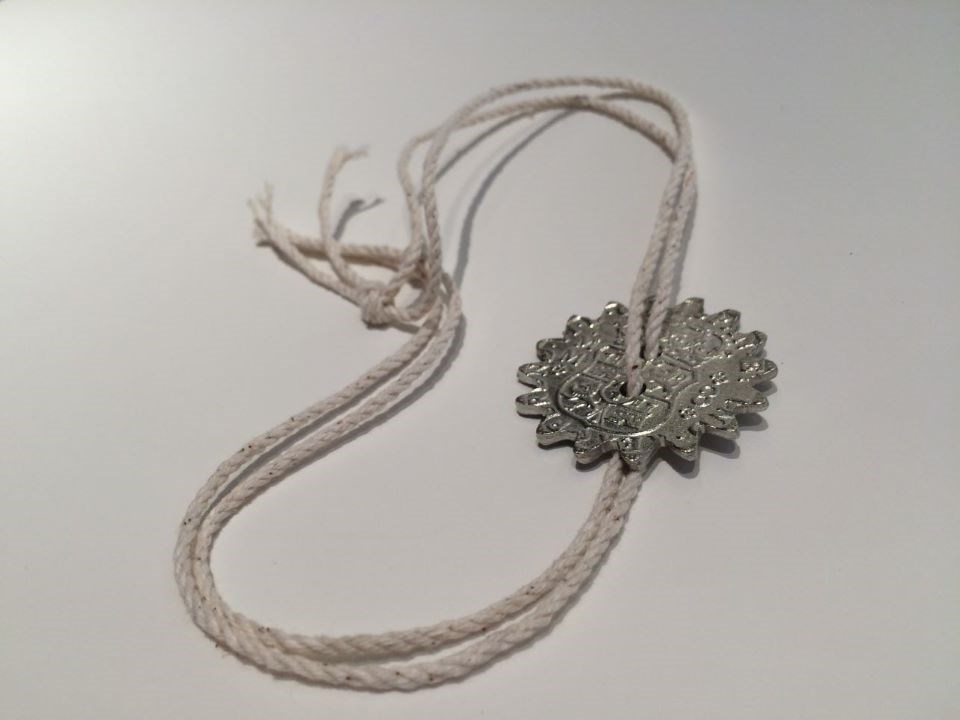
A whirligig was a favorite among 18th century children. This little spinning toy was easy to make from just a few common materials, such as buttons, worn out coins, or hammered musket balls. It was almost as much fun to make as it was to play with.
Want to make your own paper whirligig? Check out these simple instructions. The more you decorate it, the better it looks!
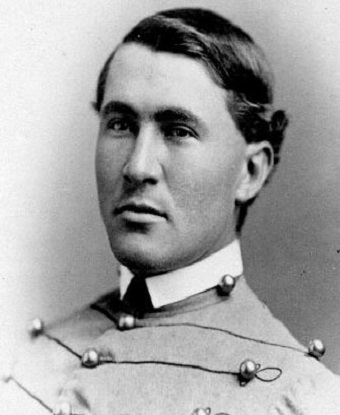
Frederick Dent Grant had big shoes to fill. As the oldest son of Ulysses S. Grant, Fred was treated “always as if I were already a man.” He helped with chores around his childhood home at White Haven and was taught to ride and swim at an early age. “I can see myself now, a chubby little chap, sitting on the back of one of the farm horses and holding on for dear life, my father urging me to be brave,” Grant later recalled.
Young Fred was also exposed early on to the stark realities of warfare. Not long after his father was promoted to the rank of colonel in the 21st Illinois Infantry in 1861, Fred accompanied him through the Illinois countryside. Colonel Grant believed his 11-year-old son was relishing his time as an unofficial member of the 21st. He wrote to his wife Julia: “Fred enjoys it hugely…The Soldiers and officers call him Colonel and he seems to be quite a favorite.”
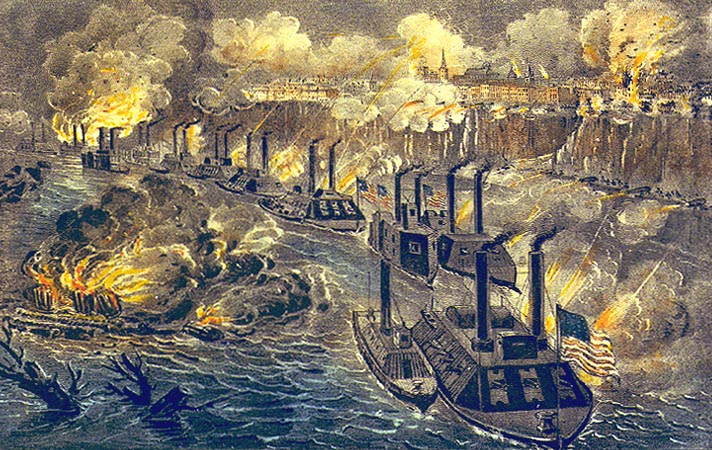
Ulysses also bragged about his son’s bravery a few years later when he brought him along during the Vicksburg Campaign of 1863. “Fred is very well enjoying himself hugely. He has heard balls whistle and is not moved in the slightest by it. He was very anxious to run the blockade of Grand Gulf.” But decades later, Fred painted a different picture, having been horrified by what he saw from a Union gunboat at Grand Gulf: “I was sickened by the scenes of carnage.”
At one point, the boy was shot in the leg by a Confederate soldier, but soon made a complete recovery and was able to stay with his father until the 45-day siege of Vicksburg ended. Fred returned to Ulysses’ side again during further battles. And he accompanied him to Washington, DC, when President Lincoln promoted Grant as Commanding General of all Union armies.
Credit: NPS
Despite his early distaste for the horrors of combat, Frederick Grant pursued a military career. Like his father, he attended West Point six years after the end of the Civil War. He was eventually promoted to the rank of Major General during the Spanish-American War. Also like his father, he was a heavy smoker and died of cancer in 1885 at age 62.