
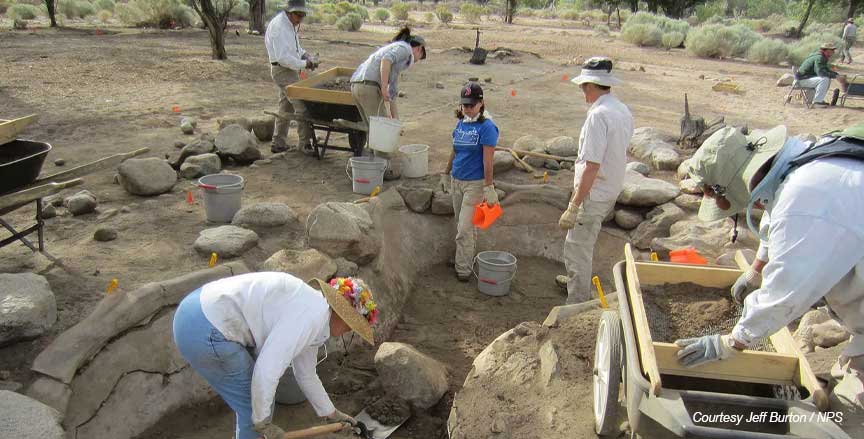
In honor of International Archeology Day – coming up this weekend – we thought we’d (ahem) dig into some of the fascinating finds uncovered at our partner parks.
Archeology is an important part of many historic National Park Service sites. It provides unique perspectives on places and people from our past that cannot be identified any other way. Archeologists can figure out exactly when events happened, reconstruct ways of life that no longer exist, and ultimately understand changes in human culture over time.
Several of our partner parks have relied on archeological studies to broaden our understanding of the stories and events that shaped their sites.
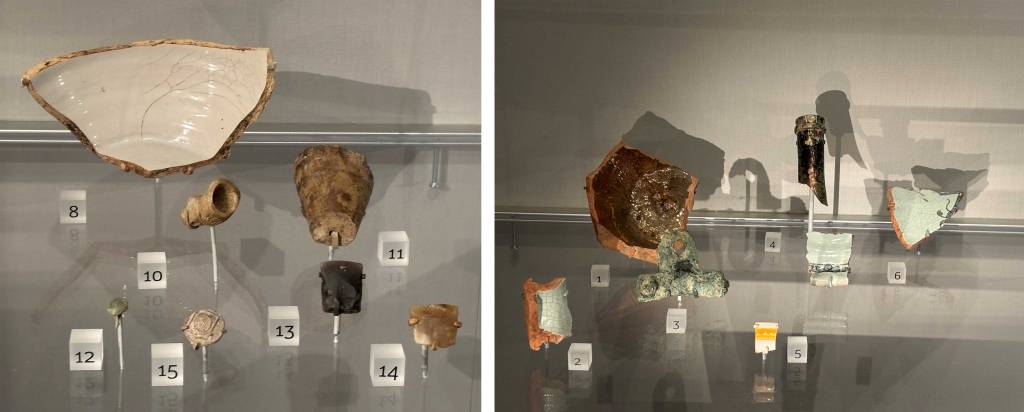
In 2014, archeologists discovered the remains of three French colonial house sites that had been buried just south of the Arch, the first evidence of French settlement some 250 years ago. Among the artifacts they uncovered were ceramic trade items related to the Indigenous inhabitants in the early 1700s. They also found items from St. Louis’ French colonial period in the late 1700s, including fragments of imported Faience plates and musket flint.
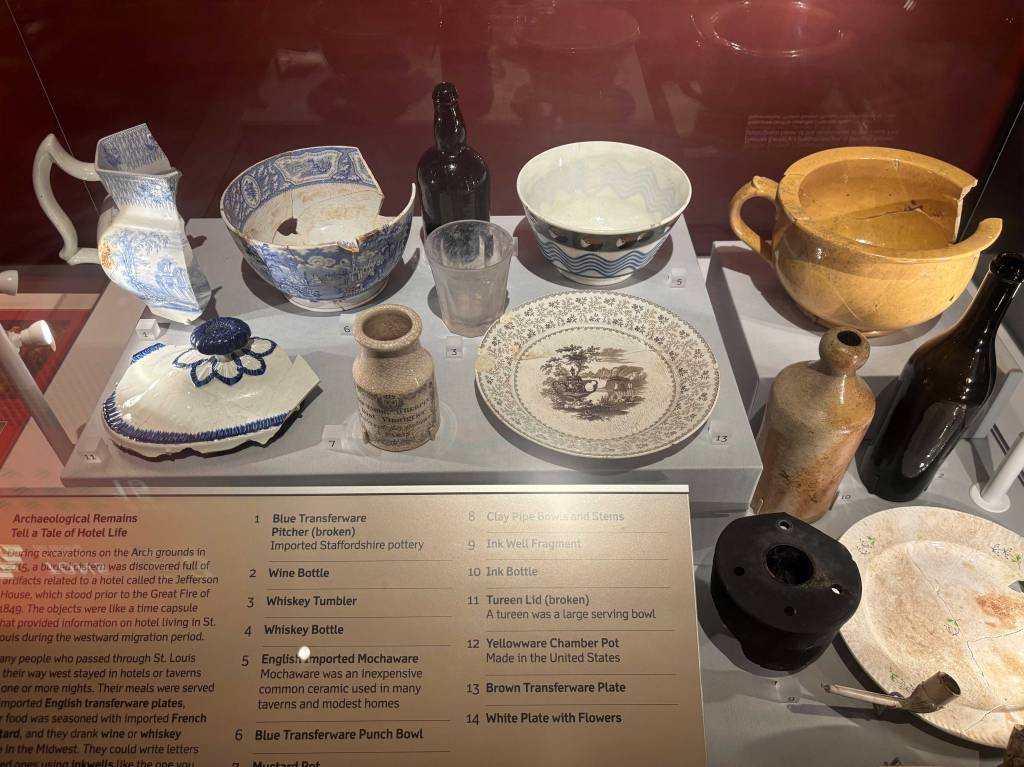
An excavation on the Arch grounds in 2015 uncovered a trove of 1840s artifacts from a hotel called the Jefferson House. These items showed what travelers coming through St. Louis had used during their hotel stay, like imported English crockery, whiskey and wine bottles, a French mustard bottle, and a chamberpot. Findings like these shed new light on how settlers and travelers lived in the city back then.
Ste. Genevieve National Historical Park
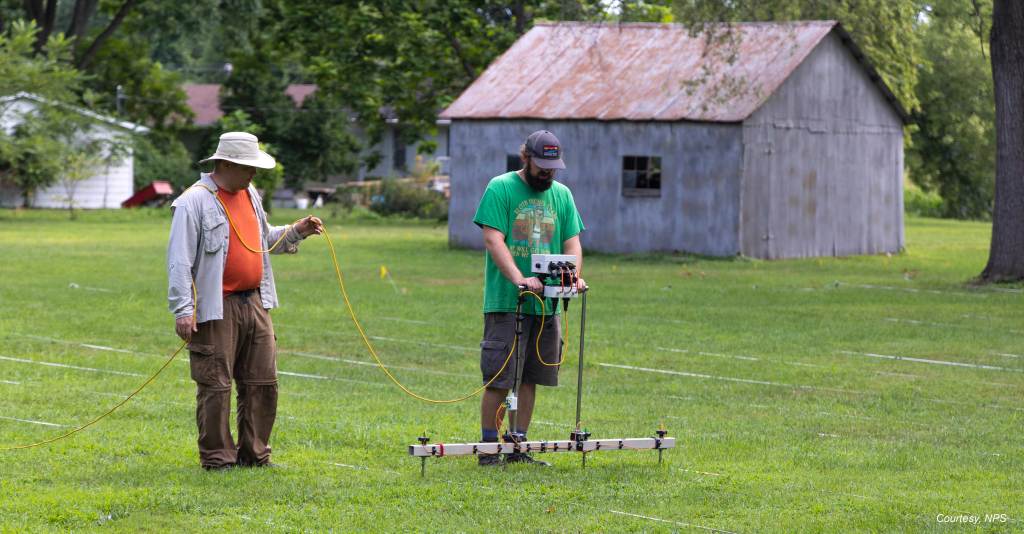
Expanding our knowledge of French colonial history in America was also the goal of recent archeological work at our partner site in Ste. Genevieve, Missouri. In 2022, specialists from the NPS Midwest Archeology Center spent several days investigating the grounds of the park’s 18th century buildings. They searched for evidence of old trash pits, for the remains of outbuildings like barns, kitchens, stables, and even privies, and for remnants of household items like tools and food serving items.
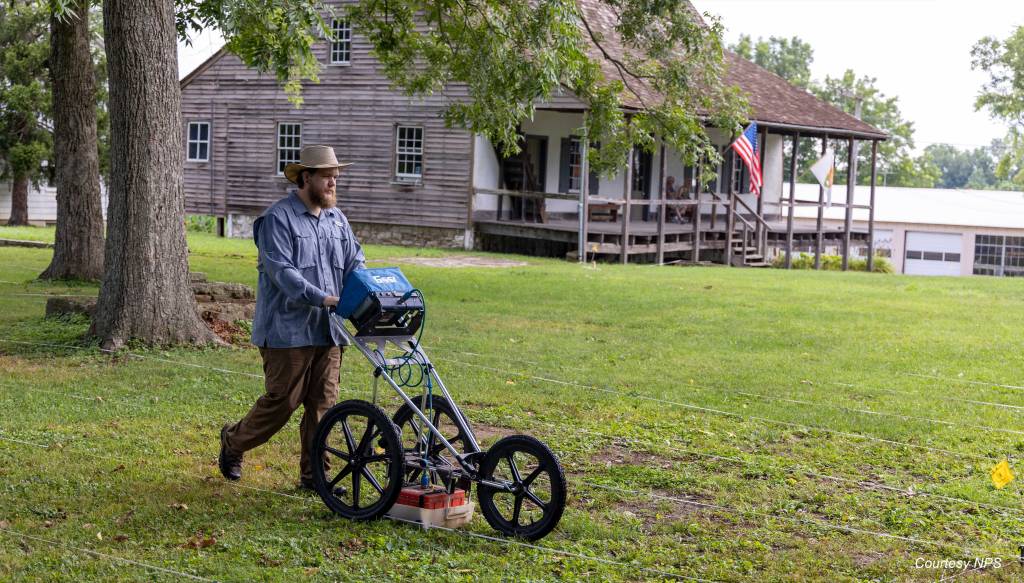
Information like this is invaluable to creating a complete picture of a historic community, and can reveal insights into how people lived or worked on-site, including enslaved men and women or hired servants.
During this visit, the archeologists didn’t actually dig into the ground but analyzed each property they studied with magnetometers, ground-penetrating radar equipment, and electromagnetic induction meters. The data they collected is being analyzed and the park is awaiting the result of their studies.
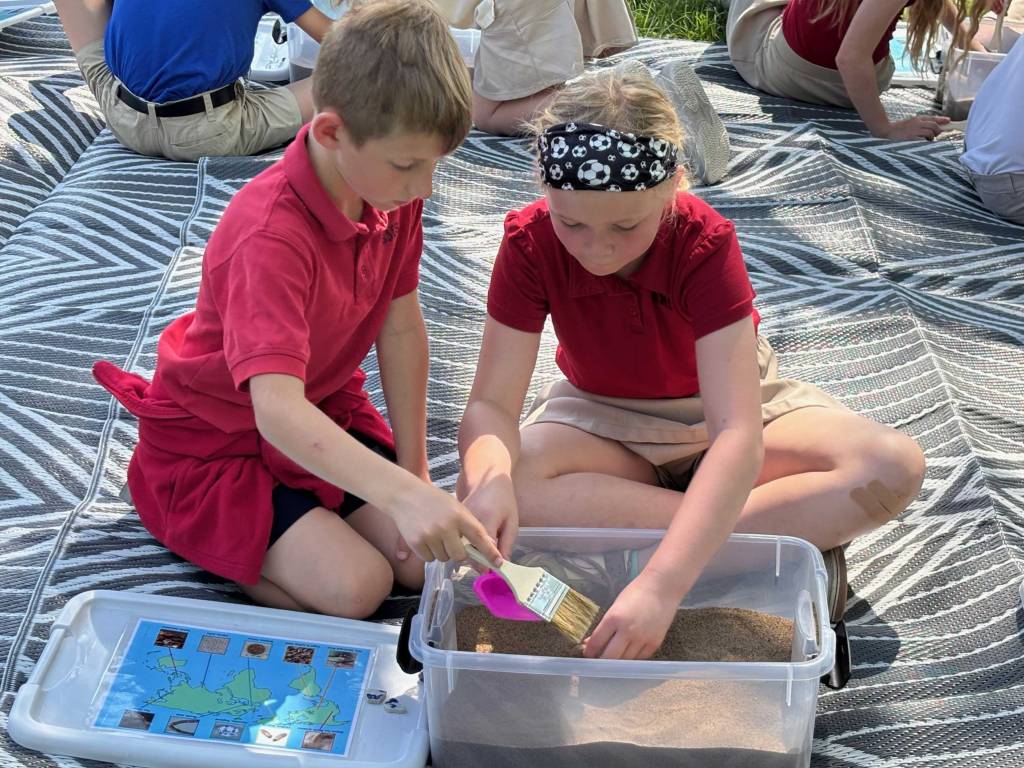
Meanwhile, third graders on field trips to the park can learn about the importance of archeology when they conduct “mock digs” for buried artifacts.
Knife River Indian Villages National Historic Site
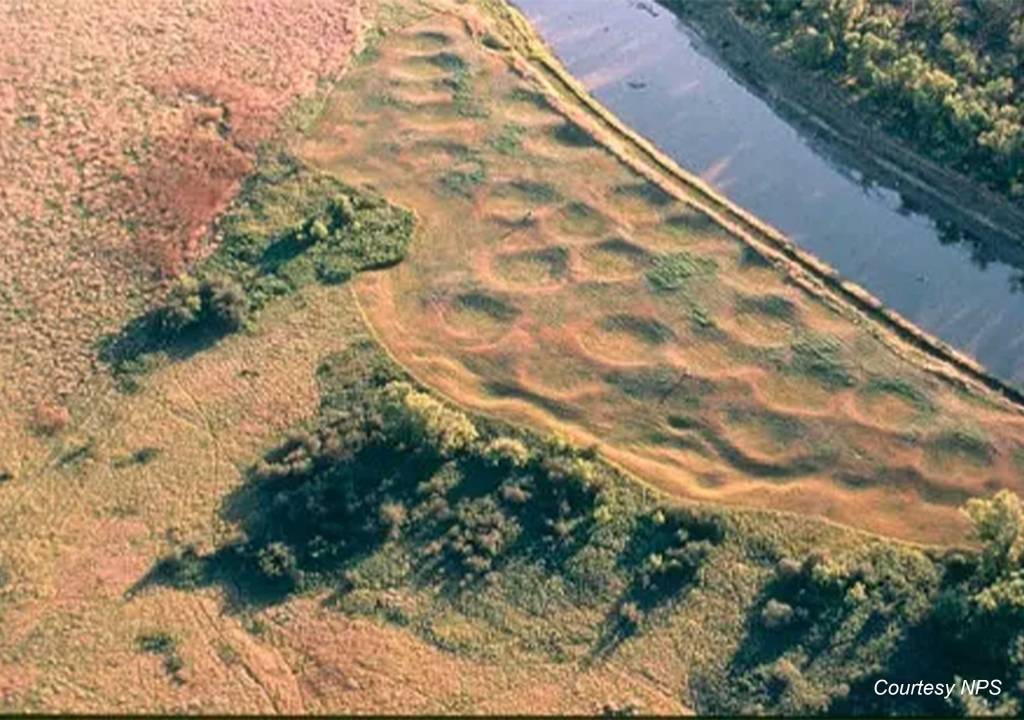
The discovery of more than 50 archeological sites within this North Dakota park show the region has been home to various peoples for up to 11,000 years. The tribes who eventually settled here from the early 1500s to the mid-1800s – the Hidatsa, Mandan, and Arikara – pioneered an agricultural lifestyle on the Northern Plains while hunting bison and harvesting the crops they grew. Additional tribes traveled from across the plains to trade, socialize, and occasionally wage war.
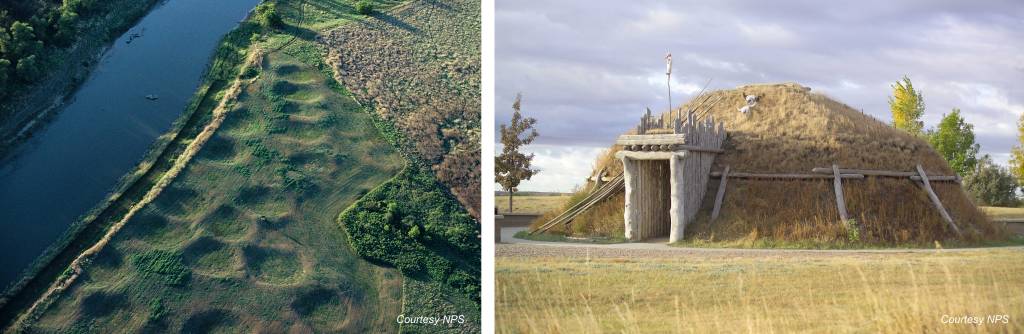
The park today contains the remains of three large village sites, which show up as round depressions in the landscape along the Knife River. Each circle represents the depression caused by the round earthlodges that housed extended families. These settlements date to 1525 and thrived until 1837, when smallpox greatly reduced the populations.
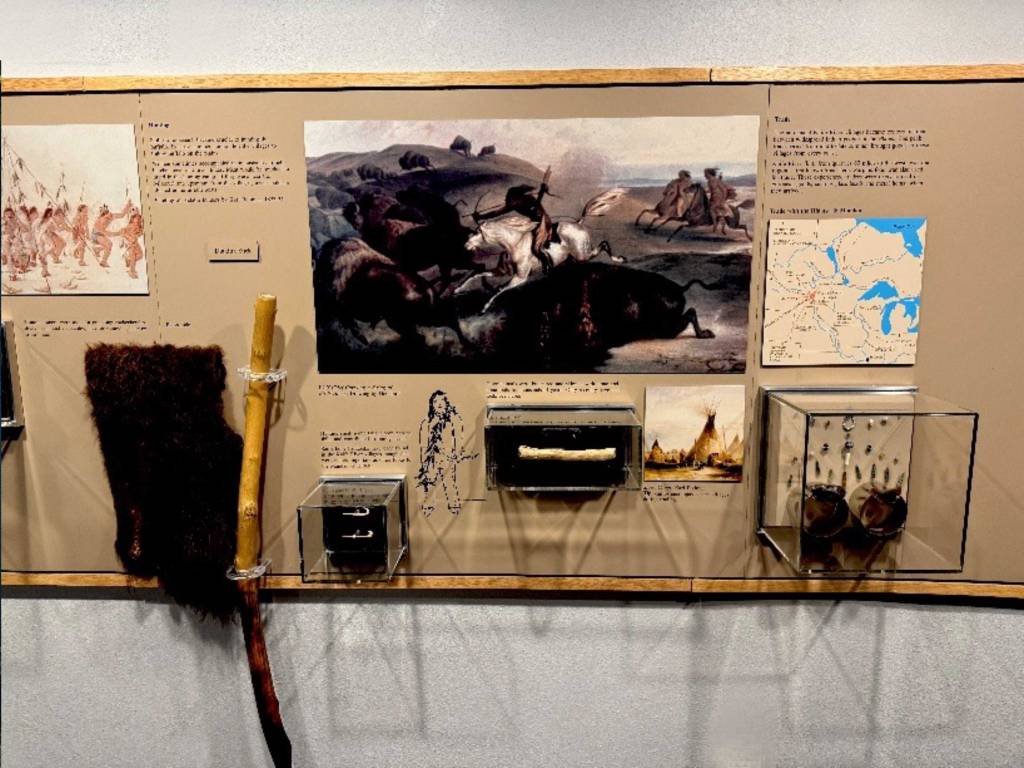
The park’s visitor center features some artifacts that were discovered on the site, as well as information on the lives of the region’s early inhabitants.
Ulysses S. Grant National Historic Site
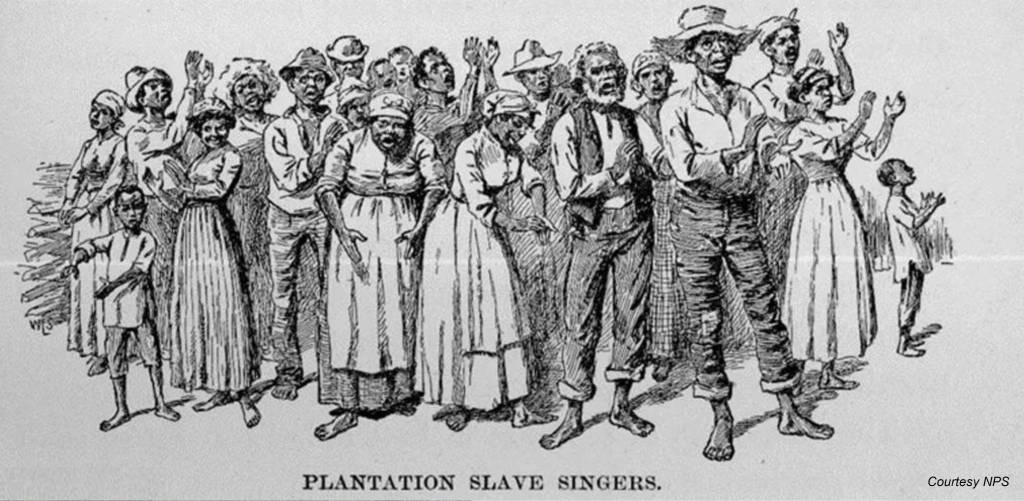
Although the life and military career of Ulysses S. Grant is the main focus of this park, the 25 archeology studies conducted at this site have shed considerable light on the conditions of slavery at this 19th century plantation. White Haven and its surrounding 850 acres were home to approximately 30 enslaved people: the men worked the fields and orchards while the women and children maintained the home, tending to laundry, cooking, cleaning, and other domestic duties.
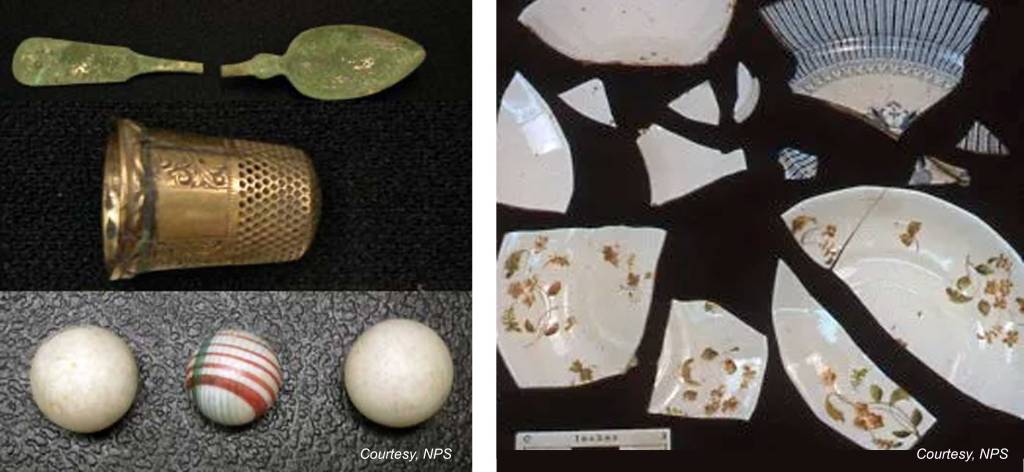
NPS archeologists found more than 2,200 artifacts during excavations of the stone summer kitchen building, which sits behind the main residence. These include numerous objects that would have been used by enslaved workers, many of them related to food preparation, laundry, and sewing duties. Other objects like marbles and even a domino were probably used by children.
In addition, researchers also uncovered evidence of spiritual traditions that were practiced by the enslaved. In the winter kitchen (on the ground floor of the main house), archeologists uncovered ritualistic bundles known as minkisi hidden beneath the winter kitchen floorboards. These were thought to be used in hoodoo spiritual practices, which were secretly used by enslaved people on numerous American plantations.
Springfield 1908 Race Riot National Monument
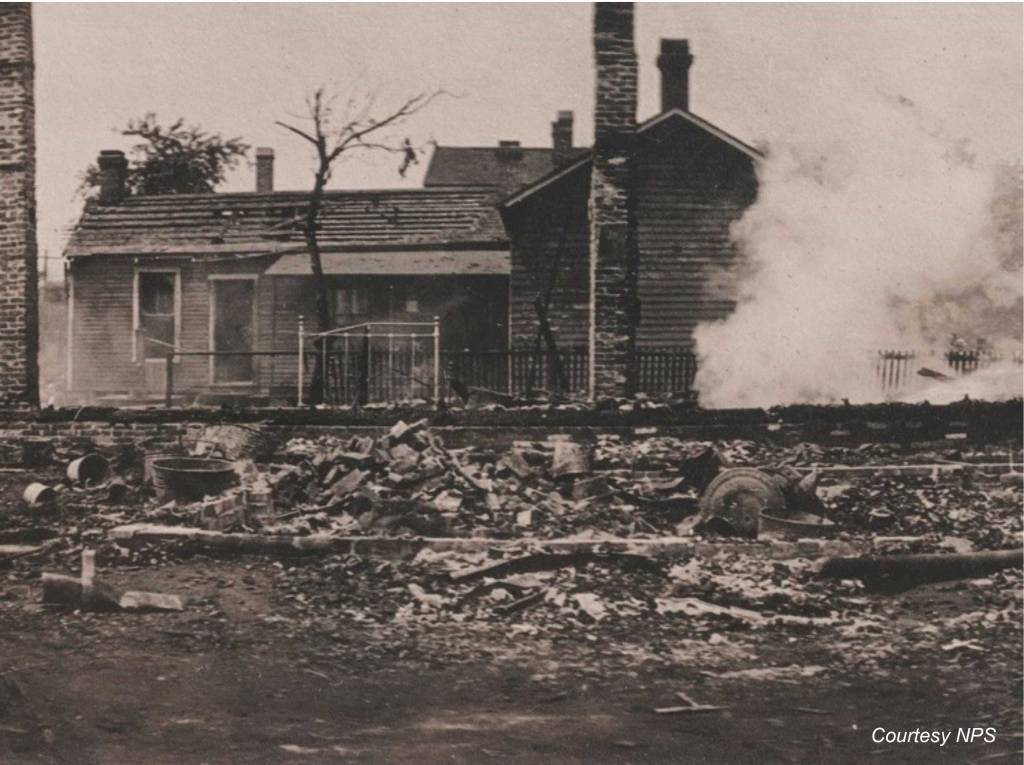
The site of a horrific race riot in Springfield, Illinois, stands as a memorial to one of America’s most deadly incidents of racial violence. And while there is nothing left of the burned-out buildings, archeological evidence gives us a rare glimpse into a Black community devastated by racial hatred. The mob, consisting of thousands of White residents, destroyed Black homes and businesses, and lynched two Black men over several days in August 1908.
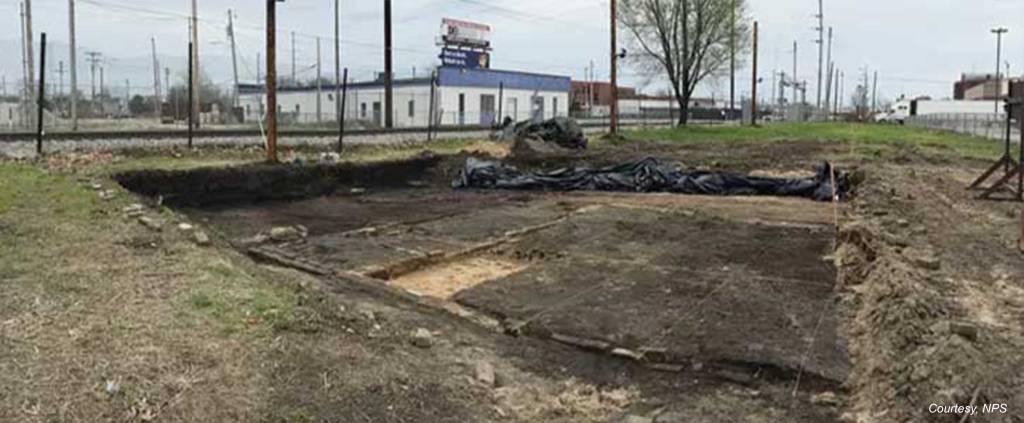
The foundations of five homes and related artifacts show give us a glimpse into the lives of those who lived in Springfield’s predominantly Black neighborhood, known as the “Badlands.” The NPS site is very near where the riot started. Archeological evidence shows the buildings burned in the riot and never reoccupied. But the artifacts that have been recovered – on display at the Illinois State Museum – are powerful reminders of the rioters’ victims.
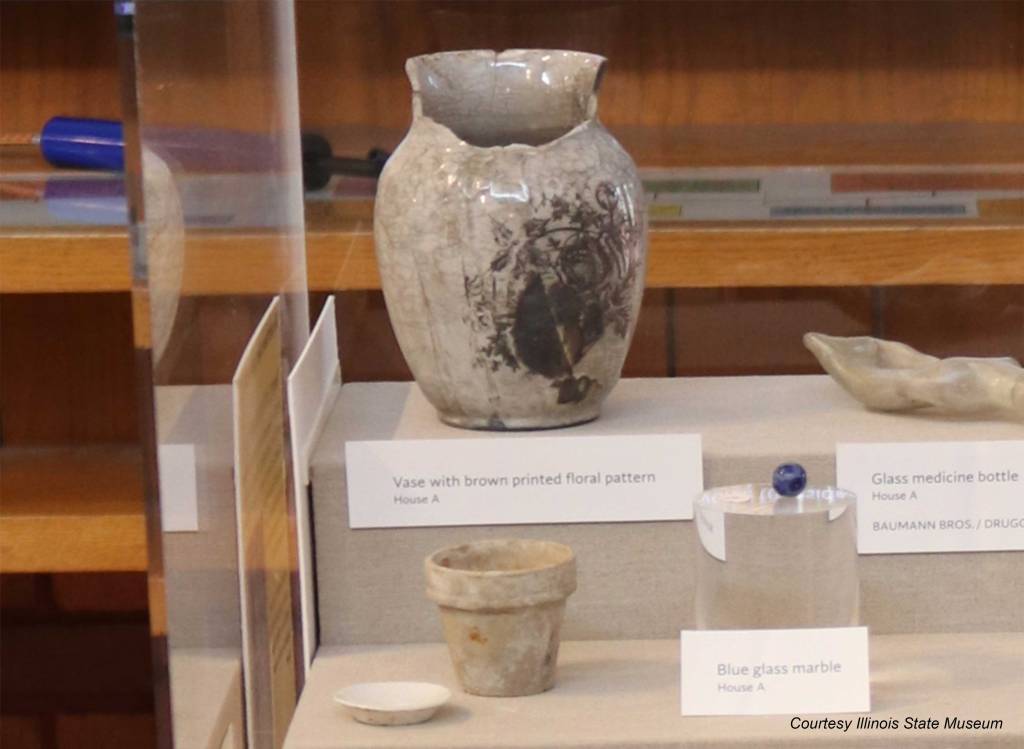
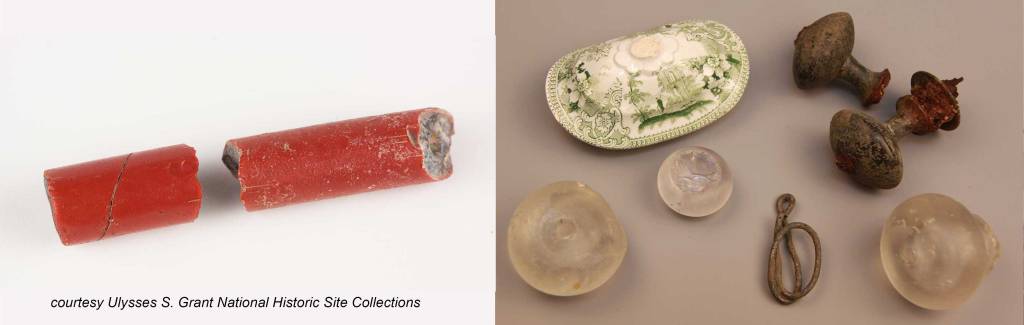
The vase and seedling pot seen here, for example, were recovered from the remains of a house on North 10th Street. They tell us that members of the William Smith family took an interest in gardening, a common practice among African American families who sought to supplement their food supply.
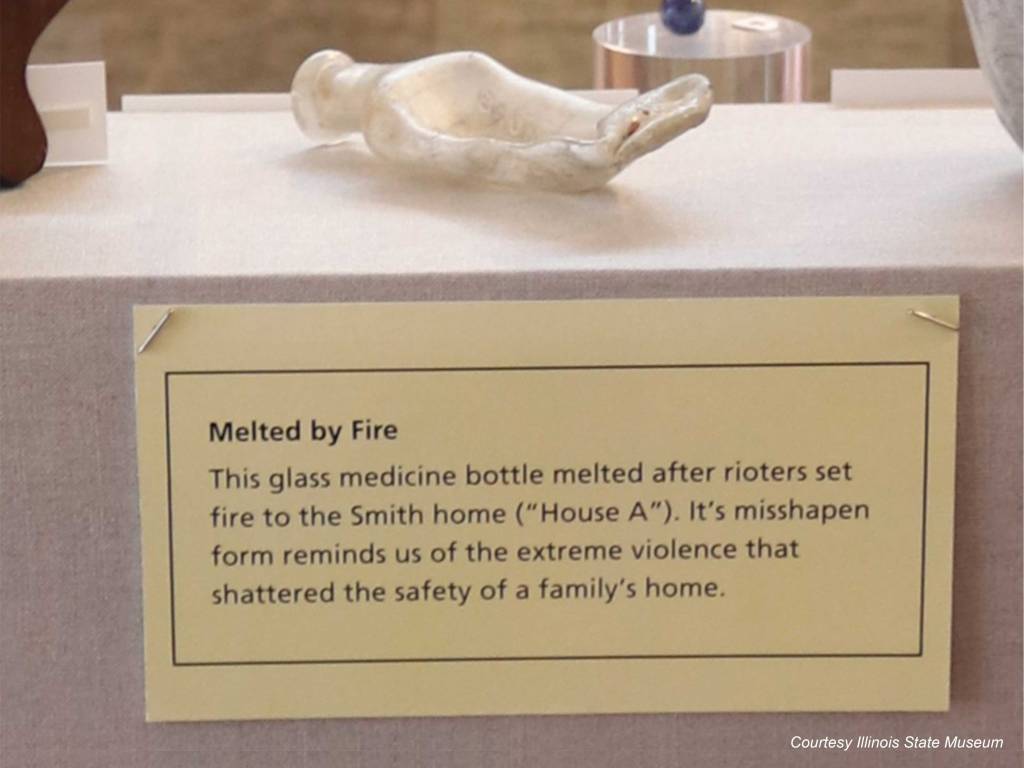
This melted glass medicine bottle – also from the Smith home – is a silent reminder that William and his son were both on medication and confined to bed when the riots broke out. Both men were severely injured by the attacking mob.
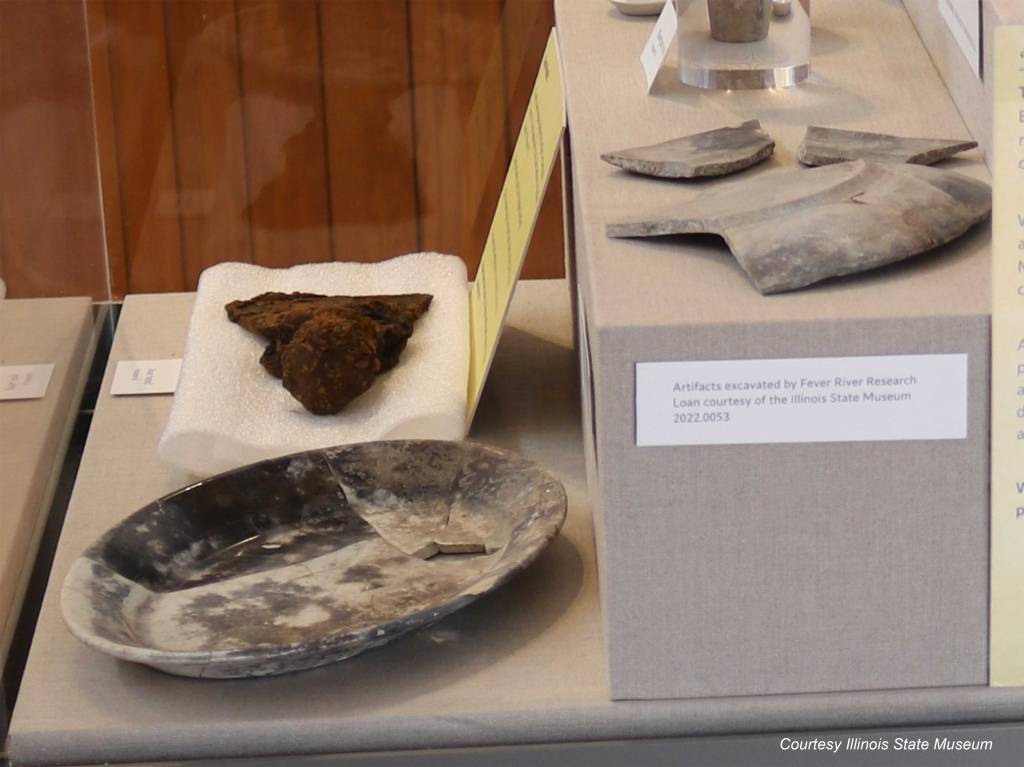
The shattered dishware recovered from the home of Smith’s next-door neighbor, Robert N. Wright, evokes the moment that rioters ransacked the house. Archeologists also found Wright’s U.S. Army service medals dating from his time serving in the Spanish-American War. Some were fused together as his home was burned.
The archeological findings at Springfield 1908 Race Riot National Monument helps us not only confront the injustice these residents endured but also helps us see them as real people who showed strength and resilience during a pivotal Civil Rights turning point.

