
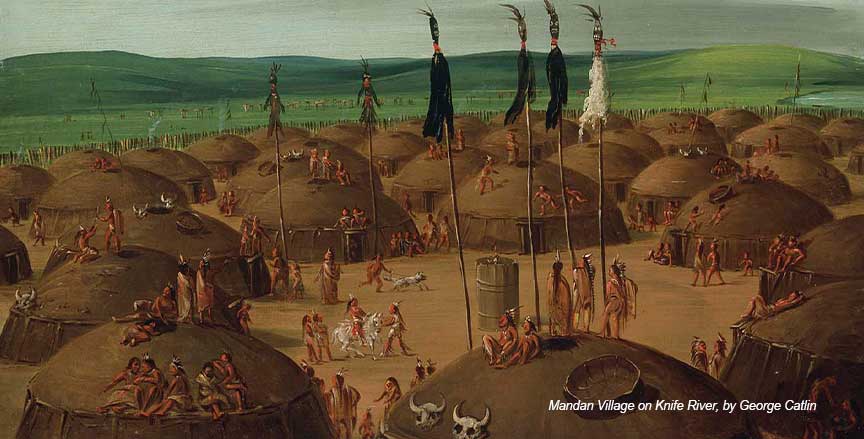
During Native American Heritage Month, JNPA is especially proud to partner with a number of public lands sites that honor the history and heritage of Indigenous people in their regions. One of our newest park partners, Knife River Indian Villages National Historic Site, interprets the unique cultures of the Hidatsa, Mandan, and Arikara people who occupied the landscape near the Knife River.
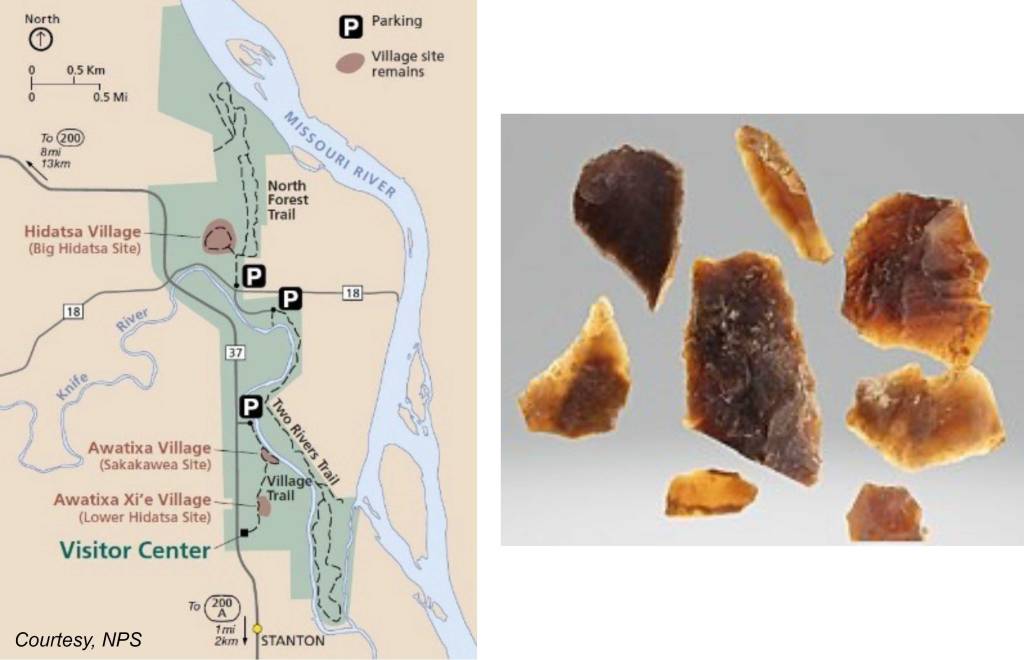
The Knife River in west-central North Dakota is a 120-mile tributary of the Missouri River. It gets its name from the abundance of high-quality brown flint found along its banks. The glassy flint breaks easily to form sharp edges, making it ideal for crafting sharp knives and tools, which local Native American communities used and also traded with traveling tribes.
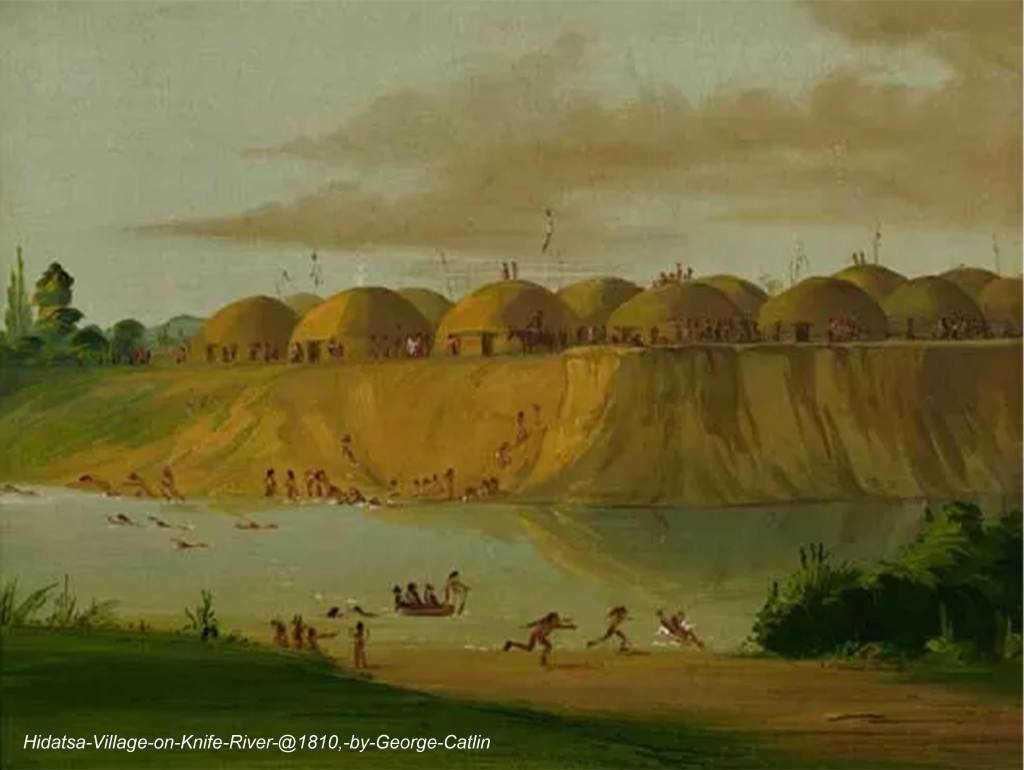
The first people to live in the area around the Knife River were primarily hunters and may have arrived as early as 12,000 years ago. Then starting around 1525, the Hidatsa began to establish large permanent villages comprised of closely packed earthlodges. They were soon joined by the Mandan and Arikara. Though these tribes hunted, they were also the first people to pioneer agriculture in the Northern Plains, successfully cultivating crops like corn, beans, and squash.
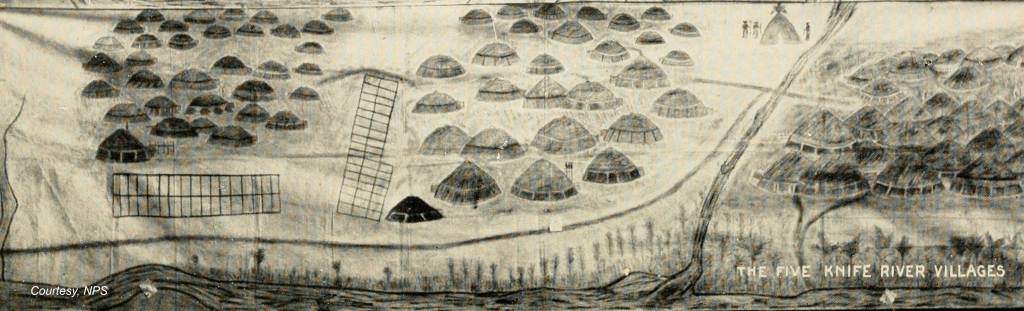
That development led to their establishment of permanent village settlements, comprised of carefully engineered circular earthlodges arranged in tight clusters. The largest villages consisted of roughly 120 earthlodges.
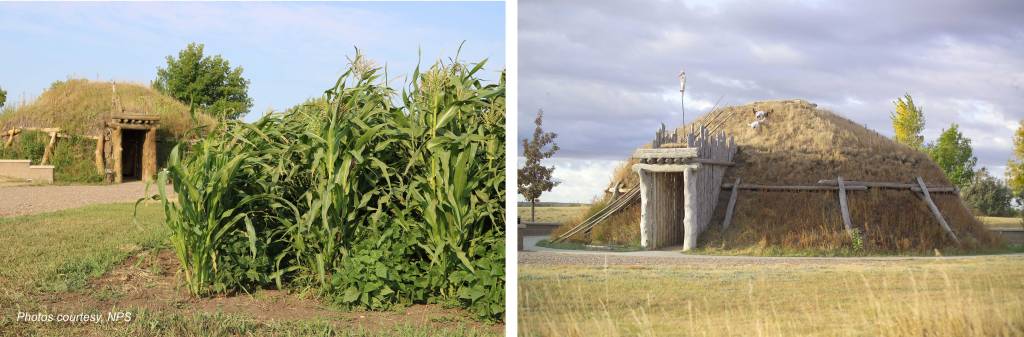
Among the Hidatsa, women owned and largely built the earthlodges. The round structures measured about 40 feet across, consisting of a framework of posts and beams covered with branches, prairie grass, and strips of thick sod.
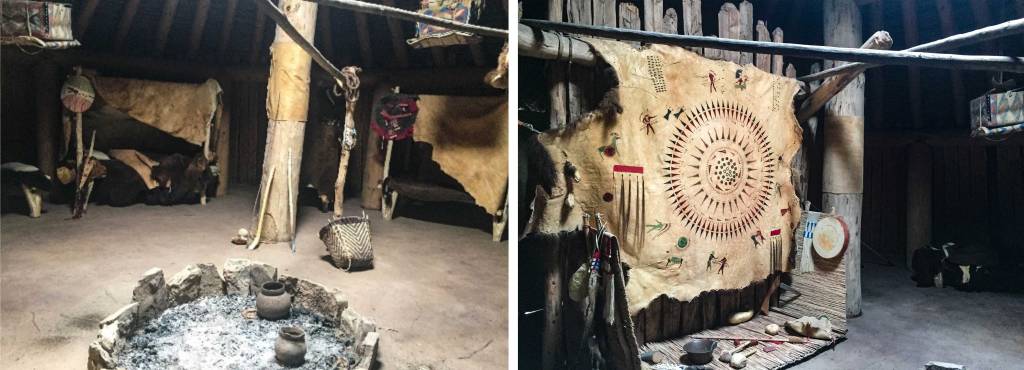
Inside, a central fire provided warmth and a place to cook, while an opening in the roof allowed smoke to escape. There were separate spaces for sleeping, eating, and storage; hidden cache pits stored dried corn, beans, squash and sunflower seeds, helping families preserve food year-round. An earthlodge could last about 10 years and usually housed between 10 and 20 members of an extended family.
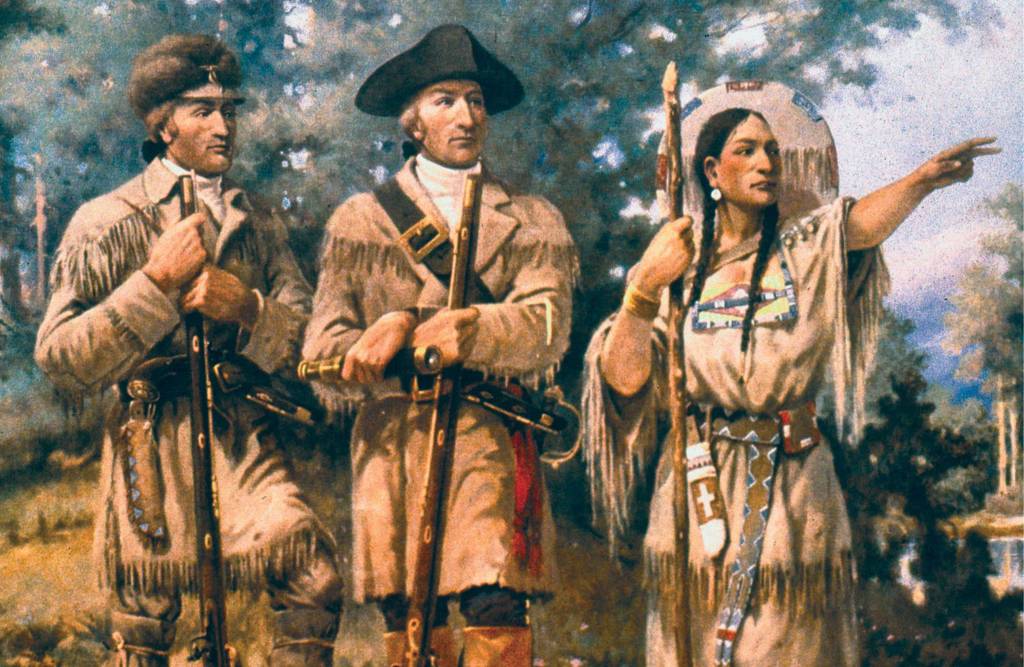
Interestingly, Lewis and Clark visited one of the Hidatsa Villages in 1805 on their journey through the American West. It was there they encountered a teenage Shoshone girl from Idaho named Sacagawea who had been kidnapped by the Hidatsa in a raid years earlier. The explorers hired her and her French-Canadian husband to serve as translators for the Corps of Discovery.
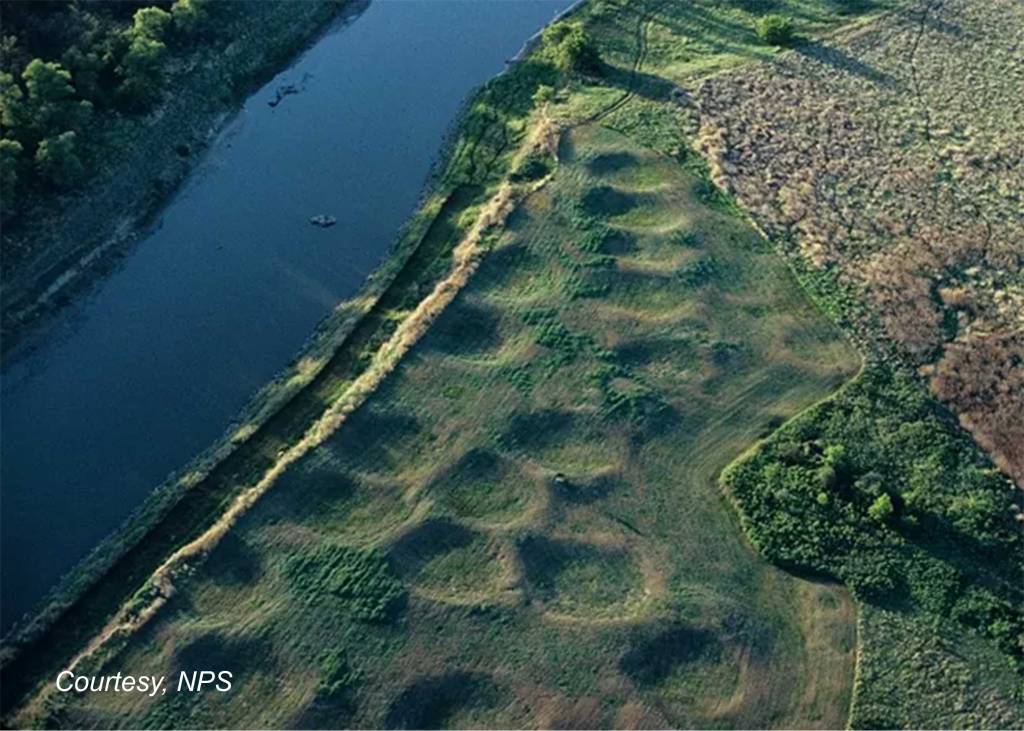
The Knife River villages thrived from the early 1500s until 1837 when a series of smallpox outbreaks – spread through the trading network – nearly wiped out the populations. All that’s left of the earthlodge settlements today are rounded depressions in the ground that only hint at the vibrant cultures that once flourished along the Knife River. Yet these ancient communities remain part of living history. Tribal members continue to gather at the park for ceremonies, and students participate in land-restoration projects and plant heirloom seeds, ensuring that traditions and connections to the land remain strong.

