Grant’s Christmas Present to the Nation

Most of us probably assume that Christmas Day has always been a holiday in the U.S., even during colonial days. Not so – it wasn’t until 1870 that December 25 was proclaimed a national holiday. And we have President Ulysses S. Grant to thank for that official declaration.

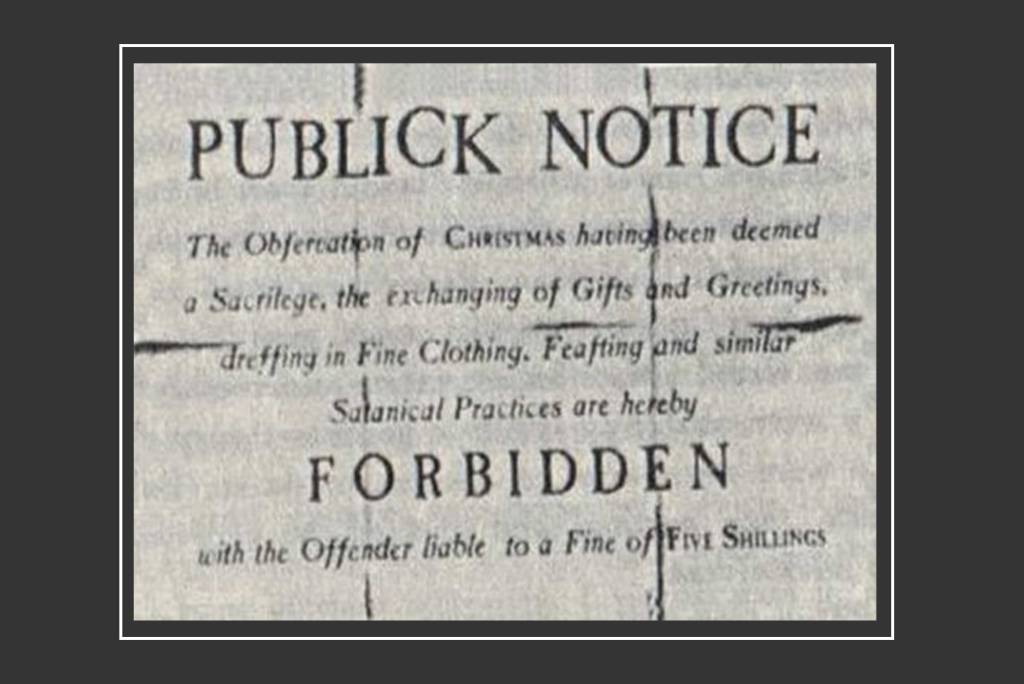
Early Americans’ observance of Christmas depended on where you lived. The Dutch colonists in New York celebrated the day, as did the British in Virginia. But many Puritans in New England looked upon Christmas as a pagan festival; in many communities, including Boston, it was actually a crime to celebrate on Dec. 25. The strict and pious Puritans disapproved of the drinking, feasting, and dancing associated with Christmas, regarding it instead as a muted, solemn affair more appropriate for church services and praying.  

1659 public notice banning Christmas celebrations in Boston 

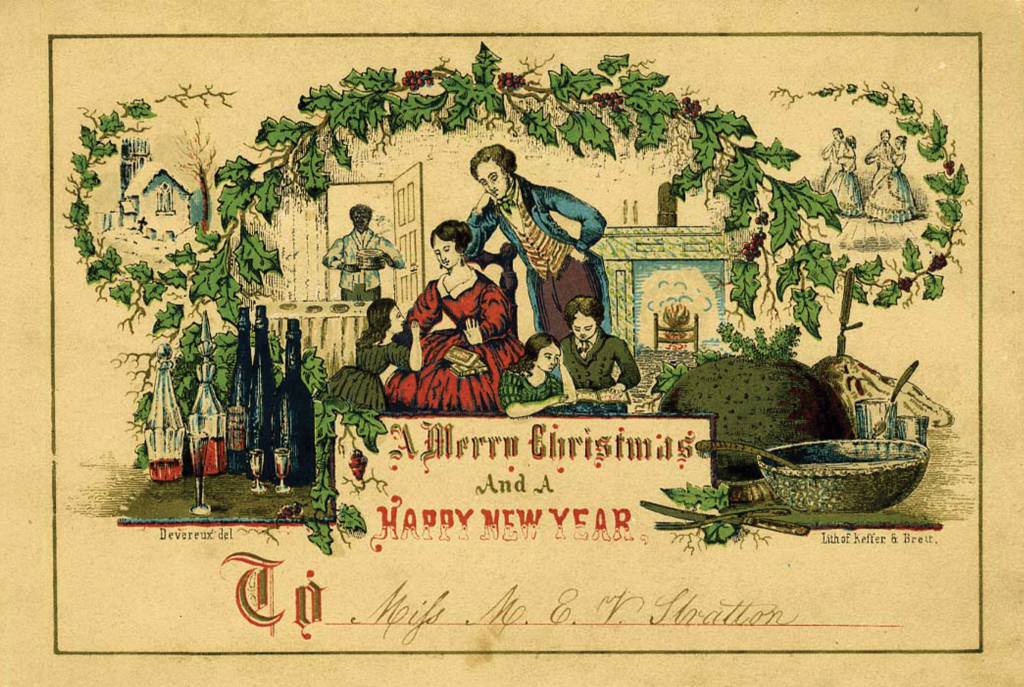
In the early 1800s, Christmas became increasingly popular in the South, and newly arrived European immigrants in New England managed to lift the local bans on celebrating the holiday. A number of states (beginning with Louisiana in 1830) declared Dec. 25 a holiday. Families started sending Christmas cards, decorating fir trees, and preparing festive meals.

Early American Christmas card, 1850

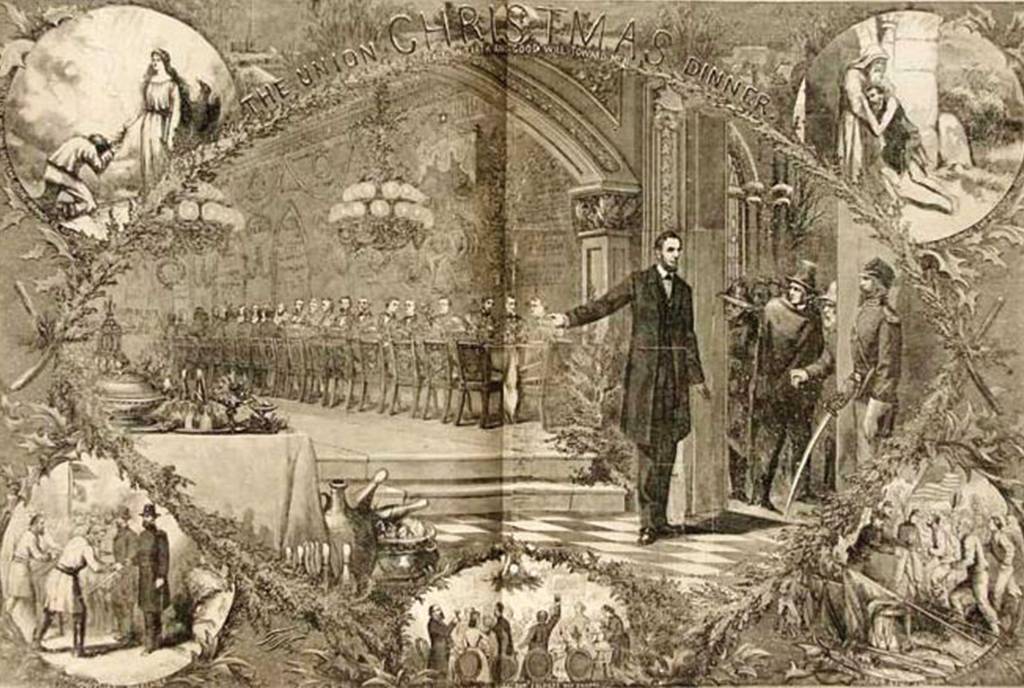
During the Civil War, soldiers celebrated by decorating their camp trees and singing carols. During the first year of the war President Lincoln and his family observed the day by holding a Christmas party at the White House.

Thomas Nast illustration of Abraham Lincoln welcoming Confederates to Christmas dinner, 1864  

It wasn’t long before business leaders became frustrated with the patchwork holiday celebrations that varied state by state, interrupting their businesses on different days in different places. They encouraged politicians to formalize the Christmas observance nationwide.  

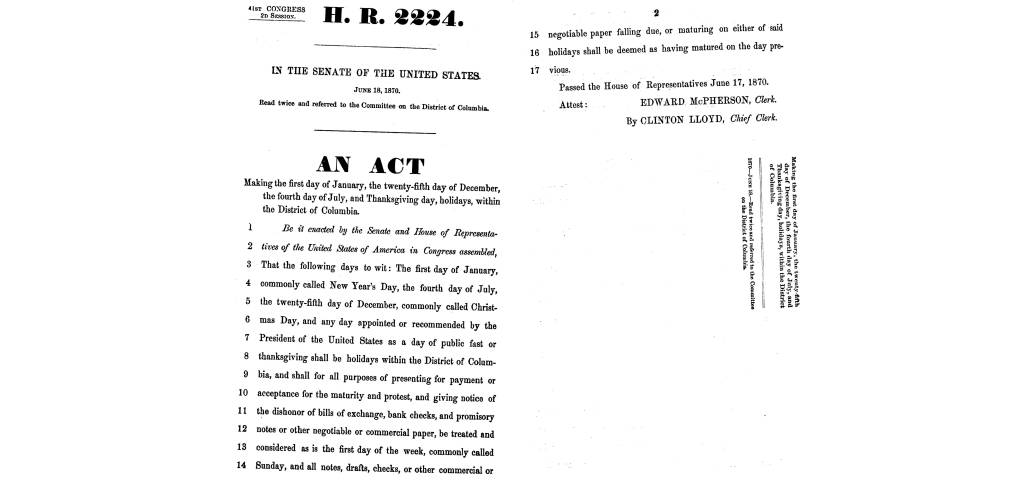
In June 1870, President Ulysses S. Grant signed a bill into law establishing Christmas Day and New Years Day, among others, as nationally observed holidays. In addition to appeasing the business community, it was hoped the move would help unify a nation still divided by the Civil War. 

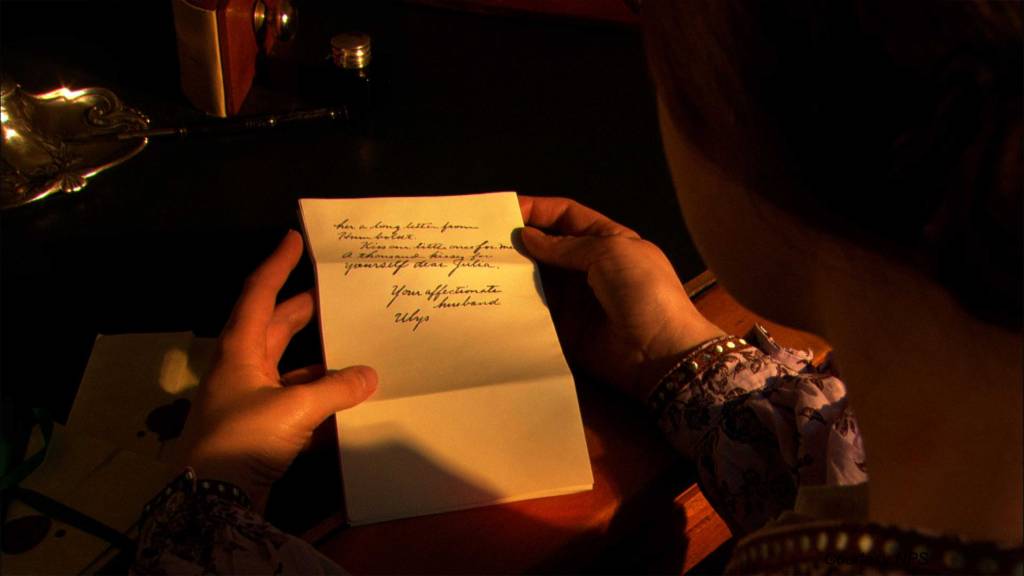
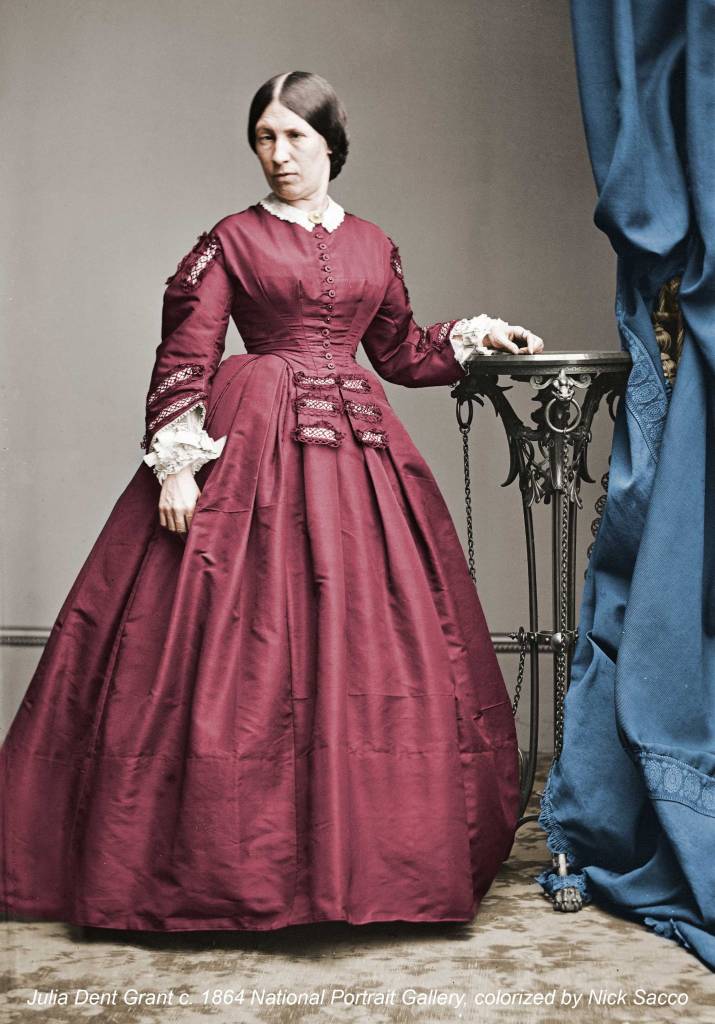
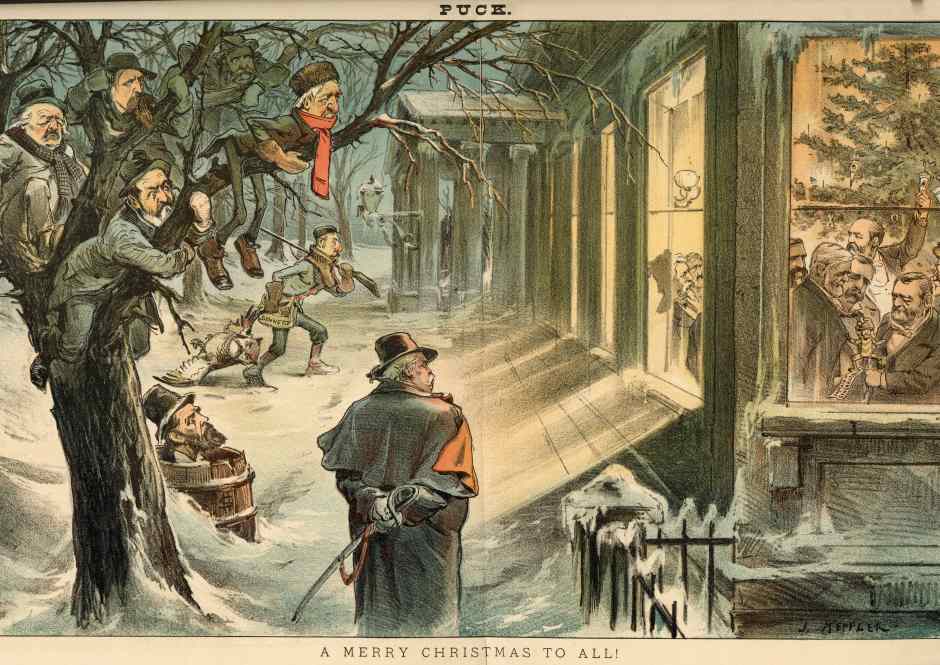
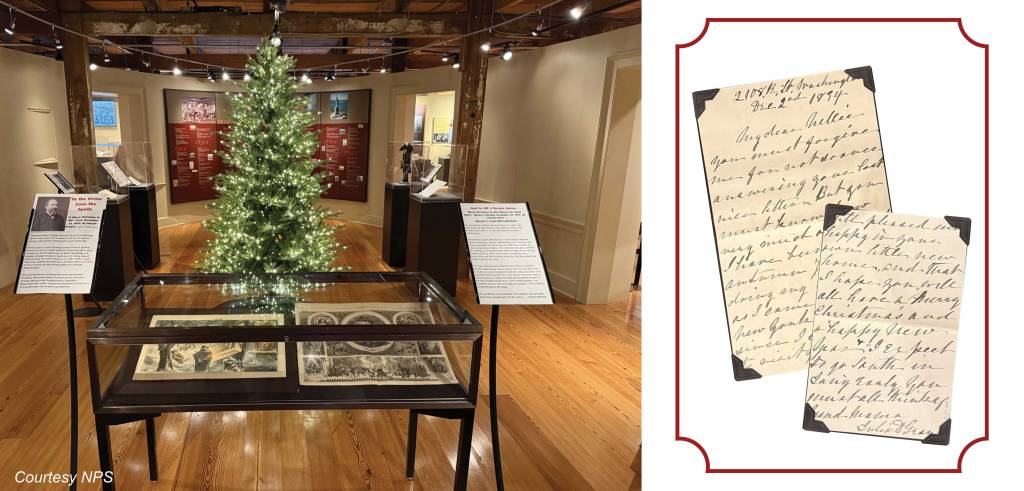
To honor Grant’s historic act, Ulysses S. Grant National Historic Site has created a special Christmas exhibit in the park’s museum. Artifacts on display include holiday letters from Julia Dent Grant to family members, seasonal political cartoons, and a nutcracker representing Grant. The exhibit will last through early January.

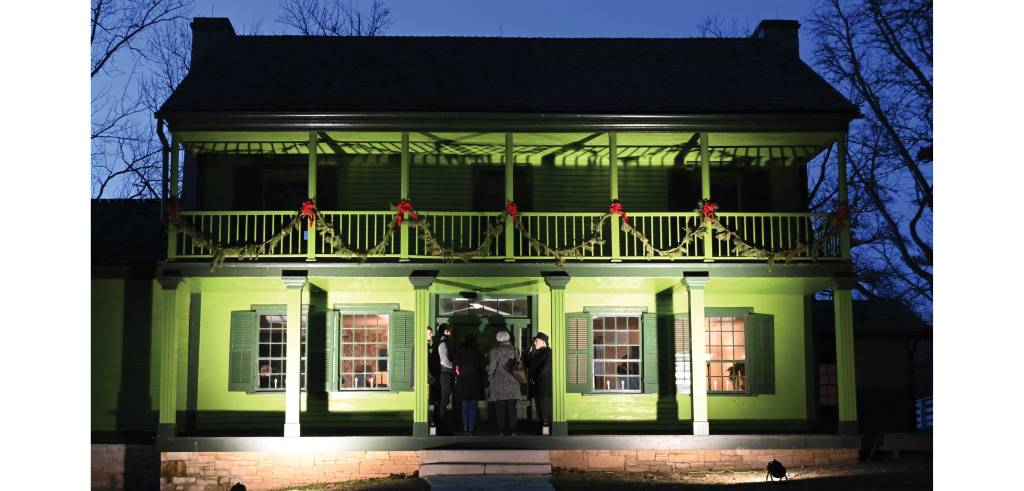
You’ll also want to visit the park at 5:30 Sunday December 14 to experience White Haven by Candlelight. Lights and decorations will adorn the historic house both inside and out, carolers and musicians will entertain guests, and 19th century foods will be on hand. At 7:00, visitors can enjoy a concert by the Buckhhannon Brothers in the park’s theater.

A Most Skilled Horseman

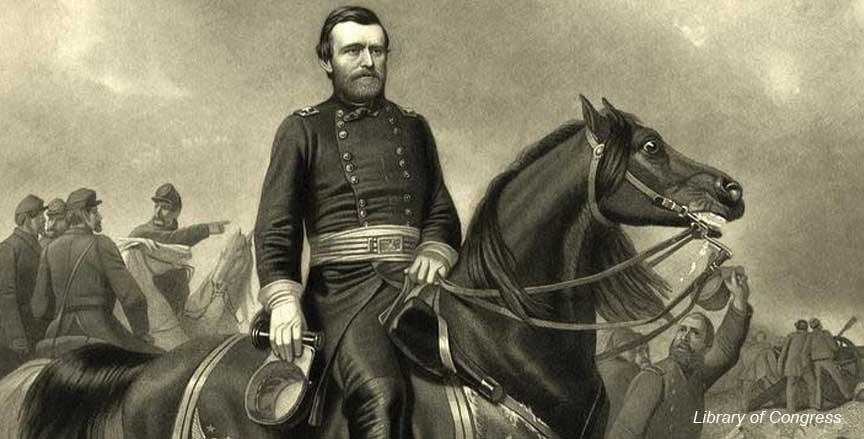
Many of our U.S. presidents were accomplished horsemen. George Washington was known as the “finest horseman of his age;” Thomas Jefferson rode nearly every day until late in life; Andrew Jackson bred and raced horses, stabling several at the White House; and Zachary Taylor grazed his beloved warhorse on the White House lawn. But Ulysses S. Grant is considered by many to be the most skilled horseman to ever occupy the Oval Office.

Even as a small boy, Grant’s connection with horses was obvious. There are numerous stories of young Ulysses breaking in horses nobody else could ride and doing daredevil stunts on horseback. By age five, he was an accomplished and daring rider, known for standing on one leg while maintaining his balance at a gallop. His mother was heard to say, “Horses seem to understand Ulysses.” 

Throughout adulthood, Grant continued to ride, train, and care for horses. For him, riding was more than a pastime – it was a form of discipline and excellence.  When he attended West Point, his riding abilities were legendary. Fellow cadet James Longstreet described Grant’s skills: “In horsemanship…he was noted as the most proficient in the Academy. In fact, rider and horse held together like the fabled centaur.” 

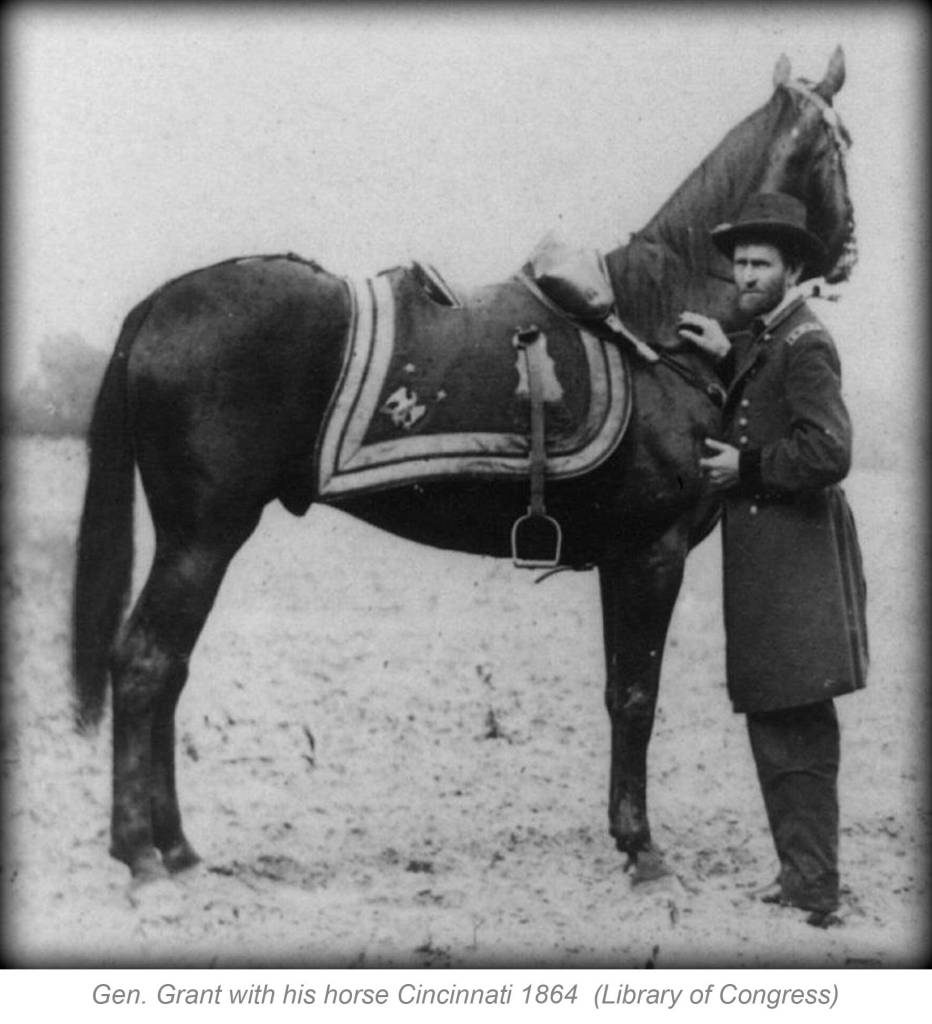
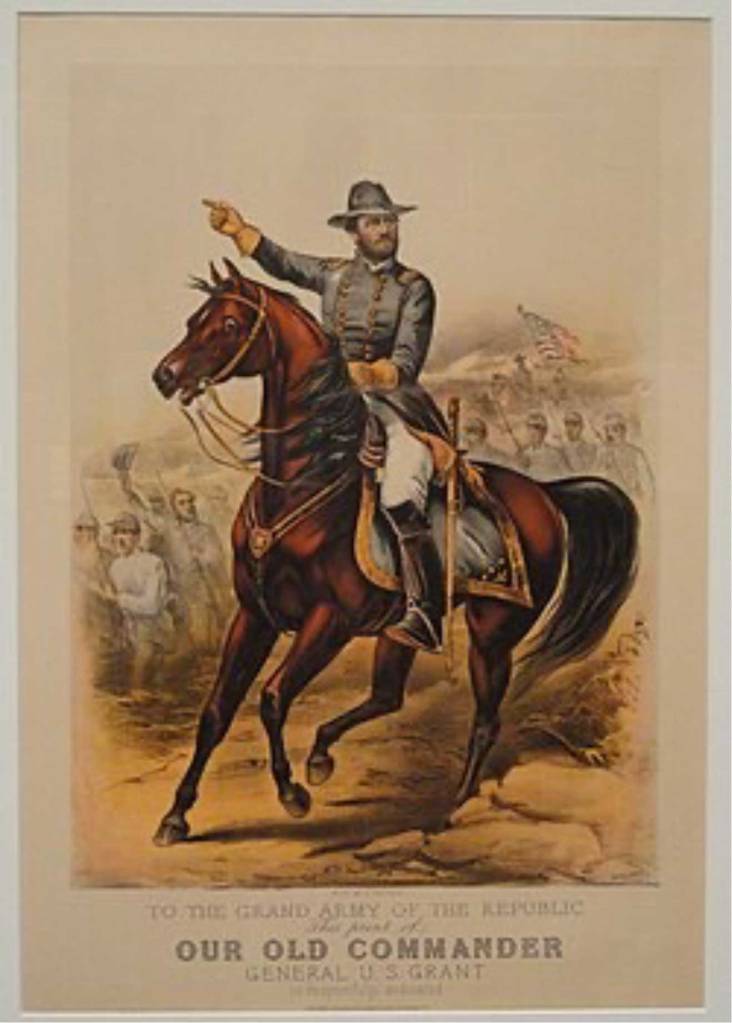
During the Civil War, riding was Grant’s preferred means of transportation since he found it a useful way to scout the terrain. His most famous horse, Cincinnati, was given to him as a gift after the Battle of Chattanooga and quickly became his favorite. (The horse was the son of Lexington, at one time the fastest four-mile thoroughbred in the country.) Cincinnati was a reliable warhorse, remaining even tempered during the fiercest of battles, and Grant continued to own him until the horse’s death of old age.

Courtesy NPS.

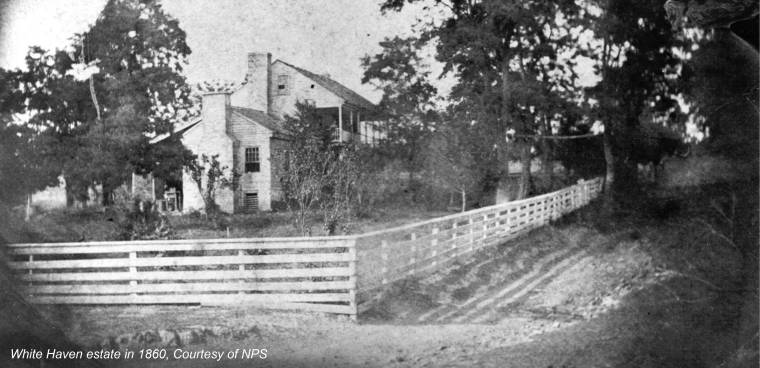
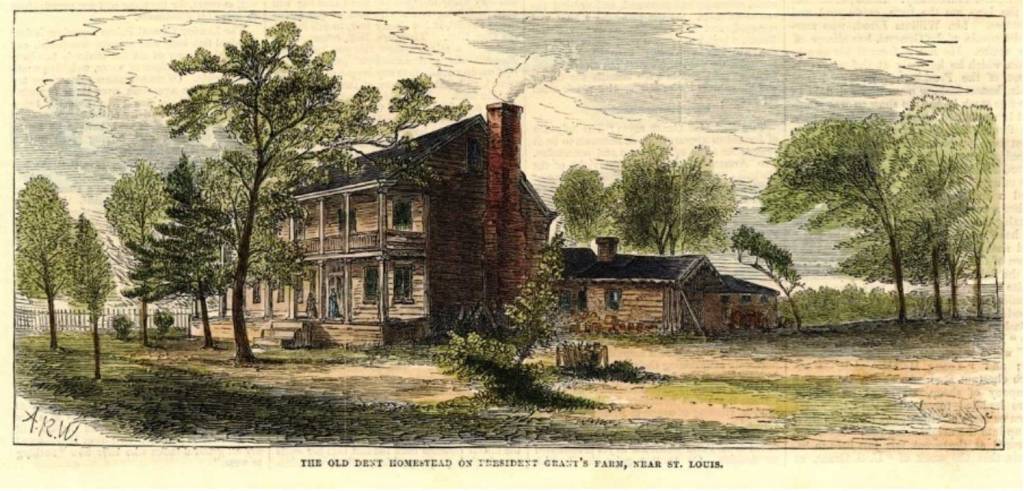
After the war, Grant turned to horse breeding. In 1866 he bought the 860-acre White Haven estate outside St. Louis from his wife’s family, primarily to breed and raise horses. To do this, he needed to convert the bulk of the land from fruits and vegetables to grass and hay to provide feed for the horses. He wrote his caretaker: “I want to get all the ground in grass as soon as it can be got rich enough, except what will be in fruit.”

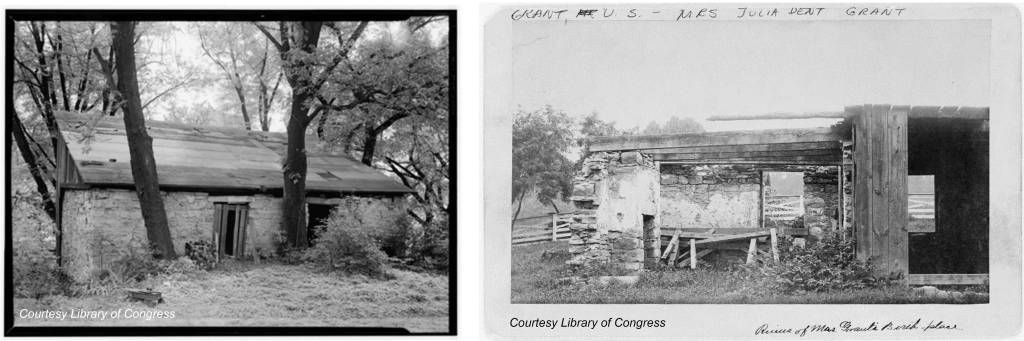
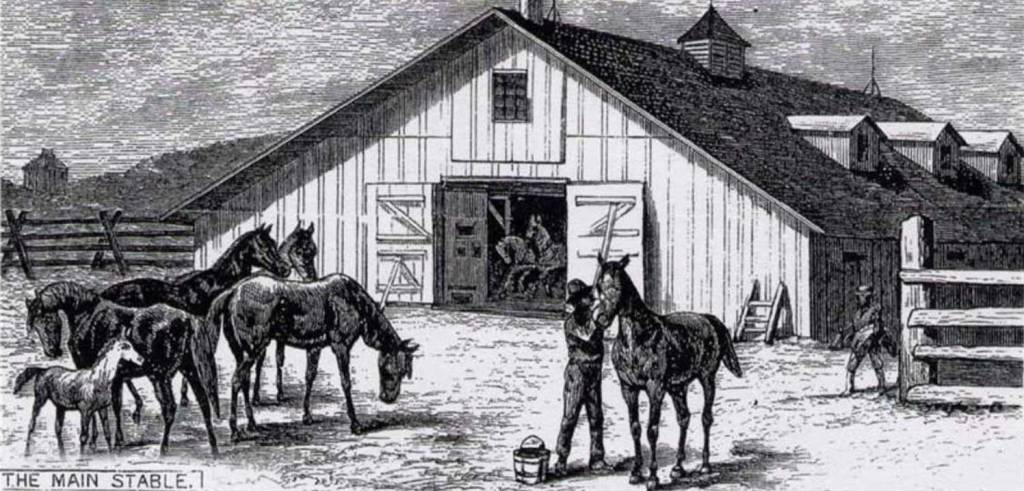
Original stable at White Haven.

In 1871, he also designed and built a large stable that could accommodate 25 horses, including his beloved trotters, thoroughbreds, and Morgans. Today, the stable remains standing and serves as the museum at Ulysses S. Grant National Historic Site

Grant’s breeding farm produced a number of very fine horses, which in 1873 were valued at $25,000 ($675,000 in today’s dollars). And yet the operation was barely turning a profit. Grant decided to shut down the farm and put its resources to auction in 1875. He lost the farm when he was swindled by a New York City business partner in 1884. 

Today, the last ten acres of Grant’s horse farm constitute Ulysses S. Grant National Historic Site.

Currier & Ives print, 1885.

Did Mark Twain Help Ulysses S. Grant Write His Memoirs?

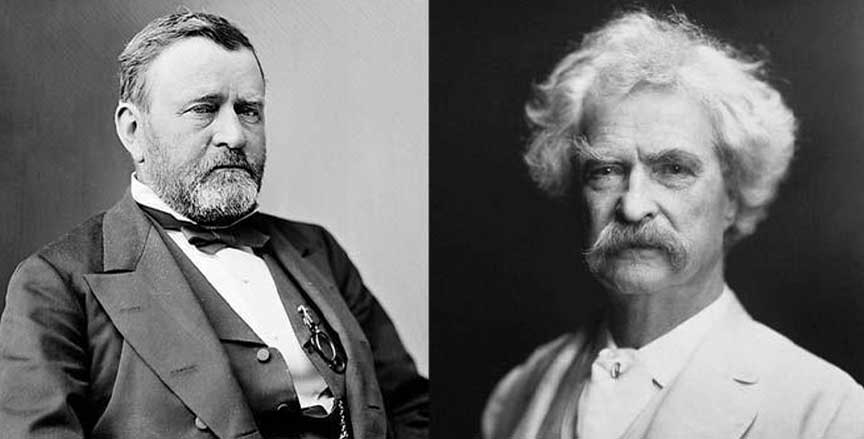
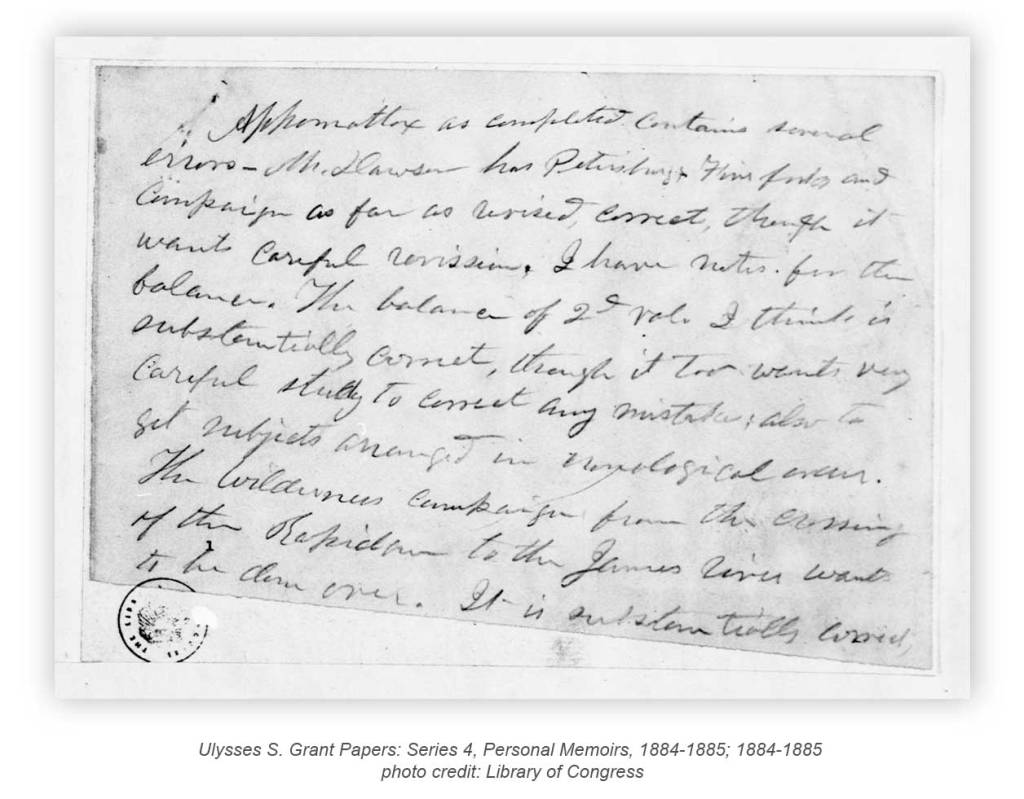
The Personal Memoirs of Ulysses S. Grant are considered one of the best military commentaries ever written. Yet rumors persisted for many years that Mark Twain helped write and edit them. Detractors doubted that the lucid prose used in the papers couldn’t possibly have been penned by the former president. However, the claim – first suggested by a disgruntled aide to Grant – proved untrue. The original hand-written manuscript still survives and is entirely penned in Grant’s own handwriting. What’s more, though the two men were indeed friends, Twain was not even involved with the project when Grant began writing.

In 1884, near the end of his life, Grant was struck by financial disaster. He had invested most of his assets with a firm headed by one of his sons, which was later involved in a scam that lost all of the investors’ money. Now broke and with no source of income on the horizon, Grant was concerned about providing for his beloved wife Julia. He reluctantly accepted an offer from a magazine to write articles about his experiences during the Civil War and soon decided to turn the effort into writing his personal memoirs. Although the magazine offered to publish the memoirs, his friend Mark Twain made him a much more lucrative offer through Twain’s own publishing company. Grant eventually accepted Twain’s offer, hoping the memoirs could secure Julia’s financial future.

At about this time, the former president was diagnosed with advanced throat cancer, no doubt a result of his lifelong cigar habit. He was left in near-constant pain, unable to drink or sleep. Yet from his sickbed he churned out page after page. Twain was a frequent visitor, proof-reading the manuscript and sometimes passing notes back and forth when Grant was eventually unable to even speak.   

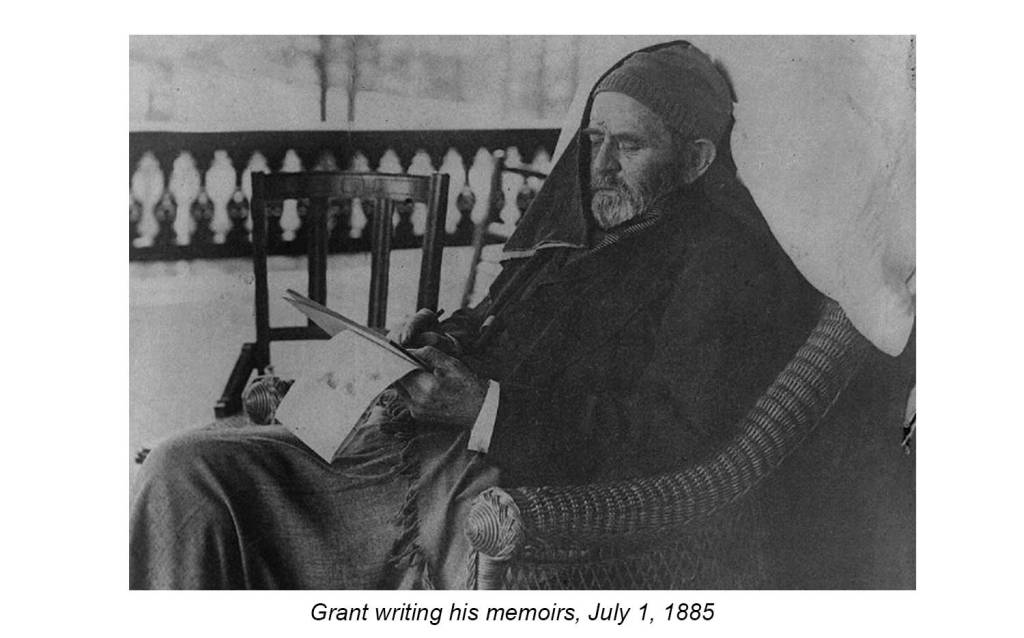
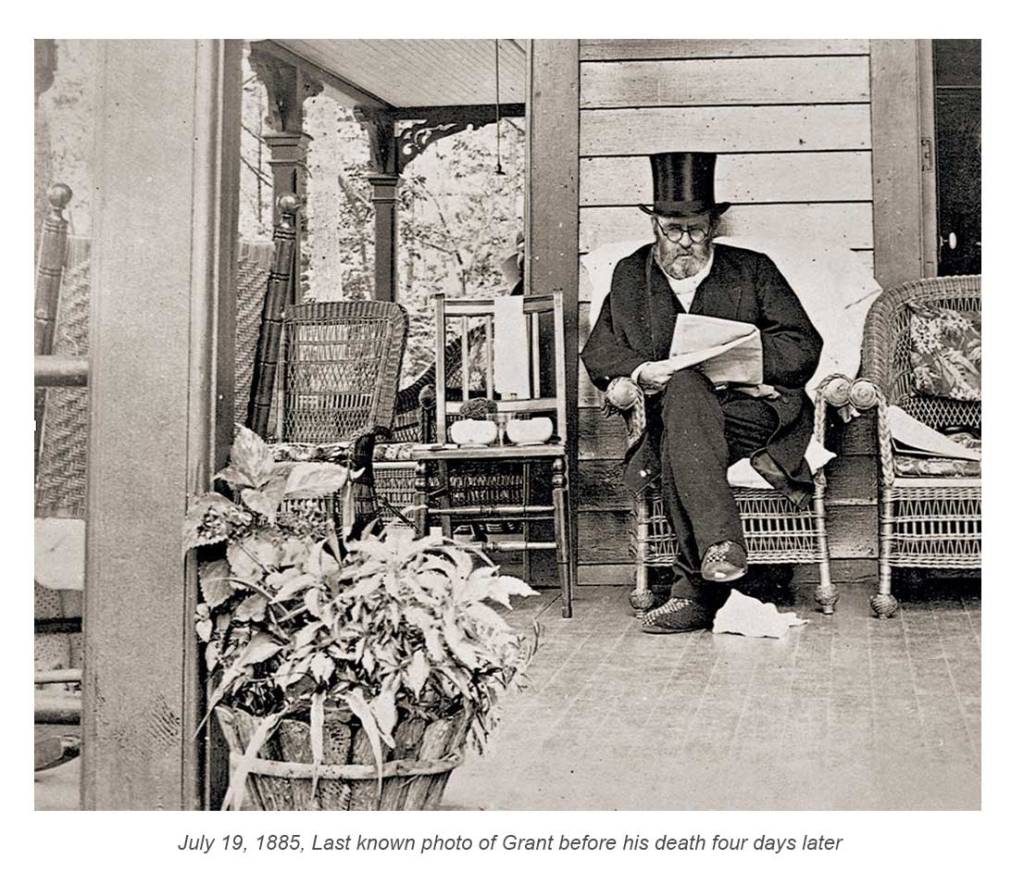
Grant’s last days were spent on his porch with pencil and paper, wrapped in blankets, determined to finish his memoirs before he succumbed to his disease. He completed his memoirs just days before his death on July 23, 1885. 

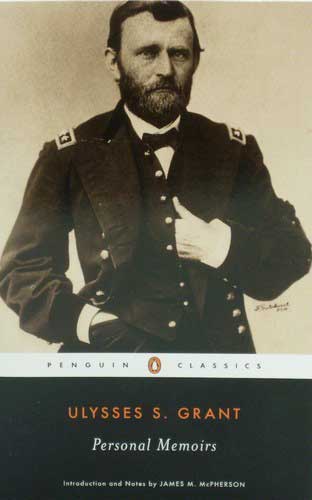
The book was sold in two volumes and became an instant bestseller. Twain said that the book was one of the best written he had ever seen. The publisher presented a check for $200,000 to Julia Dent Grant in early 1886 – the biggest royalty check written up to that time. Grant’s Personal Memoirs are still in print today and are often considered one of the best written ever produced by a former president.

You can purchase your own copy of the Personal Memoirs of Ulysses S. Grant online or in person at our gift shops at Ulysses S. Grant National Historic Site and Gateway Arch National Park. 

Accessible to All

As the Americans with Disabilities Act (ADA) turns 35 years old this month, the Centers for Disease Control reports that more than one in four Americans – roughly 70 million people – are living with a disability. This can include a wide range of conditions from mobility issues and hearing loss to vision impairment and cognitive limitations.  
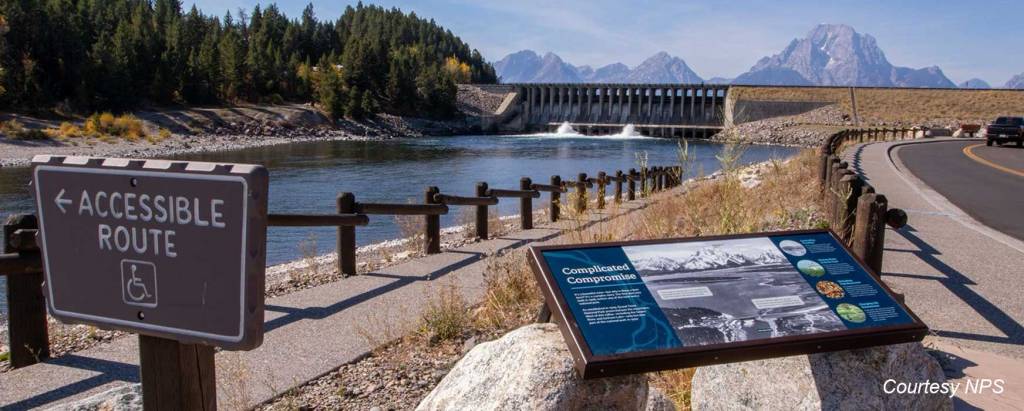
Yet there’s no reason people with physical challenges can’t enjoy our national parks. In fact, the National Park Service “strives to make its parks, monuments, and historic sites available to all.” And it offers a wide range of accessible experiences across its 400+ park sites.

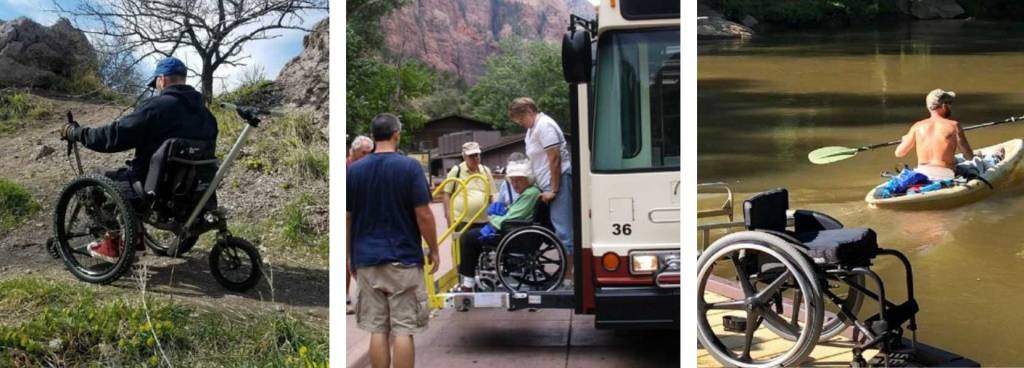
Each park has its own accessibility section on its website, where visitors can find details about its accessibility services and programs. These can go way beyond more traditional services like sign language interpretation of tours, accessible camping sites, paved trails, and ramps. Newer accommodations include all-terrain wheelchairsaudio cave tours,  tactile maps and accessible shuttle buses, and Wheels to Water floating kayak launches

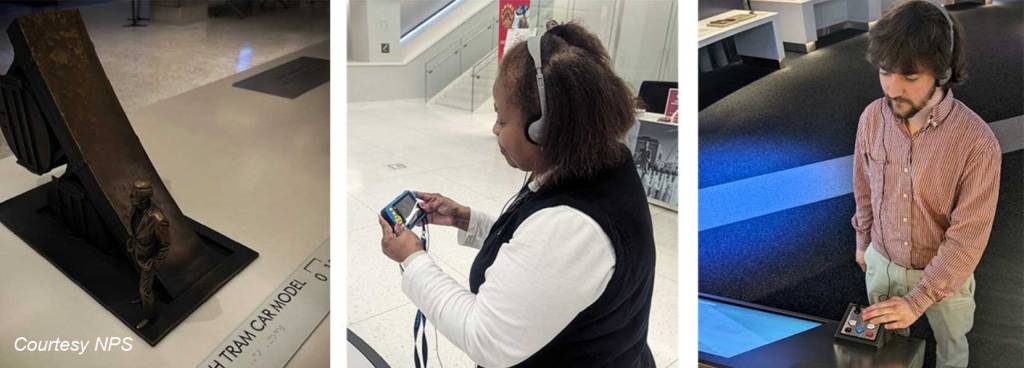
As challenging as some of these physical accommodations are, making museum exhibits accessible is even more complicated. Designers of the new museum at Gateway Arch National Park, for instance, fully embraced the concept of Universal Design when planning new exhibits. The museum includes multiple accessibility features, like tactile exhibits and interactive computer simulations that are visitor-directed through a touchscreen. Visitors can make use of Braille signage, large-print, high-contrast text versions of exhibit copy, assisted listening and captioning devices, as well as a new device that allows non-speaking guests to type questions for museum staff. Similar accommodations are available in the park’s theater.

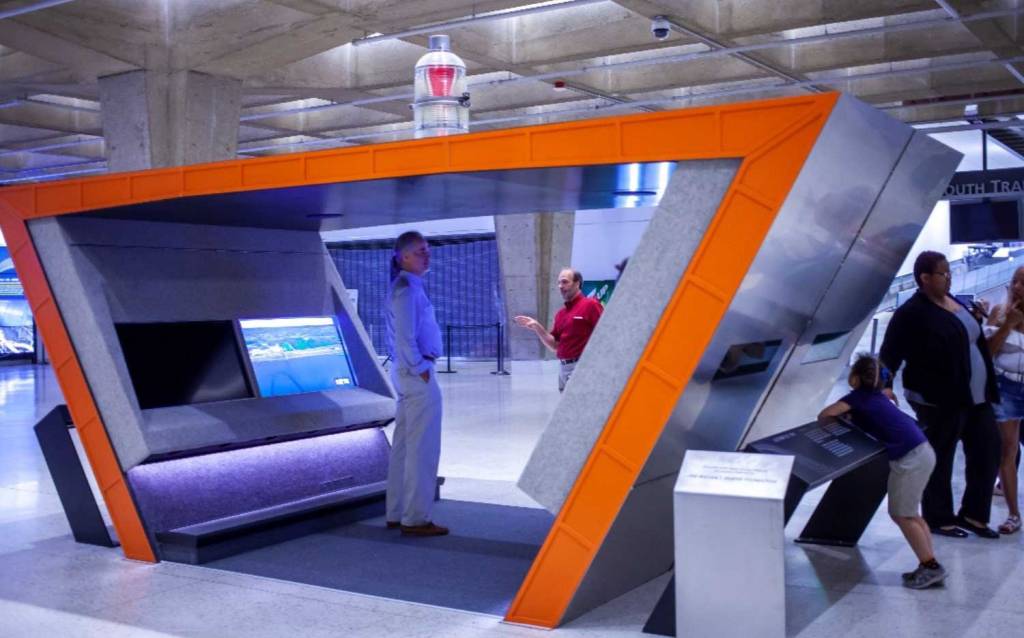
And since the tram ride to the top of the Arch is not wheelchair accessible, designers created the next best thing. Inside a full-size replica of the final piece of the Gateway Arch, video screens show live views from each side of the top observation deck, replicating the experience as much as possible for visitors who cannot make the trip to the top. 

Ulysses S. Grant National Historic Site also offers a range of accessibility services, including free wheelchair use, assisted listening devices for guided tours, audio descriptions of park films, and Braille and large-format brochures.  

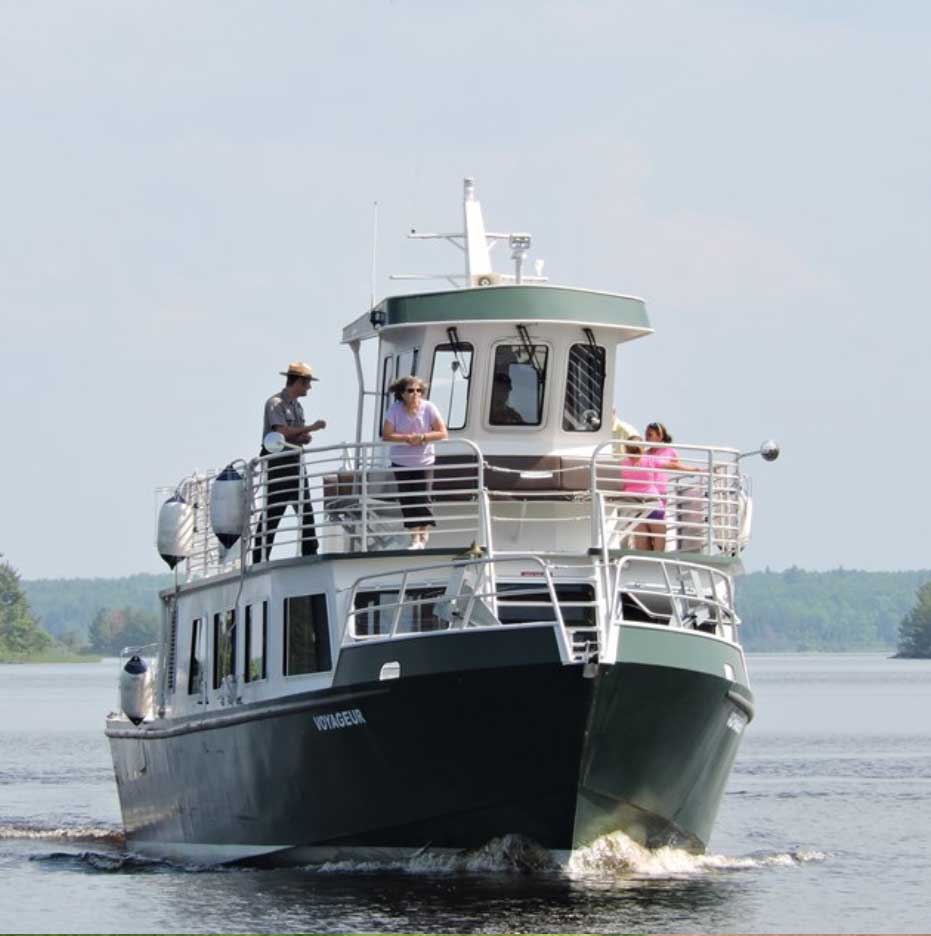
At Voyageurs National Park boating, fishing, and camping are the primary activities. All NPS boats are accessible. And visitors can make use of accessible lifts at boat launches as well as accessible campsites.

Similar accommodations are available at Missouri National Recreational River and the Lewis and Clark Visitor Center, both of which are popular with anglers.  In addition to taking advantage of accessible trails, shelters, and cabins, visitors can fish from several piers that are reachable by those in wheelchairs. 

All in all, NPS efforts to improve accessibility have principally focused on well-developed areas within easier reach, such as park visitor centers and established campgrounds. But accessibility advocates want to see more trails, shelters, and other park areas comply with ADA standards, particularly in more remote natural areas. Park Service officials acknowledge there’s a nationwide backlog of existing trails and structures that don’t meet accessibility standards, especially in the backcountry. But they say they’re making progress where they can.

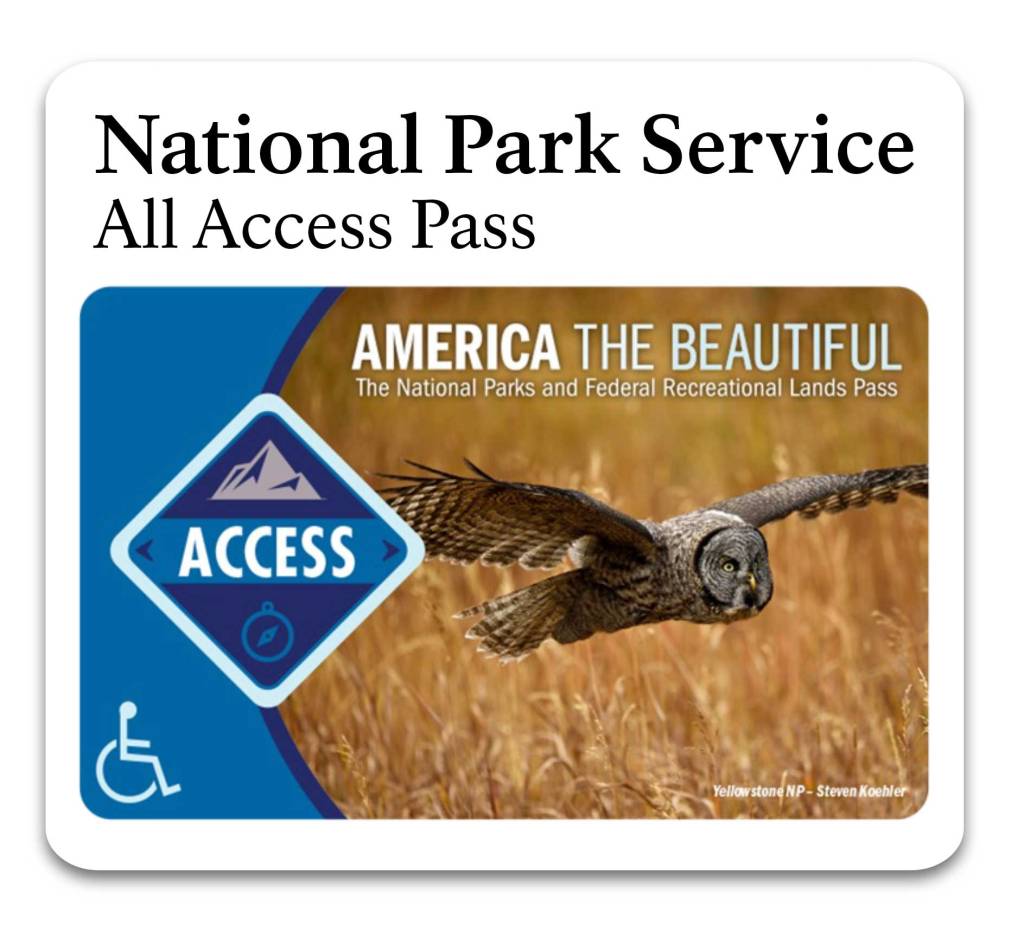
Americans with permanent disabilities are eligible to receive the National Park Service All Access Pass, which provides lifetime benefits at federal lands managed by six agencies, including free entrance to parks managed by the National Park Service that charge an entrance fee. The free passes are available at certain federal recreation sites or can be ordered online (for a small shipping fee). 

Have a “Pawsitive” Experience in Your National Parks

(Reader alert – if you’re allergic to puns, don’t read on. We’ve made generous and shameless use of many howl-arious puns in this blog post!)

Dog-gone-it – sometimes our canine friends have a ruff life. Especially when their human owners go on a fun vacation, and Fido gets left behind. Howl can we do that to them?  

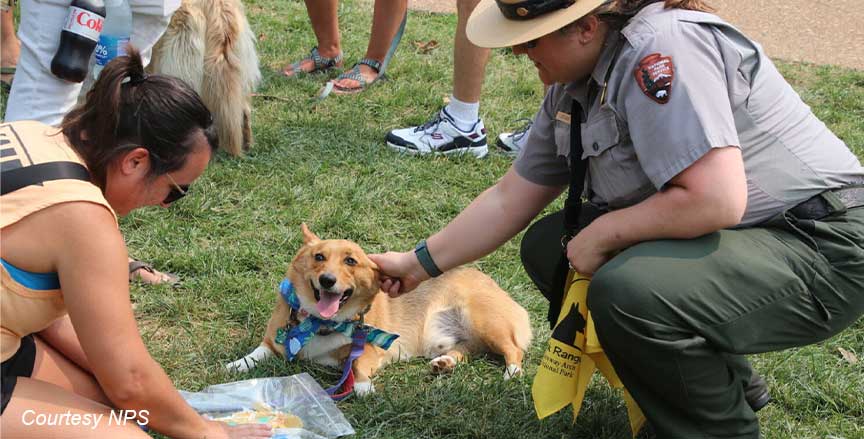
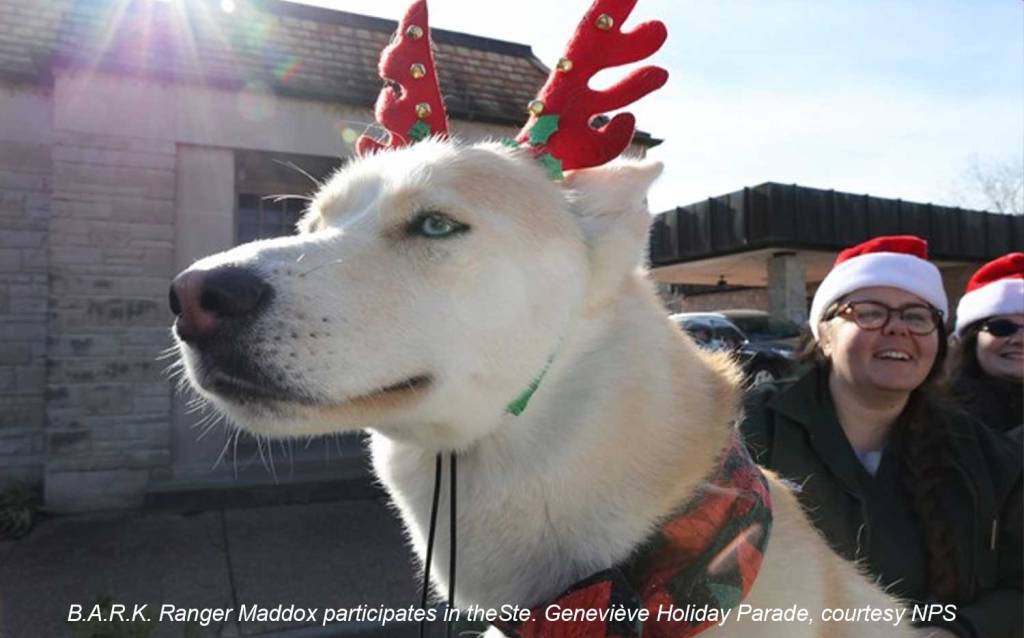
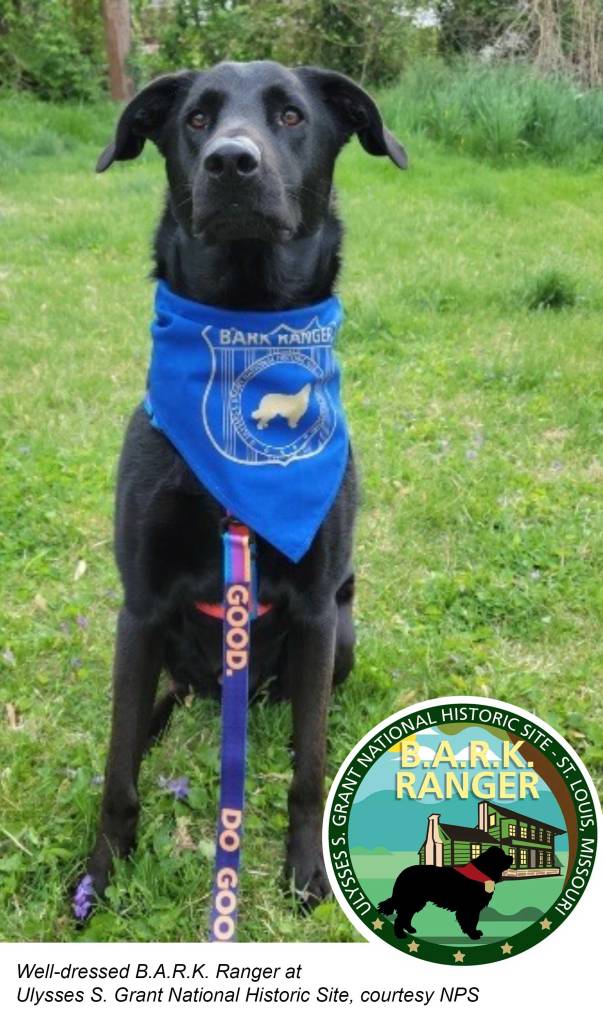
Well, the National Park Service believes that dogs deserve a round of a-paws.  That’s why dozens of parks offer our four-legged friends special programs, tasty treats, and fun adventures when they visit with their human owners. It’s all part of the NPS B.A.R.K. Ranger program, a project of the agency’s Healthy People Healthy Parks Initiative.   

What does B.A.R.K. stand for?  Glad you asked, since there are a few simple rules (none of them too far-fetched) that pet owners should follow when they visit a park:

  • Bag your pet’s waste
  • Always leash your pet
  • Respect wildlife
  • Know where you can go

B.A.R.K. Ranger programs vary from park to park and are tailored to each site’s unique setting.  Some parks offer a walk with a ranger program. Some have a pledge that owners take with their pets. Most sites adopt an honor system that assumes owners will follow the B.A.R.K. principles on their visit. (Well, anything is paw-sible…)

In return for abiding by the B.A.R.K. rules, pets can earn a variety of rewards. At Ulysses S. Grant National Historic Site, dogs who take the pledge earn a special bandana (looks very fetching) and a signed certificate.  

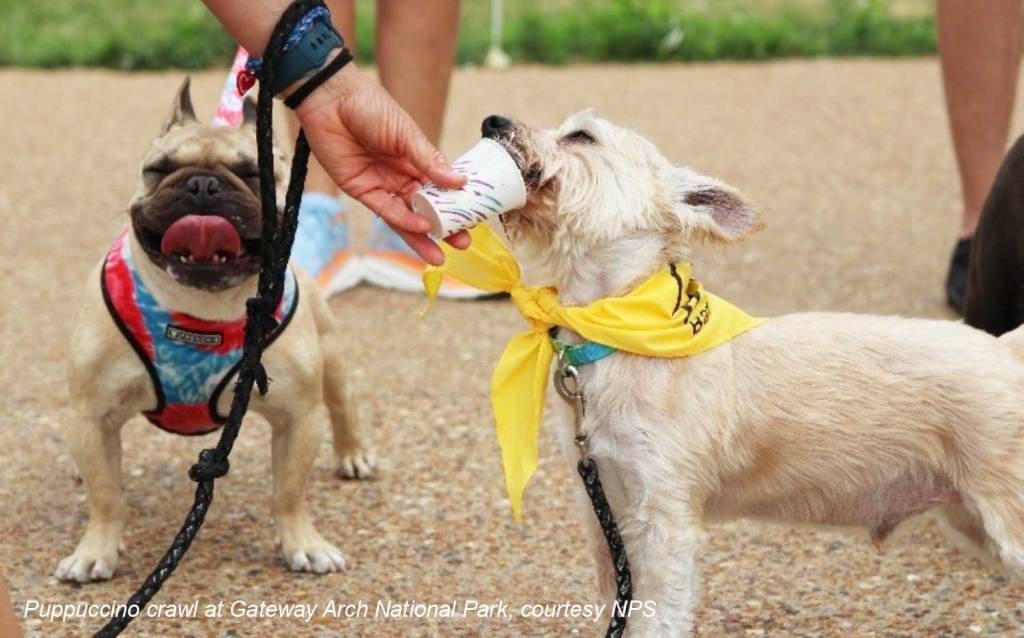
Dogs who attend one of the many annual B.A.R.K. Ranger events at Gateway Arch National Park can create special artwork or enjoy a cup of Puppuccino during their visit. Check out the upcoming B.A.R.K. events at the Arch in July, September, and October. Your pooch will be hounding you to attend!

If you and your dog visit a park that doesn’t offer special rewards, you can still fetch a special B.A.R.K. Ranger collar tag. Try the park’s gift shop, or purchase one at The Arch Store or online . Your pup will go mutts about the new jewelry!

But what about cats, you ask? Are they feline left out with all this attention on dogs, fur crying out loud? What a cat-astrophe!  (Too much?)

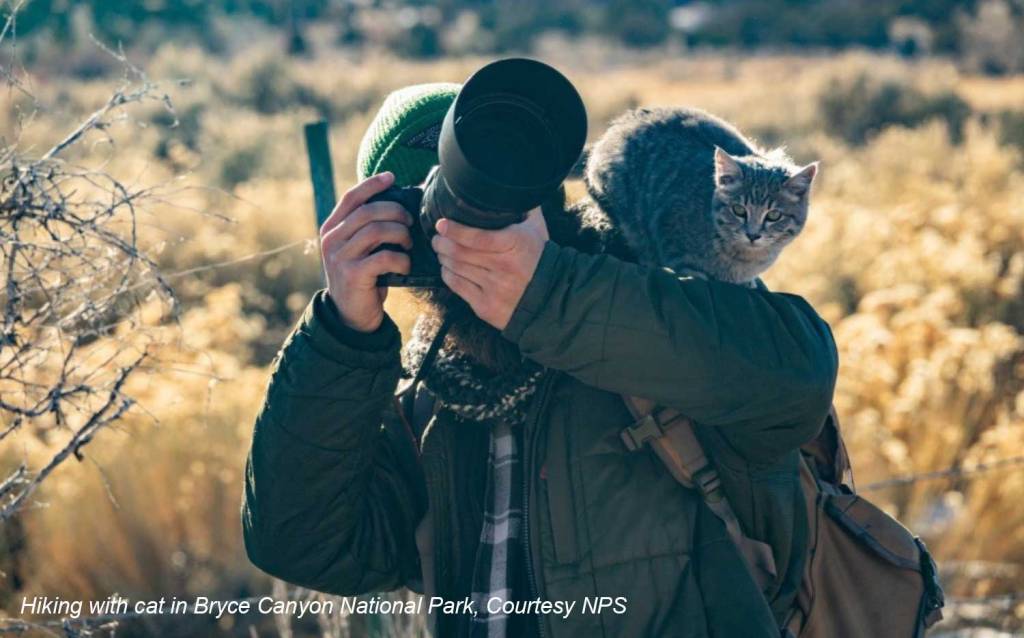
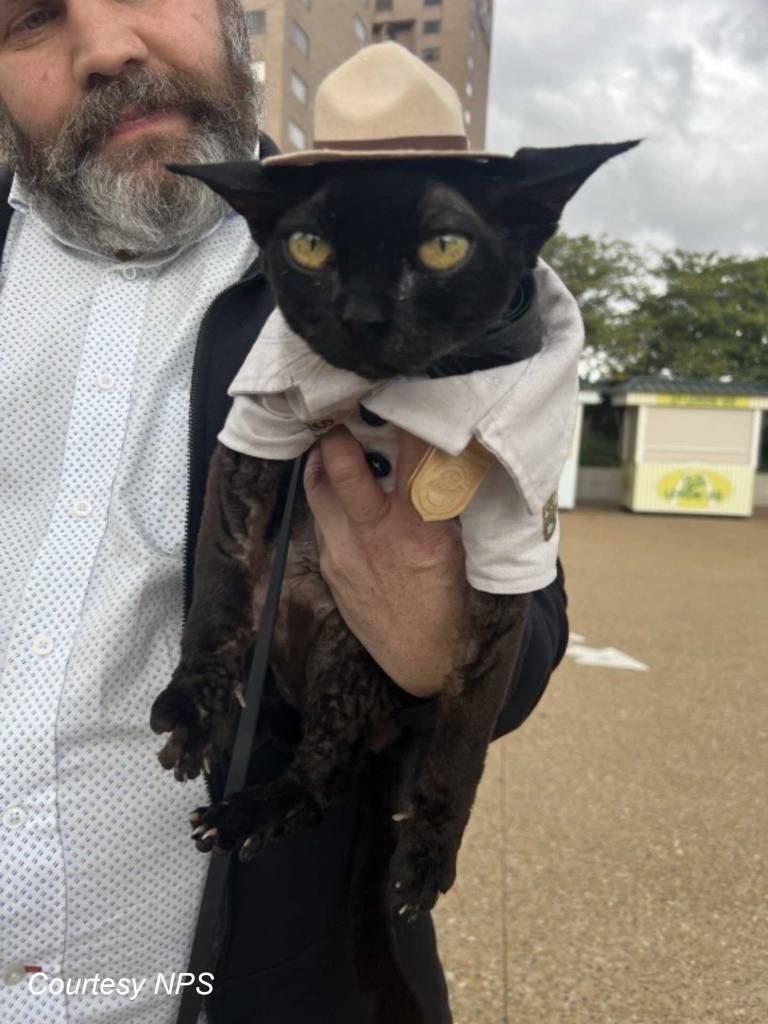
Never fear, some national parks allow cats as long as they are leashed or restrained. One dedicated cat owner recently dressed his feline friend for an outing at Gateway Arch National Park. Hiss-terical!

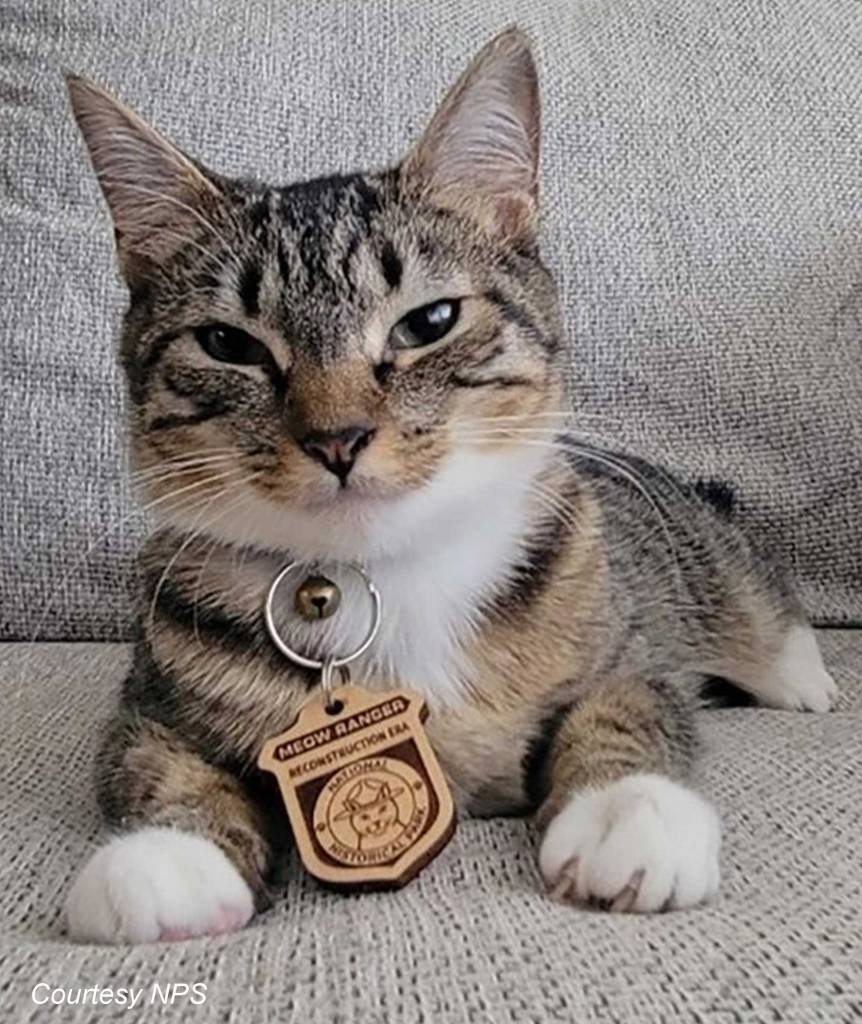
And another NPS site even inaugurated a M.E.O.W. Ranger program, complete with a special collar tag for participating kitties.  

No matter which furry friend you want to bring to a national park site, it’s always smart to check before you visit to learn about any restrictions and rules that might apply. Here’s wishing you and your companions a pawsitive park experience!  

A Home Called Hardscrabble

It’s hard to overstate the notable accomplishments of Ulysses S. Grant: military strategist, Commanding General of the U.S. Army, 18th president of the United States, supporter of the Fifteenth Amendment (which banned racial discrimination in voting), loving husband and father – the list goes on and on.  However, there was one area where it seems Grant didn’t exactly shine: homebuilder. 

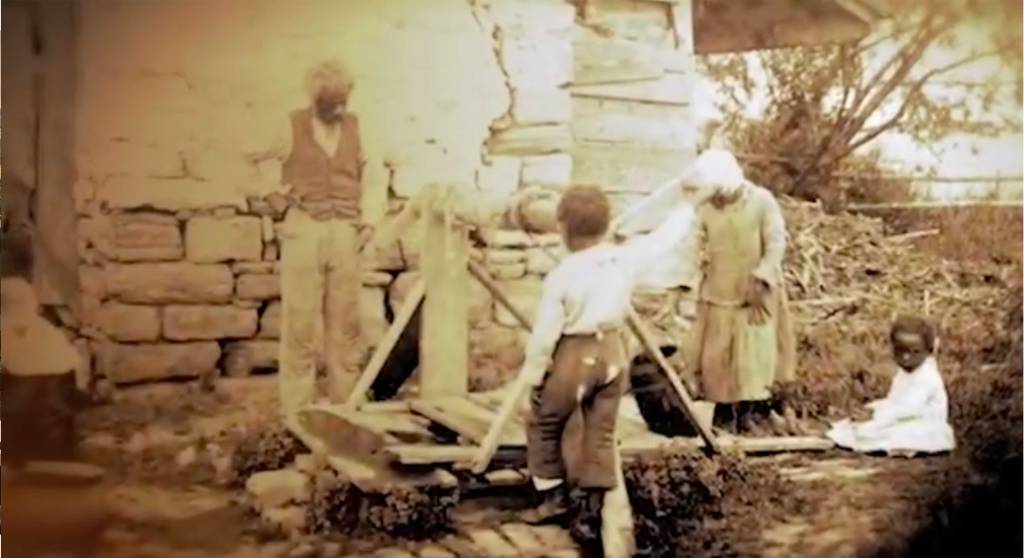
When Grant resigned from the military in 1854, he returned home to his in-laws’ plantation outside St. Louis and turned to farming as a way of supporting his wife Julia and their young children. With the help of enslaved laborers, he cultivated fruit and vegetable crops on the 80 acres he was given as a wedding present, and harvested and sold firewood. 

Grant also began constructing a house for his young family so they could live independently from his in-laws. In the fall of 1855, he started cutting, hewing, and notching logs for the cabin; the following spring he dug a cellar and laid stones for the foundation. Julia organized a house-raising with neighbors and enslaved laborers, but otherwise, Grant completed much of the work himself, including shingling the roof, laying floors, and building the stairs. 

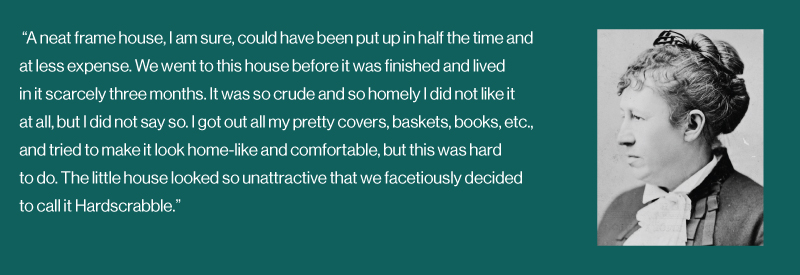
The family moved into the modest four-room log cabin during the fall of 1856, but their stay was short-lived. Accustomed to the relative finery of her upbringing at White Haven, Julia was unimpressed by the roughness of the log cabin, which she felt was beneath her standards. (Her father had discouraged Ulysses from constructing a frame house, saying a log cabin would be warmer.)  Julia later recalled in her memoirs: 

Quote from The Personal Memoirs of Julia Dent Grant
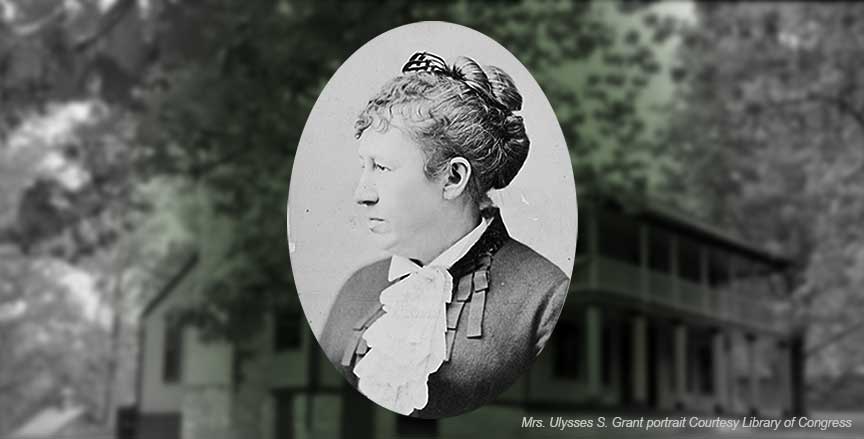
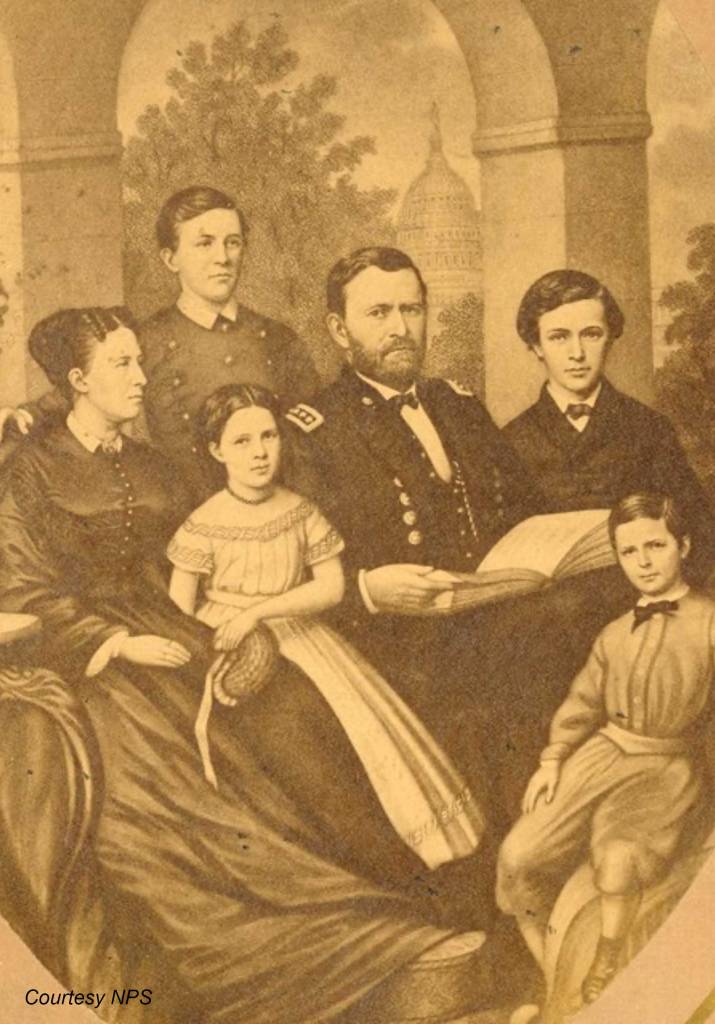
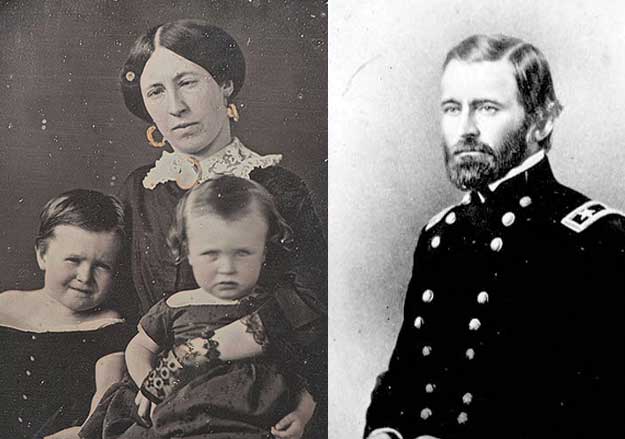
Left:Julia Dent Grant with Frederic & Ulysses Jr. Right: Ulysses S. Grant circa 1860

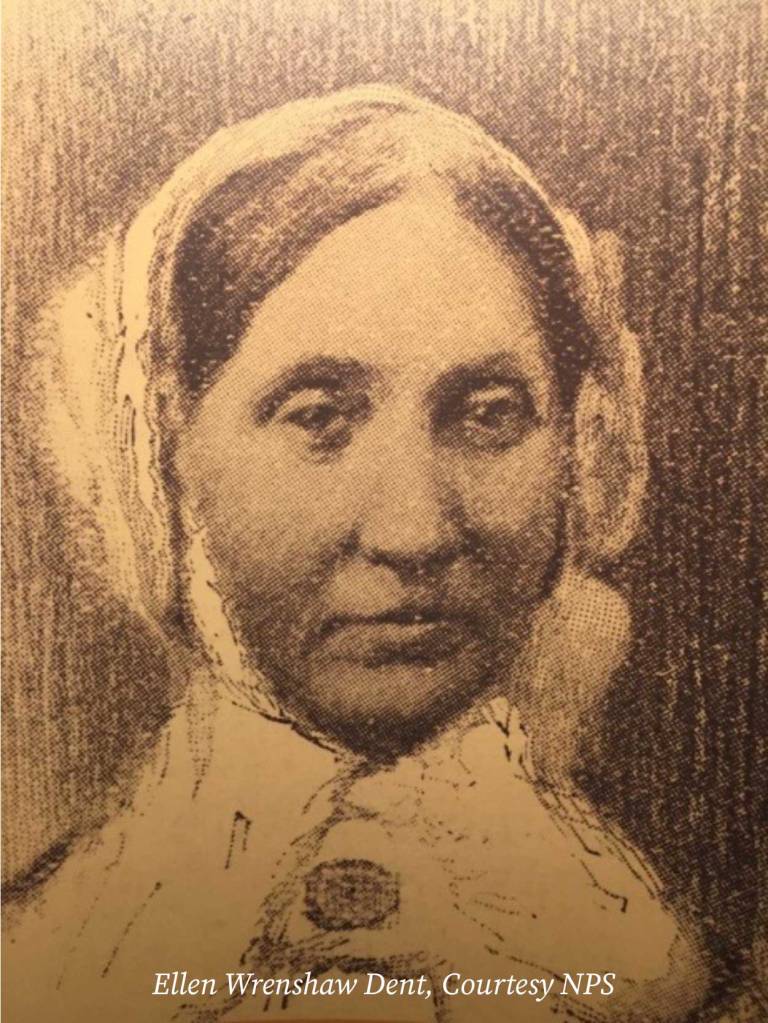
Hardscrabble was abandoned in early 1857 when Julia’s mother Ellen died and the Grants moved back into White Haven at her father’s request. They never re-occupied the log cabin.   

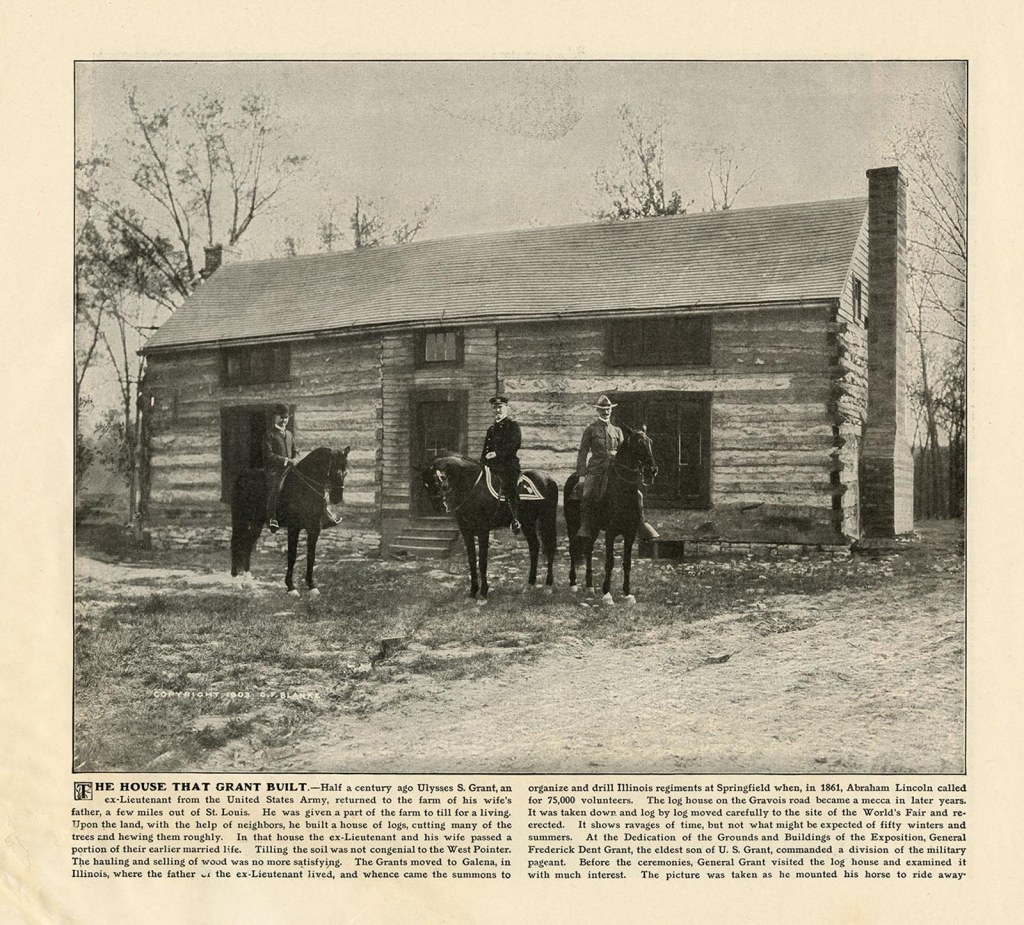
But Hardscrabble eventually acquired a history of its own because of its association with the famous general and president. It was dismantled and moved three times, including to the site of the 1904 World’s Fair in St. Louis, where it became an attraction featuring refreshments and souvenirs!   

Image of Hardscrabble on grounds of 1904 World’s Fair. General Frederick Dent Grant, eldest son of Ulysses, is shown in center.
Courtesy of NPS 

In 1907 Hardscrabble was finally moved to its current location at “Grant’s Farm,” a public attraction owned and operated by Anheuser-Busch and adjacent to Ulysses S. Grant National Historic Site. The cabin is currently not available for tours, though visitors to Grant’s Farm can view it during a tram tour of the park. 

Present-day interior of cabin, courtesy NPS

Hardscrabble is the only existing structure hand-built by a U.S. president prior to assuming office. For now, there are no plans to relocate it in the future. 

Hey Kids, You Can Become a Junior Ranger!!!

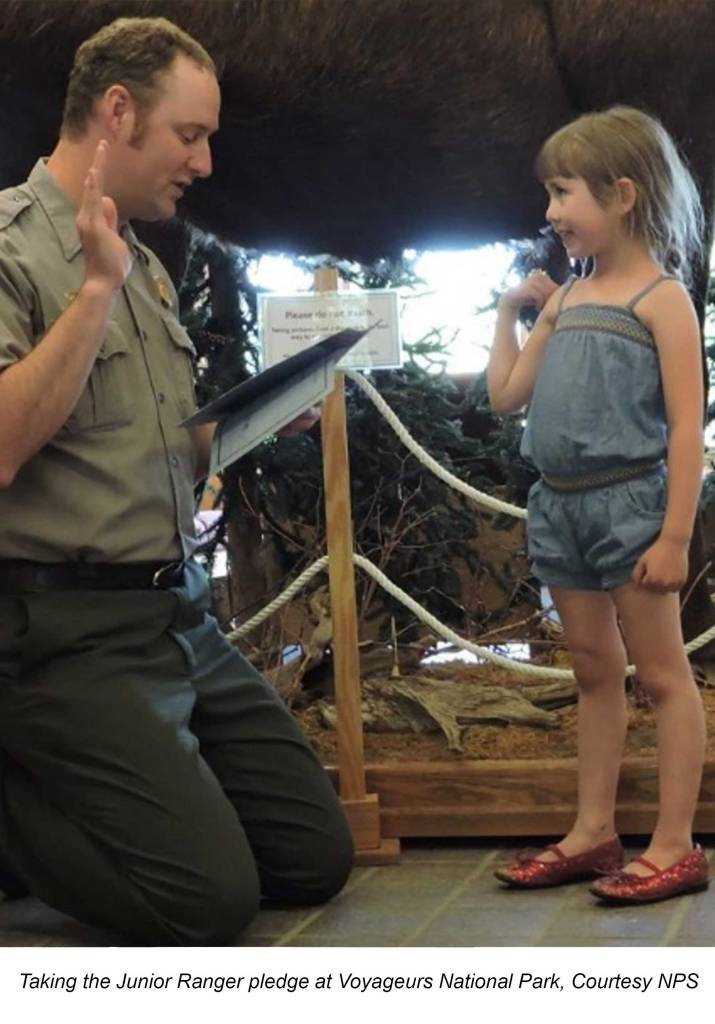
National parks aren’t just for adults. If you’re planning a trip to a park with your kids this summer, make sure you check out the site’s Junior Ranger activities when you visit. These programs help children appreciate and connect to our parks – whether it’s walking in the footsteps of famous people, exploring beautiful landscapes, developing new interests, or just having fun.  

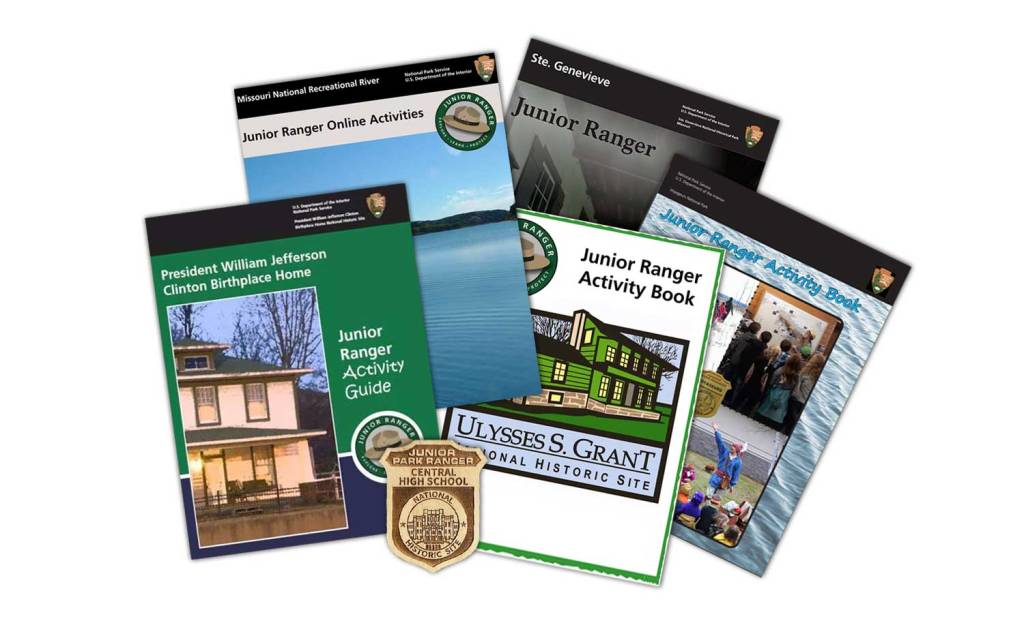
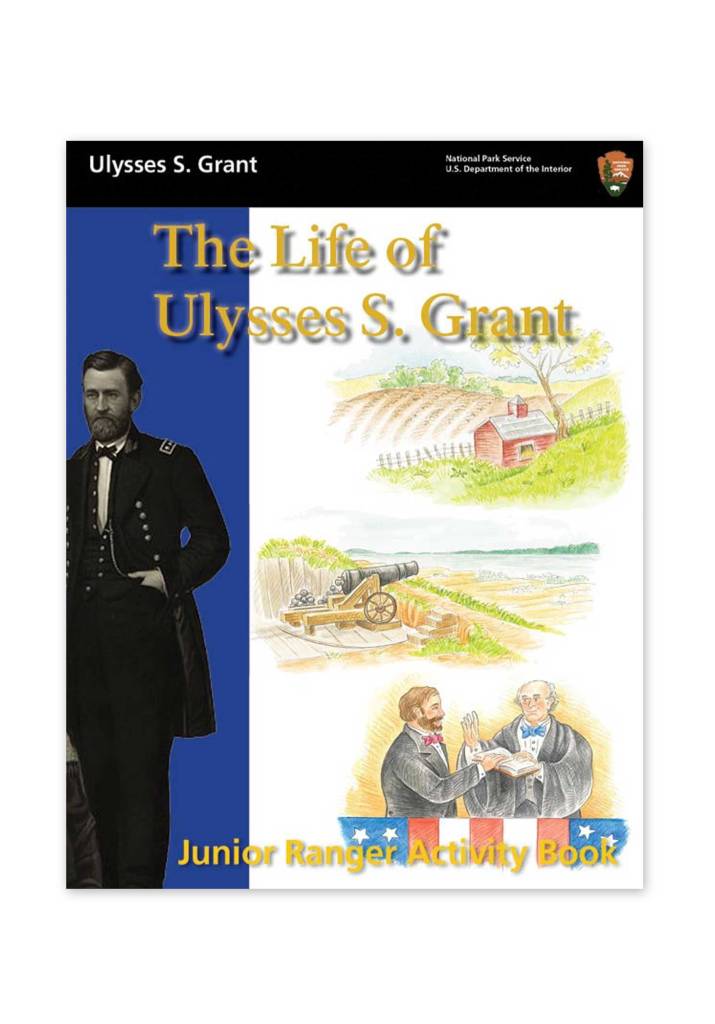
Here’s how it works: Before your visit, go to the park’s webpage to learn about its special kids’ activities. Most of the nation’s 400+ national park sites offer Junior Ranger programs. When you’re on site, check in at the visitor center. That’s where kids will typically receive a free park-specific activity book that helps them learn about the landmarks, history, wildlife, geology or other themes unique to that park.  

After your kids complete the activities in the book, they’ll need to present it to a park ranger to receive a special Junior Ranger badge and certificate. Often, they’ll also take a pledge to learn, protect, and explore their national parks. 

For kids who can’t visit in person, the National Park Service website offers a Junior Ranger Online section featuring videos, games, and songs, allowing families at home to connect with parks around the country. And many parks have their own Virtual Junior Ranger programs. Voyageurs National Park, for instance, includes fun activities on its website, as well as the opportunity to download the Virtual Ranger badge. U.S. Grant National Historic Site created a special Bicentennial Virtual Ranger Activity Book to celebrate the 200th anniversary of Grant’s birth.  

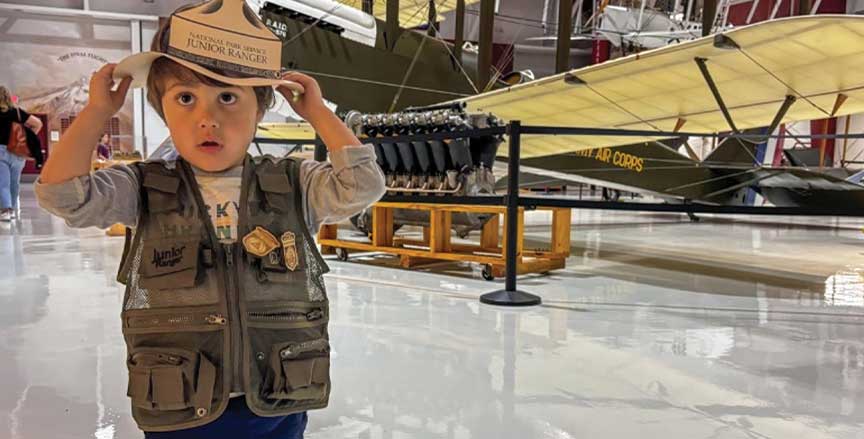
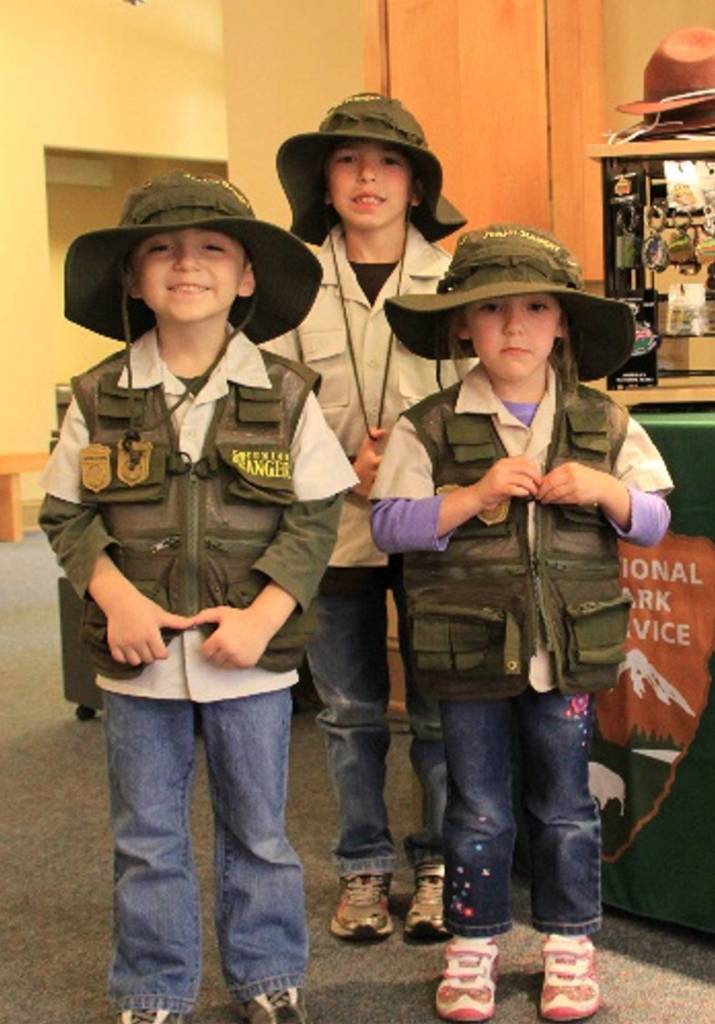
Finally, for those kids who want to go the extra mile, why not let them dress like a park ranger with a special Junior Ranger Vest and Flat Hat! JNPA carries a wide range of Junior Ranger products like these in our online store, including mini building blocks, pins, and activity books.  

However you introduce national parks to your kids, they’ll be sure to get more out of their visits when they become Junior Rangers!

Hoodoo Traditions on the Plantation

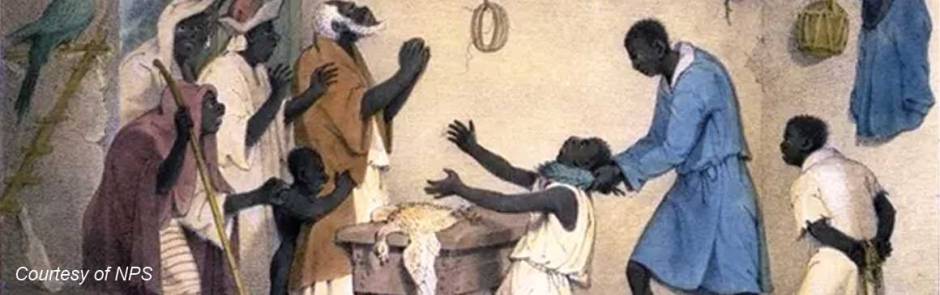
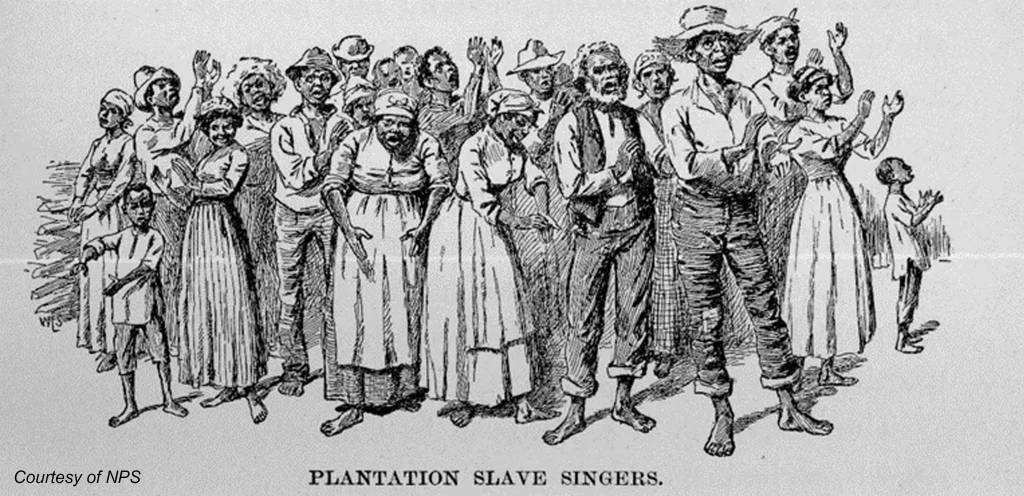
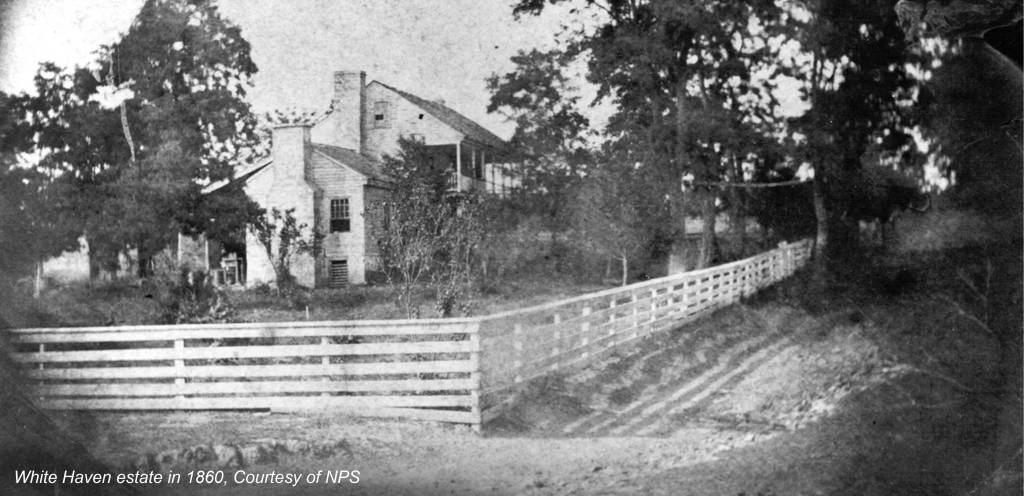
When Africans were captured as slaves and transported to the Americas, they naturally brought with them many of the traditions and cultural practices from their homelands. One cultural practice that had tribal origins in Central and West Africa was hoodoo, a spiritual tradition that was popular among enslaved people on numerous American plantations, including White Haven. What exactly WAS hoodoo?

Hoodoo (not to be confused with voodoo) is not a religion per se. It is a collection of rituals such as herbal healings, ancestor worship, song, and folk magic inspired by African religious practices. The practice of hoodoo arose when enslaved workers were forced to become Christians upon arrival in North America. Although the rituals were historically used for curative and protective purposes, they also provided empowerment and comfort for people who had little agency over their lives. Often, hoodoo practitioners attempted to communicate with ancestors and created spells that called for justice and vengeance. Because it was a crime for the enslaved to practice African traditions, many hoodoo practices were hidden from slave owners.

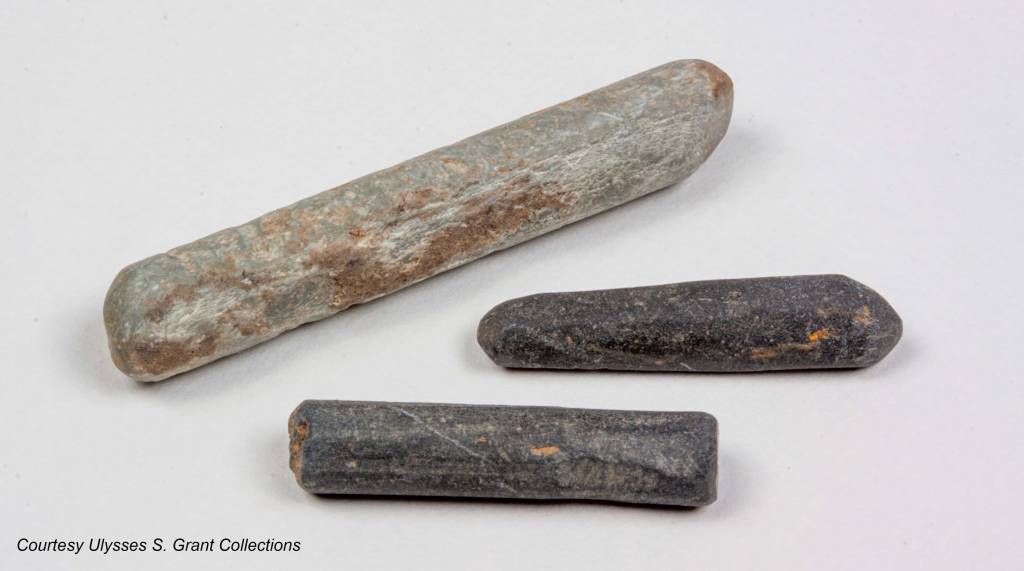
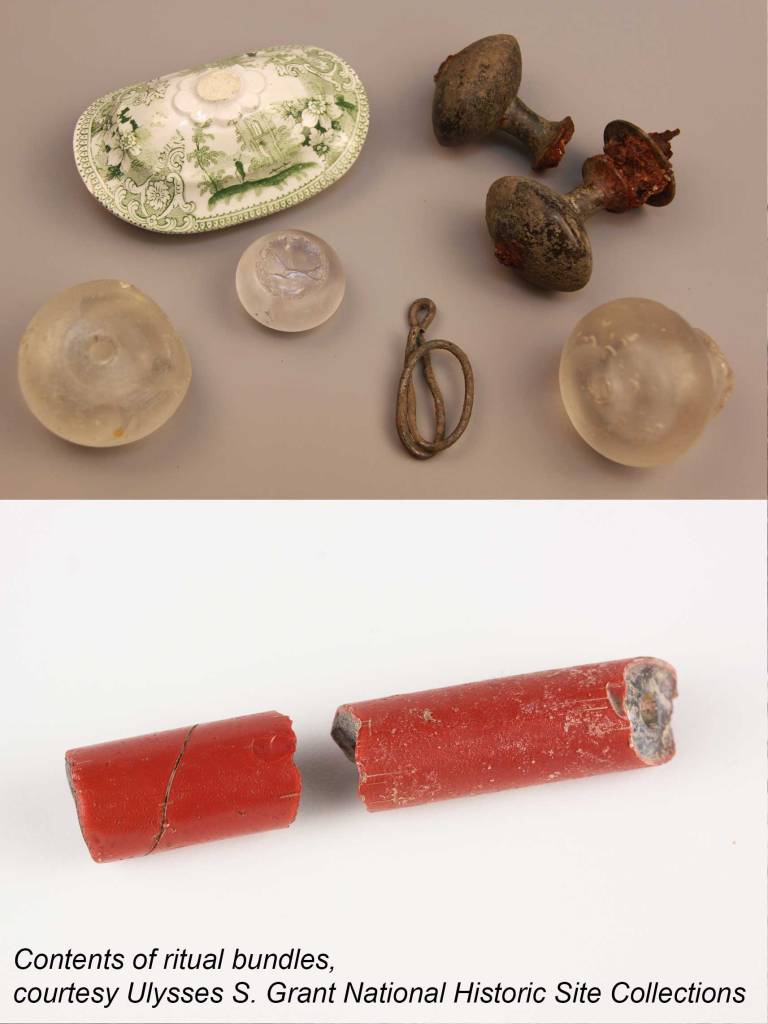
Archeologists and historians working in the 1990s discovered evidence that hoodoo was practiced by the slave community at Ulysses S. Grant National Historic Site. They found cloth bundles known as minkisi buried beneath the floorboards at White Haven. These bundles purportedly contain spirits that inhabit objects created by a conjurer.   

The objects found inside the White Haven minkisi included beads, buttons, crab claws, a peach pit, crystals, seashells, iron, and sharp projectile points – each of which carried a spiritual meaning. Silver dimes were found in the site’s Winter Kitchen, often used in hoodoo as protective charms. Other items found in minkisi bundles at the historic site were similar to those found in conjure bundles on other slave plantations. 
Hoodoo practices did not end when slavery was abolished in the U.S. In the late 19th century and well into the 20thcentury, some African Americans turned to hoodoo to help them find jobs or to protect them from law enforcement and racial violence. They also practiced hoodoo to treat illnesses using herbal remedies. These African-derived practices and beliefs continue in some African American communities today.  
Grant’s Very Unpleasant Ride

Many of us shudder at the prospect of enduring bone-chilling weather. But imagine having to endure sub-zero temperatures on a multi-day outdoor journey, on bad roads through rugged wilderness, and on horseback! That’s what Ulysses S. Grant had to face during the winter of 1864 as he searched for supply lines for his Union troops fighting the U.S. Civil War.

The Union general was laying plans to capture Atlanta, well before that assignment fell to General William Sherman. As Grant explored possible supply routes that would provide easy access to the front in Georgia, he was hoping the Cumberland Gap – straddling Kentucky, Virginia and Tennessee – would fit the bill. The mountain passes in the Gap were valued by both Union and Confederate armies as a way to move men and supplies between the eastern and western theaters of war. But when Grant reached the area in January 1864, what he found was quite unpleasant: 

This assessment must have been particularly disheartening for such an accomplished horseman as Grant. From an early age, he became adept at riding, training, and caring for horses, and used those skills during his military career and private life. Some historians believe he bought the White Haven property (now Ulysses S. Grant National Historic Site) from his wife’s family after the Civil War mainly to breed and raise horses.

Grant ultimately had to abandon his plans to move troops through the Gap that freezing cold winter.  He might have succeeded in reaching Atlanta by other routes, but President Lincoln interrupted that strategy.  Lincoln promoted him to the rank of Lt. General in March 1864, and placed him in command of the Union armies. 

Grant’s eventual plan to win the war involved immobilizing General Robert E. Lee’s army near Richmond, Virginia, while General Sherman led the Union army through Georgia. Grant went on to force the Confederates to surrender in 1865.

To learn more about the life and accomplishments of Ulysses S. Grant, consider a visit to Ulysses S. Grant National Historic Site.

Juneteenth at our Parks

Several of our partner parks are planning events to honor Juneteenth, one of the oldest known commemorations related to the abolition of slavery in the United States.  The holiday marks the day that enslaved people in Texas learned they had been freed.   News of the Emancipation Proclamation had taken two-and-a-half years to reach Texas, arriving June 19, 1865.

Staff at Ste. Geneviève National Historical Park have found a unique way to honor the enslaved residents of the park’s historic houses during the annual Juneteenth commemoration.  They place flowers on the porches of the Jean Baptiste Vallé House, Bauvais-Amoureux House, and Green Tree Tavern.  Each flower memorializes an individual who was enslaved at that home.

Credit: NPS

This project is an outgrowth of the park’s ongoing effort to learn more about the early Black residents of Ste. Genevieve.  So far, staff and volunteers have confirmed the names of 46 individuals who were enslaved at the three NPS-managed houses.  They hope to uncover the larger narratives of these residents and learn about their connections among the free and enslaved people of color in the historic community. The park plans to share the details of these findings through public events like Juneteenth.

Lynne Jackson

Another Juneteenth-related program will take place at the park on Saturday June 22.  Lynne Jackson, a descendant of Dred and Harriet Scott, will share the story of her famous ancestors’ long-awaited emancipation in 1857.  She will also discuss the Freedom Suit Memorial in St. Louis, a bronze sculpture erected in 2022 commemorating the many lawsuits that enslaved people filed against slaveholders in an effort to gain their freedom. 

The lecture begins at 1:30 at the park’s Welcome Center.  The event is free, but reservations are recommended; reserve your spot by calling 573-880-7189.

Peggy Harris

Ulysses S. Grant National Historic Site will celebrate Juneteenth on Saturday June 15 with a unique program– Rhythms, Rhymes and Cultural Times.  This one-woman show by performer Peggy Harris is a collection of narratives depicting the lives of various strong Black women, including an African Royal’s recounting of the slave trade, Harriett Tubman’s journey to freedom, Harriet Scott’s support of her husband Dred, and Luisah Teish’s call to join women of color together to embrace their culture and spirituality.

The free program takes place at the park at 1:00 p.m. For reservations call 314-842-1867 ext. 230.